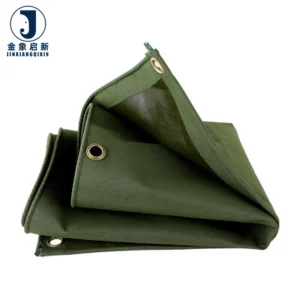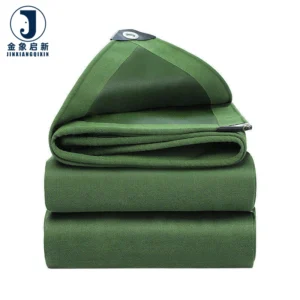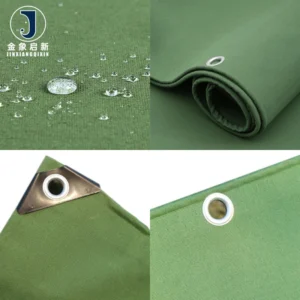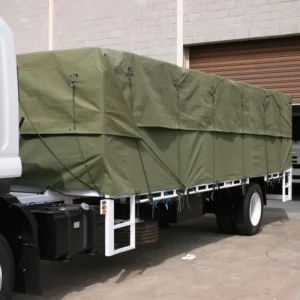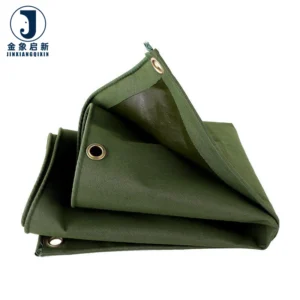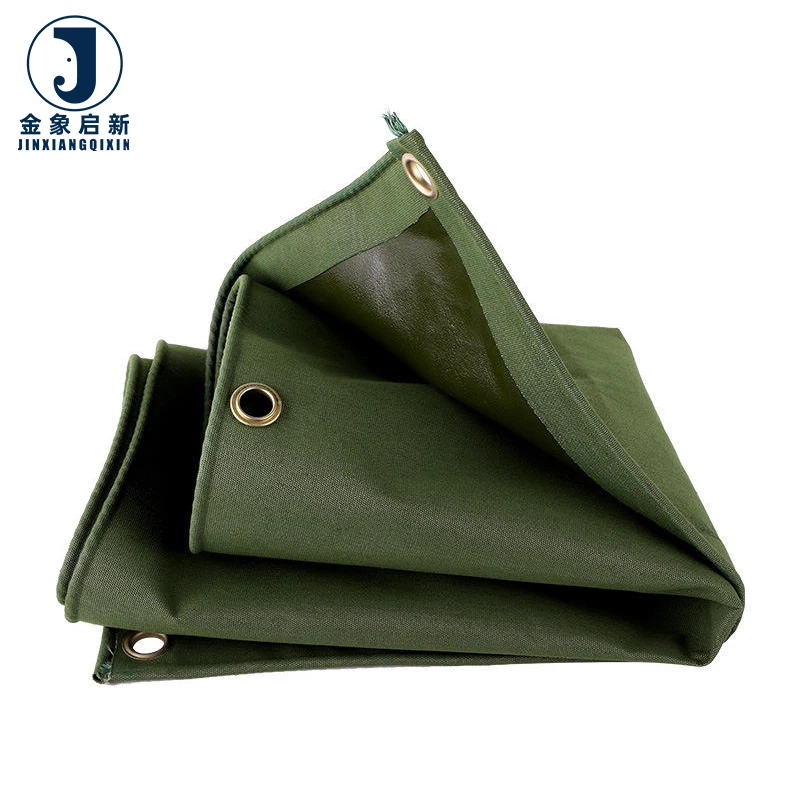
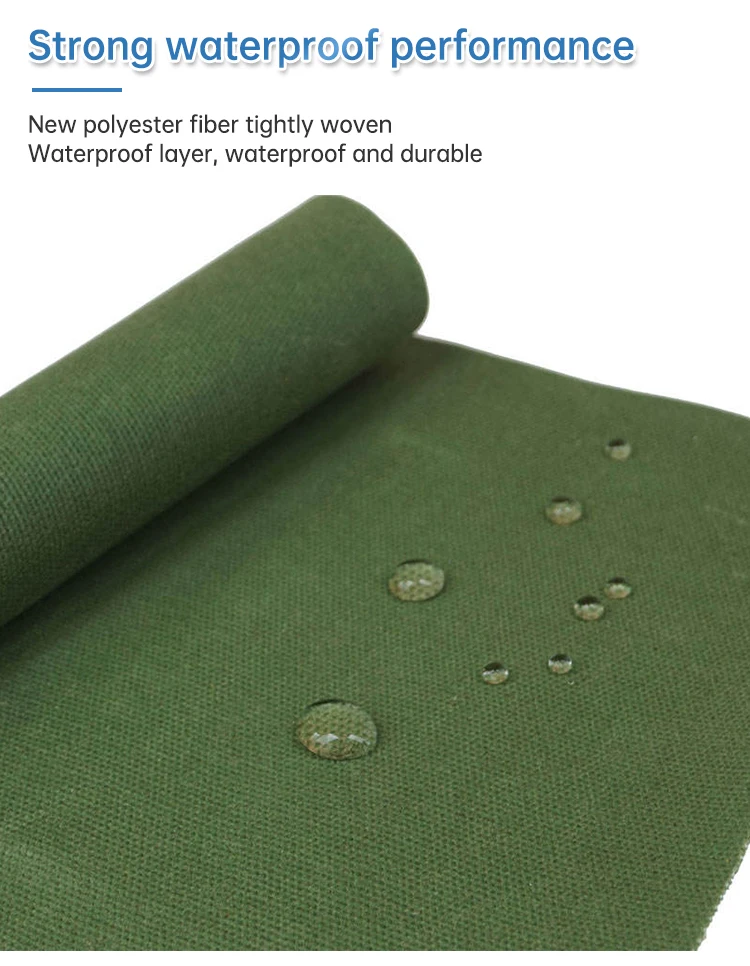
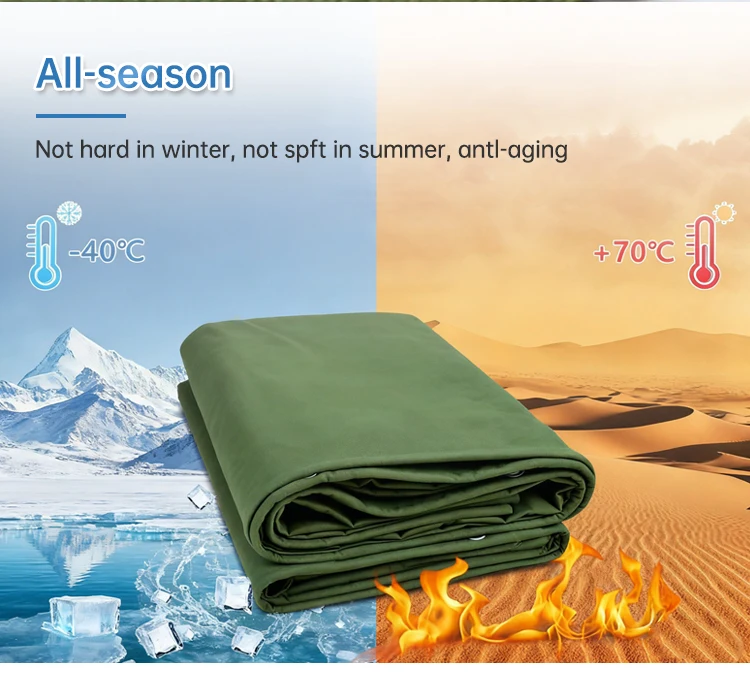
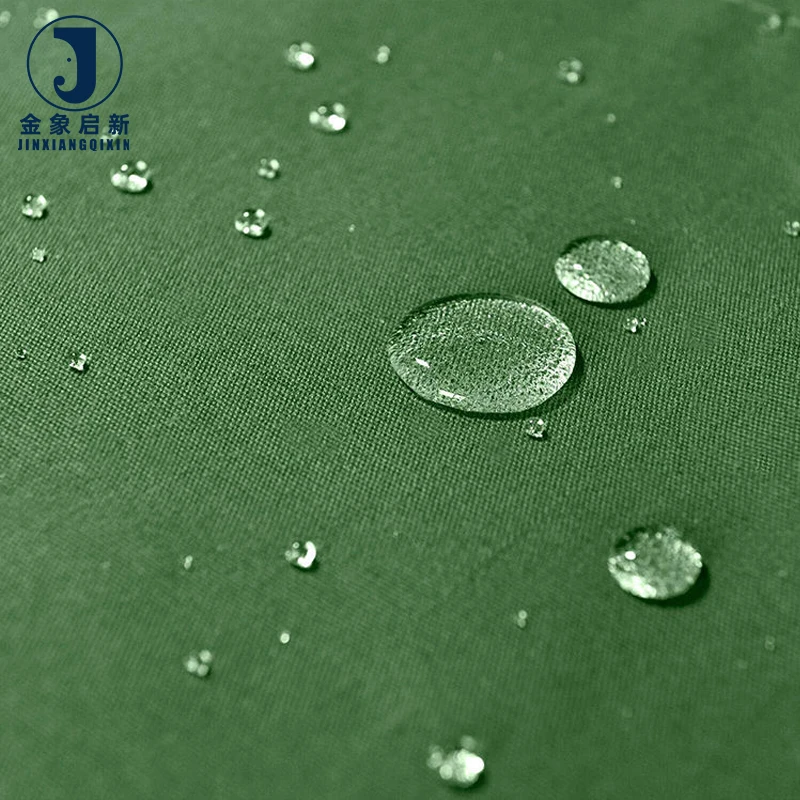
Heavy Duty Canvas Tarpaulin 600 gsm, 0.5–0.7 mm thickness, polyester cotton base with 8–12 strand fine cotton yarn — built for truck, construction and open-air cargo cover applications.
- Full PVC coated and laminated canvas range in roll and cut-to-size formats with custom width, length and colour matching
- Reinforced hem with rust-proof aluminum eyelets every 1 meter, folded and welded seams sewn with poly ropes for high-flex load points
- UV resistant and shrink proof, supporting 2 m × 100 m roll stock or tailored cut sizes for fleet and contractor specifications
Three dedicated coating lines and 100% pre-shipment inspection ensure GSM and colour consistency across every roll.
Description
Precision-Weighted Canvas — Every roll of 600gsm laminated canvas is inspected against the quoted GSM before dispatch, with a documented pre-shipment record.
Technical Specifications
| Parameter | Value |
|---|---|
| Product Type | Canvas Tarpaulin |
| Material | Polyester cotton industrial textile with 8–12 strands of fine cotton yarn |
| Weight | 600 gsm |
| Thickness | 0.5 mm / 0.6 mm / 0.7 mm |
| Coating Method | Laminated |
| Roll Width | 2 m |
| Roll Length | 100 m |
| Color | Army Green Camouflage / Custom |
| Eyelet & Hem | Rust-proof aluminum eyelets at 1 m intervals; folded and welded seams sewn with poly ropes |
| Flame Retardant | Available in flame retardant grades — confirm the grade required for your market |
| UV Treatment | Available with UV treatment — test basis to be confirmed per order |
| Waterproof Rating | Waterproof laminated construction |
| Certifications | CE, ISO |
Application Suitability
| Application | Exposure & Requirement |
|---|---|
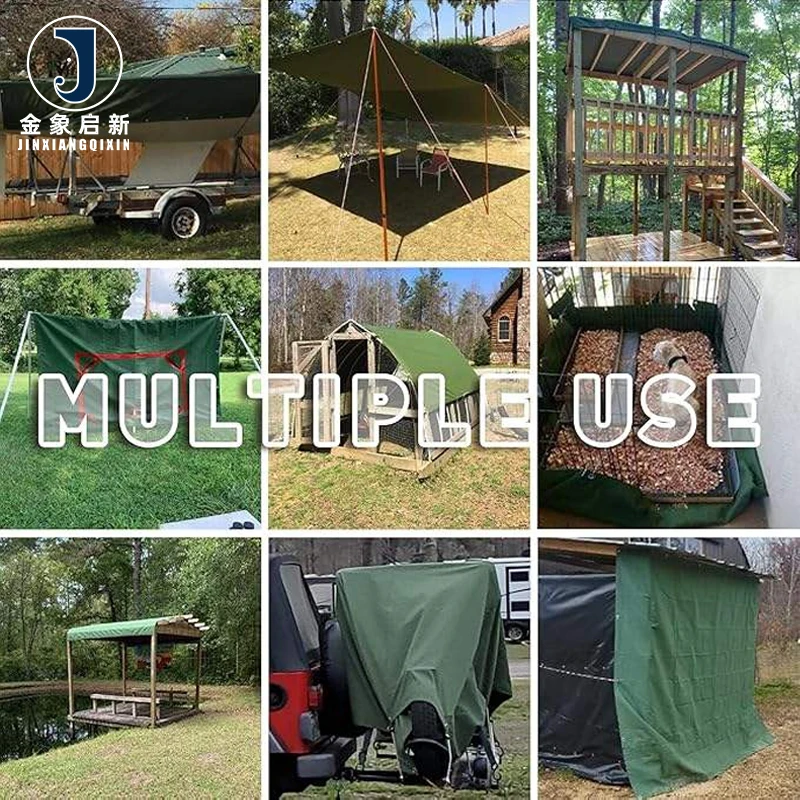
| Truck and trailer covers | Constant flexing at load points, road debris abrasion, UV and rain exposure, tie-down tension on eyelets |
| Construction site covers | Direct ground contact, cement dust, equipment drag, prolonged sun and rain exposure |
| Asphalt covers | High surface temperature contact, heavy rolling loads, chemical residue from bitumen |
| Tent and awning structures | Wind uplift tension on seams, extended UV exposure, repeated folding and deployment |
| Outdoor equipment wraps | Static load over extended periods, moisture ingress risk, abrasion from contact surfaces |
Why a 600gsm Laminated Canvas Tarpaulin Fails When the Weld Gives First
A fabric that outlasts its seams is a specification mismatch, not a material failure.
Buyers who source heavy duty canvas tarpaulin by GSM alone often discover that the weakest point is not the coated surface but the joined edge. When a truck cover flexes under tie-down straps, the welded and sewn seam absorbs the peak load cycle after cycle. If the welding temperature or poly-rope tension is not calibrated to a 600 gsm laminated base, the seam delaminates or the stitching pulls through the yarn long before the canvas body shows wear [NEED_CITE: tensile and tear test methods for coated fabrics per ISO 1421]. The result is a load exposed to weather on the highway, and a warranty claim that traces back to fabrication rather than the fabric itself.
Laminated Construction for Multi-Layer Adhesion
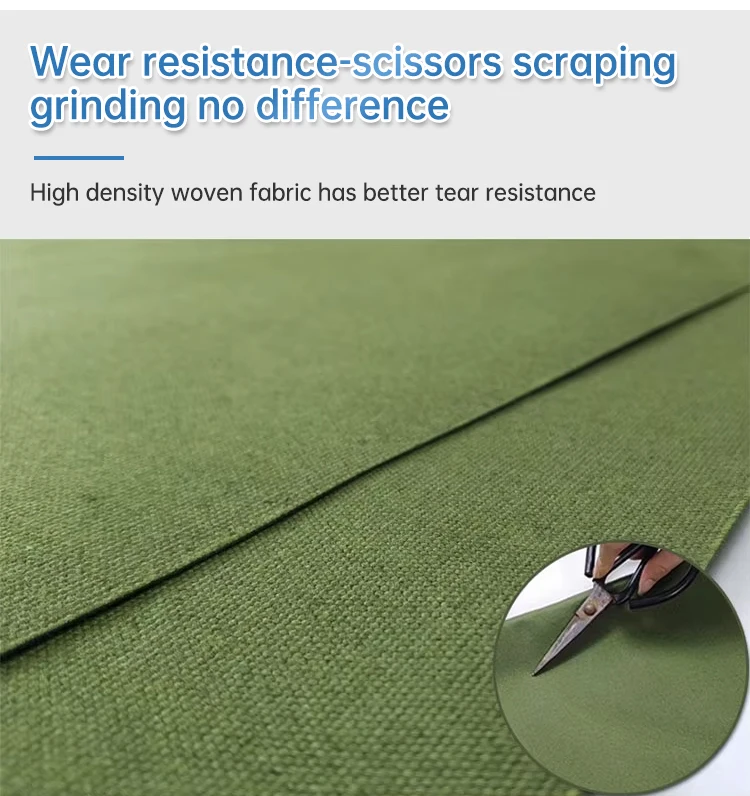
The 600gsm polyester-cotton base uses 8–12 strands of fine cotton yarn woven into an industrial textile, giving the laminated canvas tarpaulin a dense substrate that resists tensile pull across both warp and weft. The lamination process bonds the coating to the base under heat and pressure, creating a composite where the layers move together under load rather than separating at the interface. This bonded structure is what allows the fabric to handle repeated folding without the coating lifting from the yarn.
Reinforced Edge System Built for Tension Loads
Aluminum eyelets set at 1-metre intervals distribute tie-down and lashing forces across the hem rather than concentrating stress at a single point. The folded seams are welded and then sewn with poly ropes, combining thermal bonding with mechanical stitching. This dual-reinforcement approach is critical for truck covers and construction wraps where the edge takes the full brunt of wind uplift and strap tension [NEED_CITE: seam strength testing standards for coated technical textiles].
Reading the Specs Beyond the GSM Number
The 600 gsm weight reflects the combined mass of the polyester-cotton base fabric and the laminated coating, but it is the yarn count and weave density that determine how the fabric behaves under point loads. A canvas woven from 8–12 strand fine cotton yarn provides a tighter interlock than a heavier fabric built on a looser weave, meaning tear propagation is arrested earlier. The three available thickness options — 0.5 mm, 0.6 mm, and 0.7 mm — allow buyers to match stiffness and drape to the end use: thinner gauges for applications requiring flexibility and folding, thicker gauges for static covers subject to abrasion. The laminated coating method produces a uniform bond across the full 2-metre roll width, which is essential for maintaining consistent waterproofing performance when the fabric is cut and fabricated into finished covers.
What Happens When Colour and Weight Drift Across a Shipment
A specification sheet may state 600 gsm and Army Green Camouflage, but without roll-level verification the fabric arriving at the fabrication shop can vary in both weight and shade. A lighter roll cuts costs for the supplier but delivers a canvas that tears earlier under the same working loads. A colour shift between rolls becomes visible the moment two panels are installed side by side on a single truck or awning, forcing the buyer to reject the batch or accept a mismatched finish [NEED_CITE: colour fastness and batch consistency standards for coated fabrics]. Neither outcome protects the buyer’s project timeline or reputation.
Sourcing Directly from the Coating Line
Every roll of this laminated canvas tarpaulin is produced on one of three dedicated coating lines with 36 sets of professional equipment, ensuring batch capacity matches order volume without subcontracting the lamination step. A 10-person R&D team develops samples within days when custom widths, colours, or sizing are required, so buyers can approve the exact specification before bulk production begins. QA and QC checkpoints are embedded at every production stage, with 100 percent inspection before any roll leaves the facility. Deep process control over coating weight and adhesion means the GSM on the quotation is the GSM that ships.
Documentation & Verification
- Material specification sheet confirming 600 gsm weight, polyester-cotton base composition, and lamination method per roll
- Pre-shipment inspection record verifying GSM, colour reference, and eyelet spacing against the agreed specification
- UV and flame retardant test reports matched to the treatment grade stated on the quotation
- Roll packing list with individual roll identification, dimensions, and net weight for container loading plans
- Certificate of origin and customs documentation supporting import clearance
Fabrication, Handling & Storage
- Weld temperature must match the laminated coating formulation on 600 gsm canvas to avoid delamination at seam edges
- Aluminum eyelets at 1 m intervals require punch dies sized for the combined 0.5–0.7 mm thickness to prevent deformation
- Store rolls horizontally on racking to avoid flat spots that cause creasing in the laminated surface
- Allow cold-stored rolls to reach ambient temperature before unrolling to prevent coating crack at the fold line
- Use mild detergent only for cleaning; solvents can attack the laminated bond on polyester-cotton yarn
What to Include in Your Specification Enquiry
To receive a matched quotation for laminated canvas tarpaulin, provide the end-use application and the environmental conditions the fabric will face, including UV exposure duration and any flame retardant compliance required by your market. Confirm whether you need roll stock at 2 m × 100 m or finished cut-to-size covers with specific eyelet spacing and hem treatment. If colour matching or custom branding is required, a reference sample or Pantone code accelerates the sample approval cycle.
Frequently Asked Questions
Q: How is the 600gsm weight verified on each roll before shipment?
A: Every roll is sampled and weighed against the 600 gsm specification during the pre-shipment inspection. The inspection record documents actual weight per roll and is shared with the buyer before the container is sealed, so you have written confirmation that the canvas matches what was quoted.
Q: What UV and flame-retardant test reports are available for this canvas grade?
A: Test reports are available for UV resistance and flame-retardant grades — the specific grade and test standard depend on your market requirements. Request the treatment grade needed for your application during the specification stage, and the matching report will be included with your shipment documentation.
Q: How do you control colour consistency across rolls in the same order?
A: Colour is controlled through raw material batching and monitored at each coating stage. For orders requiring multiple rolls of Army Green Camouflage or a custom colour, all rolls in the shipment are produced from the same batch. A pre-shipment inspection confirms shade uniformity before dispatch.
Q: What custom widths, lengths, and cut sizes can be produced, and what are the minimums?
A: The standard roll format is 2 m × 100 m, but custom widths and lengths can be produced on the lamination line. Finished cut-to-size covers with specific eyelet placement and hem reinforcement are also available. Confirm your required dimensions and quantities during the enquiry stage for minimum and lead time details.
Q: What eyelet spacing, hem reinforcement, and printing options are available?
A: Standard configuration uses rust-proof aluminum eyelets at 1 m intervals with folded and welded seams sewn with poly ropes. Alternate spacing and reinforcement methods can be specified for your application. Pattern printing and branding options are available — provide artwork or Pantone references for sample development.