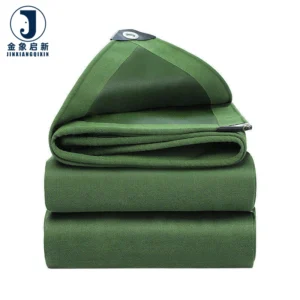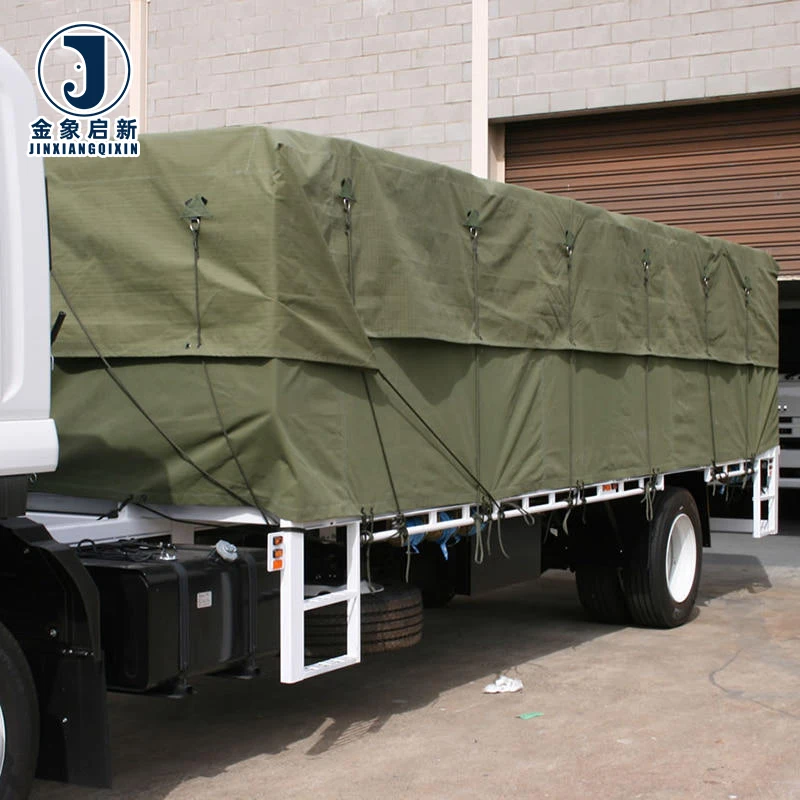
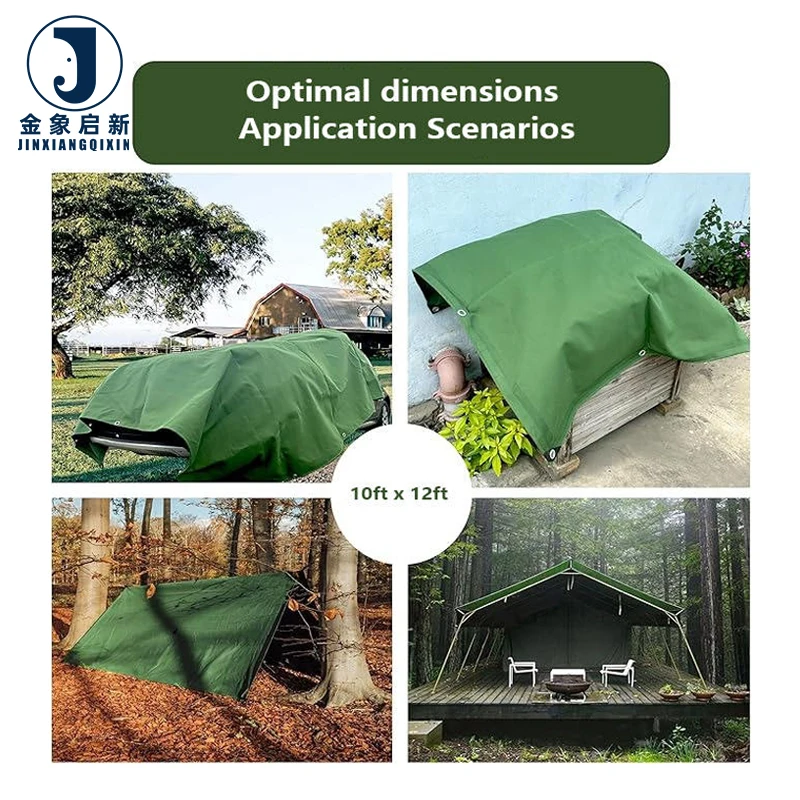
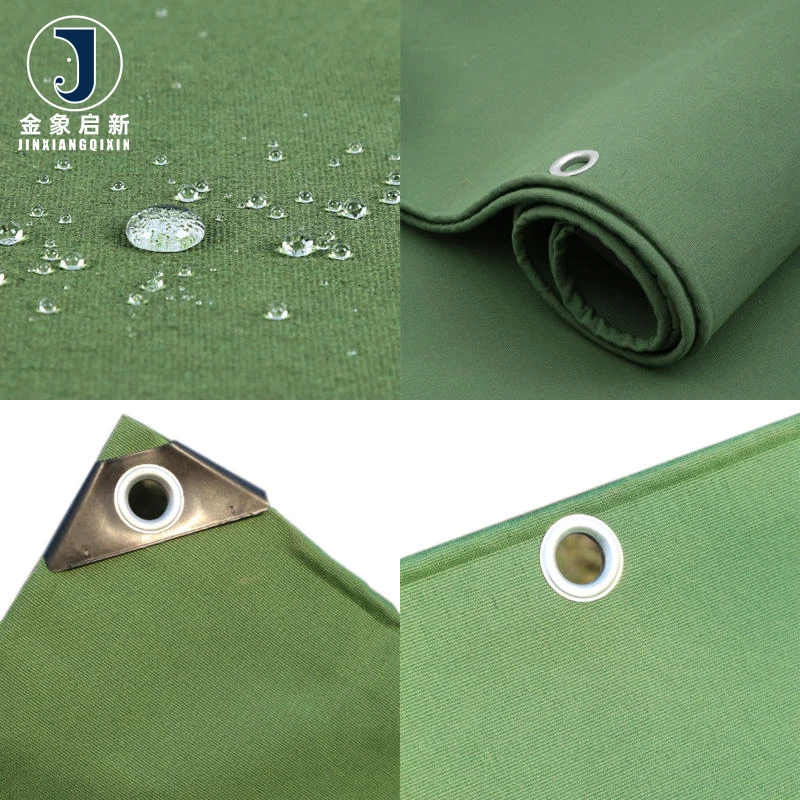
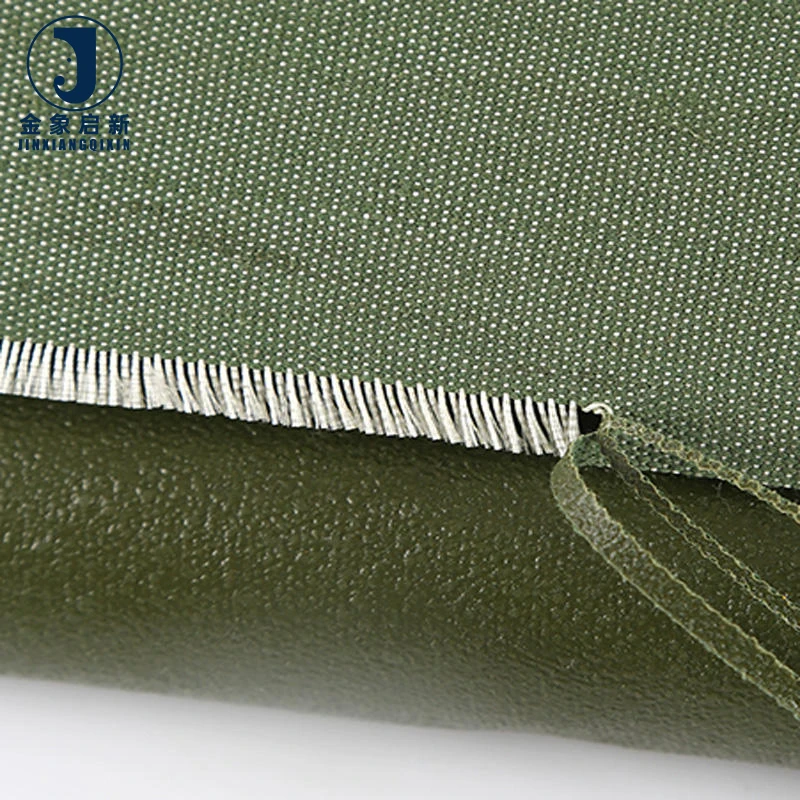
Heavy Duty PVC Coated Canvas Tarpaulin — 600gsm polyester cotton base with 8-12 strand fine cotton yarn, 0.5-0.7mm thickness, 2m×100m roll stock.
Coating weight and base fabric density together determine tensile and tear performance; our controlled PVC coating process ensures consistent adhesion across the full roll length, while welded and sewn hems with poly ropes handle flex-point stress better than stitch-only construction.
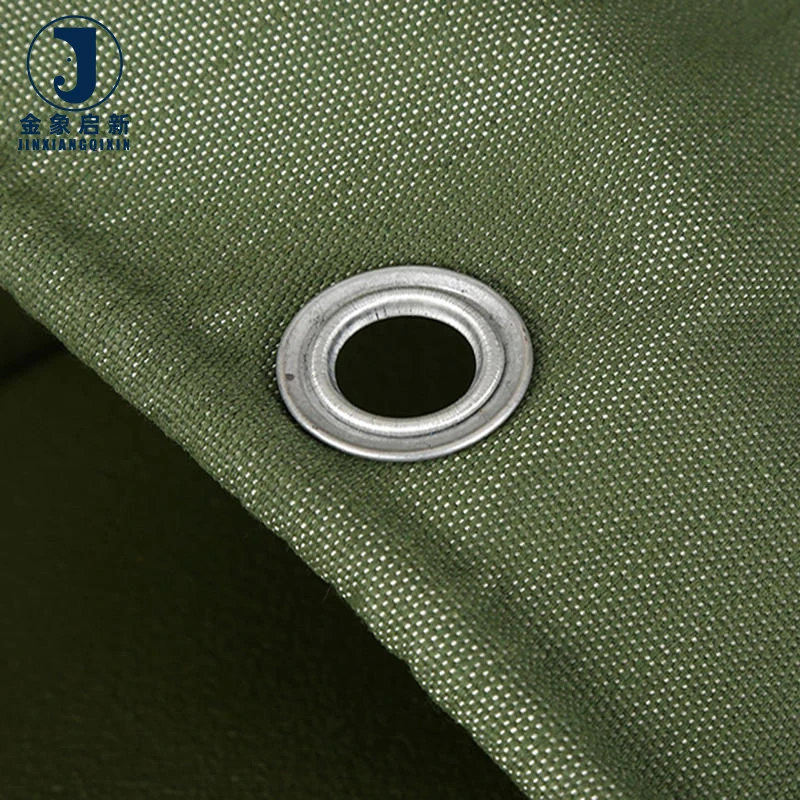
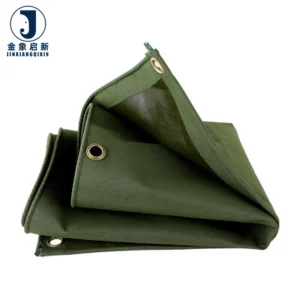
Rust-proof aluminum grommets spaced every 1 meter at corners and edges, reinforced for transport and construction covering.
Backed by nearly 30 years of coated fabric process control, 100% pre-shipment inspection on every roll, and full material specification documentation including GSM verification and test reports where applicable2.
Description
Deep coating control — Nearly 30 years focused on coated fabric production ensures that every roll of 600gsm polyester cotton canvas tarpaulin leaves the line with verified weight, consistent adhesion and reinforced edge detailing matched to your transport or construction specification.
Technical Specifications
| Parameter | Value |
|---|---|
| Product Type | Canvas Tarpaulin |
| Base Fabric | Polyester cotton industrial textile with 8-12 strand fine cotton yarn |
| Weight | 600gsm |
| Thickness Options | 0.5mm / 0.6mm / 0.7mm |
| Roll Width | 2m |
| Roll Length | 100m |
| Color | Army Green Camouflage / Custom |
| Coating / Treatment | Silicone canvas treatment |
| Waterproof | Yes |
| UV Resistance | Claimed (test basis not stated in source — confirm grade required for your market) |
| Flame Retardant | Grade not stated — available in flame retardant grades on request |
| Anti-Static | Not stated |
| Eyelet System | Rust-proof aluminum eyelets every 1m at corners and hem |
| Hem & Seam Construction | Folded, welded and sewn with poly ropes |
| Key Features | Wear-resistant, corrosion-resistant, tensile-resistant, high- and low-temperature resistant, shrink-proof, mold-resistant |
| Standards | CE, ISO |
Application Suitability
| Application | Exposure & Requirement |
|---|---|
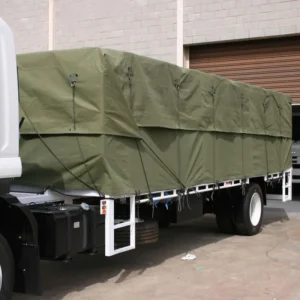
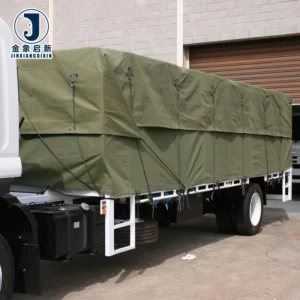
| Truck and trailer load cover | Constant road vibration, wind flex at load edges, UV and weather exposure, tie-down abrasion at eyelet points |
| Asphalt haulage cover | High surface temperature contact, bitumen adhesion risk, repeated folding and deployment |
| Construction equipment and stockpile cover | Outdoor weathering, ground moisture, puncture from sharp aggregate, wind uplift on large spans |
| Temporary roofing and site shelter | Rain ingress prevention, UV degradation over extended deployment, structural wind load on fixed spans |
| Tent and awning fabrication by the roll | Batch colour consistency, sewing and weld compatibility, dimensional stability under tension |
Why the Weight on the Quotation Is Not the Weight You Always Receive
A stated GSM is only meaningful when verified at the point of dispatch, not just on the spec sheet.
Buyers sourcing heavy duty canvas tarpaulin for fleet or construction use regularly open containers to find material that feels lighter than agreed. The discrepancy is not always deliberate short-weighting — it can come from looser weaving tolerance, thinner coating passes or base fabric substitution mid-run. In our QA process, every roll is weighed and measured against the material specification before packing, so the 600gsm you order is the 600gsm you receive [NEED_CITE: pre-shipment weight verification methods for coated fabrics per ISO 3801].
Silicone Treatment and the Balance Between Waterproofing and Breathability
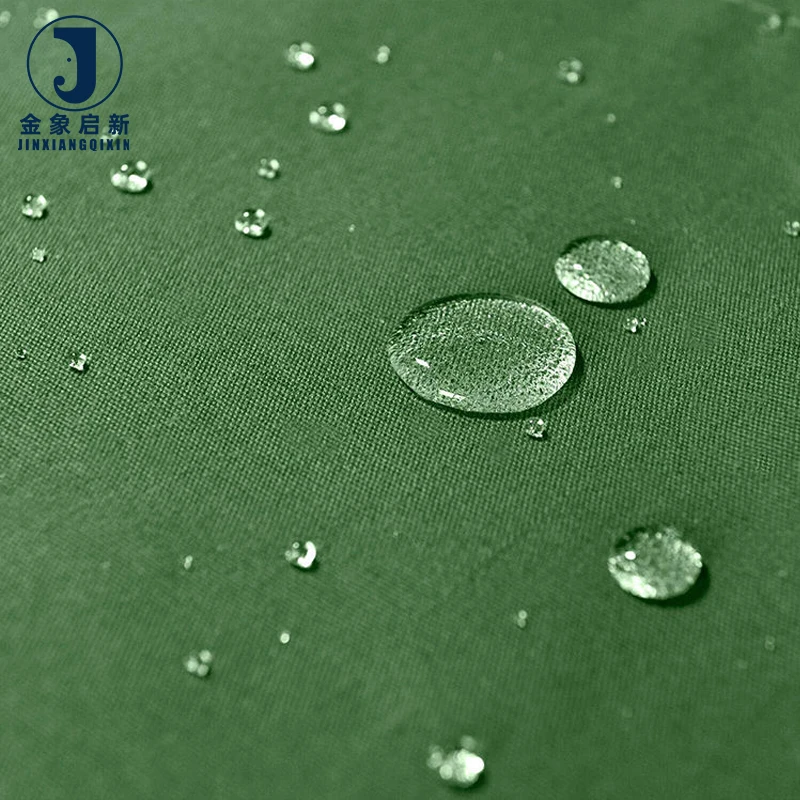
Silicone canvas treatment delivers a fully waterproof barrier while maintaining a degree of breathability that solid PVC film cannot match. For applications like truck covers and construction shelters where trapped moisture causes condensation damage to the load beneath, this balance matters. The silicone formulation also retains flexibility across a wide temperature range, reducing the risk of the fabric cracking when folded in cold conditions or deployed in direct summer heat. A heavy duty canvas tarpaulin manufacturer custom process controls coating weight to ensure this performance stays consistent roll to roll.
Reinforced Edge Construction Where Load Flex Concentrates Stress
The most common failure point on any tarpaulin is not the body of the fabric but the hem and eyelet line, where tie-down straps and bungee cords transfer wind and road loads directly into the material. This canvas tarpaulin uses folded hems that are both welded and sewn with poly ropes, creating a load path that spreads tension across a wider fabric area rather than concentrating it at a single stitch line. Rust-proof aluminum eyelets spaced at every one-metre interval along corners and hems provide frequent and secure attachment without requiring aftermarket grommet installation [NEED_CITE: tensile load distribution at hem and eyelet reinforcement points on heavy coated fabrics].
Reading the Specification Beyond the GSM Number
A 600gsm weight figure tells you how much material is present per square metre, but it does not tell you how that weight is distributed between base fabric and coating, or how the yarn construction contributes to tear propagation resistance. The 8-12 strand fine cotton yarn woven into a polyester cotton industrial base creates a dense interlocking structure where individual yarn breaks do not cascade into a full tear. Total thickness — available in 0.5mm, 0.6mm and 0.7mm — reflects the combined depth of base fabric and silicone treatment, and selecting the right thickness depends on whether abrasion resistance or folding flexibility is the priority for your specific deployment.
What Happens When Colour Consistency Is Not Managed at the Coating Stage
When multiple rolls from the same order show visible colour variation after installation side by side, the root cause is usually inconsistent pigment dispersion during the coating mix or a change in base fabric whiteness between weaving batches. For army green camouflage or any custom colour, a mismatch between rolls forces fabricators to sort, reject or re-dye — adding cost and delay to projects already running on tight schedules. Colour reference confirmation against an approved sample before production begins, with batch-to-batch comparison during in-process QA, is the control point that prevents this outcome [NEED_CITE: colour consistency measurement methods for coated textile batches per ISO 105 series].
Why Sourcing This Canvas Tarpaulin Through a Coated Fabric Specialist Matters
Three full production lines and 36 sets of professional equipment support bulk roll orders with reliable scheduling, so a container-load canvas tarpaulin order does not stall your project timeline. A 10-person R&D team handles custom sizing, colour matching and pattern printing requirements, developing samples within days rather than weeks so you can verify material performance before committing to full production volume. Dedicated QA and QC inspection at every production stage, culminating in 100% pre-shipment inspection, means weight, dimension and visual checks are completed — not skipped — before any roll is packed for export.
Documentation & Verification
- Material specification sheet stating 600gsm, polyester cotton base, silicone treatment and colour reference
- Pre-shipment inspection record with verified roll weight and dimensional check per order
- ISO and CE certificates included with every export shipment
- Roll packing list detailing quantity, dimensions and gross weight per roll
- Certificate of origin and full customs documentation support for destination country
Fabrication, Handling & Storage
- Weld silicone-treated 600gsm canvas at manufacturer-recommended temperature to avoid coating delamination at seams
- Space rust-proof aluminum eyelets at 1m intervals as supplied to distribute tie-down loads across the hem
- Store 2m × 100m rolls upright on pallets to prevent permanent creasing and coating adhesion loss
- Clean silicone-coated surface with mild detergent; avoid solvents that degrade the treatment layer
- Cut custom sizes with allowance for hem fold and poly-rope sewn reinforcement to maintain edge strength
What to Include in Your Enquiry
To move from specification to sample quickly, share your end-use application and the environmental conditions the canvas will face — particularly UV exposure duration, temperature extremes and whether the fabric will be in contact with hot surfaces like asphalt. Specify whether you need finished cut-to-size covers with eyelets and reinforced hems, or full 2m × 100m roll stock for your own fabrication line. If colour matching or printed branding is required, indicate your Pantone or physical colour reference so the sampling process can begin immediately.
Frequently Asked Questions
Q: How is the 600gsm canvas weight verified before shipment and how should I re-check on arrival?
A: Every roll is weighed and measured during 100% pre-shipment inspection, with results recorded against the material specification sheet. On arrival, cut a measured one-square-metre sample from the roll and weigh it on a calibrated scale. Compare the result to the stated 600gsm — minor weaving tolerance is normal, but consistent under-weight across multiple samples indicates a production deviation that should be reported with your inspection record.
Q: What eyelet spacing and hem reinforcement options are available for high-wind truck cover applications?
A: Standard configuration is rust-proof aluminum eyelets every 1 metre at corners and hems, with folded seams welded and sewn with poly ropes. For high-wind transport routes, additional eyelets can be specified at closer intervals, and double-layer hem reinforcement can be discussed during the sampling stage to spread tie-down loads across a broader fabric area.
Q: How do you control colour consistency across multiple rolls in the same custom order?
A: Colour reference is confirmed against an approved sample before production begins. During coating, pigment batches are matched and in-process QA compares each roll visually and by reference to the approved swatch. For large custom orders spanning multiple production runs, retaining a master colour standard ensures continuity and prevents the visible variation that causes installation rejection.
Q: What is the lead time and minimum order for custom cut sizes versus standard roll stock?
A: Standard 2m × 100m roll stock typically carries shorter lead times and lower minimums than custom cut-to-size finished covers with eyelets and hem reinforcement. Exact scheduling depends on order volume and colour or print requirements. Request a quotation with your size list and quantity so lead time and minimum can be confirmed against current production capacity.
Q: Can the canvas be printed with branding or pattern, and what is the sampling process for print approval?
A: Yes, pattern printing and branding are available on this polyester cotton canvas base. The R&D team develops a print sample within days for your approval, covering colour accuracy, pattern repeat alignment and adhesion to the silicone-treated surface. Bulk production begins only after you sign off on the approved print sample.
Related products
-
Custom PVC Coated Tarpaulin for Truck Cover – Full Range
Read more -
Thick 0.9mm PVC Laminated Canvas Tarpaulin Truck Canopy Rainproof Outdoor Awning Waterproof Very Heavyweight Shading Sail Pet
¥0.99 Add to cart -
Custom PVC Coated Tarpaulin for Truck Trailer – Full Range
Read more -
Heavy Duty Waterproof PVC Coated Abrasion-Resistant Very Heavyweight Asphalt Truck Cover Cotton Canvas Tarpaulin
¥10.29 Add to cart