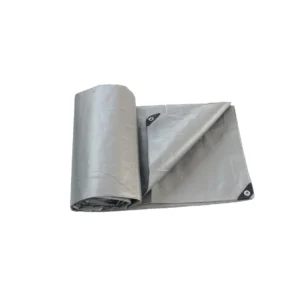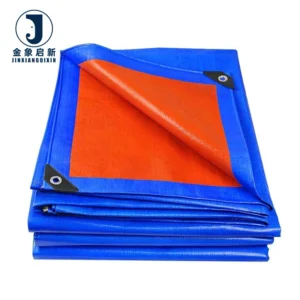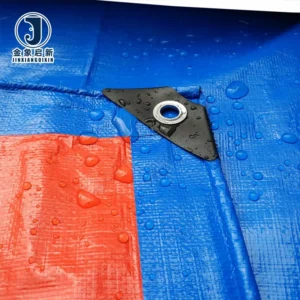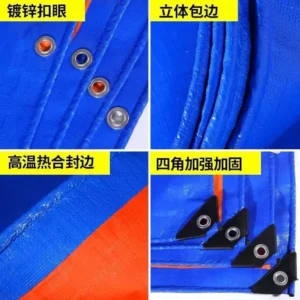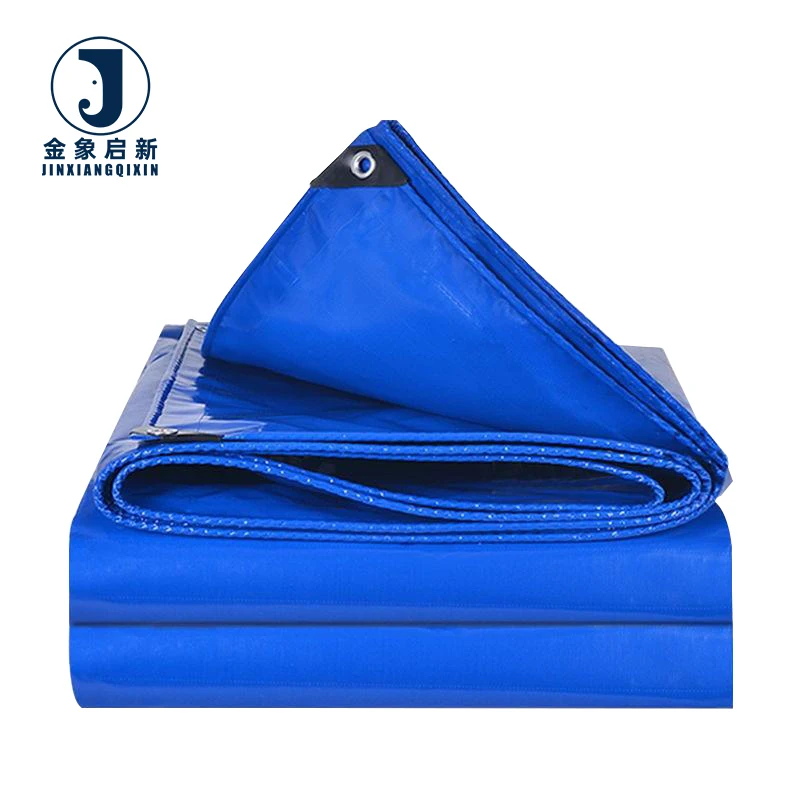
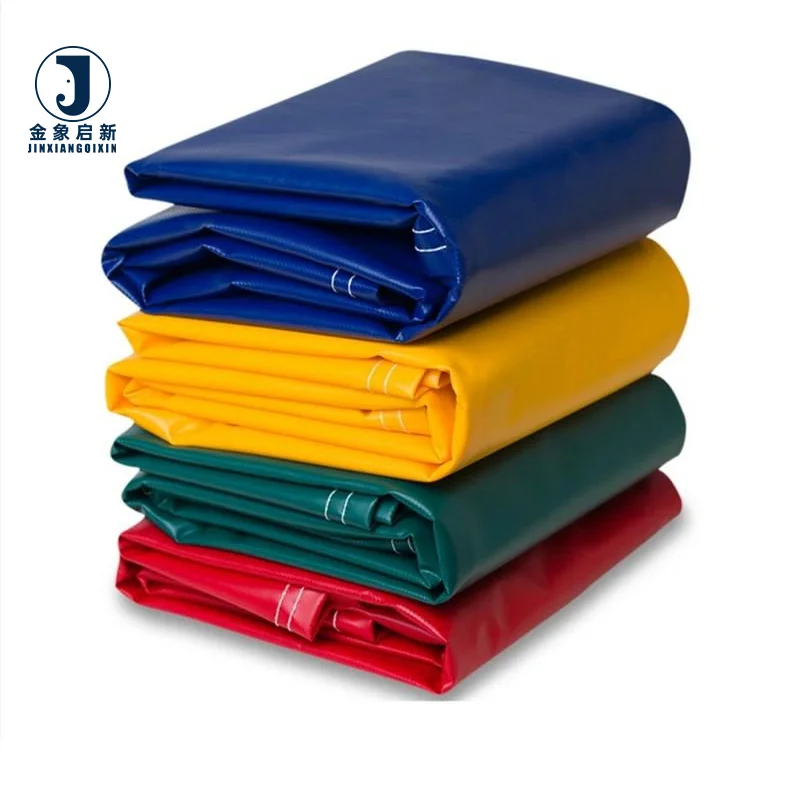
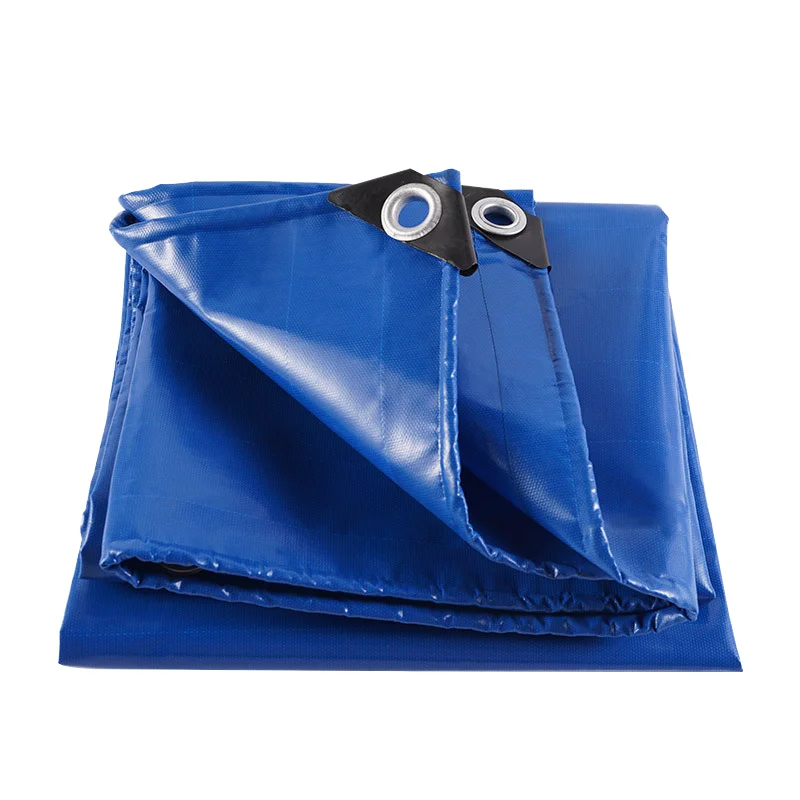
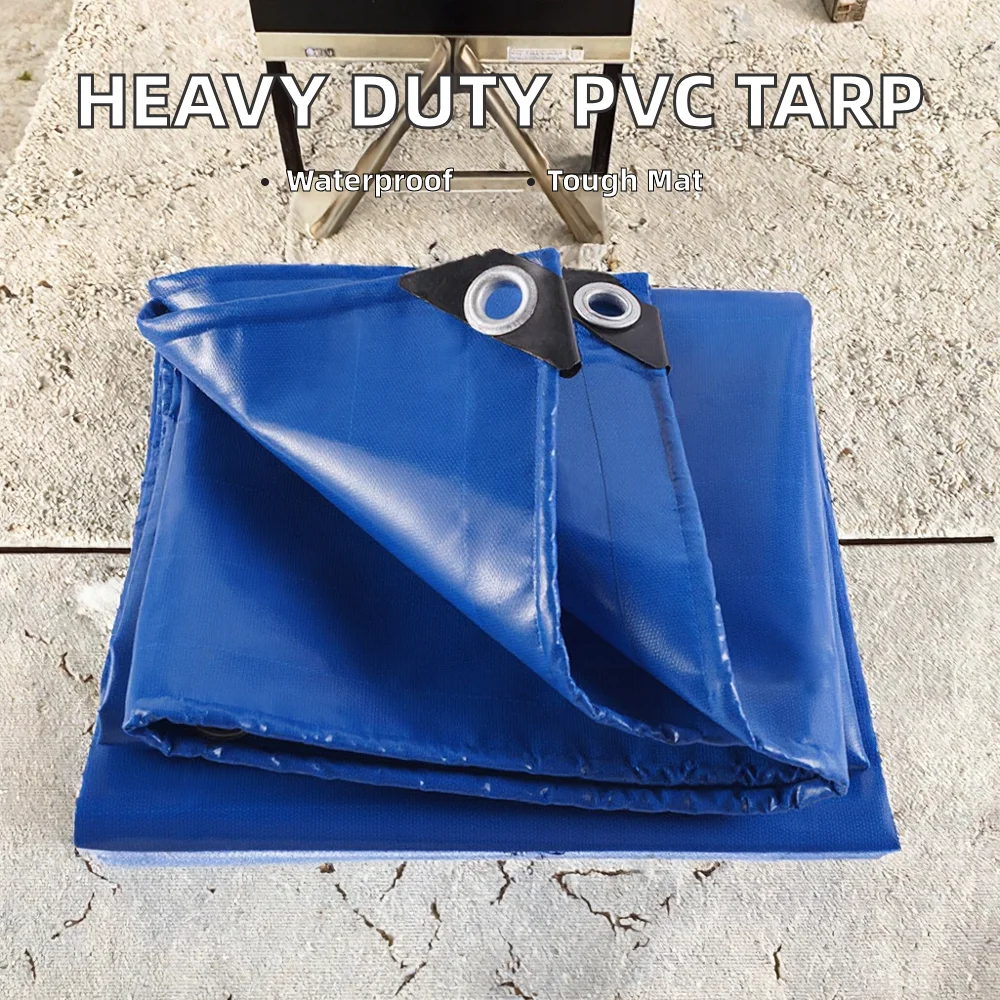
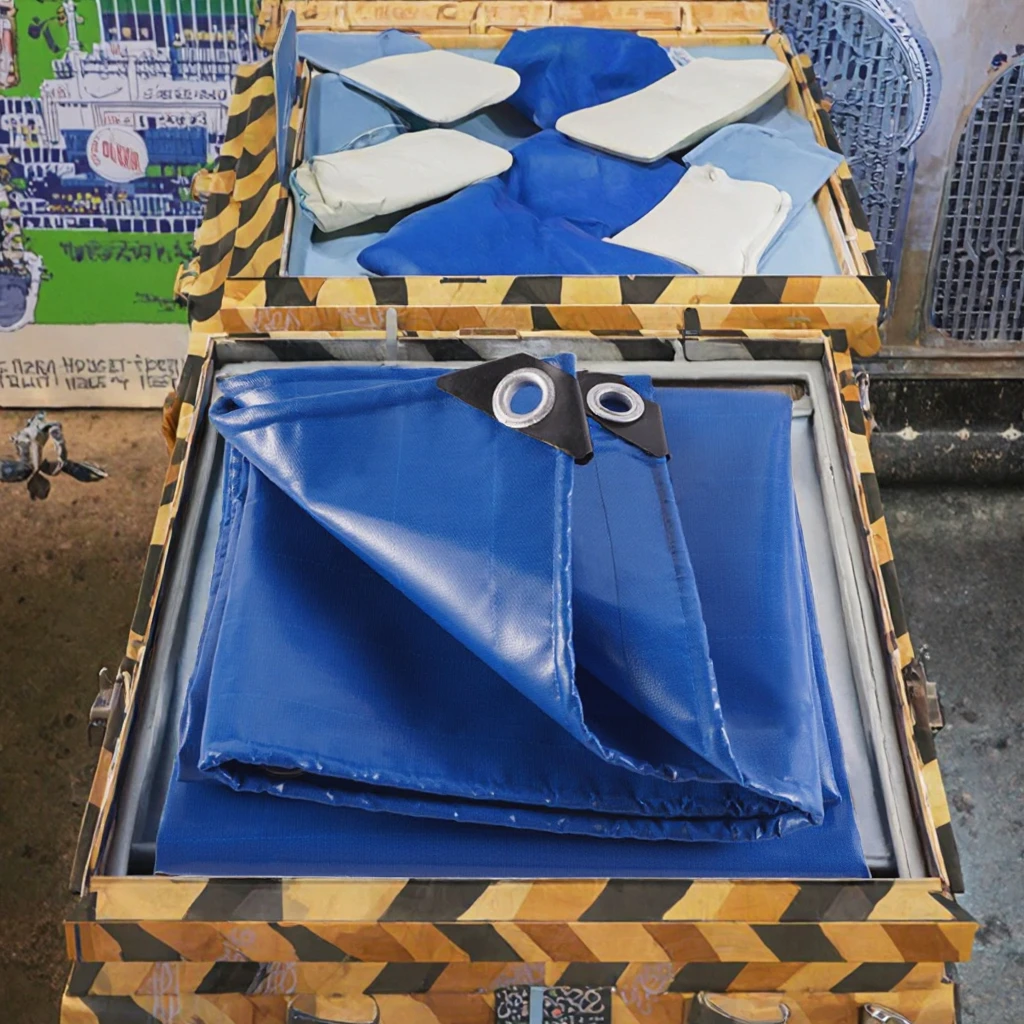
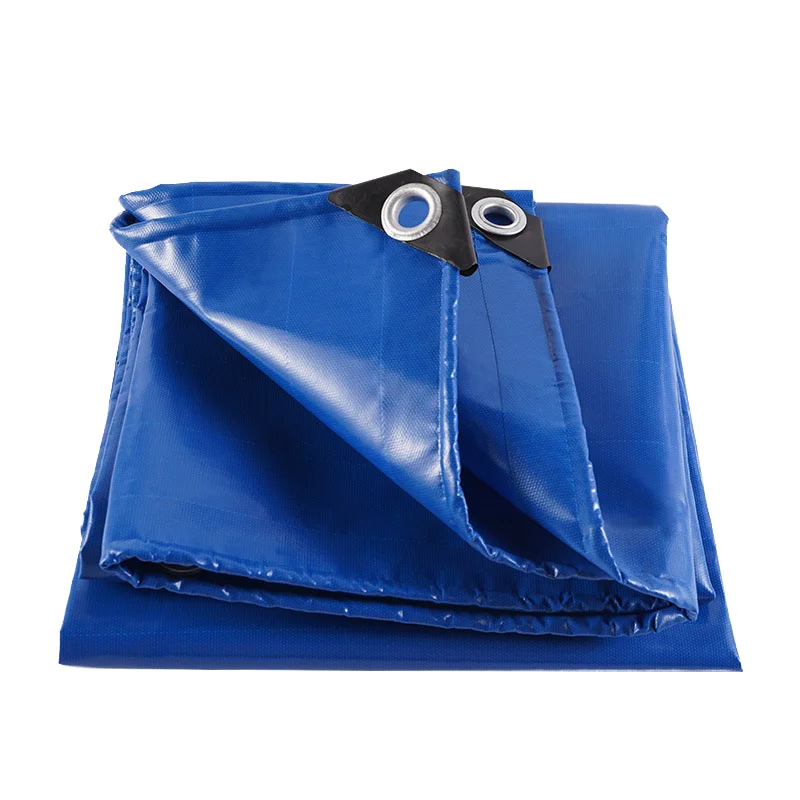
PVC Coated Tarpaulin for Truck and Outdoor Cover, 350–750gsm — hot-melt coated on high-tenacity polyester mesh, available in 2m and 2.1m roll widths with full custom sizing.
Laminated and hot-melt coating technology controls adhesion between PVC layers and the base fabric, directly affecting weld integrity at flex points and long-term peel resistance. Roll-to-roll GSM consistency is verified at each production stage, so colour and weight stay matched across your entire order.
- Custom width, colour, printing and flame-retardant treatment with supporting test reports
- 100% pre-shipment inspection with roll-by-roll verification and full documentation
Description
Full In-House Production Control — three dedicated lines manage every coating and lamination step for PVC coated tarpaulin, keeping GSM, colour and adhesion consistent from the first roll to the last.
Technical Specifications
| Parameter | Value |
|---|---|
| Product Type | PVC Coated Tarpaulin |
| Base Fabric | High-strength polyester mesh fabric |
| Coating Technology | Laminated technology & Hot-melt coating technology |
| Weight Options | 350gsm / 420gsm / 500gsm / 550gsm / 600gsm / 750gsm |
| Thickness Options | 0.32mm / 0.35mm / 0.4mm / 0.45mm / 0.5mm / 0.65mm |
| Roll Size | 2m width × 75m length / 2.1m width × 50m length |
| Finished Size | Custom sizes per customer requirements or sold by inventory |
| Colour Options | Blue / Red / Yellow / Light Blue / Grey (Customized) |
| Key Features | Waterproof, UV stable, cold crack resistant, anti-mildew, anti-static treatment, anti-fungal and termite resistant, colorfast, 100% recyclable, easy to repair by welding |
| Flame Retardant | Available upon request (grade not stated) |
| Certifications | ISO 14001 / ISO 45001 / CE / RoHS |
| Service Life | 3-7 years under normal circumstances |
Application Suitability
| Application | Exposure & Requirement |
|---|---|
| Truck covers and side curtains | Constant flexing at tie-down points, road debris abrasion, UV and weather exposure, welded seam integrity under load movement |
| Tent and awning covers | Prolonged sun exposure, wind loading, repeated assembly and teardown stress on fabric and seams |
| Cargo ship covers | Salt-laden atmosphere, heavy rainfall, sustained UV, puncture risk from shifting cargo edges |
| Fish tank and pool liners | Permanent water immersion, chemical balance of treated water, puncture risk from substrate irregularities |
| Outdoor equipment and cargo protection | Static UV load, pooling water, abrasion from wind-driven fabric movement against sharp edges |
| Construction site covers | Dust and debris exposure, UV degradation, mechanical damage from site traffic and falling objects |
Why a Stated GSM Does Not Guarantee a Strong PVC Coated Tarpaulin
Coating adhesion and base fabric denier matter more than weight alone.
Many buyers specify a GSM figure and assume the resulting fabric will perform accordingly. In practice, a PVC coated tarpaulin aftermarket supplier can hit the target weight with a thin coating over a dense base, or a thick coating over a loose weave. The first tears under load; the second delaminates at the weld. What separates a reliable roll from a disappointing one is process control at every stage — how the PVC bonds to the polyester mesh, and whether that bond is verified before the roll ships [NEED_CITE: tensile and tear test methods for coated fabrics per ISO 1421]. I have seen heavy-grade coated rolls fail at the weld line because the coating was too stiff and the hot-melt layer did not penetrate the base fabric properly. The weight was correct. The performance was not.
Coating Technology and What It Means for Fabrication
This range uses both laminated and hot-melt coating technology, each suited to different end uses. Laminated construction bonds a PVC film to the polyester mesh under heat and pressure, producing a smooth surface that handles printing and high-frequency welding well. Hot-melt coating drives liquid PVC into the mesh structure before curing, creating a mechanical lock between coating and yarn that resists delamination under repeated flexing. For truck side curtains that flex thousands of times per journey, hot-melt coating is generally the stronger choice. For tent fabric that needs a clean printable surface, laminated construction delivers better results. Selecting the right PVC coated tarpaulin aftermarket supplier means confirming which coating method sits behind the quoted specification.
Seam Integrity Where the Load Flexes Most
Welded seams on truck covers and side curtains fail not because the fabric is weak, but because the weld parameters were set for a generic PVC formulation rather than the specific coating chemistry on the roll. Hot-melt coated fabric needs different temperature and dwell-time settings than laminated fabric. When those settings are wrong, the weld peels away cleanly while the surrounding fabric remains intact — a failure pattern I have encountered on multiple fleet cover projects [NEED_CITE: DIN 4102 fire classification for building materials]. The solution is testing weld samples from the actual production batch before cutting begins, checking peel strength at the flex points where the load shifts during transport.
Reading the Specification Sheet Beyond GSM
Weight in GSM tells you how much material is in each square metre, but not how that material is distributed. A 550gsm fabric with a 1000-denier base and thin coating will tear more easily than a 550gsm fabric with a 500-denier base and thick coating, because the thicker coating bridges the yarn gaps and distributes stress across a wider area. Thickness readings in millimetres give a second data point — comparing GSM and thickness together reveals whether the fabric is coating-heavy or base-heavy, which directly affects cold crack resistance and weldability. Hot-melt coated fabric tends to show slightly greater thickness at the same GSM compared to laminated fabric, because the PVC penetrates the mesh rather than sitting on top of it. Colour consistency across rolls in a single order depends on coating batch control, not the base fabric, so a PVC coated tarpaulin aftermarket supplier with in-house coating lines can hold tighter colour tolerances than one buying pre-coated stock.
What Specification Shortcuts Actually Cost on Site
A roll that arrives lighter than the quoted GSM is an immediate commercial problem, but the hidden cost is the fabrication labour already spent cutting and welding before the shortfall is discovered. Flame-retardant grades shipped without a supporting test report create a compliance gap that only surfaces at the site inspection, when the contractor cannot produce documentation for the fire authority. Colour variation between rolls in the same order becomes visible the moment two panels hang side by side on a truck or tent frame, forcing a reorder that delays the entire project [NEED_CITE: batch colour consistency standards for coated fabrics]. These are not theoretical risks — they are the most common failure modes I have traced back to insufficient pre-shipment verification.
Why Source This PVC Coated Tarpaulin Range Here
Three full production lines and 36 sets of professional equipment mean roll stock and finished covers move through one facility, eliminating the handoff errors that occur when coating and fabrication happen at separate sites. A 10-person R&D team handles custom width, colour matching and sample development in-house, so a sample cut from the same coating batch as production stock arrives within days rather than weeks. Dedicated QA/QC runs at every production stage with 100% inspection before shipment, catching GSM drift, colour deviation and coating adhesion faults before the roll leaves the factory. Nearly 30 years of focused coated fabric production has built a process knowledge base that covers edge cases — from cold crack behaviour in northern European winters to anti-static requirements for mining ventilation ducts — that generic trading houses simply do not have. ISO 14001, ISO 45001, CE and RoHS certifications are held at factory level, not borrowed from a third-party trading entity.
Documentation & Verification
- Material specification sheet confirming exact GSM, base fabric denier, coating technology and colour reference per roll
- UV stability and flame retardant test reports matched to the batch number on the shipment
- Pre-shipment inspection record showing weight verification roll by roll against stated GSM
- Colour reference sample retained from production batch for buyer comparison on arrival
- Roll packing list with net and gross weight per roll for container load planning
- Certificate of origin and customs documentation prepared per destination country requirements
Fabrication, Handling & Storage
- Hot-melt coated rolls require higher weld temperatures than laminated grades; test peel strength on a sample before setting production parameters
- Store rolls horizontally on racking to prevent permanent creasing across the 2m or 2.1m width
- Cut panels from 350gsm to 750gsm grades with a rotary blade to avoid fraying the polyester mesh at edges
- Allow cold-stored rolls to reach ambient temperature before unrolling to prevent coating crack at low-GSM grades
- Weld seams on 600gsm and 750gsm grades with extended dwell time to ensure full PVC penetration at the joint
- Clean printed or coloured surfaces with neutral pH detergent to preserve the coating finish and colourfastness
Before You Request a Quote
Confirm the specific exposure conditions your covers or liners will face — sustained UV load, chemical contact, flexing frequency, and temperature range — so the right GSM and coating technology can be recommended from this PVC coated tarpaulin aftermarket supplier range. If your market requires flame retardant or anti-static compliance, state the grade or standard your end user demands so the correct test report is prepared with the shipment. Specify whether you need roll stock at standard or custom width, or finished cut sizes with welding and reinforcement, as this determines lead time and minimum order.
Frequently Asked Questions
Q: How do you verify the GSM matches what was quoted?
A: Every roll is weighed and measured during the pre-shipment inspection, with the result recorded against the purchase order specification. If the measured GSM falls outside the agreed tolerance, the roll is held and replaced before dispatch. The inspection record travels with the shipping documentation so you can cross-check on arrival.
Q: Can I get different colours across rolls in one order with batch consistency?
A: Yes, custom colours are available alongside the standard blue, red, yellow, light blue and grey options. All rolls in a single order are coated from the same PVC batch to eliminate shade variation between panels. A colour reference sample from that batch can be sent for approval before production begins.
Q: What certifications and test reports come with flame retardant grades?
A: Flame retardant treatment is available upon request. When specified, the shipment includes a test report from an accredited laboratory confirming the grade achieved. Confirm the specific standard required in your market — such as DIN 4102, NFPA 701 or local building codes — so the correct formulation is applied and tested.
Q: What is the sample process and lead time for custom widths or finishes?
A: The 10-person R&D team develops samples for custom width, colour, or finish requirements. Samples are produced on the same coating lines as bulk stock to ensure the sample accurately represents production quality. Confirm your target specification early to allow time for sample approval before the main order enters production.
Q: How are rolls packed and loaded for container shipment?
A: Rolls are packed at the standard 2m × 75m or 2.1m × 50m dimensions, or at custom lengths as specified. A detailed packing list accompanies every shipment showing roll count, individual roll weight, and total net and gross weight. Container loading plans are prepared to maximise space utilisation while protecting roll surfaces from transit damage.
Related products
-
Multi-color & Size Waterproof Breathable Organic Blackout Coated PE Tarpaulin with UV Customizable Weft Knitted for Boys & Girls
¥0.21 Select options This product has multiple variants. The options may be chosen on the product page -
Hot Selling Organic Coated Blackout Waterproof Canvas PE Tarpaulin Tarp for Boys & Girls Construction Transportation Cover
¥1.68 Select options This product has multiple variants. The options may be chosen on the product page -
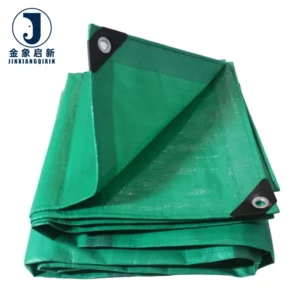
Waterproof Organic Blackout PE Coated Medium Duty All-Purpose Truck Tarpaulin for Outdoor Use Boys
¥6.81 Select options This product has multiple variants. The options may be chosen on the product page -
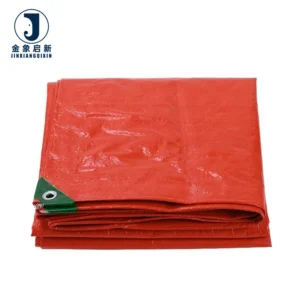
China JINGXIANG PE Coated Waterproof Blackout Truck & Trailer Cover Tarpaulin for Boys & Girls
¥0.35 Select options This product has multiple variants. The options may be chosen on the product page