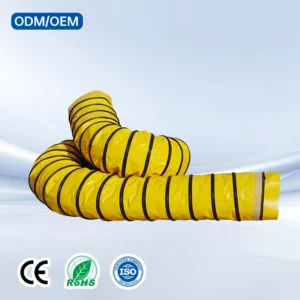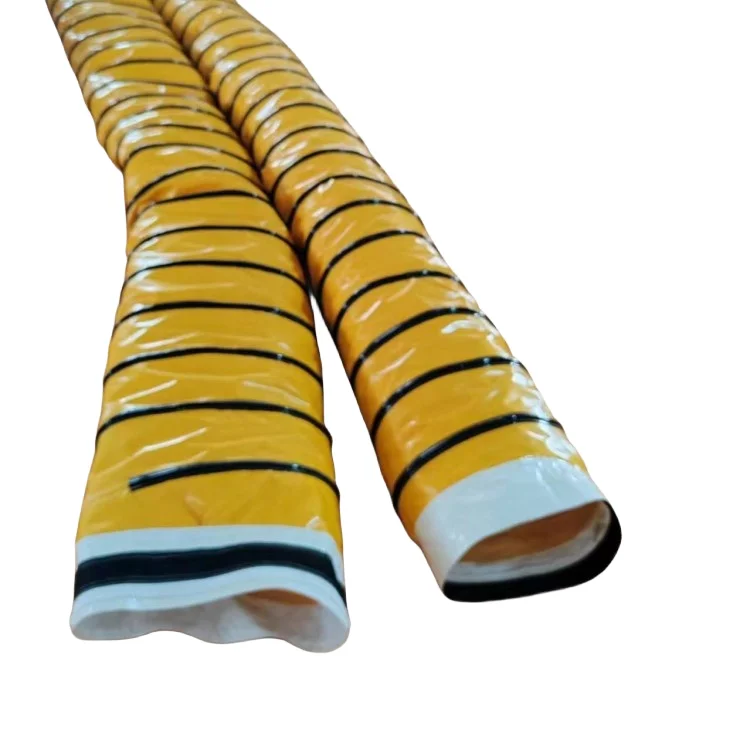
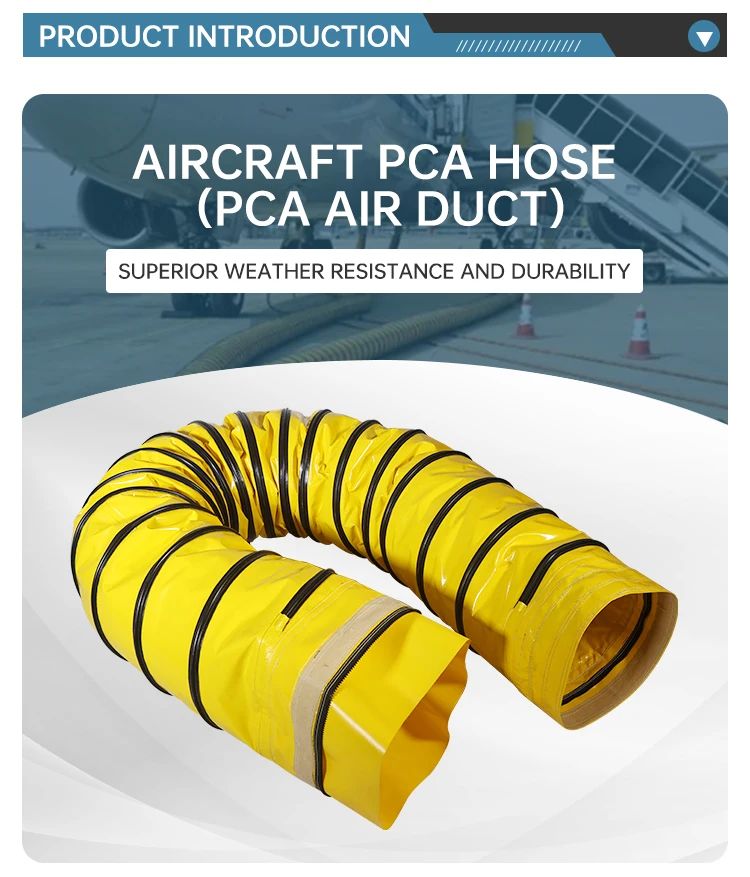
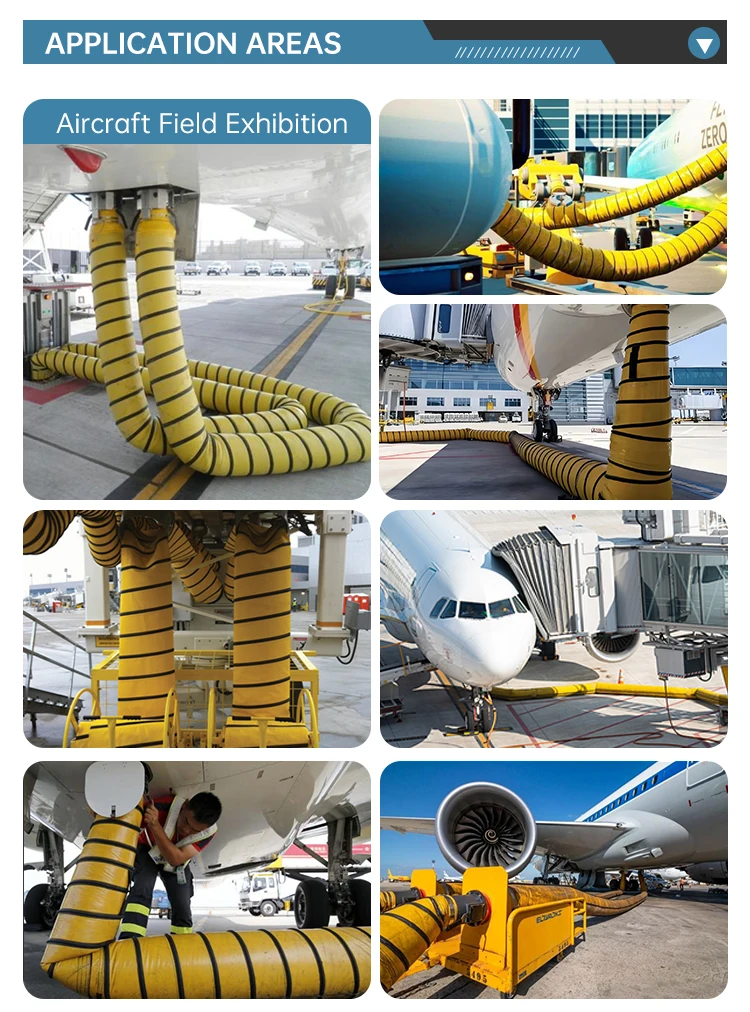
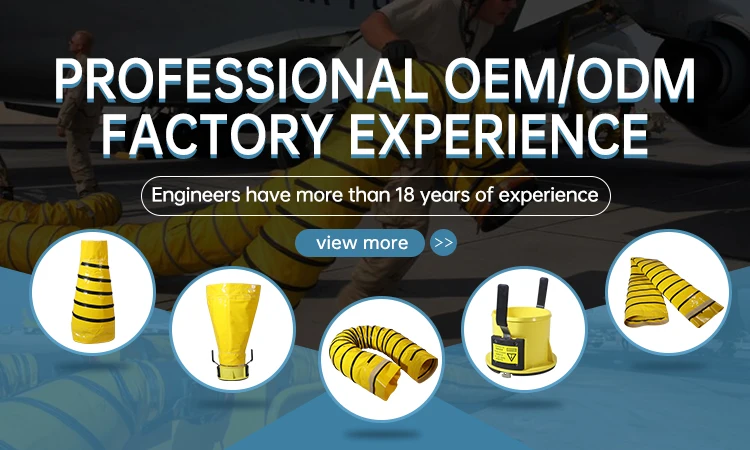

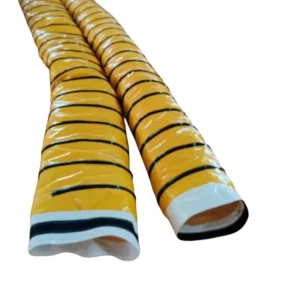
Aircraft PCA Air Duct, 12 Inch Diameter — flexible PVC coated cloth with aluminum foil bubble film insulation, zipper and Velcro connection system. Engineered for airport ground support equipment, transmitting pre-conditioned air from PCA units to aircraft cabins. The insulated construction maintains thermal performance across temperature extremes while high-visibility yellow-black coloring enhances apron safety. Lightweight and foldable design simplifies storage and transport between gate positions.
- Temperature range: -30°C to 150°C
- Mildew and water resistant for outdoor exposure
- Rapid deployment and teardown during aircraft servicing
- Customizable logo, packaging, and pattern (MOQ 100)
Three full production lines and 36 sets of professional equipment ensure reliable bulk capacity and on-time delivery for aviation duct orders.
Description
Deep Process Control Over Coating Weight and Adhesion — Every PCA air duct we produce is built on this foundation, ensuring the PVC coated fabric and aluminum foil insulation layers maintain structural integrity through repeated deployment on the apron.
Technical Specifications
| Parameter | Value |
|---|---|
| Product Type | Flexible PCA Air Conditioning Hose |
| Diameter | 12 Inch |
| Material | PVC coated cloth + aluminum foil bubble film insulation |
| Temperature Range | -30°C to 150°C (source value — verify against manufacturer catalog) |
| Characteristic | Mildew resistance, water resistance, high strength and strong tension |
| Connection Type | Zipper and Velcro link |
| Outer Layer Color | Yellow-black alternating protective coloring |
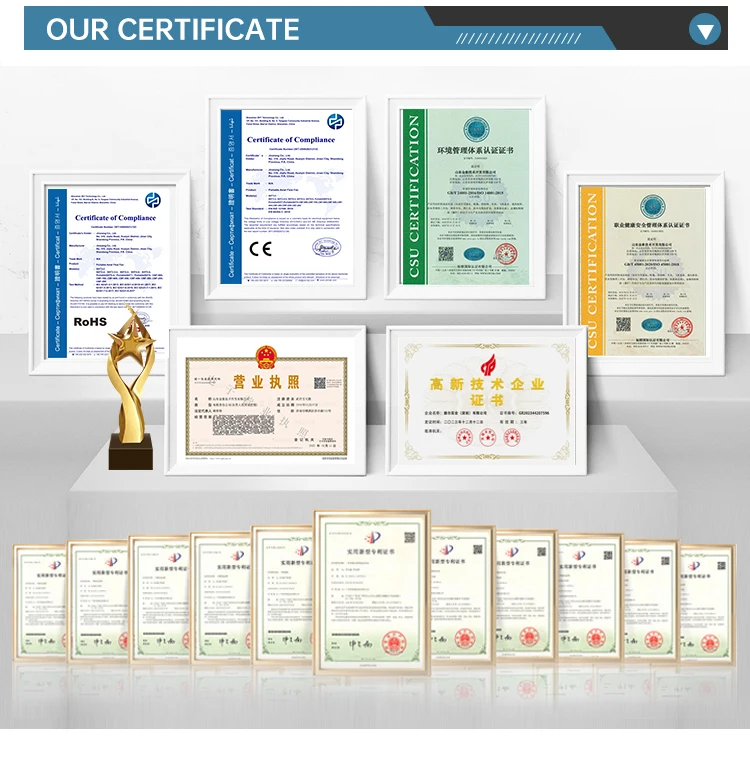
| Standards | ISO, CE |
| Customization | Logo, outer packaging, and pattern customization supported (MOQ 100) |
Application Suitability
| Application | Exposure & Requirement |
|---|---|
| Airport apron PCA unit to aircraft cabin connection | Daily drag across concrete, jet fuel splash, extreme ambient heat or cold, rapid thermal transfer demand |
| Ground support equipment fleet servicing | Repeated deployment and teardown, zipper/Velcro cycle fatigue, storage between gate positions |
| Aviation maintenance facility duct replacement | Fitment verification against existing PCA interfaces, compliance with airport fire safety regulations |
| GSE distributor stocking standardized ducts | Batch consistency across orders, shelf storage without crease damage, branding customization |
When Insulation Fails on the Apron, It Is Never Just About the Fabric
Thermal loss in a PCA hose starts at the insulation layer, not the outer shell — and most buyers do not check it until cabin complaints come in.
I have watched ground crews swap out ducts mid-turnaround because the air reaching the cabin was barely cooler than the ambient apron temperature. The outer PVC shell looked intact, but the aluminum foil bubble film inside had delaminated from repeated flexing. By the time the problem surfaces, the aircraft has already sat on stand with passengers aboard and the airline is filing a delay report. An Aircraft PCA Air Duct aftermarket supplier needs to understand that thermal insulation performance is a layered system, not a single-material claim [NEED_CITE: thermal delamination testing standards for flexible insulated ducts].
How PVC Coated Fabric Handles Apron Abuse
The outer layer of this PCA hose uses PVC coated cloth that resists mildew and water ingress — conditions that are constant on aprons where morning condensation, rain, and de-icing fluid residue all contact the duct surface. The yellow-black alternating protective coloring serves a practical purpose beyond branding: ground crews working around moving GSE vehicles need high-visibility markers on every hose segment to avoid trip hazards and vehicle contact damage.
Rapid Connection Systems That Survive Daily Cycle Fatigue
Every aircraft turnaround requires the duct to be connected and disconnected, often multiple times if gate changes occur. The zipper and Velcro link system on this duct allows a single operator to join segments without tools, but the connection points must withstand abrasion from dragging across concrete. We build the zipper track into a reinforced fabric channel so the teeth do not bear the full drag load directly, reducing early failure at the joint line [NEED_CITE: zipper cycle fatigue testing for flexible duct connections].
Reading the Specification Sheet Beyond Diameter
The 12-inch diameter must match your PCA unit outlet flange precisely — even a half-inch mismatch creates turbulence and thermal loss at the connection. Temperature range ratings define the operational envelope: the stated -30°C to 150°C boundary (source value — verify against manufacturer catalog) covers most climate zones, but you should confirm whether your airport’s recorded extremes sit within this range. The aluminum foil bubble film insulation layer is what maintains the temperature differential between the PCA unit output and the aircraft cabin inlet, and its integrity over repeated flex cycles determines whether the duct performs in its second year as well as its first. Mildew and water resistance ratings on the outer PVC coated cloth matter because a duct stored outdoors between shifts absorbs moisture that degrades insulation performance from the inside out.
What Happens When the Wrong Duct Reaches the Gate
I once saw a batch of PCA hoses rejected at a Middle Eastern airport because the fire-retardant certification the site safety officer requested was not in the documentation package. The ducts themselves were physically fine, but without the paperwork proving compliance with local aviation ground safety standards, they sat in a cargo hold for weeks while replacement certificates were arranged. A missing test report does not mean the material fails — it means nobody can prove it passes, and in aviation ground operations, that distinction shuts down the equipment just as effectively as a torn hose [NEED_CITE: airport ground support equipment fire safety documentation requirements].
Why Sourcing This Duct From a Coated Fabric Specialist Matters
We have spent nearly 30 years working with PVC coated fabrics, which means our production team understands how coating weight and adhesion behave when the material is flexed, folded, and dragged daily. Three full production lines and 36 sets of professional equipment allow us to run PCA duct orders without competing for line time against tarpaulin and roll stock production. Our 10-person R&D team develops samples within days when you need to verify diameter fitment, insulation performance, or custom branding before committing to a bulk order. Every duct undergoes 100% inspection before shipment, including connection point integrity and insulation layer adhesion checks, because we know a single failed segment on the apron disrupts an entire turnaround schedule.
Documentation & Verification
- Material specification sheet stating PVC coated cloth construction and aluminum foil bubble film insulation type
- Temperature range test report matching the stated operational envelope for your airport climate
- ISO and CE certificates covering the production facility and duct product category
- Pre-shipment inspection record confirming diameter, connection integrity, and insulation adhesion per unit
- Certificate of origin and customs documentation for cross-border GSE procurement
Fabrication, Handling & Storage
- Zipper and Velcro joints should be aligned before dragging to prevent track distortion on the PVC coated fabric
- Store duct segments folded along existing crease lines to avoid new stress points on the aluminum foil insulation layer
- Clean outer PVC shell with mild detergent only — solvent-based cleaners can soften the coating and reduce mildew resistance
- Inspect zipper teeth for concrete grit buildup after each apron deployment cycle to maintain smooth connection engagement
- Avoid storing compressed under heavy equipment, as permanent creasing damages the bubble film insulation structure
What We Need to Quote Your PCA Duct Requirement
Tell us the exact diameter and segment length your current PCA units require, along with the climate conditions at your airport — both peak summer apron temperature and minimum winter operating temperature. Let us know if your site safety regulations require specific fire-retardant or anti-static certification for ground support equipment hoses. If you need custom logo printing or specific outer packaging for your GSE distribution network, share the artwork and packaging specifications so we can confirm feasibility and minimums before sampling.
Frequently Asked Questions
Q: What diameter and length options are available for different aircraft types?
A: This duct is produced in 12-inch diameter as standard, which covers the majority of narrow-body and wide-body PCA connections. Custom diameters and segment lengths can be developed through our R&D team — send us your PCA unit interface drawings and we will confirm fitment with a sample before production.
Q: Can the duct be customized with company logos or specific color schemes?
A: Yes, we support logo printing, pattern customization, and outer packaging branding with a minimum order of 100 units. The standard yellow-black alternating protective coloring provides high visibility on the apron, but alternative color schemes are available if your GSE fleet uses specific color coding for equipment identification.
Q: How does the insulation perform in extreme hot or cold airport environments?
A: The aluminum foil bubble film insulation layer is designed to maintain thermal transfer across the stated temperature range. We recommend confirming your airport’s recorded temperature extremes against our specification sheet, and requesting an insulation performance test report if your operating environment pushes toward either boundary of the range.
Q: Are fire-retardant or anti-static grades available for specific airport regulations?
A: Fire-retardant and anti-static grades are available in our industrial duct range — confirm the specific grade or certification standard required by your airport safety authority so we can match the correct material and include the corresponding test documentation with your shipment.
Q: What is the typical lead time for customized orders with logo printing?
A: Customized orders involving logo printing, non-standard diameters, or specific packaging requirements involve sample development and approval before bulk production begins. Share your specifications early so we can align the sample timeline with your deployment schedule and avoid apron equipment gaps.
Related products
-
650gsm PVC Tarpaulin Roll for Truck Cover – Custom Made
Read more -
PVC Tarpaulin Roll 650gsm Heavy Duty Waterproof – Custom Made
Read more -
12 Inch High Quality Lightweight 12 Inch Flexible PCA Air Conditioning Hose Aviation Cooling Duct Ground Supp
¥12.00 Select options This product has multiple variants. The options may be chosen on the product page -
PVC Coated Tarpaulin Roll for Industrial Shelter – Custom Made
Read more