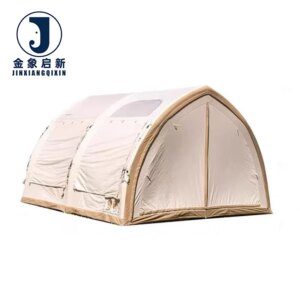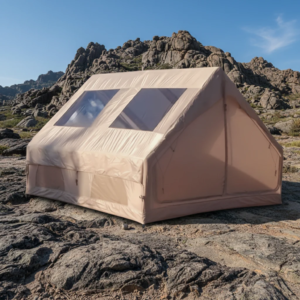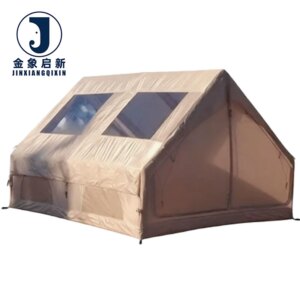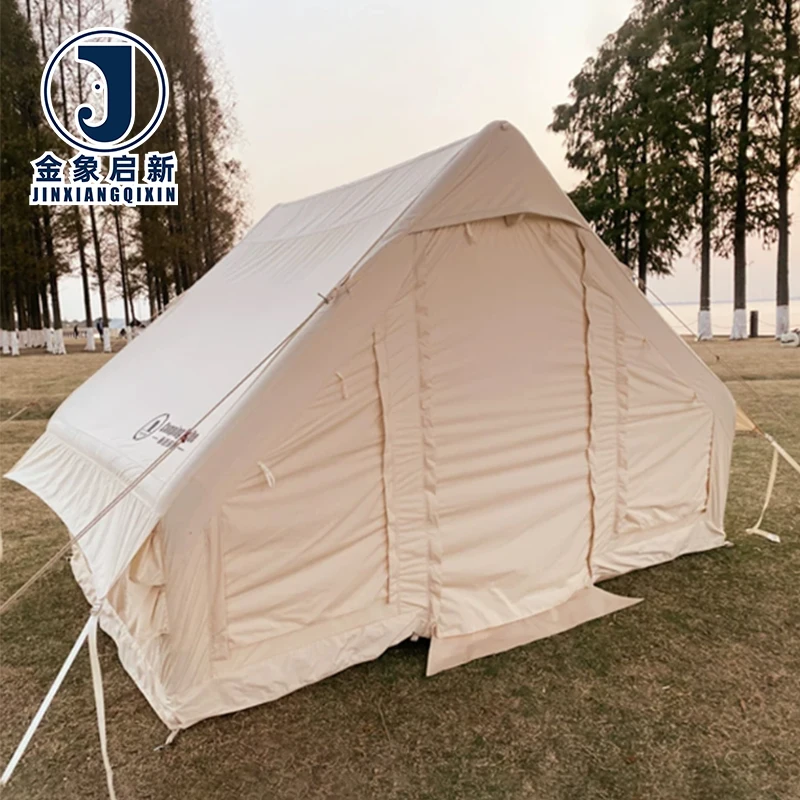
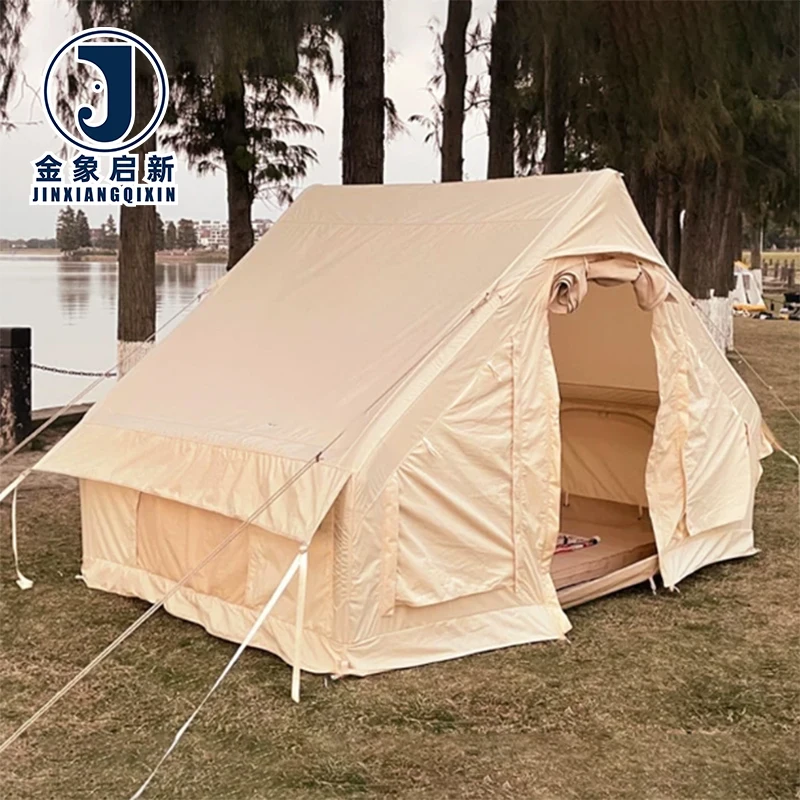
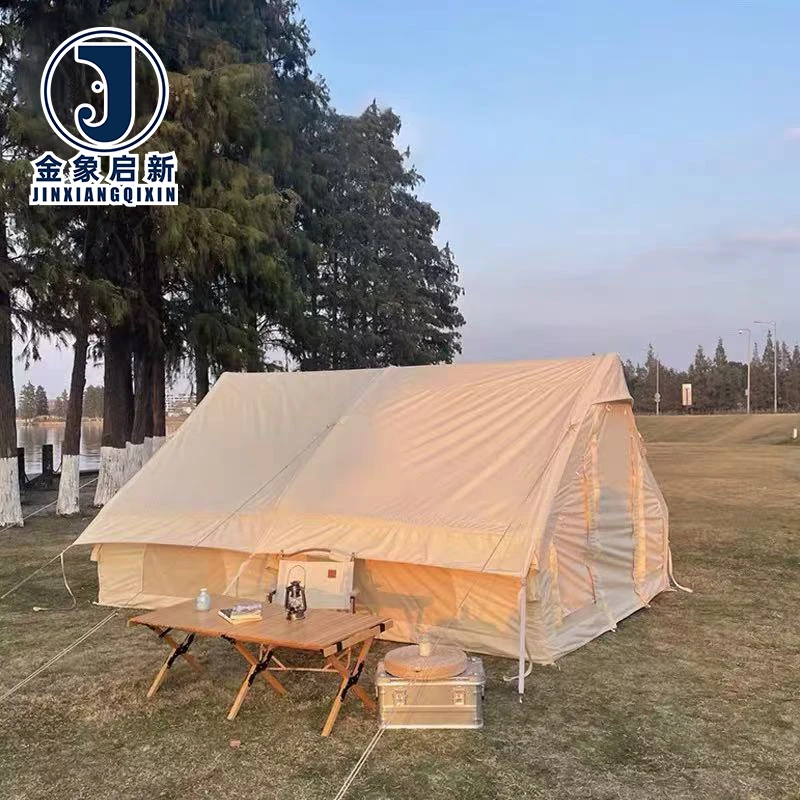
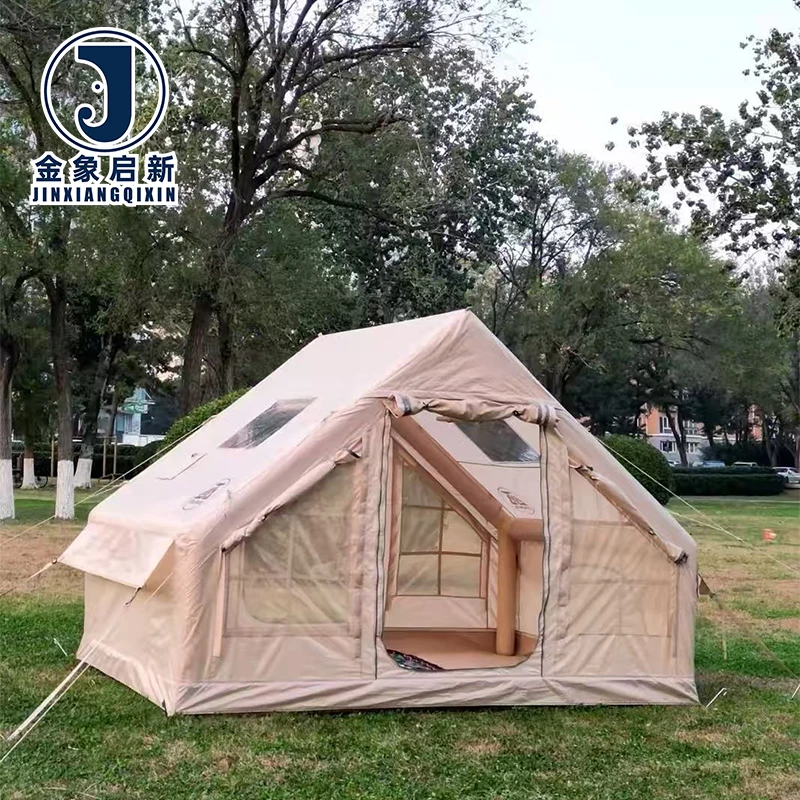
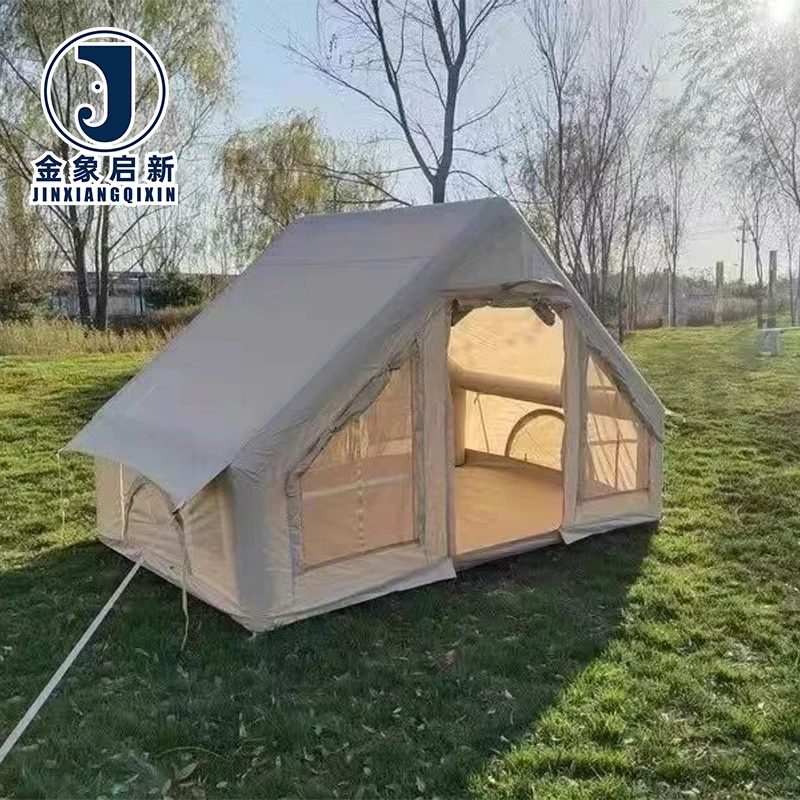
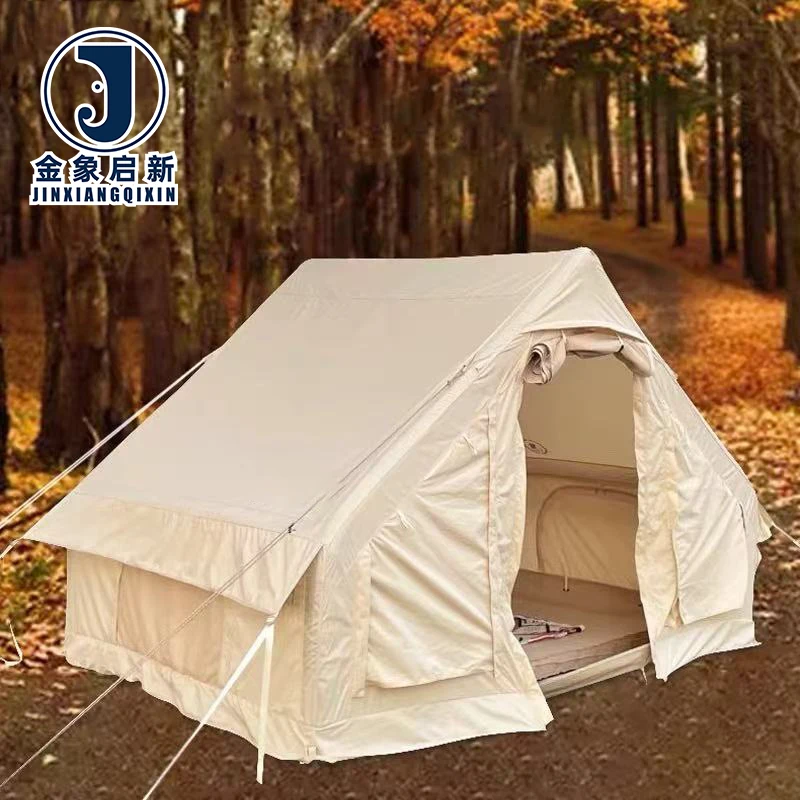
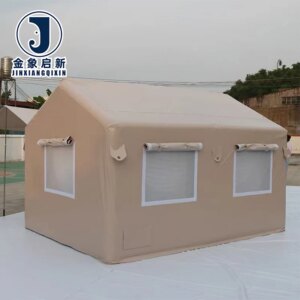
Inflatable Camping Tent, UV Water-resistant PVC Fabric, Extended Type with 1 Bedroom & 1 Living Room — engineered for commercial camping, site accommodation, and temporary field stations.
- Complete PVC inflatable tent range with deep customization on material thickness (0.3mm to 0.8mm), color matching, logo printing, and dimensional layout
- Coating formulation verified by hydrostatic head and UV aging test data, ensuring fabric specs match quotation and color stays consistent across batches
Backed by nearly 30 years of coated fabric expertise, 3 full production lines, and 100% pre-shipment inspection for reliable bulk delivery.
Description
Engineered Coated Fabric Control — Every batch of PVC inflatable tent fabric we supply carries documented UV aging and hydrostatic head data verified before dispatch.
Technical Specifications
| Parameter | Value |
|---|---|
| Product Type | Inflatable Tent |
| Core Material | UV Water-resistant PVC Fabric |
| Key Performance | UV Protection, Water Resistance, Tear Resistance |
| Product Forms | Extended type with 1 bedroom & 1 living room |
| Sunlight Exposure Resistance | 5000 hours accelerated aging (test basis not stated — confirm standard for your market) |
| Hydrostatic Head Rating | Exceeding 5000mm (test basis not stated — confirm standard for your market) |
| Tear Strength | 300N/5cm warp and weft (test basis not stated — confirm standard for your market) |
| Wind Load Resistance | Up to Beaufort scale 6 |
| Material Thickness Options | 0.3mm to 0.8mm (customization range — confirm grade for your application) |
| Customization Service | OEM & ODM, sample customization, pattern printing |
| Quality Control System | Full-process inspection with dedicated QA & QC staff, 16-point inspection |
| Standards | ISO 9001, ISO 14001, ISO 45001, CE, ISO 5912, ISO 4892-3, EN 13725 |
Application Suitability
| Application | Exposure & Requirement |
|---|---|
| Site accommodation for construction crews | Prolonged UV exposure, wind-driven rain, repeated inflation and deflation cycles |
| Temporary shelter for outdoor equipment storage | Moisture ingress prevention, dust sealing, structural stability under load |
| Mobile field stations for research teams | Remote deployment, four-season temperature swings, rapid setup and teardown |
| Emergency response temporary facilities | Immediate deployment under adverse weather, high visibility, durable floor and wall seams |
| Commercial camping and outdoor recreation | Frequent transport and packing, consumer-level aesthetic expectations, varied terrain anchoring |
Why Stated Waterproof Ratings Mean Nothing Without the Test Report Behind Them
A hydrostatic head number on a quotation is only as reliable as the lab that produced it.
Sourcing managers reviewing custom inflatable tent proposals often see waterproof ratings quoted without any reference to the underlying test method. A fabric may claim protection against heavy rainfall, yet the test could have been run on a virgin sample that was never subjected to flexing, abrasion, or UV degradation — conditions that rapidly compromise coating integrity in the field [NEED_CITE: ISO 5912 waterproofness test methods for camping tents]. Without a verifiable standard attached to the number, buyers are essentially comparing marketing claims rather than material performance.
PVC Coating Formulation and What It Means for Inflatable Tent Fabric
When specifying an Inflatable Camping Tent manufacturer for commercial or industrial procurement, the PVC coating formulation directly dictates how the tent shell handles sustained inflation pressure and environmental stress. A well-calibrated coating achieves a balance between flexibility at low temperatures and dimensional stability when internal air pressure loads every seam. The extended-type layout with separate bedroom and living room zones places different tension profiles on the fabric — vertical walls experience outward bowing while roof panels must shed pooled water without sagging. Selecting the correct thickness within the 0.3mm to 0.8mm range depends on deployment frequency, transport conditions, and the expected wind load at the installation site.
Seam Integrity Under Repeated Inflation Cycles
Every inflation and deflation cycle introduces micro-stress at welded and bonded seam lines. On a four-person inflatable camping tent, the air beam channels and their junction points with the main shell bear concentrated loads that pure fabric panels never experience [NEED_CITE: seam strength testing protocols for inflatable structures]. A coating that bonds poorly to the base fabric will delaminate at these junctions long before the field fabric itself shows wear. This is why the 16-point in-process inspection covers air valve integrity, seam peel strength, and 24-hour pressure retention as distinct checkpoints — each addresses a different failure mode that manifests at different stages of the product lifecycle.
Reading the Specification Sheet Beyond the Headline Numbers
Tear strength of 300N/5cm in both warp and weft directions indicates that the base fabric weave and coating adhesion have been balanced to resist tear propagation from puncture points — a common initiation site when tent floors contact sharp ground debris. The hydrostatic head exceeding 5000mm addresses sustained rainfall exposure, but this value should be interpreted alongside the coating thickness: a thinner coating achieving this rating through high-density formulation may behave differently under abrasion than a thicker coating reaching the same rating through mass alone. Wind load resistance rated to Beaufort scale 6 reflects the combined performance of fabric stiffness, air beam rigidity, and anchorage point design rather than any single material property. UV exposure resistance documented at 5000 hours of accelerated aging provides a reference point for expected color retention and coating flexibility over time, though the correlation between accelerated lab conditions and real-world deployment varies with geographic latitude and seasonal intensity [NEED_CITE: ISO 4892-3 UV aging methodology for coated textiles]. Buyers specifying material for OEM production runs should request test reports aligned to the standards recognized in their destination market.
What Happens When Material Thickness Is Selected on Price Alone
Choosing the thinnest available option to reduce unit cost creates downstream problems that surface after the tent enters service. A 0.3mm shell may perform adequately in controlled showroom demonstrations yet fail to resist puncture when deployed on gravel or compacted soil at construction sites. Conversely, specifying the maximum 0.8mm thickness for a recreational camping product adds pack weight and inflation volume that end users find impractical. The cost of a warranty claim — including return shipping, replacement production, and distributor relationship damage — routinely exceeds the per-unit savings gained by selecting the wrong thickness band [NEED_CITE: field failure analysis for inflatable temporary shelters]. Batch-to-batch color variation compounds the problem when replacement units do not match existing inventory on a retail shelf or campsite row.
How Production Capability Translates to Order Reliability
The three full production lines and 36 sets of processing equipment allow concurrent runs of different thickness grades and color batches without cross-contamination or schedule conflict. For buyers sourcing custom inflatable tent fabric at volume, this means a confirmed color reference stays consistent across multiple container loads — verified by dedicated QA and QC staff at each production stage rather than sampled only at final inspection. The 10-technician R&D team handles material selection and sample development, producing pre-production samples that let you validate seam parameters, valve placement, and print registration before committing to a full production run. Pattern printing and branding capabilities are integrated into the production workflow, not outsourced to a separate finishing house, which reduces lead time and eliminates handoff quality gaps. Every shipment leaves with a complete documentation package — material specification sheet, batch-specific test reports, pre-shipment inspection records, and certificates of origin — structured to satisfy import compliance in North American, European, and Asian markets.
Documentation & Verification
- Material specification sheet confirming PVC coating composition, thickness range, and color reference per order
- Batch-specific test reports for UV aging and hydrostatic head aligned to ISO 5912 and ISO 4892-3
- Pre-shipment inspection record covering 16-point checklist with air valve and seam integrity results
- Certificate of origin and customs documentation supporting import clearance across destination markets
- ISO 9001, ISO 14001, ISO 45001, and CE certificates included with each dispatch
Fabrication, Handling & Storage
- Heat-weld seams at temperatures validated for the specific PVC thickness selected, adjusting dwell time between 0.3mm and 0.8mm grades
- Reinforce air valve mounting points with additional coating layers to resist peel under cyclic inflation pressure
- Store rolled fabric on flat racks in climate-controlled space to prevent permanent creasing in the PVC coating
- Allow cold-transported rolls to reach ambient temperature before unrolling to avoid low-temperature coating fracture
- Use mild non-solvent cleaners on the PVC surface to preserve coating integrity and printed branding adhesion
Preparing Your Inquiry for Accurate Quotation
To receive a specification-matched proposal for your inflatable tent project, share the intended deployment environment, expected wind and rainfall exposure, and the compliance standards your destination market requires. Indicate whether you need raw PVC tent fabric by the roll or finished units with air pump systems, and specify any color matching, logo printing, or custom dimensional layout requirements. Providing your annual volume estimate and target shipment schedule allows the production team to confirm material availability and lock batch consistency across your order cycle.
Frequently Asked Questions
Q: What customization options are available for fabric weight, color, and structural layout?
A: Material thickness ranges from 0.3mm to 0.8mm, with color matching to your reference sample and pattern printing integrated into production. Structural layout — including room divisions, window placement, and air beam routing — is developed during the sample phase so you can validate before bulk production begins.
Q: How are UV and water-resistance claims verified with test data?
A: Each shipment includes batch-specific test reports documenting accelerated UV aging and hydrostatic head results. The applicable test standards — including ISO 5912 for waterproofness and ISO 4892-3 for UV resistance — are referenced on the report so your compliance team can verify alignment with destination market requirements.
Q: What is the lead time for sample production and bulk orders?
A: Pre-production samples are developed within days for standard configurations, with custom color or structural modifications requiring additional time for tooling adjustment. Bulk production scheduling is confirmed at the quotation stage based on current line capacity and material availability for your specified thickness and color.
Q: Can the tent meet specific safety or compliance standards for my market?
A: The production facility operates under ISO 9001, ISO 14001, ISO 45001, and CE certification. Material test reports reference ISO 5912, ISO 4892-3, and EN 13725. If your market requires additional certifications or specific fire-retardant grades, confirm the exact standard during inquiry so the R&D team can validate compliance before production.
Q: How is batch-to-batch color and material consistency controlled?
A: Dedicated QA and QC staff conduct inspections at each production stage using a 16-point checklist. Color reference samples are matched under standardized lighting conditions, and coating weight is verified per roll against the material specification sheet before the batch is cleared for dispatch.
Related products
-
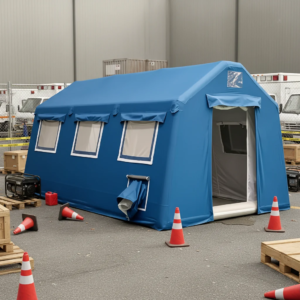
Outdoor Waterproof Inflatable Tent for Camping Portable Air Camping Tent Shelter
Read more -
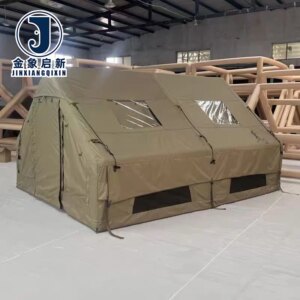
Waterproof Inflatable Camping Tent Outdoor Easy Setup Air Tent for Camping
Read more -
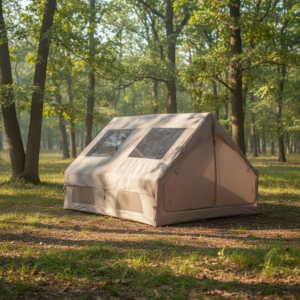
Inflatable Tent Four-Season Quick Automatic Opening PVC 3000mm Waterproof Foldable Eco-Friendly 2-3/3-4/6-8 Person Outdoor Use
Read more -
Tenda de Eventos Inflável para Quatro Estações, Exterior, Impermeável em PVC, Abertura Automática Rápida para 6-8 Pessoas, Logotipo Personalizado
Read more