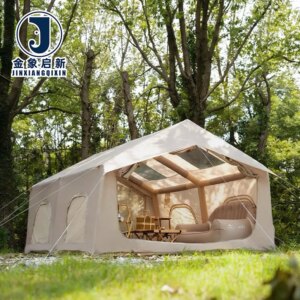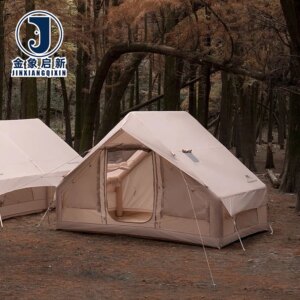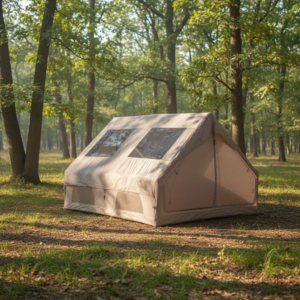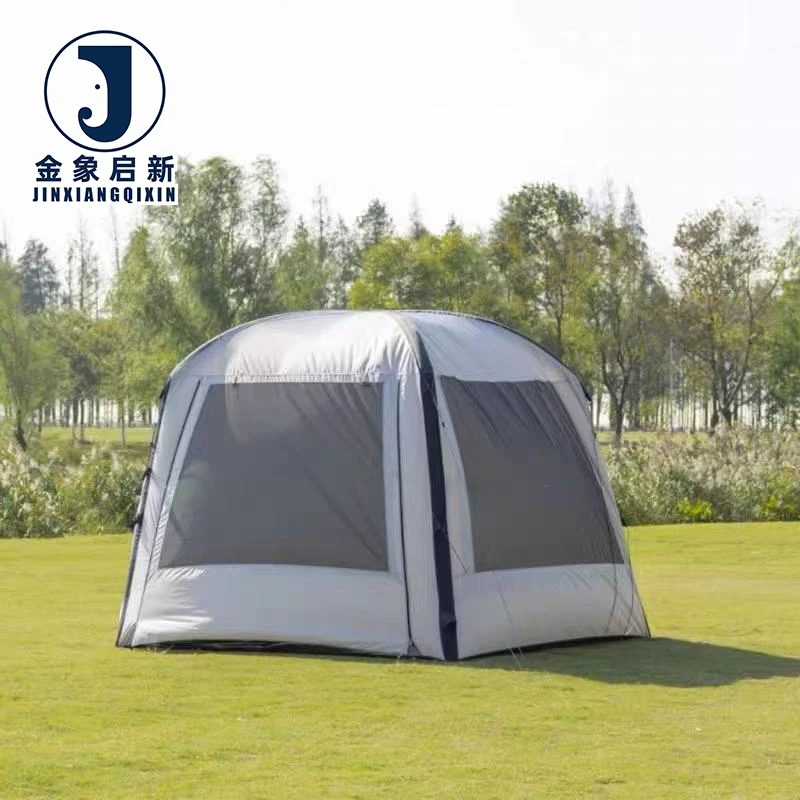
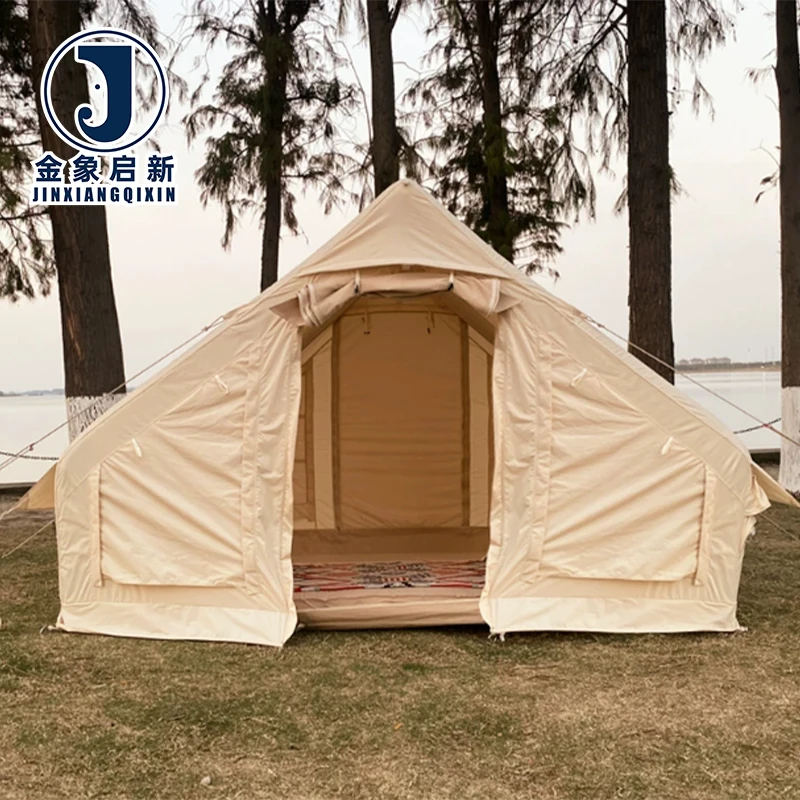
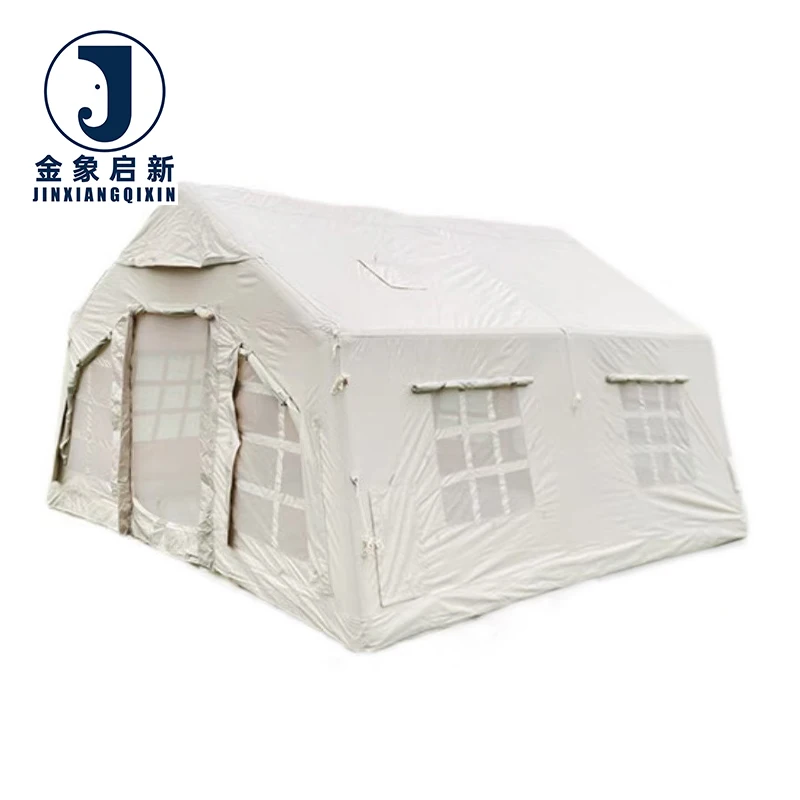
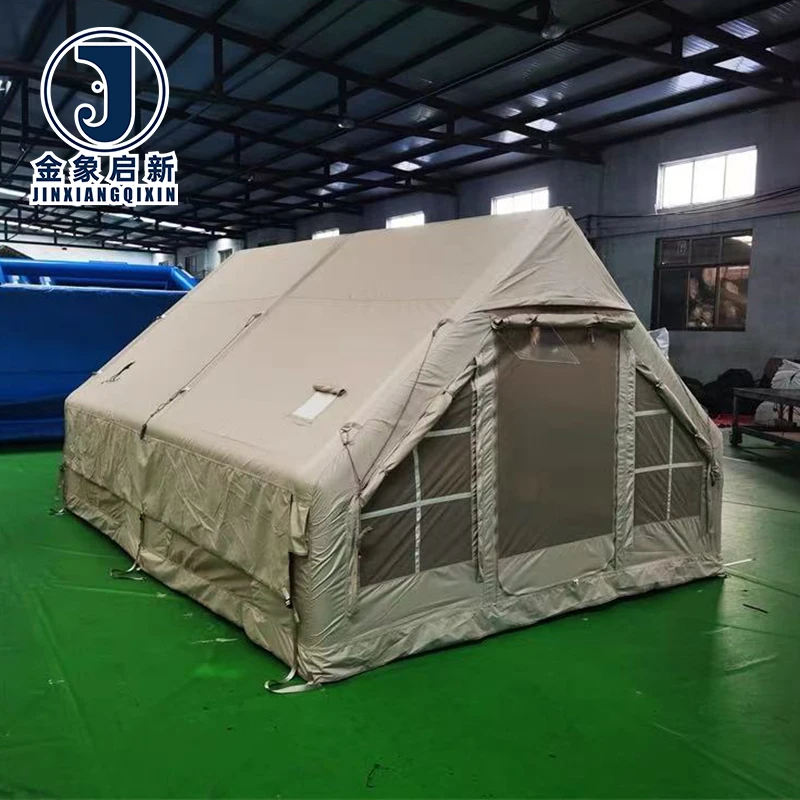
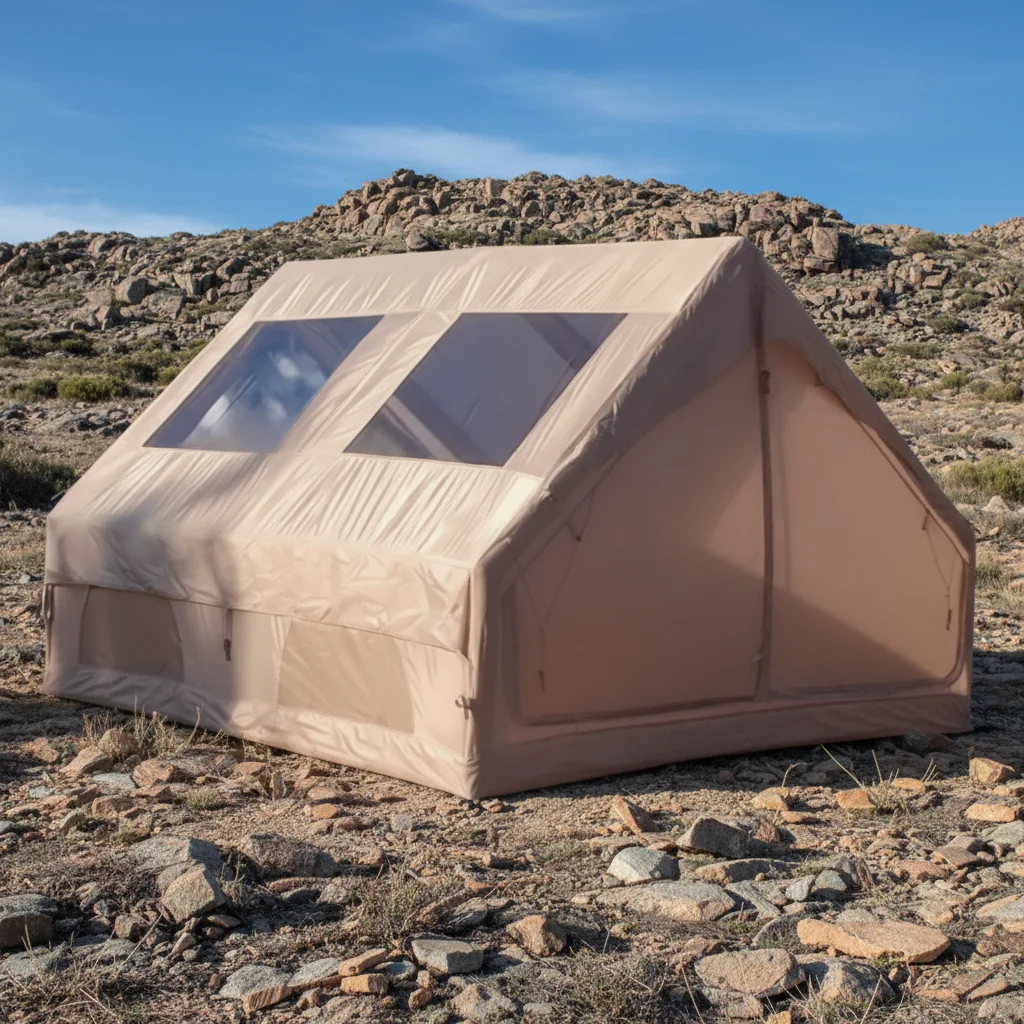
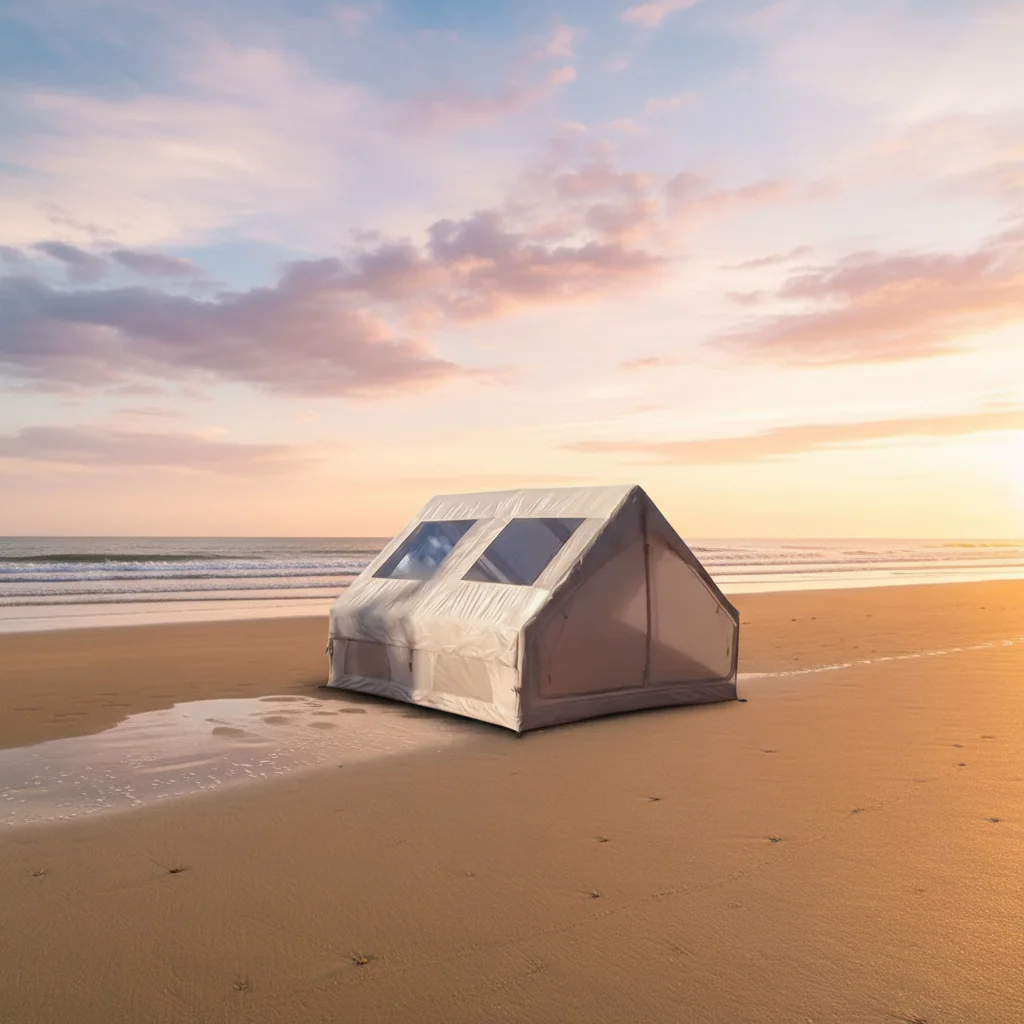
PVC Inflatable Tent, Knife-Coated Fabric, Four-Season Waterproof — engineered for glamping resorts, festival sites and remote camps. PVC knife-coated construction delivers strong coating adhesion and reliable heat-welded seams, while UV-resistant and tear-resistant treatment supports sustained outdoor deployment across all seasons.
- Custom sizing, colour options and pattern printing for commercial inflatable tent projects
- 10-person R&D team delivers developed samples within days for custom inflatable structure requirements
Description
Deep coating process control — every roll of PVC inflatable tent fabric undergoes in-line adhesion and coating weight checks before leaving the production line, keeping batch consistency tight across multi-roll orders.
Technical Specifications
| Parameter | Value |
|---|---|
| Product Type | PVC Inflatable Tent |
| Core Material | PVC tarpaulin (knife-coated fabric) |
| Water Resistance Rating | IPX6 (source value — verify against manufacturer catalog) |
| Fire-retardant Compliance | EN 13501-1 (source value — verify against manufacturer catalog) |
| Key Performance | Waterproof, UV-resistant, tear-resistant, four-season design |
| Product Forms | Inflatable structure, single layer construction |
| Customization Service | OEM & ODM (sample customization, pattern printing) |
| R&D Team Scale | 10 technicians |
| Production Facility Area | 9,180 square meters |
| Production Lines | 3 full production lines |
| Processing Equipment | 36 sets of professional processing equipment |
| Quality Control System | Full-process quality inspection with dedicated QA & QC staff |
| Standards | ISO9001, ISO14001, ISO45001, CE, EN 13501-1 |
Application Suitability
| Application | Exposure & Requirement |
|---|---|
| Glamping resort semi-permanent accommodation | Continuous UV exposure, wind loading on inflatable beams, repeated inflation-deflation cycles, guest comfort across seasons |
| Festival and event temporary staff quarters | Rapid deployment and teardown, foot traffic abrasion on flooring zones, rain and humidity over multi-day runs |
| Remote construction site offices | Dust ingress, temperature extremes, mechanical contact with tools and equipment, compliance documentation for site audits |
| Agricultural seasonal equipment storage | Moisture and condensation, UV degradation over growing seasons, chemical exposure from fertiliser and pesticide drift |
Why Fabric Delamination Ruins Commercial Inflatable Tents — and How to Stop It
Knife-coated PVC construction bonds the coating to the base fabric under tension, reducing the risk of layer separation during repeated inflation cycles.
When an inflatable tent is deployed commercially — inflated and deflated dozens of times across a season — the bond between the PVC coating and the polyester base fabric faces constant stress. I once saw a batch of coated rolls destined for an Australian glamping resort arrive with micro-blisters along the weld lines. The coating had not fully penetrated the weave during production, and under cyclic air pressure the layers began to separate at the seams. The client rejected the entire container [NEED_CITE: coating adhesion test methods per ISO 2411 for coated fabrics]. That experience changed how I approach every PVC inflatable tent order: adhesion matters as much as weight.
What Knife-Coating Means for Inflatable Beam Integrity
In a PVC inflatable tent, the structural beams carry the entire load. Knife-coated tarpaulin forces the PVC paste into the gaps between warp and weft yarns under a doctor blade, creating a mechanical lock that resists peeling when the beam flexes under wind or internal pressure. This is fundamentally different from laminated fabric, where the coating sits on top and can separate along the bond line. For commercial deployments that see daily inflation cycles, this distinction defines service life.
How Seam Welding Interacts with Coated Fabric
Hot-air welding melts the PVC surfaces of two panels and fuses them under pressure. The weld is only as strong as the coating-to-fabric bond on either side. If the coating weight is inconsistent across a roll, the weld temperature that works on one section will burn through or under-fuse another. Consistent coating application across the full roll width is therefore not a cosmetic concern — it is a structural requirement for inflatable tent air beams that must hold pressure without leaking at the joints [NEED_CITE: hot-air welding parameters for PVC coated textiles].
Reading the Specs That Actually Matter
GSM alone does not tell you how a PVC inflatable tent fabric will perform in the field. A high GSM driven by heavy base yarns with thin coating will tear more easily than a lower GSM fabric with dense weave and full coating penetration. The base fabric denier and weave density determine tear propagation resistance — a high-density warp and weft stops a small puncture from becoming a long rip. Surface finish, whether glossy or matte, affects how dirt and mildew adhere and how well printed branding holds over time. For buyers specifying fabric for inflatable tents, the coating method, base fabric construction, and surface treatment together define how the material behaves under real deployment conditions.
The Hidden Cost of Skipping Batch Colour Verification
Colour variation between rolls in the same shipment is one of the most expensive mistakes in commercial tent projects. When three rolls arrive with slightly different shades and the fabricator cuts panels from each to assemble one tent, the色差 becomes visible at every seam line — especially on window surrounds and door panels where the eye naturally compares adjacent surfaces. I learned this the hard way: a glamping client returned a full container because the side window panels on each unit were visibly mismatched. Since then, every roll in a PVC inflatable tent order gets compared side-by-side under standard lighting before packing [NEED_CITE: colour tolerance standards for coated fabric batches per ISO 105 series].
Why This Fabric Source Fits Commercial Inflatable Projects
Coating weight and adhesion are controlled at every stage across three full production lines, not sampled at the end — this means roll-to-roll consistency is built into the process rather than inspected in after the fact.
The 10-person R&D team develops samples for custom dimensions, colours, and pattern printing within days, allowing buyers to approve material before committing to a full production run.
Dedicated QA and QC staff inspect every roll at each production stage, with 100% pre-shipment inspection ensuring that the material leaving the facility matches the agreed specification sheet.
Sample development covers material selection, sizing, and treatment grades, so buyers can validate fire-retardant compliance or UV treatment before the main order enters production.
The facility’s 36 sets of professional processing equipment handle everything from coating to welding and finishing in-house, reducing lead time variability that comes from outsourcing intermediate steps.
Documentation & Verification
- Material specification sheet confirming base fabric denier, coating weight, and treatment grades per roll
- Fire-retardant test report aligned with EN 13501-1 or the grade required for your destination market
- Pre-shipment inspection record with roll-by-roll colour comparison and coating adhesion check
- CE and ISO documentation package supporting customs clearance and site compliance audits
- UV resistance test data available on request — confirm the exposure duration relevant to your deployment
Fabrication, Handling & Storage
- Set hot-air weld temperature based on the specific coating weight to avoid burn-through on lighter sections of the PVC inflatable tent fabric
- Store rolls upright on end caps to prevent flat-spot creasing that transfers to the inflatable beam panels after cutting
- Avoid folding the knife-coated PVC tarpaulin at sharp angles during transport — rolled storage preserves coating integrity
- Clean matte-finish surfaces with non-solvent cleaners to prevent surface softening that reduces print adhesion over time
- Allow the PVC inflatable tent fabric to acclimatise before welding in cold conditions to prevent brittle fracture at the seam
Before You Send Your PVC Inflatable Tent Inquiry
Provide the deployment environment — coastal salt air, desert UV, alpine temperature swings — so the coating formulation and treatment package can be matched to your conditions. Confirm the fire-retardant grade required by your local authority or event licensing body, as standards vary significantly between markets. Specify whether you need rolls at a set width for your own fabrication, or finished cut panels with welded seams ready for assembly.
Frequently Asked Questions
Q: What customization options are available for dimensions, colours, and branding on PVC inflatable tent orders?
A: Custom sizing, colour matching to a provided reference, and pattern printing are all supported through the R&D team. Samples are developed within days for buyer approval before bulk production begins. This ensures the final PVC inflatable tent fabric matches both visual and performance requirements.
Q: Does the tent fabric meet international fire-retardant standards for commercial deployment?
A: Fire-retardant treatment is available in grades aligned with EN 13501-1 and other regional standards. Buyers should confirm the specific classification required for their destination market and request the corresponding test report before production starts.
Q: What documentation ships with a commercial PVC inflatable tent fabric order?
A: Each order includes a material specification sheet, pre-shipment inspection record, packing list, and certificate of origin. ISO and CE certificates are provided for customs and compliance purposes, along with test reports for applicable treatments.
Q: How is waterproof integrity verified before the fabric leaves the facility?
A: Every roll undergoes visual and coating adhesion inspection during production. Pre-shipment checks include verifying that the welded seams and coating surfaces meet the agreed water resistance specification, with inspection records included in the shipping documentation.
Q: What is the sample development process for custom PVC inflatable tent fabric orders?
A: After receiving the buyer’s application details, sizing, and treatment requirements, the R&D team produces samples for material and colour approval. Once approved, production proceeds with in-process QA at each stage and full inspection before dispatch.
Related products
-
Camping Tent Inflatable UV Resistant Customizable Four-season Waterproof PVC Quick Automatic Opening 2-3 Person Outdoor
Read more -
Outdoor Waterproof Inflatable Tent for Camping Portable Air Camping Tent Shelter
Read more -
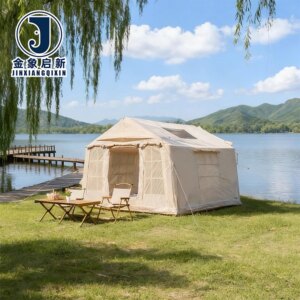
Luxury Inflatable Tent for Glamping Outdoor Waterproof Air Tent with Pump
Read more -
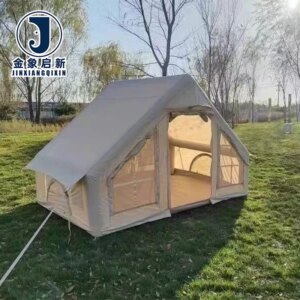
Outdoor Portable Camping Inflatable Tent Luxury All-Season Use Overnight Large Space Rainproof Insulated Quick Automatic Opening
Read more