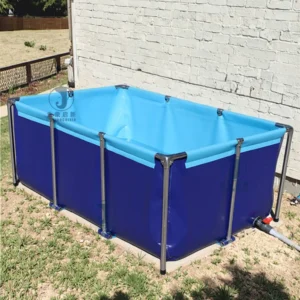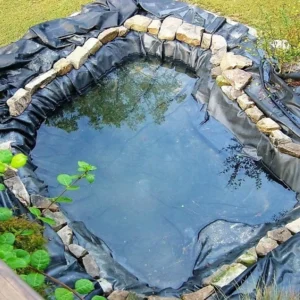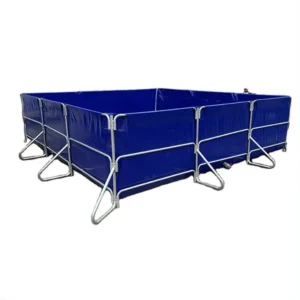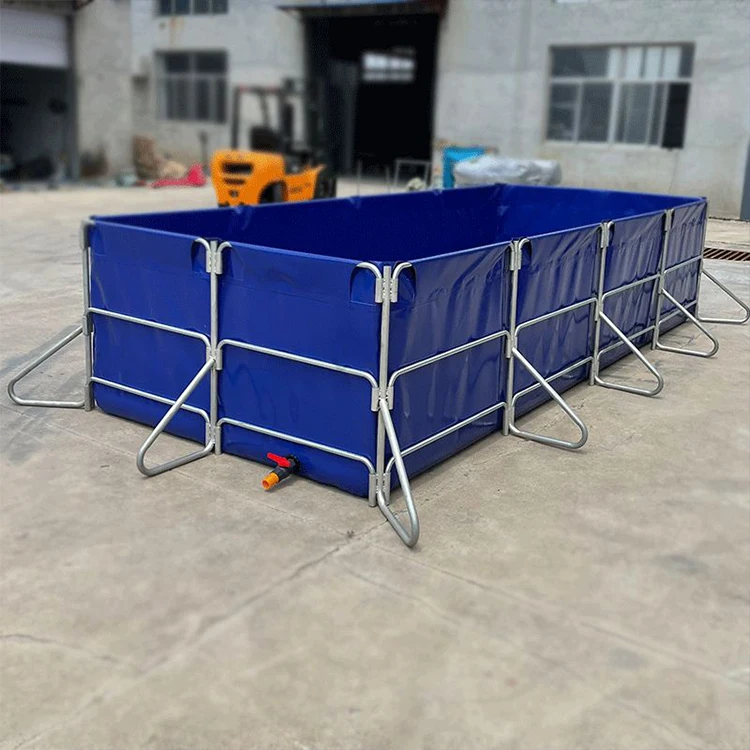
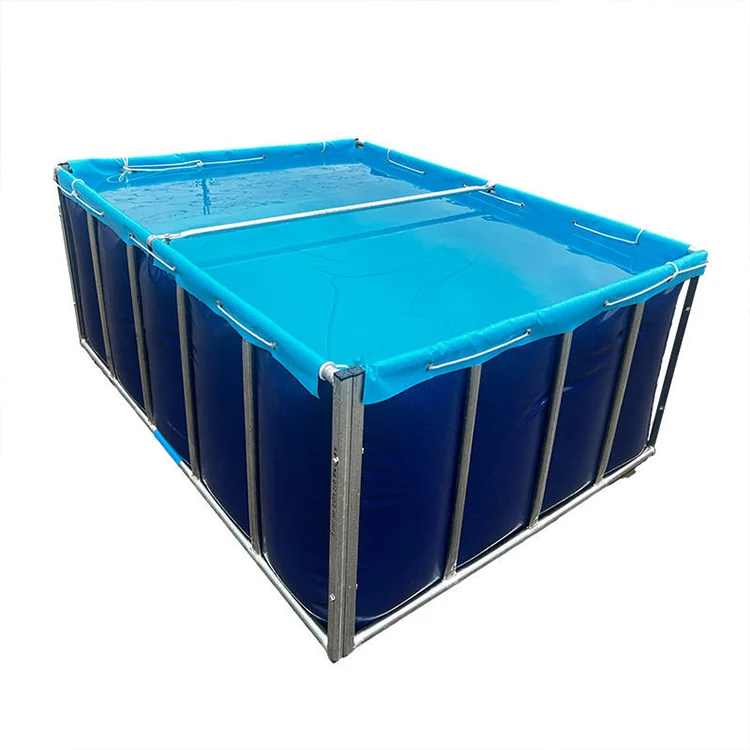
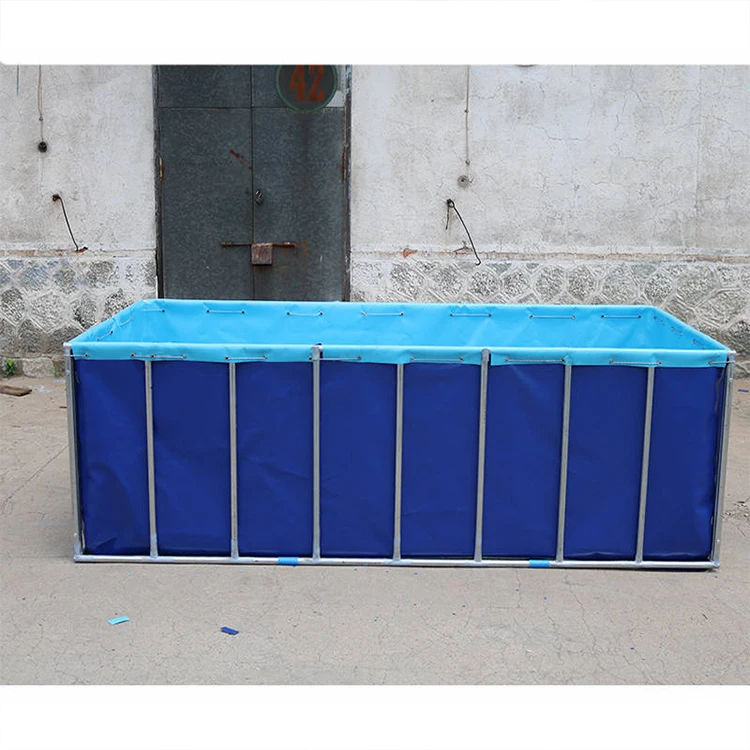
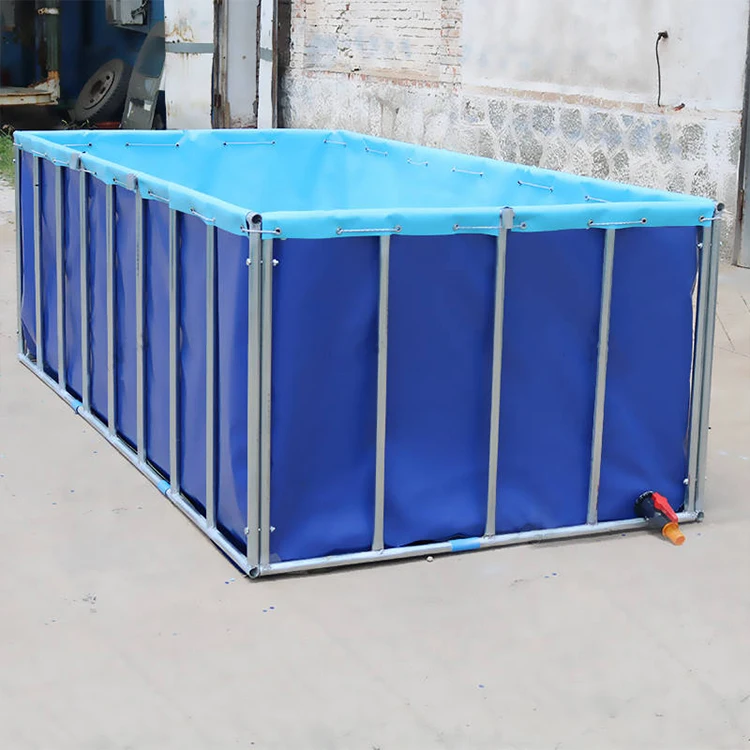
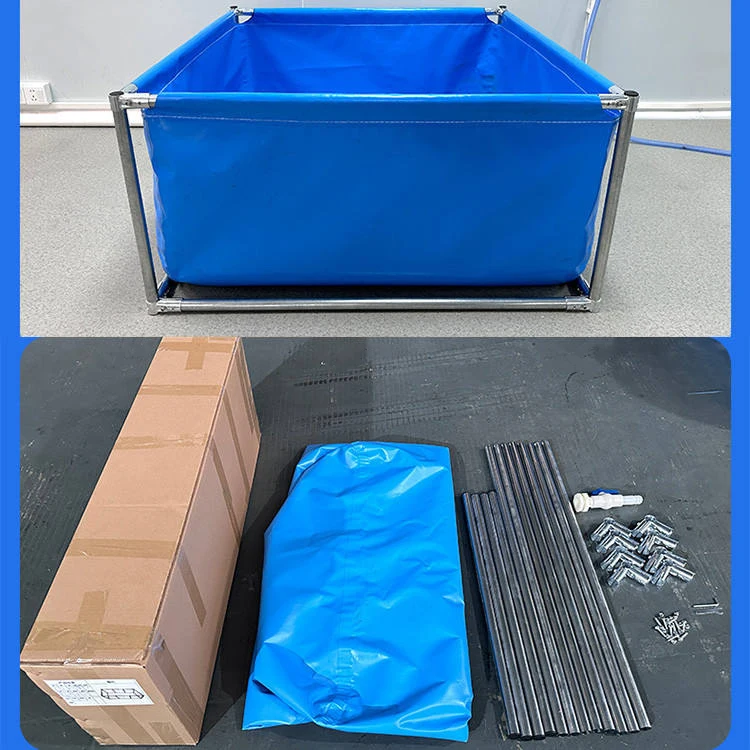
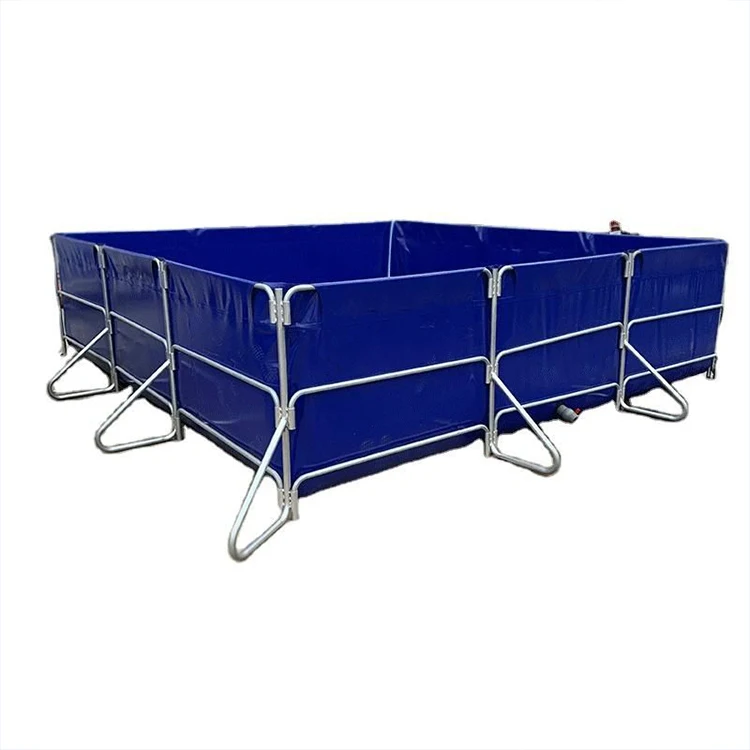
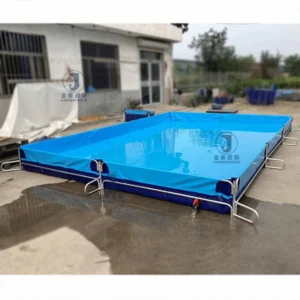
Foldable PVC Tarpaulin Fish Pond Liner — available in circular and rectangular shapes, engineered for aquaculture water containment and pond lining.
- Coating weight and adhesion are controlled through nearly 30 years of PVC process expertise, ensuring reliable seam welding at high-stress flex points where generic liners typically fail
- Custom width, length, eyelet spacing and reinforced hems specified to your exact pond dimensions, with single- and double-side colour options and UV-stable finish
- Roll-to-roll colour consistency verified within each order, supported by full pre-shipment inspection records and documentation including certificate of origin
Description
Process-Controlled Coating — adhesion and weight consistency developed over nearly 30 years of PVC coated fabric production, applied to every fish pond liner we ship.
Technical Specifications
| Parameter | Value |
|---|---|
| Product Type | PVC Tarpaulin Fish Pond Liner |
| Material | PVC coated tarpaulin |
| Shape Options | Circular / Rectangular |
| Structure | Foldable |
| Application | Aquaculture fish tanks, pond lining, water containment |
| Certifications | ISO, CE |
Application Suitability
| Application | Exposure & Requirement |
|---|---|
| Aquaculture fish ponds | Continuous water contact, biological load, soil chemistry interaction, puncture risk from substrate |
| Hatchery tank fabrication | Controlled water environment, frequent cleaning, sanitisation chemical exposure |
| Agricultural water containment | Seasonal UV exposure, ground settlement stress, mechanical damage from equipment |
| Distributor roll stock supply | Batch consistency across rolls, warehouse storage, re-fabrication for end users |
Why Seam Integrity Decides the Life of a PVC Tarpaulin Fish Pond Liner
A pond liner fails where the weld gives way — not where the fabric does.
When a fish pond fills with water, the liner carries continuous hydrostatic pressure. At the seams, that pressure concentrates along every welded joint. I have reviewed field returns where the base fabric remained intact but the heat-welded seam separated along the fold line, draining the pond within hours. The consequence is stock loss, not just material replacement. Specifying PVC tarpaulin fish pond liner material without verifying weld peel strength leaves the weakest point unaddressed [NEED_CITE: seam peel strength test methods for coated fabrics].
Coating Weight and Adhesion Control
The PVC tarpaulin fish pond liner depends on controlled coating application to maintain waterproof integrity under constant immersion. Our coating process governs how evenly the PVC compound bonds to the base fabric, which directly affects how the material behaves when the pond is filled and the liner stretches under load. Uneven coating weight across a single panel creates thin spots that accelerate wear against abrasive pond floors.
Foldable Construction and On-Site Deployment
A foldable fish pond liner reduces shipping volume and allows a single operator to unfold and position the liner into an excavated pond or framed tank. Whether configured as circular or rectangular, the fold pattern avoids sharp crease marks that could become crack initiation points once the liner is under hydrostatic tension. This design consideration matters most for remote aquaculture sites where handling equipment is limited [NEED_CITE: coated fabric crease behaviour under sustained tension].
Reading the Specification Beyond GSM
Purchasing on GSM alone misrepresents what the liner will actually withstand. The base fabric denier and weave density determine how the material resists tear propagation when a sharp stone or root presses against the underside. Two liners rated at the same GSM but woven from different yarn counts will behave differently under identical pond conditions. The coating thickness and formulation then govern puncture resistance and long-term flexibility in wet environments. For aquaculture operators, confirming the base fabric construction alongside the stated weight gives a far more reliable picture of field performance than weight alone.
The Cost of Overlooking Substrate Preparation
I have seen pond liners that were correctly specified in weight and construction fail prematurely because the excavation floor was not cleared of sharp debris. A heavy-grade coated liner can still suffer puncture damage when a protruding root or rock concentrates the entire water column load onto a single point. The specification protects against material-level failure; it does not eliminate the need for proper ground preparation before installation [NEED_CITE: installation best practices for flexible pond liners].
What Consistent Production Capacity Means for Pond Liner Orders
Our three full production lines and 36 sets of professional equipment support bulk pond liner orders without pushing lead times beyond the schedule we confirm at quotation. The 10-person R&D team handles custom sizing for circular and rectangular pond dimensions, developing samples within days so you can verify fit before committing to the full production run. Every liner passes through dedicated QA/QC checks at each production stage, with 100% inspection before shipment covering seam peel strength, dimensional accuracy, and coating integrity. This process control applies equally to a single prototype and to a container-load order.
Documentation & Verification
- Material specification sheet confirming GSM, base fabric denier, and coating compound for each pond liner order
- Pre-shipment inspection record documenting seam weld peel test results before dispatch
- Roll packing list with dimensional data matching circular or rectangular pond specifications
- Certificate of origin for customs clearance in destination aquaculture markets
- ISO and CE certification documents supporting compliance verification
- UV or flame-retardant test reports provided where these treatments are specified
Fabrication, Handling & Storage
- Heat-weld all seams using temperature settings matched to the PVC coating thickness to avoid burning through or under-bonding the joint
- Store folded pond liners flat and avoid stacking heavy items on top to prevent permanent crease damage in the PVC coating
- When deploying in cold conditions, allow the PVC tarpaulin to warm gradually before unfolding to avoid brittle cracking at fold lines
- Clean pond liners with mild detergent solutions; avoid solvents that degrade the PVC coating surface and compromise waterproof integrity
- For field repairs on circular or rectangular liners, use compatible PVC repair patches applied with solvent cement to the cleaned surface
Requesting a Quotation
To specify the right pond liner, we need your intended pond dimensions — diameter and depth for circular, or length, width and depth for rectangular — along with the substrate type and whether the installation is permanent or seasonal. Confirm if any regulatory water-contact or UV treatment standards apply in your destination market, and whether you require finished liners with welded seams or roll stock for local fabrication.
Frequently Asked Questions
Q: How do I verify the GSM of the pond liner when it arrives?
A: We supply a pre-shipment inspection record that documents the measured weight of the material against the quoted GSM before the liner leaves our facility. On arrival, you can cross-check by cutting a measured sample and weighing it on a calibrated scale. Any discrepancy is addressed through our after-sales support channel with the inspection record as the baseline reference.
Q: Can the liner be made to exact pond dimensions?
A: Yes. Our R&D team develops custom-sized circular and rectangular pond liners based on your excavation or frame dimensions. We produce a sample for fit confirmation before full production runs. There is no restriction to standard catalogue sizes, and the minimum order depends on the panel dimensions and the total square meterage involved.
Q: Are welded seams tested before the pond liner ships?
A: Every welded seam undergoes peel strength testing during the 100% pre-shipment inspection. We check that the weld bond exceeds the tear threshold of the base fabric so that the seam does not become the failure point under hydrostatic load. Test results are recorded on the inspection report provided with each shipment.
Q: What UV treatment is available for outdoor pond installations?
A: UV-stable formulations are available for pond liners exposed to direct sunlight. The specific treatment level depends on the geographic location and expected exposure duration of your installation. We provide test report documentation for the UV grade applied so that you can verify it meets any local regulatory or project specification requirements.
Related products
-
Custom PVC Pond Liner for Fish Ponds – Manufacturer
Read more -
Foldable Circular Rectangular PVC Tarpaulin Fish Pond Tarpaulin for Fish tank
¥0.53 Select options This product has multiple variants. The options may be chosen on the product page -
Custom PVC Tarpaulin for Fish Pond – Full Range
Read more -
Custom Made PVC Tarpaulin Fish Pond Liner for Aquaculture
Read more