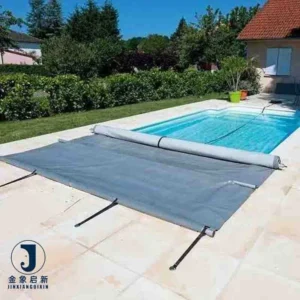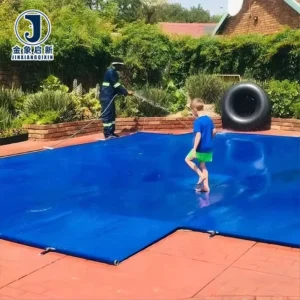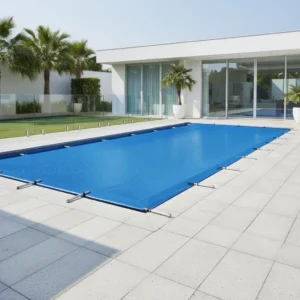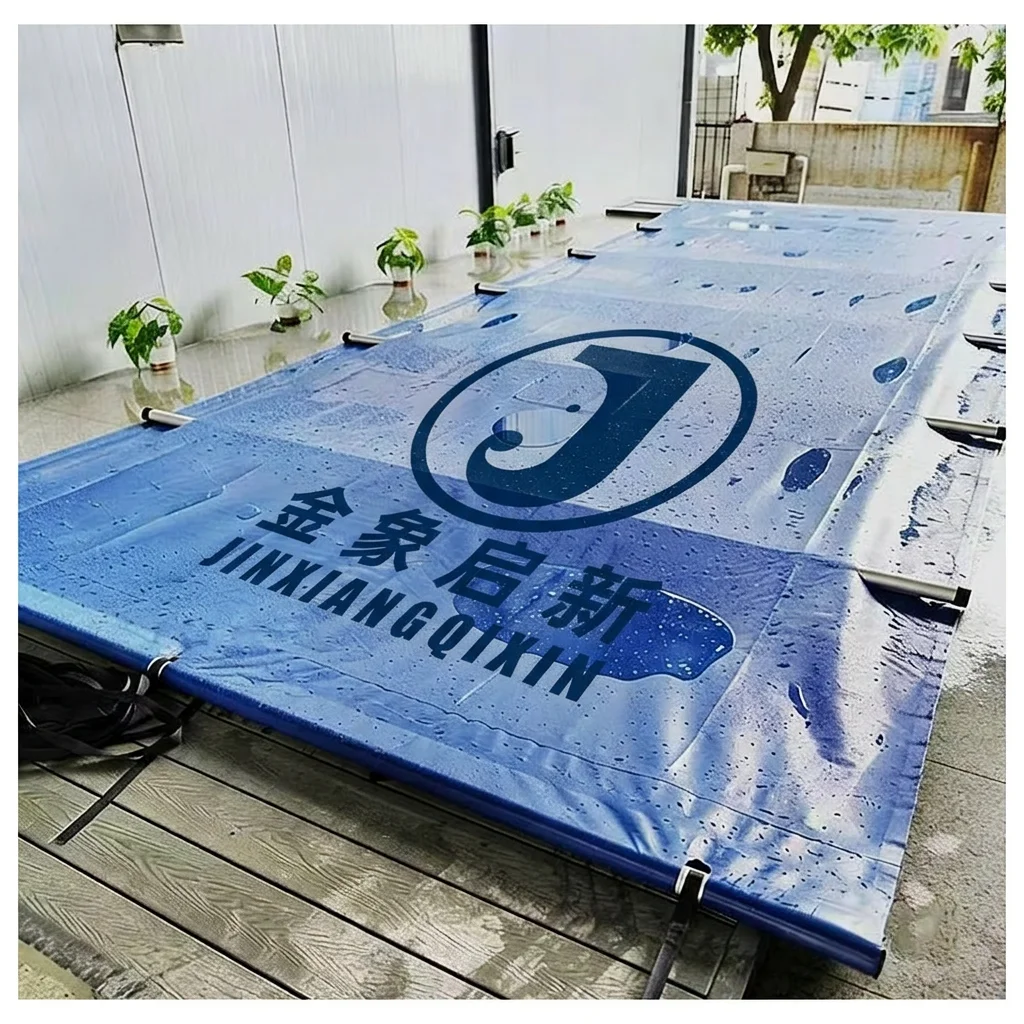
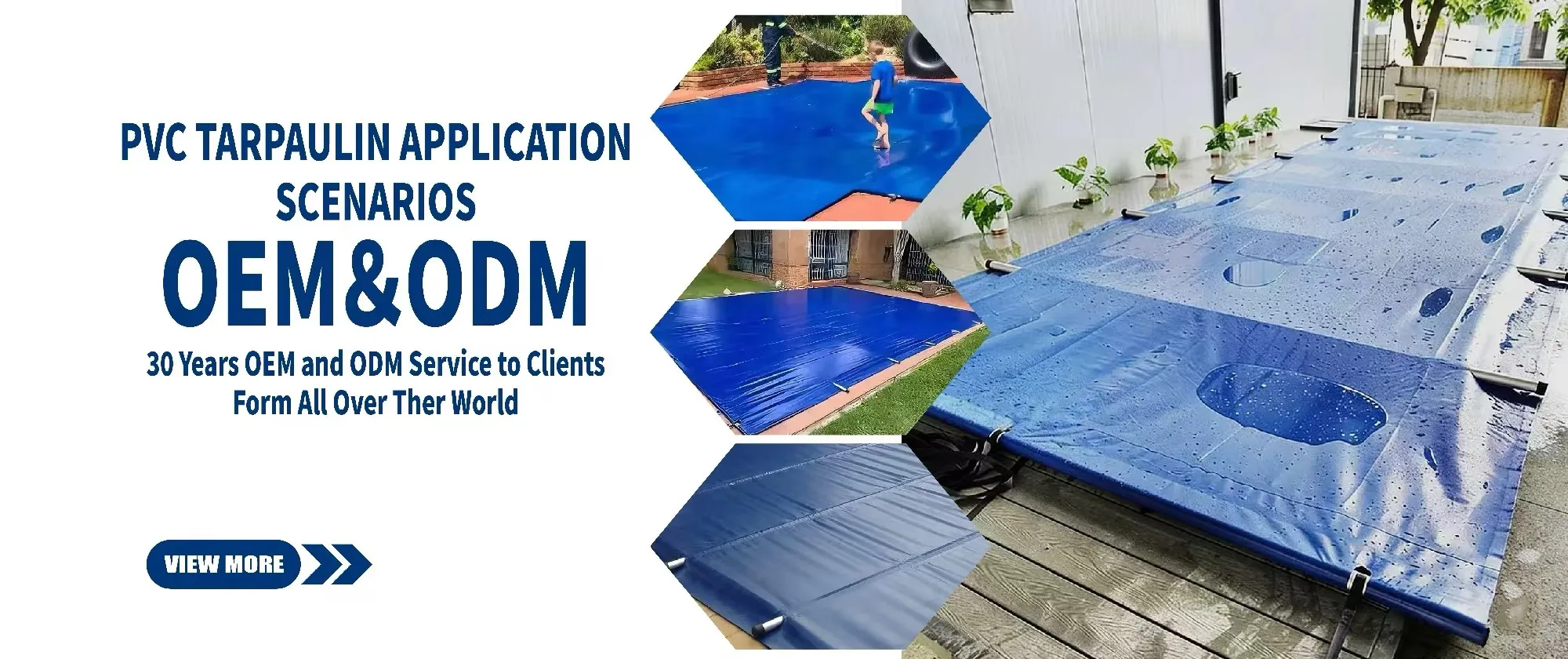
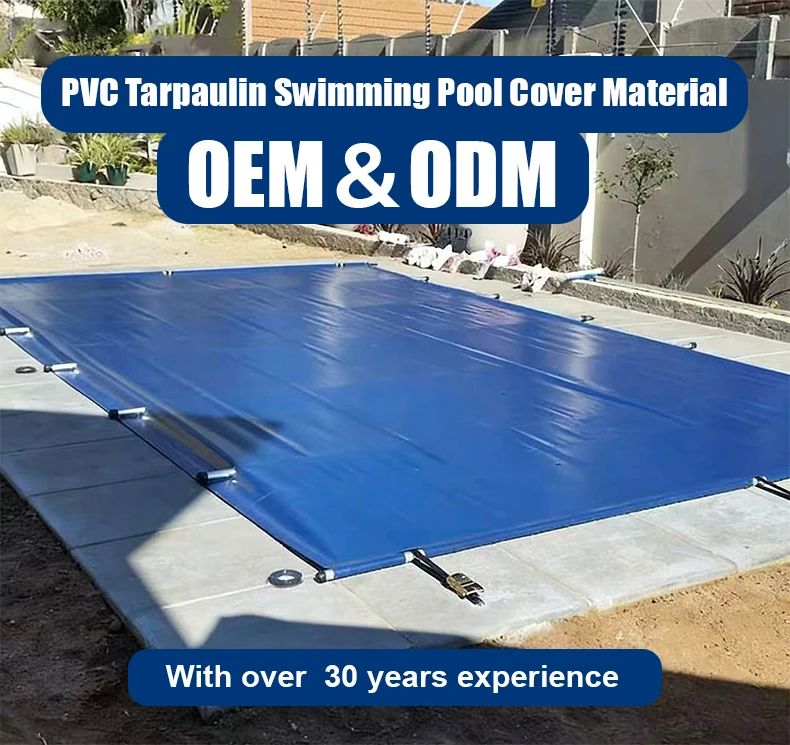
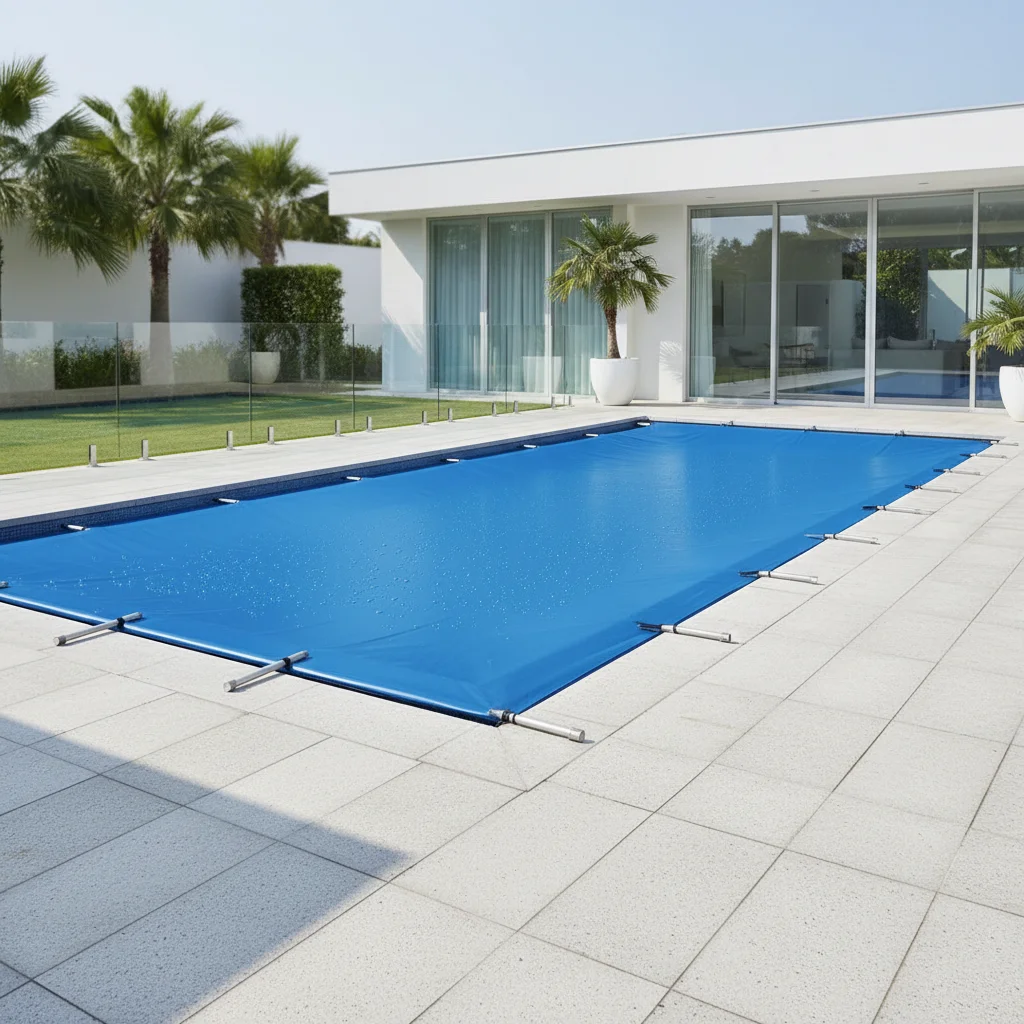
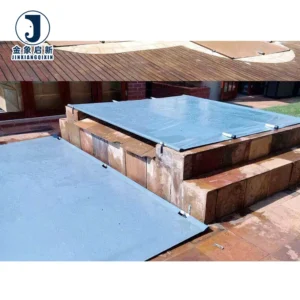
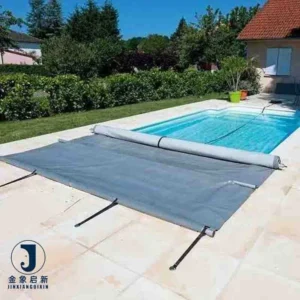
PVC Tarpaulin Pool Cover with brass anchors, ratchet tensioning and aluminium poles — complete hardware kit for pool safety projects.
- Knife coated fabric delivers waterproof and UV-resistant protection
- Six-point stainless steel attachment prevents injury while maintaining aesthetics
- Compatible with manual and motorized winder systems
- Custom sizing available for irregular pool geometries
Backed by 30 years of coating process control and 100% pre-shipment inspection across three dedicated production lines.
Description
Precision Coating Control — Every roll of PVC pool cover material is held to the specified GSM through strict knife-coating process calibration, eliminating the weight discrepancies that cause field failures and rejected shipments.
Technical Specifications
| Parameter | Value |
|---|---|
| Product Type | PVC Pool Cover Material |
| Coating Material | PVC |
| Coating Method | Knife Coated |
| Key Features | Waterproof, UV-resistant (test basis not stated), Windproof |
| Compatible Hardware | Brass anchor, triangular hook, ratchet system, aluminium poles |
| Connection Design | Self-sinking stainless steel connections (six-point attachment) |
| Winder Compatibility | Manual or motorized systems |
| Thickness | 0.2–0.4 mm / 8–16 mil / Custom (confirm grade required) |
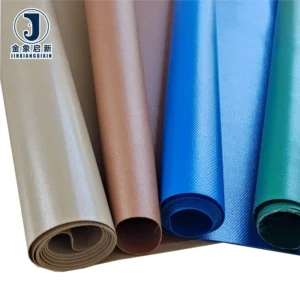
| Color Options | Blue, Blue/Orange, Green, Grey, Black, Clear, Grey/Green, Orange, or custom |
| GSM Range | 50 g/m² ~ 220 g/m² available (confirm grade for your project) |
| Certifications | ISO 9001, ISO 14001, ISO 45001, CE |
Application Suitability
| Application | Exposure & Requirement |
|---|---|
| Residential solid pool covers | Constant sun and water contact, child safety barrier, six-point secure attachment |
| Commercial and hotel pool enclosures | High-frequency deployment via winder systems, weather shielding between guest use periods |
| Pool cover fabricators and distributors | Custom-width roll stock for cut-to-size production, batch colour consistency across orders |
| Seasonal pool winterization | Extended UV exposure, wind uplift resistance, debris and precipitation exclusion |
| Aquaculture water containment covers | Permanent water immersion, biological growth resistance, structural tensioning across spans |
Why GSM Alone Fails Pool Cover Buyers
A quoted GSM means nothing if the roll arriving on site weighs less than the spec sheet promised.
Pool cover fabricators routinely specify a mid-range GSM for residential safety covers, only to find the delivered material is lighter. The deficit is invisible until the cover sags under snow load or tears at the brass anchor point during tensioning. This is not a material science problem — it is a verification gap at the factory gate. When a PVC pool cover material manufacturer custom-builds each batch, the buyer must confirm that the coating weight applied during knife coating matches the agreed specification, roll by roll, before the shipment leaves the facility. [NEED_CITE: pre-shipment inspection standards for coated fabric weight verification]
How Knife Coating Defines Cover Integrity
The knife coating method deposits a controlled PVC layer directly onto the base fabric, producing a continuous film that blocks water penetration across the entire pool cover surface. Unlike laminated constructions where the coating can delaminate at the edges, knife-coated PVC pool cover material maintains adhesion through seasonal temperature swings and repeated winding cycles on both manual and motorized systems.
Hardware Integration Across the Cover System
A pool cover fails most often not in the field of the fabric but at the anchor and tensioning points. This PVC pool cover material is engineered to work with a matched hardware ecosystem — brass anchors embedded in the deck, triangular hooks distributing load across the hem, ratchet systems maintaining uniform tension, and aluminium poles supporting the cover above the water surface. The six-point self-sinking stainless steel connection design ensures that when the cover is removed, no protruding hardware remains on the pool deck to pose a tripping or child safety hazard. [NEED_CITE: ASTM F1346 safety cover attachment requirements]
Reading Beyond the Specification Sheet
Thickness and GSM together determine how the cover behaves under real poolside conditions. The 0.2–0.4 mm thickness range spans lightweight residential covers to heavier commercial grades, but thickness without knowing the base fabric denier tells only part of the story. A cover with adequate coating thickness but a low-denier base scrim will resist water yet tear when pulled across a rough concrete deck edge. Buyers should request the base fabric construction alongside the coating weight to understand the true tensile and tear performance of each grade. Knife coating produces superior peel strength compared to laminated alternatives, which directly affects how well the material survives heat-welded seams at the hem and anchor reinforcement patches.
The Cost of Overlooking Batch Consistency
Pool cover fabricators cutting multiple covers from the same order need every roll to match in colour and coating weight. A visible shade difference between two panels installed side by side on adjacent residential pools triggers a customer complaint and a full replacement. Similarly, inconsistent GSM across rolls means one cover passes the tensioning test while the next fails at the same anchor point — a failure pattern that damages the fabricator’s reputation rather than the material supplier’s. Securing documented batch consistency before production begins eliminates both problems. [NEED_CITE: colour fastness and batch variation standards for coated textiles]
Why Source Pool Cover Fabric Here
Nearly three decades of knife-coating process control means the PVC layer applied to each roll matches the target weight, not an averaged batch tolerance. Three full production lines and 36 sets of professional equipment support the volume demands of distributors ordering multiple container loads of roll stock. A dedicated 10-person R&D team develops custom colour matches and non-standard widths within days, not weeks. Every roll undergoes 100% inspection against the material specification sheet before packing, with a documented pre-shipment record available for buyer review. The hardware ecosystem — brass anchors through ratchet systems — is sourced as a matched set, so the cover fabric and attachment components arrive tested for compatibility.
Documentation & Verification
- Material specification sheet stating exact GSM, base fabric denier, and coating weight per roll
- UV-resistance test report provided upon request for applicable grades with documented test basis
- Pre-shipment inspection record confirming roll-by-roll weight verification before dispatch
- ISO 9001, ISO 14001, ISO 45001, and CE certificates included in the shipment documentation package
- Roll packing list with individual roll weights and dimensions for receiving verification
- Certificate of origin and customs documentation supporting international pool cover material shipments
Fabrication, Handling & Storage
- Heat-weld seams at hem and anchor patches using temperature settings matched to the PVC coating thickness grade
- Reinforce brass anchor and triangular hook attachment zones with additional PVC patches to prevent pull-through under ratchet tension
- Store rolls upright on hard paper tubes in a shaded, ventilated area to prevent flattening and surface marking
- Allow cold-transported rolls to acclimate to ambient temperature before unrolling to avoid coating crack at low flexibility
- Use mild detergent and soft brush for cleaning — avoid solvent-based cleaners that may degrade the knife-coated PVC surface
- Plan cutting layouts to maximize roll width utilization and minimize welded seams across the cover field
What We Need to Quote Your Project
To specify the correct PVC pool cover material for your application, share the pool dimensions or cover size range you produce, the target GSM and thickness for your market segment, and whether you require roll stock or finished covers with hardware. Let us know your colour requirements, annual volume, and whether UV-resistance test documentation is needed for compliance in your destination market. We will return a material recommendation, sample development timeline, and quotation with confirmed lead time.
Frequently Asked Questions
Q: How is the GSM of the pool cover fabric verified before shipment?
A: Every roll is weighed and measured during 100% pre-shipment inspection. The actual GSM is recorded against the quoted specification on a documented inspection record that the buyer can review before the shipment is released. This eliminates the common problem of material arriving lighter than the quotation stated.
Q: What UV test basis supports the anti-UV claim for outdoor pool covers?
A: UV-resistant treatment is available for grades intended for extended outdoor pool exposure. The specific test basis and results are documented in a test report provided upon request. Buyers should confirm which UV performance standard their destination market requires so the correct grade is specified.
Q: Can pool cover fabric be supplied in custom widths and colours with batch consistency?
A: Yes. Custom widths and colour matches are developed by the R&D team with samples produced within days. Batch consistency across rolls in the same order is controlled through the coating line process, ensuring uniform colour and GSM when multiple covers are fabricated from a single shipment.
Q: What hardware options are available and how do they integrate with the cover fabric?
A: The hardware ecosystem includes brass anchors, triangular hooks, ratchet tensioning systems, and aluminium support poles. All components are sourced as a matched set and specified to work with the six-point self-sinking stainless steel connection design, ensuring compatibility between the PVC cover material and the deck attachment system.
Q: How are samples developed and approved before bulk production begins?
A: Once the buyer provides the application details, target GSM, colour, and treatment requirements, the R&D team prepares a material sample for evaluation. After the buyer approves the sample, bulk production proceeds with the confirmed specification locked in for the entire production run.
Related products
-
Custom PVC Pool Cover for In-ground Winter Safety – Manufacturer
Read more -
PVC Laminated Waterproof Breathable Anti-UV Blackout Organic Plain Weft Swimming Pool Covers Tarpaulin Coated
¥1.78 Select options This product has multiple variants. The options may be chosen on the product page -
18oz 610gsm PVC Swimming Pool Cover Tarpaulin Fabric – Custom Made
Read more -
JX PVC Laminated Waterproof Breathable Anti-UV Blackout Organic Plain Weft Swimming Pool Covers Tarpaulin Coated
¥1.78 Select options This product has multiple variants. The options may be chosen on the product page