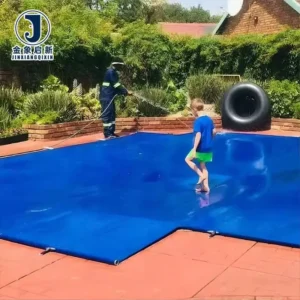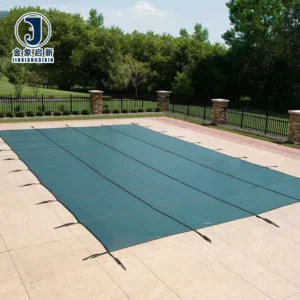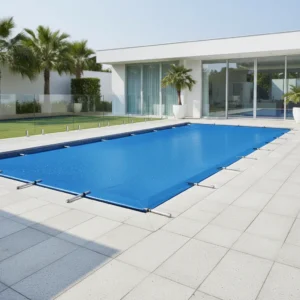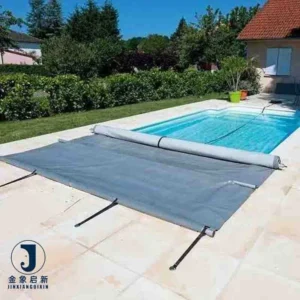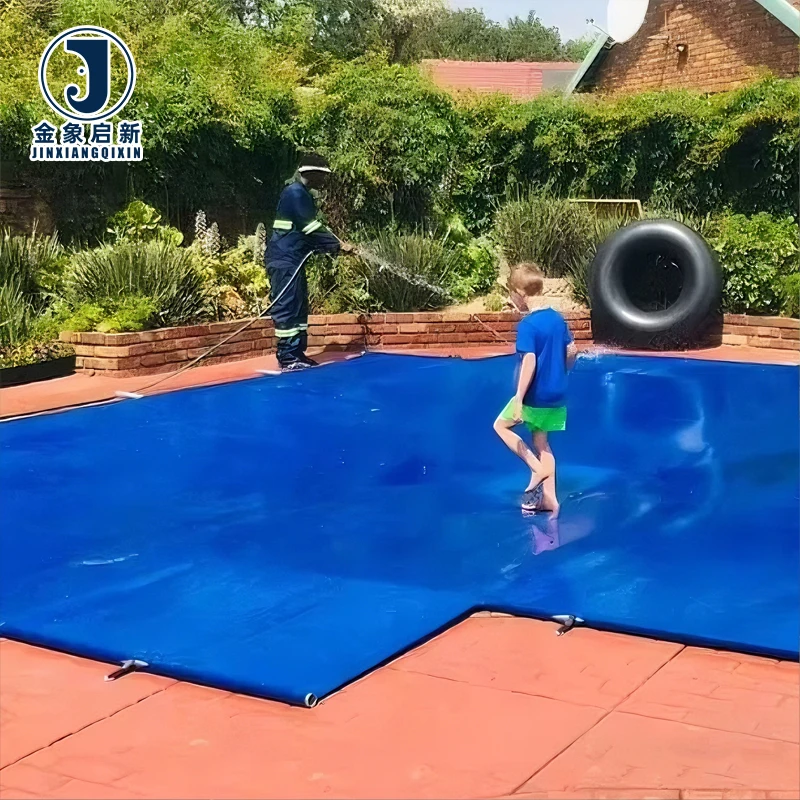
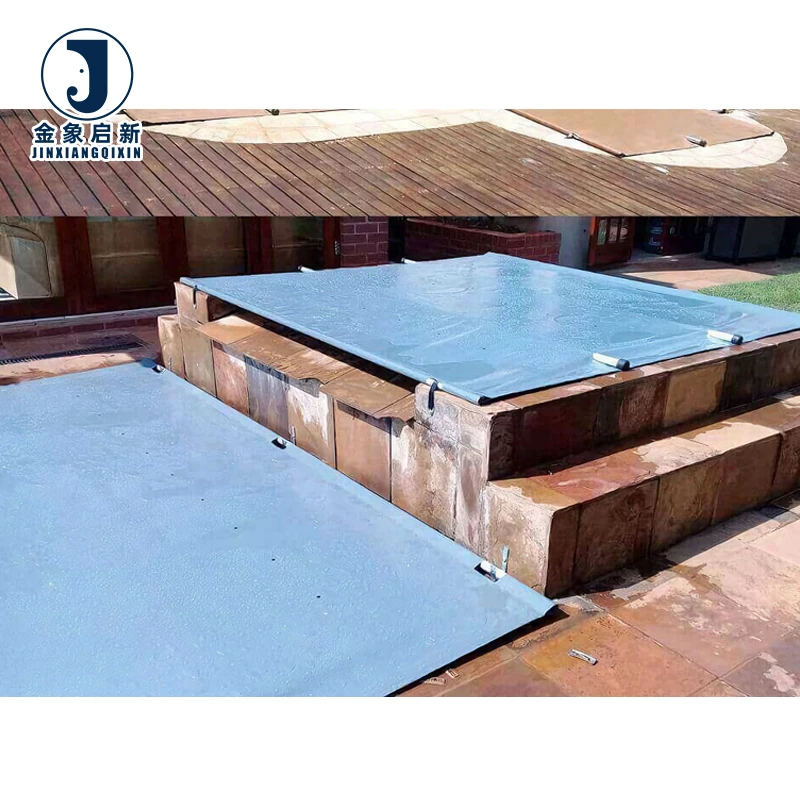
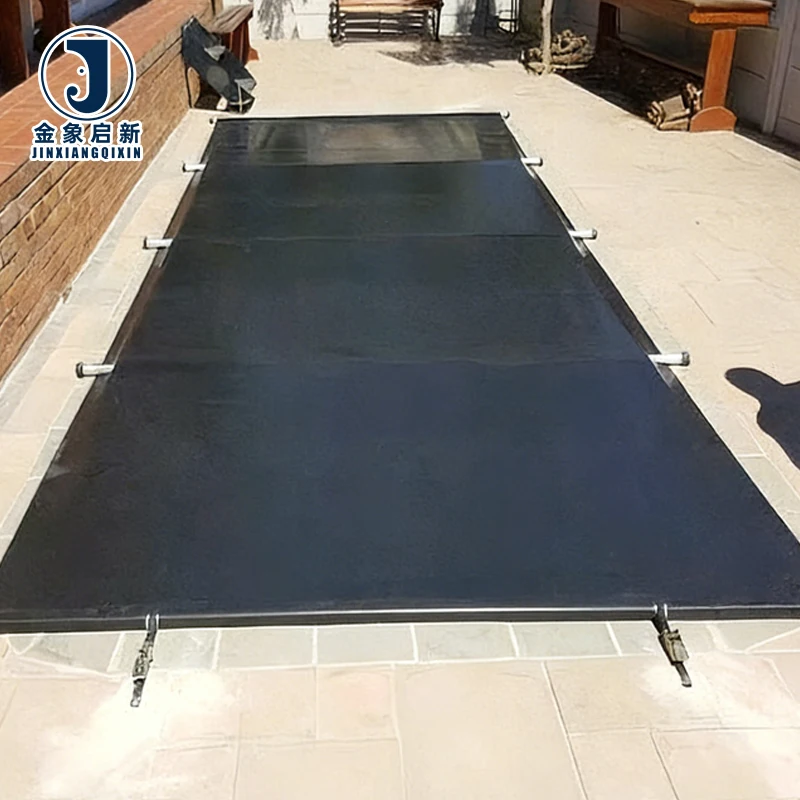
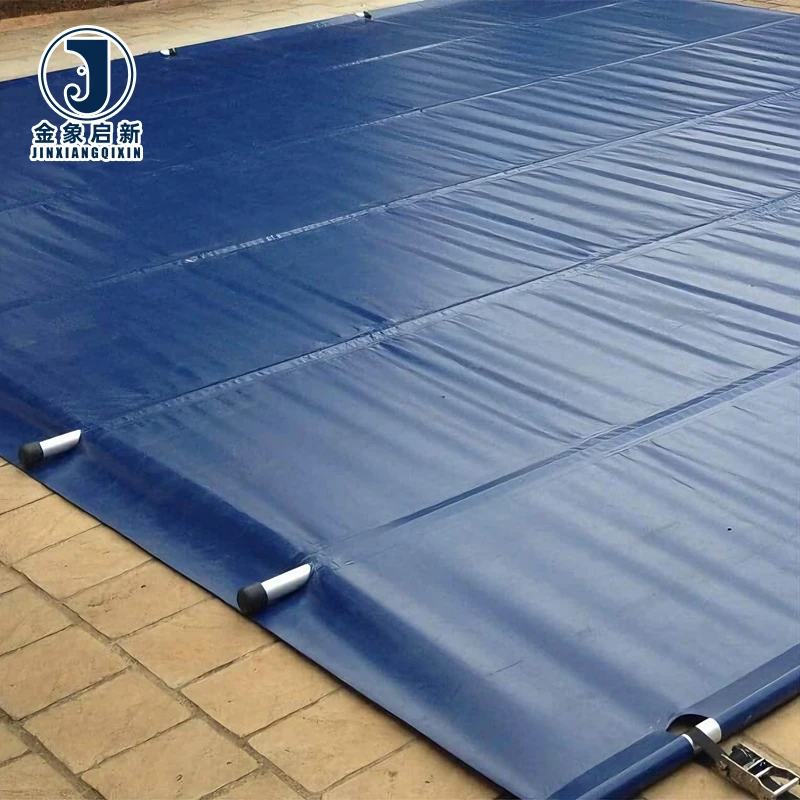
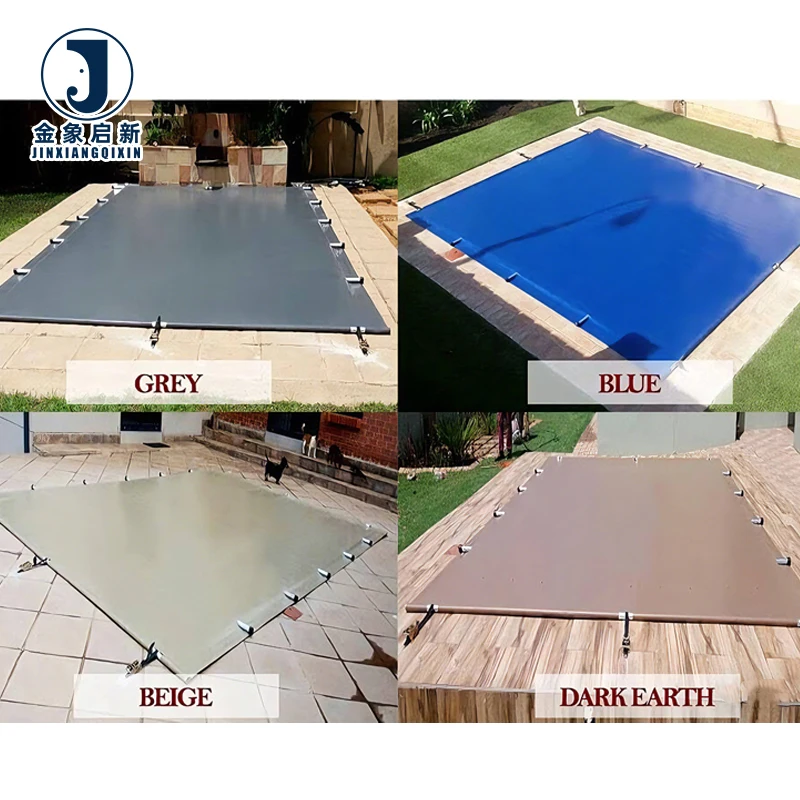
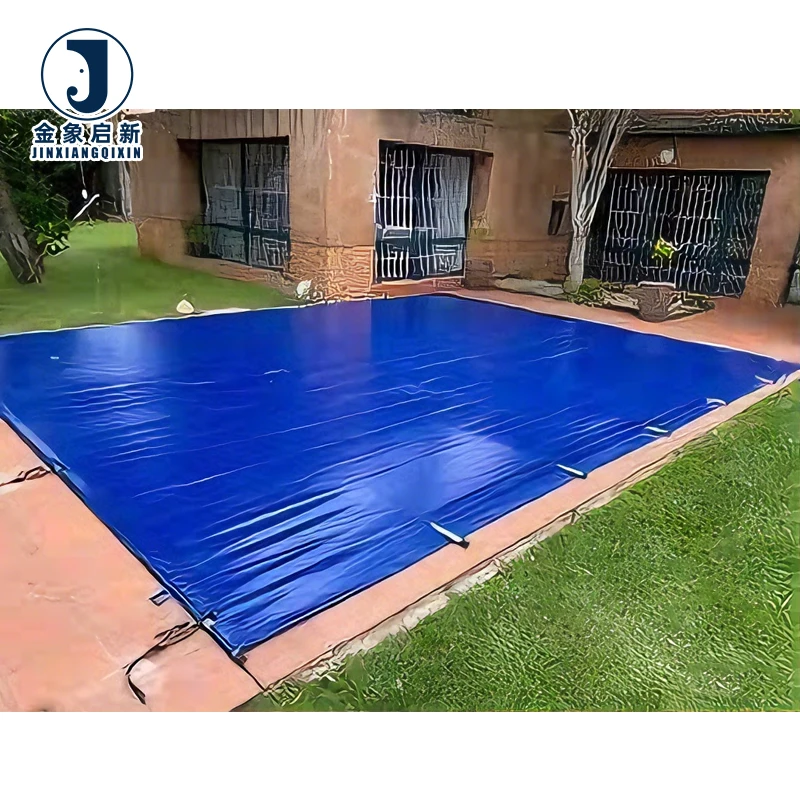
PVC Swimming Pool Cover Tarpaulin — 350–750gsm, high-strength polyester mesh with PVC coating, laminated and hot-melt technology for strong adhesion and outstanding welding tear strength.
- Anti-UV, anti-mildew, anti-static and flame retardant treatments available with test reports matched to the batch supplied
- Custom width, length, colour and pattern printing developed in-house with samples ready in days
- Roll-to-roll colour and GSM consistency verified through in-process QA and 100% pre-shipment inspection
Dedicated 10-person R&D team handles material selection and sample development, supported by three full production lines for reliable bulk capacity and on-time delivery.
Description
Full-Cycle Fabrication Control — Coating weight, adhesion strength and seam behaviour verified through in-process QA on every roll of PVC pool cover tarpaulin before dispatch.
Technical Specifications
| Parameter | Value |
|---|---|
| Product Type | PVC Coated Tarpaulin |
| Base Fabric | High-strength polyester mesh fabric with high tenacity yarns |
| Coating Technology | Laminated technology & Hot-melt coating technology |
| Available Weight Options | 350gsm / 420gsm / 500gsm / 550gsm / 600gsm / 750gsm |
| Available Thickness Options | 0.32mm / 0.35mm / 0.4mm / 0.45mm / 0.5mm / 0.65mm |
| Roll Size Options | 2m width × 75m length / 2.1m width × 50m length |
| Finish Product Sizing | Custom cut items as per customer requirements or sold from inventory |
| Colour Options | Blue / Red / Yellow / Light blue / Grey (custom colours available) |
| Key Features | Waterproof, sunproof, anti-mildew, cold crack resistance, anti-static treatment, outstanding tearing strength for welding, good strength and flexibility, adhesion strength, best colour fastness |
| Special Treatments Available | Flame retardant (grade not stated — confirm grade required for your market), anti-static, anti-cold, anti-mildew, 3P |
| Service Life Expectancy | 3–7 years under normal circumstances |
| Certifications | ISO, CE |
Application Suitability
| Application | Exposure & Requirement |
|---|---|
| Swimming pool covers | Continuous water contact, chlorine and chemical exposure, UV radiation, wind uplift on large spans, frequent rolling and folding at flex points |
| Fish tank and aquaculture pond liners | Permanent water immersion, biological fouling, soil chemistry contact, puncture risk from substrate irregularities |
| Tent and awning covers | Weather cycling, UV exposure, wind loading on tensioned panels, repeated assembly and disassembly |
| Truck awning and side curtain fabric | Road debris abrasion, constant vibration and flexing, weather exposure at highway speed, tie-down stress at edge hems |
| Cargo ship deck covers | Salt spray, heavy weather, cargo abrasion, prolonged UV exposure during transit |
Why GSM Alone Cannot Predict Pool Cover Performance
A heavier roll does not automatically mean a stronger weld or a longer-lasting pool cover.
When I first moved from running the hot-air welding machines to sampling for overseas clients, I learned that a PVC pool cover tarpaulin specified at a certain GSM could still fail catastrophically at the seam if the coating formulation and the welding parameters were not matched. The base fabric denier, the weave density and the coating adhesion together determine whether a heat-welded joint holds under the tension of a spanned pool cover or splits open at the first strong wind [NEED_CITE: tensile and tear test methods for coated fabrics per ISO 1421]. Buyers who focus only on weight on the quotation often discover that the real problem surfaces at the fabrication stage — when the weld peels apart before the fabric itself shows any sign of stress.
Laminated and Hot-Melt Coating for Reliable Seam Behaviour
The PVC pool cover tarpaulin aftermarket supplier offering both laminated and hot-melt coating technologies gives fabricators a critical advantage. Laminated construction bonds the PVC film to the polyester mesh under heat and pressure, creating a coating layer that penetrates the weave structure and produces strong mechanical adhesion. This matters directly at the weld line: when two panels are joined by hot-air or wedge welding, the coating must melt and re-fuse consistently across the seam. Hot-melt coating adds further adhesion depth, ensuring that the bond between coating and base fabric does not delaminate under the repeated flexing a pool cover experiences when it is rolled, unrolled and tensioned across a span.
Colour Consistency Across the Full Order
Pool covers installed on adjacent residential or commercial sites are often visible side by side, making any roll-to-roll colour variation immediately obvious once the covers are deployed. Our 10-person R&D team manages colour formulation at the coating stage, matching each production batch to the approved reference sample before the material enters the finishing line. Every roll of PVC pool cover tarpaulin produced in a single order is checked against the same colour standard during pre-shipment inspection, so the blue, grey or custom shade you approved at sampling is the shade that arrives on site [NEED_CITE: colour fastness testing standards for coated textiles].
How Weight, Weave and Coating Interact in Practice
The GSM figure on the quotation tells you the total mass per square metre — base fabric plus coating — but it does not reveal how that mass is distributed. A 550gsm roll with a dense, high-tenacity polyester mesh and a proportionally thick coating will behave very differently from a 550gsm roll where most of the weight sits in a heavy coating over an open weave. The laminated and hot-melt coating process used here ensures the PVC fills the interstices of the mesh, giving the fabric body and contributing to tear resistance in both warp and weft directions. Thicker options such as the 0.65mm grade add coating depth that improves puncture resistance for pond liner and pool floor applications, while the lighter 0.32mm grade keeps the material pliable for covers that are folded and stored frequently. The cold crack resistance treatment extends usable performance into lower temperature ranges, preventing the coating from becoming brittle and cracking when a winterised pool cover is tensioned in freezing conditions.
The Hidden Cost of Overlooking Weld Compatibility
Specifying a pool cover fabric that looks right on paper but behaves differently on the welding table is a problem I have seen more than once. A heavy-grade coated roll with strong tensile figures can still produce brittle welds if the coating chemistry does not match the hot-air temperature and travel speed set by the fabricator. The result is a seam that fails before the fabric does — typically at the point where the cover flexes most under wind load or water weight. When an entire batch of custom-cut pool covers comes back from installation with split seams, the rework cost covers not just material replacement but the labour of on-site removal, return shipping and emergency re-fabrication [NEED_CITE: coated fabric weld strength testing methods]. This is why we supply material specification sheets that state the coating type and base fabric construction for every roll, giving the fabricator the data needed to dial in welding parameters before production starts.
Why Fabricators Source This Range Here
Three full production lines and 36 sets of professional equipment support bulk capacity for PVC pool cover tarpaulin orders, whether the requirement is container-load roll stock or smaller batches of custom width and colour. Dedicated QA and QC checks run at every production stage — coating weight verification, adhesion testing and colour matching — with 100% inspection before any roll leaves the facility. The 10-person R&D team handles material selection, custom sizing and sample development, turning around sample rolls within days so fabricators can validate weld settings and colour before committing to a full order. Nearly 30 years of focused coated fabric production provides the process control depth that keeps GSM, coating weight and colour consistent from the first roll to the last in any shipment.
Documentation & Verification
- Material specification sheet stating GSM, base fabric construction, coating type and colour reference for each roll
- Test reports for UV and flame retardant grades matched to the batch supplied, where applicable
- Pre-shipment inspection record covering weight verification, colour check and surface quality per roll
- Roll packing list with individual roll weights, dimensions and batch identification
- Certificate of origin and customs documentation support for international dispatch
- ISO and CE certificates available on request
Fabrication, Handling & Storage
- Set hot-air welding temperature and travel speed based on the specific GSM and coating type stated on the material sheet
- Reinforce edge hems and tie-down points with additional coating-compatible webbing to distribute load across the polyester mesh
- Store rolls upright on pallets in a dry, shaded area to prevent permanent creasing of the PVC coating surface
- Allow cold-stored rolls to reach ambient temperature before unrolling to avoid cracking the anti-cold treated coating
- Clean finished covers with mild detergent and soft brush; avoid solvent-based cleaners that attack the PVC coating layer
- Plan cutting layout to maximise yield from the 2m or 2.1m roll width, keeping weld seams away from highest-stress span points
What to Include in Your Enquiry
To specify the right PVC pool cover tarpaulin for your application, share the intended use — whether the material will serve as a tensioned safety cover, a winter debris cover or a pond liner — along with the chemical and UV exposure conditions expected on site. Confirm the fire classification or treatment requirements for your destination market, and indicate whether you need roll stock for your own fabrication line or finished cut-to-size panels. If custom colour, width or printed branding is required, provide your colour reference and annual volume so the sampling and production schedule can be aligned to your project timeline.
Frequently Asked Questions
Q: How is the GSM verified before shipment against what was quoted?
A: Every roll undergoes weight verification during pre-shipment inspection. We cut a measured sample from the roll, weigh it and record the result against the GSM stated on your quotation and the material specification sheet. Any roll falling outside the agreed tolerance is flagged and replaced before the packing list is finalised, so you receive documented proof of the weight you paid for.
Q: Can flame retardant and anti-UV treatment be combined on the same roll?
A: Both treatments are available and can be applied to the same material. We supply test reports matched to the batch you receive, confirming the specific grade achieved for each treatment. Before sampling, confirm the fire classification required in your destination market so the correct formulation is selected during coating.
Q: What is the maximum custom width and minimum order per colour?
A: Custom widths beyond the standard 2m and 2.1m roll sizes are developed through our R&D team based on the production line capability for the selected GSM and coating type. Minimum order per colour depends on whether the shade is a stock option or a custom formulation. Share your required width, colour reference and estimated annual volume for a specific production plan.
Q: How do you ensure colour consistency across multiple rolls in one order?
A: Each production batch is matched to an approved colour reference sample before coating begins. During in-process QA and final pre-shipment inspection, rolls from the same order are checked side by side under controlled lighting. The inspection record documents the colour verification result for every roll, ensuring the shade stays uniform across your full order.
Q: What lead time applies to custom width, colour or printed branding orders?
A: Custom orders involving non-stock width, a bespoke colour formulation or printed branding require sample development and approval before full production begins. Typical lead times vary based on the complexity of the customisation and current production scheduling. Submit your specifications early so sampling can be completed and production capacity reserved for your required dispatch date.
Related products
-
Custom PVC Tarpaulin Pool Cover – Manufacturer
Read more -
JX PVC Tarpaulin Swimming Pool Cover Material Knife Coated Fabric Waterproof UV-Resistant Windproof
¥13.00 Select options This product has multiple variants. The options may be chosen on the product page -
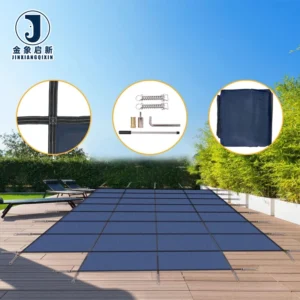
Custom PVC Pool Cover for Inground Pools – Full Range
Read more -
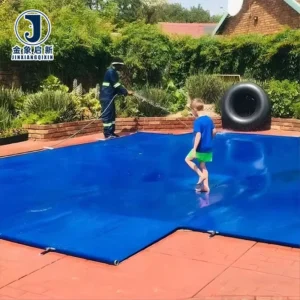
JX PVC Laminated Waterproof Breathable Anti-UV Blackout Organic Plain Weft Swimming Pool Covers Tarpaulin Coated
¥1.78 Select options This product has multiple variants. The options may be chosen on the product page