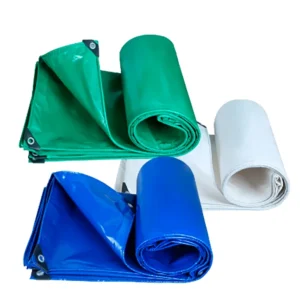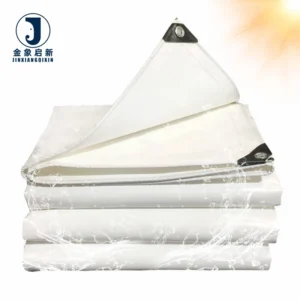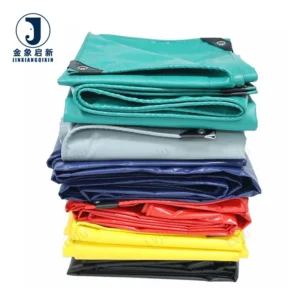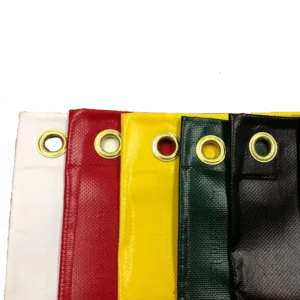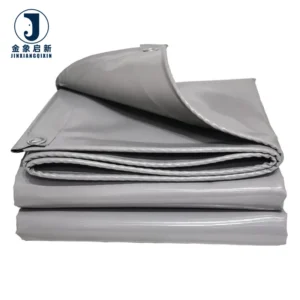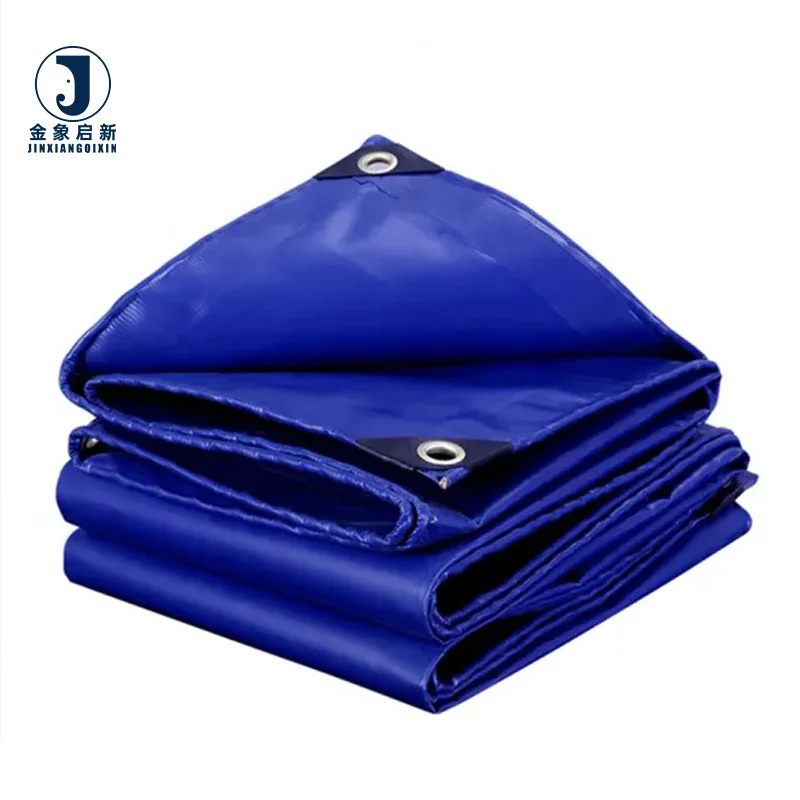
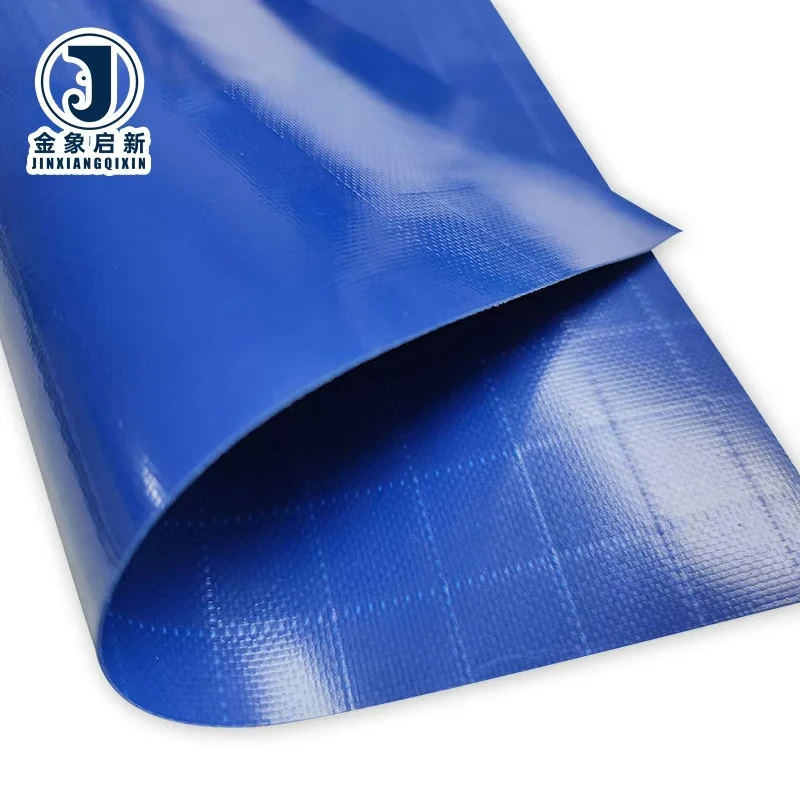
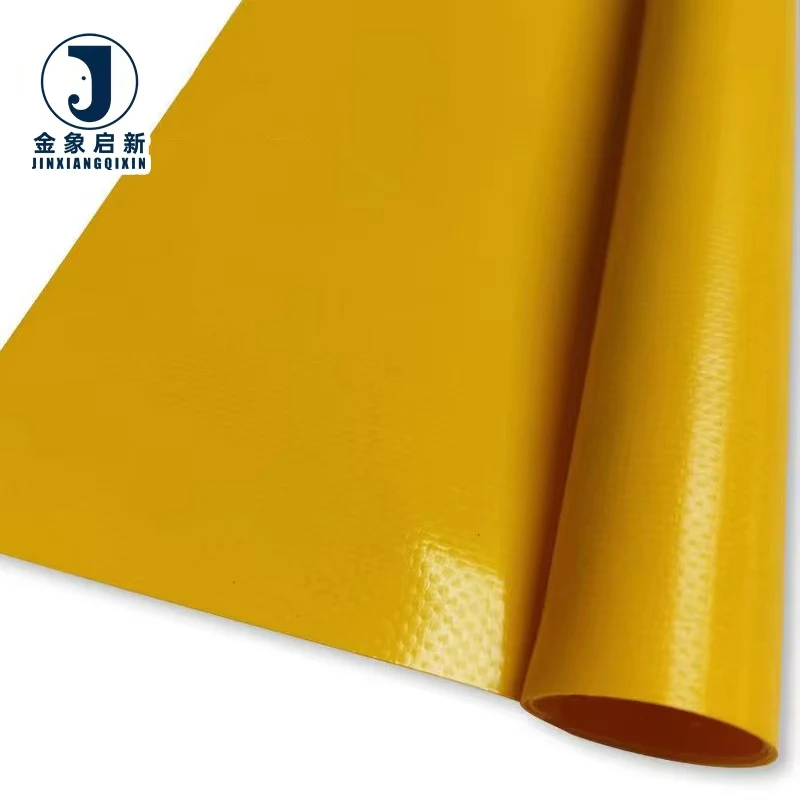
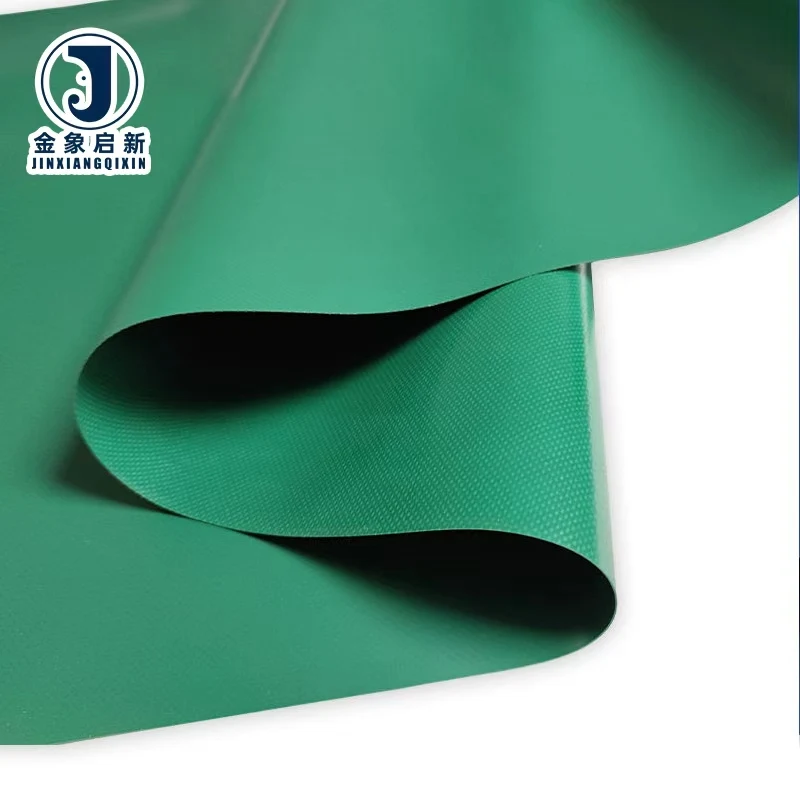
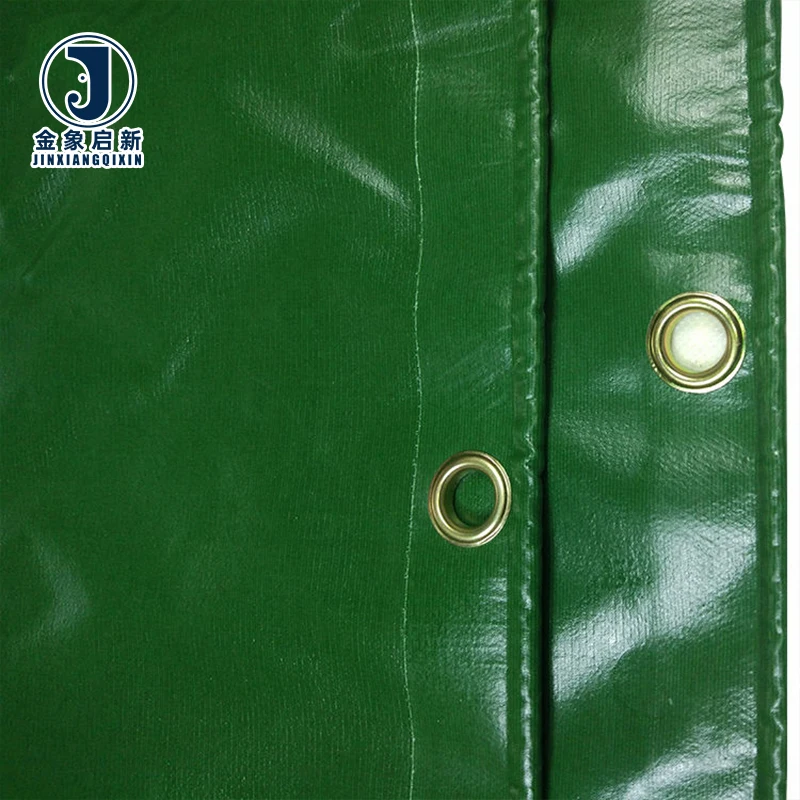
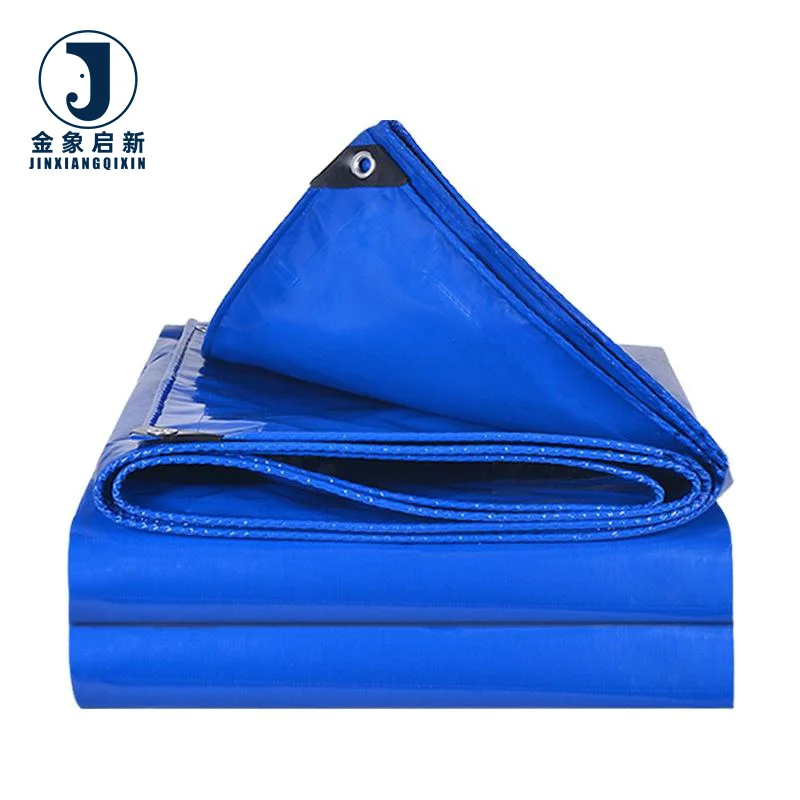
PVC Coated Tarpaulin for Railway Wagon Cover with 350–900 GSM range, 500D×840D to 1300D×1300D yarn counts, and 0.29mm to 0.65mm thickness — knife-coated polyester fabric with high-temperature heat-sealed seamless edge wrapping and 3cm enlarged aluminum alloy eyelets.
- GSM and yarn density matched to tensile requirements; higher GSM is not automatically better — base fabric denier and coating adhesion together determine field performance
- Flame retardant and anti-UV treatment available with supporting test reports on request
- Nearly 30 years of coated fabric process control, 100% pre-shipment inspection, and custom samples developed within days for sizing, colour, and print requirements
Description
Precision Coating Control — three dedicated production lines and in-process QA verify coating weight and base fabric adhesion on every roll before it leaves the facility.
Technical Specifications
| Parameter | Value |
|---|---|
| Product Type | PVC Coated Tarpaulin |
| Material | PVC & Polyester |
| Yarn Count Options | 500D840D / 500D1000D / 1000D1000D / 1000D1300D / 1300D1300D / 1000D2000D |
| Weight Range (GSM) | 350 / 400 / 420 / 500 / 600 / 650 / 750 / 900 |
| Thickness Range | 0.29mm to 0.65mm |
| Warp Tensile Strength | 1650 N to 3900 N (depending on specification) |
| Weft Tensile Strength | 1600 N to 3500 N (depending on specification) |
| Density Options | 3019 / 2020 / 30*15 (depending on yarn count) |
| Brittle Temperature | ≤ -50 to -60 °C |
| Softening Temperature | ≥ 80 °C |
| Key Features | Water resistant, waterproof, flame retardant (grade not stated), anti-UV (test basis not stated) |
| Edge Finishing | High temperature heat sealed seamless edge wrapping |
| Eyelets | 3 cm enlarged aluminium alloy buttonhole |
| Reinforcement | Reinforced corners on all sides |
| Rope | 5 mm thick rope without splicing |
| Standards | ISO, CE |
Application Suitability
| Application | Exposure & Requirement |
|---|---|
| Railway wagon cover | Wind-driven rain, debris impact, repeated tying and untying at tension points |
| Flatbed truck and trailer load cover | Road vibration, UV exposure, multi-directional pull from tie-down straps |
| Construction site equipment cover | Dust, moisture, abrasion from shifting loads, site handling |
| Outdoor car and garden furniture cover | Prolonged sun exposure, pooling water, seasonal temperature swings |
| Tent and awning fabrication | Roll-to-roll colour consistency, weldability, tension under frame load |
| Balcony and window rain cover | Wind load, UV degradation, attachment stress at grommet points |
Why Stated GSM Is Not Enough to Guarantee Cover Performance
A quoted weight means nothing if the coating adhesion fails before the base fabric reaches its rated tensile limit.
When a PVC coated tarpaulin custom manufacturer provides a spec sheet listing 650 GSM, the buyer expects a certain level of durability. Yet field failures rarely trace back to weight alone. More often, the coating delaminates from the polyester base under repeated flexing, or the heat-sealed edge lets go while the fabric body remains intact. I have reviewed returned covers where the weld line separated cleanly from the substrate — the base yarn was never stressed to anywhere near its breaking point. [NEED_CITE: coating adhesion test methods for PVC-coated polyester per ISO 2411]
Matching Yarn Count to Load-Bearing Demands
The yarn count you select determines how the PVC coated tarpaulin behaves under sustained tension. A 500D1000D base fabric delivers adequate strength for light-to-medium flatbed covers, while a 1300D1300D construction provides the warp and weft density needed for heavy machinery wrapping and railway wagon sheets exposed to high wind loads. Choosing the correct denier prevents premature tearing at stress concentrations.
Edge and Corner Engineering for Tie-Down Stress
The points where a cover meets the tie-down system are where most field failures originate. High temperature heat sealed seamless edge wrapping eliminates the glue cracking and thread unraveling that stitched hems develop after repeated wet-dry cycles. The 3 cm enlarged aluminium alloy eyelets, combined with reinforced corners on all sides, distribute multi-directional pulling forces across a wider area of the substrate rather than concentrating load on a single yarn bundle.
Understanding How Base Fabric Density Governs Tear Propagation
Density — the count of warp and weft yarns per unit area — works together with yarn denier to control how a tear spreads once initiated. A 3019 density in the 500D variants places more yarns in the warp direction, resisting longitudinal tears that commonly develop when a cover snags on a protruding load edge. The 2020 density used in the heavier 1000D and 1300D variants balances strength in both directions for applications where load shift can pull from any angle. Coating weight alone cannot compensate for insufficient base fabric density; the PVC film bridges the gaps between yarns but does not replace their structural contribution. [NEED_CITE: relationship between base fabric weave density and tear resistance in coated textiles]
The Hidden Cost of Specifying on Weight Alone
Buyers who select a cover grade based only on GSM frequently encounter problems once the product enters service. A lighter-than-agreed coating may pass a quick hand-feel check at delivery yet fail to provide the waterproof integrity needed for monsoon-season rail transport. Flame retardant grades claimed without a supporting test report create compliance risk on regulated construction sites where inspectors demand documented certification. Colour variation between rolls in the same shipment becomes visible only after panels are installed side by side on a large awning or tent structure, forcing a costly replacement. [NEED_CITE: fire classification requirements for temporary structures and construction covers]
Why Procurement Teams Consolidate With This Source
Three full production lines equipped with 36 sets of professional equipment handle both roll stock and finished cut-to-size orders without outsourcing any stage. A dedicated 10-person R&D team develops samples for custom widths, colours and pattern printing within days, allowing buyers to verify material and finish before committing to a production run. In-process quality control checks coating weight, adhesion and dimensional accuracy at every stage, with 100% pre-shipment inspection verifying that each roll matches the purchase order. Production runs for PVC coated tarpaulin custom manufacturer orders ship with complete documentation packages built for cross-border customs clearance.
Documentation & Verification
- Material specification sheet confirming actual GSM, base fabric denier, coating weight and colour reference per roll
- Pre-shipment inspection record verifying weight and dimensions against the purchase order before loading
- Test report for flame retardant and anti-UV grades where applicable, with stated grade or standard
- Roll packing list with net and gross weight per roll to support container load planning
- Certificate of origin and customs documentation for smooth clearance across export markets
Fabrication, Handling & Storage
- Heat-sealed seams require matched temperature and dwell time settings for the selected GSM and coating thickness
- 3 cm aluminium alloy eyelets must be set with adequate washer diameter to distribute load across the reinforced corner patch
- Store rolls upright on pallets to prevent flat-spotting and permanent creasing in heavier grades above 650 GSM
- Allow cold-stored rolls to acclimatise before unrolling to avoid coating stiffness and surface cracking below the softening threshold
- Use mild detergent without solvents for cleaning to preserve the PVC coating surface and any applied anti-UV treatment
- Field repairs on cuts up to several centimetres can be heat-patched using compatible PVC repair tape matched to the coating grade
What to Include in Your Enquiry
Provide the specific application and expected environmental exposure — wind load, UV intensity, chemical contact — so the correct yarn count and GSM can be recommended. Confirm the flame retardant grade or anti-UV standard required by your local regulations or project specification. State the required roll width, cut dimensions, eyelet spacing and any colour or printed branding needs to receive an accurate PVC coated tarpaulin custom manufacturer quotation and lead time.
Frequently Asked Questions
Q: How is GSM verified before the rolls leave the factory?
A: Every roll undergoes 100% pre-shipment inspection where weight is measured and recorded against the stated GSM on the purchase order. The inspection record accompanies the shipping documentation so buyers can confirm compliance on arrival without needing to re-weigh independently.
Q: What flame retardant grade and UV test basis can you supply?
A: Flame retardant and anti-UV treatments are available in multiple grades. The specific grade and test standard depend on the destination market and application requirements. Request the test report relevant to your compliance needs when placing the enquiry.
Q: How is colour consistency maintained across multiple rolls?
A: Each production batch uses controlled pigment dosing and in-process colour checks to maintain consistency. For orders spanning multiple rolls, buyers can request a colour reference sample for comparison on receipt. Confirm the colour standard at the quotation stage.
Q: How do heat-sealed edges compare to stitched hems under load?
A: High temperature heat sealed seamless edge wrapping fuses the coating directly to the hem, eliminating thread and adhesive as potential failure points. Stitched hems can unravel when exposed to repeated moisture and flex cycles, making heat-sealed construction more reliable for covers under constant tie-down tension.
Q: What information do you need to develop a custom sample?
A: Provide the target GSM, yarn count preference, required dimensions, colour reference, and any eyelet spacing or reinforcement details. The R&D team typically produces a sample within days for review before bulk production is scheduled.