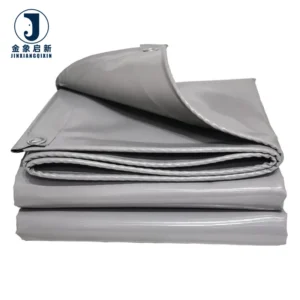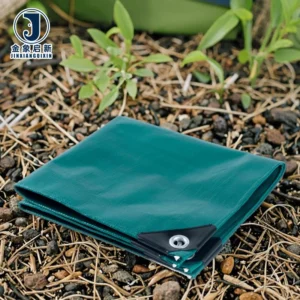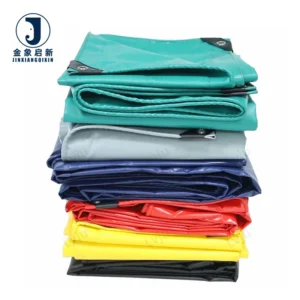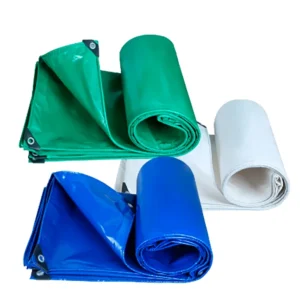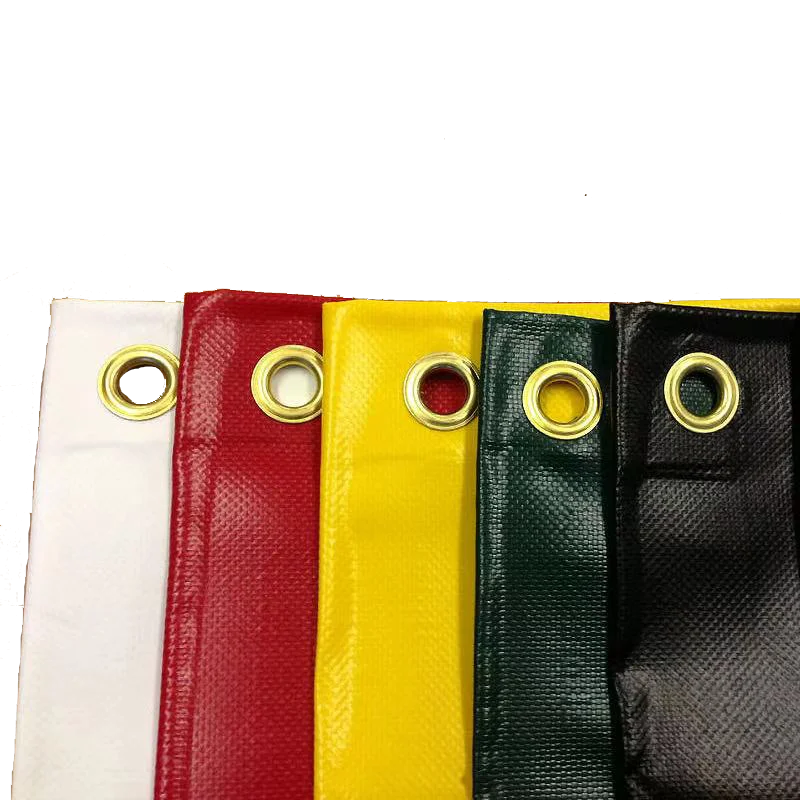
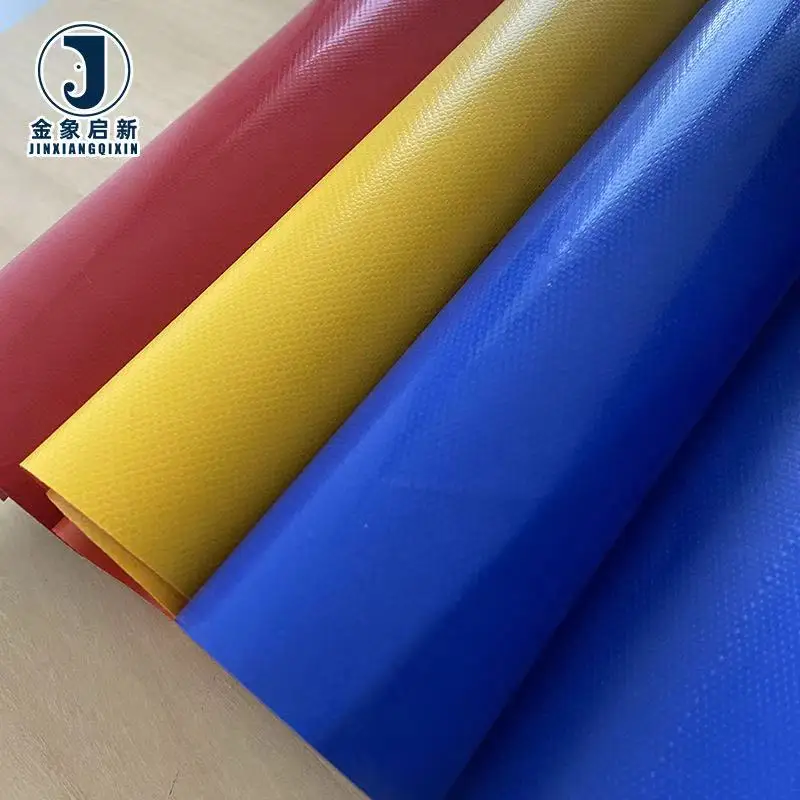
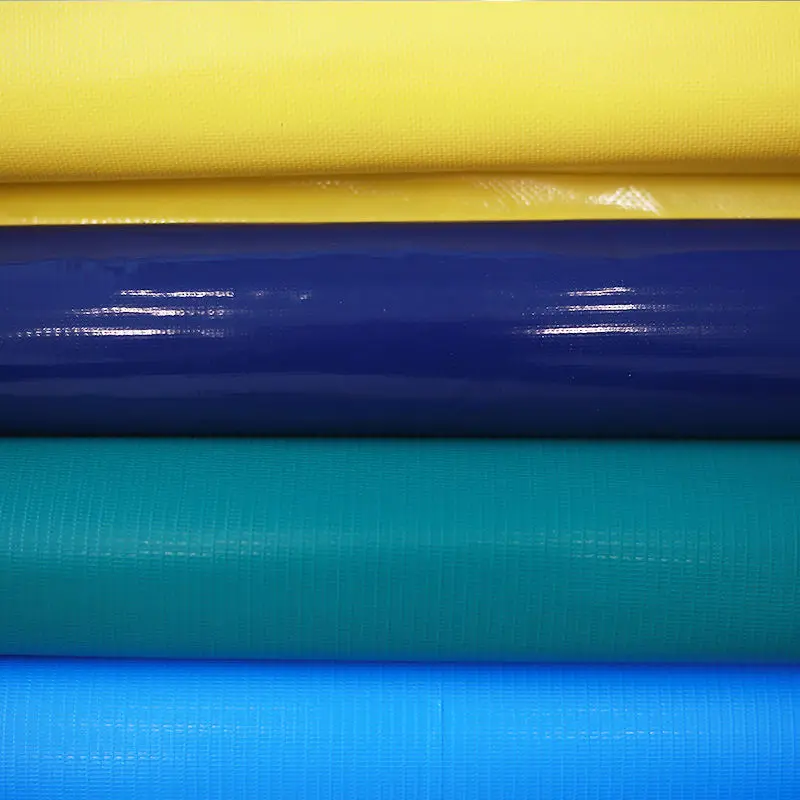
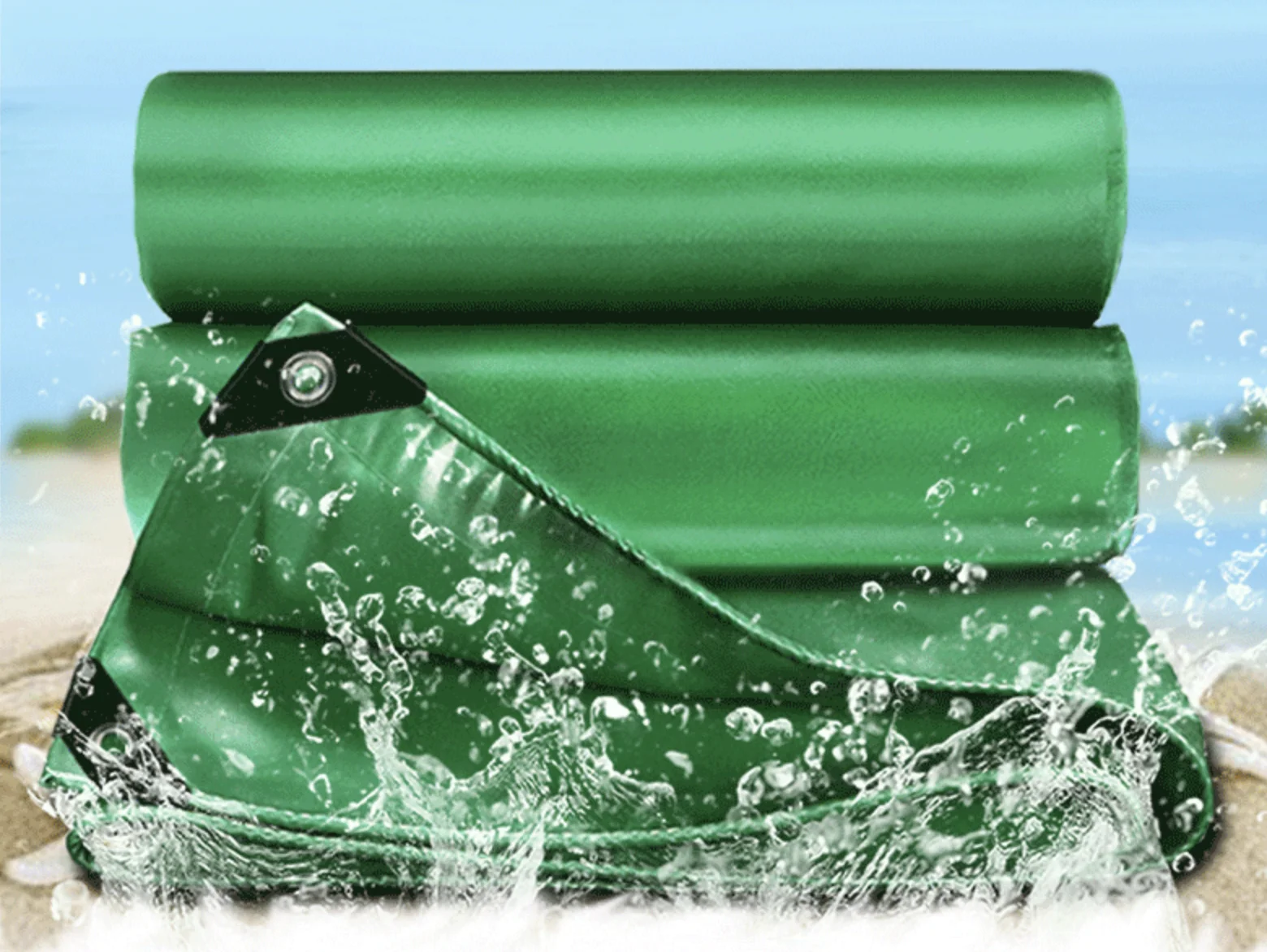
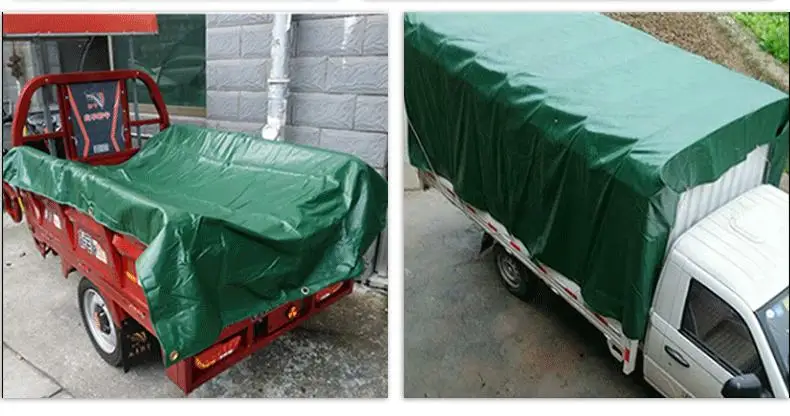
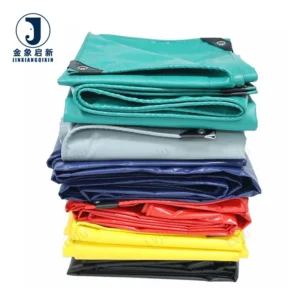
PVC Knife-Coated Fabric Tarpaulin available in 300-600 gsm with flame retardant, anti-static and anti-cold treatments applied at coating stage. Roll stock or cut-to-size format with custom width and length for tent, truck cover and industrial waterproof applications.
- Knife-coated construction delivers consistent coating weight and strong adhesion between base fabric and PVC layers, critical for heat-welded seams on fabricated covers.
- Colour and GSM verified roll-to-roll across the full order, with 100% pre-shipment inspection before dispatch.
- Sample development within days for custom width, colour or treatment combinations, backed by three full production lines and 36 sets of specialist coating equipment.
Description
Deep Process Control — Every roll of PVC knife-coated fabric tarpaulin undergoes weight verification and treatment certification before dispatch, ensuring the specification you ordered is the specification you receive.
Technical Specifications
| Parameter | Value |
|---|---|
| Product Type | PVC Knife-Coated Fabric Tarpaulin |
| Weight Range | 300–600 gsm |
| Available Treatments | Flame Retardant (grade not stated), Anti-Static (grade not stated), Anti-cold, Anti-mildew, 3P |
| Format | Roll or Customization |
| Outdoor Service Life | 3–5 years (source value — verify against manufacturer catalog) |
| Applications | Outdoor tent, truck cover, car cover, waterproof cover, oilproof tarpaulin, banner material, general heavy-duty covering |
Application Suitability
| Application | Exposure & Requirement |
|---|---|
| Outdoor tent and awning fabric | Prolonged UV exposure, wind loading, repeated assembly and teardown stress |
| Truck and trailer cover | Road abrasion, constant flexing at folds, fuel and oil contact |
| Car cover and vehicle wrap | Weather cycling, surface scratch prevention, conformability to shape |
| Waterproof general covering | Standing water, rain-driven moisture, ground contact and soil chemistry |
| Oilproof tarpaulin for industrial use | Hydrocarbon contact, workshop floor abrasion, frequent repositioning |
| Banner and signage material | Large-format printing, ink adhesion, short to medium-term outdoor display |
What "Flame Retardant" Means Without a Certified Grade
A PVC knife-coated fabric tarpaulin labelled flame retardant is only as reliable as the test report that ships with it.
Buyers routinely request flame retardant treatment on coated tarpaulins for construction site enclosures, event tents and mining ventilation covers. Yet many orders arrive without any documentation specifying which standard the fabric was tested against — or whether it was tested at all. The absence of a referenced grade such as DIN 4102 B1, NFPA 701 or M2 leaves the buyer exposed during site inspections and regulatory audits [NEED_CITE: DIN 4102 fire classification for building materials]. When the inspector asks for the certificate, a generic claim on the invoice does not hold up.
Specifying flame retardant treatment without tying it to a recognised standard creates a gap between what the buyer assumes and what the mill actually produced. The coating may contain retardant additives but in concentrations insufficient to pass the test the buyer’s market requires [NEED_CITE: tensile and tear test methods for coated fabrics per ISO 1421]. Available in flame retardant grades — confirm the grade required for your market before placing the production order.
Matching Weight Grade to the Actual Load Environment
Selecting the correct gsm for a PVC knife-coated fabric tarpaulin depends on the mechanical and environmental load the material will face in service. A lightweight grade around 300 gsm suits banner printing and short-term event covers where the fabric is handled frequently but not subjected to sustained tension or abrasion. Moving into the mid-range provides additional body for truck covers and temporary construction enclosures where wind gusts and tie-down points concentrate stress on the fabric.
For applications involving continuous outdoor exposure or contact with abrasive surfaces, heavier grades approach the upper limit of this product range and deliver greater resistance to puncture and tear propagation. The relationship between weight and durability is not linear — base fabric denier and weave density contribute independently to tensile and tear performance, meaning two fabrics at the same gsm can behave very differently under load.
Treatment Selection at the Coating Stage Determines Field Performance
The treatments available on this PVC knife-coated fabric tarpaulin — including anti-static, anti-cold and anti-mildew options — are incorporated during the coating process rather than applied as a surface finish. This integration means the functional properties persist through the normal wear cycle of the fabric and do not wash or abrade away after the first few months of service [NEED_CITE: coating integration methods for PVC tarpaulin treatments]. Anti-cold treatment is critical for covers deployed in sub-zero environments where untreated PVC becomes brittle and cracks at fold lines.
Anti-mildew treatment matters most in tropical and subtropical markets where stored rolls or installed covers remain damp for extended periods. Without this additive, fungal growth on the fabric surface causes staining and accelerates plasticiser migration, which in turn stiffens the material and shortens its usable life.
Reading the Specification Beyond the GSM Number
GSM alone tells you how much material is on the roll but not how that material will perform. The knife-coating process deposits a controlled layer of PVC compound on both sides of a polyester base fabric, and the bond between coating and substrate determines peel strength and long-term delamination resistance. Unlike laminated or calendared alternatives, knife coating allows precise metering of compound weight, which is why verified GSM is meaningful only when the base fabric construction is also known.
A heavier coating over a low-denier base may show high GSM but offer poor tear strength because the yarns themselves are the weak point. Conversely, a tight weave at moderate GSM can outperform a heavier, loosely woven fabric in both tensile and tear tests. Surface finish — whether glossy or matte — affects cleanability and ink adhesion for banner applications, with glossy surfaces generally releasing dirt more readily under rain wash while matte surfaces provide better print receptivity for solvent and UV-cured inks. Treatment additives such as flame retardant and anti-static compounds are compounded into the PVC paste before coating, so their effectiveness is locked in at production rather than dependent on a topical application that could wear away.
The Hidden Cost of Inconsistent Roll-to-Roll Quality
When a buyer orders multiple rolls of PVC knife-coated fabric tarpaulin for a single project, any variation in weight or colour between rolls becomes immediately visible once the material is installed side by side. Colour shade differences across rolls sourced from different production batches force the fabricator to sort and segregate panels, wasting time and material [NEED_CITE: batch consistency standards for coated textile production]. Weight inconsistency is harder to detect visually but surfaces during fabrication when some rolls heat-seal at different temperatures than others, producing weld seams that fail prematurely at the point the load flexes most.
The cost of these failures is never limited to the defective roll. A truck cover that splits at a seam on the highway damages the cargo and the transport operator’s reputation. A tent panel that fades unevenly across its surface triggers a warranty claim from the end user back through the entire supply chain.
Why Buyers Source This Fabric Through Our Production Lines
Three full production lines with 36 sets of professional equipment support consistent output across the 300–600 gsm range, allowing bulk orders to ship on schedule without splitting production across external mills. The 10-person R&D team develops custom width, colour and treatment combinations specific to each buyer’s application, producing samples within days rather than weeks. Dedicated quality inspection at every coating stage means the GSM, colour and treatment level are checked before the roll leaves the line — not after the buyer discovers a discrepancy on arrival.
Full documentation accompanies every shipment: material specification sheets, treatment test reports where applicable, and pre-shipment inspection records provide the traceability that downstream customers and regulatory bodies require. With nearly 30 years of focused coated fabric production, process parameters for knife coating are established from historical data rather than trial and error, giving buyers confidence that reorders will match the original approved sample.
Documentation & Verification
- Weight verification per roll against the stated GSM before dispatch
- Treatment test report referencing the specific grade shipped
- Colour reference card matched to the production batch number
- Pre-shipment inspection record covering surface and dimensional checks
- Material specification sheet detailing base fabric and coating construction
- Certificate of origin and customs documentation for export markets
Fabrication, Handling & Storage
- Heat-seal temperature must be adjusted per gsm grade to prevent coating scorch or incomplete weld
- Store rolls upright on pallets to avoid flat-spot deformation on the outer coating layers
- Allow cold-stored rolls to acclimate to room temperature before unrolling to prevent coating crack
- Use compatible PVC solvent cement for field repairs on knife-coated surfaces
- Plan cutting layout across the roll width to minimise off-cuts and seam count
- Clean printed banner surfaces with non-solvent detergent to preserve the coating finish
What We Need to Quote Your Requirement Accurately
Provide the application environment, including whether the fabric will face continuous outdoor exposure, chemical contact or mechanical abrasion. Specify the target market and any fire safety or anti-static compliance requirements that apply in that jurisdiction. Confirm whether you need roll stock in standard widths or custom dimensions, along with estimated annual volume, so we can align production scheduling to your procurement cycle.
Frequently Asked Questions
Q: What GSM do I need for my application?
A: The correct weight depends on the mechanical load and exposure conditions. Banner and short-term covers typically suit the lighter end of the 300–600 gsm range, while truck covers and construction enclosures benefit from heavier grades. Base fabric denier and weave density also influence strength independently of weight, so share your application details for a specific recommendation.
Q: Can I order custom widths beyond standard stock?
A: Yes, custom width is available within the production line capability. Share the exact width and roll length you require, along with the gsm grade and treatment combination, so the R&D team can confirm feasibility and provide a sample for your approval before full production begins.
Q: How do I verify flame retardant treatment on delivery?
A: Request the treatment test report that corresponds to your shipment batch. The report should reference the specific standard and grade tested. Compare the batch number on the report with the roll labels you receive, and conduct independent testing if your market regulations require third-party verification.
Q: What is the expected outdoor lifespan at different weight grades?
A: Outdoor service life varies with UV exposure intensity, installation orientation and cleaning frequency. The 3–5 year reference applies under typical conditions, but heavier grades with UV treatment generally sustain appearance and flexibility longer in high-sun environments. Confirm the exposure profile of your market for a realistic expectation.
Q: What is the minimum order for custom colours or prints?
A: Minimum order quantities for custom colour and printed branding depend on the specific shade and the number of print stations required. Standard colours from the existing palette carry lower minimums. Share your Pantone or RAL reference and estimated order volume so we can provide the exact threshold and lead time.
Related products
-
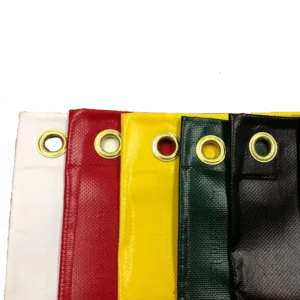
300-600gsm Heavy Duty PVC knife-coated Fabric Tarpaulin roll or Customization
¥0.83 Select options This product has multiple variants. The options may be chosen on the product page -
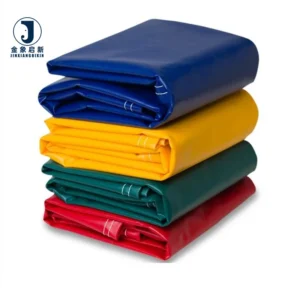
PVC Knife-Coated Fabric 500gsm 600gsm for Truck Cargo Cover – Custom Made
Read more -
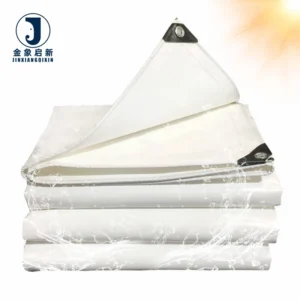
PVC Tarpaulin 650Gsm for Truck Cover – Custom Made
Read more -
500 GSM PVC Knife-Coated Fabric for Tent Truck – Custom Made
Read more