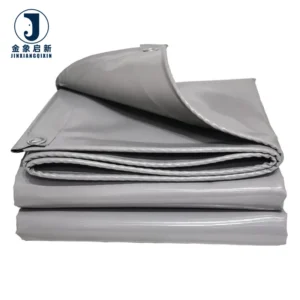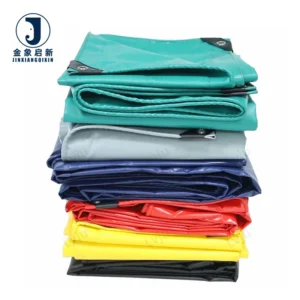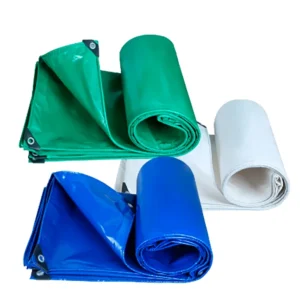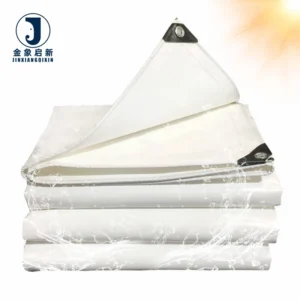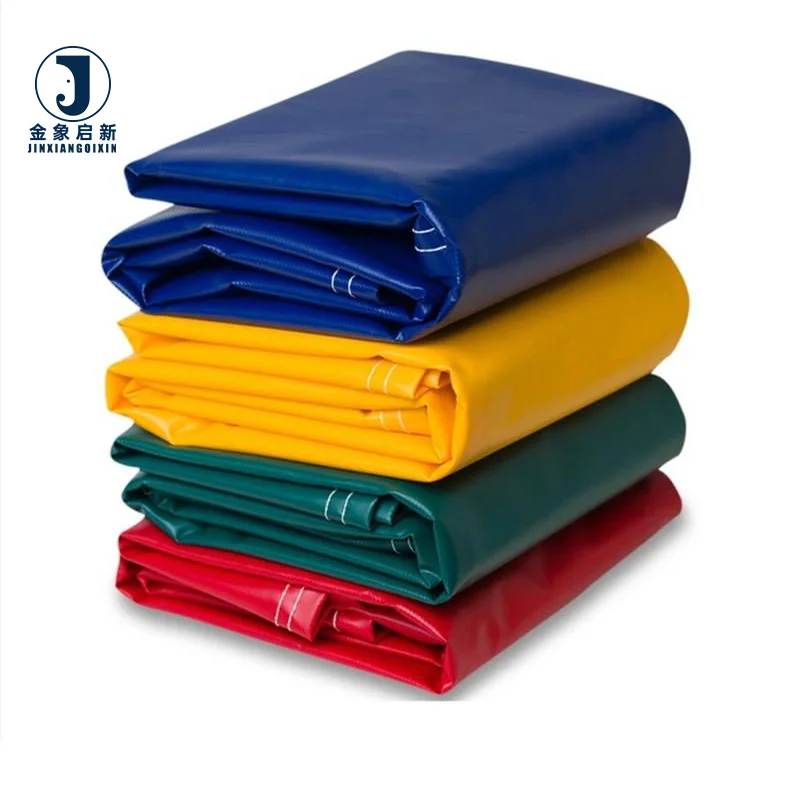
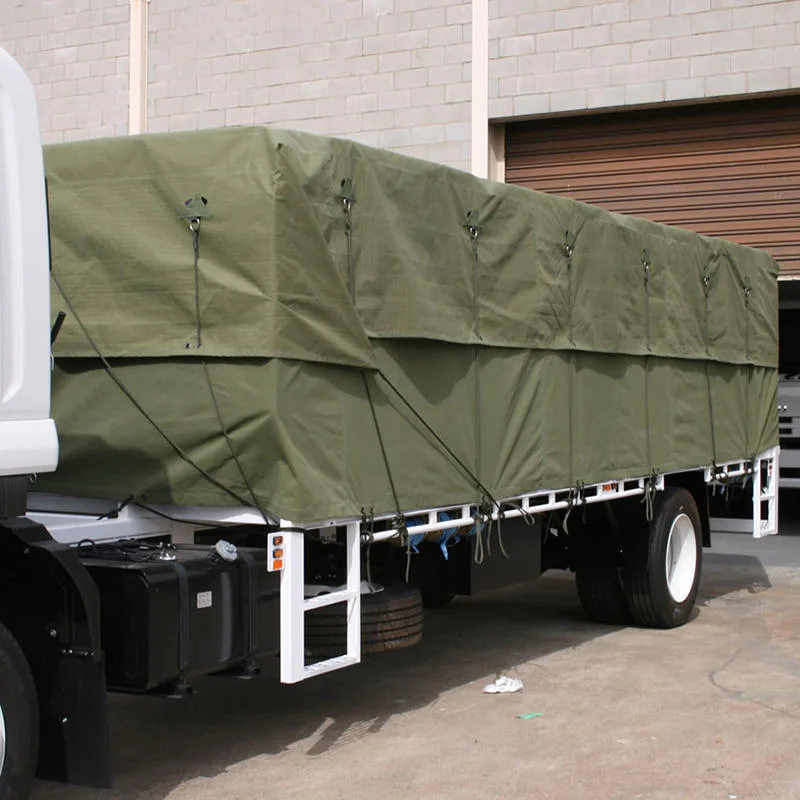
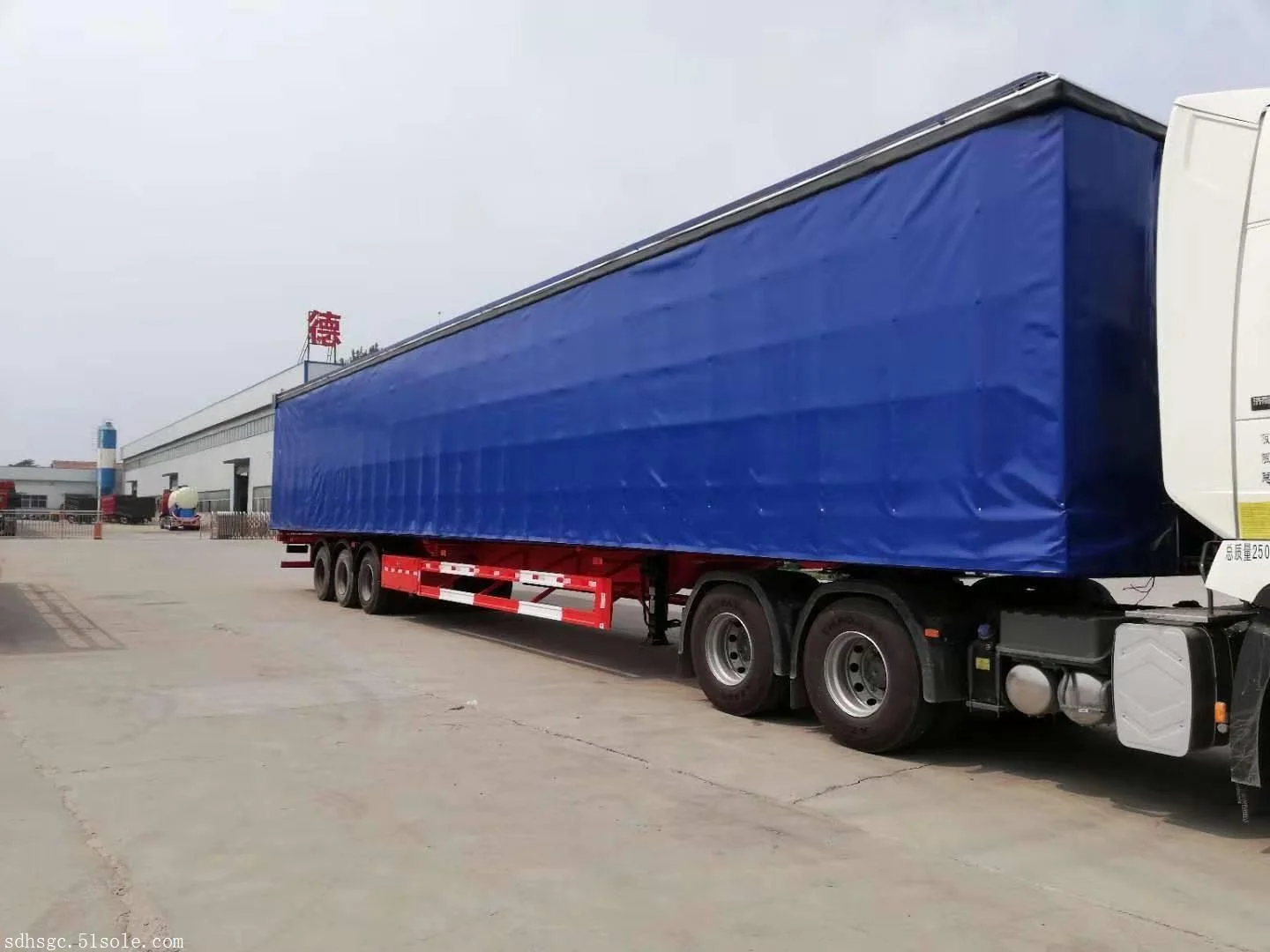
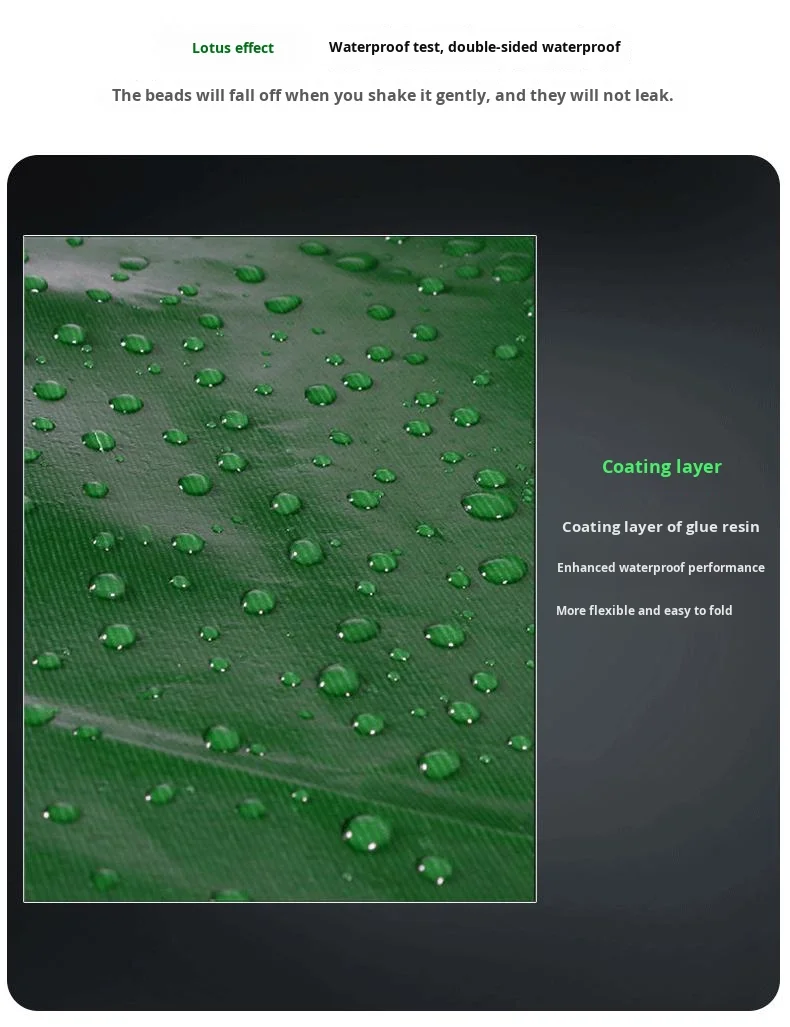
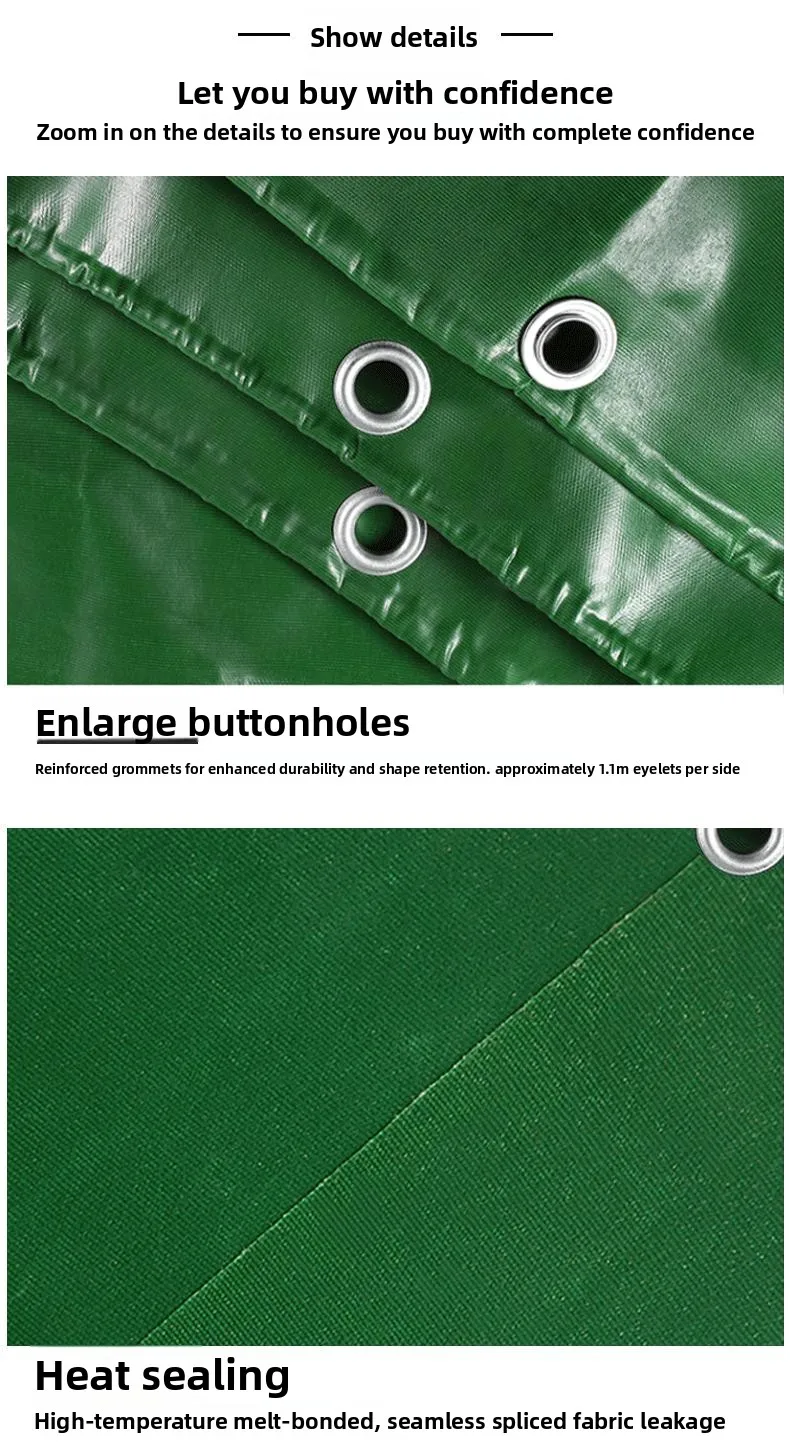
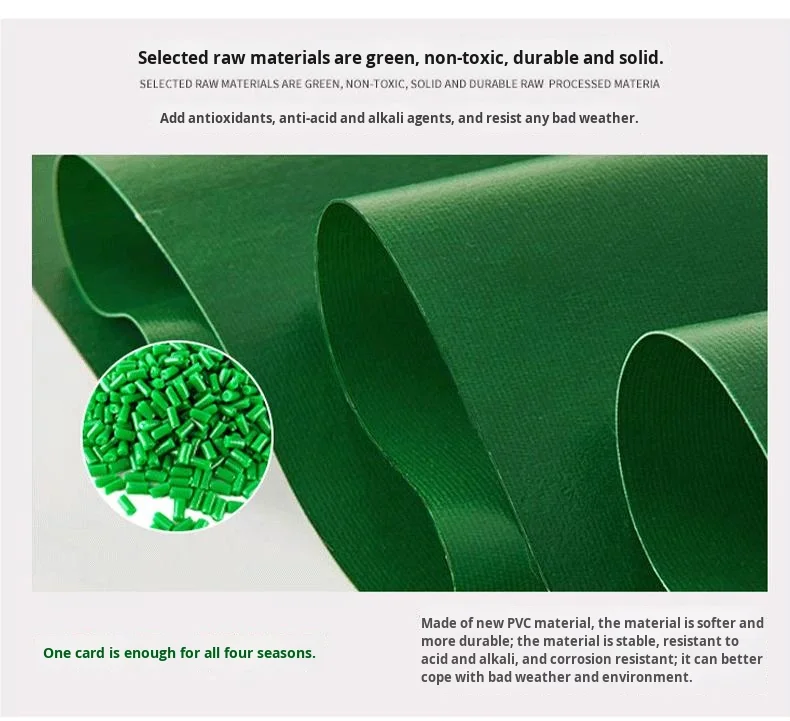
PVC Knife-Coated Fabric in 350gsm to 750gsm with high-strength polyester mesh base, hot-melt coated for strong adhesion and superior weld performance — available in 2m and 2.1m roll widths with full custom sizing.
Six weight grades cover light to heavy-duty applications, with hot-melt coating technology ensuring reliable peel strength at welded seams. Anti-UV, anti-mildew and anti-static treatments available with test documentation on request.
- Thickness range: 0.32mm to 0.65mm matching each GSM grade
- Custom colours, eyelet placement and reinforced hems to your specification
- Certified to ISO and CE standards for international markets
Backed by nearly 30 years of coated fabric expertise, 100% pre-shipment inspection, and full documentation including test reports and roll packing lists.
Description
Coated Fabric Process Control — Every roll of PVC knife-coated tarpaulin is weighed and measured against the quoted GSM before it leaves the line, with no tolerance for variance between specification and shipment.
Technical Specifications
| Parameter | Value |
|---|---|
| Product Type | PVC Coated Tarpaulin |
| Base Fabric | High-strength polyester mesh |
| Coating Method | Laminated technology & Hot-melt coating technology |
| Weight Options | 350gsm / 420gsm / 500gsm / 550gsm / 600gsm / 750gsm |
| Thickness Options | 0.32mm / 0.35mm / 0.4mm / 0.45mm / 0.5mm / 0.65mm |
| Roll Width Options | 2m / 2.1m |
| Roll Length Options | 50m / 75m |
| Colour Options | Blue / Red / Yellow / Light Blue / Grey (customised on request) |
| Key Features | Waterproof, cold crack resistance, anti-mildew, anti-static treatment (grade not stated), sunproof, colour fastness |
| Finish Product Sizing | Custom cut to buyer dimensions or supplied as roll stock |
| Service Life | 3–7 years under normal circumstances (source value — verify) |
| Certifications | ISO, CE |
Application Suitability
| Application | Exposure & Requirement |
|---|---|
| Truck cargo covers and side curtains | Continuous road vibration, UV exposure, flexing at tie-down points, weather and spray ingress |
| Tent and awning covers | Prolonged sun exposure, wind load, rain pooling, repeated folding and unpacking |
| Fish tank and pool liners | Permanent water immersion, chemical treatment in water, puncture from substrate |
| Cargo ship deck covers | Saltwater spray, heavy wind, UV degradation, mechanical abrasion from cargo shifting |
Why the Stated GSM on Your Quotation Does Not Guarantee What Arrives
Weight verification at the roll level is the only defence against under-spec delivery.
Sourcing a PVC Knife-Coated Tarpaulin aftermarket supplier often means specifying 600gsm on paper and receiving something lighter once the container is opened. The gap between quoted weight and delivered weight is one of the most common reasons for full-container rejection in coated fabric procurement. When the material arrives below the agreed specification, the tensile and tear performance drops with it — the fabric simply cannot perform to the engineering assumptions made at the design stage [NEED_CITE: tensile and tear test methods for coated fabrics per ISO 1421]. I have watched heavy-grade coated rolls come in underweight and fail at the weld line within months of installation, not because the welder did anything wrong, but because the base fabric was not what was promised. Every roll we produce is weighed individually before dispatch, and anything outside the stated tolerance is held back.
Coating Adhesion and the Hot-Melt Process
The bond between the PVC coating layer and the high-strength polyester mesh base fabric determines whether the material delaminates under stress or holds together through years of flexing. Our hot-melt coating technology drives the PVC into the mesh structure under heat and pressure, creating a mechanical and chemical bond that resists peeling at the edges and at welded seams. This is what separates a PVC Knife-Coated Tarpaulin aftermarket supplier that controls its own coating line from one that simply sources pre-coated stock and cuts it to size.
Colour Consistency Across Multi-Roll Orders
Batch-to-batch colour drift is a problem that only shows up once the fabric is installed side by side on a fleet of trailers or across a tent structure. We manage pigment dosing at the compounding stage and run colour checks against the reference standard before each production run begins. When an order spans multiple rolls — particularly across different production dates — the colour match is verified under controlled lighting before the rolls are packed together [NEED_CITE: colour fastness testing standards for coated textiles].
Reading the Specification Sheet Beyond the Weight Number
Grams per square metre tells you how much material is in each square metre of fabric, but it does not tell you how that weight is distributed between the base fabric and the coating. A 500gsm fabric with a dense polyester mesh and thinner coating will tear differently than a 500gsm fabric with a lighter mesh and heavier coating layer. The thickness options — from 0.32mm through to 0.65mm — reflect different balances between base fabric density and coating weight, each suited to different mechanical demands. The high-strength polyester mesh provides the tensile and tear backbone, while the PVC coating delivers waterproofing, UV screening, and surface durability. Hot-melt coating, as opposed to simple lamination, ensures the coating penetrates the mesh rather than sitting on top of it, which directly improves weld strength when fabricators join panels together. Available in anti-static treatment — confirm the grade required for your market. Flame retardant grades are available — confirm the grade required for your market.
The Hidden Cost of Specifying on Price Alone
When a coated fabric order is awarded purely on the lowest per-square-metre price, the savings almost always come from reduced coating weight or a lighter base fabric. The material passes visual inspection on arrival, but within months the surface cracks under UV exposure, the weld seams separate under load, or the colour fades unevenly across panels that were supposed to match. For fleet operators, a single truck cover that fails prematurely costs far more in downtime and replacement labour than the per-metre savings on the original order [NEED_CITE: common failure modes in PVC coated tarpaulin field use]. This is why we insist on GSM verification per roll and provide the documentation to prove what was shipped matches what was quoted.
Production Capability Behind Every Roll
Three full production lines and 36 sets of professional equipment allow us to run multiple weight grades — from 350gsm to 750gsm — without cross-contamination between coating formulations. The 10-person R&D team handles custom colour matching, pattern printing, and non-standard width requests, developing samples within days rather than weeks. Dedicated QA/QC inspection runs at every production stage, with 100% pre-shipment checking that covers weight, colour, coating adhesion, and dimensional accuracy. Roll widths of 2m and 2.1m are standard stock, and custom widths are produced to order. Nearly 30 years of continuous coated fabric production gives us process data on how each weight grade behaves under different welding temperatures and tension settings.
Documentation & Verification
- Material specification sheet stating exact GSM, base fabric type, coating method, and colour reference per roll
- Weight verification record per roll measured against the stated GSM before dispatch
- UV and flame-retardant test reports supplied where treatment grades are specified on the order
- ISO and CE certificates covering the production facility and product range
- Pre-shipment inspection record documenting roll count, dimensions, and visual quality check
- Roll packing list and certificate of origin for customs clearance
Fabrication, Handling & Storage
- Hot-melt coated fabric welds best with high-frequency or hot-air welding; test temperature on a scrap piece of the same GSM before production runs
- Reinforced hems should be folded and welded rather than stitched to maintain waterproof continuity across the PVC coating layer
- Store rolls upright on a flat surface in shaded conditions to prevent flat spots and surface marking on the coated face
- Allow cold-stored rolls to reach ambient temperature before unrolling to avoid cracking the PVC coating at low flexibility
- Clean with mild soap and water; avoid solvent-based cleaners that can soften the PVC coating and reduce colour fastness
- When cutting panels from 2m or 2.1m wide rolls, plan the nest layout to minimise offcut waste and reduce the number of welded seams in high-stress zones
What We Need to Quote Accurately
To provide a precise specification and lead time, share the end-use application, the environmental exposure conditions, and any fire safety or anti-static compliance requirements for your market. Let us know whether you need roll stock or finished cut-to-size covers, the target colour or colour reference, and the expected annual volume. If printed branding or non-standard widths are required, we will develop a sample for your approval before full production begins.
Frequently Asked Questions
Q: How is GSM weight verified before shipment?
A: Every roll is individually weighed on calibrated scales after production and before packing. The measured GSM is recorded against the quoted specification, and any roll falling outside the agreed tolerance is removed from the shipment. The weight verification record is included in the dispatch documentation so you can cross-check on arrival.
Q: Can you match a specific colour reference across multiple rolls?
A: Yes. We match pigment formulations against your provided colour reference — a Pantone code, RAL number, or physical sample — and run a visual check under controlled lighting before packing. For orders spanning multiple production runs, we hold a retained sample from the first batch to verify consistency on subsequent runs.
Q: What treatments are available and how are they certified?
A: Anti-UV, anti-mildew, anti-static, and flame-retardant treatments are available depending on the grade required for your application and market. Where a specific grade is specified on the order, we supply the corresponding test report from a recognised laboratory. Confirm the exact standard your end market requires before placing the order.
Q: What is the minimum order for custom width or printed branding?
A: Custom widths and printed branding are produced to order, and the minimum depends on the specific width, colour, and print design. We develop a sample for approval first, typically within days, and then confirm the production minimum and lead time based on the approved specification. Contact us with your requirements for a precise quotation.
Q: How are welded seams tested for strength?
A: Welded seams are tested by peeling a sample weld from each production batch to check coating adhesion and fabric integrity at the join. The hot-melt coating process ensures the PVC penetrates the polyester mesh, producing welds that hold at or above the base fabric strength. Weld parameters are adjusted based on the specific GSM and thickness being joined.
Related products
-
500gsm 600gsm Plain PVC Waterproof Truck Cargo Cover Tarpaulin Canopy for Boys & Girls
¥3.00 Select options This product has multiple variants. The options may be chosen on the product page -
300-600gsm Heavy Duty PVC knife-coated Fabric Tarpaulin roll or Customization
¥0.83 Select options This product has multiple variants. The options may be chosen on the product page -
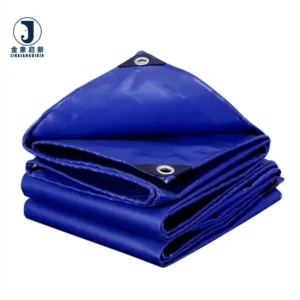
Waterproof Railway Wagon Tarpaulin Cover for Construction
¥1.19 Add to cart -
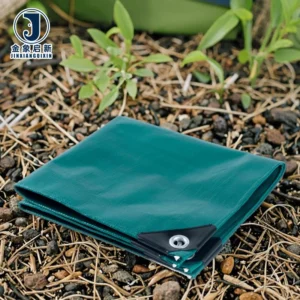
Plastic Tarpaulin PVC Material Truck Tarpaulin Tent Tarpaulin Green Color Heavy Duty High Quality
¥0.90 Select options This product has multiple variants. The options may be chosen on the product page