PVC Tarpaulin Price in Australia: 2026 Bulk Buyer Guide
Higher GSM does not automatically mean higher cost per square meter — coating technology and compliance certifications are the real price drivers.
PVC tarpaulin price Australia is fundamentally shaped by three pillars: fabric weight (GSM), coating process (knife-over-roll vs. roller coating vs. lamination), and AS/NZS certification requirements. Base resin cost is only one component; the coating method and fire-retardant testing fees often create wider price gaps than GSM increments alone.
I still remember a full container of 650gsm PVC fabric we shipped to a construction site near Fremantle years back. The buyer needed fire-retardant certification, and we supplied test reports based on mainland standards. Australian customs rejected them outright. The container sat at the port for weeks, accumulating demurrage charges that eventually exceeded the cargo value. We had to swallow the return freight. That whole ordeal forced me to study AS/NZS requirements inside out — which certifications are mandatory, which GSM ranges move fastest locally, and how coating choices ripple through landed cost. Quoting PVC tarpaulin price Australia without factoring these variables is how buyers end up paying twice. [NEED_CITE: AS/NZS fire-retardant testing standards for flexible coated fabrics]
Let me walk you through what actually moves the needle on PVC tarpaulin price Australia in the current market.
What Determines PVC Tarpaulin Price in Australia?
Three variables dominate pricing: GSM weight class, coating technology, and compliance certification — not just raw material cost.
Many buyers assume PVC resin price fluctuations are the primary cost driver. In reality, once you move beyond commodity-grade fabric, the coating process and certification overhead create far larger spreads. A 510gsm knife-coated fabric with full AS/NZS fire-retardant approval can cost substantially more per square meter than a 610gsm roller-coated fabric without certification. The weight difference is irrelevant next to the technology and compliance gap. [NEED_CITE: PVC coated fabric manufacturing process cost comparison]
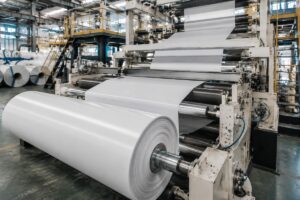
The base fabric — the polyester scrim — accounts for a predictable portion of cost. What varies wildly is how the PVC is applied. Knife-over-roll coating produces a fully fused, homogeneous layer that delivers superior tear strength and weldability. Roller coating is faster and cheaper but leaves a thinner, less uniform PVC layer. Lamination bonds a pre-formed PVC film to the scrim, which is cost-effective for certain specifications but lacks the structural integrity of direct coating for heavy-duty applications. [NEED_CITE: coating technology impact on PVC tarpaulin durability and cost]
Then there is the certification layer. AS/NZS fire-retardant testing, UV stability verification, and state-specific compliance documentation all carry upfront costs that get amortized into the per-square-meter price. Buyers who skip this step to chase the lowest FOB figure often discover — the hard way — that port delays and re-shipment costs dwarf the initial savings.
How Does GSM Weight Affect Cost Per Square Meter?
Within the 440–1000gsm range, each weight tier corresponds to a distinct price bracket, but the increments are not linear — coating thickness matters more than scrim weight alone.
Australian buyers typically source across several GSM classes depending on application. Light-duty covers and temporary site protection sit at the lower end. Truck covers and machinery wraps occupy the mid-range. Mining equipment covers and long-term outdoor installations demand the upper tiers. Here is how these tiers generally compare:
| GSM Range | Typical Application | Coating Requirement | Relative Cost Tier |
|---|---|---|---|
| 440–510gsm | Temporary covers, light site protection | Single-side or light roller coat | Entry |
| 580–650gsm | Truck covers, machinery wraps, mid-term outdoor use | Dual-side knife coat | Mid |
| 700–800gsm | Heavy-duty industrial covers, mining equipment | Heavy knife coat, reinforced scrim | Upper-mid |
| 850–1000gsm | Long-term outdoor installations, extreme conditions | Heavy knife coat, high UV stabilizer load | Premium |
The cost jump from 510gsm to 610gsm is noticeable but manageable. The jump from 610gsm to 760gsm is steeper — not because the polyester scrim costs dramatically more, but because heavier coatings require slower production lines, more PVC compound per pass, and additional quality checks. [NEED_CITE: PVC tarpaulin GSM weight and production cost relationship]
A mining operator in Western Australia once asked us to quote a full container of 900gsm fabric for equipment covers. After reviewing their actual use cases, we recommended splitting the order: 760gsm for standard machinery covers and 510gsm for lighter temporary applications. The mixed-container approach reduced their overall spend noticeably while still meeting durability requirements where it mattered. Uniform GSM across all applications is a common overspending pattern.
Why Do AS/NZS Certifications Add Noticeably to Landed Cost?
Fire-retardant and UV compliance testing costs are amortized into unit price, but the port delays they prevent would cost multiples more.
Australian customs and state work safety regulators enforce strict standards for flexible coated fabrics used in construction, mining, and transport. The relevant AS/NZS standards for fire retardancy require dedicated batch testing at accredited laboratories. These tests are not cheap, and the turnaround time means production scheduling must account for them well in advance. [NEED_CITE: AS/NZS fire-retardant testing requirements for PVC coated fabrics in Australia]
The certification cost itself typically adds a meaningful percentage to the per-square-meter price. But consider the alternative: a container arriving at Brisbane or Melbourne without compliant documentation gets held. Demurrage accumulates daily. If the paperwork cannot be rectified onshore, the cargo must be returned or destroyed. I have seen mid-five-figure losses from a single shipment because the fire-retardant certificate did not match the specific fabric batch.
UV stability certification follows a similar logic. Australian conditions — particularly in inland mining regions — demand verified UV resistance. Accelerated weathering tests confirm whether the fabric will hold up over its intended service life. Skipping this verification to save a small amount per square meter risks premature failure claims that damage your reputation with end users.
A distributor in Melbourne learned this after importing a large batch of non-certified fabric at an attractive price. The fabric passed visual inspection but failed on-site when exposed to regional UV levels. Replacement costs and customer compensation far exceeded what proper certification would have added upfront. [NEED_CITE: UV stability testing standards for outdoor PVC tarpaulin in Australian conditions]
Coating Technology Comparison: Which Delivers Best Value?
Knife-over-roll coating suits heavy-duty and weldable applications; roller coating fits cost-sensitive volume orders; lamination serves specialized requirements.
The coating method determines not just performance but also how the PVC tarpaulin price Australia breaks down across your order. Here is a direct comparison:
| Parameter | Knife-over-Roll | Roller Coating | Lamination |
|---|---|---|---|
| PVC Layer Uniformity | Excellent | Moderate | Good |
| Tear Strength | Robust | Standard | Moderate |
| Heat Weldability | Excellent | Good | Limited |
| Production Speed | Slower | Faster | Moderate |
| Cost Position | Higher | Lower | Mid |
| Best Fit | Heavy-duty, mining, truck covers | Volume distribution, temporary use | Specialty applications |
Knife-over-roll coating forces PVC compound through a precise gap onto the moving scrim, creating a fully bonded, homogeneous layer. This is the method preferred for Australian mining and transport applications where seam integrity and long-term outdoor exposure are non-negotiable. The slower line speed and higher compound consumption explain its premium positioning. [NEED_CITE: knife-over-roll vs roller coating PVC fabric performance comparison]
Roller coating applies PVC through a series of rollers, building up layers more quickly. The result is adequate for many general-purpose applications but lacks the same depth of penetration and fusion. For distributors stocking a broad range for walk-in customers, roller-coated fabric offers a competitive entry point.
Lamination bonds a pre-formed PVC film to the scrim using adhesive or heat. This method allows precise control over film thickness and surface finish, making it suitable for printing surfaces and specific chemical resistance requirements. However, the bond between film and scrim can delaminate under extreme flexing, which limits its use in heavy-duty cover applications.
A truck cover manufacturer in Sydney switched from laminated to knife-coated fabric after experiencing seam failures during heat welding. The knife-coated fabric welded cleanly every time, reducing their rework rate substantially. Their per-meter cost went up, but their total production cost — including wasted material and labor — dropped. [NEED_CITE: heat welding performance of knife-coated vs laminated PVC tarpaulin]
How to Structure Orders for Optimal Pricing?
Mixed-container loading and MOQ tier negotiation reduce effective per-square-meter cost more effectively than chasing the lowest single-specification quote.
The most cost-efficient buyers I work with do not order a single GSM across an entire container. They analyze their end-market demand and build mixed loads that balance high-margin heavy-duty fabric with faster-moving mid-range and light-duty rolls. This approach spreads fixed costs — certification amortization, container freight, port handling — across a broader revenue base.
Consider a typical 20-foot container. Loading it entirely with 760gsm knife-coated fabric means a high per-container cost but also a high per-square-meter selling price. The inventory turns slowly. Now load the same container with a combination: roughly half 610gsm for truck covers, a quarter 510gsm for general-purpose use, and a quarter 760gsm for heavy-duty contracts. The blended cost per square meter drops, and the product mix matches actual market demand. [NEED_CITE: container loading optimization for PVC tarpaulin distribution]
MOQ flexibility matters here. Some manufacturers insist on full-container single-specification orders, which forces buyers into inventory imbalances. Working with a producer that accommodates mixed rolls within a single container — and that can supply the full GSM and coating range from one source — eliminates the need to split orders across multiple suppliers. This consolidates certification costs, simplifies customs documentation, and reduces the risk of specification mismatches.
Color and width customization also plays a role. Standard widths and stock colors typically carry no surcharge. Non-standard widths or custom colors add setup time and minimum run requirements. Buyers who align their specifications with standard production parameters avoid these premiums without sacrificing end-use performance.
Conclusion
PVC tarpaulin price Australia is driven by coating technology, GSM tier selection, and AS/NZS compliance — not just base fabric weight.
Understanding these three variables lets buyers structure orders that match actual application needs, avoid costly port delays, and achieve a competitive landed cost. The cheapest per-square-meter quote on paper often becomes the most expensive shipment in practice when compliance gaps and specification mismatches surface at the port.