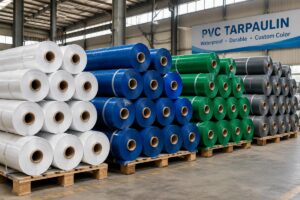
Wholesale Machinery Cover Tarp for Container Weatherproofing
Thicker is not always better; flexibility often beats rigidity in dynamic shipping environments.
Selecting the right machinery cover tarp for container weatherproofing requires balancing GSM weight, coating durability, and edge reinforcement against specific route conditions, rather than simply minimizing the unit price. Importers must prioritize high-tenacity PVC over standard PE for long-haul ocean freight, ensure eyelet spacing matches lashing points, and verify UV stabilization for deck-stowed cargo to prevent costly moisture and tear damage.
I still remember the silence in the warehouse office after that phone call from Jakarta. It was a humid winter morning in Shandong, and I was reviewing shipment logs when the news came through. A client, a timber importer in Southeast Asia, had opted for a low-cost, lightweight polyethylene sheet to cover a container of high-value hardwood. On paper, the savings looked significant. In reality, the material had disintegrated under the friction of loading and the relentless humidity of the sea journey. By the time the container doors opened in Indonesia, the protective layer was shredded, and the wood beneath was spotted with mold. That claim cost far more than the initial difference in tarp pricing. Since then, my approach to specifying a machinery cover tarp for container shipments has shifted from counting pennies to calculating risk. I no longer ask just about the size; I ask about the route, the stowage position, and the specific vulnerabilities of the cargo inside. [NEED_CITE: common causes of cargo damage in maritime transport per insurance industry reports]
This guide breaks down the technical specifications that actually matter when protecting machinery and high-value goods during ocean freight. We will move beyond generic waterproofing claims to examine the material science and structural reinforcements that keep your cargo dry and intact.
Why Do Standard Tarps Fail in Container Shipping?
Condensation and friction are silent destroyers that standard waterproofing often ignores.
Many buyers assume that if a tarp keeps rain out, it is sufficient for shipping. This is a dangerous misconception. Inside a sealed steel container, temperature fluctuations between day and night create a "container rain" effect, where condensation forms on the ceiling and drips onto the cargo. Furthermore, the constant vibration and rolling of a vessel generate significant friction between the cargo and its covering. Standard agricultural or construction tarps are not engineered to withstand these specific maritime stresses.
When I visit ports like Qingdao, I often see containers stacked on deck, exposed to direct sunlight and salt spray. The combination of UV radiation and saline corrosion can degrade inferior plastics rapidly. A tarp that looks robust in a warehouse may become brittle and crack after weeks of exposure to marine conditions. [NEED_CITE: effects of UV radiation and salt spray on polymer materials in marine environments]
The failure usually happens at the weak points: the seams and the eyelets. If the hem is not double-stitched with high-tenacity thread, the vibration of the ship will unravel it. If the eyelets are merely punched holes without reinforcement patches, the tension from lashing straps will tear them out. This is why a generic machinery cover tarp for container application often fails where a purpose-built solution succeeds. The goal is not just water resistance, but structural integrity under dynamic load.
Key Specs: How to Choose GSM and Material for Machinery?
Material flexibility and tensile strength matter more than raw thickness alone.
Choosing between Polyethylene (PE) and Polyvinyl Chloride (PVC) is the first critical decision. PE tarps are lightweight and inexpensive, making them popular for short-term outdoor storage. However, for international shipping, especially for heavy machinery, they lack the necessary tear resistance and durability. PVC tarps, particularly those in the higher GSM ranges, offer superior protection due to their laminated structure and chemical resistance.
At our manufacturing facilities in Shandong, we produce a wide range of materials, but for maritime use, the focus is on coated technical fabrics that can endure harsh handling. A machinery cover tarp for container made from high-quality PVC provides a barrier that is not only waterproof but also resistant to oils, chemicals, and abrasion. The coating process bonds the fabric layers, creating a monolithic shield that does not delaminate easily under stress.
| Feature | Standard PE Tarp | Heavy-Duty PVC Tarp | Marine-Grade PVC Tarp |
|---|---|---|---|
| Tensile Strength | Low | High | Very High |
| Tear Resistance | Vulnerable | Resistant | Robust |
| UV Stability | Basic | Standard | Extended |
| Cold Flexibility | Poor (Brittle) | Good | Excellent |
| Weight | Light | Medium-Heavy | Heavy |
| Best Use Case | Temporary Storage | Trucking/Construction | Ocean Freight/Deck Stowage |
[NEED_CITE: comparative tensile strength testing standards for woven vs. coated fabrics]
Consider the route. For shipments to tropical regions like Southeast Asia or Latin America, humidity is the enemy. A breathable yet waterproof solution is ideal to manage condensation, though fully sealed PVC is often preferred for machinery to block salt spray entirely. For routes passing through high-UV zones like the Middle East or Australia, the UV stabilization additives in the PVC coating become critical. Without them, the plasticizer migrates out, and the tarp becomes stiff and prone to cracking. I have seen cases where a tarp arrived looking fine but snapped like glass when workers tried to unfold it. This is why specifying the right GSM and coating type is non-negotiable. A machinery cover tarp for container must be selected based on the environmental hazards of the entire journey, not just the departure point.
Critical Reinforcements: What Prevents Tearing During Lashing?
Eyelet placement and hem strength determine survival during rough seas.
You can have the strongest fabric in the world, but if the attachment points fail, the cover is useless. During ocean transit, cargo shifts. Lashing straps are tightened to secure the load, placing immense point-load stress on the tarp’s eyelets. Standard spaced eyelets every meter are often insufficient for heavy machinery covers. The tension concentrates on a few points, leading to pull-out failures.
Reinforcement is key. High-quality tarps feature double-stitched hems with webbing integrated into the fold. This distributes the load across the entire edge rather than just the stitching thread. Eyelets should be made from corrosion-resistant materials like brass or aluminum, especially for sea freight where salt air can rust steel grommets. More importantly, each eyelet must be backed by a reinforced patch of extra fabric. This patch prevents the eyelet from tearing through the main body of the tarp under tension.
For heavy equipment like excavators or generators, sharp edges pose a unique threat. Metal corners can cut through fabric during movement. A well-designed machinery cover tarp for container includes additional corner patches or abrasion-resistant pads at high-wear areas. In one instance, a buyer exporting mining equipment to Africa noticed that standard tarps were getting punctured by the sharp edges of the machine frames. By adding localized reinforcement patches at these contact points, the damage rate dropped noticeably. This level of customization is often available from manufacturers who understand the practical realities of loading and securing cargo. It is not just about covering the object; it is about protecting the cover from the object itself.
Wholesale Buying Checklist: Questions to Ask Your Supplier
Verification of certifications and production capabilities prevents supply chain surprises.
When sourcing in wholesale quantities, the relationship with the manufacturer is as important as the product specs. Many suppliers claim to offer "heavy-duty" tarps, but the definition varies wildly. To ensure you get a reliable machinery cover tarp for container, you need to ask specific technical questions. Do not settle for vague assurances. Ask for test reports regarding fire retardancy and UV resistance. Certifications such as B1 or M2 for fire safety are crucial if your cargo passes through ports with strict safety regulations. [NEED_CITE: international fire safety standards for textile materials in transport]
Lead times and MOQ flexibility are also practical concerns. A manufacturer that offers roll stock as well as finished products provides more versatility. If you have urgent orders, the ability to cut and finish from existing roll stock can significantly reduce lead times. Conversely, for large projects, custom manufacturing ensures consistent quality across the entire batch.
| Question to Ask | Why It Matters | Red Flag Answer |
|---|---|---|
| What is the GSM range? | Determines weight and durability. | "We have standard weight." |
| Are eyelets reinforced? | Prevents tear-out during lashing. | "They are just punched." |
| Can you provide UV test data? | Ensures longevity in sunny climates. | "It is UV resistant." (No data) |
| What is the MOQ for custom sizes? | Affects inventory and cost efficiency. | "Only full container loads." |
| Do you offer fire-retardant options? | Compliance with port and transport laws. | "All our tarps are safe." |
Sourcing from a region with a strong manufacturing base, such as Shandong, offers access to a complete supply chain for coated fabrics. This means better control over raw material quality and faster response to customization requests. When you work directly with a manufacturer that handles everything from coating to finishing, you eliminate middlemen markups and gain direct access to technical support. This is invaluable when troubleshooting issues like condensation management or specific lashing requirements. A reliable partner will not just sell you a tarp; they will help you engineer a protection solution.
Conclusion
Protecting your cargo starts with choosing the right barrier, not the cheapest one.
Investing in a high-quality machinery cover tarp for container shipping is an insurance policy against the unpredictable nature of ocean freight. By focusing on material durability, proper reinforcement, and route-specific features, you mitigate the risks of moisture damage, tearing, and UV degradation. Remember that the cost of a failed shipment far outweighs the savings from substandard packaging. Choose wisely, verify thoroughly, and ensure your machinery arrives in the same condition it left.