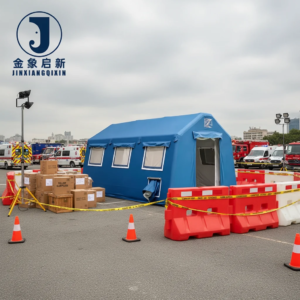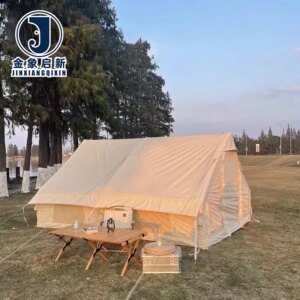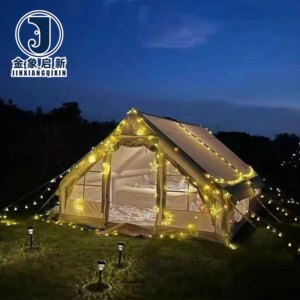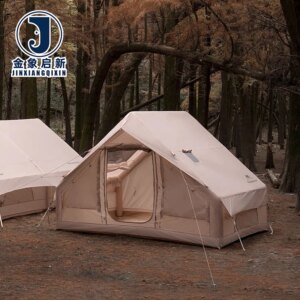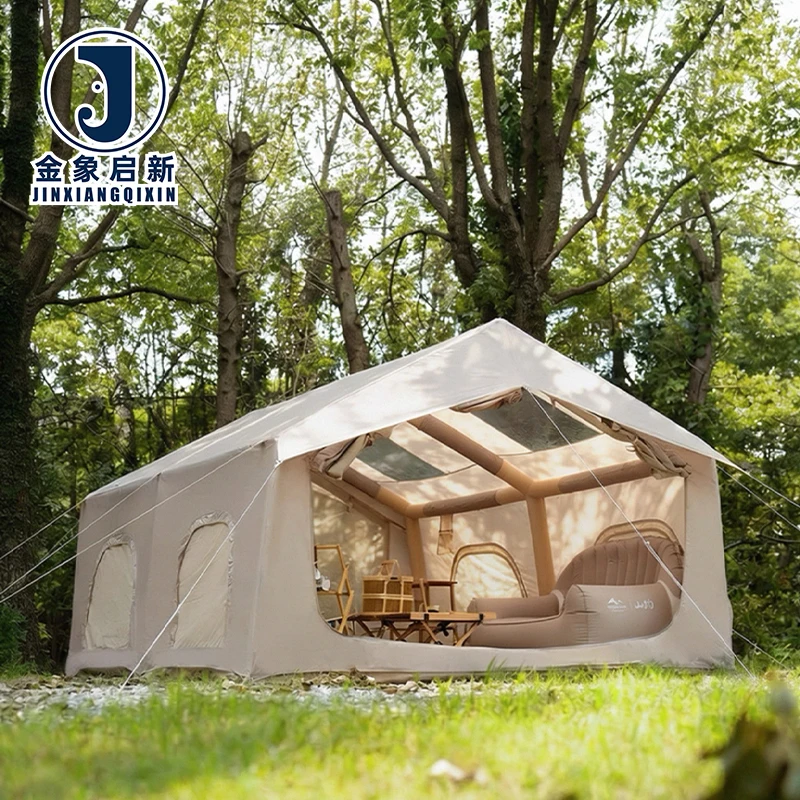
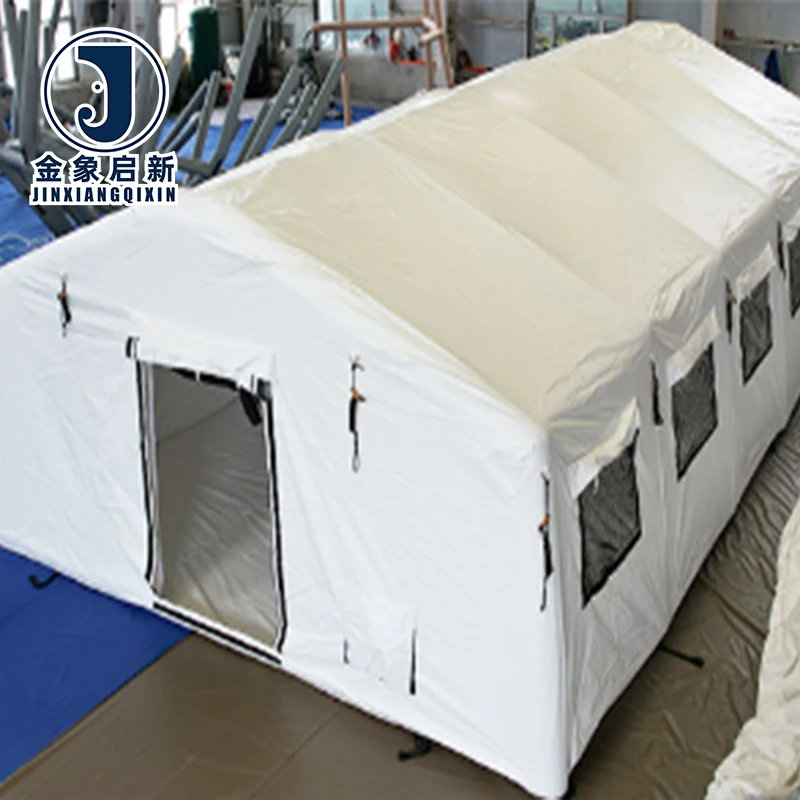
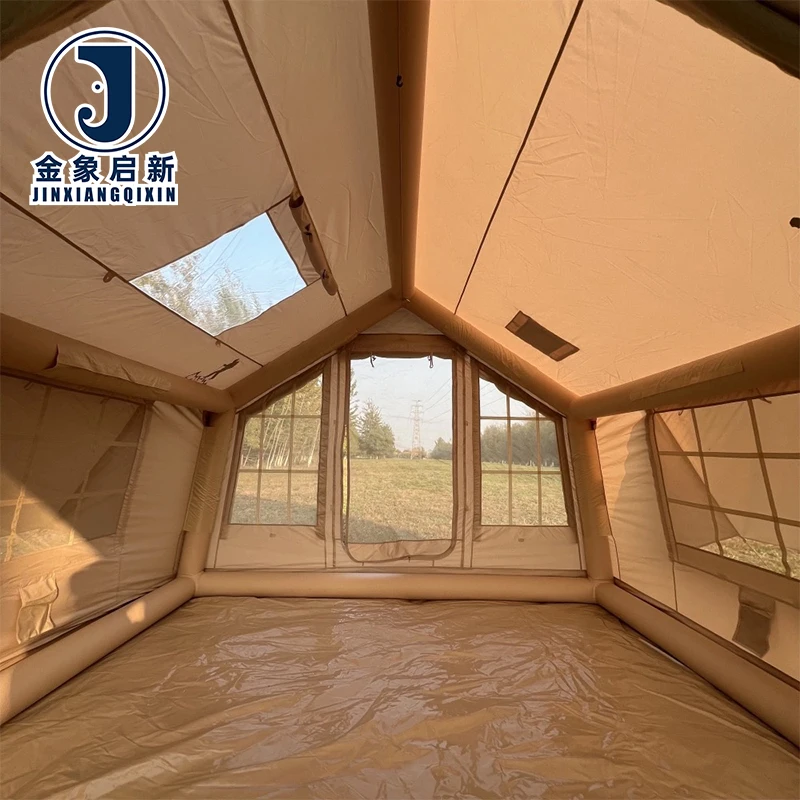
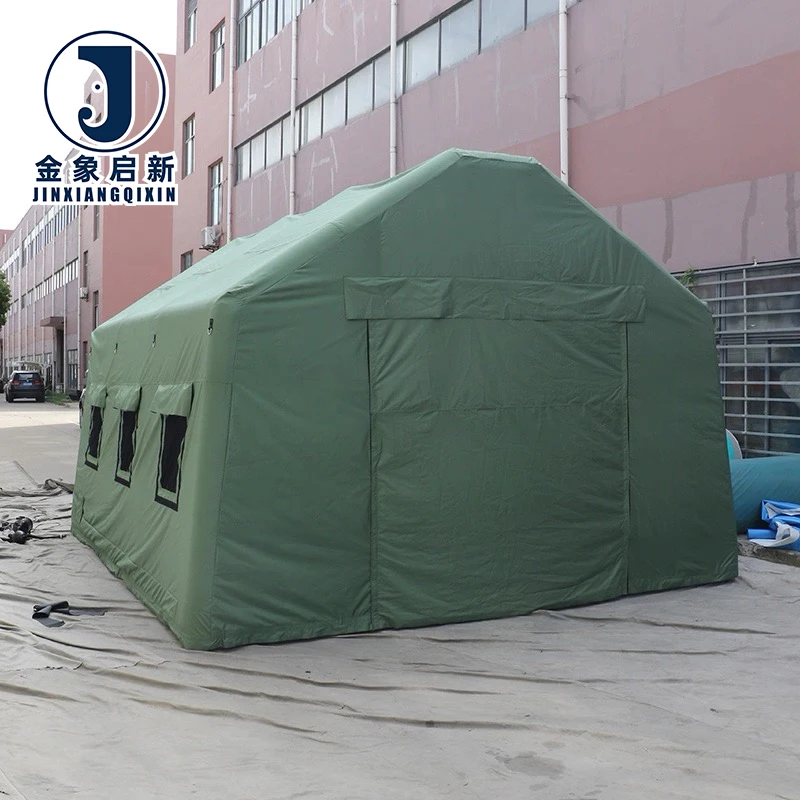
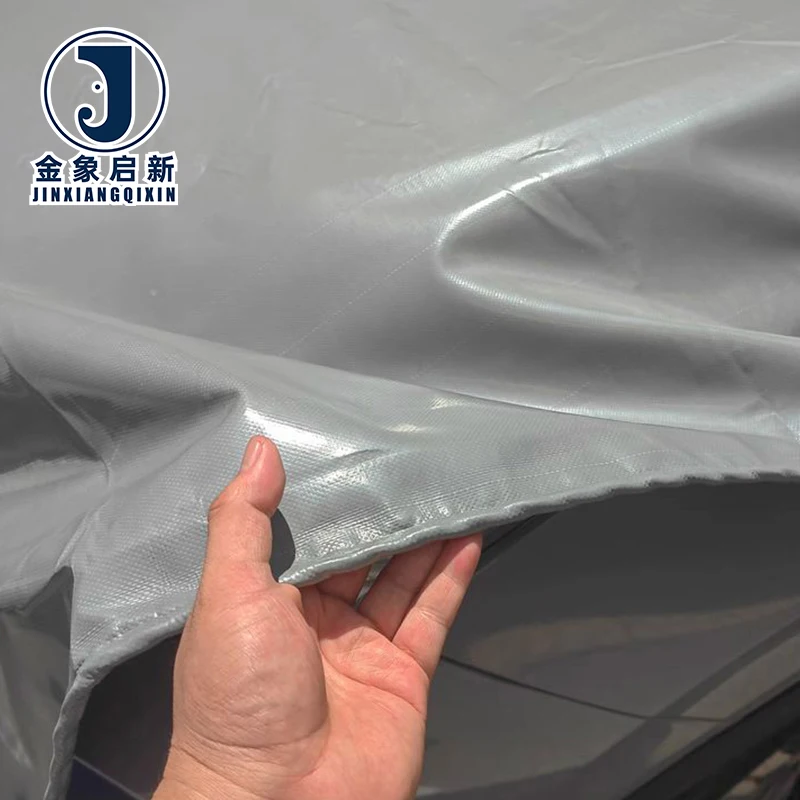
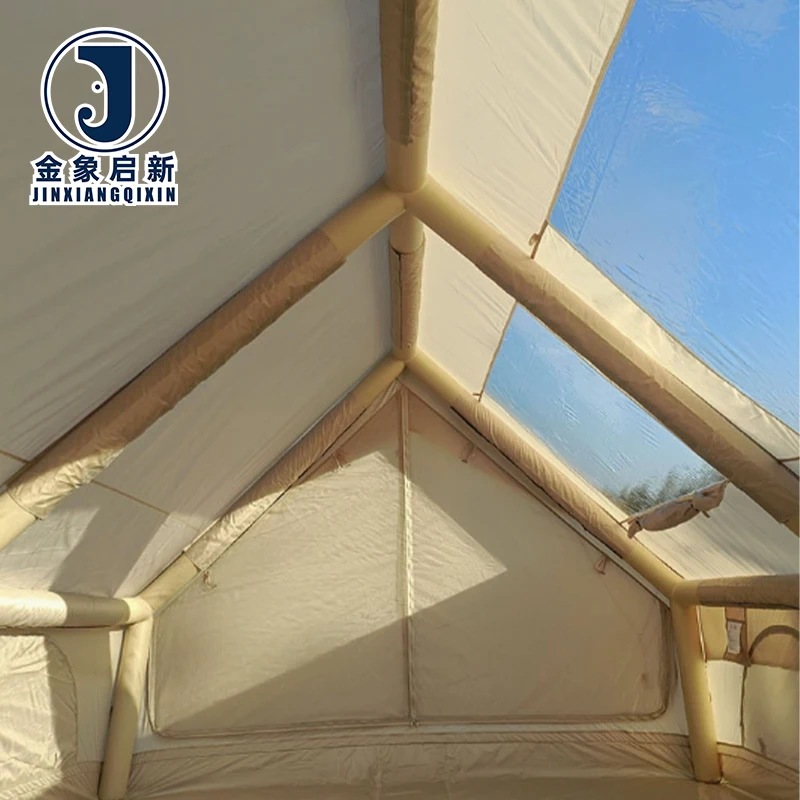
Inflatable Camping Tent — PVC tarpaulin construction with waterproof, UV-resistant, and tear-resistant performance for rapid field deployment.
Engineered for commercial outdoor shelter projects where fabric integrity under sun and rain determines operational uptime. PVC-coated base fabric provides moisture protection while maintaining structural stability across prolonged exposure.
- Quick setup design minimizes labor at temporary installations
- Full OEM & ODM customization on dimensions and printing
Backed by 100% pre-shipment inspection and batch-specific quality reports covering waterproof rating and tensile strength.
Description
Process Control at the Coating Line — Nearly 30 years of PVC coated fabric production ensures every roll of inflatable tent material is checked for adhesion, weight, and finish before it leaves the facility.
Technical Specifications
| Parameter | Value |
|---|---|
| Product Type | Inflatable Camping Tent |
| Core Material | PVC Tarpaulin |
| Key Performance | Waterproof, UV-resistant (test basis not stated in source), Tear-resistant, Quick Setup |
| Product Forms | Inflatable Camping Tent |
| Customization Service | OEM & ODM (sample customization, pattern printing) |
| Standards | ISO 9001, ISO 14001, ISO 45001, CE |
Application Suitability
| Application | Exposure & Requirement |
|---|---|
| Temporary site shelters for construction projects | Wind loading, rain ingress, repeated inflation cycles, site dust and abrasion |
| Equipment storage in logistics hubs | Moisture protection, UV exposure during yard storage, handling stress from forklift movement |
| Mobile field stations for industrial events | Rapid deployment and teardown, crowd contact, weather variability across seasons |
| Year-round outdoor commercial operations | Thermal cycling, prolonged sun exposure, ground moisture, seasonal temperature swings |
Why Stated GSM Is Not the Whole Story for Inflatable Tent Fabric
Coating adhesion and base fabric weave determine real-world performance far more than weight alone.
When buyers evaluate an inflatable camping tent manufacturer, the conversation often starts and ends with grams per square metre. Yet a heavier fabric with poor coating adhesion will delaminate at the weld lines long before a lighter, well-bonded material shows any sign of failure. [NEED_CITE: tensile and tear test methods for coated fabrics per ISO 1421] Inflatable structures place unique cyclic stress on every seam — each inflation and deflation cycle flexes the fabric at the joints, and if the coating separates from the base yarn, the air chamber loses pressure and the entire structure sags. Specifying by GSM alone leaves these critical variables unexamined.
How PVC Tarpaulin Construction Supports Inflatable Structures
The PVC tarpaulin used in our custom Inflatable PVC Tent range is engineered to hold air pressure across large unsupported spans. The base fabric provides the tensile skeleton, while the PVC coating seals the weave against air leakage and moisture penetration. For inflatable camping tents deployed in commercial and industrial settings, this dual-layer construction must withstand not only static loads from wind and snow but also the dynamic flexing that occurs every time the structure is inflated, deflated, or repositioned on site.
UV-Resistant Treatment and What Verification Looks Like
UV-resistant treatment is available across our inflatable tent fabric range — confirm the grade required for your market and intended exposure duration. [NEED_CITE: ISO 4892 accelerated weathering methods for plastics and coated fabrics] Without documented test results, a UV claim is simply a marketing statement. We provide batch-specific inspection records so that buyers can verify the treatment level before committing to a full production run, ensuring the fabric performs as specified under actual field conditions.
Reading the Specification Sheet Beyond the Headline Numbers
PVC tarpaulin performance depends on the interplay between base fabric denier, weave density, and coating weight. A high-denier yarn in a loose weave may show a respectable GSM reading but will allow coating strike-through gaps that weaken tear propagation resistance. Conversely, a tighter weave with moderate denier yarns distributes load across more intersection points, limiting how far a puncture or cut can spread. For inflatable structures, where a single breach compromises the entire air beam, controlling tear propagation is as important as initial tensile strength. The coating method — whether knife-over-roll, dip, or calender — affects how deeply the PVC penetrates the weave, which in turn governs peel strength at welded seams.
What Happens When the Wrong Fabric Grade Goes Into Production
Selecting a fabric that is too light for the intended inflation pressure leads to bulging panels and seam stress that accelerates fatigue failure. If UV-resistant treatment is specified without a supporting test report, the coating surface may chalk and embrittle after a single season of direct sunlight, leaving the structure looking aged and compromising air retention. [NEED_CITE: accelerated weathering effects on PVC coated polyester fabrics] Colour inconsistency between rolls in a multi-panel inflatable tent becomes immediately visible once the structure is erected, forcing costly panel replacement or order rejection at the installation site.
Why Buyers Source Inflatable Tent Fabric Through This Facility
Our three full production lines and 36 sets of professional processing equipment support consistent batch output for custom Inflatable PVC Tent orders, whether the requirement is a single prototype or a container-load production run. The 10-person R&D team develops pre-production samples within days, allowing buyers to evaluate coating weight, hand feel, and weld behaviour before authorising mass production. A dedicated QA/QC team inspects every roll at multiple production stages, and 100% pre-shipment inspection catches coating defects, colour drift, and GSM deviation before the goods leave the factory. Pattern printing and OEM/ODM sizing are handled in-house, eliminating the coordination gaps that arise when printing is outsourced to a separate converter. Nearly 30 years of focused coated fabric experience means the production team recognises and corrects process drift before it reaches the finished roll.
Documentation & Verification
- Material specification sheet stating PVC composition, coating weight, and colour reference for each inflatable tent order
- Batch-specific quality inspection report covering waterproof rating, tensile strength, and UV resistance results
- ISO 9001, ISO 14001, ISO 45001, and CE certification documentation supplied with every shipment
- Pre-production sample approval record linking approved swatch to mass production batch number
- Roll packing list with individual roll weight and dimensions for container loading verification
Fabrication, Handling & Storage
- Heat-weld seams using temperature and dwell settings matched to the PVC tarpaulin coating weight to prevent delamination
- Reinforce inflation valve anchor points with additional PVC patches to distribute cyclic stress across a wider area
- Store rolls upright on pallets in a dry, shaded environment to prevent compression creasing of the coated surface
- Avoid deploying the inflatable camping tent fabric below the PVC embrittlement threshold to prevent crack propagation
- Clean surfaces with mild, non-solvent detergents to preserve the coating finish and UV-resistant treatment layer
- Repair minor punctures on site using compatible PVC adhesive patches matched to the original coating grade
What to Include in Your Inflatable Tent Enquiry
Provide the intended application environment — including expected wind loads, temperature range, and duration of outdoor exposure — so we can recommend the appropriate PVC tarpaulin grade and treatment level. Specify any dimensional requirements, pattern printing artwork, and target market compliance needs such as fire classification or REACH registration. Indicate whether you require finished inflatable camping tent units or roll stock for your own fabrication line, along with estimated annual volume to support accurate lead-time planning.
Frequently Asked Questions
Q: What customization options are available for inflatable tent dimensions and printing?
A: Our OEM and ODM service covers custom sizing, pattern printing, and material thickness selection for inflatable camping tents. The 10-person R&D team develops samples within days, allowing you to confirm dimensions, colour, and print registration before mass production begins. Minimum order quantities vary by specification complexity and are confirmed at quotation stage.
Q: How is UV-resistant treatment verified before shipment?
A: Each batch of PVC tarpaulin destined for inflatable tent production undergoes UV resistance assessment, with results documented in the batch-specific inspection report. We recommend buyers confirm the UV grade required for their target market and exposure conditions during the specification stage so the correct treatment level is applied.
Q: How do you ensure colour consistency across multiple rolls in one order?
A: Colour reference is locked at sample approval, and the dedicated QA/QC team checks every roll against the approved standard during pre-shipment inspection. Any roll showing visible deviation is held back from dispatch. This process prevents the panel-to-panel colour mismatch that becomes apparent once the inflatable structure is erected on site.
Q: What documentation accompanies each inflatable tent fabric order?
A: Every shipment includes a material specification sheet, batch inspection report, ISO and CE certificates, a roll packing list, and a certificate of origin. Pre-production sample approval records are retained to link each production batch back to the originally approved swatch and specification.
Related products
-
Camping Tent Inflatable UV Resistant Customizable Four-season Waterproof PVC Eco-Friendly Windproof Foldable Quick Automatic
Read more -
High Quality Four-Season Inflatable Tent for Camping Durable PVC Material All-Weather Resistance Quick Automatic Opening
Read more -
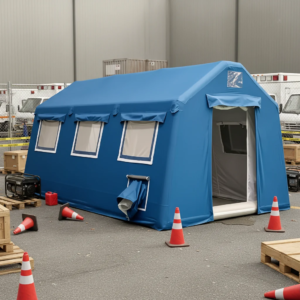
Outdoor Waterproof Inflatable Tent for Camping Portable Air Camping Tent Shelter
Read more -
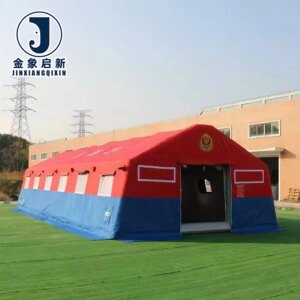
Inflatable PVC Camping Tent Four-Season Waterproof CE Certified Quick Automatic Opening 3000mm+ Factory Direct Sale
Read more