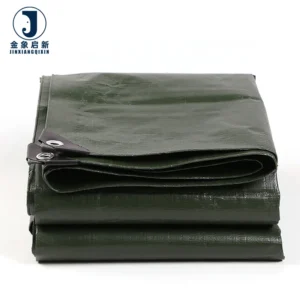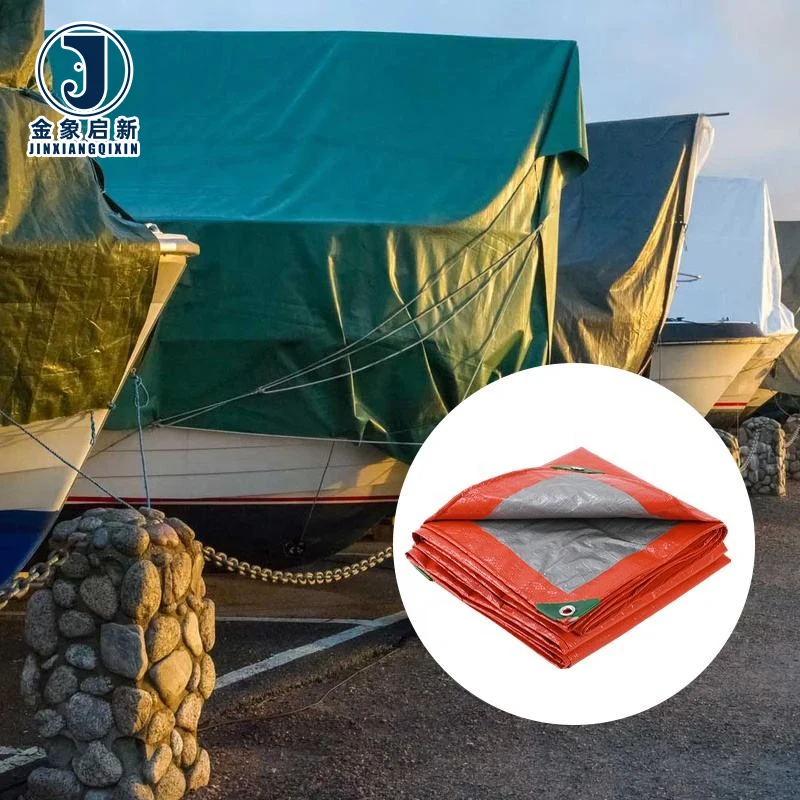
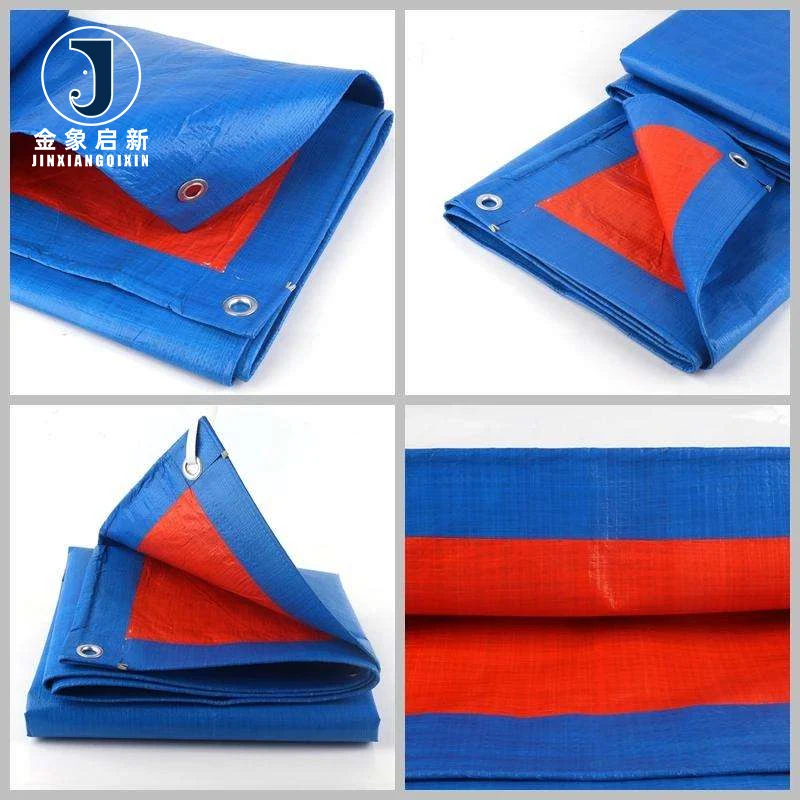
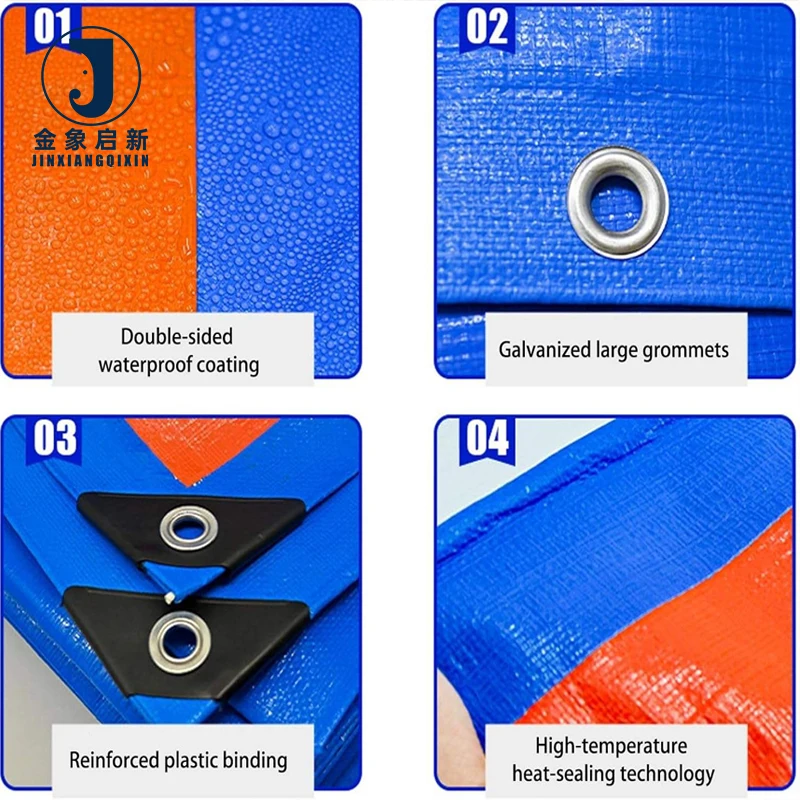
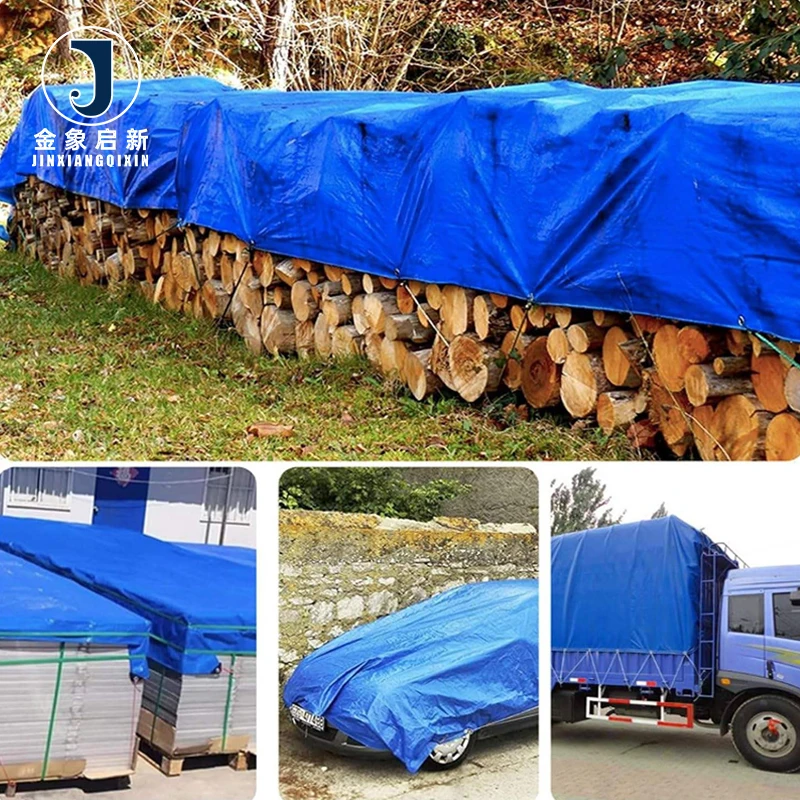
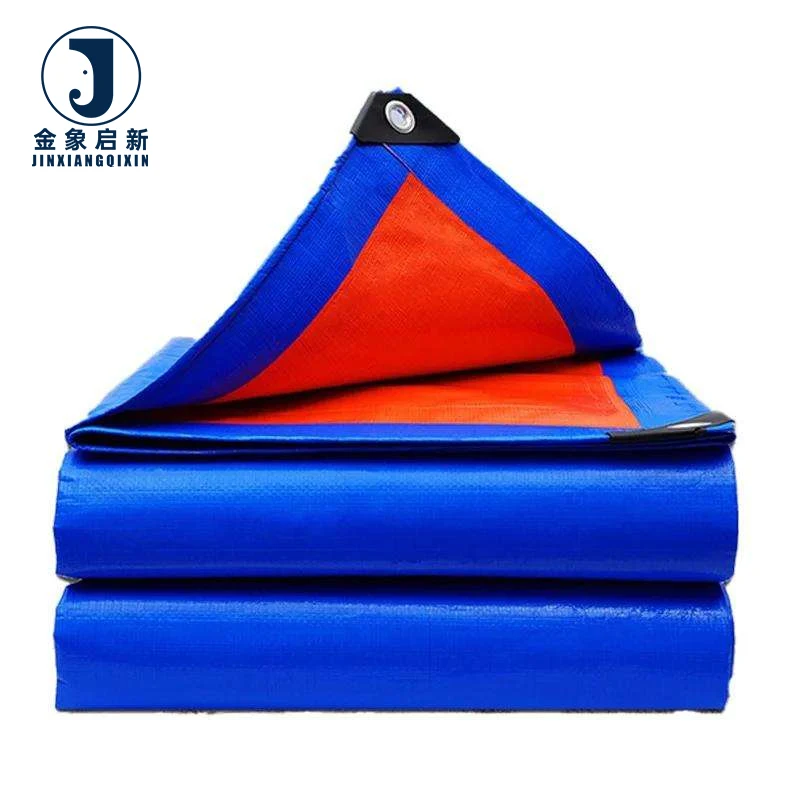
PE Tarpaulin 40g–500g/m², HDPE Cross-Weave with LDPE Lamination, 3/5-Layer Construction — custom sizes and colors with anti-UV and mildew-proof treatment.
- HDPE base fabric density from 5×5 to 20×20 meshes, paired with LDPE lamination for tear-resistant, double waterproof surfaces
- Reinforced rustproof grommets at 39.4-inch spacing with corner reinforcement at high-stress flex points
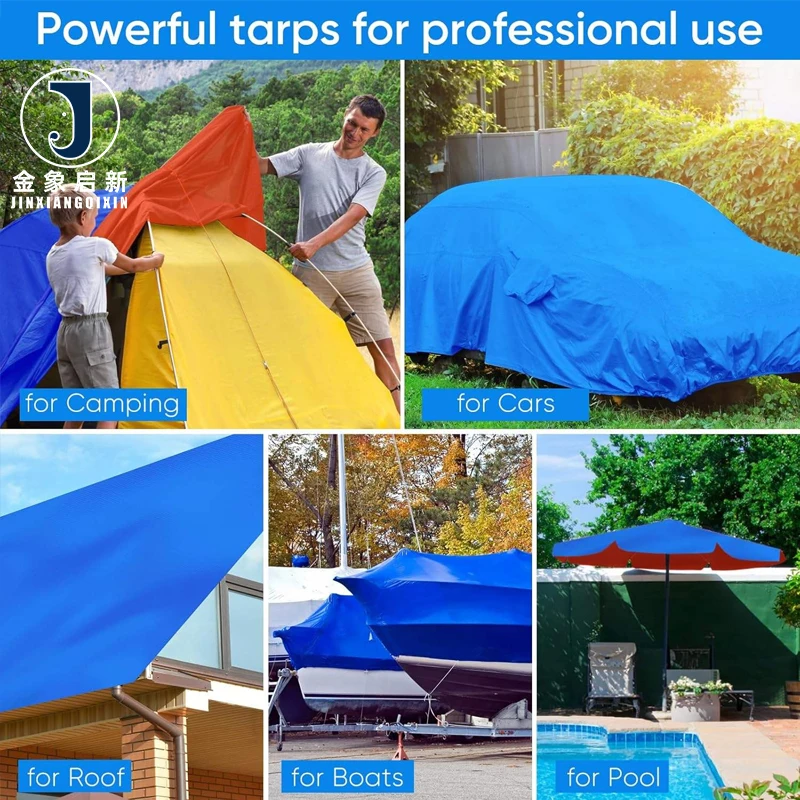
- Covers agricultural pond lining, truck load protection, construction site covers, and tent fabric by the roll
Sourced from a facility with nearly 30 years of coated fabric process control, 100% pre-shipment inspection, and full material documentation including GSM verification and test reports.
Description
Deep Process Control Over Coating Weight — Every roll of PE tarpaulin we produce passes through dedicated QA/QC checks at each production stage, ensuring the GSM on your quotation matches the material you receive.
Technical Specifications
| Parameter | Value |
|---|---|
| Product Type | PE Tarpaulin |
| Material | Polyethylene (HDPE fabric cross weaving, laminated both sides with LDPE) |
| Coating Method | Laminated (3 layers: 1 fabric + 2 coating; or 5 layers: 2 fabric + 3 coating) |
| Weight (GSM) | 40g~500g/m² (range covers product family — confirm the grade for your application) |
| Lightweight Grade Weight | 80-110 g/m² |
| Lightweight Grade Thickness | 0.18-0.22 mm |
| Lightweight Grade Mesh Count | 8×8 |
| Lightweight Grade Tensile Strength | Meridian 300-500 / Latitude 250-450 N/5cm |
| Medium Grade Weight | 120-150 g/m² |
| Medium Grade Thickness | 0.22-0.28 mm |
| Medium Grade Mesh Count | 10×10 |
| Medium Grade Tensile Strength | Meridian 500-800 / Latitude 400-700 N/5cm |
| Heavy-duty Grade Weight | 160-240 g/m² |
| Heavy-duty Grade Thickness | 0.30-0.35 mm |
| Heavy-duty Grade Mesh Count | 12×12 |
| Heavy-duty Grade Tensile Strength | Meridian 900-1200 / Latitude 700-1000 N/5cm |
| Color | Custom color |
| Size | Custom size |
| UV Treatment | UV treatment available (test basis not stated) |
| Water Resistance | Double waterproof surfaces |
| Key Features | Tear-resistant, reinforced rustproof grommets, reinforced corner, mildew proof, anti-aging |
| Standards | ISO, CE |
Application Suitability
| Application | Exposure & Requirement |
|---|---|
| Agricultural stock and crop covering | Prolonged sun exposure, rain, wind load, requires UV stabilization and tear resistance at tie-down points |
| Warehouse and yard coverage | Dust and water ingress prevention, frequent handling and folding, demands abrasion resistance |
| Truck and trailer load protection | Road debris impact, constant vibration, weather exposure at highway speed, needs reinforced grommets |
| Construction site equipment covers | UV degradation, mechanical abrasion from scaffolding and materials, puncture risk from sharp edges |
| Temporary tents and canopy structures | Wind uplift forces on seams, water pooling on horizontal surfaces, repeated assembly and disassembly |
| Pond and reservoir lining | Permanent water contact, soil chemistry exposure, puncture risk from substrate irregularities |
Why the GSM on Your Quotation May Not Match the Tarpaulin That Arrives
We verify weight at every production stage and conduct 100% inspection before any PE Tarpaulin shipment leaves our facility.
A common frustration among procurement teams is receiving rolls that feel noticeably lighter than what was specified. When a PE Tarpaulin manufacturer quotes 150 g/m² but delivers 130 g/m², the tensile and tear performance drop accordingly — and the cover fails earlier in service [NEED_CITE: ISO 1421 test methods for tensile and tear strength of coated fabrics]. The discrepancy often traces back to inconsistent coating application or substitution of a lighter base fabric during production runs.
Our approach addresses this at the source. Each production stage includes weight verification, and the pre-shipment inspection confirms that the finished roll matches the material specification sheet before packing. Buyers receive documented proof rather than relying on trust alone.
How Laminated Construction Determines Real-World Durability
The HDPE cross-weave base fabric provides the structural backbone of this PE tarpaulin, while the LDPE lamination on both sides delivers waterproof performance and surface protection. In a 3-layer construction, a single fabric layer is sandwiched between two coating films. The 5-layer variant adds an extra fabric and coating layer, increasing puncture resistance and dimensional stability. Choosing between them depends on whether the cover will face occasional handling or constant mechanical stress in the field.
What Customization Actually Covers Beyond Color Selection
When buyers source a custom PE Tarpaulin, the conversation often stops at width, length, and color. However, finishing details — grommet spacing, corner reinforcement patterns, hem construction — determine how the cover performs under load. Our 10-person R&D team develops samples within days, allowing you to test eyelet pull-out strength and hem integrity before committing to a full production run. This eliminates the guesswork that leads to covers failing at the exact point the load flexes most [NEED_CITE: tarpaulin failure modes at reinforced edges and grommet zones].
Reading the Specification Sheet: Mesh Count, Weight, and Strength Together
A common mistake in specifying PE tarpaulin is treating GSM as the sole indicator of performance. In reality, the mesh count — 8×8 for lightweight, 10×10 for medium, and 12×12 for heavy-duty grades — defines how the HDPE yarns are distributed across the fabric. A higher mesh count with the same GSM means finer yarns packed more tightly, which changes tear propagation behavior. Coating weight also plays a role: heavier LDPE lamination adds waterproofing and abrasion resistance but does not contribute to tensile strength. The three parameters must be evaluated together to predict how the material handles installation tension, wind uplift, and point loads at grommets.
UV treatment availability means the material can be stabilized for extended outdoor exposure, though the specific test basis should be confirmed against your market requirements before ordering [NEED_CITE: UV stabilization test standards for polyethylene outdoor fabrics].
The Cost of Specifying One Grade When the Application Needs Another
When a lightweight 80 g/m² cover is used in a heavy-duty transport application, the failure pattern is predictable: grommets tear through the fabric within weeks, and seams split along the hem line under road vibration. Conversely, specifying a 240 g/m² heavy-duty grade for a temporary agricultural cover inflates material cost without proportional benefit. The mismatch often originates from incomplete application briefs during the inquiry stage — the supplier ships what was ordered, but what was ordered does not match the actual exposure conditions [NEED_CITE: coated fabric selection and application mismatch in industrial covers]. Colour inconsistency across rolls in the same order compounds the problem when covers are installed side by side on a fleet of trucks or across a construction site, making visual uniformity a procurement concern beyond pure performance.
What Sets Our PE Tarpaulin Production Apart
Nearly 30 years focused on coated fabric gives us process knowledge that directly controls coating weight consistency and lamination adhesion — the two variables that determine whether your PE tarpaulin survives its intended service life. Three full production lines and 36 sets of professional equipment support bulk order volumes with reliable on-time delivery, so your supply chain does not stall waiting for a single container. The dedicated 10-person R&D team handles material selection, custom sizing, pattern printing, and sample development, meaning your specification is translated into production parameters by the same group that developed the material library. QA/QC operates at every production stage, not only at final inspection, catching weight deviations and coating defects before they propagate through the run. Every order ships with a complete documentation package — material specification sheet, pre-shipment inspection record, roll packing list, and certificate of origin — so your import and compliance paperwork is ready before the container reaches port.
Documentation & Verification
- Material specification sheet stating GSM, base fabric denier, and lamination type for each grade ordered
- Pre-shipment inspection record confirming weight and dimension compliance per roll before dispatch
- Test report for UV treatment available where applicable — confirm the test basis required for your market
- Roll packing list detailing roll count, individual roll weight, and net/gross weight for customs clearance
- Certificate of origin and ISO/CE documentation included with every export shipment
Fabrication, Handling & Storage
- Heat sealing parameters depend on the 3-layer or 5-layer construction — confirm temperature and dwell time for the specific grade before welding
- Grommet installation at 39.4-inch center spacing requires reinforced corner patches on heavy-duty grades to prevent pull-through under load
- Store rolls horizontally on pallets in shaded areas; prolonged direct sun on rolled stock accelerates surface aging before deployment
- Avoid folding heavy-duty 160-240 g/m² grades at sharp angles during transport to prevent permanent crease marks in the LDPE coating
- Clean with mild detergent and soft brush; abrasive cleaners damage the LDPE surface layer and reduce water resistance
- Repair minor punctures with compatible LDPE tape applied to both surfaces for maintained waterproof integrity
Before You Request a Quote: What We Need to Know
To recommend the correct grade and construction, share your application environment, expected exposure duration, and any compliance requirements specific to your market. If you need custom widths, colors, or printed branding, provide target dimensions and annual volume so we can confirm lead times and minimums. For cut-to-size sheets, specify grommet spacing, hem reinforcement preference, and corner treatment so the sample we develop matches your installation method.
Frequently Asked Questions
Q: How is GSM verified on arrival and what does your pre-shipment inspection cover?
A: Every roll is weighed during production and again at the pre-shipment inspection stage. We provide a material specification sheet stating the target GSM alongside the inspection record confirming actual measured weight. This means you can reconcile what was quoted against what was produced before the container leaves our facility, eliminating disputes at destination.
Q: What UV treatment test basis is available for PE tarpaulin destined for extended outdoor exposure?
A: UV treatment is available across our PE tarpaulin range. The specific test basis and exposure rating should be confirmed during the inquiry stage based on your market requirements. We provide the test report documentation with the shipment so your compliance team has the evidence needed for project approval.
Q: How do you control colour consistency across rolls in the same order?
A: Colour matching is managed at the compounding stage before lamination. For orders requiring multiple rolls installed side by side, we run the entire batch in a single production cycle to minimize variation. The pre-shipment inspection includes visual comparison against the approved reference, and any roll outside tolerance is replaced before dispatch.
Q: What are the minimum order quantities and lead times for custom width, colour or print?
A: Minimums and lead times depend on the specific grade, width, and finishing requirements. Custom widths and colors generally require longer setup than stock specifications. Submit your target dimensions, color reference, and estimated annual volume during inquiry, and we provide confirmed minimums and scheduling in the quotation.
Q: What eyelet spacing, hem reinforcement and finishing options are available for cut-to-size sheets?
A: Standard eyelet spacing is 39.4 inches center to center, with reinforced rustproof grommets and reinforced corners. For high-load applications, we adjust spacing and add extra corner patches. Hem construction and reinforcement details are defined during sample development so the finishing matches your tie-down method and load requirements.
Related products
-
Multi-color & Size Waterproof Breathable Organic Blackout Coated PE Tarpaulin with UV Customizable Weft Knitted for Boys & Girls
¥0.21 Select options This product has multiple variants. The options may be chosen on the product page -
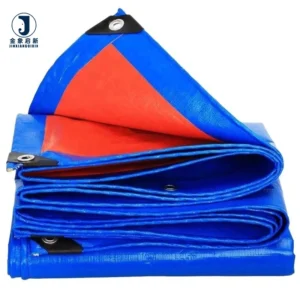
Tarpaulin Manufacture Scaffolding Heavy Duty Camping Waterproof Cover Sheet Coated Plastic Roll Pe Tarp
¥1.80 Select options This product has multiple variants. The options may be chosen on the product page -
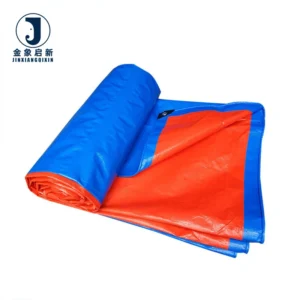
Custom Made PE Tarpaulin with Eyelets – Waterproof Tear-Resistant
Read more -
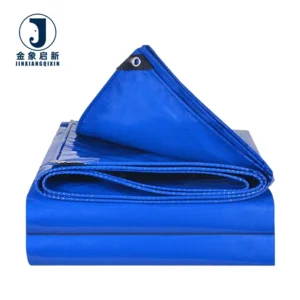
Hot Selling Heavy Duty PVC Coated Tarpaulin Covers Waterproof Plastic for Truck Tent Outdoor
¥3.10 Select options This product has multiple variants. The options may be chosen on the product page