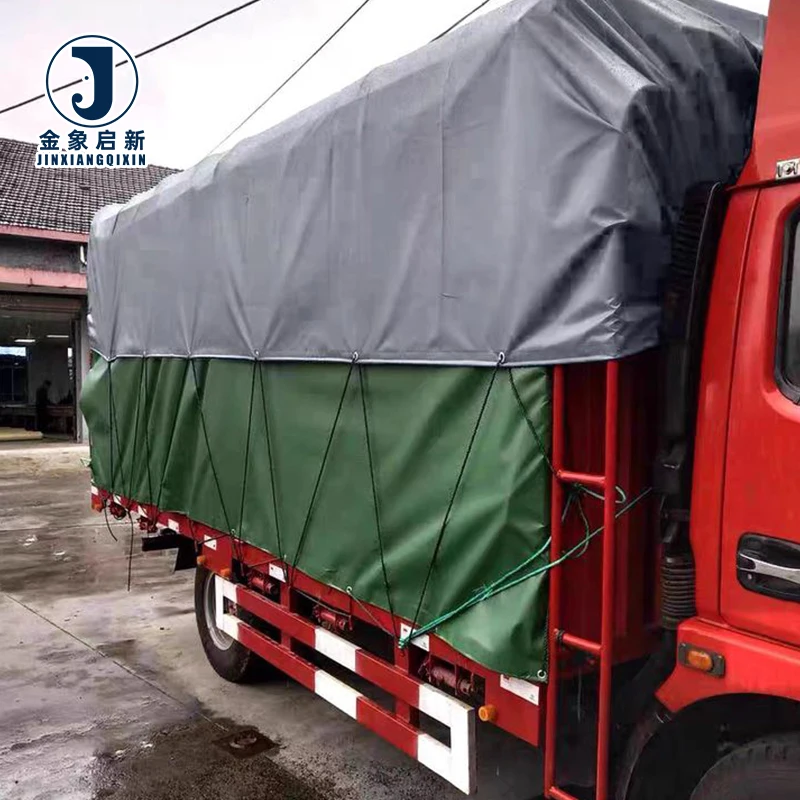
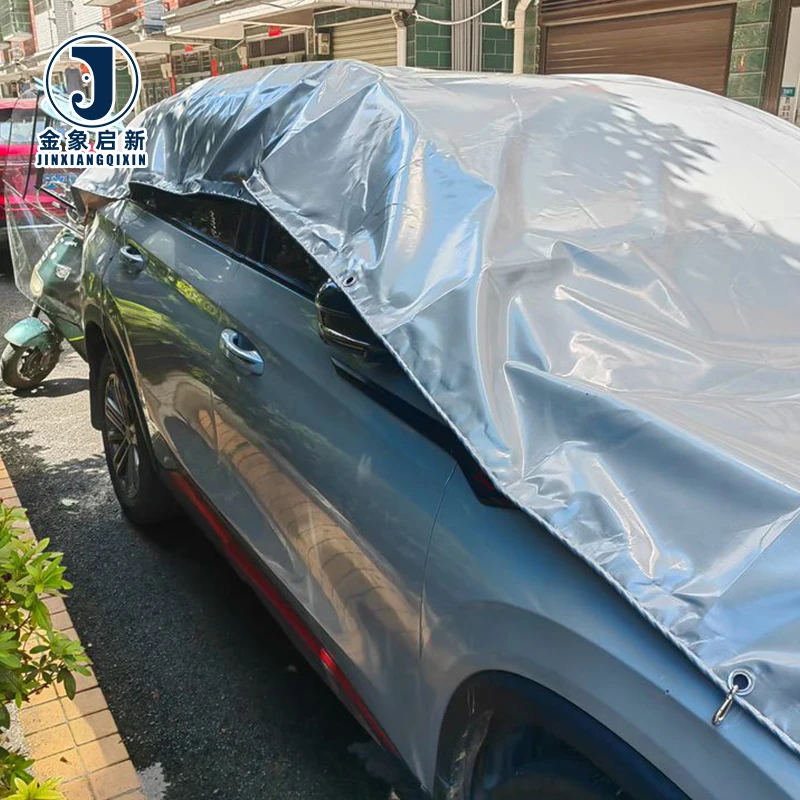
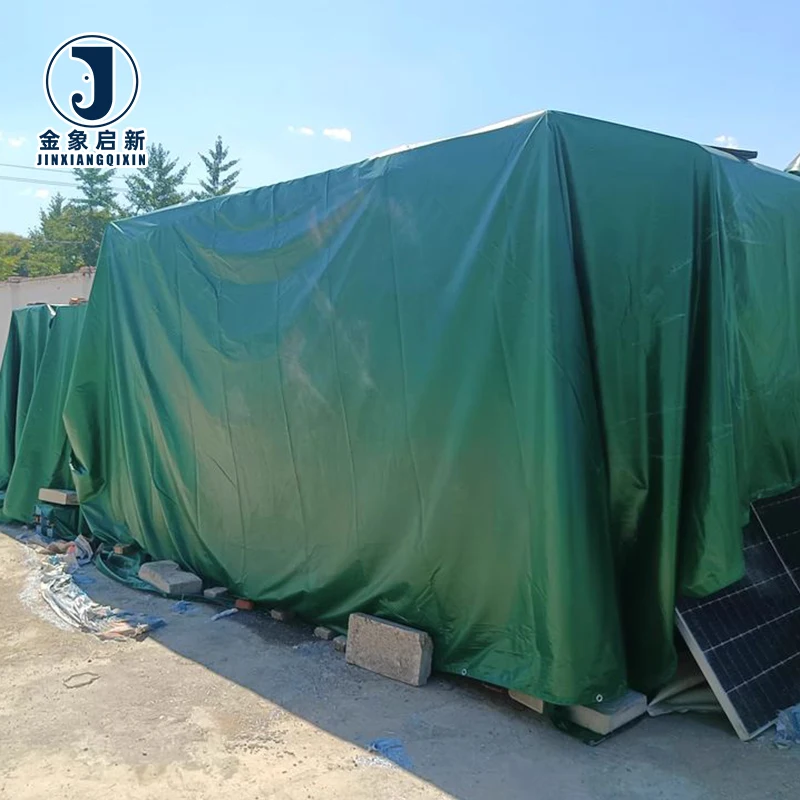
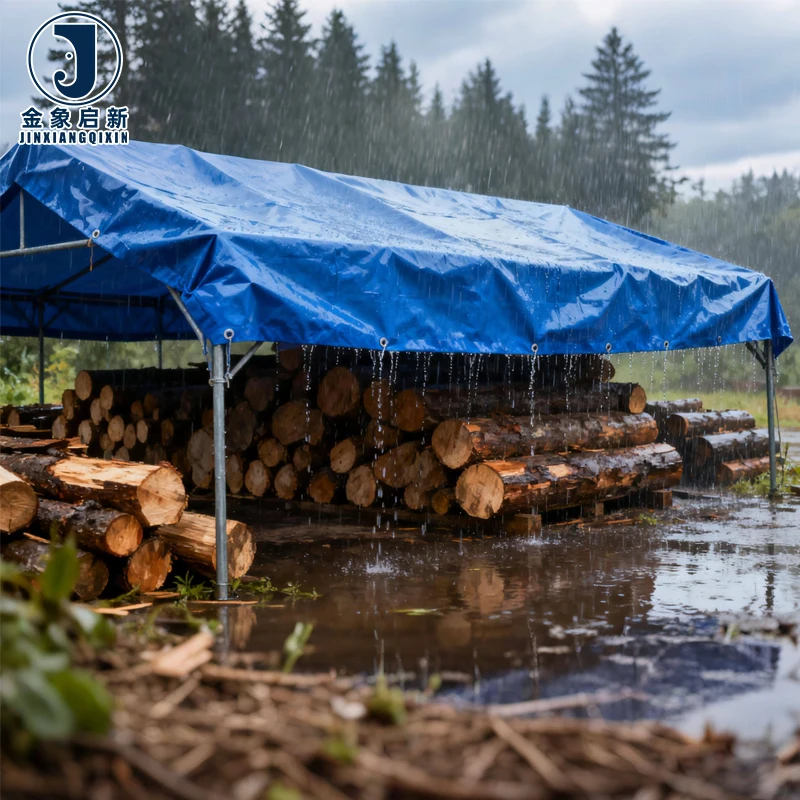
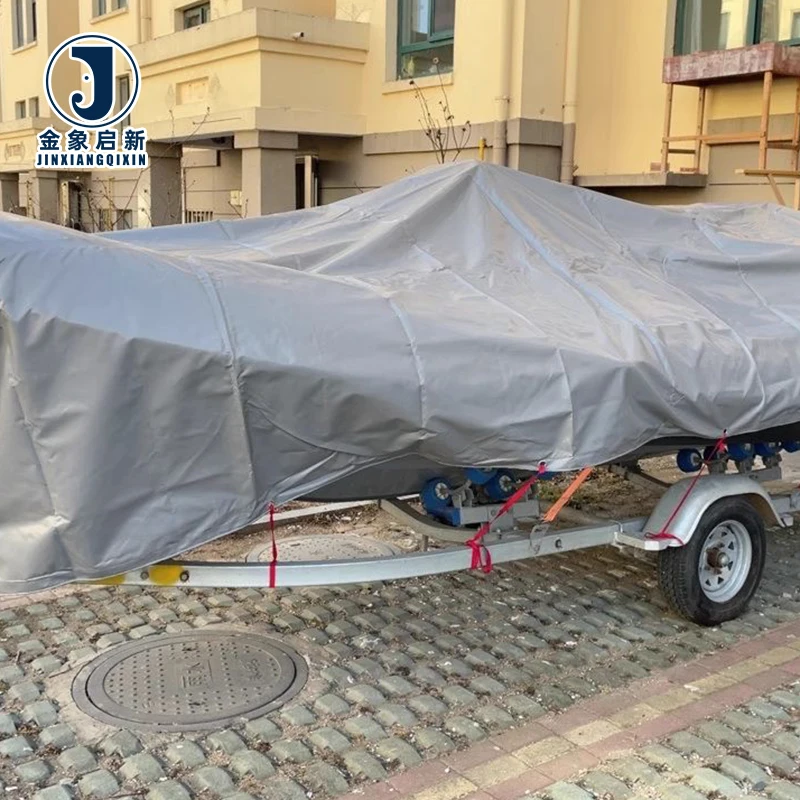
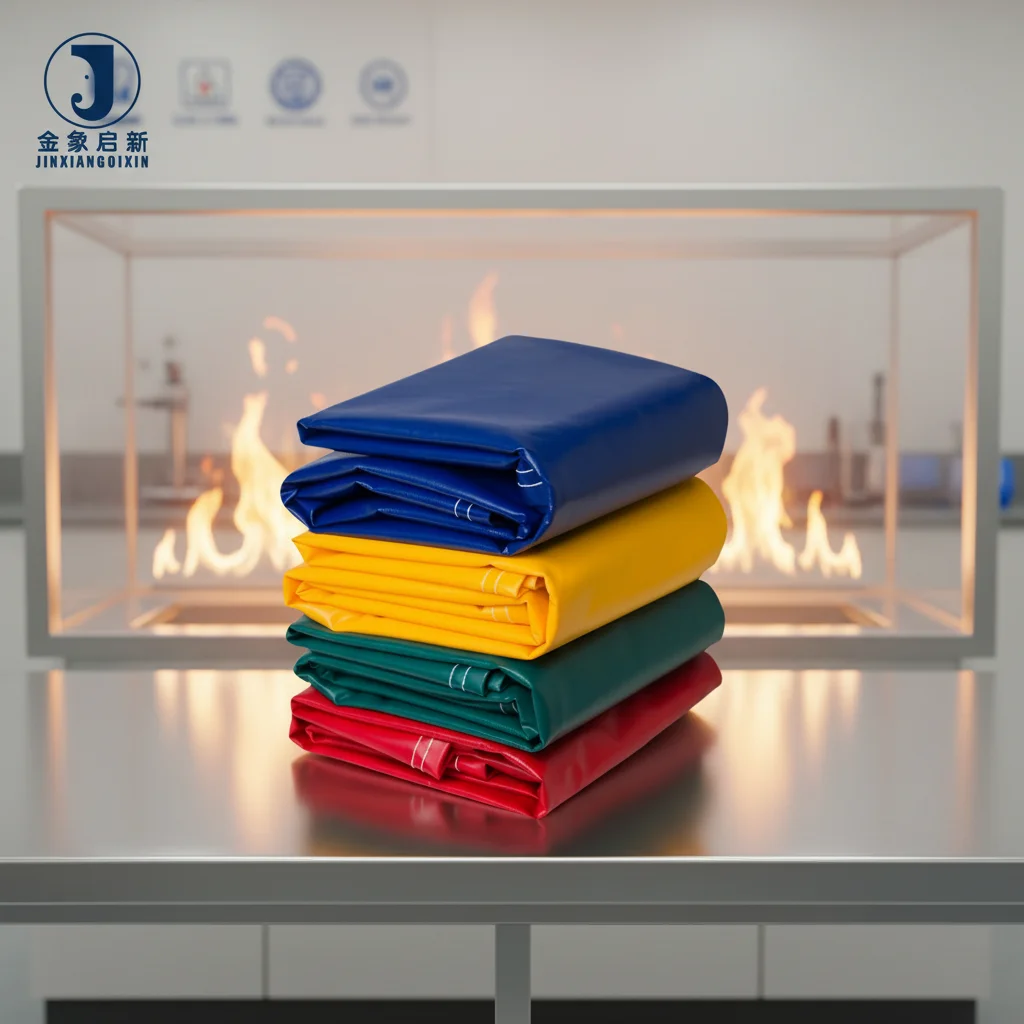
PVC Truck Cover — 400-1500 g/m² weight range, 0.35-1.5 mm thickness, 500D-2000D knitting density, waterproof and cold-cracking resistant
- Covers transport loads where generic sizing fails specific trailer models, with custom sizing and eyelet reinforcement at high-flex points
- Material weight and base fabric density matched to load type and road exposure conditions
Full customization from sample to bulk, with 100% pre-shipment inspection and dedicated QA at every production stage.
Description
Process Control — A dedicated manufacturer with nearly 30 years focused on PVC coated fabric maintains tight control over coating weight and adhesion across every roll of PVC Coated Truck Tarpaulin produced, ensuring spec consistency from first to last meter.
Technical Specifications
| Parameter | Value |
|---|---|
| Product Type | Truck Tarpaulin |
| Coating Material | PVC coated polyester fabric |
| Base Fabric Denier | 500D / 1000D / up to 2000D |
| Weight (GSM) | 400–500 / 700–1000 / 1100–1500 (multiple grades available — confirm grade for your application) |
| Total Thickness | 0.35–0.45 mm / 0.70–1.0 mm / 1.2–1.5 mm (varies by grade) |
| Tensile Strength | 1500–3000 N/5cm warp, 1200–2800 N/5cm weft (test basis not stated — request report) |
| Coating Method | Lamination technology and hot melt coating technology |
| Colour Options | Blue, Blue/Orange, Green, Grey, Black, Clear, Grey/Green, Orange, or custom |
| Cold Resistance | Cold resistant cracking formulation |
| Waterproof | Fully waterproof coated construction |
| Flame Retardant | Available in flame retardant grades — confirm the grade required for your market |
| UV Treatment | Anti-UV treatment available — test basis not stated, request documentation |
| Anti-Static | Anti-static treatment available — surface resistance standard not stated, confirm requirement |
| Anti-Mildew | Mold and mildew proof |
| Custom Printing | Brand and pattern printing available |
| Standards | ISO, CE |
Application Suitability
| Application | Exposure & Requirement |
|---|---|
| Flatbed trailer covers | Constant wind load, tie-down abrasion, road debris impact, UV exposure |
| Dump truck load enclosures | Heavy material contact, repeated flexing at load shift points, weather exposure |
| Side curtain systems | Continuous flex cycling at curtain runners, lateral wind pressure, warehouse dock abrasion |
| Farm machinery covers | Standing water, UV degradation, chemical contact from fertiliser residues |
| Construction site enclosures | Scaffolding contact, wind-driven rain, UV exposure on long-duration projects |
| Large material pile coverage | Static load on cover surface, ponding water, bird and rodent exposure |
Why Stated GSM Does Not Guarantee Real-World Truck Cover Performance
GSM measures mass per square meter, not structural integrity — a PVC coated tarpaulin with correct weight can still fail if base fabric denier and coating adhesion are poorly matched.
Fleet operators routinely receive covers that match the quoted GSM on a scale test but split at the weld line within months of service. The problem is almost never the weight itself. It is the gap between coating chemistry and base fabric construction, where lamination bonding or hot melt penetration determines whether the layers behave as one unit or delaminate under load flex [NEED_CITE: tensile and tear test methods for coated fabrics per ISO 1421]. A PVC Coated Tarpaulin custom manufacturer with deep process control addresses this by calibrating coating weight against base denier for each grade, rather than simply adding more PVC to hit a target number.
Matching Weight Grade to Fleet Operating Conditions
Selecting the correct GSM family is the first decision in specifying a truck tarpaulin. Lightweight 400–500 GSM grades suit short-haul and seasonal agricultural covers where handling weight matters more than multi-year durability. Heavy-duty 700–1000 GSM grades cover most long-haul flatbed and tipper applications where the fabric must resist load shift abrasion and sustained wind pressure. Super heavy grades at 1100–1500 GSM are specified for mining haulage, oversized load enclosures, and permanent side curtain installations where the PVC coated tarpaulin must withstand continuous mechanical stress.
Coating Method and Its Effect on Seam Reliability
The lamination and hot melt coating methods used across this PVC Coated Tarpaulin custom manufacturer range directly influence how well seams hold under tension. Hot melt coating penetrates the base fabric weave, creating a mechanical lock between coating and yarn that supports stronger heat-welded joints. Lamination bonds a pre-formed PVC film to the fabric surface, offering a smoother finish and consistent thickness. The choice between them depends on whether the priority is weld strength at high-flex points or surface uniformity for printed branding [NEED_CITE: DIN 53354 adhesion test for coated textiles]. Both methods are available across the weight families, and the correct pairing should be confirmed during sampling.
Reading the Specification Sheet Beyond the GSM Number
Three parameters work together to determine how a truck tarpaulin performs in service, and none of them can be evaluated in isolation. Base fabric denier — ranging from 500D to 2000D in this range — sets the yarn thickness and therefore the fundamental tear resistance of the woven grid. A higher denier resists tear propagation from puncture points such as sharp load corners or tie-down hook contact. Total thickness reflects the combined coating and fabric build, and it correlates with stiffness and handling weight rather than strength alone. Coating adhesion determines whether the PVC layer stays bonded to the polyester base during repeated flexing cycles, which is where many field failures originate. Specifying all three together, rather than quoting GSM alone, gives a meaningful picture of how the PVC coated tarpaulin will hold up to a specific fleet’s operating conditions.
What Happens When Specifications Are Chosen on Price Alone
Covers that arrive underweight relative to the quotation create immediate risk for transport operators. A flatbed cover running lighter than its stated grade loses tensile reserve, meaning that the first heavy crosswind or unexpected load shift can push the fabric past its working limit. More insidiously, colour variation between rolls in the same shipment becomes visible once covers are installed side by side on a fleet, forcing a choice between cosmetic inconsistency and a costly reorder [NEED_CITE: batch colour consistency standards in coated fabric production]. Flame retardant claims without supporting test documentation create compliance exposure at construction and mining sites where site inspectors require certified material on every cover. These are not theoretical problems — they are recurring purchasing failures that a disciplined specification process prevents.
How This Manufacturer Supports Correct Specification
The 10-person R&D team develops material selections and sample panels within days of receiving an inquiry, allowing buyers to evaluate coating adhesion and weld behaviour before committing to production volume. Three full production lines with 36 sets of professional equipment provide the capacity to maintain batch consistency across large fleet orders without sacrificing lead time. Dedicated quality control at every stage — from incoming base fabric inspection through coating weight checks to final roll examination — ensures that the PVC coated tarpaulin shipped matches the approved sample. Pre-shipment inspection covers 100 percent of rolls rather than relying on statistical sampling. Custom colour matching, pattern printing, and sizing are handled in-house, eliminating the coordination problems that arise when these services are outsourced.
Documentation & Verification
- Material specification sheet stating exact GSM, base fabric denier, and coating weight for every roll
- UV and flame retardant test reports provided where applicable treatments are specified
- Pre-shipment inspection record covering weight verification and visual consistency checks
- Roll packing list with batch identification for traceability
- Certificate of origin and customs documentation for international dispatch
Fabrication, Handling & Storage
- Heat weld at temperatures matched to the coating method — hot melt grades tolerate a wider weld window than laminated surfaces
- Reinforce tie-down and eyelet contact zones with additional PVC patches on grades below 700 GSM to prevent pull-through
- Store rolls upright on pallets in shaded areas to prevent compression flattening of the coating surface
- Allow cold-stored rolls to reach ambient temperature before unrolling to avoid coating crack damage
- Use mild detergent and soft brush for cleaning — avoid solvent-based products that attack the PVC plasticiser system
- Plan cut patterns across the available custom widths to minimise offcut waste and reduce seam count on large covers
Starting Your Specification Enquiry
To move from catalogue review to a confirmed specification, share your vehicle fleet details including trailer model dimensions, typical load types, and the environmental conditions your covers face in service. If your destination market requires fire classification or anti-static compliance, state the specific standard your site or contract demands. Indicate whether you need finished covers cut to vehicle dimensions with hem and reinforcement details, or roll stock for in-house fabrication. Sample panels in your required grade and colour can be produced for approval before bulk production begins.
Frequently Asked Questions
Q: How do I verify the GSM on arrival matches what was quoted?
A: Every shipment is accompanied by a material specification sheet stating the exact GSM, base fabric denier, and coating weight. Our pre-shipment inspection records document weight checks across the production run. You can also conduct your own scale test on arrival using a measured sample — the documentation provides the baseline to compare against.
Q: What flame retardant grades and test standards are available?
A: Flame retardant treatment is available across the PVC coated tarpaulin range, but the specific grade must be matched to your destination market’s regulatory requirements. We provide test reports for the grades we supply. State the standard your project or site contract requires — such as DIN 4102 classification or local building code — and we will confirm which grade applies.
Q: Can I order custom width, length, colour, and print in one batch?
A: Yes. The production capability covers custom width, colour matching, and brand or pattern printing within a single order. Sample panels are developed for your approval before bulk production proceeds, so you can verify colour accuracy and print quality against your requirements before committing the full batch.
Q: How is colour consistency controlled across multiple rolls?
A: Colour matching is managed in-house using controlled formulation and monitored during the coating process. Pre-shipment inspection includes visual consistency checks across rolls within the same order. If your application requires panels installed side by side where variation would be visible, flag this in your inquiry so that tighter matching controls are applied.
Q: What documentation comes with each shipment?
A: Standard documentation includes a material specification sheet with GSM and coating details, test reports for any performance treatments specified, a pre-shipment inspection record, roll packing list with batch identification, certificate of origin, and customs support documents. Additional compliance paperwork can be arranged if your market requires it.
Related products
-
Custom PVC Truck Cover for Trailer – Manufacturer
Read more -
Heavy Duty Tent for Lorry/Laminated Sheet PVC/Vinyl Canvas Tarp for Truck Trailer
¥1.25 Select options This product has multiple variants. The options may be chosen on the product page -
Custom PVC Truck Cover for Trailer – Manufacturer
Read more -
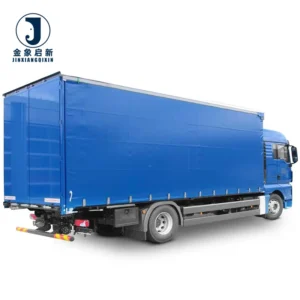
Custom PVC Tarpaulin Truck Cover for Trailer Side Curtain
Read more