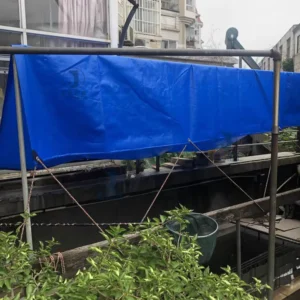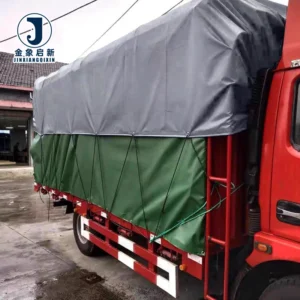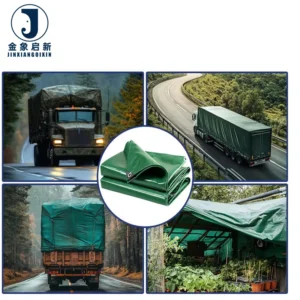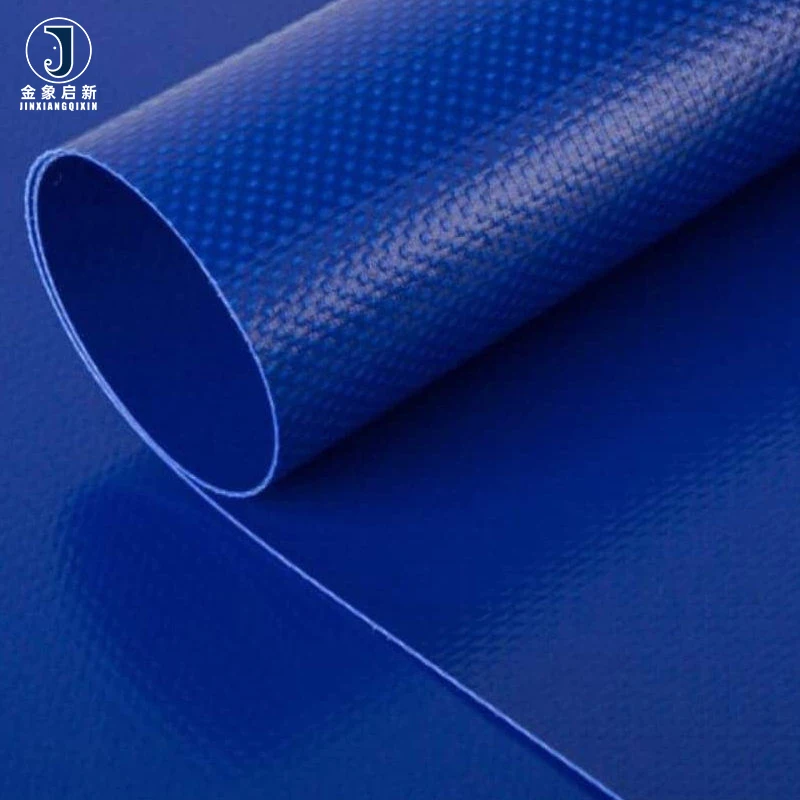
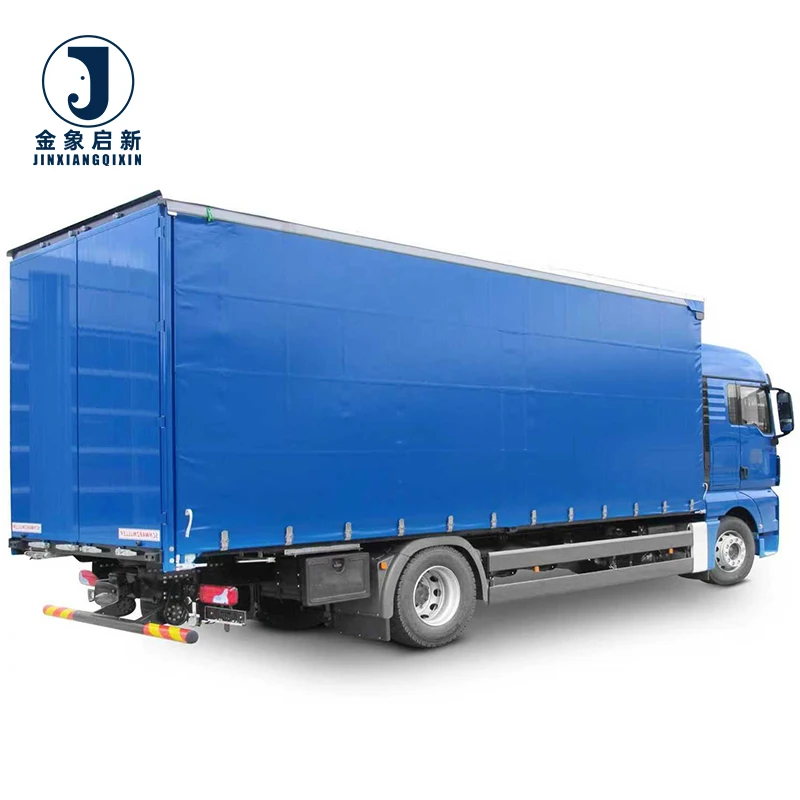
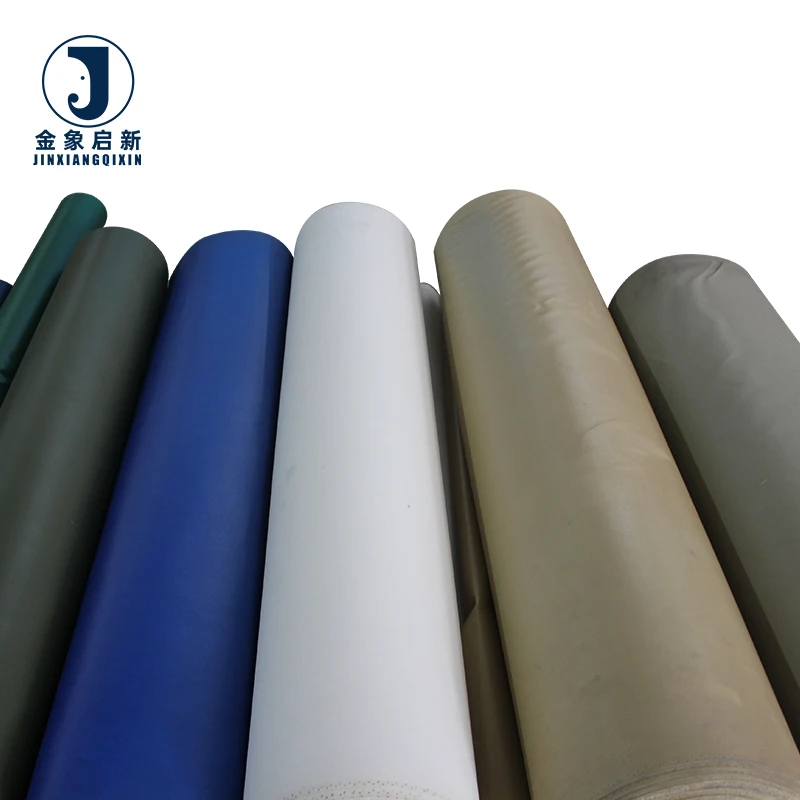
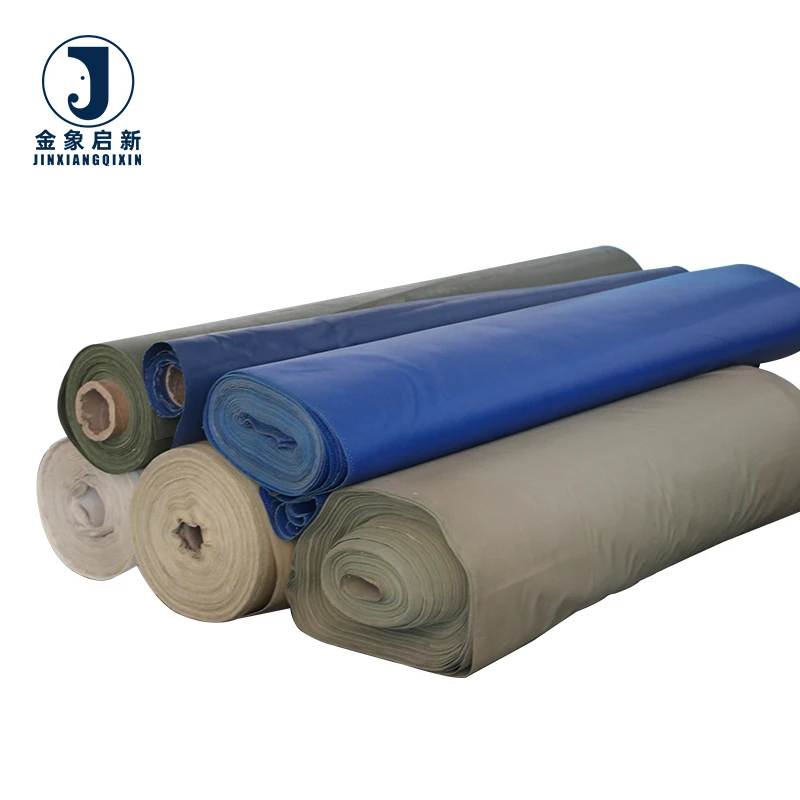
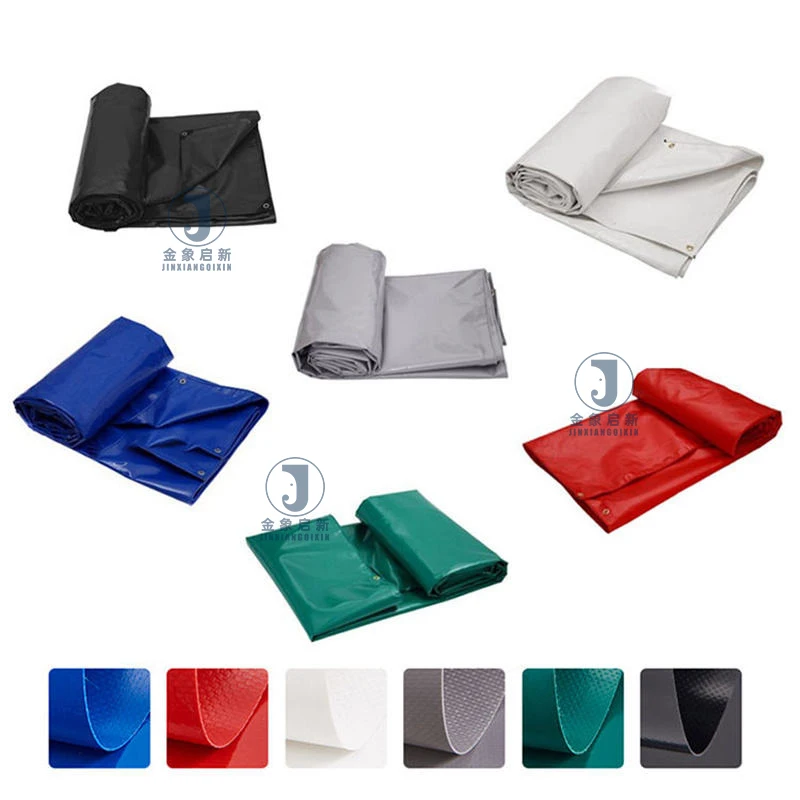
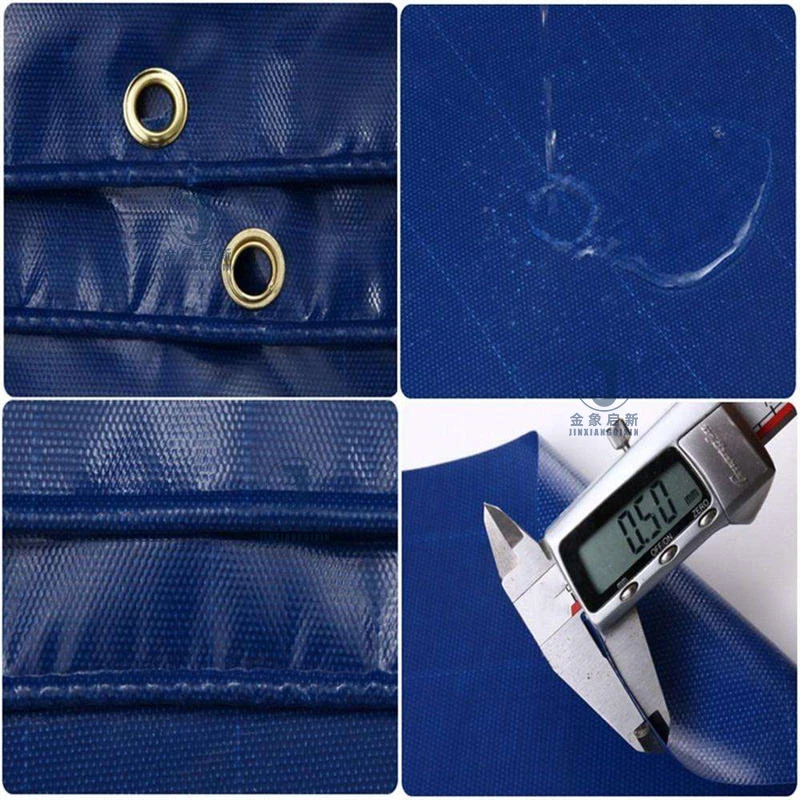
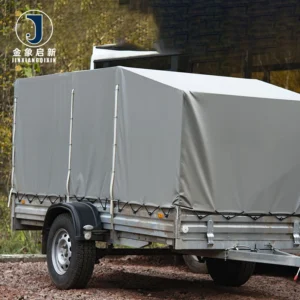
PVC Tarpaulin Truck Cover 610g Blackout — hot-melt coated on high-tenacity polyester mesh for strong adhesion at welded seams and flex points.
- Custom cut to specific trailer models with eyelet placement and reinforced hems to match your fleet
- 350–750gsm range with laminated and hot-melt coating options, flame retardant and anti-static treatments available with test reports
- Colour consistency verified across rolls with batch approval samples before dispatch
Backed by nearly 30 years of coated fabric process control, 100% pre-shipment inspection on every roll, and a 10-person R&D team handling custom sizing and treatment specifications.
Description
Precision Coating Weight Control — hot-melt laminated lines hold GSM tolerance tight across every roll so the fabric arriving on your dock matches the specification sheet you approved.
Technical Specifications
| Parameter | Value |
|---|---|
| Product Type | PVC Tarpaulin Truck Cover |
| Base Fabric | High-strength polyester mesh fabric |
| Coating Material | PVC |
| Coating Method | Laminated technology & Hot-melt Coating technology |
| Yarn Type | High tenacity polyester yarns with PVC coating |
| Weight (GSM) Options | 350gsm / 420gsm / 500gsm / 550gsm / 600gsm / 750gsm |
| Total Thickness Options | 0.32mm / 0.35mm / 0.4mm / 0.45mm / 0.5mm / 0.65mm |
| Roll Width | 2m / 2.1m |
| Roll Length | 75m (2m width) / 50m (2.1m width) |
| Finished Product Size | Custom cut-to-size as per customer requirements |
| Color Options | Blue / Red / Yellow / Light blue / Grey (Customized) |
| Standard Treatments | Cold crack resistance, Anti-mildew, Waterproof, Sunproof, Color fastness |
| Special Treatments Available | Flame retardant, Anti-static, Anti-cold, Anti-mildew, 3P (confirm grade required for your market) |
| Certifications | ISO, CE |
Application Suitability
| Application | Exposure & Requirement |
|---|---|
| Truck and trailer cargo covers | Constant flexing at load points, road abrasion, UV exposure, rain and wind loading |
| Side curtain fabric for fleet operators | Repeated rolling and unrolling tension, weld seam integrity at flex zones |
| Construction site enclosures | Wind shear, scaffold contact abrasion, prolonged weather exposure |
| Equipment and machinery covers | Static loading, dust and moisture ingress, periodic handling and folding |
| Agricultural and aquaculture covers | Continuous moisture contact, biological growth risk, seasonal temperature swings |
| Marine and offshore maintenance covers | Salt spray, high humidity, UV intensity at sea level |
Why GSM Alone Does Not Tell You How Strong a PVC Truck Cover Tarpaulin Will Be in Service
A quoted GSM only confirms weight per square metre — it says nothing about the yarn denier, weave density, or coating adhesion that actually determine how the fabric performs under load.
Fleet operators and transport equipment builders regularly discover that two PVC coated tarpaulin rolls carrying the same GSM label can behave very differently once fabricated into truck covers. One roll may tear cleanly along a welded seam when the load shifts, while another holds firm because the base fabric uses higher tenacity yarns in a tighter mesh. [NEED_CITE: tensile and tear test methods for coated fabrics per ISO 1421] The PVC coated tarpaulin manufacturer you choose must provide the full material specification sheet — not just the headline weight — so that the base fabric construction is as transparent as the coating weight.
Fabric Engineering for Transport Covers
This PVC truck cover tarpaulin uses high tenacity polyester yarns in a mesh construction that is then coated through hot-melt laminated technology. The hot-melt process forces PVC into the interstices of the base fabric under heat and pressure, creating a mechanical bond between coating and yarn rather than a simple surface layer. This adhesion quality directly affects how well the fabric tolerates high-frequency welding — the technique most commonly used to join panels and attach reinforcement strips on truck and trailer covers. When adhesion is poor, the PVC layer can delaminate from the polyester base at the weld line, leaving a weak point that fails under flex loading.
Coating Technology and Weld Performance
The combination of laminated and hot-melt coating technology gives the PVC layer a consistent thickness across the full roll width. Consistent coating thickness matters because welding machines apply heat and pressure uniformly across the seam. If coating weight varies from one edge of the roll to the other, the operator must adjust weld parameters mid-run or risk under-fused seams on the thinner side and burnt-through seams on the thicker side. For fleet operators building covers in volume, roll-to-roll coating consistency reduces weld reject rates and speeds up fabrication throughput. [NEED_CITE: hot-melt coating adhesion requirements for welded tarpaulin assemblies]
Interpreting the Weight and Thickness Range
The available grades span from 350gsm at 0.32mm to 750gsm at 0.65mm. Each step up in GSM corresponds to a heavier base fabric and thicker PVC coating, which together increase tensile strength and resistance to puncture. A lighter grade suits temporary load covers and short-haul applications where weight savings matter. A heavier grade is specified for side curtain systems and flatbed covers that face continuous wind loading and frequent tie-down tension. The relationship between GSM and actual field performance is governed by the base fabric mesh count and yarn denier — two values that should be confirmed on the material specification sheet before approving production.
The Hidden Cost of Specifying on Price Per Roll Instead of Verified Performance
A truck cover that looks correct on the quotation but arrives underweight in GSM will fail at stress points months earlier than expected. Buyers who focus only on per-roll cost sometimes accept lighter coating without realising that the PVC layer is what protects the polyester base from UV degradation and moisture ingress. [NEED_CITE: field failure patterns in PVC coated tarpaulin truck covers] Batch colour variation is another hidden cost — if rolls within the same order differ in shade, installing them side by side on a fleet of trailers creates a visible mismatch that damages brand presentation. Confirming colour references and requesting batch approval samples before full production runs prevents this problem.
Why This PVC Coated Tarpaulin Manufacturer Supports Your Truck Cover Programme
Nearly 30 years of focused coated fabric production provides the process knowledge needed to hold GSM tolerance tight from the first roll to the last in a container load. Three full production lines and 36 sets of professional equipment allow bulk PVC truck cover tarpaulin orders to be fulfilled without splitting production across uncontrolled sub-contractors. The 10-person R&D team handles material selection, custom sizing, and colour matching for side curtain and load cover specifications. Dedicated QA and QC inspection at every stage, with 100% pre-shipment checking, ensures that the GSM, colour, and coating quality documented on the specification sheet match the rolls that leave the factory.
Documentation & Verification
- Material specification sheet stating exact GSM, base fabric mesh, and PVC coating weight for each roll
- Test reports for flame retardant and anti-static grades where applicable to your market
- Pre-shipment inspection record confirming weight, colour, and dimensions against the approved sample
- Roll packing list with individual roll weights and dimensions for container load planning
- Certificate of origin and customs documentation for international shipment
Fabrication, Handling & Storage
- Hot-melt coated PVC surface welds cleanly at standard high-frequency settings; verify temperature on heavier GSM grades before full production runs
- Reinforce hem areas with extra PVC strip before punching eyelets to prevent tear-out under tie-down tension on truck covers
- Store rolls vertically on end caps in a shaded, ventilated area to avoid flat-spot creases that show through after unrolling
- Allow cold-stored rolls to reach workshop temperature before unrolling to prevent cracking on anti-cold treated grades
- Cut panels using a clean straight blade on a flat table; the polyester mesh base resists fraying but still requires sharp tooling for clean edges
- Use PVC-compatible solvent cement for field repairs on minor cuts; the coating accepts standard PVC repair adhesives
How to Start Your PVC Truck Cover Tarpaulin Enquiry
Provide your truck or trailer model dimensions, including the position of tie-down points and any reinforcement zones, so we can confirm panel sizes and weld seam layout. Let us know your target GSM range, colour reference, and whether your market requires flame retardant or anti-static certification. If you are ordering roll stock for your own fabrication line, specify roll width, length, and annual volume so we can plan batch consistency and production scheduling around your programme.
Frequently Asked Questions
Q: How do I verify the GSM matches what was quoted before the shipment leaves the factory?
A: Every roll undergoes weight testing as part of our 100% pre-shipment inspection. You receive a pre-shipment inspection record showing the measured GSM per roll alongside the quoted value. If you require independent verification, we can arrange third-party testing at the factory before dispatch, and the material specification sheet documents the base fabric and coating breakdown in full.
Q: Can the truck cover be cut to fit my specific trailer model, including eyelet and tie-down positions?
A: Yes. We produce custom cut-to-size covers based on your trailer model drawings. Provide the exact panel dimensions, eyelet spacing, hem reinforcement requirements, and any cut-out positions. Our R&D team reviews the layout and returns a fabrication drawing for your approval before production begins, ensuring the finished PVC truck cover tarpaulin fits without modification on arrival.
Q: What test reports are available for flame-retardant and anti-static grades?
A: Flame retardant and anti-static treatments are available as special options. The specific test standard depends on your market requirement — confirm the grade needed for your application and we will supply the corresponding test report with your shipment. Available grades should be discussed during the specification stage to ensure compliance with local safety regulations.
Q: How do you ensure colour consistency across multiple rolls in the same order?
A: We assign a single colour reference to each order and produce all rolls from the same coating batch where possible. A batch approval sample is available for side-by-side comparison before the full order ships. For repeat orders, we retain colour records and master samples so that subsequent PVC coated tarpaulin shipments match the original approved shade.
Q: What is the typical lead time for custom width or custom colour orders?
A: Custom width and colour orders require dedicated coating line scheduling and therefore carry longer lead times than standard stock rolls. The exact schedule depends on the width, colour, GSM grade, and order volume. Request a quotation with your specific requirements and we will confirm the production window alongside the minimum order quantity for your chosen specification.
Related products
-
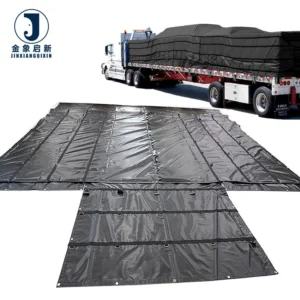
Factory Wholesale 14oz 18oz RipSTOP Flatbed Semi Truck Lumber Tarp with 8′ Drops 1PC 2PC 3PC Custom Waterproof Tarp
¥200.00 Add to cart -
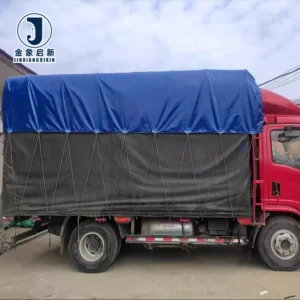
Custom PVC Truck Cover for Trailer – Manufacturer
Read more -
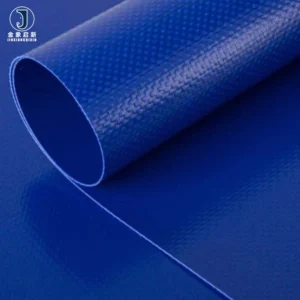
610g Blackout Coated PVC Tarpaulin for Tents & Truck Covers Waterproof Outdoor Use Boys & Girls
¥1.20 Select options This product has multiple variants. The options may be chosen on the product page -
PVC Coated Tarpaulin for Truck Cover – Custom Made
Read more