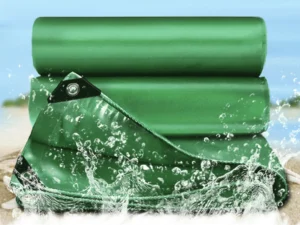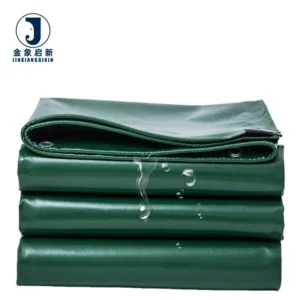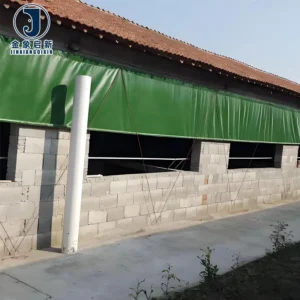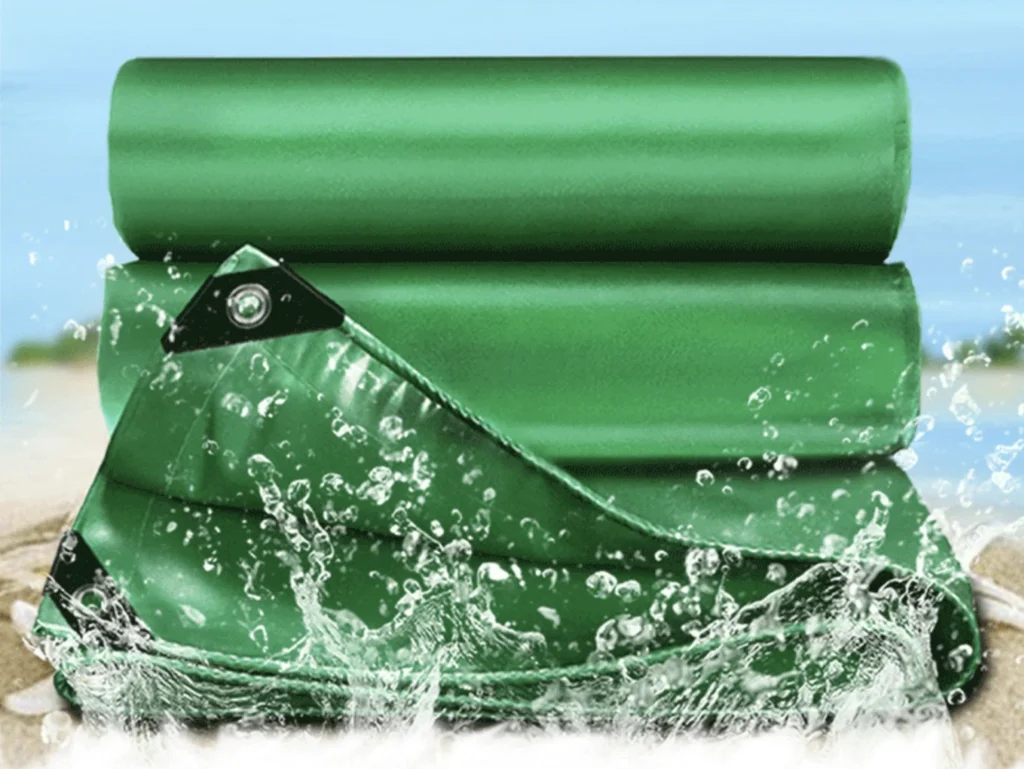
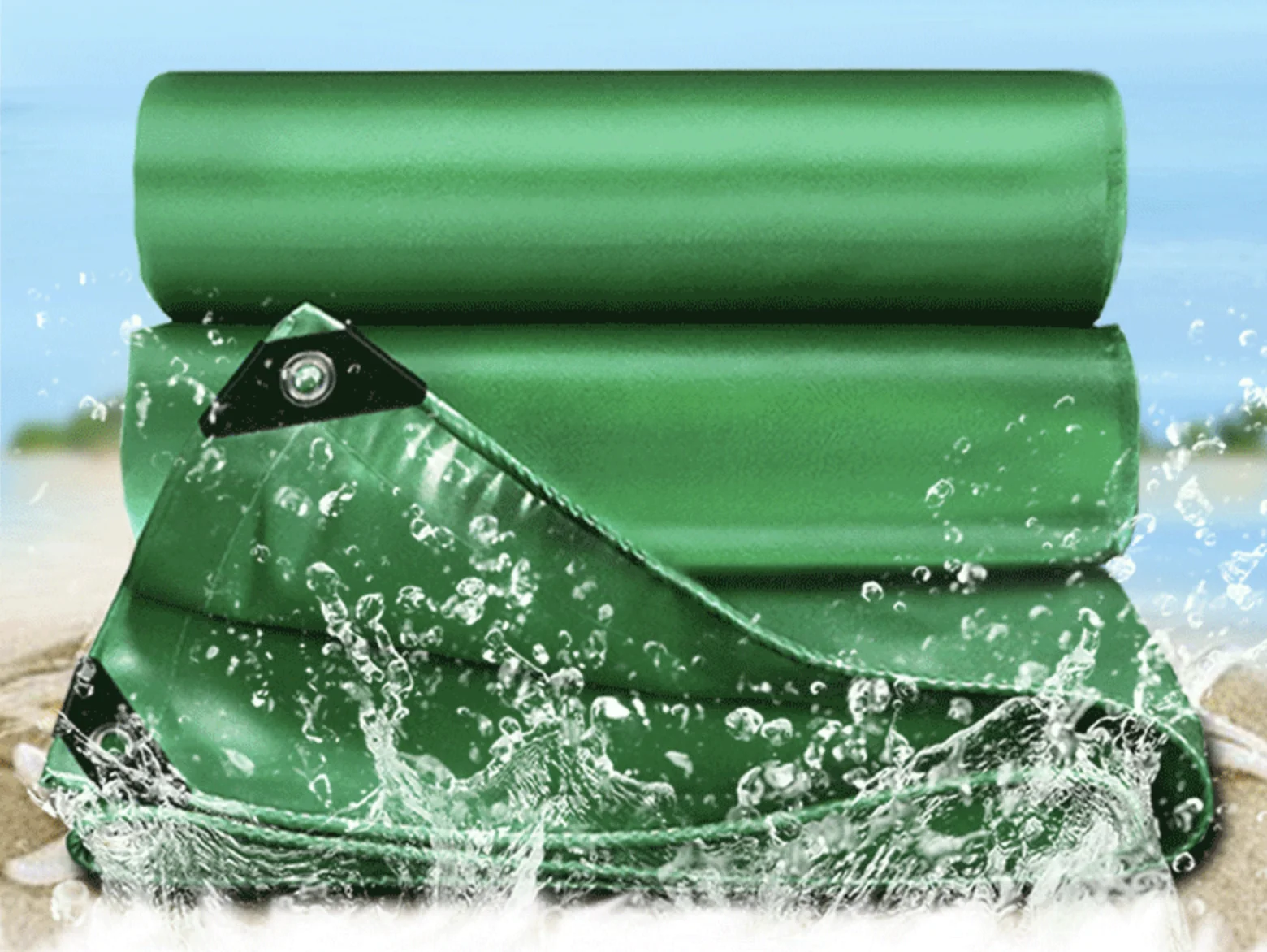
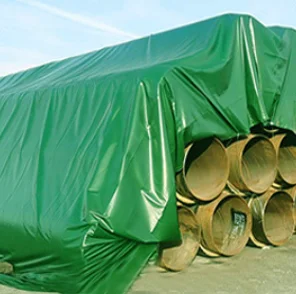
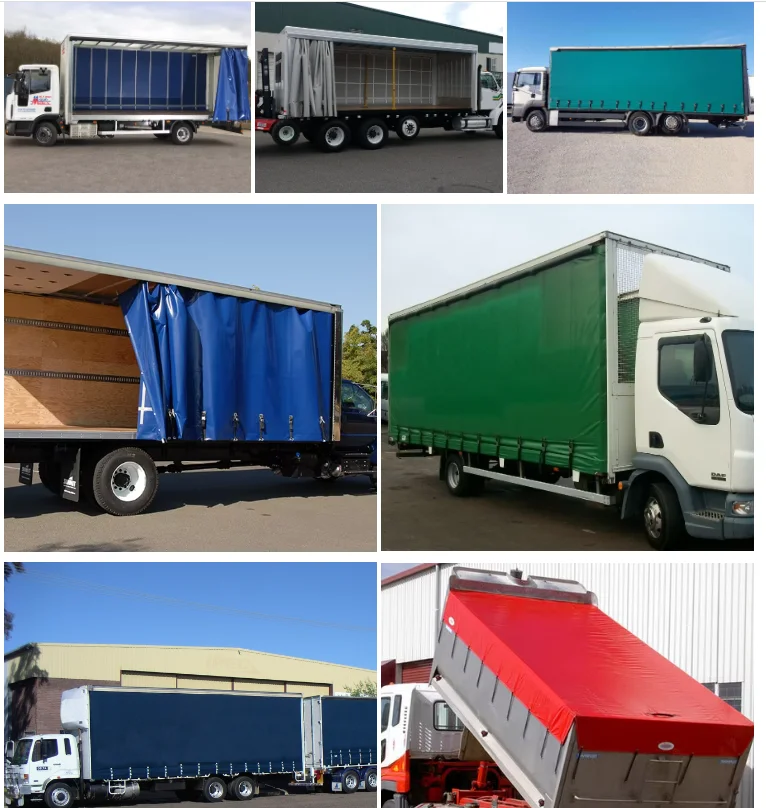
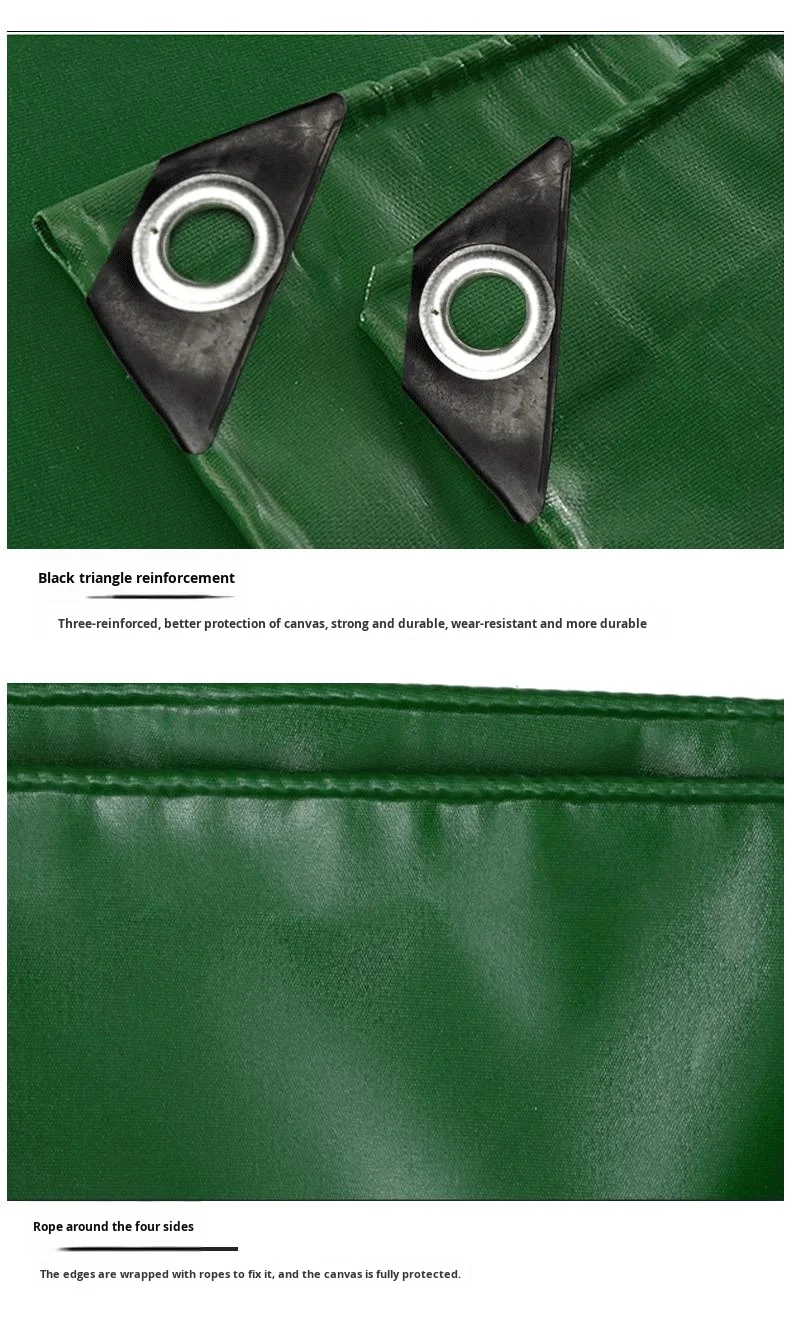
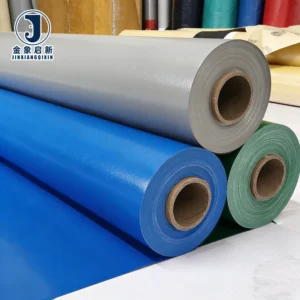
PVC Knife Coated Fabric — fire retardant, UV resistant, high & low temperature tolerant with HF, hot air and sewing welding options for tensile structures and large format technical textiles. Knife coating ensures consistent adhesion across the full roll width, while surface treatment controls gloss, self-cleaning behaviour and weather exposure for stadium roofs, airport hangars and shade systems. Supported by a 10-person R&D team for custom width, colour and print development within days.
Description
Coating Process Control — Nearly 30 years focused on PVC coated fabric gives us deep command over coating weight, adhesion consistency, and roll-to-roll uniformity, so the material arriving at your dock matches the specification you approved.
Technical Specifications
| Parameter | Value |
|---|---|
| Product Type | PVC Knife Coated Fabric |
| Coating Method | Knife coated |
| Coating Material | PVC |
| Finish Options | Glossy or matte |
| Welding Compatibility | High frequency, hot air, sewing |
| Flame Retardant Grade | (grade not stated in source — confirm the grade required for your market) |
| UV Treatment | (test basis not stated in source — confirm UV duration needed for your application) |
| Anti-Mildew | Antibacterial and mildew proof |
| Oil & Stain Resistance | Yes |
| Acid & Alkali Resistance | Yes |
| Temperature Behaviour | High and low temperature resistant |
| Flexibility | Highly flexible, crack resistant |
| Self-Cleaning | Yes |
| Key Features | Fire retardant, UV resistant, anti-oxidation, weather resistant |
Application Suitability
| Application | Exposure & Requirement |
|---|---|
| Tensile membrane structures | Permanent tension, wind uplift, UV and rain exposure, architectural fire code compliance |
| Stadium roof canopies | Span loading, ponding water, thermal cycling, long-term colour stability |
| Airport hangar covers | Fuel and hydraulic fluid contact, large panel welding, high wind loads |
| Portable storage domes | Repeated assembly and disassembly, abrasion at frame contact points, snow load |
| Shade systems and awnings | Daily UV exposure, thermal expansion, frequent retraction stress at seams |
| Outdoor event tents | Rapid pitch and strike, mud and stain contact, guest safety fire classification |
| Truck side curtains and covers | Road abrasion, constant flexing, tie-down strap wear, weather sealing |
Why the Quoted GSM Often Fails On Arrival
A number on a quotation is only meaningful when backed by a documented inspection chain from coating to dispatch.
The most common complaint we hear from fabricators is that the PVC knife coated tarpaulin roll felt lighter than expected the moment it was unrolled on the shop floor. A lighter base fabric or thinner coating pass can shave grams from every square metre, and across a container load that shortfall compounds into a material that tears earlier, welds inconsistently, and fails to meet the structural engineer’s tensile requirement [NEED_CITE: tensile and tear test methods for coated fabrics per ISO 1421]. We address this by running 100% pre-shipment weight verification against the stated GSM and attaching a per-roll inspection record so you can trace every roll back to its production batch before it leaves our facility.
Knife Coating Delivers the Adhesion Fabricators Need
When you are welding large membrane panels or building a truck curtain that flexes thousands of times on the road, the bond between the PVC layer and the polyester base fabric determines whether the panel holds together. Knife coated construction forces the PVC paste through the weave under controlled pressure, filling the interstices rather than sitting on top. This produces a mechanical lock that resists delamination at the weld line — a failure mode that frequently ends a membrane structure’s service life prematurely. For fabricators running high-frequency or hot-air welding equipment, this consistent coating penetration also means your weld parameters stay stable from roll to roll.
Finish and Surface Treatment Dictate Long-Term Appearance
Architectural membranes and stadium canopies must look clean for years with minimal maintenance. A glossy finish sheds rain and dirt more readily, while a matte surface reduces glare in high-visibility installations like airport hangars. Our self-cleaning surface formulation reduces the frequency of manual washing, which matters on large-format structures where scaffolding access adds significant maintenance cost. When you request a PVC knife coated tarpaulin manufacturer custom run, you can specify the finish that suits both the visual brief and the cleaning regime your client expects [NEED_CITE: surface treatment effects on coated fabric maintenance cycles].
Reading the Specification Sheet Beyond GSM Alone
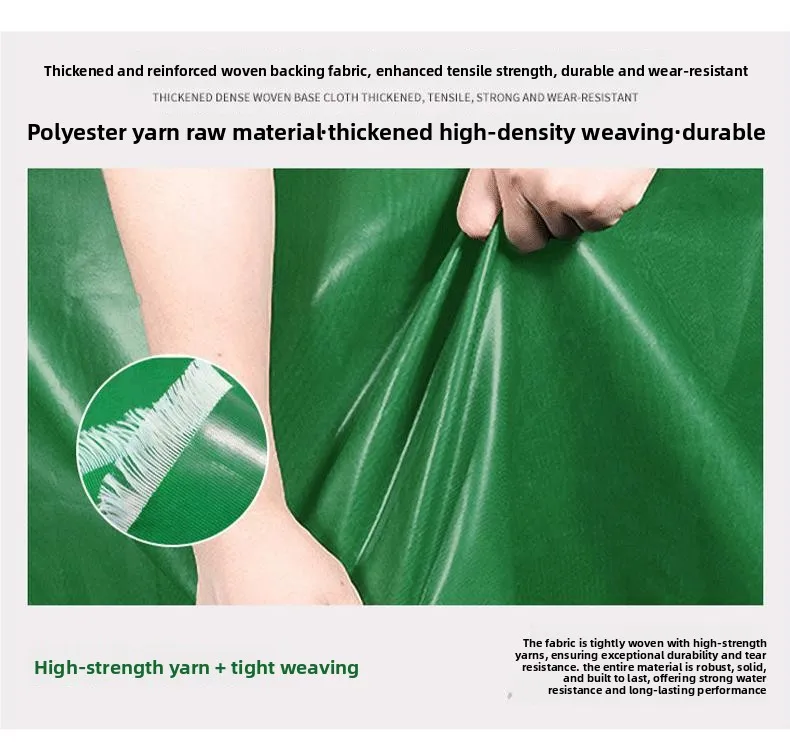
Tensile strength and tear resistance are not functions of weight alone. A 650 GSM fabric with a low-denier base woven at high thread count will behave very differently from one using heavier yarns at lower density. The knife coating process adds structural contribution because the paste penetrates and bonds to individual yarns, distributing load across the weave rather than allowing yarns to pull apart under point stress. Acid and alkali resistance matters in agricultural or industrial-adjacent installations where fertiliser dust or chemical splash is routine. Temperature range determines whether the membrane remains flexible during winter installation or resists softening and sag on a hot July afternoon. Each of these parameters interacts with the others, which is why our material specification sheet lists base fabric denier, weave density, and coating weight separately rather than collapsing everything into a single GSM figure.
The Hidden Cost of Specifying on Price per Kilogram
When buyers select PVC coated fabric on cost per kilogram alone, the supplier is incentivised to use a lighter base fabric and compensate with filler in the coating paste. The roll arrives at the correct GSM but the fabric is stiffer, harder to weld, and more prone to cracking at fold lines during cold-weather installation. Colour inconsistency between rolls in the same shipment is another symptom of cost-cutting in the compounding stage — visible the moment two adjacent panels are hung side by side on a tension structure. Welded seams that fail before the fabric itself is a third consequence: insufficient coating adhesion means the weld peels away under the cyclic loading that every membrane structure experiences [NEED_CITE: weld seam failure modes in PVC coated architectural fabrics]. We control these variables through dedicated QA at every production stage and document the results before dispatch.
What We Bring to Your Next Project
Our 10-person R&D team handles material selection, colour matching, and sample development in-house, which means a custom colourway or non-standard width is developed and sampled within days rather than outsourced and delayed. Three full production lines and 36 sets of professional equipment give us the capacity to deliver full container loads on schedule, while still maintaining the process control that custom architectural projects demand. Every roll is inspected at multiple production stages — base fabric, coating pass, surface finish — and the inspection record travels with the shipment. We supply PVC knife coated tarpaulin fabric to distributors, fabricators, and contractors across North America, Europe, and Asia, and every market-specific documentation requirement is prepared at our end so your import process stays smooth.
Documentation & Verification
- Material specification sheet listing exact GSM, base fabric denier, weave density, and coating type for every roll
- Test reports for flame retardant and UV grades supplied where applicable, matched to batch
- Per-roll weight verification record attached to the pre-shipment inspection file
- Colour reference sheet confirming Pantone or RAL match across all rolls in your order
- ISO and CE certificates included in the shipping documentation package
- Roll packing list with gross and net weights for customs clearance support
Fabrication, Handling & Storage
- HF and hot air welding both compatible — set temperature to match coating paste formulation for consistent seam strength
- Sewn panels benefit from bonded thread to prevent wicking through the PVC coating layer
- Store rolls upright on pallets to prevent flat-spot deformation on the outer coating surface
- Allow cold-stored rolls to acclimatise before unrolling to avoid creasing the crack-resistant coating
- Use neutral pH cleaners only — aggressive solvents can degrade the self-cleaning surface treatment
- Plan cutting layout to maximise yield per roll width and reduce welded seam count on large membranes
How to Start a Technical Enquiry
Tell us the end-use application, the environmental exposure conditions, and the fire classification your local building code or client specification requires. Specify the roll width you need, annual volume, and whether you require finished panels or raw roll stock. If colour consistency across multiple shipments is critical, request a lab dip and production sample before committing to bulk — we develop samples within days.
Frequently Asked Questions
Q: How do you ensure GSM accuracy matches the quotation when the rolls arrive?
A: Every roll is weighed and measured during pre-shipment inspection, and the actual GSM is recorded on the inspection sheet that ships with your order. If you need to re-verify on arrival, we recommend cutting a measured square from the outer wrap and weighing it before fabrication begins. Discrepancies are documented and resolved against the recorded batch data.
Q: What flame retardant grades can you supply, and will test reports accompany the shipment?
A: We offer flame retardant treatment across our PVC knife coated fabric range, but the specific grade required depends on your market and application — B1, M2, NFPA 701, or others. Confirm the classification your project demands and we will supply the matching test report with your documentation package.
Q: How do you control colour consistency when I order multiple rolls in one shipment?
A: All rolls in a single order are produced from the same compounded PVC batch using a single colour reference. We run visual and instrumental colour checks at the coating stage and record the results. If you need a colour match to a previous order, send us a sample or reference code and we will develop a lab dip for your approval first.
Q: What custom widths and minimum order quantities apply to non-standard specifications?
A: We produce PVC coated fabric in custom widths and lengths to suit your cutting layout and reduce waste. Minimum order quantities vary by specification complexity — standard stock grades carry lower minimums while fully custom colour and treatment combinations require a dedicated production run. Share your width and volume requirements for a precise quotation.
Q: Which welding methods work best with this knife coated PVC fabric?
A: High frequency welding produces the strongest and cleanest seams on our knife coated construction, ideal for tensile membranes and truck curtains. Hot air welding suits field repairs and on-site panel joining. Sewing with bonded polyester thread is appropriate for applications where mechanical fastening is preferred or where welding equipment is unavailable.
Related products
-
Best Quality 650gsm Waterproof Polyester Heavy Duty Bache Pvc Tarpaulin
¥0.53 Add to cart -
Wholesale Pricehigh Quality Outdoor Waterproof Tarp Customized Pvc Tarpaulin Roll
¥1.20 Add to cart -
Tarp Factory 610gsm 650gsm 800gsm Awnings Tent PVC Coated Fabric Waterproof Bache Lona PVC Tarpaulin Roll
¥1.45 Select options This product has multiple variants. The options may be chosen on the product page -
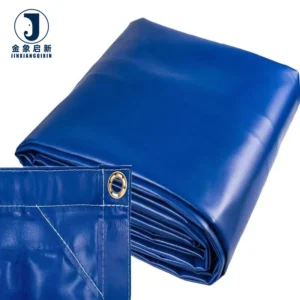
Custom Reinforced Edges Rip-Stop Rubberized PVC Tarpaulin Industry Covering Vinyl Coated Polyester Tarps for Trucks
¥8.00 Select options This product has multiple variants. The options may be chosen on the product page