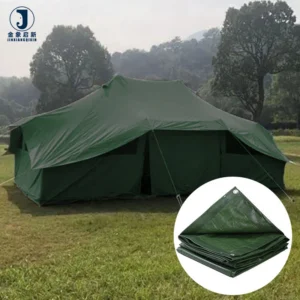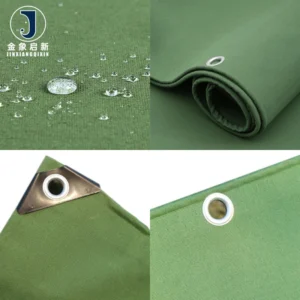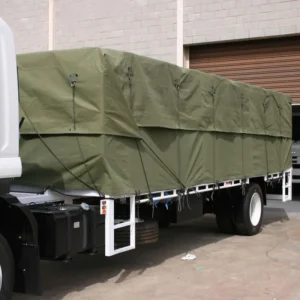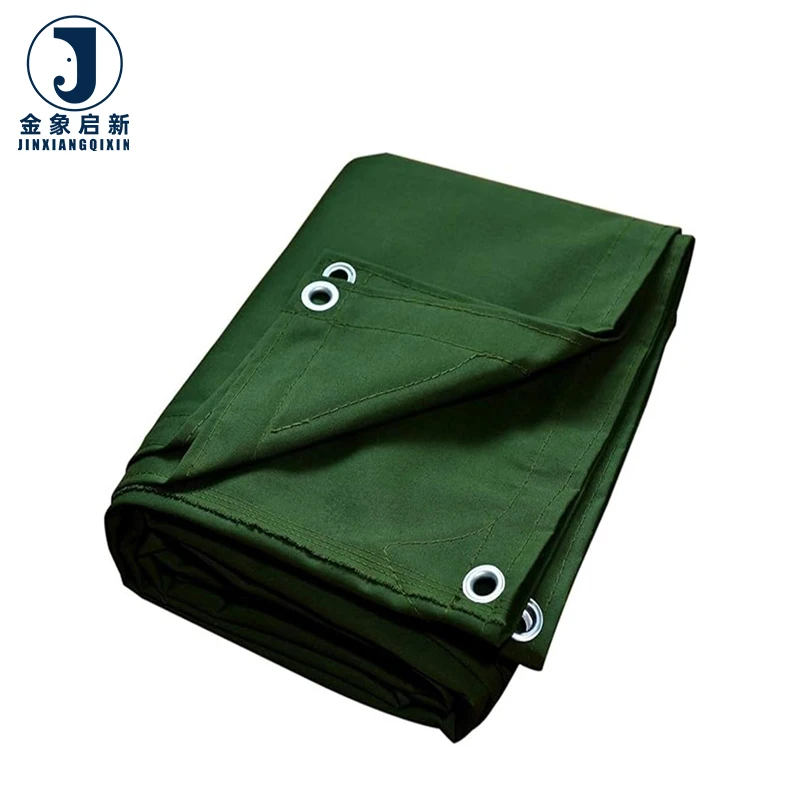
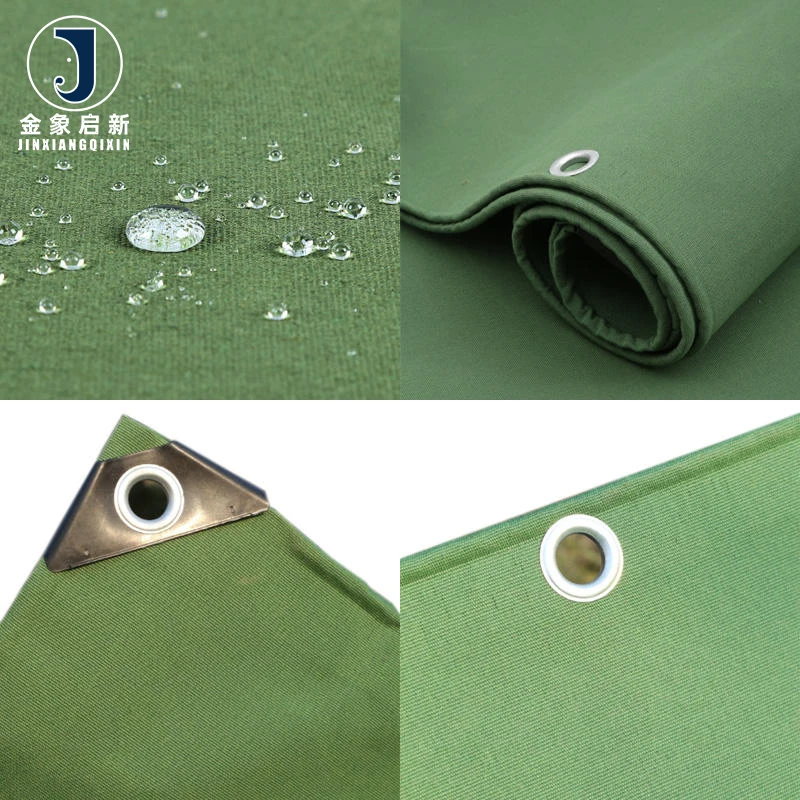
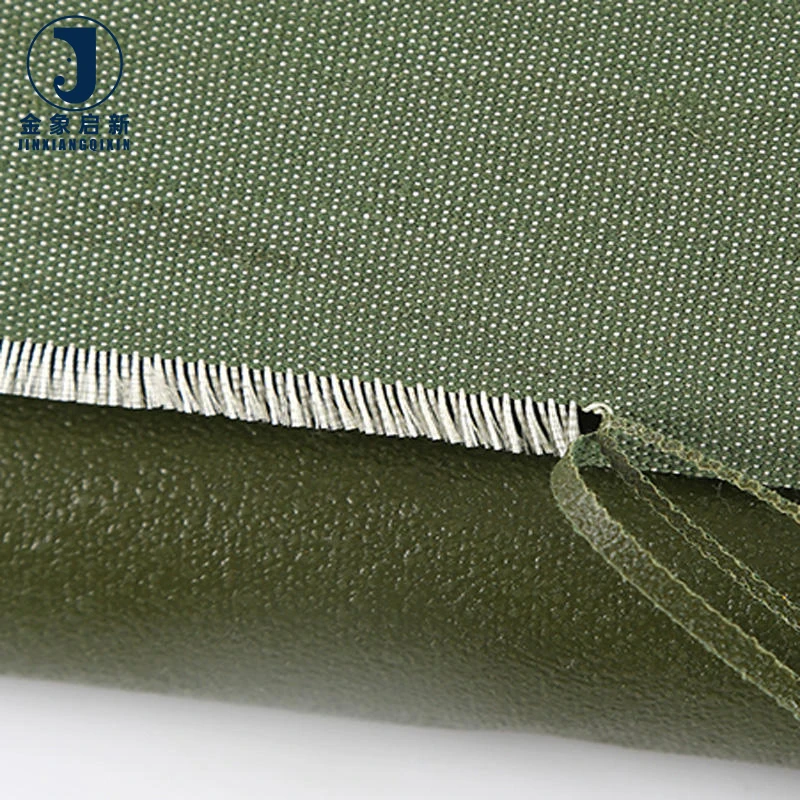
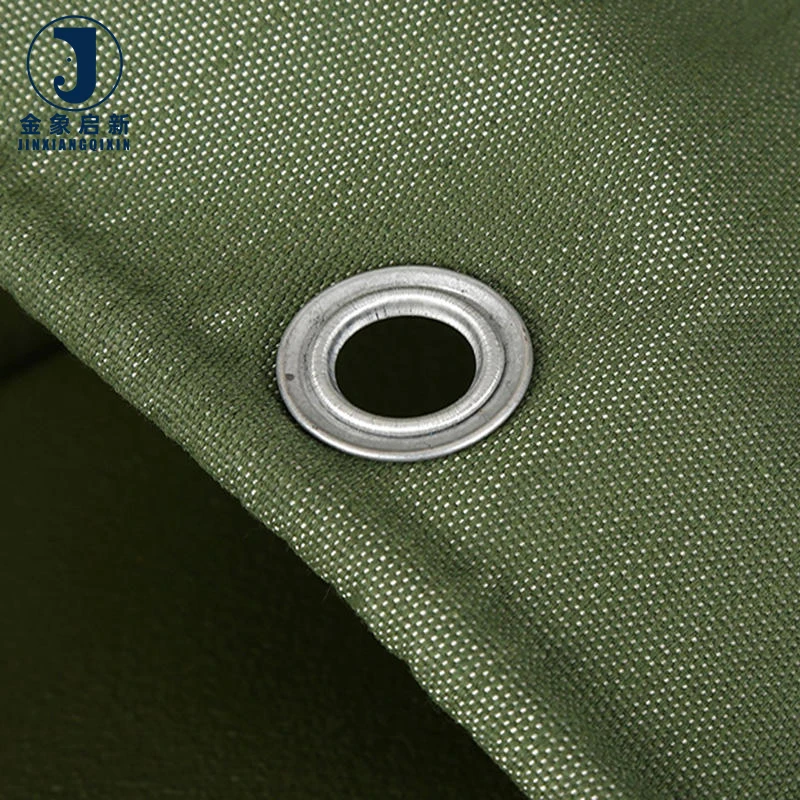
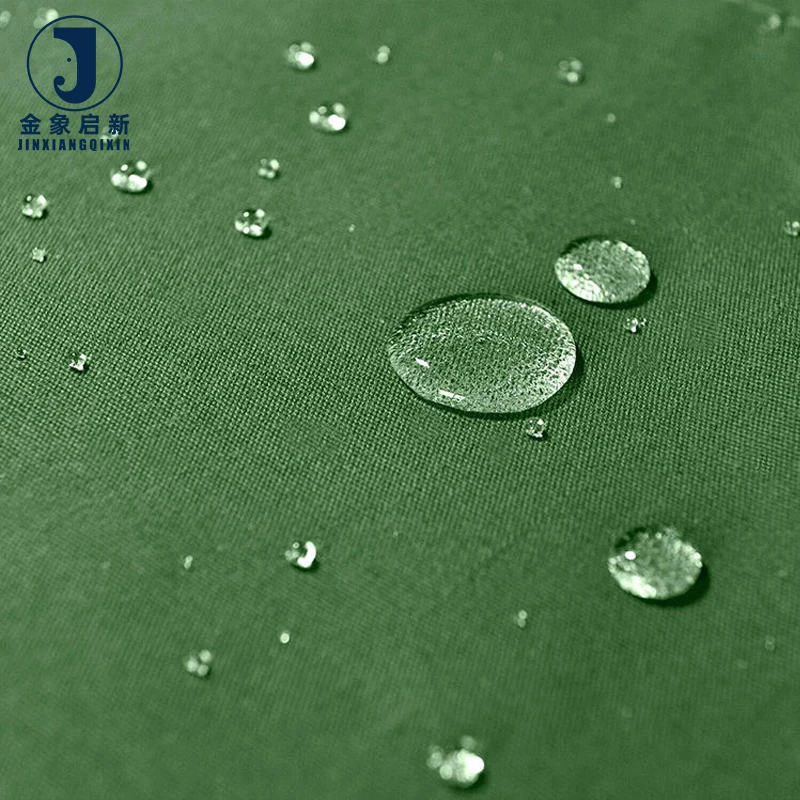
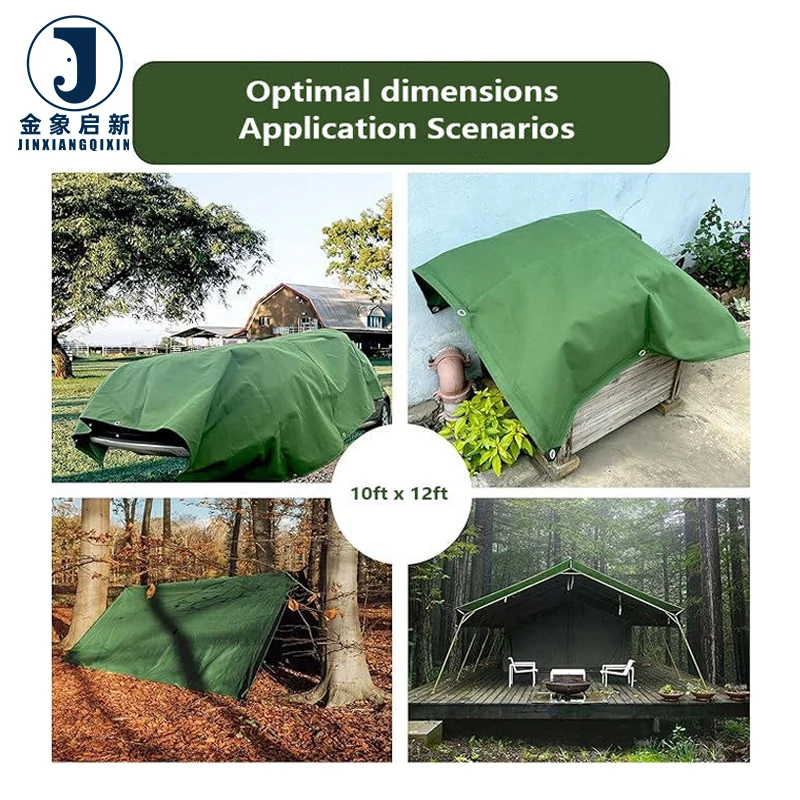
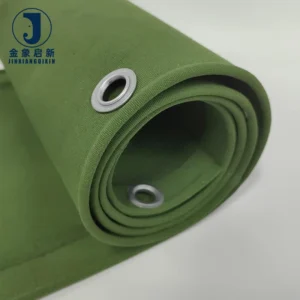
Heavy Duty Canvas Tarpaulin 600gsm, 0.5mm Thickness, 2m Roll Width — woven polyester cotton textile with PVC lamination, rust proof aluminum eyelets every 1 meter, welded and sewn hems with poly ropes.
- Base fabric denier and weave paired with controlled coating weight deliver verified tensile and tear performance across every roll.
- Custom cut-to-size or full roll supply with batch colour consistency, ideal for logistics fleets and construction site covers.
Supported by 100% pre-shipment inspection, 10-person R&D for sample development, and nearly 30 years of coated fabric process control.
Description
Full-Range Coating Capability — Every roll of this Heavy Duty Woven PVC Laminated Canvas Tarpaulin leaves our facility with a documented GSM inspection record, matching the specification you approved before production.
Technical Specifications
| Parameter | Value |
|---|---|
| Product Type | Canvas Tarpaulin |
| Base Fabric | Polyester cotton industrial textile with 8-12 strands of fine cotton yarn |
| Coating Method | PVC Laminated |
| Weight | 600 GSM |
| Total Thickness | 0.5 mm / 0.6 mm / 0.7 mm |
| Standard Roll Width | 2 m |
| Standard Roll Length | 100 m |
| Colour | Army Green Camouflage / Custom |
| Key Features | Waterproof, UV resistant (test basis not stated), anti-mildew |
| Reinforcement | Rust-proof aluminum eyelets every 1 m at corners and hem; welded and sewn with poly ropes |
| Standards | CE, ISO |
Application Suitability
| Application | Exposure & Requirement |
|---|---|
| Truck and trailer covers | Constant road vibration, weather exposure, wind flex at hem and eyelet zones |
| Construction open-air covers | Abrasive ground contact, UV and rain exposure, repeated folding and deployment |
| Asphalt covering | High surface temperatures, hydrocarbon contact, puncture from aggregate edges |
| Tent and canopy structures | Sustained tension loads, wind uplift, UV exposure over extended installation |
| Outdoor floor mats and ground sheets | Foot traffic abrasion, moisture ingress, soil chemistry contact |
| Engine hood and equipment covers | Localised heat, oil and grease splatter, tight drape over irregular shapes |
Why a 600 GSM Label Does Not Guarantee Tear Resistance in the Field
The base fabric weave density and coating adhesion determine whether a heavy duty canvas tarpaulin survives its first season, not the printed GSM alone.
Buyers frequently receive rolls that measure correct on the scale but split at the hem under load. The reason is that weight can be achieved through coating thickness while the underlying weave remains loose, leaving tear propagation uncontrolled once a puncture starts. On this PVC laminated canvas tarp, the polyester cotton base with 8-12 strands of fine cotton yarn provides a dense woven grid that the laminated backing locks in place. [NEED_CITE: tensile and tear test methods for coated fabrics per ISO 1421]
Without a verified test report linking GSM to both tensile and tear values, the number on the quotation is a weight claim, not a performance claim. Every batch we produce is checked against the stated 600 GSM before dispatch, with the inspection record included in your documentation pack.
Custom Sizing and Finishing From One Production Line
This heavy duty canvas tarpaulin manufacturer offers cut-to-size finished panels alongside full roll stock, eliminating the need to coordinate between a fabric supplier and a separate fabrication shop. The 2 m roll width accommodates most truck bed and pallet cover dimensions with minimal welding, while custom lengths are slit and rewound to your specification. Rust-proof aluminum eyelets are installed at 1 m intervals along corners and hems, and all edges are folded, welded, and sewn with poly ropes for load-bearing tie-down.
Colour and Batch Consistency Across Multi-Roll Orders
When a logistics fleet orders canvas covers in army green camouflage across several containers, colour drift between batches can become visible once the tarps are installed side by side on adjacent vehicles. We hold a master colour reference for every active SKU and match each production run against it before lamination. If your project requires a non-standard colour or branded printing, a physical sample is produced for your approval before bulk PVC laminated canvas tarp production begins, ensuring roll-to-roll visual consistency. [NEED_CITE: colour fastness evaluation methods for coated textiles]
How Base Fabric and Lamination Work Together
The 600 GSM weight of this fabric is the sum of a high-density woven upper layer and a low-density reinforced laminated backing. The woven polyester cotton face provides the tensile skeleton — its 8-12 strand fine cotton yarn construction resists tearing in both warp and weft directions. The PVC laminated backing bonds to this grid under heat and pressure, adding waterproof protection and dimensional stability without penetrating the weave so deeply that flexibility is lost. The three available thickness grades — 0.5 mm, 0.6 mm, and 0.7 mm — correspond to increasing lamination weight, letting you match material bulk to the severity of the application without changing the base cloth. Wider rolls reduce the number of welded seams in large covers, and each seam on this product family is reinforced by both welding and stitching to prevent peel failure at flex points. The result is a fabric that folds for storage yet holds flat under tension on site.
The Hidden Cost of Skipping Pre-Production Samples
A common failure pattern in bulk canvas procurement is colour mismatch discovered only after the rolls have been cut and installed. By that stage, return freight and replacement production have already exceeded any savings from skipping the sample step. Another is eyelet pull-out under wind load, caused by reinforcement spacing that does not match the actual tie-down pattern the fleet uses. Ordering a finished sample panel — complete with the specified eyelet spacing, hem construction, and colour — removes both risks before the production run starts. [NEED_CITE: pre-shipment inspection standards for textile products]
Procurement Backed by Process Control
Our R&D team handles material selection, pattern layout, and sample development for every custom canvas order, so design changes do not require restarting the supply chain. Three full production lines and dedicated equipment allow parallel runs of different thickness grades without cross-contamination of colour or coating chemistry. QA checkpoints operate at coating, lamination, cutting, and finishing stages, with a full pre-shipment inspection before any roll or panel is packed. Documentation — including material specification sheets and inspection records — ships with every consignment, giving your receiving team a verifiable reference point. The same team that develops your sample oversees the production run, maintaining continuity from first approval to container loading.
Documentation & Verification
- Material specification sheet stating 600 GSM, polyester cotton base fabric, and PVC laminated coating type
- Pre-shipment inspection record with roll-by-roll weight verification before dispatch
- Colour reference swatch matched against the approved sample for each production batch
- Thickness grade confirmation for the selected 0.5 mm, 0.6 mm, or 0.7 mm variant
- Certificate of origin and customs documentation for international shipments
- CE and ISO certificates included in the shipping document pack
Fabrication, Handling & Storage
- Welding temperature must suit the 600 GSM PVC laminated construction to achieve full peel strength at seams
- Eyelet spacing at 1 m intervals distributes tie-down load across the poly-rope reinforced hem
- Store rolls vertically on end caps to prevent permanent creasing across the 2 m width
- Allow cold-stored rolls to reach ambient temperature before unrolling to avoid coating crack
- Clean with mild detergent only; solvents may degrade the PVC laminated backing adhesion
- Field repairs on punctures respond well to hot-air welding with matching PVC laminate patches
What We Need to Quote Accurately
To move from enquiry to sample, please share the intended application and the environmental conditions the fabric will face, including sustained UV exposure, contact chemicals, and operating temperature range. Let us know whether you require finished cut-to-size panels with eyelets and hems, or full roll stock for your own fabrication line. If your market mandates specific fire classification or anti-static standards, state the required grade so we can confirm availability and test documentation before sampling.
Frequently Asked Questions
Q: How is the 600 GSM weight verified before shipment, and how should I recheck on arrival?
A: Each roll is weighed and measured during pre-shipment inspection, with the result recorded on the inspection report included in your documentation pack. On arrival, cut a 1 m × 1 m sample from the roll head, weigh it on a calibrated scale, and compare against the stated 600 GSM. Allow for minor trimming loss at edges.
Q: What custom sizes, colours, and printing options are available, and what are the minimums?
A: Finished panels are cut to any dimension within the 2 m roll width, with custom colours developed against your reference. Minimum order quantities vary by colour complexity and panel count. A physical sample is produced for approval before bulk production, and printing options are confirmed during the sampling stage.
Q: How are eyelet spacing and hem reinforcement specified for different wind conditions?
A: Standard spacing is one rust-proof aluminum eyelet every 1 m along corners and hems, with poly-rope welded and sewn reinforcement. For high-wind applications, we can reduce spacing or add intermediate D-rings. Specify your tie-down pattern and expected wind load when requesting a sample.
Q: What UV and anti-mildew treatments are applied, and what test documentation is provided?
A: The fabric carries UV resistant and anti-mildew treatments as standard. Where your market requires a specific test standard or exposure duration rating, confirm the grade required and we will advise whether existing test reports cover it or additional testing is needed before production.
Related products
-
Lona de lona tejida laminada de PVC de 0.9 mm de grosor para camiones, toldo impermeable para exteriores, vela de sombra, accesorios para casas de mascotas.
¥20.00 Add to cart -
Lona de tarpaulin industrial laminada de PVC tejida de alta resistencia personalizada estilo ripstop cubierta impermeable para coches y camiones bolsas de textiles para el hogar
¥10.00 Add to cart -
Factory Direct Sales Organic Coated Blackout Tarpaulin Garage Car Truck Container Cover for Boys & Girls
¥0.87 Select options This product has multiple variants. The options may be chosen on the product page -
Canvas Tarps for Truck Cover – Custom Made
Read more