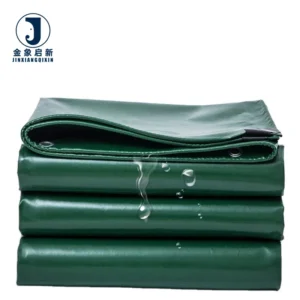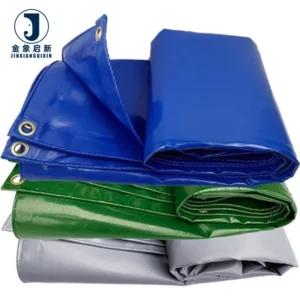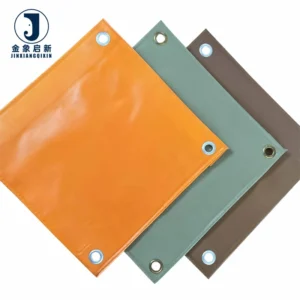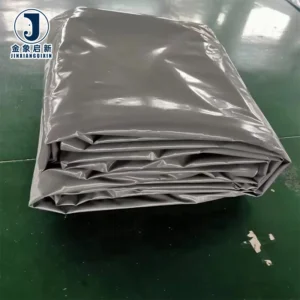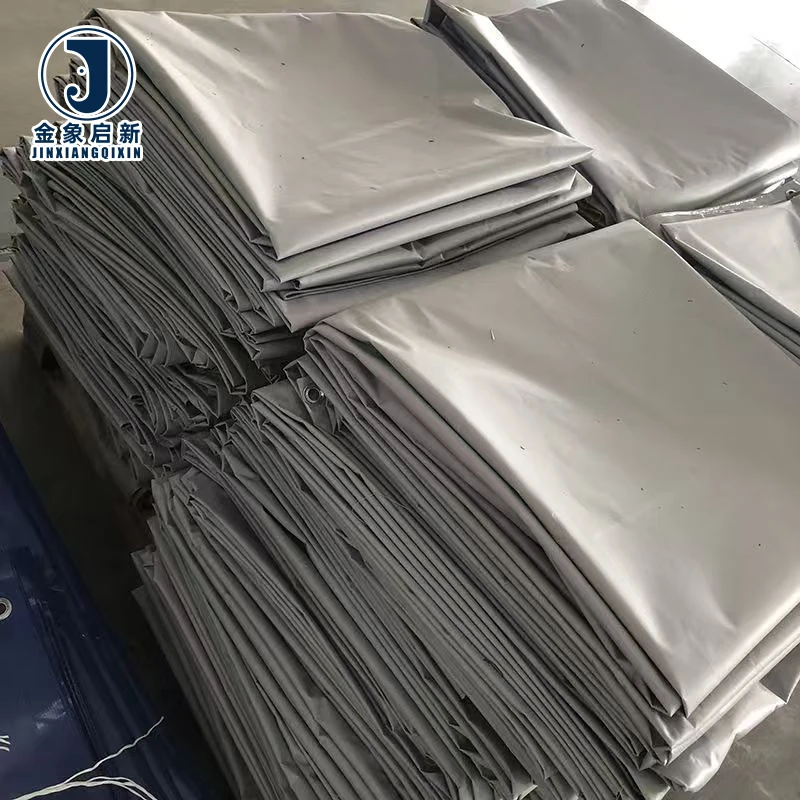
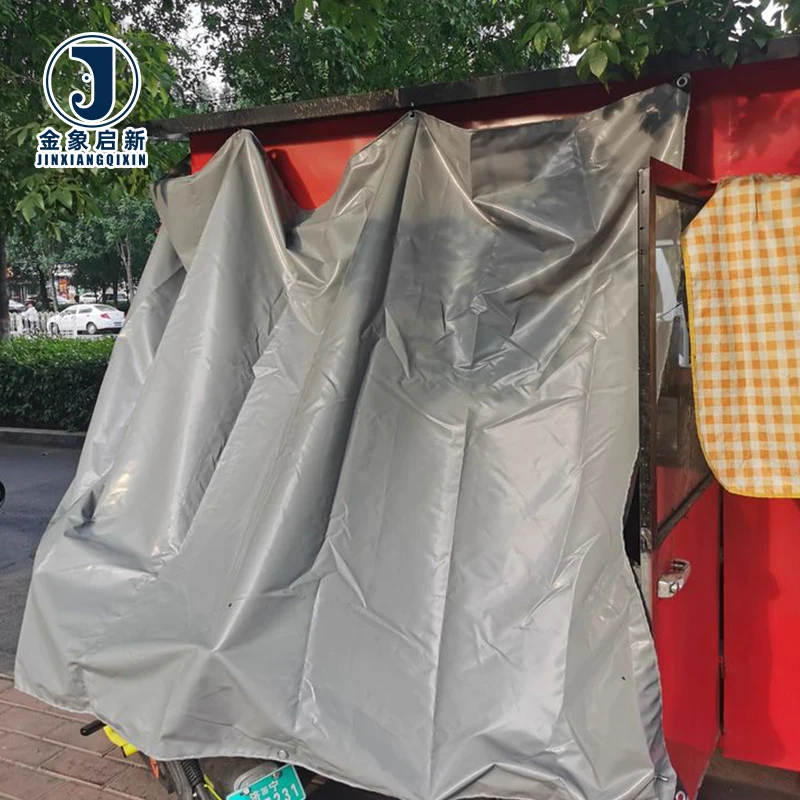
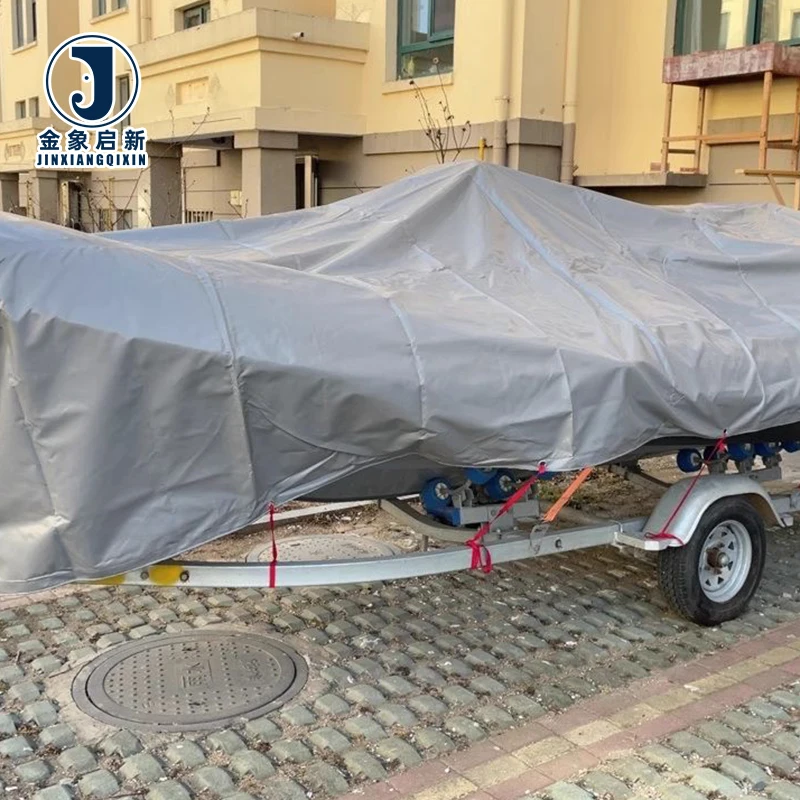
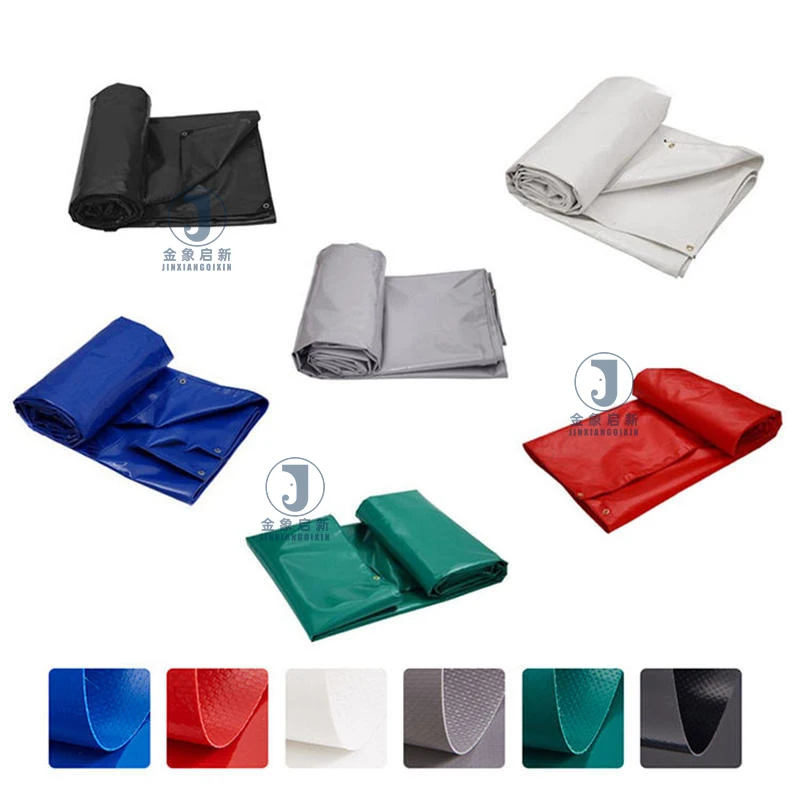
Custom 12m by 12m PVC Coated Tarpaulin 650gsm with Eyelets — engineered for truck and trailer load protection in demanding transport environments.
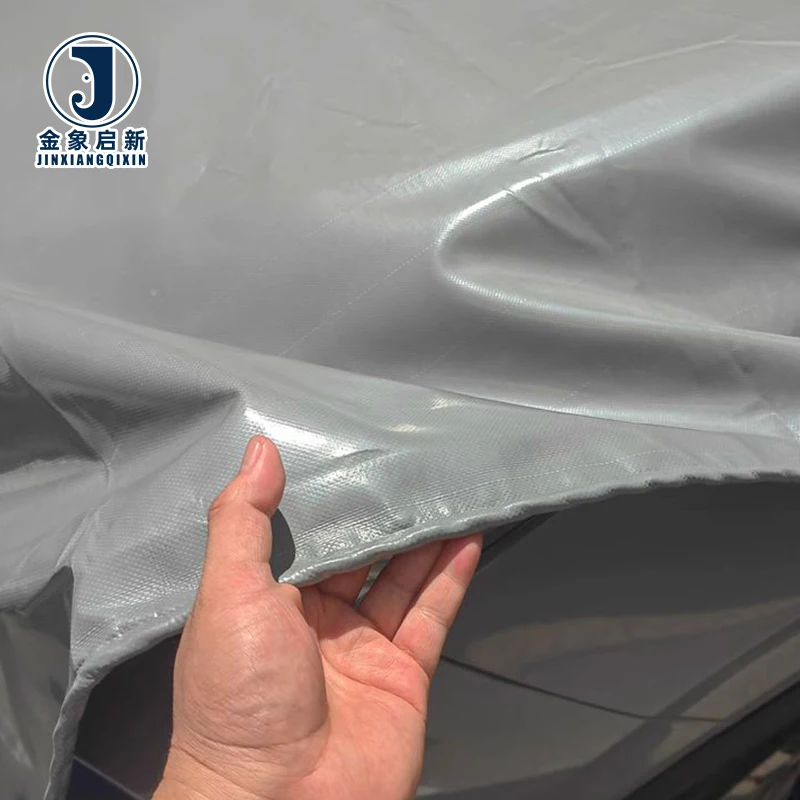
- Hot-melt coated polyester base delivers strong adhesion between fabric and PVC layers, preventing delamination at weld seams and high-flex tie-down points.
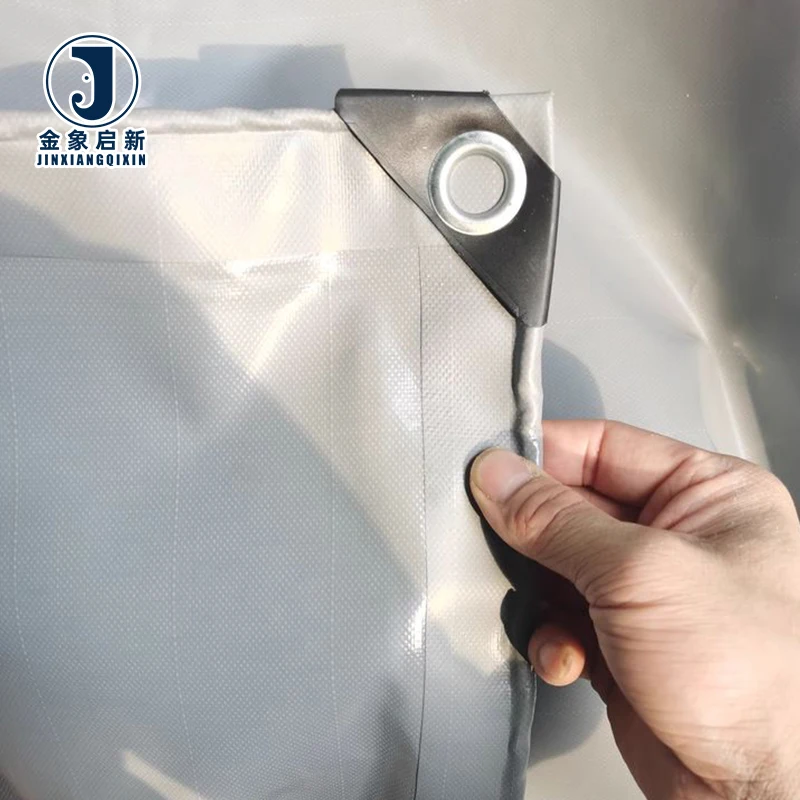
- Reinforced hems with spaced eyelets matched to standard trailer securing patterns for reliable load restraint under continuous road vibration.
- Optional flame-retardant and anti-UV treatments available with test reports upon request for site compliance.
- Backed by 100% pre-shipment inspection and dedicated QA at every production stage across 3 full coating lines.
Description
Deep Process Control Over Coating Weight — Every batch of 12m by 12m PVC coated tarpaulin runs through in-line GSM sampling on all three production lines to ensure the stated 650gsm is what arrives at your dock.
Technical Specifications
| Parameter | Value |
|---|---|
| Product Type | PVC Coated Tarpaulin |
| Material | 100% high toughness polyester yarn base with PVC coating |
| Weight | 650 GSM |
| Coating Method | Lamination technology and hot melt coating technology |
| Finish | Waterproof |
| Key Features | Flame retardant (grade not stated in source), anti-static treatment (surface resistance or standard not stated), anti-mildew, anti-UV treatment (test basis not stated), cold resistant cracking |
| Edge Treatment | Eyelets and reinforced hems |
| Standards | ISO, CE |
Application Suitability
| Application | Exposure & Requirement |
|---|---|
| Truck and trailer tarpaulin covers | Constant road vibration, wind flap, UV and rain exposure, frequent tie-down tension at eyelets |
| Construction site equipment covers | Prolonged outdoor weathering, abrasion from scaffolding contact, puncture risk from sharp edges |
| Agricultural and aquaculture covers | Continuous moisture contact, biological growth pressure, seasonal temperature swings |
| Tent and awning fabric | Tensioned structural loading, UV degradation, repeated folding and deployment |
Why the Quoted GSM Does Not Guarantee Cover Strength
Coating weight and base fabric construction must be evaluated together, not in isolation.
Buyers routinely specify 650gsm expecting a certain tear and tensile performance, only to find the material tears at the first flex point once installed on a trailer [NEED_CITE: tensile and tear test methods for coated fabrics per ISO 1421]. The problem is rarely dishonesty — it is that GSM alone says nothing about the denier of the polyester yarn or the knit density underneath the coating. A lighter base fabric with a heavier PVC coat can hit the same GSM target while delivering far less mechanical strength. This custom PVC coated tarpaulin specification starts with a high-toughness polyester yarn base, ensuring the load-bearing structure is present before coating is applied. When sourcing a PVC Coated Tarpaulin custom manufacturer, always request the base fabric denier and knit density alongside the stated GSM.
How Lamination and Hot Melt Coating Affect Field Performance
The coating method directly determines how well the PVC layer adheres to the polyester base under repeated flexing and thermal cycling. Lamination technology bonds the coating film to the substrate under heat and pressure, while hot melt coating penetrates the yarn structure for a mechanical lock. This dual approach on the PVC coated tarpaulin delivers strong adhesive strength, reducing the risk of delamination at high-stress zones like eyelet rows and welded seams. For a PVC Coated Tarpaulin custom manufacturer, controlling both coating stages in-house is what separates consistent sheet-to-sheet quality from variable output.
Eyelet Spacing and Hem Reinforcement for Trailer Fitment
Truck and trailer covers fail most often at the perimeter, where tie-down straps concentrate load into a small fabric area. The eyelet and reinforced hem configuration on this 12m by 12m sheet is designed to distribute that tension across a broader base fabric zone. Proper spacing between eyelets prevents localized tearing under wind flap, while the reinforced hem adds a secondary load path. When specifying a PVC Coated Tarpaulin custom manufacturer for fleet applications, confirming eyelet diameter, spacing interval and hem fold width against your trailer’s tie-down pattern avoids costly refit after delivery [NEED_CITE: wind load distribution on tarpaulin tie-down points].
Reading Beyond the GSM Number
A 650gsm rating tells you the total mass per square metre — base fabric plus coating combined. What it does not tell you is how that mass is distributed. A sheet with a 500D polyester base and a thick PVC coat will handle differently from one with a 1000D base and a thinner coat, even at identical GSM. The hot melt coating process used here drives PVC into the yarn interstices, which improves both adhesion and the fabric’s resistance to tear propagation. Knitting density, measured in denier, governs how many yarns per unit length carry the load — higher denier base fabrics resist tear initiation at cut edges and eyelet holes more effectively. For buyers comparing quotes from different suppliers, requesting the denier and knit specification alongside GSM provides a far more meaningful basis for comparison.
What Happens When Coating Adhesion Fails at the Weld Line
Welded seams on tarpaulin covers carry load every time the fabric flexes under wind or strap tension. When coating adhesion is weak, the heat from welding breaks the bond between PVC and base fabric at the seam edge, creating a delamination front that spreads with each flex cycle [NEED_CITE: heat welding parameters and adhesion failure on PVC coated polyester]. The seam then fails before the body of the fabric shows any wear. This failure mode is not visible during pre-shipment inspection because it only manifests under repeated mechanical stress. Specifying hot melt coating with verified adhesive strength, and confirming weld test results on sample pieces before bulk production, is how transport fleets avoid mid-route cover failure.
Why Sourcing From a Verified Manufacturer Changes the Outcome
Three full production lines with 36 sets of professional equipment allow this PVC Coated Tarpaulin custom manufacturer to run dedicated batches for custom sizes like 12m by 12m without cross-contamination between grades. A 10-person R&D team handles material selection and sample development, meaning specification changes are validated on sample before bulk commitment. Every order undergoes 100% pre-shipment inspection with documented weight verification, so the GSM you specified is the GSM you receive. Custom widths, colours and functional treatments — including flame retardant and anti-static options — are produced in-house rather than outsourced, giving direct control over coating consistency across every roll in the same shipment.
Documentation & Verification
- Material specification sheet stating 650 GSM, base fabric type and PVC coating method per order
- Weight verification per sheet against the stated 650gsm before dispatch
- Test documentation for flame retardant and anti-UV treatments where applicable — confirm grade required for your market
- Pre-shipment inspection record covering dimensional check and eyelet placement verification
- ISO and CE certification documentation included with customs paperwork
Fabrication, Handling & Storage
- Hot air weld temperature and speed must be calibrated to the hot melt PVC coating for consistent seam adhesion
- Eyelet insertion force should match the 650gsm grade to avoid punching through the reinforced hem
- Store rolls or folded sheets on flat pallets to prevent permanent crease marks in the PVC coating
- Avoid dragging sheets across abrasive surfaces during installation to protect the waterproof finish
- Clean with mild detergent only — solvents can degrade the PVC coating and anti-mildew treatment
What to Include in Your Inquiry
Provide your trailer model or exact cover dimensions so we can confirm whether the 12m by 12m sheet size suits your application or whether a custom cut is more efficient. Specify which functional treatments your market requires — flame retardant grade, anti-UV test standard, or anti-static surface resistance — so the correct formulation is matched to your compliance obligations. If you are comparing multiple PVC coated tarpaulin options, share the base fabric denier and knit density you need alongside the target GSM. Requesting a sample piece before bulk order allows you to verify weld behaviour, eyelet pull-out strength and colour match against your existing fleet livery.
Frequently Asked Questions
Q: How is the 650gsm weight verified before my shipment leaves the factory?
A: Each production batch undergoes in-line GSM sampling during coating and a final weight check during pre-shipment inspection. The inspection record documents actual measured weight per sheet and is included with your shipping documentation so you can cross-check on arrival.
Q: Which flame retardant and anti-UV grades are available for this tarpaulin?
A: Flame retardant and anti-UV treatments are available in multiple grades. Because standards vary by market — some regions require DIN 4102 B1, others NFPA 701 or local building codes — confirm the specific grade and test standard your project requires so we match the formulation and supply the corresponding test report.
Q: How do you control colour consistency if I order multiple sheets for one fleet?
A: All sheets within a single order are coated from the same PVC batch with controlled pigment dosing. Pre-shipment inspection includes a visual colour comparison across sheets. For orders spanning multiple production runs, reference samples are retained and matched to maintain consistency.
Q: What custom eyelet spacing and hem options can be specified?
A: Eyelet diameter, spacing interval and hem fold width are configured to match your trailer’s tie-down pattern and strap load. During sample development, we confirm the configuration against your drawing so the reinforced perimeter handles your specific load distribution without tearing at flex points.
Q: How long does sample development take for a custom specification?
A: Samples for custom size, colour or treatment requirements are typically developed within days of specification confirmation. This allows you to test weld parameters, eyelet pull-out and drape behaviour before committing to a full production run.
Related products
-
Factory Custom 9×11 Poultry Curtains Tarpaulin PVC Coated Waterproof Anti-Static Eco-Friendly Tarp for Chicken Coop Boys Girls
¥0.90 Select options This product has multiple variants. The options may be chosen on the product page -
Lona de venta caliente 30M X 30M Lona de PVC terminada para agricultura Lona
¥1.48 Add to cart -
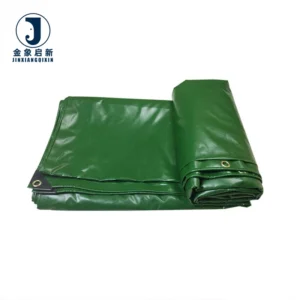
Lona verde impermeable multiusos de 500gsm para refugio de emergencia contra la lluvia. Cubierta para exteriores.
¥7.72 Select options This product has multiple variants. The options may be chosen on the product page -
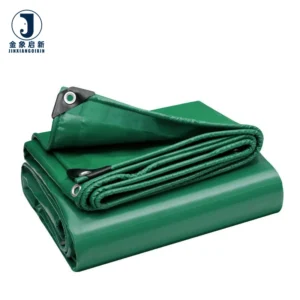
Factory Direct 20×30 Feet 13mil Heavy-Duty Vinyl Tarps PVC Tarpaulin for Firewood Roof Camping Patio Pool Boat Dump Trailer
¥2.60 Add to cart