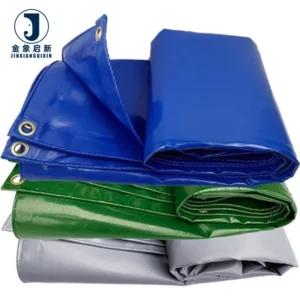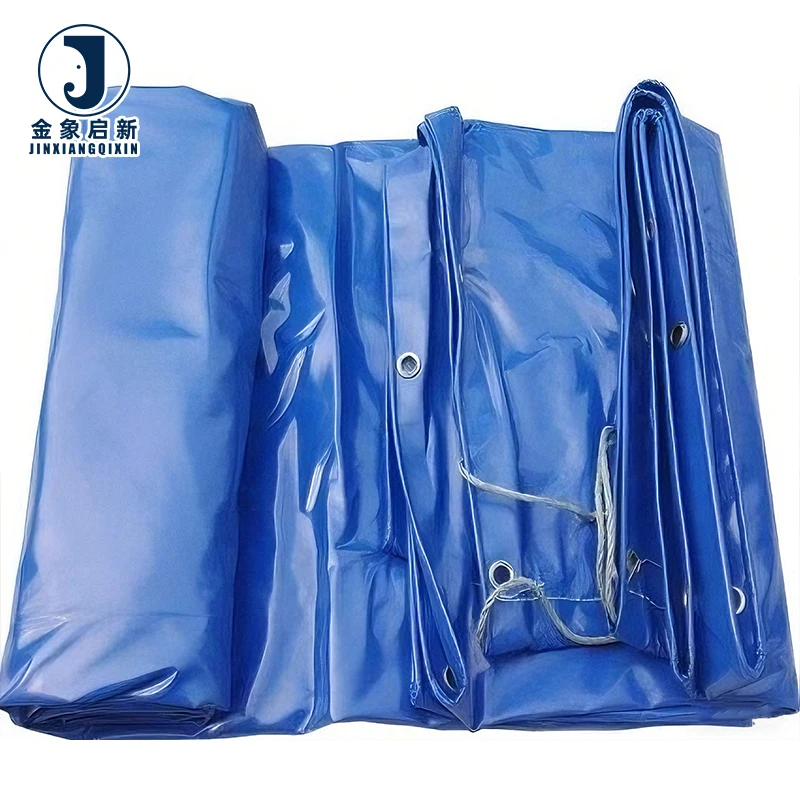
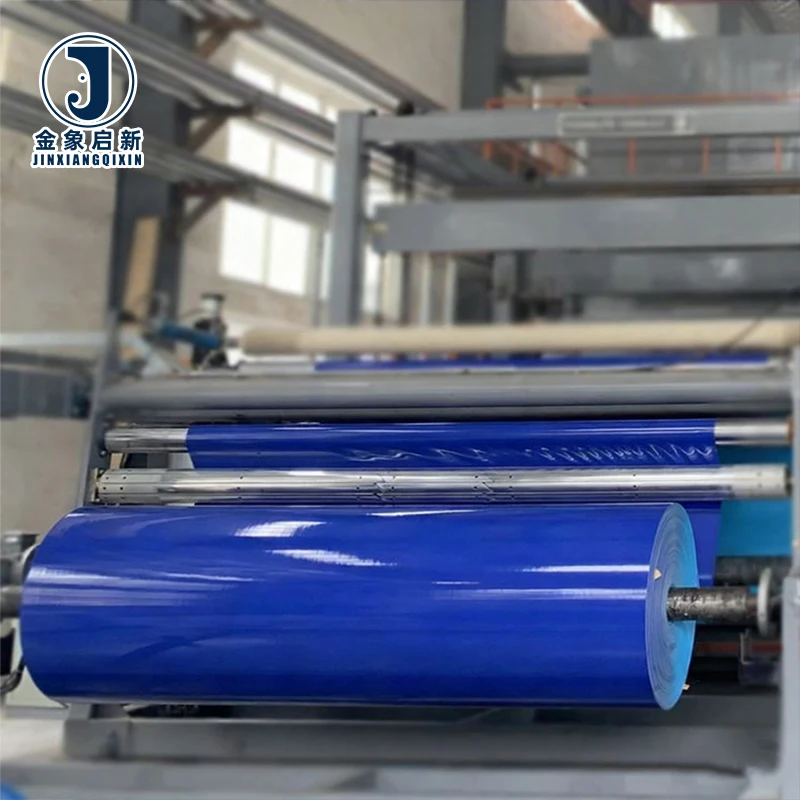
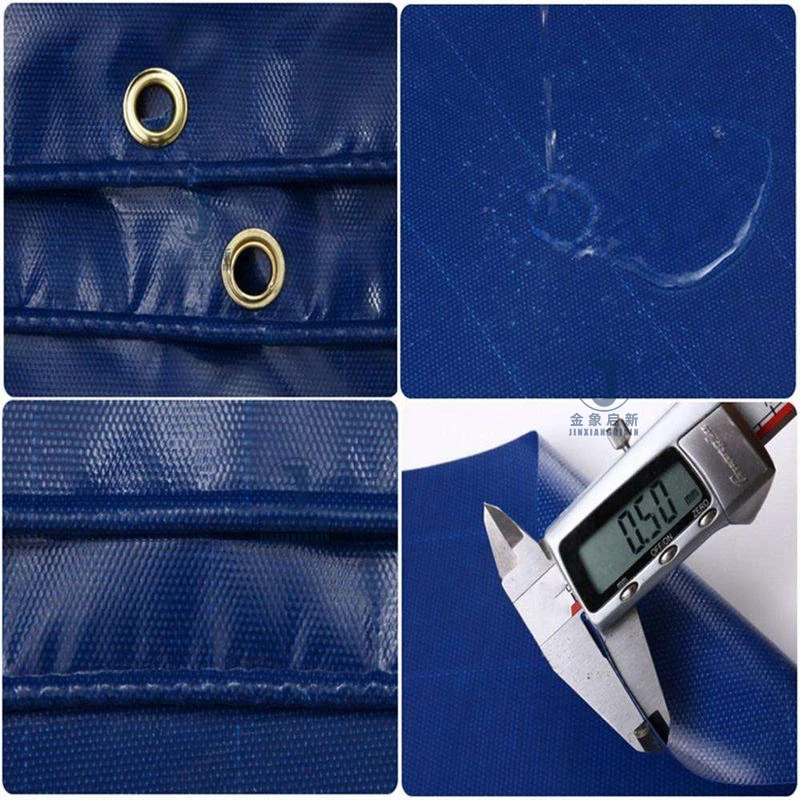
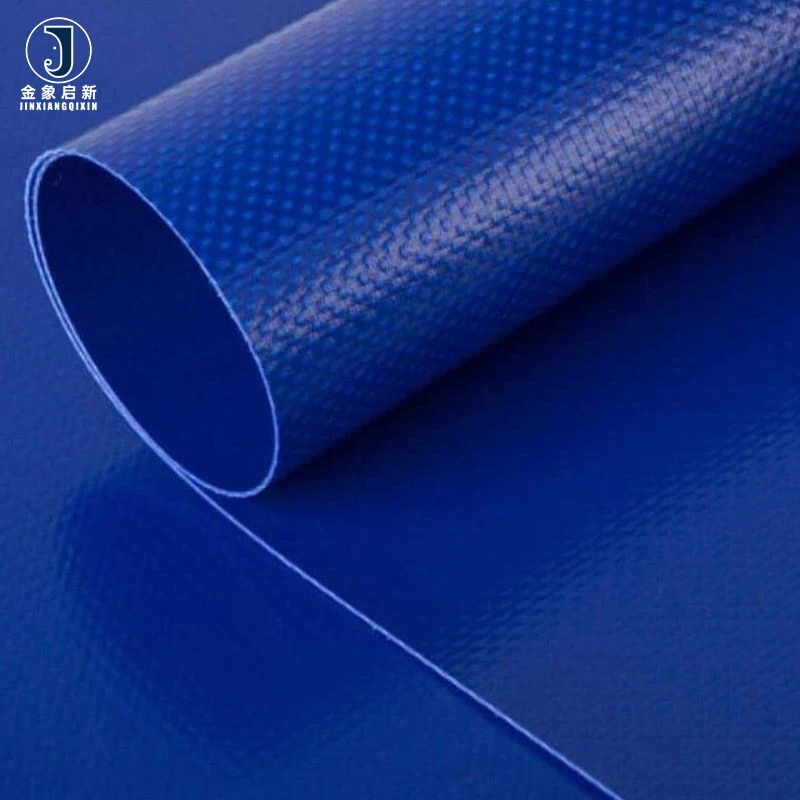
PVC Coated Tarpaulin Fabric — available in 250gsm–1500gsm with denier options from 200D×300D to 1000D×1000D, glossy or matte surface, treated for waterproof, UV, flame retardant and anti-fungal performance.
Engineered for buyers surveying the full tarpaulin range before specifying: coating weight and base fabric denier are matched to your tensile and tear requirements, not simply pushed to the highest GSM. Custom widths, cut sizes and printed branding handled in-house with sample development in days.
Backed by nearly 30 years of coated fabric process control, 100% pre-shipment inspection, and dedicated QA at every production stage.
Description
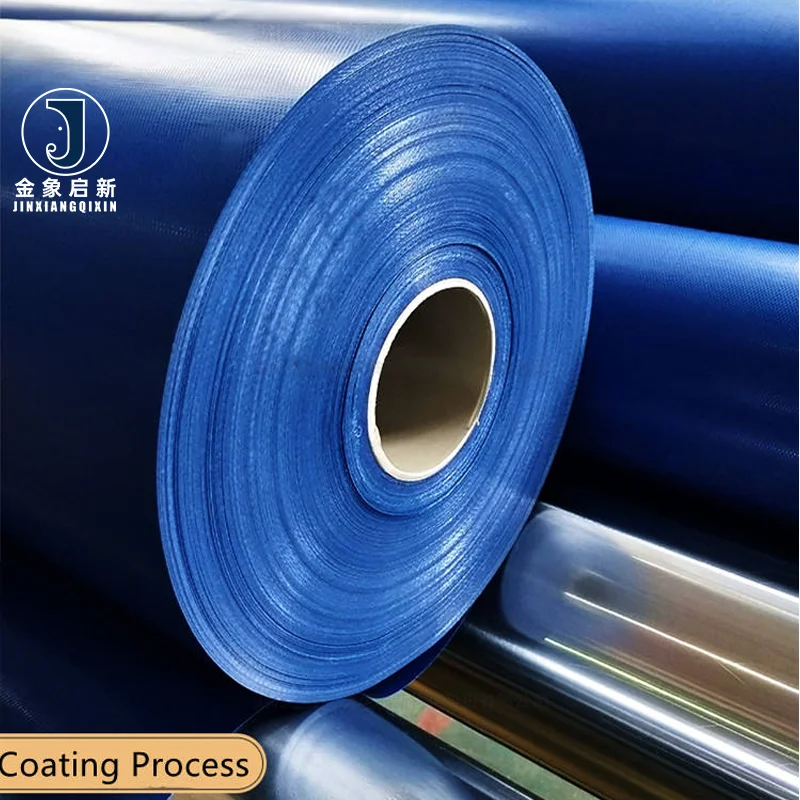
Process-Controlled Coating — nearly 30 years of PVC coating expertise applied to every roll, with in-house QA verifying GSM, denier and treatment before dispatch.
Technical Specifications
| Parameter | Value |
|---|---|
| Product Type | PVC Coated Tarpaulin |
| Weight (GSM) | 250gsm-1500gsm |
| Base Fabric Denier | 200DX300D, 500DX500D, 840DX840D, 1000DX1000D |
| Surface Finish | Available in glossy or matte finish |
| Color | Blue, yellow, black, green, white, custom options |
| Standard Sizes | 3x4m, 6x8m, 8x10m, 10x12m or custom made |
| Temperature Range | -15ºC to 70ºC |
| UV Treatment | Customized (test basis not stated in source) |
| Flame Retardant Grade | FR treated (grade not stated in source) |
| Additional Treatment | Waterproof, UV, FR and anti-fungal treated |
| Key Features | Water-proof, rain-resistant, tear-resistant, durable, good flexibility, good abrasion resistance |
| Certifications | ISO, CE |
Application Suitability
| Application | Exposure & Requirement |
|---|---|
| Truck and trailer side curtains | Constant flexing at folds, road abrasion, sustained UV and weather exposure |
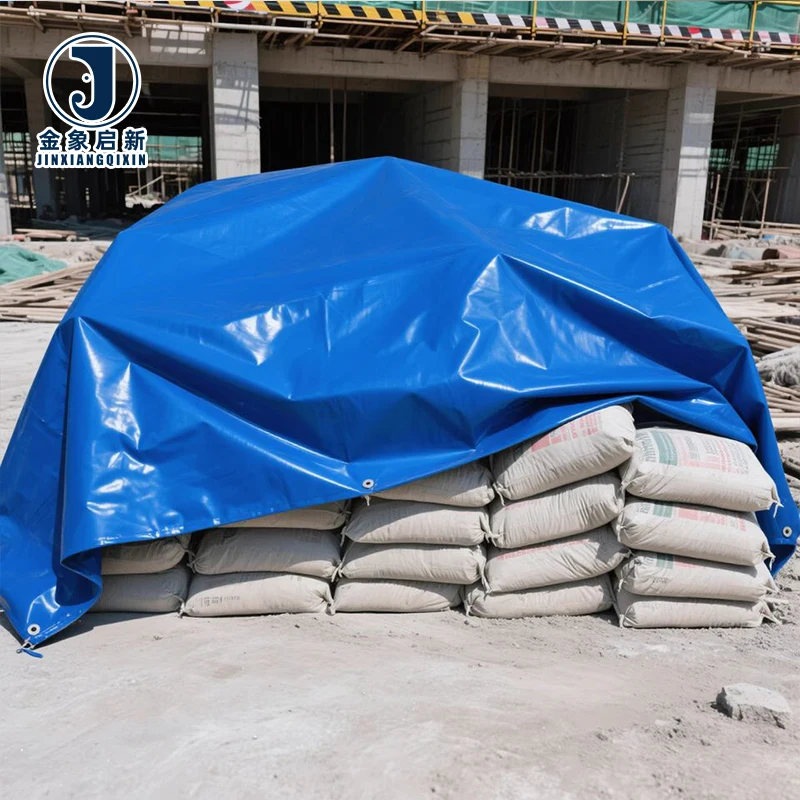
| Construction site and equipment covers | Wind load, debris impact, UV exposure, potential flame retardant site requirements |
| Tent, awning and inflatable structure fabric | Tensile stress at anchor points, prolonged sun exposure, custom colour and print needs |
| Pond and reservoir liners | Permanent water contact, soil chemistry exposure, puncture risk from substrate |
| Agricultural and aquaculture covers | Moisture, biological growth, mechanical handling stress |
What "Flame Retardant" Means Without a Grade Behind It
FR treated is a claim, not a certification — confirm the grade required for your market before specifying.
Sourcing a PVC coated tarpaulin fabric often starts with a supplier stating "flame retardant" on the quotation. But flame retardant is not a single standard. A building contractor in Europe may need classification to a specific DIN or EN standard, while a mining operation may require compliance with a different framework entirely. When the grade is not stated, the buyer carries the compliance risk. [NEED_CITE: DIN 4102 fire classification for building materials]
We offer PVC coated tarpaulin available in flame retardant grades — confirm the grade required for your market and we will provide the matching test report with your shipment. This avoids the situation where material arrives on site and the inspector rejects it because the documentation does not match the local fire code.
Matching Denier to the Load, Not Just the Label
Base fabric denier is where a PVC coated tarpaulin manufacturer custom specification either succeeds or fails in the field. A 200DX300D base is suited to light-duty covers and temporary shelters where weight and cost matter more than tear propagation resistance. A 1000DX1000D base handles the repeated stress of truck side curtains that flex thousands of times per journey. Choosing the wrong denier for the application means the fabric may look correct on paper but underperform where it matters most — at the seams and stress points.
Coating Weight and What It Actually Protects
The PVC coating layer is the barrier between the base fabric and the environment. Weight range from 250gsm to 1500gsm covers everything from lightweight agricultural covers to heavy-duty transport and construction applications. [NEED_CITE: tensile and tear test methods for coated fabrics per ISO 1421] The coating must bond to the base fabric with sufficient adhesion strength so that flexing and abrasion do not cause delamination before the fabric itself reaches end of life. Our QA process checks coating adhesion alongside weight verification at every production stage.
Reading the Specification Sheet Beyond GSM
Four parameters interact to determine how a PVC coated tarpaulin performs under load. GSM indicates total weight but does not reveal how that weight is distributed between base fabric and coating — a high GSM achieved mostly through thick coating with a light base fabric will tear more easily than a moderate GSM with a dense base. Base denier and weave density control tear propagation; a 1000DX1000D base resists tear spread far better than 500DX500D even at similar total weight. Surface finish affects both function and fabrication: glossy surfaces shed dirt and water more readily, while matte finishes reduce glare and can improve print adhesion for branded applications. Temperature range of -15ºC to 70ºC defines the operating envelope — below the lower limit, PVC stiffens and becomes prone to cracking at fold lines, while sustained exposure near the upper limit can accelerate plasticiser migration.
When the Wrong Specification Reaches the Field
Selecting a lighter denier than the application demands leads to early failure, typically at welded seams or eyelet points where stress concentrates. A batch with inconsistent colour across rolls becomes visible the moment panels are installed side by side on a structure or fleet vehicle, forcing rejection of the entire order. Flame retardant material supplied without the correct grade documentation causes site shutdowns until compliance is verified — a delay that costs far more than specifying the right grade upfront. These failures trace back to specification gaps, not manufacturing defects. [NEED_CITE: coated fabric specification matching for field performance]
Why Buyers Source This Range Through Us
Our three full production lines and 36 sets of equipment handle bulk PVC coated tarpaulin orders with consistent output quality across the entire run. The 10-person R&D team develops samples within days for custom colour, width, finish or treatment requirements — so buyers confirm the material before committing to production volume. Dedicated QA/QC operates at every stage, with 100% pre-shipment inspection meaning no roll leaves without documented weight and specification verification. Nearly 30 years of focused coated fabric production means process parameters are established, not experimental. Custom sizing from 3x4m to fully bespoke dimensions is supported, along with OEM and ODM requirements for distributors and fabricators.
Documentation & Verification
- Material specification sheet stating exact GSM, base fabric denier, coating type and colour reference for each order
- Test reports for UV stability and flame retardant grades supplied where applicable with the shipment
- Pre-shipment inspection record with roll-by-roll weight verification against the stated specification
- Roll packing list detailing quantity, dimensions and net/gross weight per unit for customs clearance
- Certificate of origin and customs documentation to support import procedures in the destination market
Fabrication, Handling & Storage
- Hot-air welding temperature and speed must be adjusted to the specific GSM and coating thickness of the roll
- Eyelet placement should account for base fabric denier to prevent pull-through under tie-down load
- Store rolls upright on pallets to prevent flat-spot deformation on the coating surface
- Allow material to acclimatise above -15ºC before unrolling to avoid cracking at fold lines
- Use non-solvent cleaners compatible with PVC coating to preserve surface finish and treatment integrity
- Plan cut layouts around standard roll widths to minimise waste and reduce the number of welded seams
What to Include in Your Inquiry
Specify the application and the exposure conditions the fabric will face — this determines the denier, GSM and treatment package we recommend. State your target market and any fire classification or compliance standards that apply on site. Provide the required widths, colours and whether you need roll stock or finished cut sizes with eyelets and reinforced hems. If colour consistency or printed branding is required, let us know so we can develop a sample for your approval before production.
Frequently Asked Questions
Q: How is GSM verified before shipment to avoid weight discrepancy?
A: Every roll undergoes weight verification during our 100% pre-shipment inspection. We compare the measured GSM against the specification stated on your order and document the result in the inspection record that accompanies the shipment. Rolls that fall outside the agreed tolerance are held and do not ship.
Q: Can you match custom colours consistently across multiple rolls?
A: Yes. Our R&D team develops a colour sample for your approval before production begins. During manufacturing, we control pigment dosing and coating parameters to maintain consistency across the batch. The colour reference is recorded on the material specification sheet supplied with each shipment.
Q: What test reports are provided for UV and flame retardant treatments?
A: Where UV or flame retardant treatment is specified, we supply the applicable test report with the shipment documentation. The specific grade and test standard depend on the treatment package selected — confirm the requirements for your market so we can match the correct certification.
Q: Do you supply fabric by the roll or only in finished cut sizes?
A: Both options are available. We supply PVC coated tarpaulin in roll form for fabricators and manufacturers, or in custom cut sizes such as 3x4m, 6x8m, 8x10m and 10x12m. Finished tarps can include eyelets, reinforced hems and other fabrication details per your drawing.
Related products
-
Fábrica de lonas de polietileno aisladas para clima frío de 12ftx20ft, lona pesada para curado de concreto, rollo de lona.
¥0.66 Add to cart -

Venta caliente Proveedor de China Personalizado Super Resistencia Grado Industrial 680GSM RIPSTOP Lona de PVC para Techos de Constructores y Envolturas
¥2.80 Add to cart -
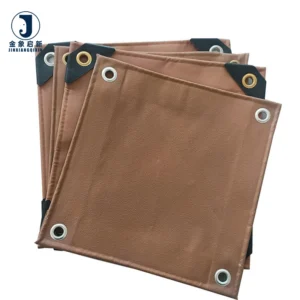
Cubierta de carga para camiones de PVC impermeable personalizable JX Fireproof 500gsm 600gsm
¥0.79 Select options This product has multiple variants. The options may be chosen on the product page -
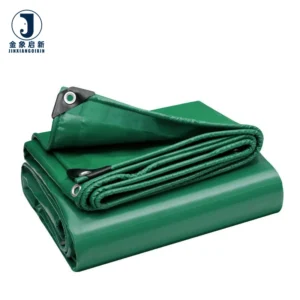
Factory Direct 20×30 Feet 13mil Heavy-Duty Vinyl Tarps PVC Tarpaulin for Firewood Roof Camping Patio Pool Boat Dump Trailer
¥2.60 Add to cart