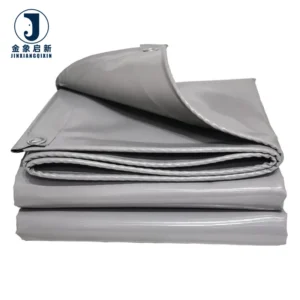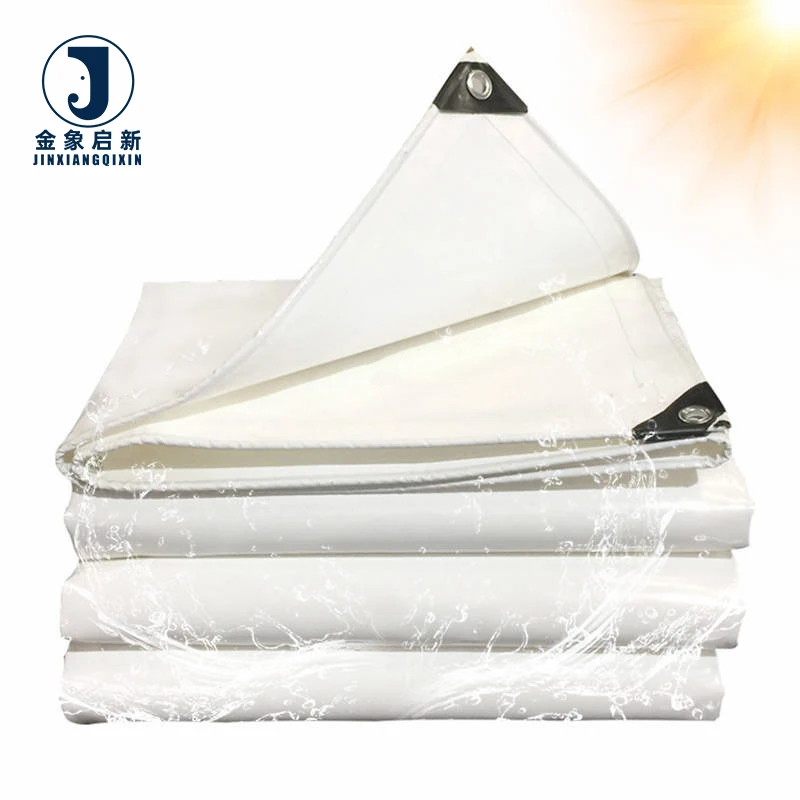
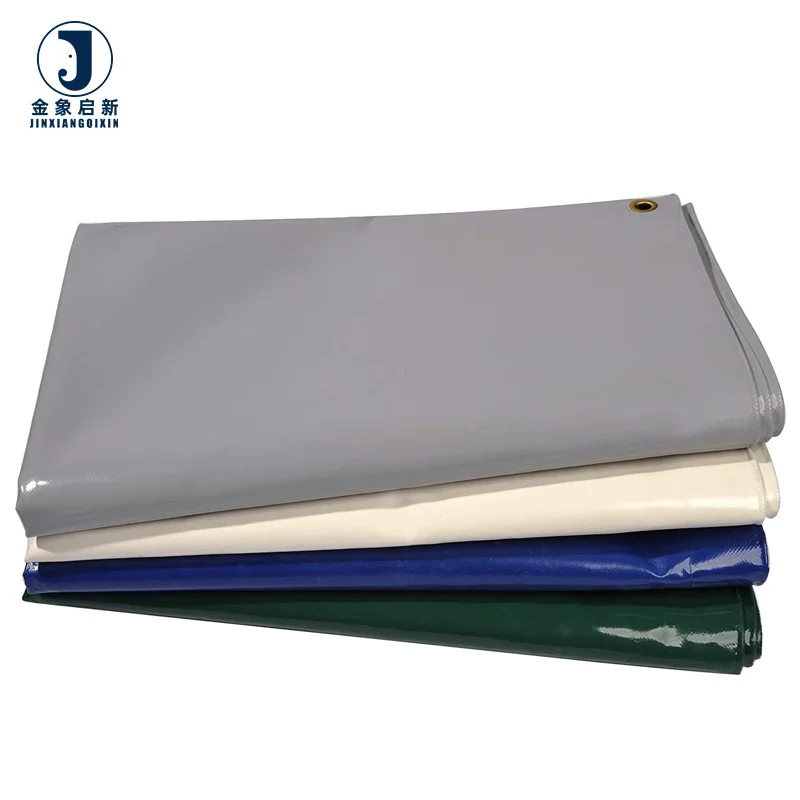
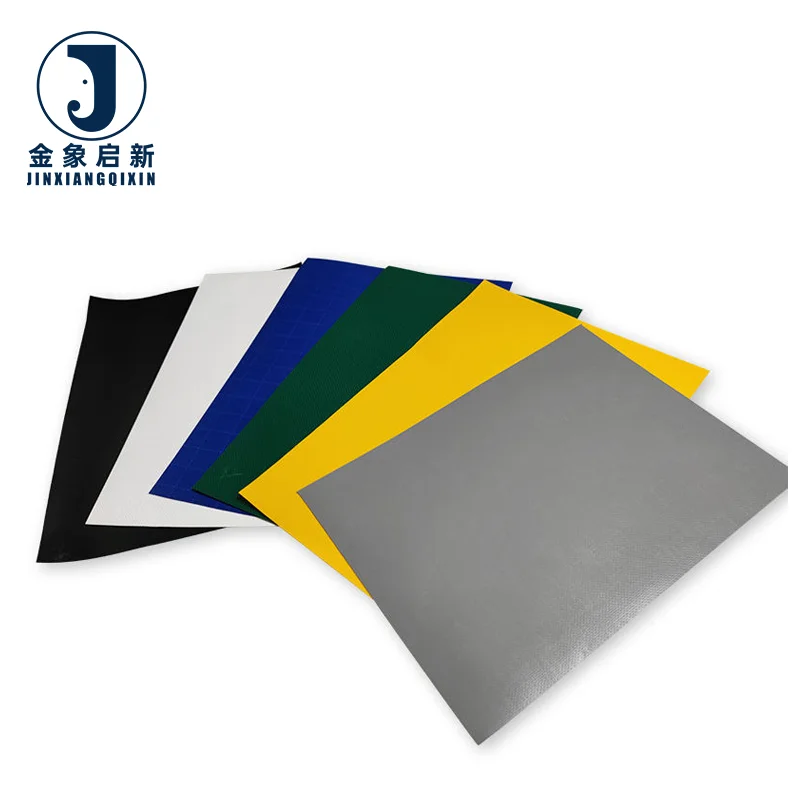
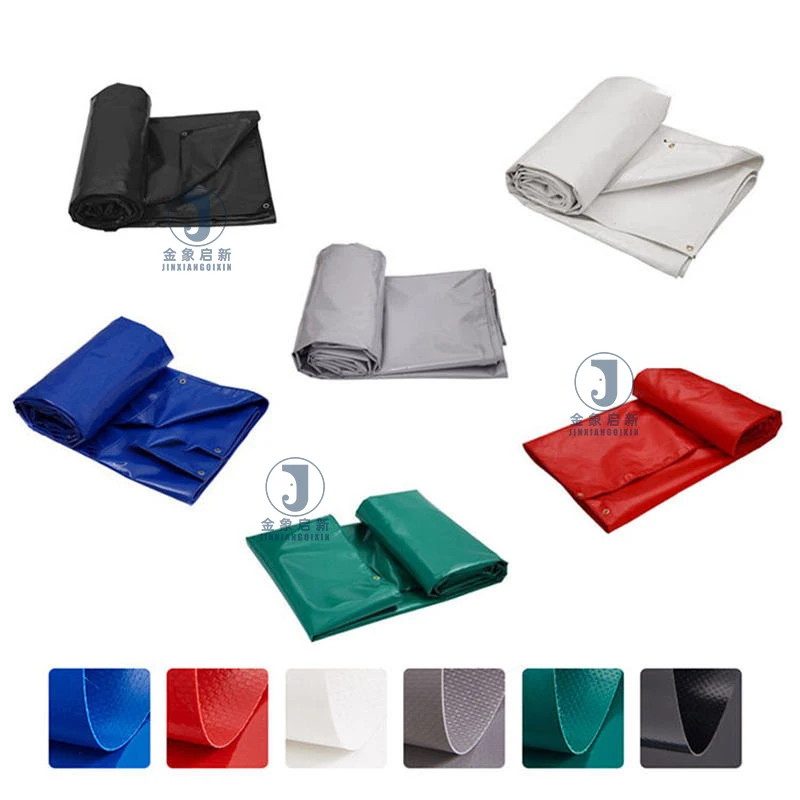
PVC Coated Tarpaulin with 350–750gsm weight range, hot-melt coating technology, and -70°C to +100°C temperature resistance for truck, construction, and agricultural covers.
- Knife-coated construction ensures consistent GSM across the roll and strong seam weldability at flex points where loads shift most
- Available in custom widths, lengths, and colours with reinforced hems and eyelets to your exact trailer or site dimensions
- Flame retardant, anti-static, and anti-UV treatments available with test reports on request
Backed by 100% pre-shipment inspection, 30 years of coating process control, and samples developed within days for custom specifications.
Description
Full Custom Tarpaulin Capability — From material selection and pattern printing to custom sizing, a 10-person R&D team handles every design detail in-house, delivering samples within days for your specific truck cover or site enclosure requirement.
Technical Specifications
| Parameter | Value |
|---|---|
| Product Type | PVC Coated Tarpaulin |
| Material | PVC + High-strength polyester mesh fabric |
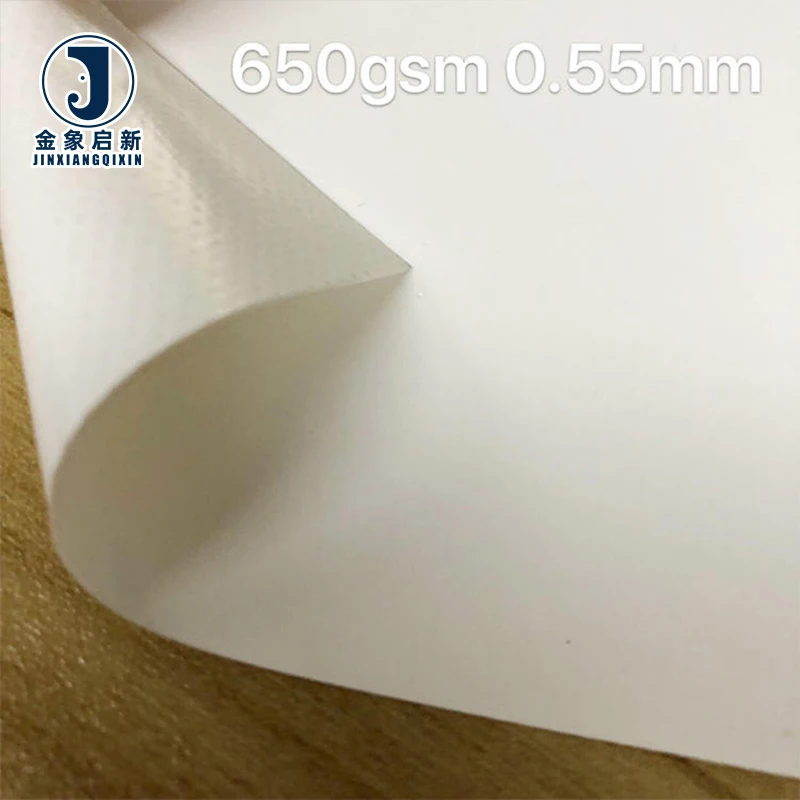
| Weight (GSM) | 350gsm / 420gsm / 500gsm / 550gsm / 600gsm / 750gsm (confirm grade for your application) |
| Total Thickness | 0.32mm / 0.35mm / 0.4mm / 0.45mm / 0.5mm / 0.65mm |
| Coating Technology | Laminated technology & Hot-melt coating technology |
| Roll Size | 2m width × 75m length / 2.1m width × 50m length |
| Colour Options | Blue / Red / Yellow / Light blue / Grey (Customized) |
| Temperature Range | -70°C to +100°C |
| Key Features | Waterproof, sunproof, cold crack resistance, anti-mildew, best colour fastness, high tenacity polyester yarns |
| Special Treatments | Flame retardant (grade not stated — confirm required standard), anti-static (grade not stated — confirm specification), anti-cold, anti-mildew |
| Service Life | 3–7 years under normal circumstances (source value — verify against application conditions) |
| Certifications | ISO, CE |
Application Suitability
| Application | Exposure & Requirement |
|---|---|
| Truck and trailer side curtains | Constant flexing at load points, road abrasion, UV and weather exposure, colour match across fleet |
| Construction site and equipment covers | Outdoor weathering, mechanical abrasion from scaffolding contact, repeated deployment and folding |
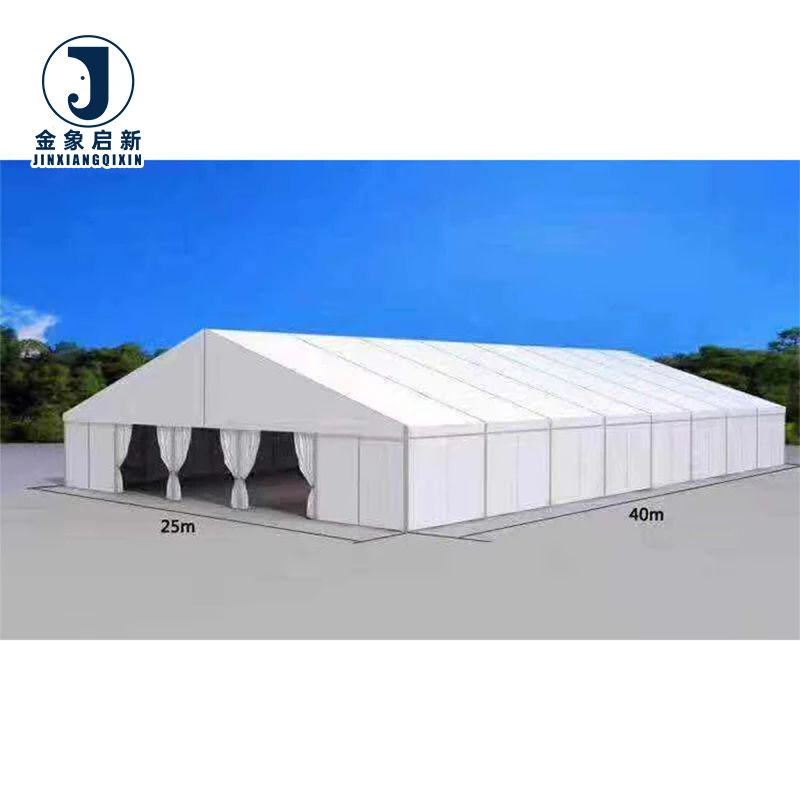
| Tent and awning fabric by the roll | Tensile load from frame tension, UV exposure, seam welding for panel joining, colour consistency across panels |
| Agricultural and pond liners | Permanent water contact, soil chemistry, puncture risk from substrate, long-term UV exposure |
| Cargo ship and marine covers | Salt spray, high humidity, wind load on secured cargo, abrasion from deck hardware |
| Scaffolding and building enclosure | Wind loading on large panels, flame retardant compliance for site safety, repeated handling |
Why the PVC Coated Tarpaulin You Ordered Often Arrives Lighter Than Quoted
The quoted GSM is only meaningful when backed by a material specification sheet and a documented pre-shipment inspection that verifies weight roll by roll.
Buyers routinely specify a target weight during negotiation, then receive material that measures lighter on arrival. The discrepancy originates at the coating stage, where reducing PVC compound input saves cost but compromises tensile strength and seam weldability. Without a documented weight check before dispatch, the only verification happens at the receiving warehouse — after the container has shipped and the lead time is spent. [NEED_CITE: tensile and tear test methods for coated fabrics per ISO 1421]
How Coating Weight and Base Fabric Define Real-World Strength
When sourcing a PVC coated tarpaulin, the relationship between GSM and the underlying polyester mesh determines how the material performs under load. Two fabrics rated at the same GSM can behave very differently: one with a denser base weave and lighter coating will show higher tear resistance, while one with a heavier coating and open weave may offer better waterproofing but lower seam strength. The hot-melt coating technology used across this range penetrates the polyester mesh, bonding PVC compound into the yarn intersections rather than sitting as a surface layer. This adhesion method supports stronger weld seams — the point where most tarpaulin failures begin under flex load.
Colour Consistency Across Rolls in the Same Order
Batch-to-batch colour variation is a frequent complaint when multiple rolls are installed side by side on a truck fleet or tent structure. Controlling colour consistency requires tight management of pigment dosing at the compounding stage and uniform temperature profiles across the coating line. For orders spanning several rolls, verifying colour match under standardised lighting before packing avoids costly on-site rejection. [NEED_CITE: colour fastness and batch matching standards for coated technical textiles]
Reading the Specification Sheet: What GSM, Thickness and Coating Method Actually Tell You
GSM alone does not predict how a coated fabric will perform in the field. The total weight combines the base polyester mesh and the PVC coating, and understanding the ratio between them matters. A heavier base fabric with high-tenacity polyester yarns delivers superior tensile and tear strength, which directly affects how the material holds up at welded seams and tie-down points. Thickness readings across this range — from 0.32mm to 0.65mm — correlate with the total coating build, influencing stiffness, cold-crack behaviour and abrasion resistance. The laminated and hot-melt coating methods each produce different peel-strength characteristics: hot-melt coating drives compound into the mesh for stronger seam welds, while lamination offers a cost-effective option for applications with lower mechanical demand. Temperature range from -70°C to +100°C indicates suitability across cold-climate transport and high-heat industrial environments, though low-temperature flexibility should always be confirmed against the specific treatment applied.
The Hidden Cost of Specifying on Price Per Square Metre Alone
Choosing coated tarpaulin primarily on unit cost frequently leads to early field failures that far exceed the initial saving. A lighter coating may pass a quick hand-feel check but fails at the weld seam after months of flex cycling on a truck curtain. Flame retardant treatments claimed without a documented grade lead to site inspection failures, forcing replacement mid-project. Colour drift between rolls becomes visible only after installation, when panels sit adjacent on a structure — triggering rejection and re-supply that delays the entire project timeline. [NEED_CITE: common failure modes in PVC coated tarpaulin field applications]
What a 30-Year Coating Specialist Brings to Your Order
Deep process control over coating weight and adhesion is built through decades of running PVC compounds across multiple production lines, not through marketing claims. Three full production lines and 36 sets of professional equipment provide the capacity to fulfil bulk roll orders while maintaining consistent coating application from first roll to last. The 10-person R&D team develops samples within days for custom width, colour and printing requirements, allowing you to verify material performance before committing to a production run. Dedicated QA/QC runs at every stage — from incoming yarn inspection through coating weight checks to final roll packing — with 100% pre-shipment inspection ensuring every roll matches the stated specification. The complete product range, from 350gsm light-duty covers to 750gsm heavy-duty transport fabric, is produced under one roof, simplifying your supply chain and ensuring documentation consistency across all grades.
Documentation & Verification
- Material specification sheet stating exact GSM, base fabric type, coating method and colour reference for each roll
- Test reports for UV resistance and flame retardant grades supplied where applicable to your market requirements
- Pre-shipment inspection record confirming weight, colour and dimensions against your purchase order
- Roll packing list with individual roll weights and dimensions for receiving warehouse verification
- Certificate of origin and customs documentation supporting your import clearance process
Fabrication, Handling & Storage
- Hot-melt coated grades support high-frequency welding; adjust dwell time and pressure to the specific GSM and thickness ordered
- Reinforce tie-down eyelet zones with additional fabric patches to distribute load across the polyester mesh base
- Store rolls upright on pallets to prevent flat-spot deformation that causes visible creasing after unrolling
- Allow cold-stored rolls to acclimatise before unfolding to avoid stress cracking in low-temperature PVC compound
- Cut panels with overlap allowance for weld seams; hot-melt coating technology supports strong seam adhesion across the full weight range
- Use mild detergent for cleaning; avoid solvent-based products that can degrade the PVC coating surface
Start Your Specification With the Application, Not the Price List
To specify the correct material for your project, share the end-use environment — whether it is a truck side curtain, a construction enclosure or a tent structure — along with the exposure conditions the fabric will face. Confirm the fire safety or anti-static grade required by your local regulations so the correct treatment can be applied and documented. Provide your target width, roll length and annual volume, and indicate whether you need finished cut sizes with eyelets and hems or stock rolls for your own fabrication line. If colour matching or printed branding is part of your requirement, a sample can be produced within days for your approval before bulk production begins.
Frequently Asked Questions
Q: How is GSM verified before shipment and what proof do I receive?
A: Every roll is weighed during the 100% pre-shipment inspection. You receive a material specification sheet stating the exact GSM, base fabric denier and coating type, along with an inspection record confirming that the delivered weight matches the quoted specification. This documentation allows your receiving team to cross-check on arrival.
Q: What flame retardant grades are available and how do I confirm compliance?
A: Flame retardant treatment is available as a special option, but the specific grade depends on your market’s fire safety regulations. Share your required standard — such as B1, M2 or NFPA 701 — at inquiry stage so the correct compound can be formulated and a test report supplied to confirm compliance before production begins.
Q: How do I specify custom width, colour and printing — what information do you need?
A: Provide the exact width, roll length, Pantone or RAL colour reference and artwork file for printing. The R&D team develops a sample within days for your approval. Minimums and lead times depend on the specific colour and width requested, so confirm these at quotation stage before committing to bulk.
Q: How is colour consistency controlled across multiple rolls in one order?
A: Pigment dosing is controlled at the compounding stage, and coating line temperature profiles are held constant throughout the production run. Rolls from the same order are compared under standardised lighting during pre-shipment inspection to verify colour match before packing, reducing the risk of visible variation when panels are installed side by side.
Q: Do you supply finished cut sizes or only rolls?
A: Both options are available. Stock rolls in standard widths and lengths ship directly from inventory. For finished items, provide the exact dimensions along with eyelet spacing, hem reinforcement and any welding requirements. Cut sizes are produced from the same PVC coated tarpaulin range, with all treatments and GSM options applying equally to finished products.
Related products
-
Cubierta de lona impermeable para vagones de ferrocarril para construcción
¥1.19 Add to cart -
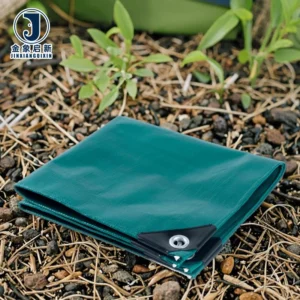
Heavy Duty PVC Tarpaulin for Truck and Tent – Custom Made
Read more -
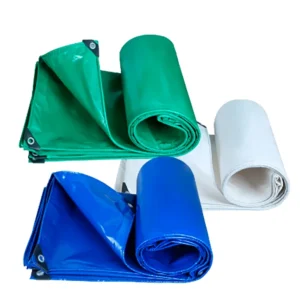
JX Carpas Toldos Toldos Personalizables Impermeables Anti-UV de Lona para Cuchillos Estilo Plano Recubiertos de PVC Resistentes a las Arrugas Sólidos
¥2.49 Add to cart -
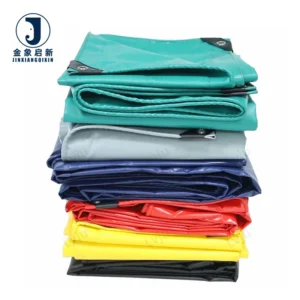
Cubierta de tienda para camiones y remolques de lona negra de PVC recubierta de cuchillo, impermeable y de alta resistencia de 650GSM, almacenamiento al aire libre para camioneros industriales.
¥1.10 Add to cart