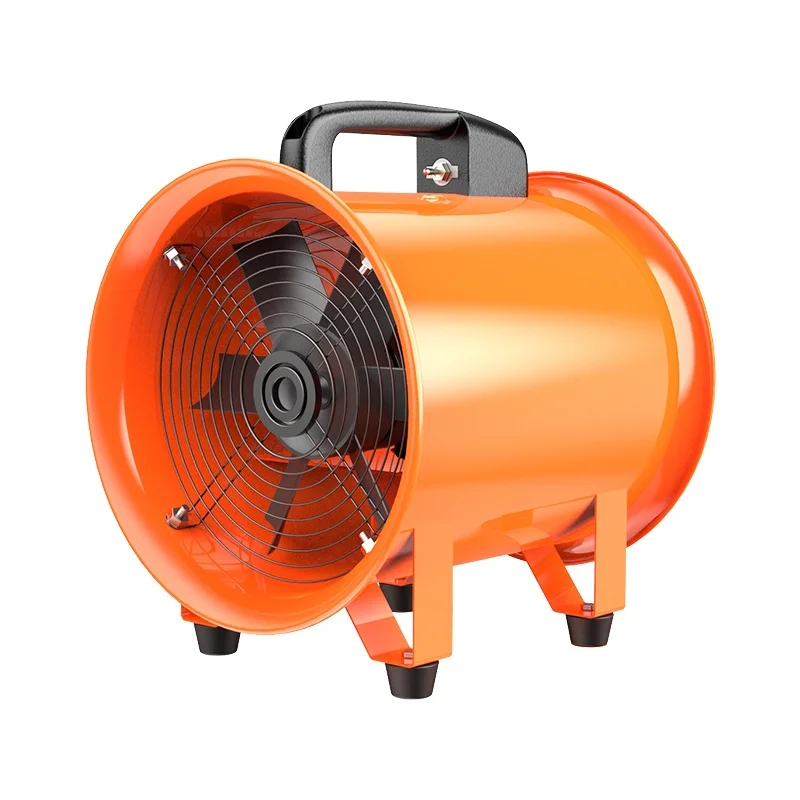
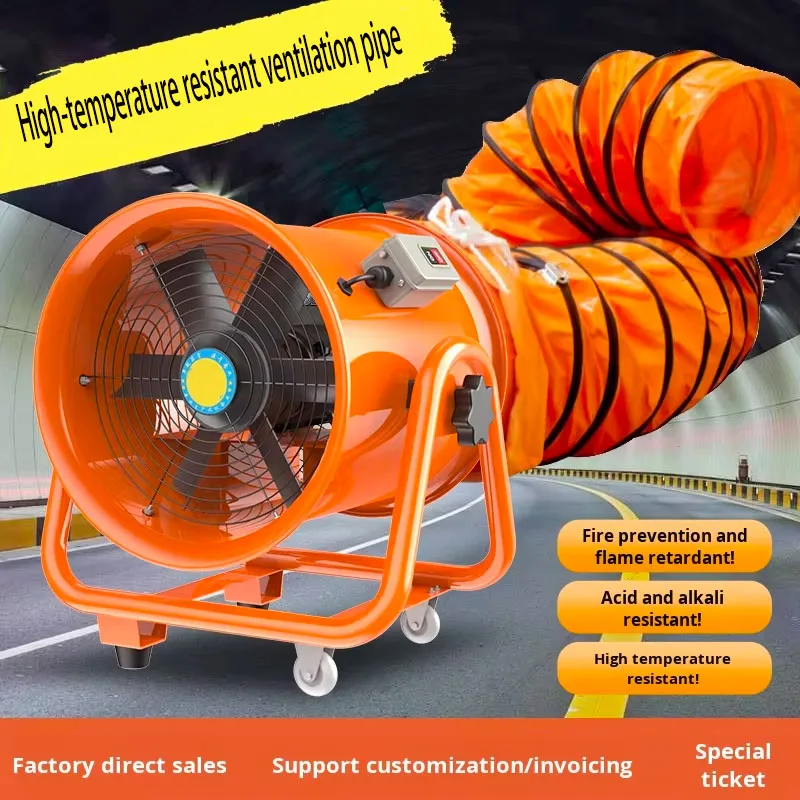

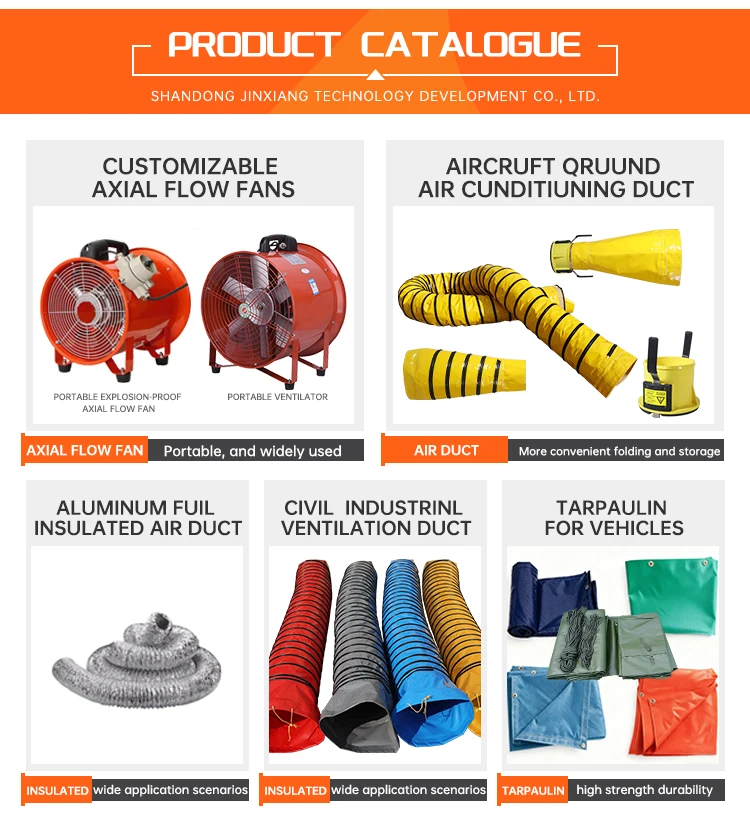
Portable Axial Flow Exhaust Fan 220V/380V, 1300–28000 m³/h Air Volume, Cast Iron Housing with Ball Bearing
- Sizes from 200mm to 900mm with 250W to 5500W motor options
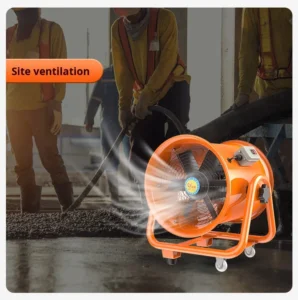
- Designed for tight space ventilation in construction, mining, and tunnelling
- Dual voltage compatibility for flexible on-site power integration
- Total pressure 140–320 Pa, noise levels 57–88 dB(A)
Backed by 100% pre-shipment inspection and ODM support from a 10-person R&D team handling custom configurations within days.
Description
Complete Range & Custom Capability — Jinan Jinxiang supports full ODM development for portable axial flow exhaust fans, from specification matching to volume production with in-process QA.
Technical Specifications
| Parameter | Value |
|---|---|
| Product Type | Portable Axial Flow Exhaust Fan |
| Available Sizes | 200mm / 250mm / 300mm / 350mm / 400mm / 450mm / 550mm / 650mm / 750mm / 850mm / 900mm |
| Power Range | 250W / 370W / 550W / 750W / 1100W / 2200W / 3000W / 4000W / 5500W |
| Air Volume | 1300 m³/h to 28000 m³/h |
| Total Pressure | 140 Pa to 320 Pa |
| Voltage Options | 220V / 380V |
| Noise Level | 57–88 dB(A) depending on size |
| Bearing Type | Ball Bearing |
| Housing Material | Cast Iron |
| Customization | ODM Available |
Application Suitability
| Application | Exposure & Requirement |
|---|---|
| Tunnel and mine face ventilation | Continuous operation in dust-laden air, confined cross-sections, duct resistance over long runs |
| Ship engine room and confined hold exhaust | Salt atmosphere exposure, restricted mounting space, sustained high-temperature air movement |
| Temporary construction enclosure airflow | Frequent repositioning, generator-powered supply, variable duct lengths |
| Industrial equipment compartment cooling | Enclosed metal housings, heat accumulation, limited access for maintenance |
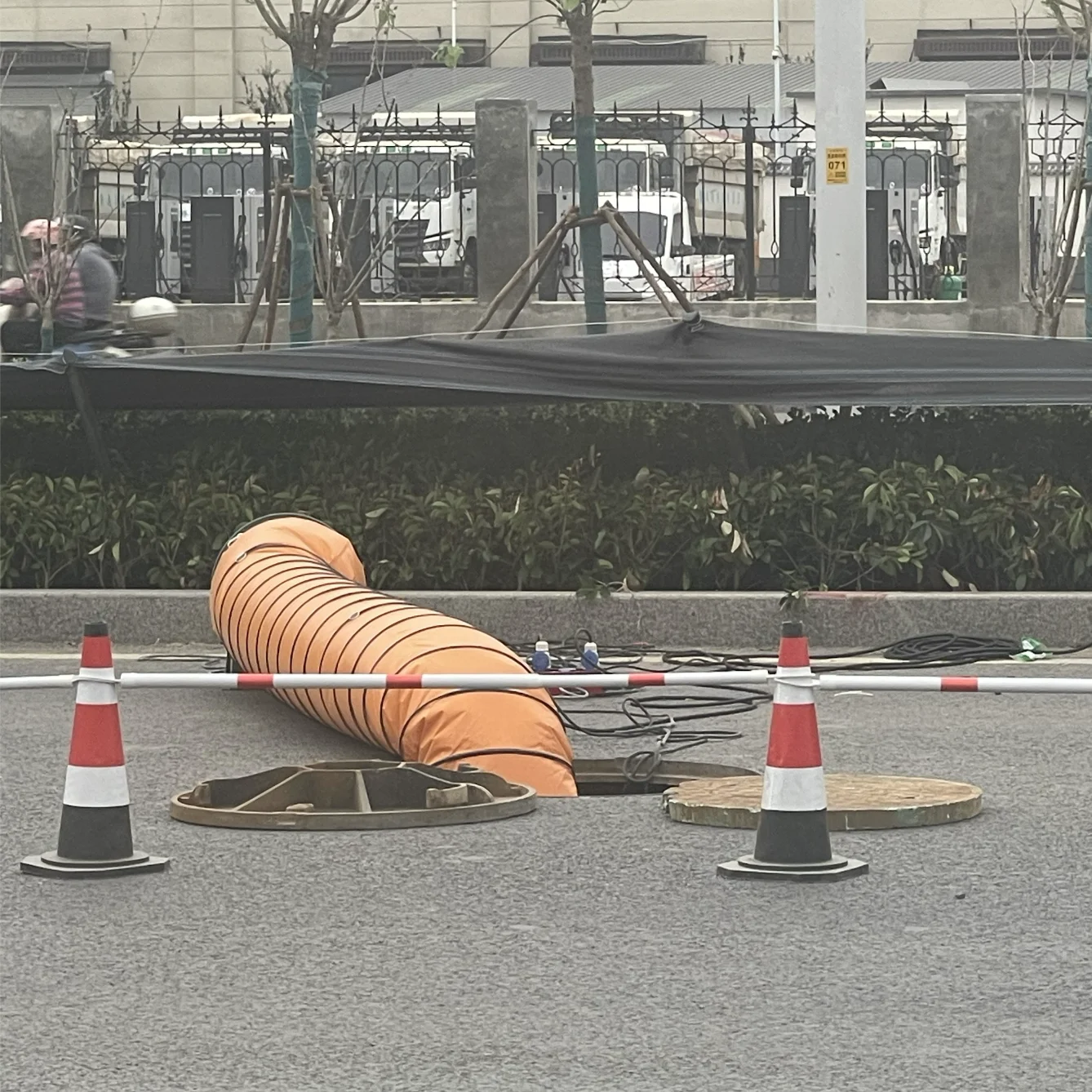
| Container and silo purge ventilation | Short-duration high-volume exchange, flexible duct attachment, portability between sites |
Why Air Volume Ratings Mislead Buyers of Portable Axial Flow Exhaust Fans
Free-air flow figures drop significantly once duct resistance is introduced.
Many procurement specifications reference the catalogue air volume without accounting for the static pressure loss across duct runs, bends and filters. A fan rated at 28000 m³/h in free air may deliver considerably less when connected to twenty metres of flexible ducting with two directional changes. [NEED_CITE: relationship between system resistance and fan operating point in ducted ventilation]. Buyers who select solely on peak flow often discover on site that the airflow at the working face falls below the threshold needed to clear fumes or heat. The correct approach is to calculate the total system pressure requirement first, then confirm the fan curve intersects at the needed volume.
Matching Fan Size to Confined Space Geometry
Selecting the right portable axial flow exhaust fan starts with the physical constraints of the workspace rather than the highest available flow. A 200mm unit fits into duct openings on compact equipment enclosures and shipboard compartments where clearance is minimal, while 750mm and 900mm models serve tunnel headings and large temporary structures where duct diameter and volume demand are substantial. The ball bearing construction across the range maintains shaft alignment even when the fan is repositioned repeatedly across uneven ground.
Voltage Selection and Site Power Infrastructure
The 220V and 380V options address fundamentally different site electrical environments. Single-phase 220V models connect directly to standard site distribution boards and portable generators, making them practical for short-duration purge tasks and maintenance shutdowns. Three-phase 380V units draw lower current per phase for the same power output, which matters on long cable runs from temporary substations in mining and tunnelling projects where voltage drop becomes a concern. [NEED_CITE: voltage drop considerations for three-phase motors on extended temporary cable runs].
Reading the Pressure-Flow Relationship in Fan Selection
Air volume and total pressure are interdependent, not independent specifications. The 1300 to 28000 m³/h range spans fans from small compartment extractors to high-capacity heading ventilators, but each size delivers its rated flow only against a specific pressure. The 140 Pa to 320 Pa total pressure envelope indicates these units are designed for low-to-medium resistance duct systems — typically flexible fabric ducting with smooth internal surfaces. Introducing rigid ductwork, multiple elbows or inline filters raises system resistance and shifts the operating point down the fan curve, reducing delivered volume. Ball bearing construction supports continuous duty at these pressures without the shaft play that accelerates wear in sleeve-bearing alternatives. The cast iron housing adds mass that dampens vibration transmission to the duct connection, reducing fatigue failures at the coupling point over extended operating cycles.
The Hidden Cost of Underspecifying Static Pressure
When the selected fan cannot overcome actual duct resistance, the immediate symptom is insufficient airflow at the delivery point, but the downstream consequences compound quickly. In welding enclosures, fume concentration rises above occupational exposure limits before workers notice the change. [NEED_CITE: occupational exposure risks when ventilation rates fall below design targets in confined spaces]. In tunnel driving, gas accumulation at the face creates a hazard that may not trigger alarms until concentrations are already dangerous. Procurement teams that prioritise air volume over pressure matching end up purchasing additional units to compensate, duplicating capital outlay and increasing site power demand. Specifying against a calculated system curve rather than a catalogue peak prevents these operational shortfalls.
Why Buyers Source Portable Axial Flow Exhaust Fans Through Jinan Jinxiang
The 10-person R&D team handles ODM requests by developing fan configurations matched to specific duct systems and mounting arrangements, with samples turned around in days rather than weeks. Three full production lines and 36 sets of professional equipment provide the capacity to fulfil bulk orders without splitting production across external workshops. Dedicated QA inspection at every stage — from casting verification through motor winding tests to final assembly run — ensures each unit meets its rated performance before packing. Nearly 30 years of industrial manufacturing experience means the engineering team understands how site conditions diverge from catalogue assumptions and can advise on pressure derating, duty cycle limits and voltage tolerance. ISO and CE certification provides the documentation trail that procurement departments in regulated markets require for equipment entering classified or inspected zones.
Documentation & Verification
- Material and component specification sheet confirming bearing type, housing grade and motor winding class for each fan size
- Performance test record showing measured air volume and pressure at rated voltage before dispatch
- ISO and CE certificates applicable to the manufacturing facility and product category
- Packing list detailing unit count, size breakdown and weight per crate for logistics planning
- Certificate of origin and customs documentation for cross-border shipment clearance
Fabrication, Handling & Storage
- Mount on level rigid base using housing bolt pattern to prevent cast iron stress fractures from uneven loading
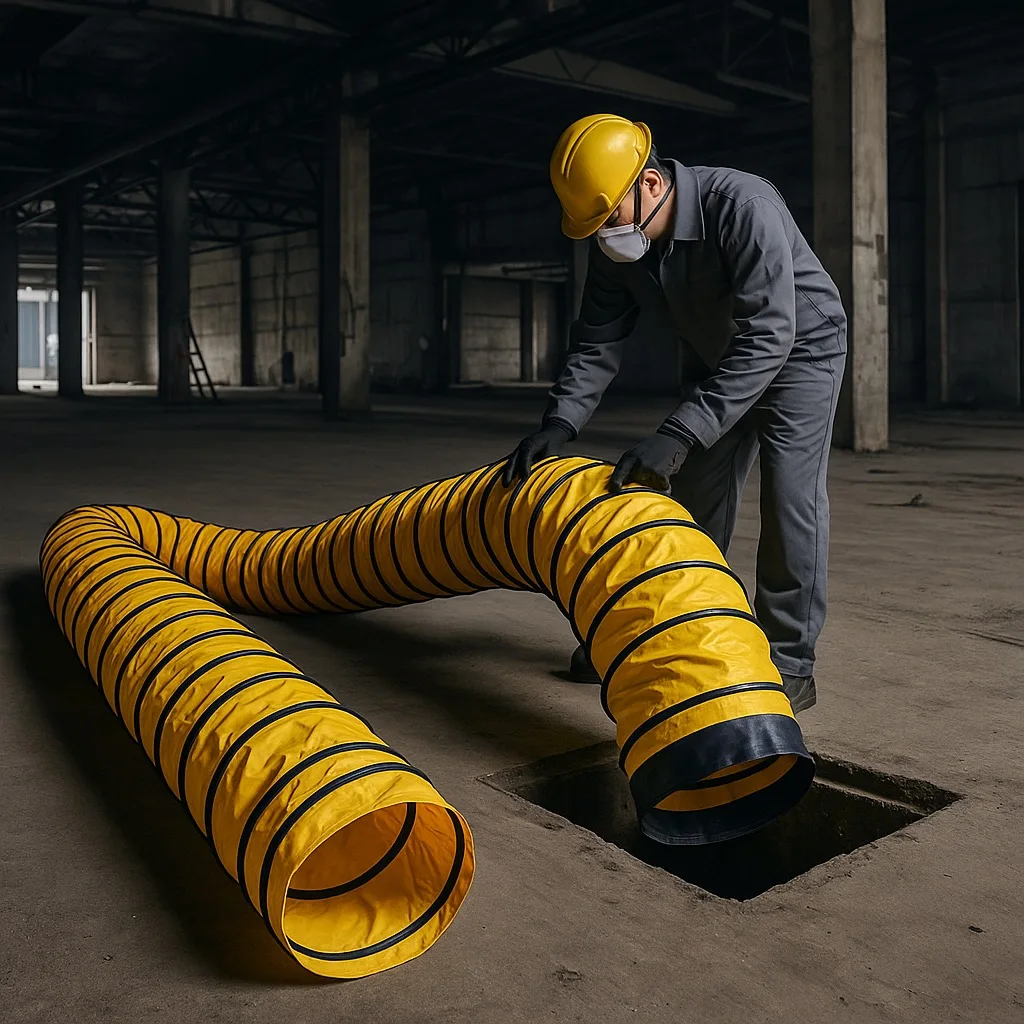
- Connect flexible ducting with smooth internal clamps to avoid tearing at the fan discharge collar
- Store 380V models in dry conditions to prevent terminal box corrosion before site commissioning
- Inspect ball bearing seals after transport over rough access roads before energising the motor
- Use manufacturer-recommended grease for bearing re-lubrication intervals on continuous-duty installations
What We Need to Prepare Your Quotation
Tell us the duct diameter, total run length and number of bends so we can match fan size to your actual system resistance. Confirm whether your site supply is 220V single-phase or 380V three-phase and the available breaker capacity at the connection point. Specify any noise constraints for occupied areas near the installation, and whether ODM modifications to mounting feet or inlet guards are required.
Frequently Asked Questions
Q: How do I determine the correct static pressure for my duct system?
A: Calculate friction loss per metre of duct, add equivalent lengths for each bend and transition, then sum the total. Compare this against the fan pressure curve at your required air volume. Our engineering team can review your duct layout and recommend the size that delivers target flow at the actual operating point rather than the free-air catalogue figure.
Q: What is the difference between 220V and 380V models for site selection?
A: Single-phase 220V fans suit portable generator supply and short cable runs typical of maintenance and emergency ventilation. Three-phase 380V models draw lower current per phase, reducing voltage drop on long temporary cable runs common in mining and tunnelling. Your site electrical engineer should confirm available supply before ordering.
Q: What ODM customisation options are available and what is the minimum order?
A: ODM scope includes modified mounting configurations, inlet and outlet flange adaptations, and voltage or frequency adjustments for specific markets. Sample development takes days once specifications are confirmed. Minimum order quantities depend on the extent of modification — contact us with your drawings and we will confirm both the threshold and lead time.
Q: How do ball bearings compare to sleeve bearings in exhaust fan applications?
A: Ball bearings maintain precise shaft alignment under continuous operation and tolerate the axial loads created by duct back-pressure. They require periodic re-greasing but do not develop the radial play that causes sleeve bearings to wear the motor air gap. For fans that are relocated frequently, ball bearing construction reduces vibration-related failures.
Q: What corrosion protection is available for the cast iron housing?
A: Standard units ship with a protective coating suitable for general industrial atmospheres. For marine or high-humidity environments, additional surface treatment can be applied during ODM production. Confirm your exposure conditions — salt spray, chemical fumes or sustained condensation — so we can specify the appropriate finish for your installation.
Related products
-
Collapsible Rain Barrel for Water Storage – Custom Made
Read more -
Custom Made PVC Waterproof Fabric Rain Tank for Irrigation – Manufacturer
Read more -
Tanque de agua de almacenamiento grande de tela industrial impermeable de PVC flexible de 750L para riego y recolección de agua de lluvia.
¥15.70 Add to cart -
Flexible PVC Tarpaulin Water Tank for Rainwater Harvesting – Custom Made
Read more