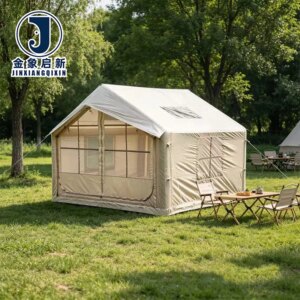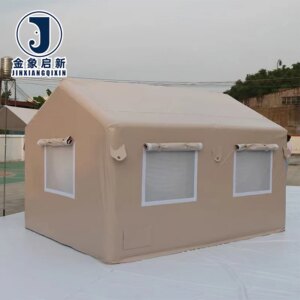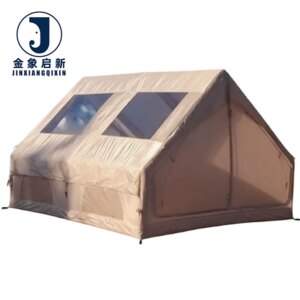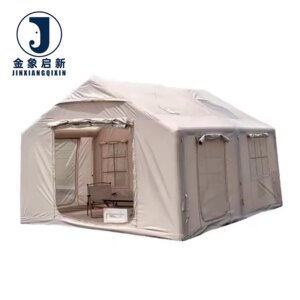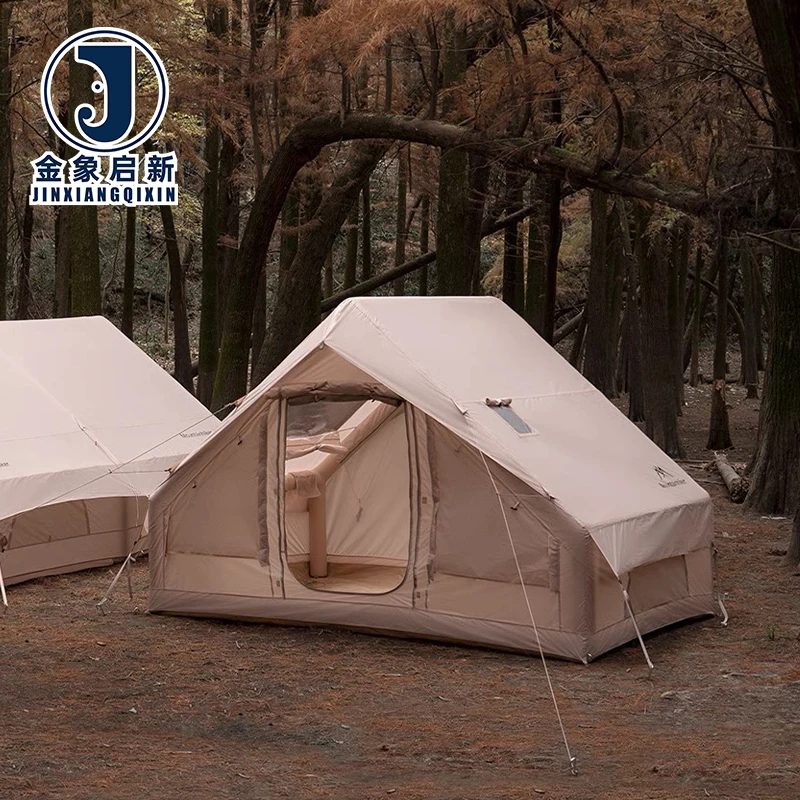
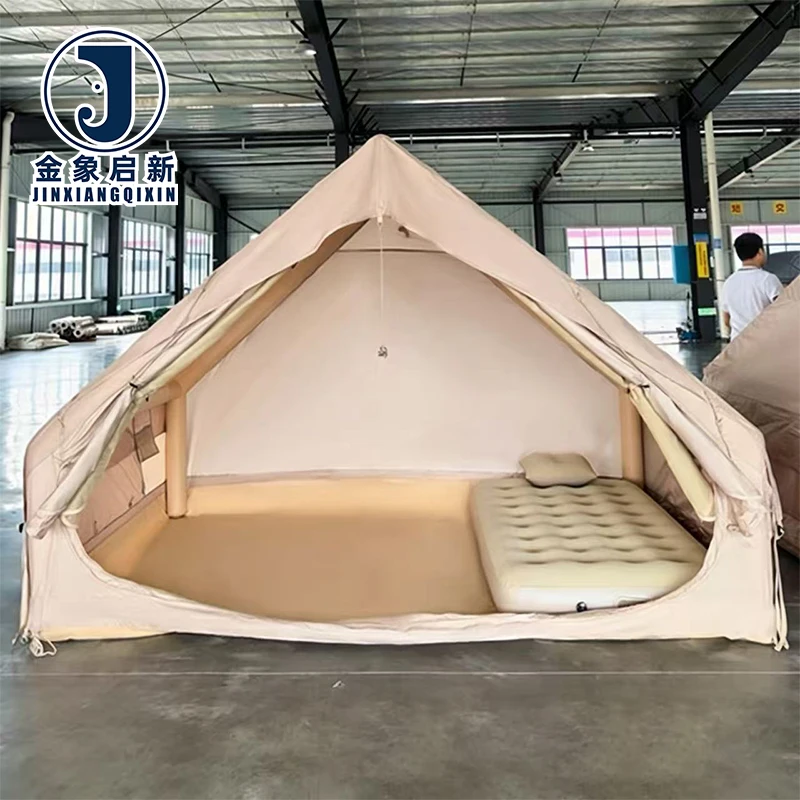
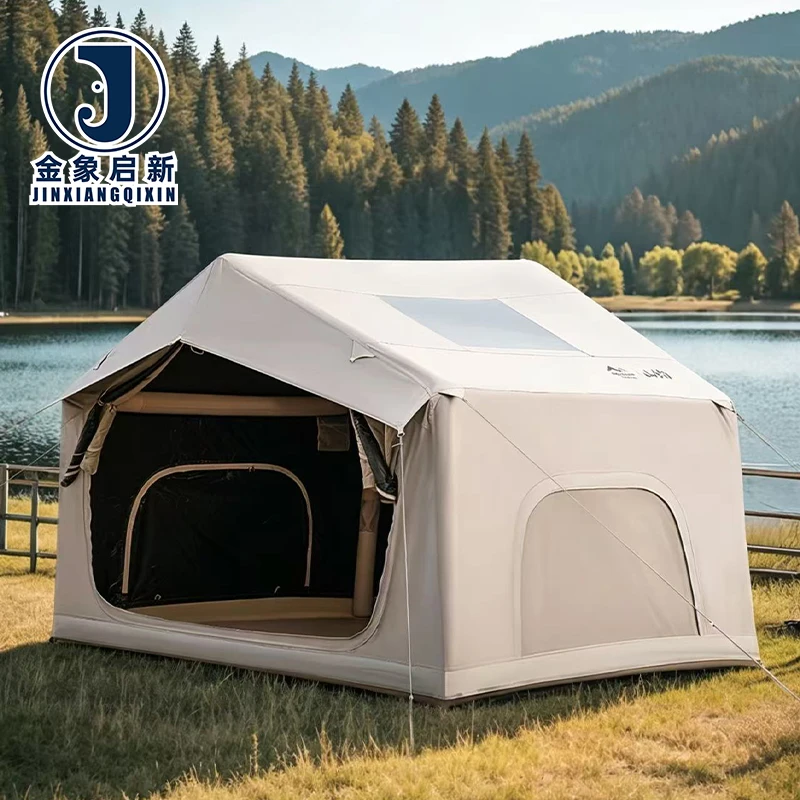
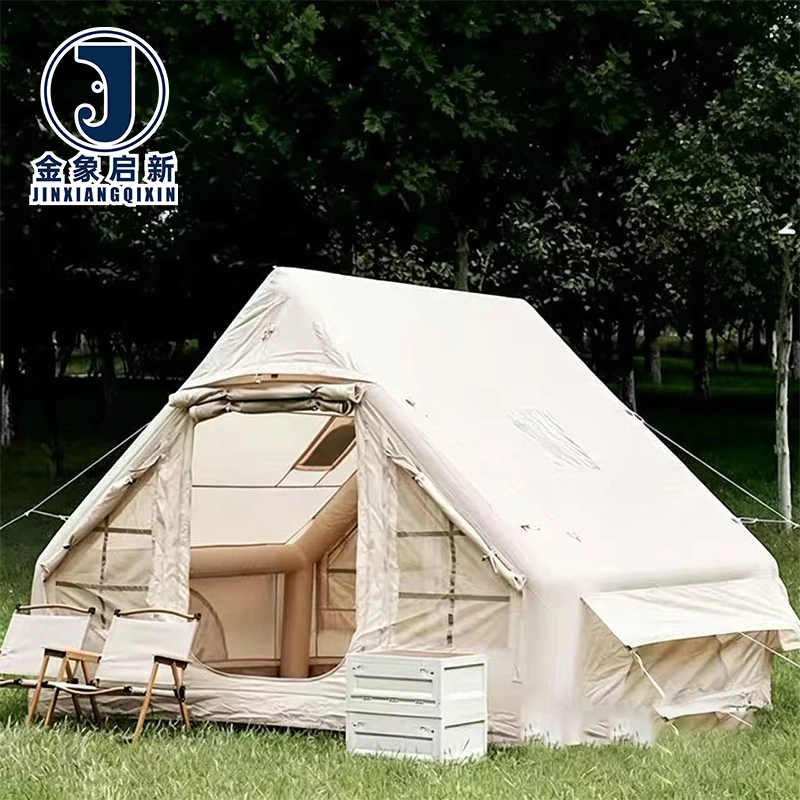
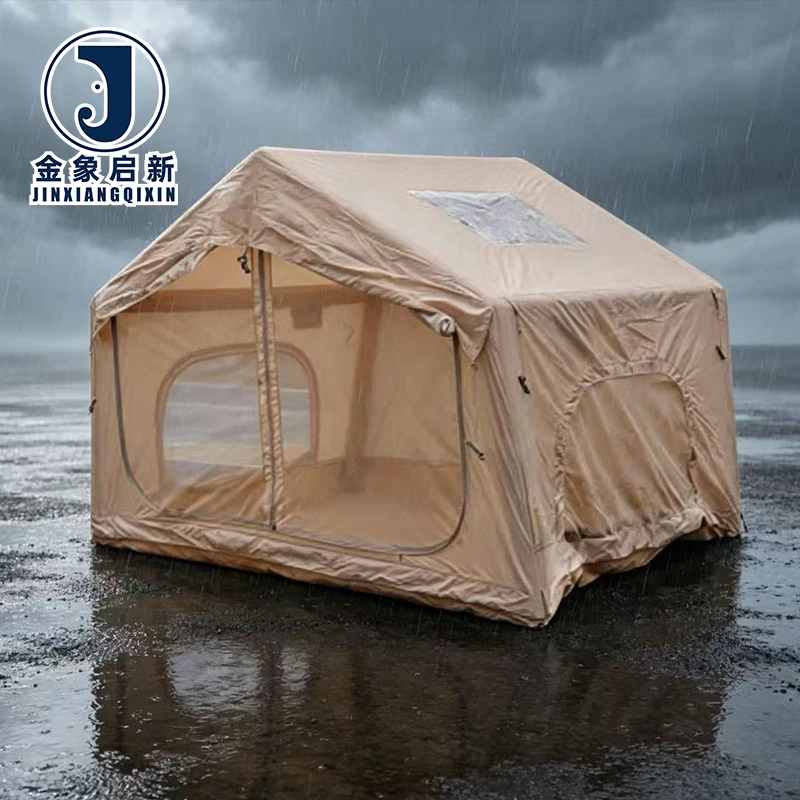
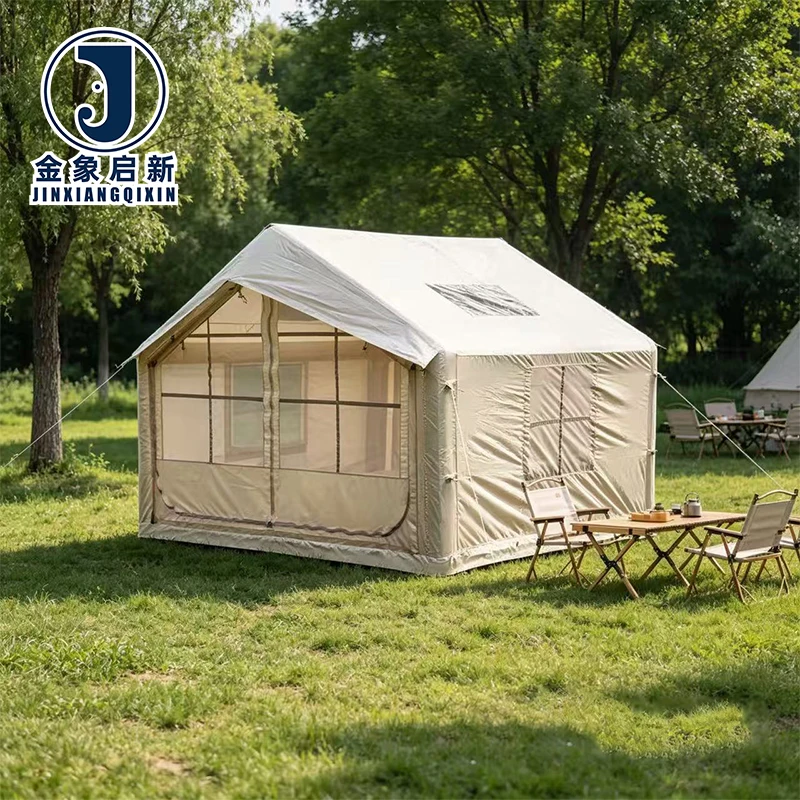
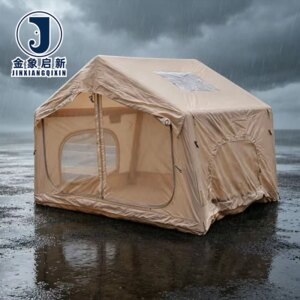
Heavy Duty Inflatable Camping Tent — waterproof, UV-resistant, tear-resistant PVC tarpaulin construction for industrial and commercial shelter applications.
- Engineered with controlled GSM and coating adhesion, ensuring consistent structural performance under wind load and flex stress. Heat-welded seams tested at high-load concentration points.
- Full OEM/ODM capability covering custom dimensions, pattern printing, and specialized fabric treatments for site-specific demands.
Backed by 100% pre-shipment inspection, dedicated QA at every production stage, and sample approval before bulk commitment.
Description
Coating Weight Mastery — Nearly 30 years of process control over PVC coating adhesion and GSM consistency, verified at every roll before it leaves the factory.
Technical Specifications
| Parameter | Value |
|---|---|
| Product Type | Inflatable Tent |
| Core Material | PVC tarpaulin |
| Water Resistance | Fully waterproof coated construction |
| UV Resistance | Available in UV-resistant grades — confirm the grade required for your market (test basis not stated) |
| Tear Resistance | Tear-resistant coated fabric structure |
| Customization Scope | OEM & ODM: size (1–12 person capacity), pattern printing, specialized fabric treatments |
| Production Capability | 3 full production lines, 36 sets of processing equipment |
| Quality System | Full-process QA/QC with 100% pre-shipment inspection |
| Certifications | ISO 9001, ISO 14001, ISO 45001, CE |
Application Suitability
| Application | Exposure & Requirement |
|---|---|
| Temporary construction site offices | Sustained weather exposure, high wind loading on inflatable frame, frequent inflation and deflation cycles |
| Mobile command centers for outdoor events | Rapid deployment demands, UV and rain exposure across multiple event cycles, branding visibility requirements |
| Agricultural equipment storage shelters | Constant sun and moisture exposure, large-span inflatable arches requiring sustained air pressure and fabric tension |
| Remote industrial worksite enclosures | Harsh environmental conditions, abrasion from ground contact during setup, requirement for thermal insulation in cold climates |
Why Claimed Performance Without Documentation Costs More Than the Fabric Itself
An inflatable tent fabric that fails mid-season is never a material cost — it is a project shutdown cost.
Buyers routinely receive PVC tarpaulin quoted at a specified weight, only to find the delivered rolls consistently lighter than agreed. When an inflatable structure depends on consistent coating weight for its air-holding seam integrity, that shortfall surfaces as leaking welds and sagging arches within weeks of deployment. The same applies to treatments: a supplier may claim UV resistance without providing a test basis you can hold against your market’s compliance requirements [NEED_CITE: tensile and tear test methods for coated fabrics per ISO 1421]. For an Inflatable Tent aftermarket supplier, documentation is not a bonus — it is the baseline that separates a reliable shelter from a liability on site.
Controlling the Coating from Raw Roll to Finished Shelter
As an Inflatable Tent Fabric manufacturer custom solutions provider, the factory controls the PVC coating process in-house across three dedicated production lines. This means the coating weight and adhesion to the base fabric are monitored at every stage rather than outsourced to a separate laminator. For inflatable structures, this matters because the air-beam seams must hold sustained internal pressure — any coating inconsistency becomes a failure point under cyclic loading.
From Sample to Production Without Specification Drift
The 10-person R&D team develops samples within days for custom size, print, and treatment requirements. Once a sample is approved, the same material specification governs the full production run. Batch-to-batch colour and weight consistency is maintained through in-process QA checkpoints, so the first unit and the last unit in an order behave identically on site [NEED_CITE: DIN 4102 fire classification for building materials]. This eliminates the visible colour variation that appears when inflatable tents from different batches are deployed side by side at a single project.
Reading the Material Beyond the GSM Number
GSM alone tells you the weight per square metre but nothing about how that weight is distributed between base fabric and coating. A heavier coating does not automatically mean a stronger material — if the base fabric denier and weave density are low, the PVC layer carries structural loads it was never designed for, and tear propagation accelerates at stress points around inflation valves and anchor attachments. The coating method also determines weld behaviour: knife-over-roll coating produces a thicker, more uniform PVC layer that heat-welds consistently, while cheaper paste-coated fabrics may delaminate at the weld line before the base fabric reaches its rated tensile limit. For inflatable tents operating under continuous positive air pressure, the peel strength between coating and base fabric is the specification that governs service life. Surface finish further affects both field performance and cleaning — a glossy face sheds water and dirt more readily but shows scuff marks, while a matte face conceals abrasion but may require more effort to clean after prolonged outdoor deployment.
What Happens When the Weld Fails Before the Fabric Does
The most common structural failure in inflatable tents is not the fabric tearing — it is the welded seam splitting at the point where the air beam flexes most during wind gusts. This happens when heat-weld parameters are set for a generic PVC grade rather than the specific coating formulation in production. The result is an inflatable arch that holds pressure in calm conditions but deflates unpredictably once lateral loads increase. Buyers who do not request pre-shipment weld test records absorb this risk entirely [NEED_CITE: weld peel strength testing standards for PVC coated fabrics].
Procurement Advantages Rooted in Process Control
The coating weight on every roll is verified against the specification before dispatch, eliminating the GSM shortfall that undermines structural inflatable performance. Flame retardant and anti-static treatments are available in documented grades — confirm the grade required for your market before placing a bulk order. The 10-person R&D team handles pattern printing and sizing for capacities from 1 to 12 persons, developing physical samples for approval before any production commitment. A dedicated QA/QC team inspects every unit across all three production lines, generating a pre-shipment inspection record tied to your order reference. ISO 9001, ISO 14001, ISO 45001, and CE certificates ship with the documentation package, supporting compliance submissions for your project without a separate request cycle.
Documentation & Verification
- Material specification sheet stating PVC coating weight, base fabric type, and colour reference per roll
- UV and flame-retardant test reports supplied when the selected grade requires documented compliance
- Pre-shipment inspection record with batch-specific quality data linked to your order number
- ISO 9001, ISO 14001, ISO 45001, and CE certificates included in the shipment documentation package
- Roll packing list detailing quantity, weight, and dimensions for customs and receiving verification
Fabrication, Handling & Storage
- Heat-weld temperature and dwell time must be set to the specific PVC coating formulation to avoid seam delamination
- Store rolls horizontally on pallets to prevent permanent creasing that compromises the coated surface integrity
- Inflate structures gradually during cold-weather deployment to allow the PVC coating to reach operational flexibility
- Use mild, non-solvent cleaners on the PVC surface to preserve the coating finish and any applied treatments
- Field repairs should use compatible PVC repair patches heat-welded or solvent-bonded to the existing coating layer
Specifying Your Inflatable Tent Order
Provide the deployment environment and expected weather exposure so the appropriate PVC grade and treatment can be recommended. Specify whether you require finished inflatable units or PVC fabric rolls for your own fabrication line. If your market mandates fire or safety compliance, state the applicable standard so the correct certified grade is selected from the start.
Frequently Asked Questions
Q: What customization options are available for inflatable tent size, print, and fabric treatment?
A: The R&D team supports OEM and ODM development for capacities from 1 to 12 persons, including pattern printing, custom sizing, and specialized PVC fabric treatments. Samples are produced within days for your approval before mass production begins, ensuring the finished inflatable tent matches your exact specification.
Q: How is UV resistance verified, and what test basis supports the anti-UV claim?
A: UV-resistant grades are available upon request. The specific test basis depends on the grade selected and can be documented for your compliance records. Confirm the UV performance standard required by your market or project specification before placing your order.
Q: What documentation accompanies each shipment for project compliance?
A: Every shipment includes a material specification sheet, a pre-shipment inspection record tied to your order reference, and the relevant ISO and CE certificates. Additional test reports for UV or flame-retardant grades are supplied when the selected product specification requires them.
Q: How do you control color and material consistency across a multi-unit order?
A: In-process QA checkpoints across all three production lines monitor coating weight and colour against the approved sample. Each production batch is inspected before dispatch, and the pre-shipment record documents the consistency data for your order reference.
Related products
-
Premium Four-season Inflatable Tents for Camping Easy-to-Use Spacious Portable Waterproof Outdoor Tent Quick
Read more -
Outdoor Portable Camping Inflatable Tent Luxury All-Season Use Overnight Large Space Rainproof Insulated Quick Automatic Opening
Read more -
Inflatable Camping Tent Waterproof Outdoor Air Tent for Camping Inflatable Tent Shelter
Read more -
Outdoor Waterproof Inflatable Tent for Camping Portable Air Camping Tent Shelter
Read more