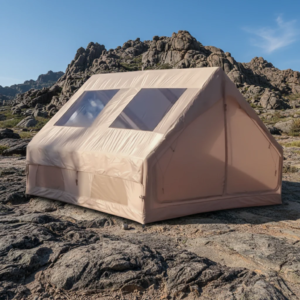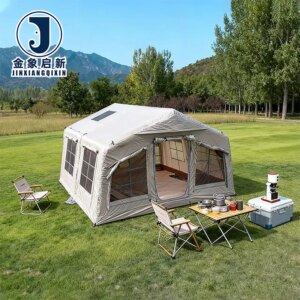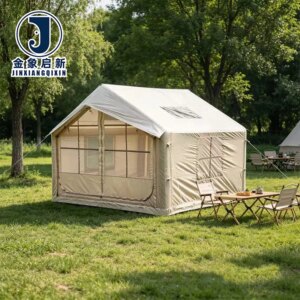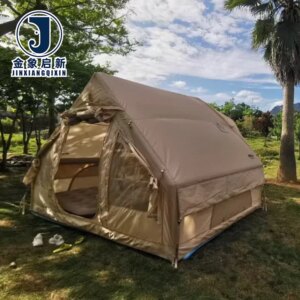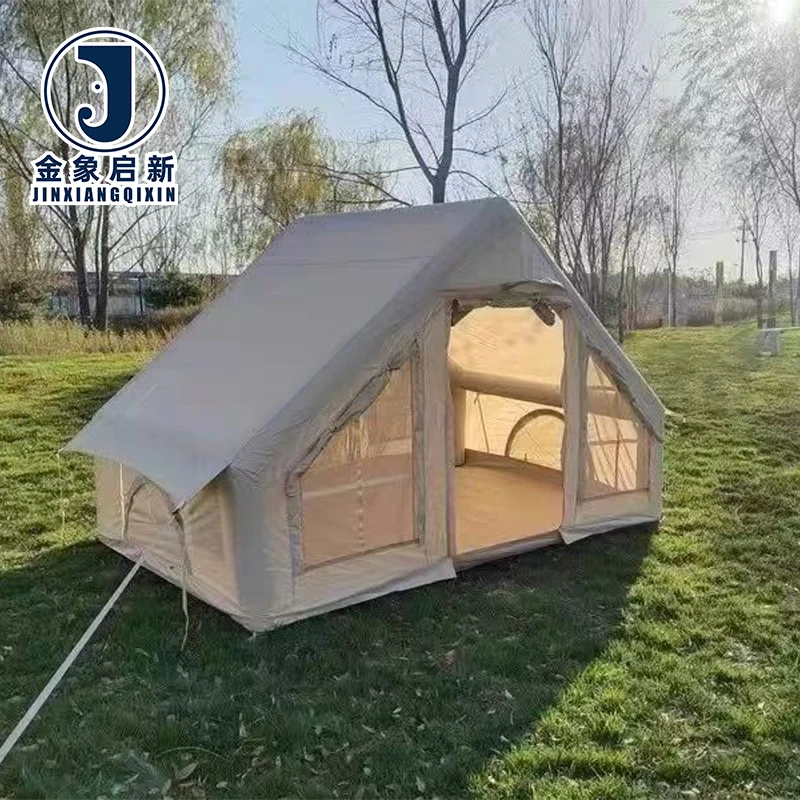
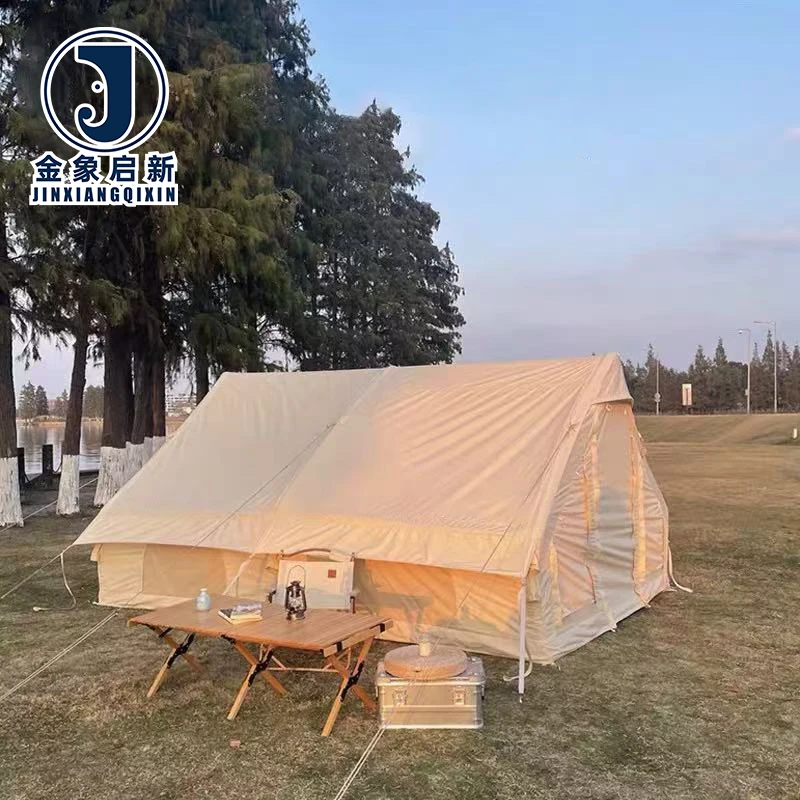
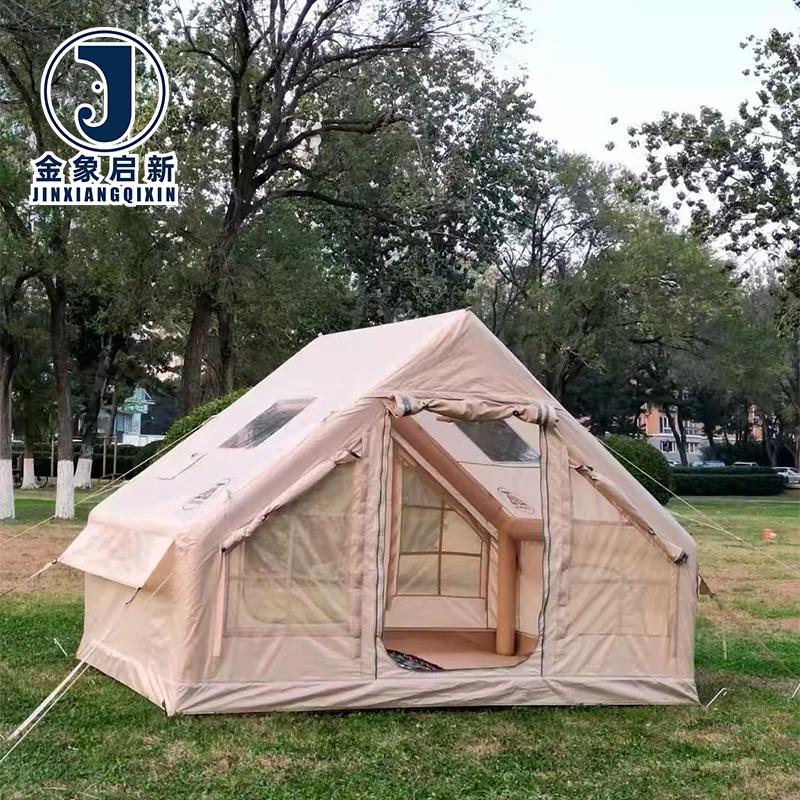
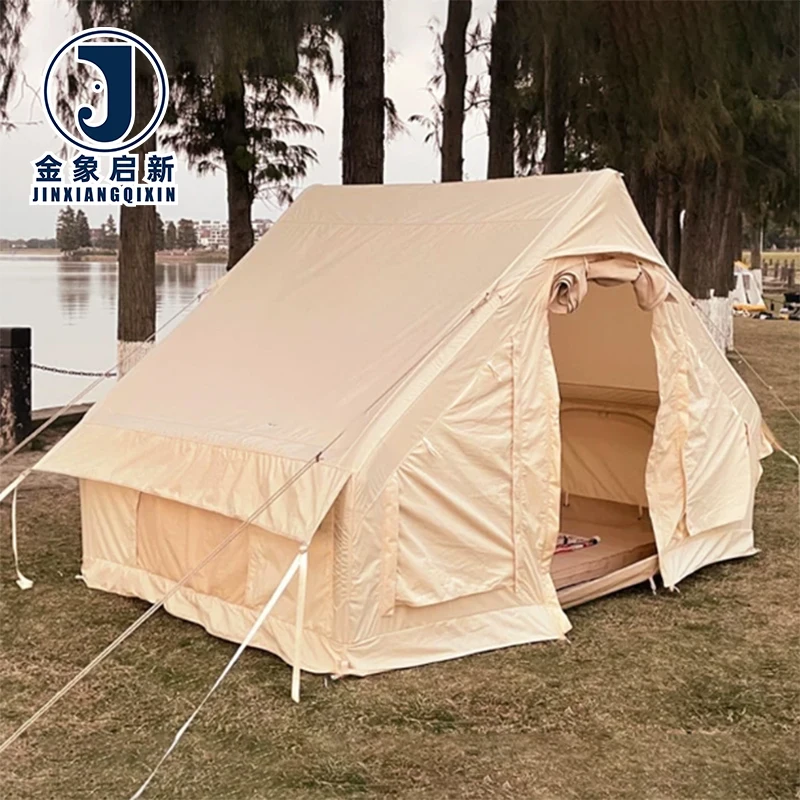
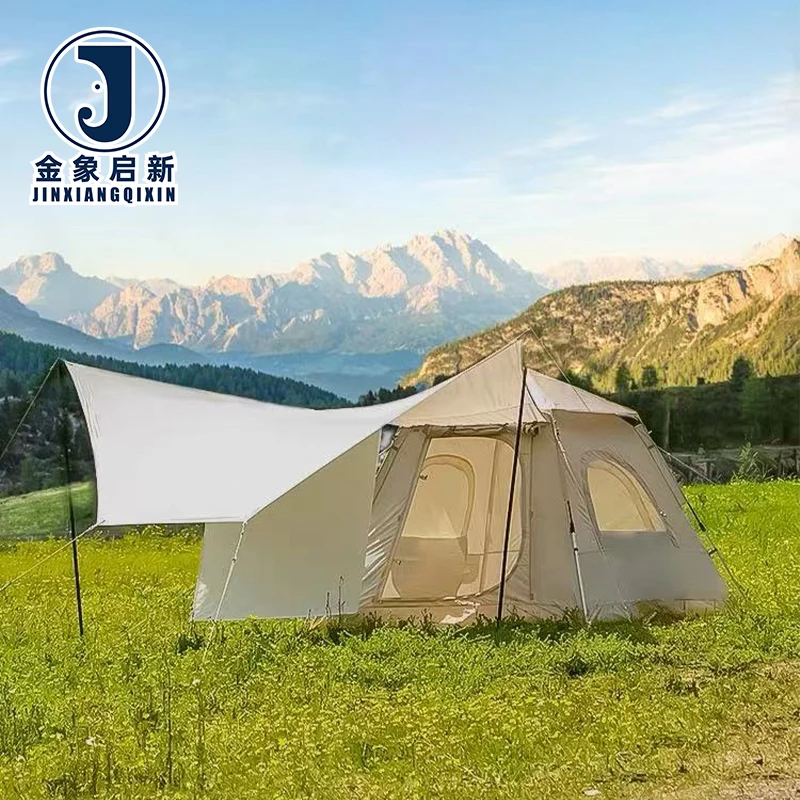
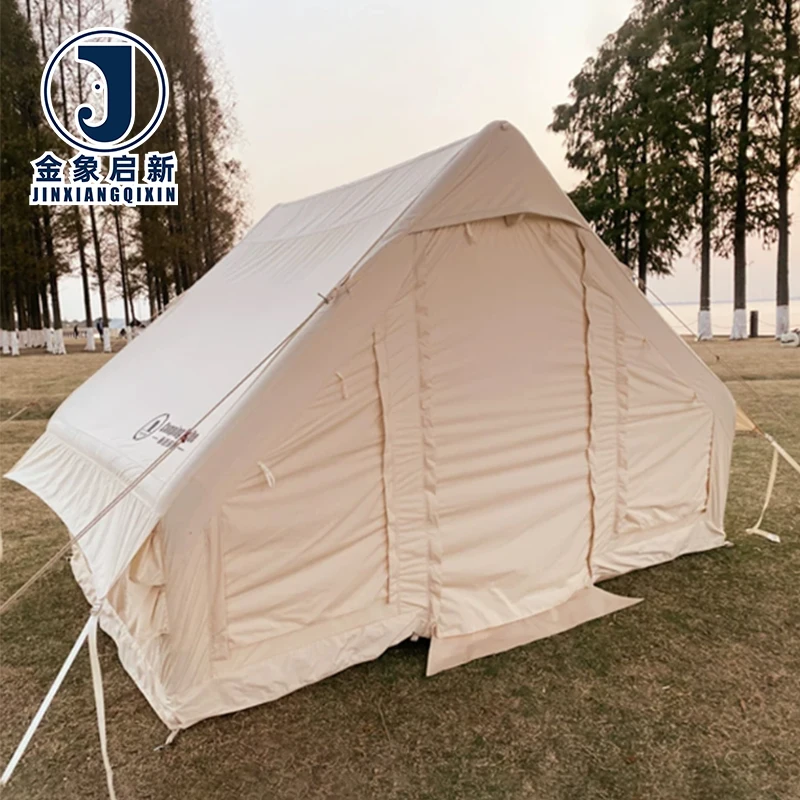
PVC Inflatable Camping Tent — waterproof, UV-resistant, tear-resistant single-layer structure with quick automatic deployment for commercial outdoor operations.
- Knife-coated PVC tarpaulin base fabric with verified GSM and coating weight control across production runs
- Welded seams engineered to outlast fabric at inflation stress and flex points
- Batch-to-batch colour consistency when multiple tents deploy side by side at a single venue
- Fire retardant to EN 13501-1, supported by test documentation for public event compliance
- OEM & ODM with sample customization, pattern printing, custom dimensions and specialized valve configurations
Backed by nearly 30 years of coated fabric process control and 100% pre-shipment inspection on every order.
Description
Process-Controlled Coated Fabric — Every PVC inflatable camping tent produced on our lines undergoes a 7-point in-process inspection, with digital quality records retained for traceability across every batch.
Technical Specifications
| Parameter | Value |
|---|---|
| Product Type | Inflatable Tent |
| Core Material | PVC tarpaulin (knife-coated fabric) |
| Construction | Single layer |
| Tear Resistance | 300N/5cm (test standard not stated) |
| UV Resistance | Available in UV-resistant grades — confirm the exposure duration required for your project |
| Fire Retardant | Available in flame retardant grades — EN 13501-1 referenced, confirm the classification level required for your market |
| Deployment | Quick automatic opening mechanism |
| Customization | OEM & ODM, custom dimensions, color matching, logo printing, pattern printing, specialized valve configurations |
| Certifications | ISO 9001, ISO 14001, ISO 45001, CE |
Application Suitability
| Application | Exposure & Requirement |
|---|---|
| Outdoor event temporary structures | Rapid deployment cycles, public safety compliance, repeated inflation and deflation stress |
| Adventure tourism base camps | Extended weather exposure, variable terrain, multi-season deployment and pack-down |
| Industrial site temporary shelters | Wind loading, dust and moisture ingress, worker safety and fire code adherence |
| Field logistics staging enclosures | Equipment protection, vehicle access clearance, frequent relocation across sites |
Why Material Specification Sheets Prevent Inflatable Tent Failures
An inflatable tent manufacturer custom build is only as reliable as the documentation backing its fabric claims.
Sourcing an inflatable tent without a verifiable material specification sheet leaves buyers exposed. The GSM printed on a quotation can differ from the actual coated weight that arrives on site. Fire-retardant claims without an EN 13501-1 classification level mean nothing when a venue safety officer asks for proof. [NEED_CITE: EN 13501-1 reaction to fire classification for construction and event materials] We have seen commercial event operators hold up entire festival schedules because the tent fabric lacked the test paperwork the local authority required. This is not a material defect — it is a documentation gap that could have been closed before production started.
Knife-Coated PVC and What It Means for Inflatable Tent Integrity
The PVC inflatable tent fabric used here is produced through a knife-coating process, where liquid PVC compound is applied directly onto the base fabric under controlled blade tension. This method builds a continuous coating layer that bonds at the molecular level with the yarn structure, producing adhesion strength that supports repeated inflation cycles without delamination. When you specify an inflatable tent manufacturer custom order, the coating weight and base fabric denier must be matched to the internal pressure the air beams will hold.
Seam Engineering at Inflation Stress Points
Inflatable tents concentrate mechanical stress at the junctions where air beams meet the canopy and where valve plates anchor to the fabric. Welded seams at these locations must exceed the tensile load of the surrounding coated fabric. Our production lines use hot-air and high-frequency welding calibrated to the specific PVC compound and coating thickness of each batch. [NEED_CITE: weld strength testing methods for PVC coated fabrics per ISO 1421] A seam that fails before the fabric does is a process control failure, not a material limitation.
Reading the Specification Sheet Beyond GSM
GSM alone does not predict how a PVC inflatable tent will perform under sustained wind load or repeated pack-and-deploy cycles. The base fabric denier and weave density determine how tear forces propagate once a puncture initiates. Coating type and weight govern flexibility at low temperatures and surface abrasion resistance. A 300N/5cm tear resistance figure only becomes meaningful when the test method is stated, because different standards use different specimen geometries and jaw speeds. Flame retardant grades must be matched to the regulatory framework of the deployment country — EN 13501-1 classifications range across multiple levels, and the grade required for a public event in Europe differs from an industrial site in Southeast Asia.
The Cost of Undocumented Specifications
When a shipment of inflatable tents arrives and the fabric weight measures below what was quoted, the buyer faces a choice: accept reduced performance or reject the container and miss the event window. Fire-retardant treatments claimed without test reports can result in venue inspectors rejecting the structure on the day of installation. Batch-to-batch colour drift across a multi-tent order becomes visible the moment the units are deployed side by side at a festival or base camp. [NEED_CITE: colour consistency measurement standards for coated textile batches] These are not theoretical risks — they are the recurring complaints that drive commercial buyers to switch suppliers mid-contract.
What This Production Facility Delivers to Your Specification
Nearly three decades of PVC coated fabric manufacturing inform every production decision, from compound formulation to final inspection. Three full production lines and 36 sets of processing equipment provide the capacity to fulfil multi-unit inflatable tent orders within compressed event timelines. A dedicated R&D team of ten technicians handles material selection, custom sizing, pattern printing and valve configuration engineering. Quality control runs through seven inspection points during production, with digital records archived for reference. Pre-production samples are developed within days so your engineering team can validate dimensions, valve placement and inflation behaviour before committing to the full run.
Documentation & Verification
- Material specification sheet confirming PVC coating type, base fabric denier and treatment grades per order
- Batch-specific inspection report covering dimensional accuracy, material thickness and inflation pressure retention
- Fire-retardant and UV test documentation matched to the classification level specified at order confirmation
- Pre-shipment inspection record with photographic evidence available for each production batch
- ISO 9001, ISO 14001, ISO 45001 and CE certificates included with every commercial shipment
Fabrication, Handling & Storage
- Hot-air welding parameters must be calibrated to the specific knife-coated PVC compound and thickness of each batch
- Valve plate bonding areas require reinforced fabric patches to distribute inflation stress across the coated surface
- Store rolled inflatable tent fabric upright in climate-controlled conditions to prevent permanent creasing at the core
- Low-temperature transport requires gradual acclimatisation before unrolling to avoid coating micro-cracking
- Clean PVC coated surfaces with neutral pH detergents only; solvents will degrade the plasticiser in the coating layer
What to Include in Your Inquiry
Provide the deployment environment, expected wind and weather exposure, and the fire safety classification your local authority requires. Specify the number of units, dimensional requirements, colour references and whether logo or pattern printing is needed. Confirm whether you need finished inflatable tents with valve assemblies installed, or coated fabric rolls cut to your own fabrication dimensions. State your sample approval timeline so the production schedule aligns with your project milestones.
Frequently Asked Questions
Q: How is fabric weight and coating thickness verified on the finished inflatable tent before shipment?
A: Each production batch undergoes a 7-point in-process inspection that includes GSM verification against the quoted specification. Digital quality records are generated at each checkpoint and stored for five years. A batch-specific inspection report accompanies every shipment, detailing dimensional accuracy, material thickness, and inflation retention test results so you can verify compliance on arrival.
Q: What flame retardant and UV test documentation is supplied with each batch?
A: Fire-retardant test documentation is provided matching the classification level confirmed at order placement, with EN 13501-1 referenced as the standard framework. UV resistance test data is supplied for grades where treatment has been applied. Buyers should confirm the specific grade required for their deployment market at the inquiry stage so the correct documentation package is compiled.
Q: What customization options are available for dimensions, colour, printing and valve configuration?
A: Full OEM and ODM capability covers custom dimensions, Pantone or RAL colour matching, logo and pattern printing, and specialized valve configurations. The ten-person R&D team develops pre-production samples for buyer approval before mass production begins. Batch-to-batch colour consistency is controlled across multi-unit orders so tents deployed side by side present a uniform appearance.
Q: How long does sample development take before bulk production can start?
A: Pre-production samples are developed within several business days once the specification is confirmed, including custom sizing, colour and valve layout. Prototype samples for more complex engineering requirements follow a similar timeline. Buyers receive the sample for dimensional and inflation testing before the production run is scheduled, preventing specification errors from carrying into the full order.
Related products
-
Tente gonflable en PVC de luxe pour le glamping extérieur imperméable avec ouverture automatique rapide, design pliable quatre saisons et pompe.
Read more -
High Quality Four-Season Inflatable Tent for Camping Durable PVC Waterproof All-Weather Resistance Quick Automatic Opening
Read more -
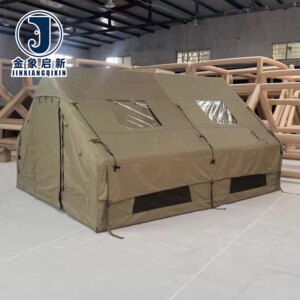
Waterproof Inflatable Camping Tent Outdoor Easy Setup Air Tent for Camping
Read more -
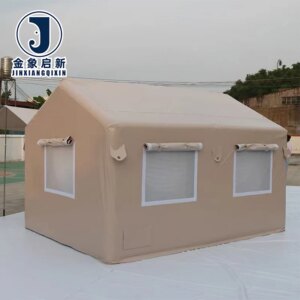
Tente événementielle gonflable quatre saisons extérieure en PVC étanche ouverture automatique rapide pour 6 à 8 personnes logo personnalisé
Read more