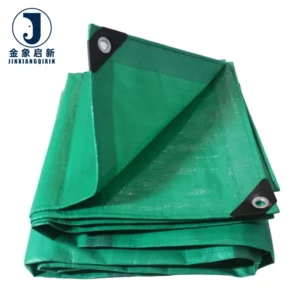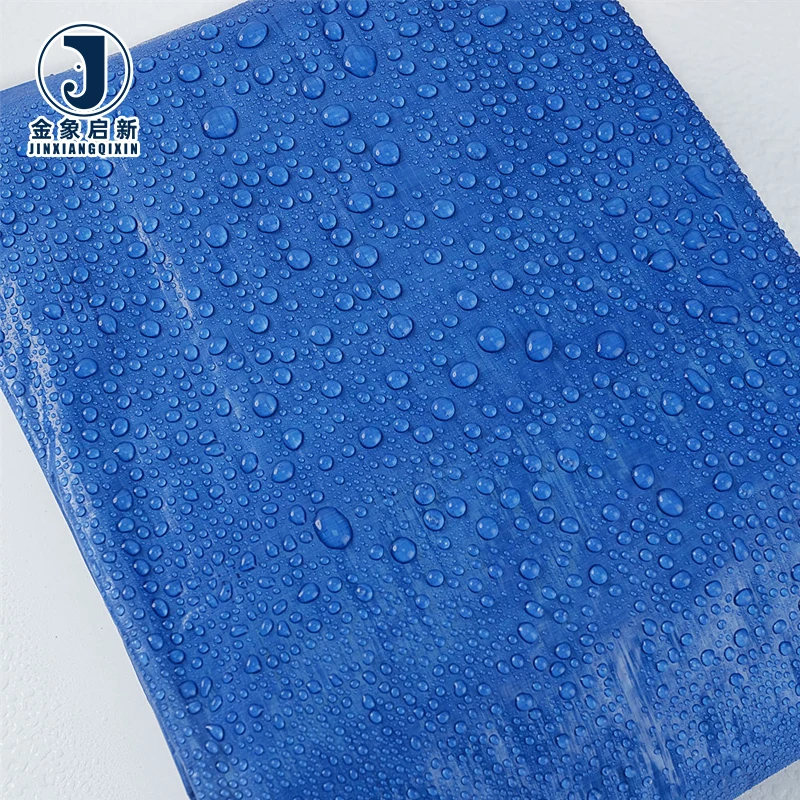
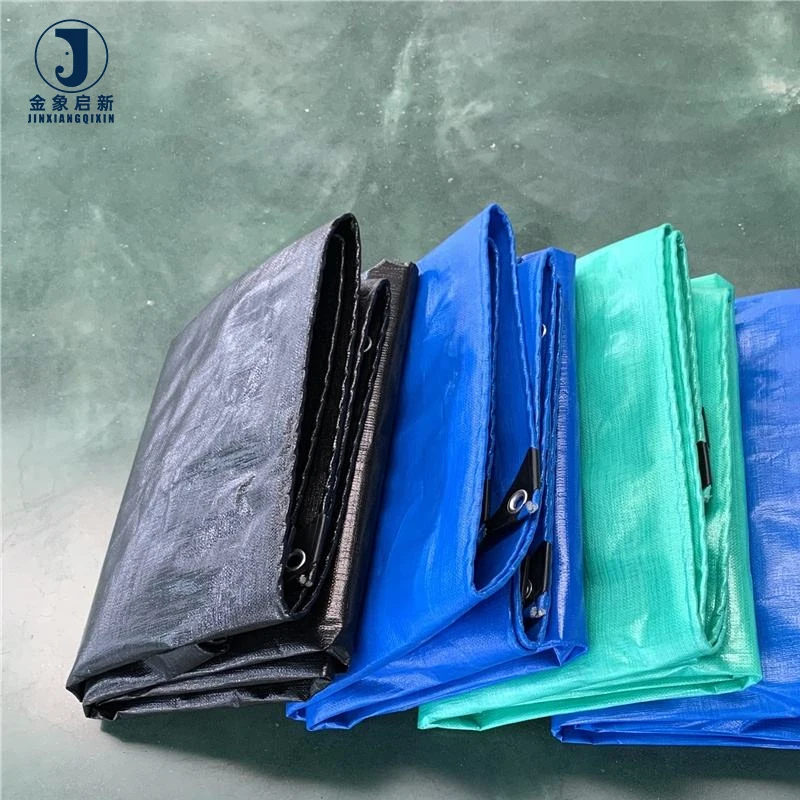
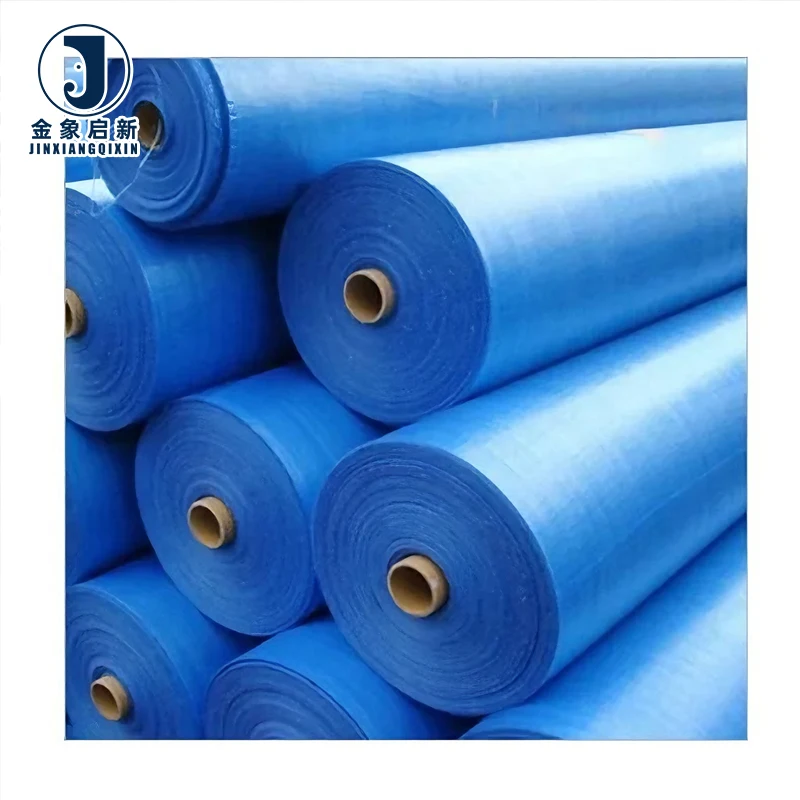
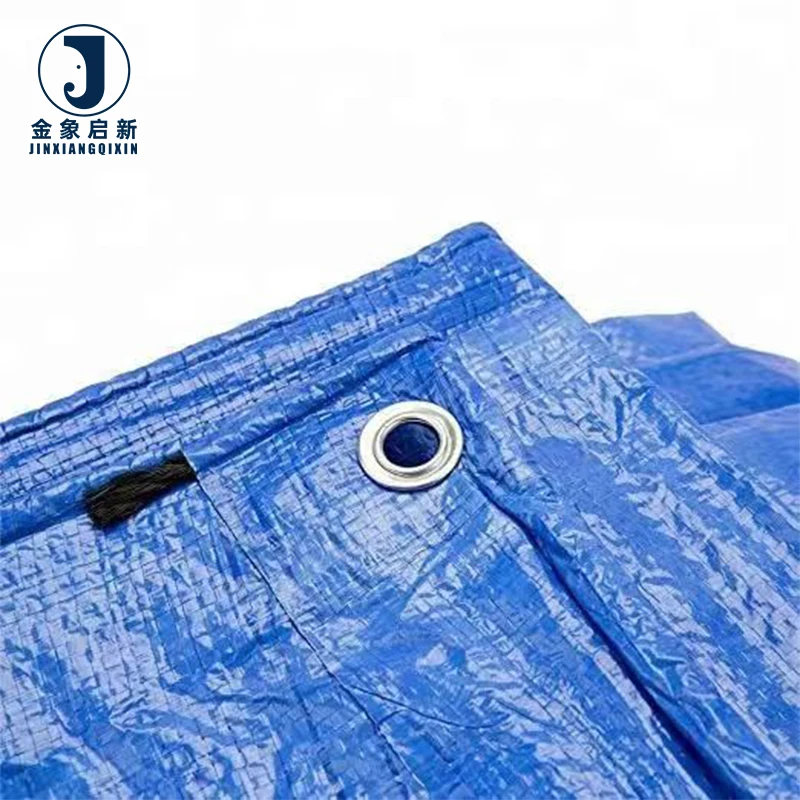
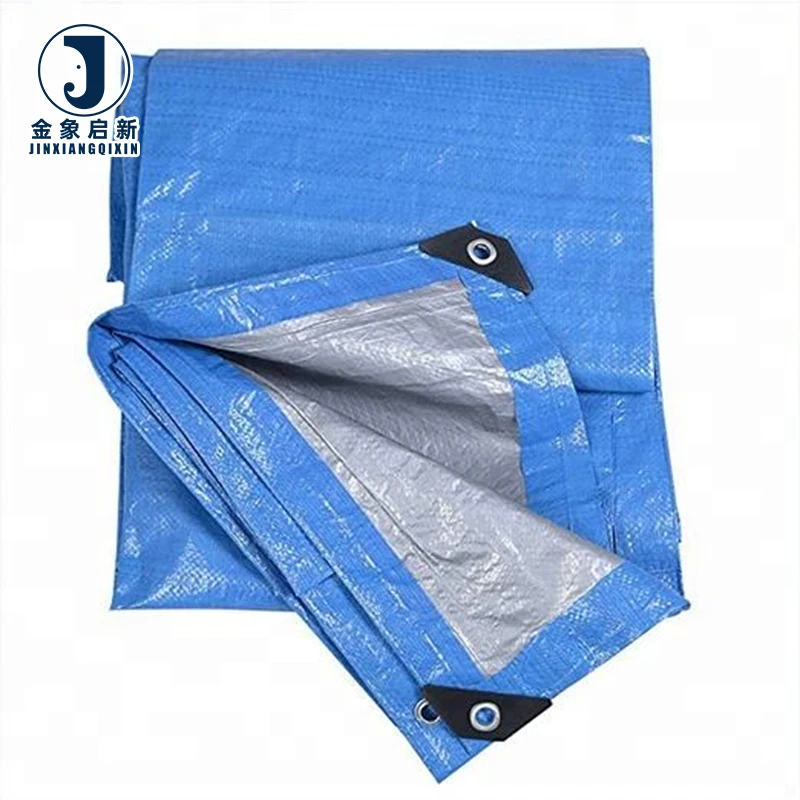
PE Tarpaulin, 40–500 g/m², Mesh 5×5 to 20×20 — lightweight (80–110 g/m², 8×8), medium (120–150 g/m², 10×10) and heavy-duty (160–240 g/m², 12×12) tiers with anti-UV, mildew-proof and anti-aging treatment.
- Knitting density controls meridian and latitude tensile strength — choose the right grade for load and exposure, not just the highest GSM
- Reinforced corners and custom eyelet spacing at 39.4 inches secure tie-down under transport vibration
- Custom size, color and print confirmed by pre-production sample, with 100% inspection before dispatch
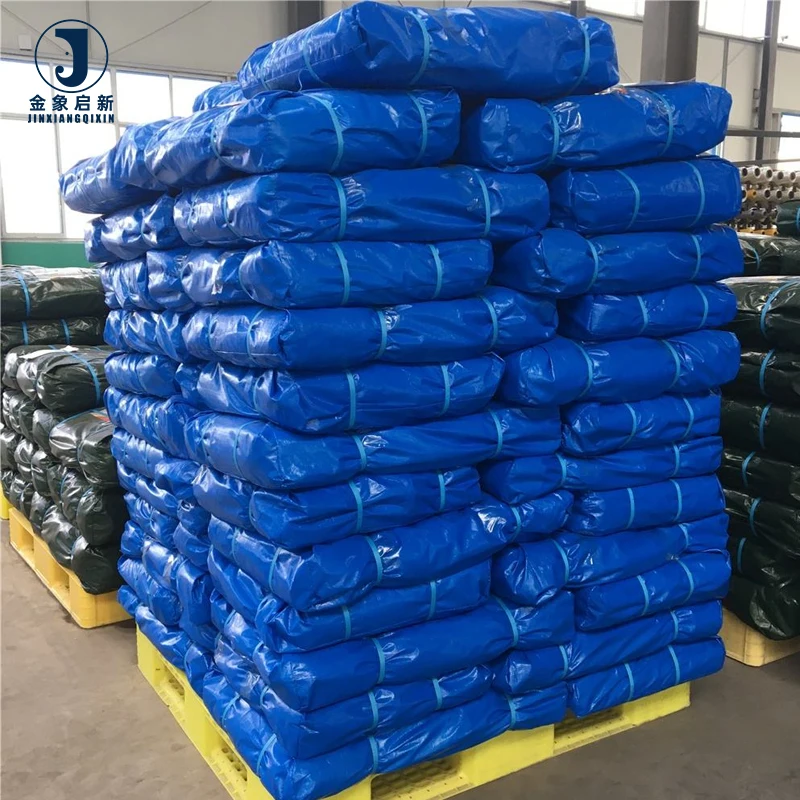
Three full production lines and 36 sets of equipment support bulk roll orders with verified GSM and consistent color across batches.
Description
Process-Controlled Weave and Coating — Three dedicated production lines and 36 sets of equipment allow every PE tarpaulin roll to pass through 100% pre-shipment inspection before dispatch, ensuring the GSM and mesh density you specify are the ones you receive.
Technical Specifications
| Parameter | Value |
|---|---|
| Product Type | PE Tarpaulin |
| Material | Polyethylene (PE) |
| Weight Range | 40 g/m² to 500 g/m² (confirm the grade required for your application) |
| Lightweight Grade | 80–110 g/m², 0.18–0.22 mm thickness |
| Medium Grade | 120–150 g/m², 0.22–0.28 mm thickness |
| Heavy-Duty Grade | 160–240 g/m², 0.30–0.35 mm thickness |
| Mesh Knitting Density | 8×8 (lightweight) / 10×10 (medium) / 12×12 (heavy-duty) |
| Tensile Strength (Lightweight) | Meridian 300–500 / Latitude 250–450 N/5cm (test basis not stated in source) |
| Tensile Strength (Medium) | Meridian 500–800 / Latitude 400–700 N/5cm (test basis not stated in source) |
| Tensile Strength (Heavy-Duty) | Meridian 900–1200 / Latitude 700–1000 N/5cm (test basis not stated in source) |
| Mesh Weave Range | 5×5 to 20×20 |
| Eyelet Center Spacing | 39.4 Inches |
| Surface Treatment | Double waterproof surfaces |
| UV and Anti-Aging | UV, mildew-proof and anti-aging treatment available — confirm the grade required for your market |
| Reinforcement | Reinforced corners |
| Size and Color | Custom size, custom color |
| Certification | ISO, CE |
Application Suitability
| Application | Exposure & Requirement |
|---|---|
| Truck and trailer load cover | Road vibration, tie-down stress at corners, wind flap, rain and dust ingress |
| Agricultural stock and pond cover | Continuous sun exposure, moisture retention, mildew risk, light mechanical contact |
| Construction site enclosure | Scaffold abrasion, UV degradation, wind load on eyelets, temporary weather barrier |
| Outdoor awning and shade sail | Direct sunlight, thermal cycling, tension at fixing points, rainfall runoff |
| Warehouse and industrial storage cover | Forklift contact, stacking pressure, dust and moisture protection, extended static load |
Why the Quoted GSM Is Not Always the GSM You Receive
Weight verification at the production stage, not just on the quotation, is what separates a reliable supply from a field failure.
Buyers regularly specify a PE tarpaulin at a certain GSM based on the supplier’s quote, only to find the delivered rolls lighter than agreed. This discrepancy often surfaces after installation, when the material tears under wind load or fails at the hem during transport. The root cause is typically an absence of in-process weight checks and no pre-shipment verification against the quoted specification. [NEED_CITE: coated fabric GSM verification and inspection standards]
Mesh Density and Weight Grade Alignment
Each weight tier in this PE tarpaulin range is paired with a specific knitting density — 8×8 for lightweight, 10×10 for medium, 12×12 for heavy-duty. This alignment ensures the base fabric structure supports the coating weight applied to it. A light mesh paired with a heavy coating leads to stiffness and cracking; a dense mesh under-coated leaves gaps that compromise waterproofing. Selecting the correct combination is critical for the custom PE Tarpaulin order to perform as intended across its service life.
Corner Reinforcement and Tie-Down Integrity
Transport and construction applications place the highest stress at corners and eyelet positions. The reinforced corners on this PE tarpaulin address the failure point where tie-down ropes and bungee cords concentrate load. Without reinforcement, the eyelet pulls through the fabric under tension, especially when the load shifts during transit or wind catches a loosely secured cover. Specifying reinforced corners alongside the correct eyelet spacing reduces the risk of in-field repair and load exposure. [NEED_CITE: tie-down load distribution and corner reinforcement for tarpaulin covers]
How Base Fabric Density and Coating Weight Interact
The relationship between knitting density and GSM determines the overall mechanical behaviour of the material. A higher mesh count provides more yarn crossover points per square inch, improving tear propagation resistance — once a tear starts, the dense weave arrests it at the next intersection. Coating weight contributes to stiffness and waterproof integrity but does not compensate for a weak base fabric. This is why the lightweight grade at 80–110 g/m² uses an 8×8 weave for agricultural covers where flexibility matters, while the heavy-duty grade at 160–240 g/m² uses a 12×12 weave for applications demanding structural rigidity. Tensile values across meridian and latitude directions reflect this engineered balance between base fabric and coating contribution.
The Hidden Cost of Specifying on Price Alone
When PE tarpaulin is sourced primarily on unit cost, the first compromise is usually coating weight. A thinner coating reduces material expense but leaves the base fabric exposed to UV degradation and moisture penetration. Over time, the fabric becomes brittle at fold lines and fails at welded seams before the body of the material does. Buyers who receive rolls lighter than quoted often trace the issue back to a supplier who did not verify GSM at each production stage. Colour variation between rolls in the same shipment is another consequence of inconsistent coating application — visible once panels are installed side by side on a structure or vehicle. [NEED_CITE: batch-to-batch colour consistency and coating weight control in PE tarpaulin production]
Why Procurement Teams Source This PE Tarpaulin Here
Three full production lines running dedicated PE tarpaulin output mean that bulk orders maintain schedule reliability without competing for machine time with other coated fabric categories. A 10-person R&D team handles material selection, custom sizing and sample development, producing samples within days for pre-production approval. Every roll undergoes dedicated QA/QC at each production stage, with 100% inspection before shipment — the weight and mesh density are checked against the purchase specification, not assumed from the batch setting. Custom widths, lengths and colours are supported with sample confirmation, eliminating the risk of bulk production against an unapproved reference. Documentation accompanies each dispatch, providing the traceability that procurement and compliance teams require.
Documentation & Verification
- Material specification sheet stating GSM, base fabric mesh count and coating type per roll
- Pre-shipment inspection record verifying actual weight against the quoted specification
- ISO and CE certificates included with each shipment for compliance filing
- Roll packing list detailing size, colour and weight grade for receiving inspection
- UV and anti-aging treatment test report available on request — confirm the grade required
Fabrication, Handling & Storage
- Heat welding parameters should match the PE coating grade — lightweight grades require lower temperature settings than heavy-duty
- Reinforced corners should be specified at all tie-down points to prevent eyelet pull-through under load
- Store rolls horizontally on pallets to avoid permanent creasing in medium and heavy-duty grades
- Avoid folding lightweight 80–110 g/m² grades at sharp angles during installation to prevent coating crack
- Clean double waterproof surfaces with mild detergent; solvent-based cleaners may degrade the PE coating layer
- Cut panels with a sharp blade on a flat surface to ensure clean edges that weld without fraying
What to Include in Your Enquiry
To receive an accurate specification recommendation and sample, share the intended application and the environmental conditions the cover will face — UV exposure duration, wind load, chemical contact or mechanical abrasion. Specify whether you require roll stock or finished cut-to-size panels with eyelets and hemming. If your market has fire classification or anti-static requirements, state the applicable standard so the correct treatment grade can be confirmed before sampling.
Frequently Asked Questions
Q: How is GSM verified before and after shipment?
A: Each PE tarpaulin roll is weighed and measured during production to confirm it meets the quoted GSM. A pre-shipment inspection record documents the actual weight per roll, which is compared against the purchase specification before dispatch. This record is included with the shipping documentation so the buyer can cross-check on arrival without needing independent lab testing.
Q: What UV test basis supports outdoor durability claims?
A: UV treatment is applied at the coating stage and is available in grades suited to different exposure durations. The specific test basis and performance classification depend on the grade selected. Request the test report for the grade relevant to your application and market before confirming your order, so the specification aligns with local compliance or project requirements.
Q: How is colour consistency maintained across rolls?
A: Colour masterbatch is dosed at the coating stage under controlled settings, and each batch is compared against the approved sample reference. The pre-shipment inspection includes a visual check for shade variation between rolls in the same order. For large orders spanning multiple production runs, a single master sample is held as the benchmark throughout.
Q: What are the minimums and lead times for custom sizes?
A: Custom sizes and colours are supported across all weight tiers, with samples developed within days for pre-production approval. Minimum order quantities and lead times depend on the selected GSM grade, colour and whether the order is for roll stock or finished cut panels. Confirm these details at the quotation stage based on your specific configuration.
Q: How do I choose the right width and roll length?
A: The optimal width depends on your cutting pattern and the need to minimise welded seams in the finished cover. Wider rolls reduce seam count but require handling equipment for unrolling and cutting. Share your panel dimensions and fabrication method, and a roll width and length recommendation will be provided to maximise material utilisation and reduce waste.
Related products
-
Custom PE Tarpaulin for Industrial Use – Full Range
Read more -
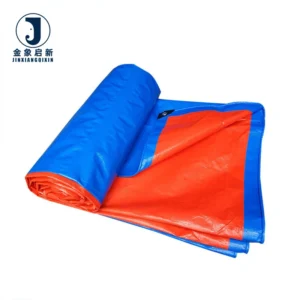
Custom Made PE Tarpaulin with Eyelets – Waterproof Tear-Resistant
Read more -
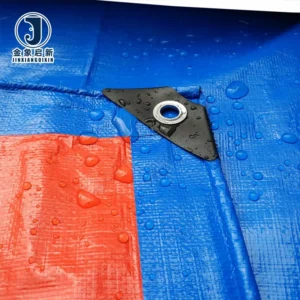
JX PE Woven Plain Resistance Tarpaulin Tent with Durable Waterproof Features for Outdoor Use
¥0.30 Select options This product has multiple variants. The options may be chosen on the product page -
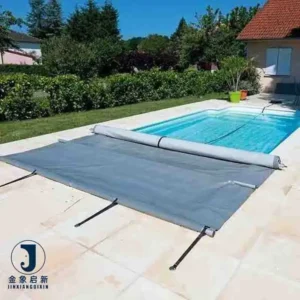
Waterproof PE Tarpaulin Fabric 100-300gsm Anti-Uv Outdoor Use for Boys & Girls Activity Ponds
¥0.31 Select options This product has multiple variants. The options may be chosen on the product page