Supported by a 10-person R&D team handling custom widths, colours and sample development within days, with 100% pre-shipment inspection ensuring every roll meets specification before dispatch.
Description
Proven Process Control — Nearly 30 years focused on coated fabric, with deep process control over coating weight and adhesion ensuring roll-to-roll consistency across bulk PE tarpaulin orders.
Technical Specifications
| Parameter | Value |
|---|---|
| Product Type | PE Tarpaulin |
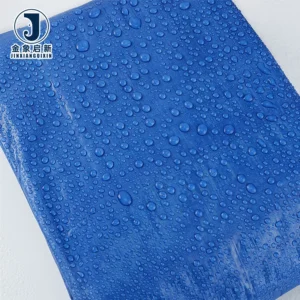
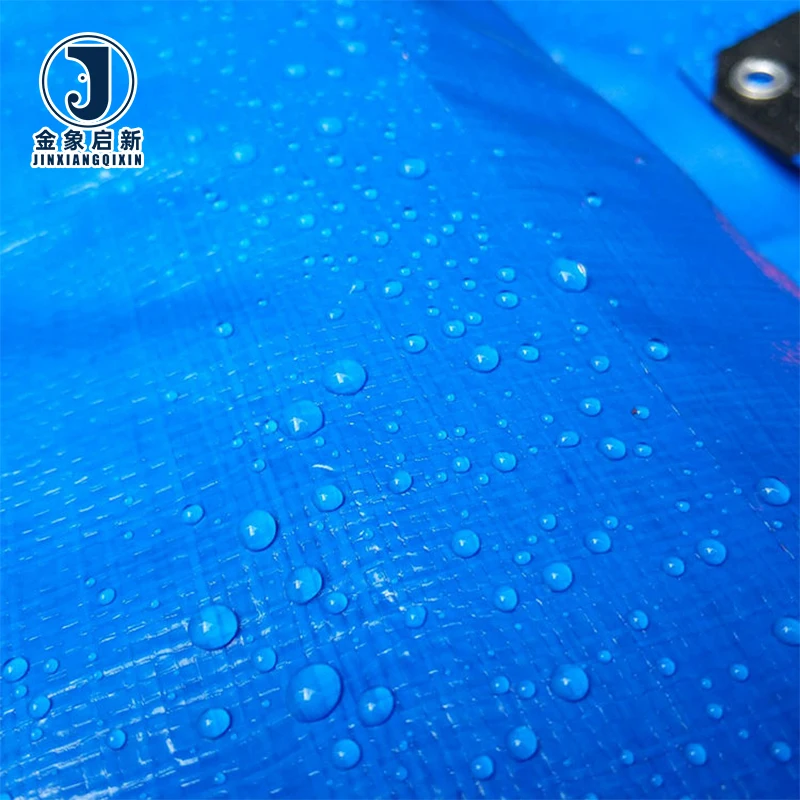
| Material | HDPE weaving with LDPE lamination on both sides |
| Available GSM | 50gr/m² ~ 220gr/m² |
| Thickness | 0.2–0.4mm / 8 mil–16 mil / Custom |
| Roll Width Options | 6ft, 8ft, 10ft, 12ft, 2m, 4m, 6m |
| Roll Length Options | 100 yards, 100 meters, or as per buyer’s wish |
| Finished Sizes | 2x2m, 3x3m, 3x5m, 4x4m, 4x5m, 4x6m, 4x8m, 4x10m, 5x5m, 5x6m, 5x8m, 5x10m, 6x6m, 6x8m, 6x10m, 8x10m, and more |
| Weave Density Options | 6×6, 6×7, 7×7, 7×8, 8×8, 9×9, 8×10, 10×10, 12×12, 14×14, 14×16 |
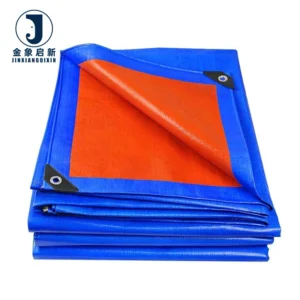
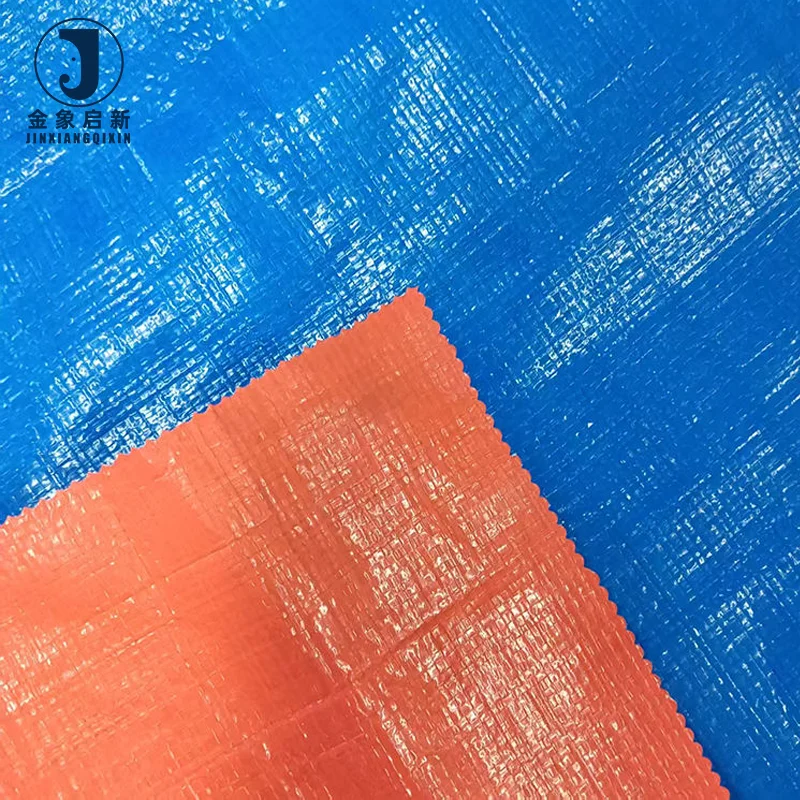
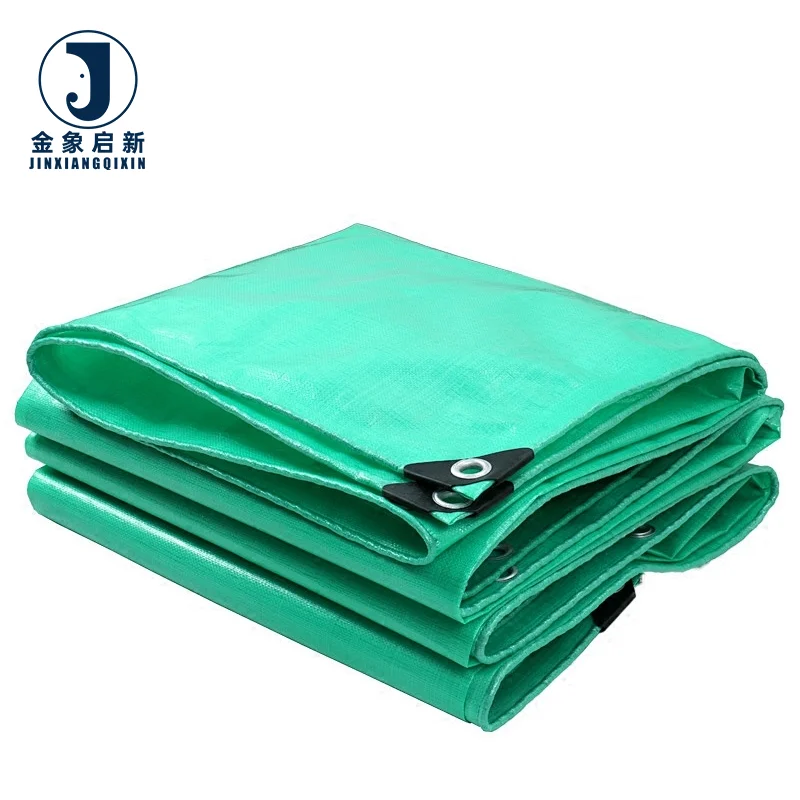
| Color Options | Blue, Blue/Orange, Green, Grey, Black, Clear, Grey/Green, Orange, or any other color |
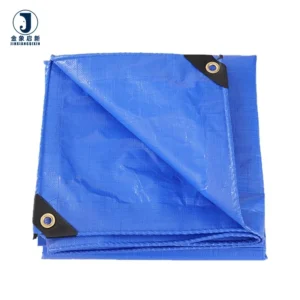
| Edge Reinforcement | All four edges reinforced with PP rope in hem |
| Eyelets | Galvanized eyelets every 3ft or 1 meter interval |
| Corners | Reinforced plastic corners |
| Waterproof | Yes |
| Tear Resistant | Yes |
| Mildew Proof | Yes |
| Anti-aging | Yes |
| UV Treatment | Available (test basis not stated in source — confirm the grade required for your market) |
| Certifications | ISO, CE |
Application Suitability
| Application | Exposure & Requirement |
|---|---|
| Truck and trailer load covers | Road abrasion, wind uplift, UV exposure, frequent handling and tie-down stress |
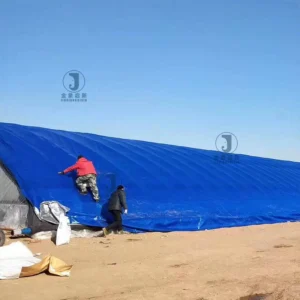
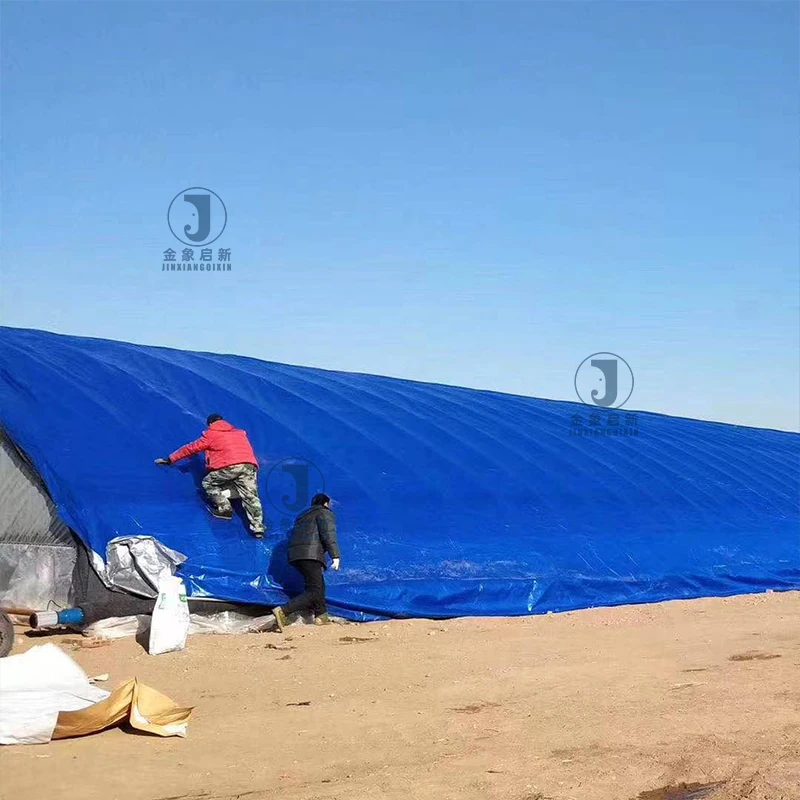
| Hay, timber and crop covers | Moisture ingress, prolonged sun exposure, tearing from sharp edges |
| Construction scaffolding wraps | Wind load, debris impact, site dust and chemical exposure |
| Pond and reservoir liners | Permanent water contact, soil chemistry, puncture from substrate |
| Container and boat covers | Salt spray, stacking pressure, UV degradation during transit or storage |
| Garden furniture and gazebo covers | Seasonal UV, rain pooling, mildew in humid conditions |
Why Batch Consistency Matters More Than Quoted GSM for PE Tarpaulin Roll Buyers
A quoted GSM only holds value when every roll in the container arrives at that same weight.
Procurement teams sourcing wholesale PE tarpaulin regularly face a frustrating scenario: the specification sheet confirms the agreed weight, yet rolls pulled from different positions in the same container show visible thickness variation. When material weight drifts even slightly across a production run, downstream consequences compound — lighter rolls tear during installation, heavier rolls throw off container weight calculations, and colour shifts between rolls become obvious once tarps are hung side by side on a job site. [NEED_CITE: pre-shipment inspection protocols for coated fabric rolls]
This is not a marginal issue. Distributors and importers managing container-load volumes need assurance that roll-to-roll weight, colour and weave density remain within tolerance across the entire shipment, not just on the sample roll sent for approval.
Weave Density and GSM Mapping for PE Tarpaulin Selection
The relationship between weave density and GSM determines how the fabric performs under load. A 6×6 weave at 50–60gsm serves light-duty temporary covers, while a 14×14 weave at 150–250gsm handles repeated installation and higher wind loads. Buyers sourcing PE tarpaulin roll stock should specify the weave count alongside the target GSM to eliminate ambiguity at the production stage.
Each weave density tier corresponds to a specific GSM band in this range. Confirming the exact combination during the quotation stage prevents substitutions and ensures the material arriving in the container matches the performance profile the end user expects. The HDPE weaving with LDPE lamination construction maintains dimensional stability across all available density grades.
Colour Matching Across Multi-Roll Shipments
Colour consistency across a large-volume order is one of the most frequent complaints in tarpaulin procurement. When rolls from the same PE Tarpaulin order show visible shade differences after installation, the entire batch can appear mismatched on a single job site. [NEED_CITE: colour tolerance standards for laminated polyethylene fabrics]
Production-stage colour control requires matching the LDPE lamination compound batch across every roll in the order. For buyers specifying custom colours or dual-tone options like Blue/Orange or Grey/Green, requesting a signed colour reference swatch before full production begins provides a verifiable benchmark. This step protects both the distributor and the end user from costly rejection claims.
How HDPE Weave and LDPE Lamination Interact to Define Performance
The base fabric in this PE tarpaulin range is woven HDPE, which provides the structural skeleton — the denier and weave count determine how forces distribute across the sheet when pulled or punctured. The LDPE lamination applied to both sides seals the weave, delivers waterproofing, and protects the yarn from abrasion and UV exposure.
GSM alone does not predict strength; a 100gsm fabric woven at 10×10 can outperform a 120gsm fabric woven at 8×8 because the tighter weave limits tear propagation. Thickness in the 0.2–0.4mm range reflects the total lamination build-up, which influences puncture resistance and stiffness during cold-weather handling. The PP rope hem reinforcement at all four edges and galvanized eyelets spaced every 3ft or 1 meter work together with the base fabric to distribute tie-down loads rather than concentrating stress at the attachment points. Reinforced plastic corners address the highest-wear zones on finished tarpaulin sheets.
The Hidden Cost of Underspecifying Weave Density
Selecting a lower weave density to reduce unit cost often triggers failure at the exact point where the cover flexes most — around the eyelets and along the hem. When the base fabric lacks sufficient yarn density, the lamination cracks under repeated stress cycles, and the tear propagates along the weave direction rather than being arrested by cross-yarns. [NEED_CITE: tear propagation behaviour in woven polyethylene laminates]
For agricultural covers exposed to wind uplift or construction scaffolding wraps subject to gust loading, specifying a weave density matched to the actual load environment prevents premature replacement. The cost difference between adjacent weave tiers is small relative to the total installed cost, yet the performance gap is significant in field conditions.
Why Distributors Source PE Tarpaulin Rolls Here
Dedicated QA/QC at every production stage with 100% inspection before shipment means every roll is weighed and checked against the stated GSM before it enters the container. This directly addresses the most common buyer complaint — material arriving lighter than agreed.
Three full production lines and 36 sets of professional equipment support bulk roll output with consistent weave tension and lamination thickness across the production run. Samples are developed within days for custom width, colour or treatment requirements, allowing buyers to verify material before committing to a full container order. A 10-person R&D team handles specification matching, ensuring the weave density, GSM and lamination weight align with the buyer’s application rather than defaulting to a generic grade.
Documentation & Verification
- Material specification sheet stating GSM, HDPE base fabric weave, and LDPE lamination weight per roll
- UV treatment test report where applicable — confirm grade required for your market
- Pre-shipment inspection record verifying GSM and colour consistency roll by roll
- Roll packing list with individual roll weights and dimensions for container loading verification
- ISO and CE certificates covering production facility and product compliance
- Certificate of origin and customs documentation for international PE tarpaulin shipments
Fabrication, Handling & Storage
- Heat-seal LDPE lamination at moderate temperature settings to avoid burning through the thinner 0.2mm grades
- Install galvanized eyelets through the PP rope hem to spread tie-down load across the reinforced edge
- Store rolls on flat pallets to prevent permanent creasing in the HDPE weave structure
- Unroll and allow the material to relax before cutting, especially in cold weather when LDPE stiffens
- Use mild detergent for cleaning; avoid solvents that degrade the LDPE lamination surface
- Patch tears with LDPE-compatible tape applied to both sides of the HDPE woven base fabric
What to Include in Your PE Tarpaulin Inquiry
Provide the target application and exposure conditions — whether the material will face continuous UV, wind uplift, or water immersion — so the correct weave density and GSM can be recommended. Specify roll width and length preferences, colour reference, and whether you require finished sheets with eyelets or raw roll stock. Confirm the container volume and any market-specific compliance requirements to ensure documentation matches your destination port.
Frequently Asked Questions
Q: How is GSM verified upon arrival and what is the tolerance?
A: Every roll undergoes weight verification against the stated GSM during pre-shipment inspection. We provide a roll-by-roll weight record so you can cross-check on arrival. Tolerance expectations should be confirmed at the quotation stage based on the specific weave density grade you select, as lighter weaves have different production tolerances than heavier constructions.
Q: How do you ensure colour consistency across multiple rolls in the same shipment?
A: Colour matching is controlled by using the same LDPE lamination compound batch across your entire order. We recommend approving a physical colour swatch before full production begins. The pre-shipment inspection includes a visual check for shade variation between rolls, and any deviation is flagged before the container is loaded.
Q: What are the container loading capacities for rolls versus bales?
A: Loading capacity depends on packing method and roll dimensions. Rolls packed on pallets maximise weight utilisation, while bale-packed finished sheets optimise volume. Confirm your preferred packing format and the specific roll width and length at the inquiry stage so we can provide an accurate container loading plan for your order.
Q: What are the minimum order quantities for custom widths and colours?
A: Custom widths beyond the standard 6ft to 6m range and non-stock colours are available subject to production run requirements. MOQ depends on the specific GSM grade and whether the order is roll stock or finished sheets. Share your target dimensions and colour reference, and we will confirm the minimum alongside your quotation.
Q: Can you supply PE tarpaulin with UV treatment backed by a test report?
A: UV treatment is available across the range. The specific test basis and exposure rating should be confirmed based on your destination market and application. Request the test report at the quotation stage so the documentation aligns with any compliance or performance claims you need to present to your end customers.
Related products
-
PE Coated Blackout Tarpaulin Poly Tarp with UV Protection Standard Size Fabric Sheet for Agriculture & Industrial Use
¥0.35 Select options This product has multiple variants. The options may be chosen on the product page -
Custom PE Tarpaulin for Industrial Use – Full Range
Read more -
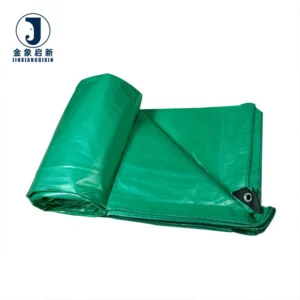
Heavy Duty Organic Breathable PVC Coated Weft Tarpaulin 400gsm Waterproof UV Resistant for Trucks Buildings Agriculture Boys
¥0.87 Select options This product has multiple variants. The options may be chosen on the product page -
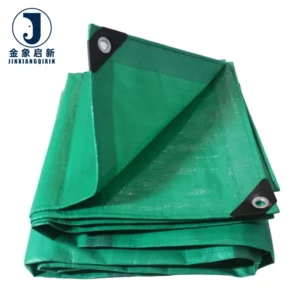
Waterproof Organic Blackout PE Coated Medium Duty All-Purpose Truck Tarpaulin for Outdoor Use Boys
¥6.81 Select options This product has multiple variants. The options may be chosen on the product page