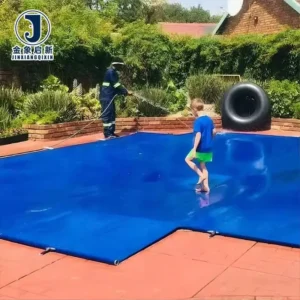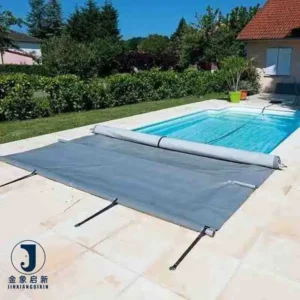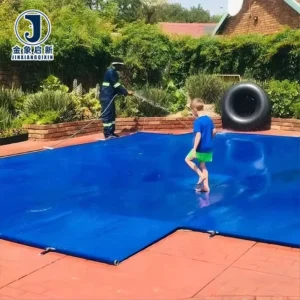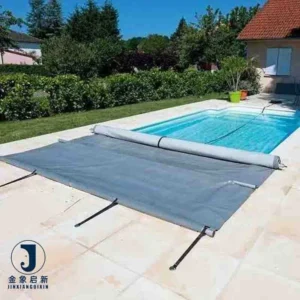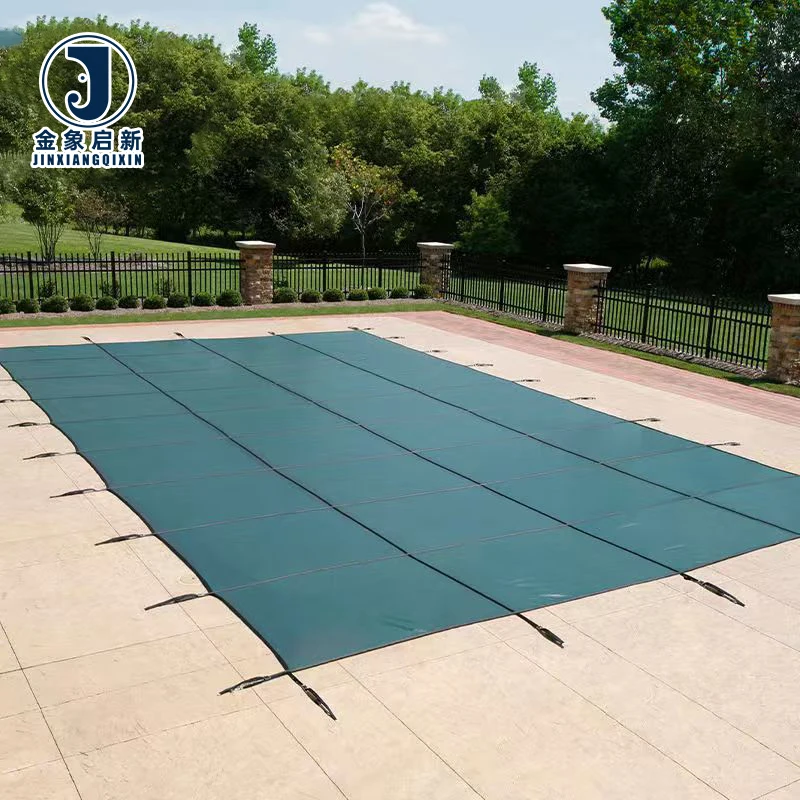
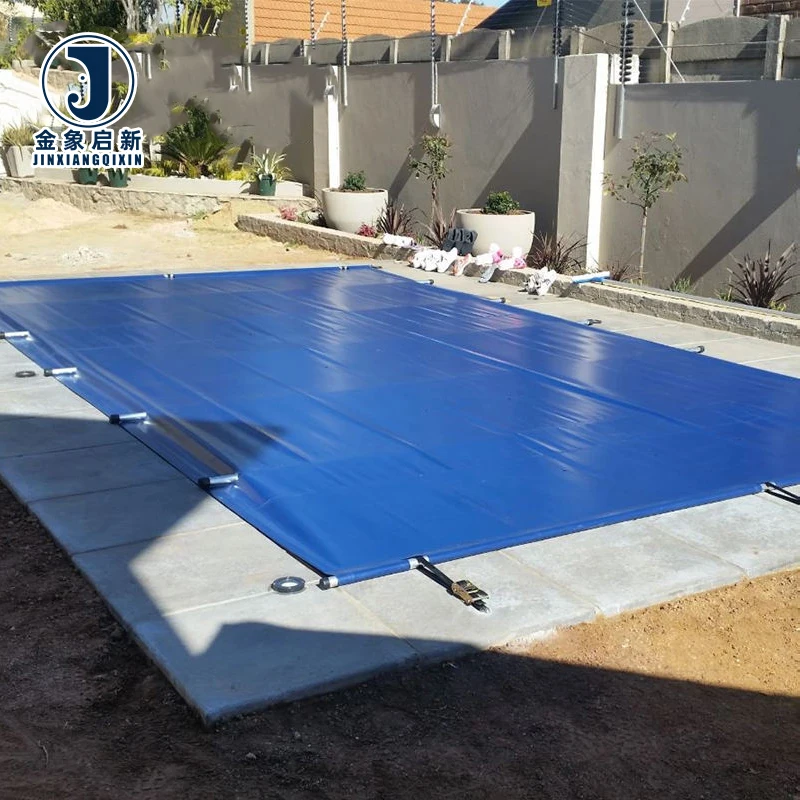
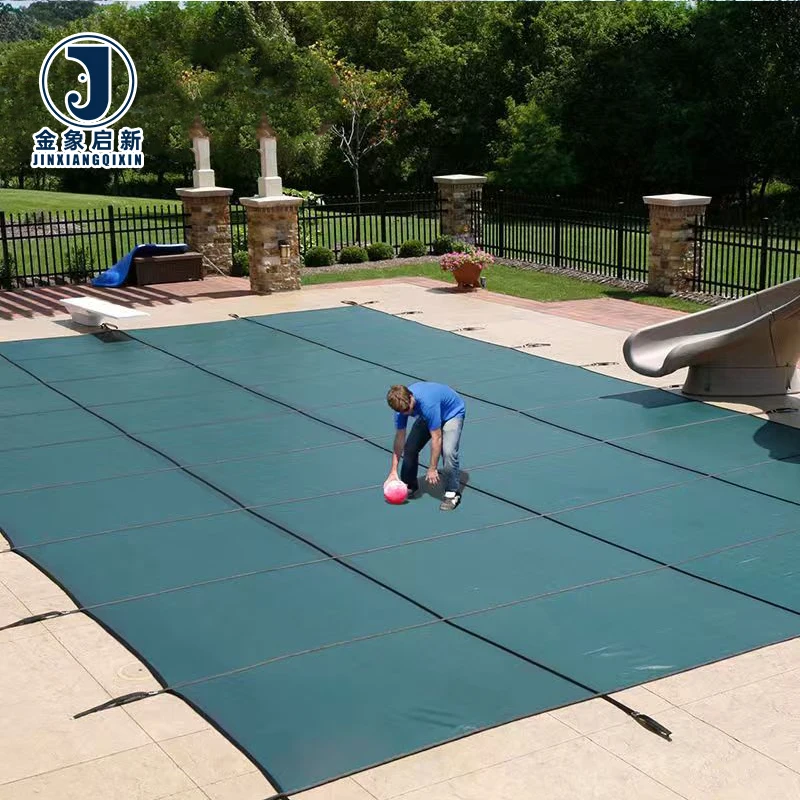
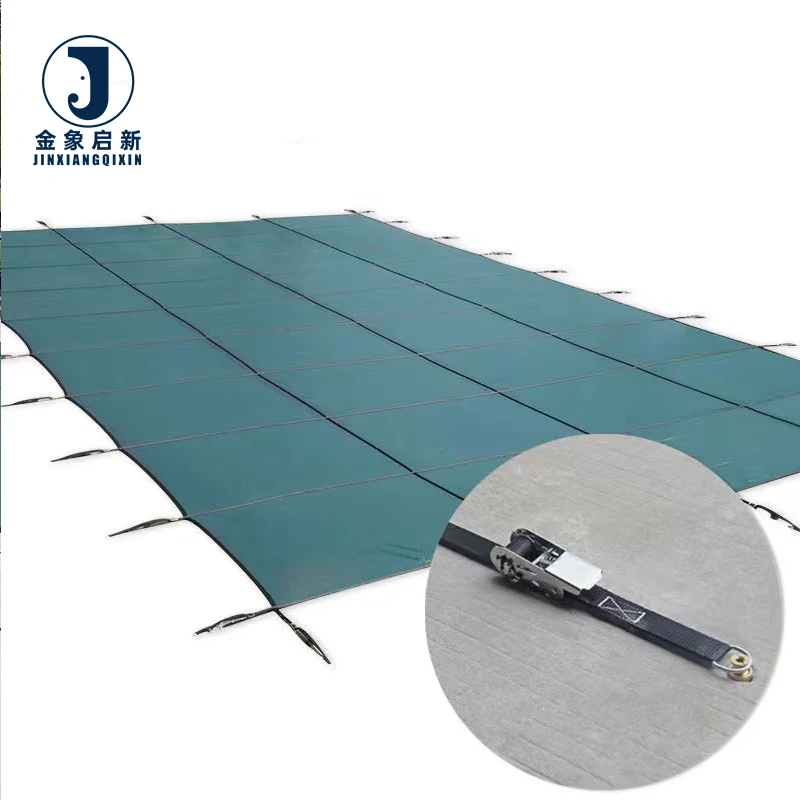
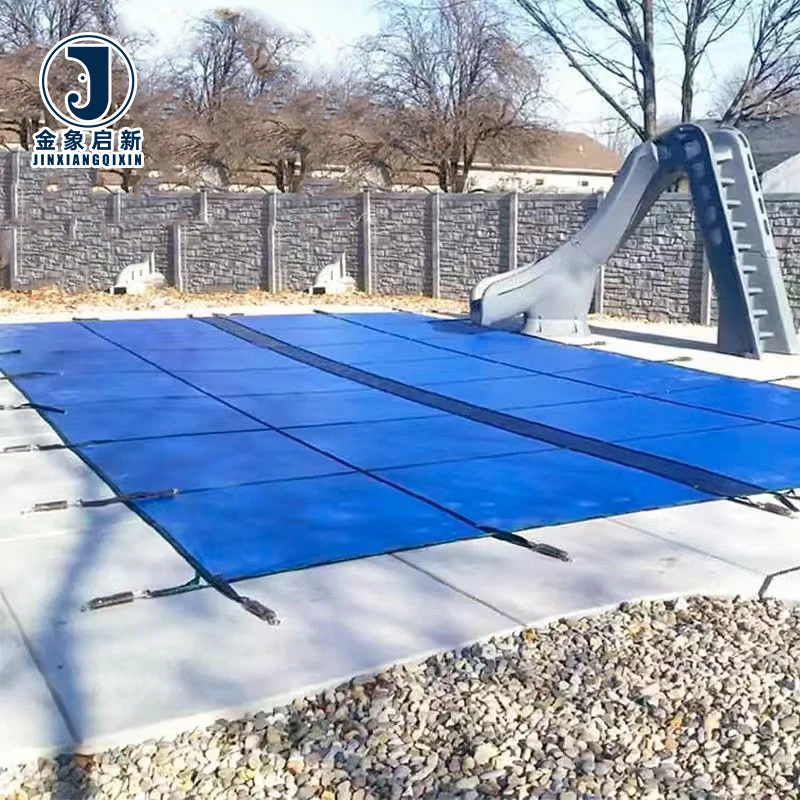
PVC Tarpaulin Pool Cover — 500D-500D base, 450-900 g/m², integrated hot-press construction with no stitching.
- Waterproof, anti-UV and flame retardant treatments available with test documentation
- Custom rectangular, square or round shapes to exact pool measurements
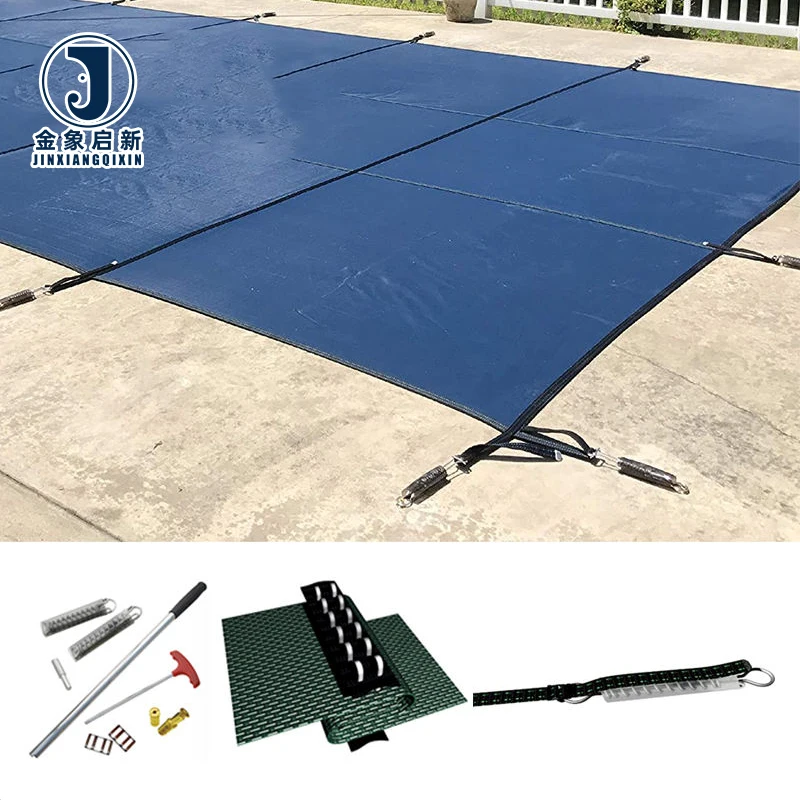
- Three installation systems: brass anchors, aluminium battens with ratchets, or water tube loops
Coating weight and base fabric density jointly determine tensile and tear performance for long-term pool safety coverage.
Supported by nearly 30 years of coated fabric process control and 100% pre-shipment inspection on every order.
Description
Integrated Pressing Mastery — Our 10-person R&D team develops custom PVC pool cover solutions with integrated pressing construction, eliminating stitched seam failures that compromise waterproof integrity.
Technical Specifications
| Parameter | Value |
|---|---|
| Product Type | PVC Tarpaulin Pool Cover |
| Base Fabric | 500D-500D Polyester |
| Coating Material | PVC (double-sided coating) |
| Weight Range | 450-900 g/m² (confirm specific grade for your application) |
| Surface Texture | Smooth, leather-like finish |
| Construction Method | Integrated pressing (no stitching) |
| Waterproof Performance | Overall coating sealing |
| UV Treatment | Anti-UV treatment available (test basis not stated in source) |
| Flame Retardant | Flame-retardant grades available (grade not stated in source) |
| Repairability | Hot air welding compatible |
| Shape Options | Rectangular, square, round (custom fitment) |
| Installation Systems | Brass anchoring / Aluminium battens with ratchets / Water tube loops |
Application Suitability
| Application | Exposure & Requirement |
|---|---|
| Residential in-ground pool winter safety cover | Seasonal weather exposure, child and pet safety barrier, debris blocking |
| Commercial pool seasonal protection | UV exposure, chemical splash resistance, frequent installation and removal |
| Pool construction contractor projects | Custom shape fitment, irregular pool geometries, long-term outdoor storage |
| Distributor branded pool cover programs | Consistent colour across batches, custom printing, volume packaging |
Why Seam Construction Matters More Than Fabric Weight
Integrated pressing eliminates the most vulnerable failure point on any pool cover — the stitched seam line.
Pool covers flex under snow load, wind pressure, and water pooling. When seams are stitched rather than welded, needle holes create penetration paths for moisture. Thread degrades faster than the PVC coating itself, leaving you with a cover that fails at the joints while the main fabric remains intact. I’ve inspected returned covers where the polyester thread had completely deteriorated after a single winter season, while the surrounding PVC showed minimal wear [NEED_CITE: tensile and tear test methods for coated fabrics per ISO 1421].
One-Piece Construction Without Stitch Lines
The PVC pool cover uses integrated pressing technology where overlapping PVC-coated polyester sections bond through heat and pressure rather than needle and thread. This creates a continuous waterproof barrier across the entire surface. The 500D-500D polyester base fabric provides dimensional stability, while the double-sided PVC coating seals both surfaces against water ingress.
Multiple Installation Methods for Different Pool Edge Designs
Custom PVC safety pool cover systems adapt to your pool’s perimeter construction. Brass anchoring suits concrete decks with pre-drilled anchor points. Aluminium battens with stainless steel hooks and ratchets work for timber or composite decking. Heavy-duty water tube loops positioned every 4 feet secure the cover on pools with limited deck space or irregular edges. Each method distributes tension across the reinforced PVC perimeter rather than concentrating stress at single points.
How Coating Weight and Base Fabric Density Work Together
The 500D-500D denier specification indicates both warp and weft yarns use 500-denier polyester threads. This balanced weave prevents directional weakness where one axis tears more easily than the other. Coating weight — whether you select from the 450-900 g/m² range — determines surface protection thickness, but the base fabric density controls tear propagation resistance. A lighter coating on high-density base fabric may outperform a heavy coating on loosely woven material when puncture resistance matters. Integrated pressing also affects how the coating bonds to the base fabric; heat-fused construction achieves higher peel strength than adhesive lamination methods.
The Hidden Cost of Generic Sizing
Standard rectangular pool covers fail on irregular shapes — kidney pools, freeform designs, and pools with built-in steps or spa sections. When a generic cover doesn’t fit precisely, water pools in low spots rather than draining off, adding dead weight that stresses the fabric and anchors. Custom PVC pool covers cut to your exact pool dimensions eliminate these water collection points. Colour inconsistency across multiple covers becomes visible when installed side-by-side on adjacent pools or when replacing a damaged section. Requesting pre-production samples confirms both colour matching and material hand feel before committing to volume production [NEED_CITE: DIN 4102 fire classification for building materials].
What You Actually Get When You Source Here
The 36 sets of professional equipment across three production lines support both sample development and volume runs without scheduling conflicts. Dedicated QA/QC inspection at every production stage catches coating thickness variations and weld integrity issues before covers leave the facility, not after delivery. The 10-person R&D team handles material selection for specific climate conditions — whether you need enhanced anti-UV treatment for Mediterranean markets or flame-retardant grades for commercial installations in regulated jurisdictions. Samples for custom shapes, colours, and GSM grades develop within days, allowing design confirmation before production tooling commits. ISO and CE certified processes ensure documentation supports customs clearance and compliance verification in your target market.
Documentation & Verification
- Material specification sheet stating GSM, base fabric denier, coating type, and colour reference per order
- Pre-shipment inspection record with 100% QC verification of coating weight and weld integrity
- Test reports for anti-UV and flame-retardant grades where applicable, with stated standards
- Roll packing list with piece count, dimensions, and gross weight for container loading planning
- Certificate of origin and customs documentation supporting import clearance procedures
Fabrication, Handling & Storage
- Hot air welding repairs require matching PVC coating material from the same production batch for colour consistency
- Brass anchoring installation demands reinforced PVC perimeter strips to distribute anchor point loads across the 500D base fabric
- Folded storage creates permanent crease lines on PVC-coated polyester; roll storage on tubes prevents surface marking
- Cold weather installation below 5°C makes PVC coating stiff; allow material to reach ambient temperature before tensioning
- Cleaning with mild detergent preserves the leather-like surface texture without degrading the PVC coating plasticizers
- Custom shape cutting should account for 2-3% material stretch under ratchet tension to achieve final fitted dimensions
Before You Request a Quote
Provide your pool’s exact dimensions — length, width, and depth for rectangular pools, or diameter for round installations. Specify your installation method preference based on deck construction, and indicate whether you need covers for standard residential pools or commercial facilities with specific fire safety requirements. Confirm target GSM range based on expected snow load or wind exposure in your region. If ordering multiple covers, request pre-production samples to verify colour consistency and material flexibility before authorizing full production runs.
Frequently Asked Questions
Q: How do I measure my pool for a custom PVC safety cover?
A: For rectangular pools, measure the water surface length and width at the coping edge, plus any step-outs or spa sections. For round pools, measure the diameter at the widest point. Include the pool’s shape in your inquiry — kidney, L-shape, or freeform — so we can develop a pattern that accounts for perimeter geometry and anchor point placement.
Q: What flame-retardant grades are available for commercial pool installations?
A: Flame-retardant treatment is available in various grades depending on your market’s fire safety regulations. Specify whether your installation requires compliance with specific standards like NFPA 701 or local building codes. We provide test reports documenting the achieved flame-retardant grade for each production batch, supporting your compliance verification and insurance requirements.
Q: How do you ensure colour consistency across multiple pool cover orders?
A: Each production run uses colour reference standards established during sample approval. Pre-shipment inspection verifies colour matching against approved samples before covers ship. For large orders spanning multiple production batches, we retain reference samples from initial production to maintain consistency. Request samples before volume production to confirm your exact colour specification.
Q: Can you produce PVC pool covers for irregular pool shapes?
A: Custom shapes including kidney, freeform, L-shaped, and pools with integrated spa sections are producible. Provide detailed pool drawings or on-site measurements showing all perimeter features. The integrated pressing construction allows complex shape welding without stitch line limitations, though very tight radius curves may require design adjustment to maintain material integrity at welded joints.
Q: What installation method works best for pools with limited deck space?
A: Heavy-duty water tube loops positioned every 4 feet suit pools with minimal surrounding deck area. The loops accept standard garden hose filling, creating perimeter weight that secures the cover without requiring deck anchors or battens. This method works for pools surrounded by landscaping, fencing, or structures that prevent permanent anchor installation while still providing adequate wind resistance.
Related products
-
JX PVC Laminated Waterproof Breathable Anti-UV Blackout Organic Plain Weft Swimming Pool Covers Tarpaulin Coated
¥1.78 Select options This product has multiple variants. The options may be chosen on the product page -
JX PVC Laminated Waterproof Breathable Anti-UV Blackout Organic Plain Weft Swimming Pool Covers Tarpaulin Coated
¥1.78 Select options This product has multiple variants. The options may be chosen on the product page -
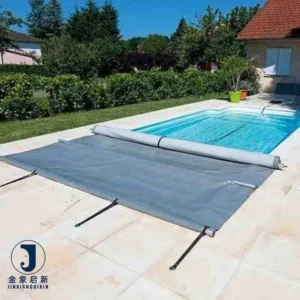
JX PVC Tarpaulin Swimming Pool Cover Material Knife Coated Fabric Waterproof UV-Resistant Windproof
¥13.00 Select options This product has multiple variants. The options may be chosen on the product page -
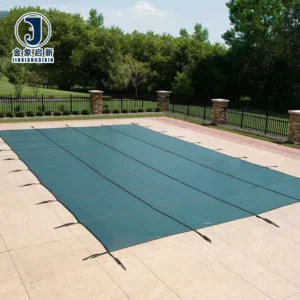
Custom Made PVC Pool Cover 500gsm Blackout – Manufacturer
Read more