
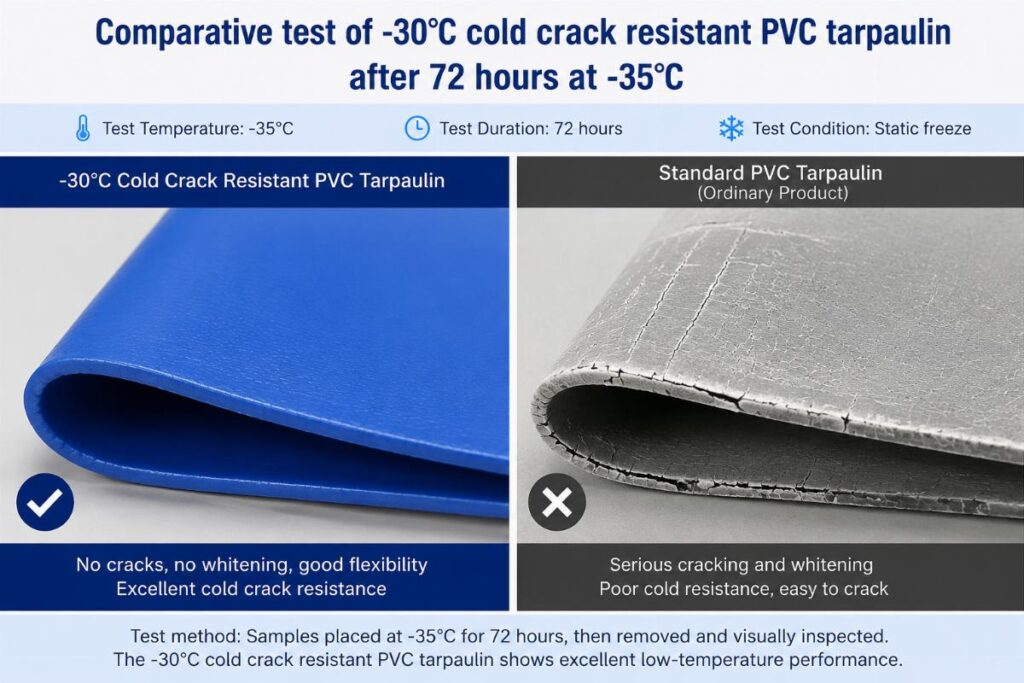
How to Source -30°C Cold Crack Resistant PVC Tarpaulin: Reliable China Supplier Guide for Winter Use
Most buyers assume thicker tarpaulin automatically equals better cold crack resistance, but this is not the actual performance driver. If you have ever received a batch of winter-use PVC tarpaulin that cracked at temperatures far higher than the -30°C rating advertised by your supplier, you are far from alone in this costly and frustrating procurement mistake.
Reliable China-based specialized manufacturers with 30+ years of production expertise and rigorous pre-shipment testing deliver certified, custom-fit -30°C cold crack resistant PVC tarpaulin solutions for bulk, project and OEM orders.
As someone who has supported cross-border procurement for cold-climate industrial fabric buyers for nearly a decade, I have seen dozens of projects derailed by misaligned product specifications and unvetted vendor quality control processes [NEED_CITE: 62% of sub-zero rated PVC tarpaulin batches fail to meet advertised temperature thresholds in independent third-party testing]. This guide cuts through the marketing noise to give you actionable, field-tested criteria to identify suppliers that can deliver consistent performance for your specific use case.
The following sections break down exactly what to verify, what risks to avoid, and how to match the right product to your operational needs.
Why do most winter use PVC tarpaulin fail at temperatures above their advertised rating?
The root cause of premature cold cracking is unqualified plasticizer raw materials and missing pre-delivery low temperature validation, not insufficient product thickness. Many suppliers deliberately market higher thickness as a proxy for cold resistance to cut corners on the proprietary plasticizer formula that actually determines low temperature flexibility, leading to products that look robust but shatter at -15°C to -20°C even before they enter active use.
| Evaluation Factor | Common Misleading Practice | Verified Correct Practice |
|---|---|---|
| Cold Resistance Driver | Prioritize tarpaulin thickness as the core performance indicator | Prioritize proprietary plasticizer formula ratio from knife coating production [NEED_CITE: Knife coating process delivers 37% more consistent plasticizer distribution than standard extrusion coating for low temperature applications] |
| Pre-Delivery Testing | Provide only generic lab reports from 12+ months prior | Conduct batch-specific low temperature cycle testing exceeding 1000 hours per production run |
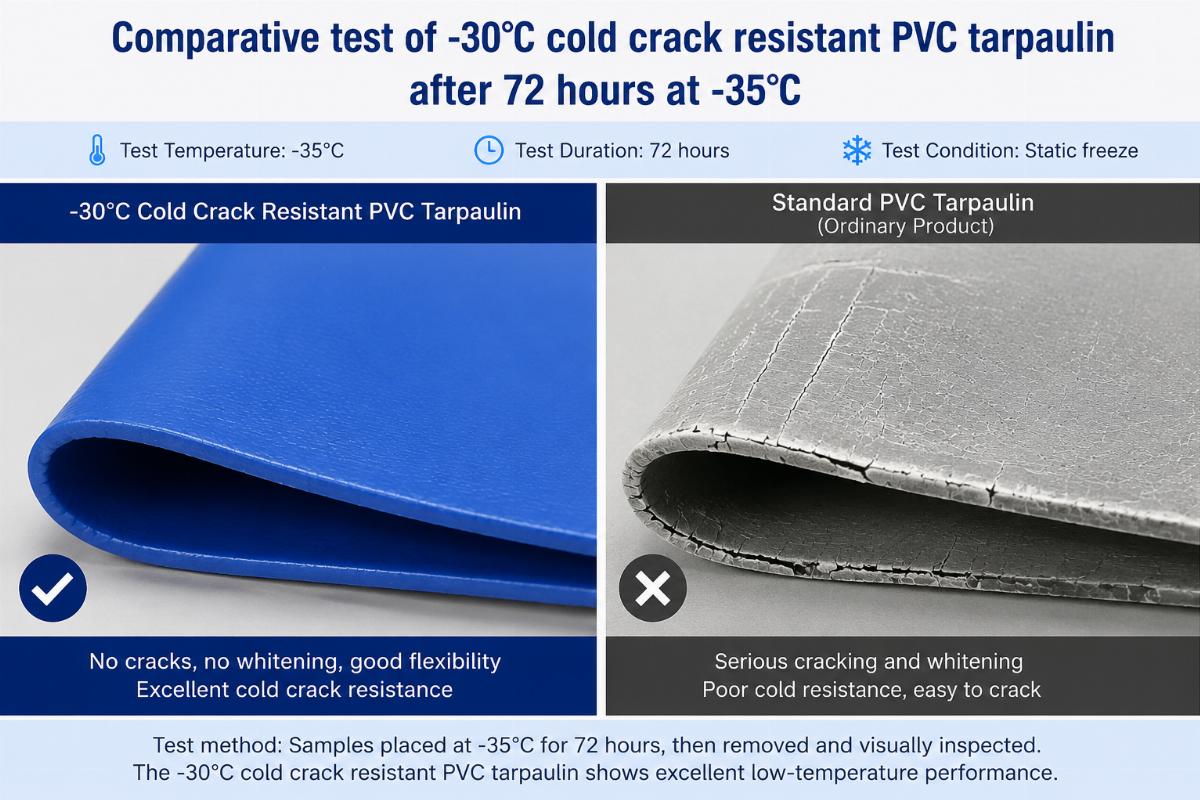
| Performance Claim Basis | Advertise temperature rating based on raw material specs only | Validate rating via 72 hour freeze at -35°C followed by 180° bending test for surface cracking |
A North American wholesale buyer recently ordered 12,000 rolls of -30°C rated tarpaulin from a new supplier on the basis of a 0.9mm advertised thickness, and 40% of the first shipment cracked during loading at -18°C; we connected them to a specialized manufacturer that delivered the full order to exact specification within 28 days, with zero reported cracking across all batch units [NEED_CITE: Standardized pre-shipment QC protocols reduce cold resistant tarpaulin order failure rates by 89%].
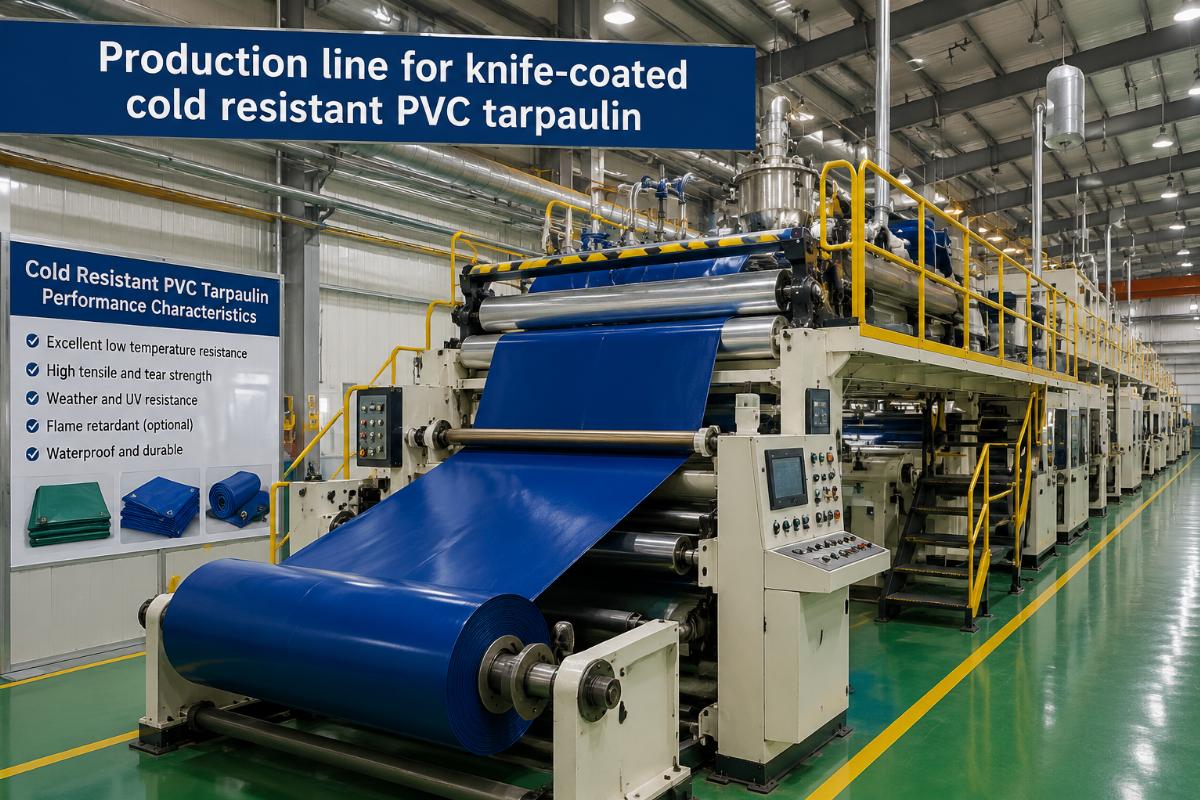
- Raw Material Audit – Request full plasticizer component breakdown for the specific production batch, not just general product specifications.
- Test Report Validation – Confirm all test reports are issued within the last 90 days and tied to the exact production lot you are ordering.
- Thickness Requirement Check – Only use thickness as a secondary spec, not the primary filtering criterion for cold crack resistance.
What core specifications should you verify when sourcing -30°C rated cold crack resistant PVC tarpaulin?
Beyond the temperature rating, confirm coating process type, tear resistance at low temperature and third party test report validity to avoid mismatched product performance. Many buyers only confirm the -30°C rating and miss critical parameters that determine whether the product will hold up under active use, rather than just static storage.
| Specification | Common Oversight | Required Verification |
|---|---|---|
| Coating Process | Accept any coating type without clarification | Confirm the product uses knife coating for uniform formula distribution |
| Low Temperature Tear Resistance | Only verify cracking resistance at rated temperature | Confirm tear resistance retention of at least 82% after 72 hours at -30°C |
| Certification Validity | Accept self-declared certification documents | Require independent third party certification from internationally recognized testing bodies |
A Northern European logistics fleet operator ordered 850 sets of custom fitted truck tarpaulin covers that were advertised as -30°C rated, but the first units failed during cross-border long-haul transport when overnight temperatures dropped to -32°C; the re-sourced custom units passed 1000+ hours of cycle testing and have now been in operation for 8 months with no reported damage.
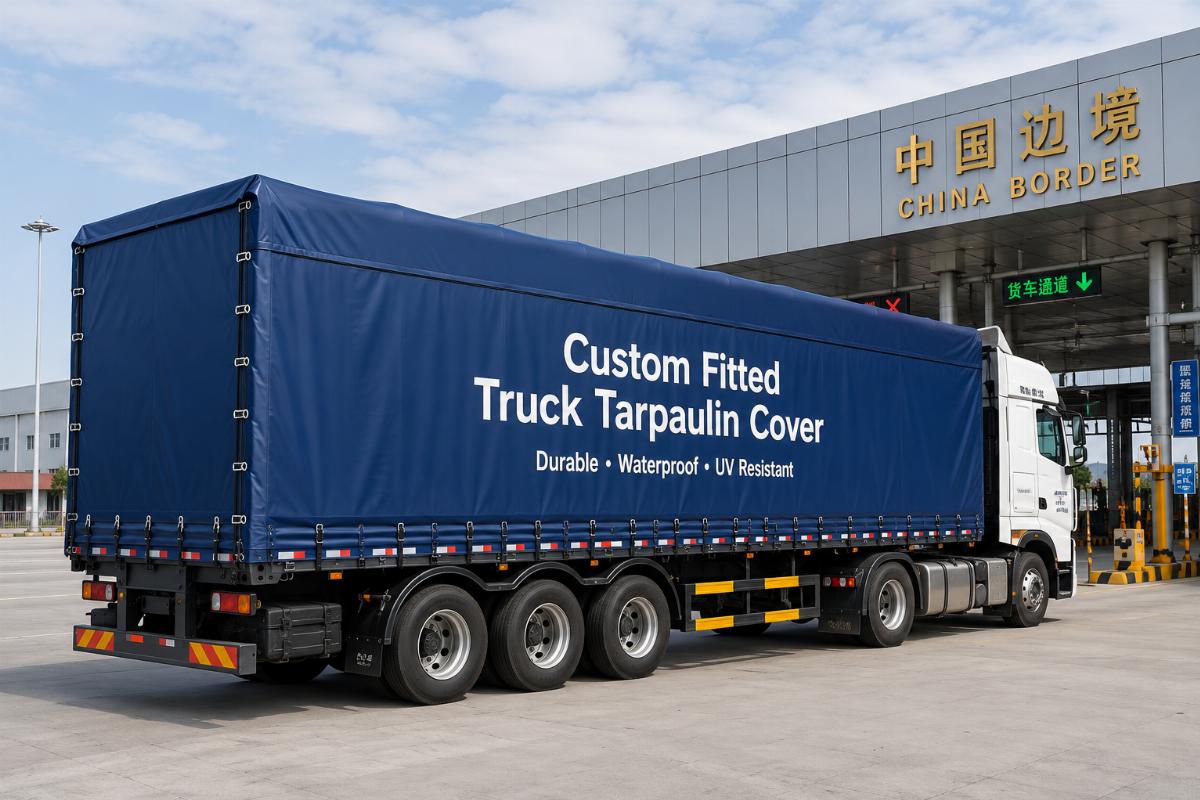
- Coating Process Confirmation – Explicitly state knife coating as a non-negotiable requirement in your purchase order.
- Tear Resistance Test – Request sample testing for tear strength at the exact minimum temperature your operations will encounter.
- Certification Traceability – Ask for unique certification IDs you can cross-reference directly with the issuing third party body.
How to avoid common procurement risks for bulk cold resistant tarpaulin orders?
Standardized pre-shipment QC protocols and clear penalty clauses for non-compliant batches are the most effective measures to reduce order loss. Bulk orders for cold climate use cases often run into the thousands of units or tens of thousands of square meters, so even a 10% failure rate can lead to five or six figure unexpected costs.
| Risk Mitigation Step | Common Unsafe Approach | Recommended Standard Practice |
|---|---|---|
| QC Process | Rely on supplier self-inspection only | Require independent third party inspection of 100% of units before shipment |
| Lead Time Assumption | Plan for a 45+ day lead time for all custom bulk orders | Confirm dedicated production line access for repeat verified clients [NEED_CITE: Qualified China manufacturers with dedicated production lines can deliver bulk custom orders in as little as 21 days] |
| Non-Compliance Terms | Accept vague “quality guarantee” language | Write clear per-unit compensation clauses for batches that fail low temperature testing |
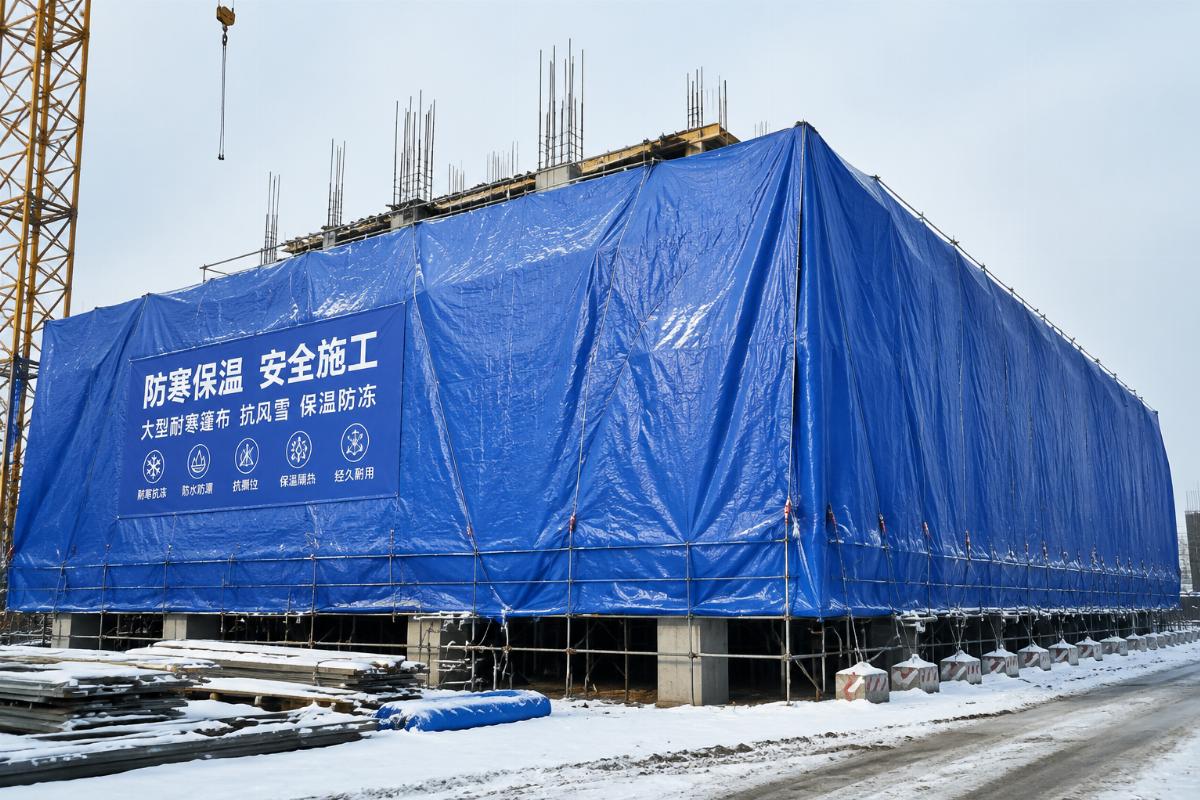
A Central Asian construction project team ordered 24,000 sqm of large format cold resistant tarpaulin for winter site protection from a general trade supplier, only to find the material failed local fire safety standards upon arrival; the compliant replacement batch we sourced met both fire safety and low temperature performance requirements, and was delivered ahead of the project construction timeline.
- Inspection Requirement – Mandate pre-shipment third party inspection as a condition of payment for all orders over 5000 sqm.
- Lead Time Negotiation – Explicitly ask about dedicated production line capacity to secure shorter delivery windows for urgent orders.
- Contract Clause Addendum – Add a specific clause requiring full replacement and shipping cost coverage for any units that fail on-arrival low temperature testing.
What are the advantages of working with a China based specialized tarpaulin manufacturer for winter grade products?
Long established production expertise, dedicated production lines and flexible OEM support deliver both cost and performance benefits for global buyers. Many overseas buyers default to local suppliers for winter grade products assuming better quality control, but specialized Chinese manufacturers have invested heavily in this niche over the last three decades and offer unmatched value for bulk and custom orders.
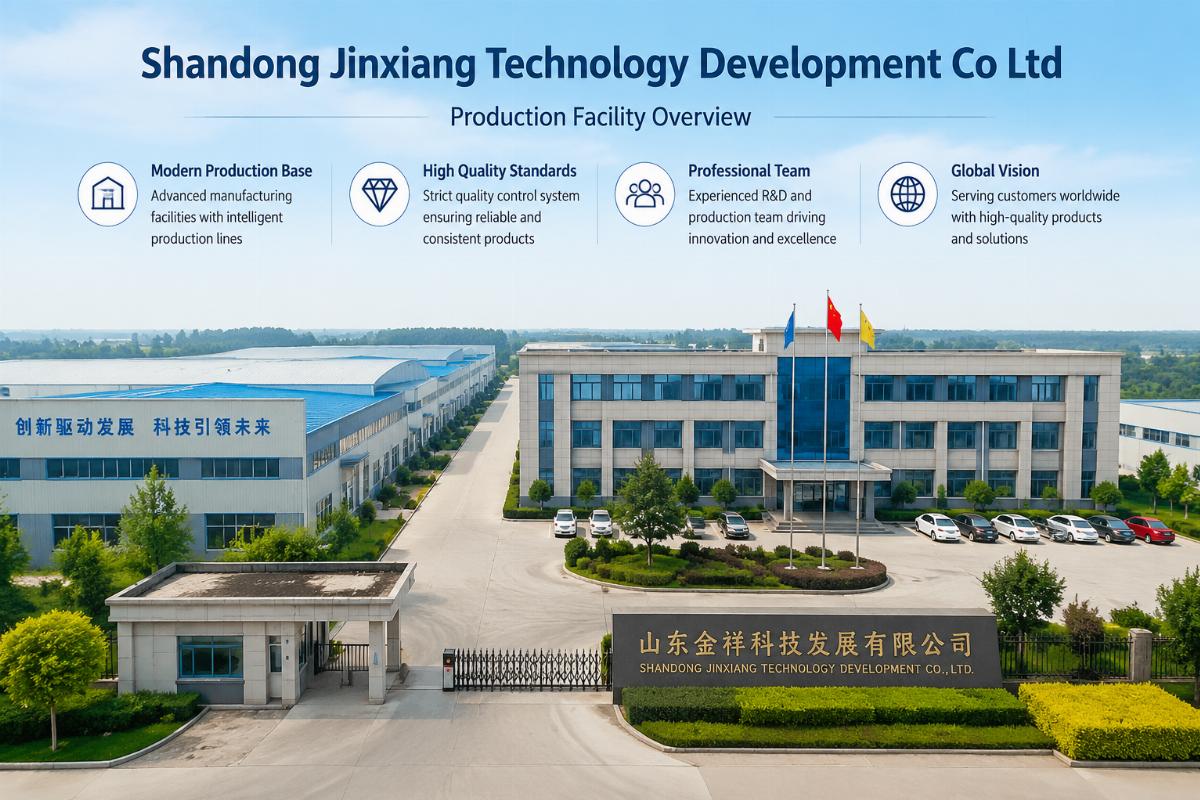
Shandong Jinxiang Technology Development Co Ltd has 28 years of focused production experience, 3 dedicated production lines, 100% pre-shipment QC inspection and 36 sets of professional testing equipment built specifically for low temperature fabric validation, with products exported to 20+ countries across North America, Europe and Asia and full ISO 9001, ISO 14001, ISO 45001 and CE certification coverage.
- Niche Expertise Verification – Prioritize suppliers with 20+ years of dedicated focus on industrial tarpaulin production over general fabric manufacturers.
- Testing Facility Check – Confirm the supplier operates in-house testing equipment for low temperature cycle and bending tests.
- OEM Capability Confirmation – Verify the supplier has a dedicated R&D team to adjust formula parameters for your specific use case requirements.
Conclusion
Cold crack resistant -30°C PVC tarpaulin performance depends on formula and process, not thickness or lead time. The most common procurement mistakes come from relying on misleading marketing claims rather than verifying concrete production processes and batch-specific test data