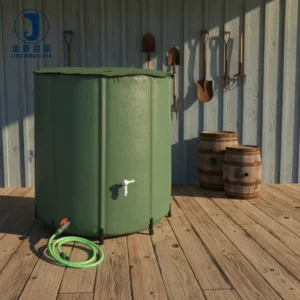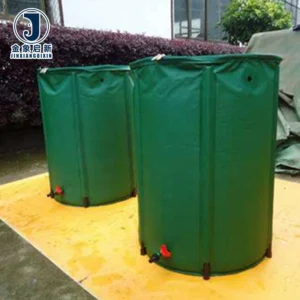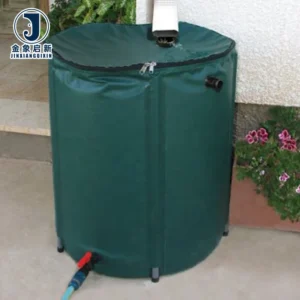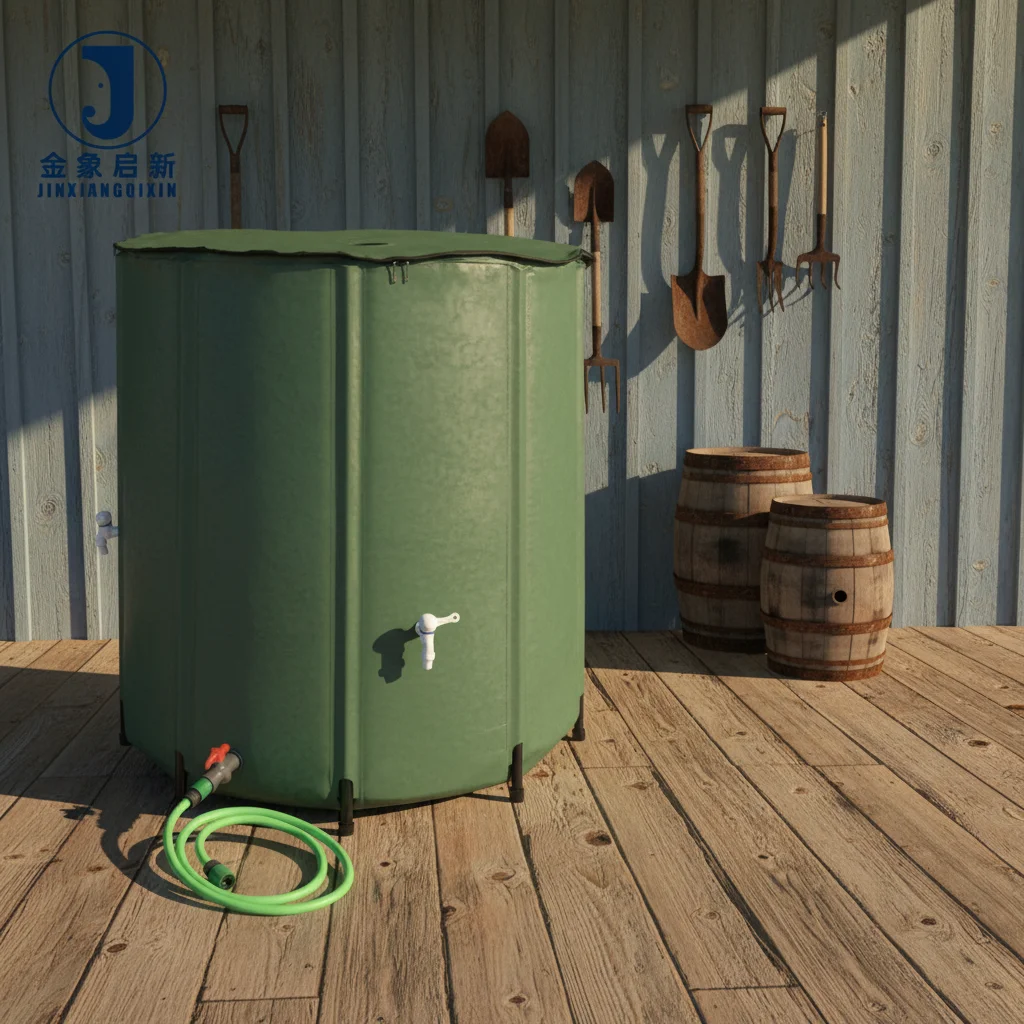
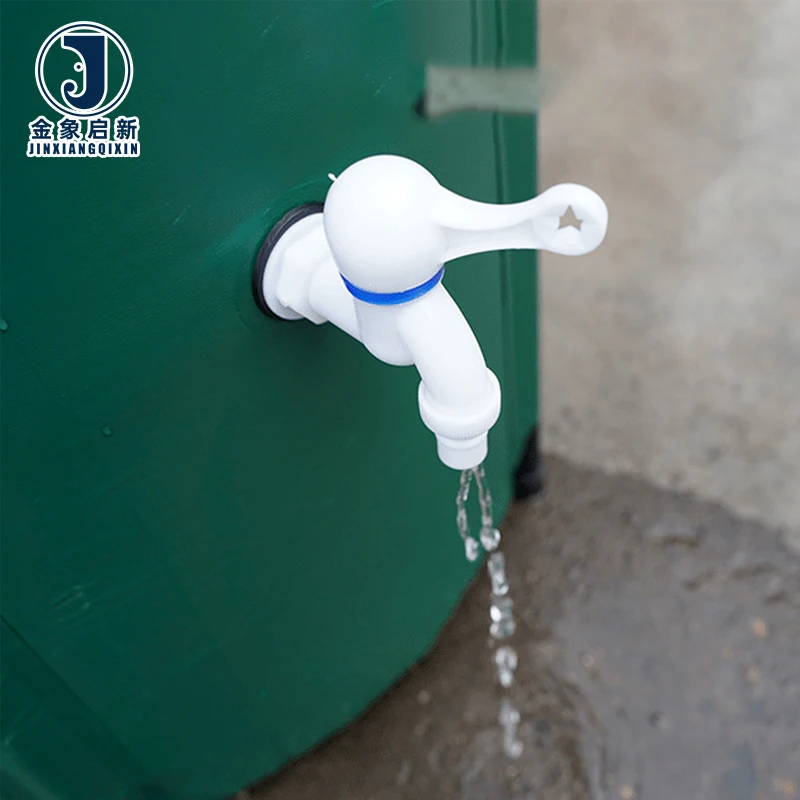
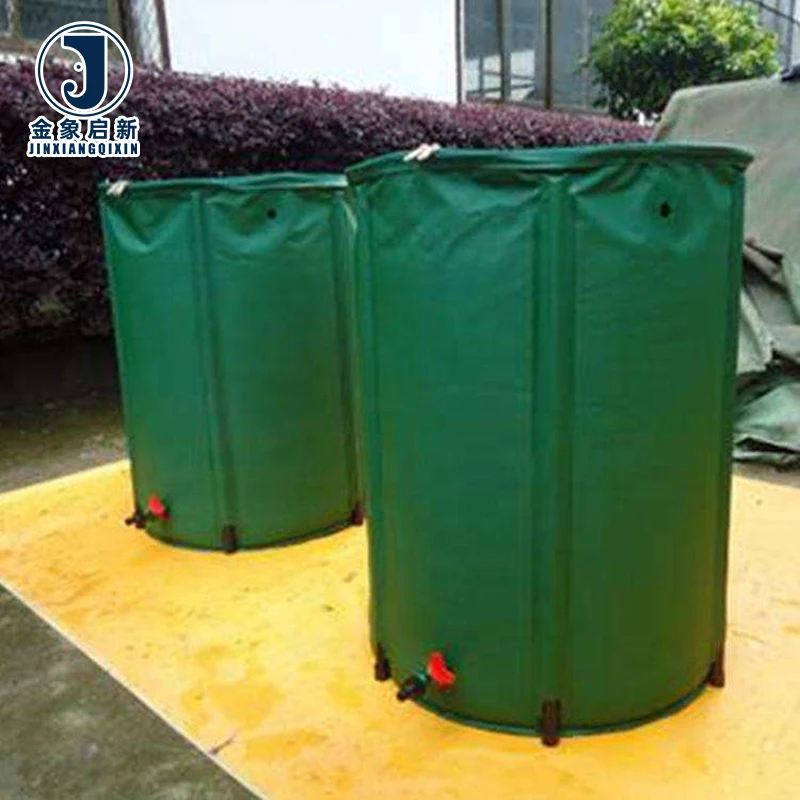
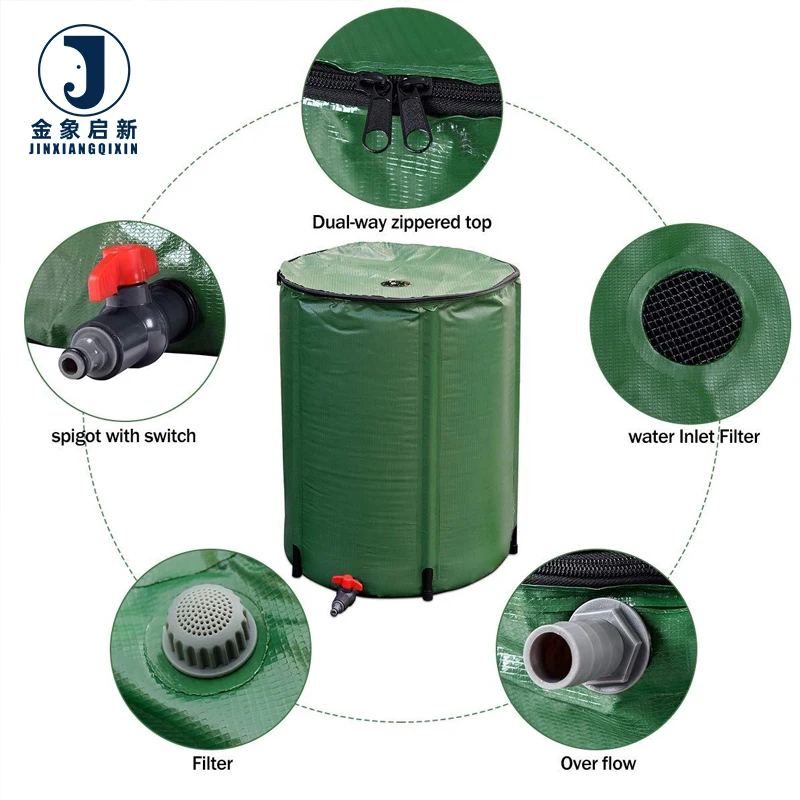
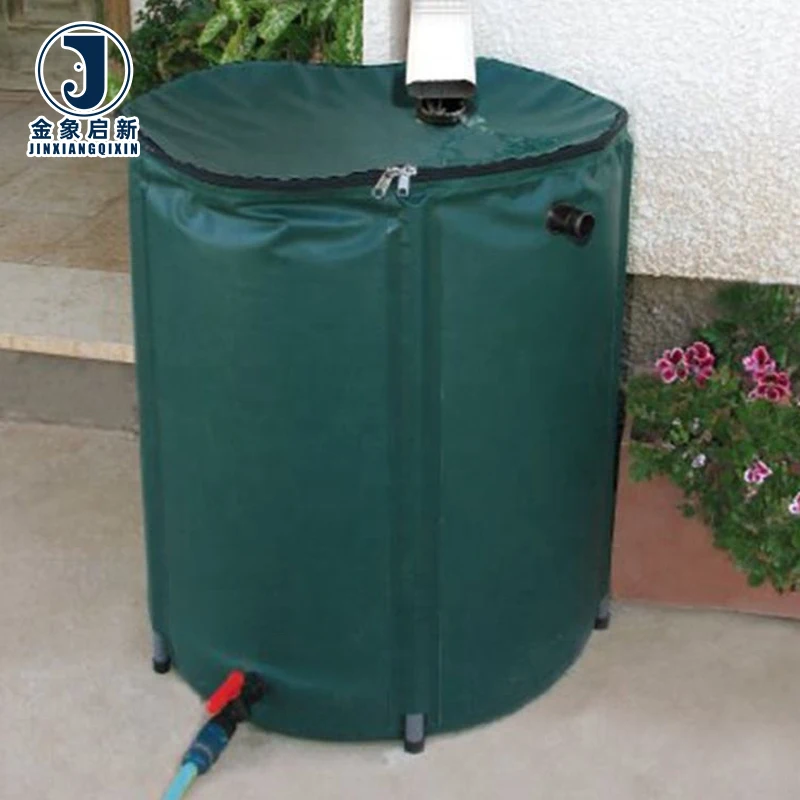
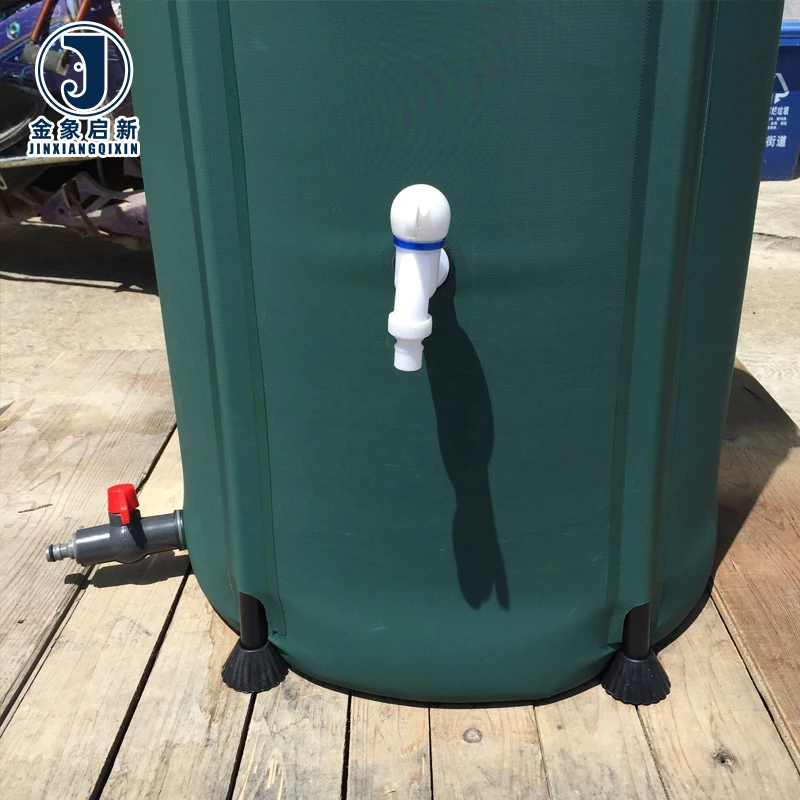
Collapsible PVC Tarpaulin Water Tank — 500D / 1000D PVC mesh cloth with support rod structure; waterproof, anti-mildew, abrasion and tear-resistant fabric for garden and agricultural rainwater collection. Foldable design ships flat and deploys in minutes, eliminating rigid tank freight cost and empty storage footprint. Material weight and denier determine puncture resistance under continuous outdoor exposure, while welded seam integrity at load-bearing flex points governs long-term service behaviour. Backed by 100% pre-shipment inspection, dedicated QA at every production stage, and samples developed within days for custom capacity or fitting layouts.
Description
Proven Fabric Engineering — Collapsible PVC tarpaulin water tanks built from the yarn up, where coating weight, base fabric denier and welded seam integrity are controlled at every production stage rather than left to chance.
Technical Specifications
| Parameter | Value |
|---|---|
| Product Type | PVC Tarpaulin Water Tank |
| Base Fabric Denier | 500D / 1000D |
| Material Construction | PVC Mesh Cloth with PVC Support Rod |
| Structure Type | Collapsible / Foldable |
| Capacity Options | 200L / 380L / 500L / 750L (1000L custom available) |
| Waterproof | Yes — fully coated construction |
| Anti-UV Treatment | Yes (test basis not stated in source — confirm the standard required for your market) |
| Anti-Mildew | Yes |
| Flame Retardant | Yes (grade not stated in source — available in flame retardant grades, confirm the grade required for your market) |
| Anti-Static | Yes (surface resistance or standard not confirmed) |
| Abrasion Resistance | Yes |
| Tear Resistance | Yes |
| Anti-Bacteria | Yes |
| Shrink Resistance | Yes |
| Key Features | Windproof, foldable for transport and off-season storage, PVC support rod structure |
Application Suitability
| Application | Exposure & Requirement |
|---|---|
| Residential garden rainwater harvesting | Continuous sun exposure, seasonal fill-and-drain cycles, algae and bacteria resistance for plant-safe water |
| Agricultural and aquaculture water storage | Outdoor weathering, contact with organic matter, need for large capacity without permanent tank infrastructure |
| Construction site temporary water supply | Abrasion from site handling, dust and debris exposure, rapid deployment and removal between phases |
| Industrial liquid containment | Chemical splash contact, fire safety compliance on regulated sites, repeated fold-unfold stress |
Why "Waterproof" Claims Fail When the Seams Are Not Engineered for Flex
The barrel holds water until it bends — and every soft tank bends under load.
I have visited sites where collapsible water tanks leaked within weeks not because the PVC fabric failed, but because the welded seams split at the exact points where the tank flexes during filling and draining. The collapsible PVC water tank aftermarket supplier market is full of products where the seam allowance and welding temperature were set for flat sheets, not for a cylindrical structure that expands and contracts with every use cycle. When a 750L tank reaches full capacity, the hydrostatic pressure pushes outward on every welded joint. [NEED_CITE: hydrostatic pressure calculation for flexible water storage vessels] If the welding parameters were calibrated for a lighter grade or a different fabric construction, the seam becomes the weakest link long before the base fabric shows any sign of wear.
How Base Fabric Denier Determines Long-Term Tank Integrity
When specifying a collapsible PVC water tank aftermarket supplier product, the denier of the base fabric — 500D or 1000D — defines how much puncture and abrasion the tank wall can absorb before the PVC coating is compromised. A 500D fabric suits sheltered garden installations where contact with sharp objects is minimal, while 1000D provides the reserve strength needed on construction sites or agricultural settings where the tank may be dragged across gravel or exposed to livestock contact.
Welded Seam Behaviour Under Repeated Fill Cycles
The collapsible PVC water tank aftermarket supplier you work with should be able to explain how their welding process accounts for the cyclic loading that rain barrels experience. Every rainfall event fills the tank; every irrigation session drains it. [NEED_CITE: fatigue testing protocols for welded PVC tarpaulin seams] This expansion and contraction places repeated stress on the heat-welded joints. The PVC mesh cloth construction with PVC support rods adds structural rigidity, but the seams between panels must still accommodate movement without delamination. Welding temperature, dwell time and pressure must all be matched to the specific coating weight and base fabric being used — generic settings produce seams that crack after a handful of cycles.
Reading the Fabric Spec Sheet: What Denier, Coating and Treatment Actually Mean Together
The denier rating (500D or 1000D) tells you the linear mass density of the yarns in the base fabric, which directly influences tear propagation resistance. A higher denier means thicker yarns that resist the spread of a puncture into a full tear — critical for a water tank where a single sharp contact could drain the entire contents. The PVC coating applied to both sides of this mesh cloth provides the waterproof barrier, and its weight must be balanced: too light and the coating wears through at contact points, too heavy and the fabric becomes stiff, making the collapsible folding action harder and increasing stress on the support rod structure. Anti-mildew and anti-bacteria treatments are integrated into the coating formulation to prevent biological growth on the water-contact surface, while UV treatment slows the photo-degradation that makes PVC brittle over time. Flame retardant grades are available — confirm the specific grade your local regulations or site safety plan requires before ordering. Anti-static treatment may be relevant for environments where dust or vapour ignition is a concern, though the surface resistance standard should be verified against your site requirements.
What Happens When You Specify on Price Instead of Seam Engineering
Buyers who compare collapsible water tanks purely on capacity and unit cost often discover the gap months after installation. A tank that uses thinner coating or fewer weld passes at the seams may pass the initial leak test at the factory but begin weeping at the base weld after repeated thermal expansion in summer heat. [NEED_CITE: thermal expansion effects on PVC coated fabric welded joints] Colour variation between production batches can also be an issue when multiple tanks are installed side by side at a commercial site — a difference invisible on the sample swatch becomes obvious once ten barrels are lined up along a building wall. And when flame retardant treatment is claimed but no test report accompanies the shipment, the tank may fail a site safety audit, forcing removal and replacement at significant cost and schedule disruption.
Why Procurement Teams Source This Collapsible PVC Water Tank Aftermarket Supplier
Deep process control over PVC coating weight and adhesion means the coating-to-fabric bond is verified at every production stage, not assumed from a supplier certificate. Three full production lines and 36 sets of professional equipment support bulk orders without sacrificing weld consistency across every tank in the batch. A 10-person R&D team handles custom capacity requests — if 750L is not enough and 1000L is the target, the pattern, support rod layout and fitting positions are re-engineered rather than simply scaled up. Dedicated QA/QC inspection covers 100% of units before shipment, checking seam integrity, leak performance and dimensional accuracy against the approved sample. Samples for custom capacity and fitting configurations are developed within days, allowing buyers to verify the product before committing to production volume.
Documentation & Verification
- Material specification sheet confirming PVC mesh cloth construction, denier and coating type for each tank
- UV and flame retardant test reports provided where applicable — matched to your market requirements
- Pre-shipment inspection record documenting seam integrity and leak verification for every unit
- Roll and unit packing list with capacity and dimension confirmation for container loading planning
- Certificate of origin and customs documentation prepared for destination country requirements
Fabrication, Handling & Storage
- Heat-welded seams on PVC mesh cloth require matched temperature settings to the coating weight — generic weld profiles risk delamination at flex points
- PVC support rods must be stored straight and unweighted to prevent permanent bending before tank assembly
- Fold the tank along designed crease lines only — random folding creates stress marks that weaken the coating over time
- Clean interior surfaces with mild detergent only; aggressive solvents degrade the anti-bacteria and anti-mildew treatment layer
- Store collapsed tanks in a dry, shaded location to prevent UV exposure on folded fabric before deployment
Request a Specification Match for Your Project
Provide your target capacity, installation environment and any fire safety or compliance standards your site requires so we can recommend the correct denier, treatment package and fitting layout. If you need a capacity outside the standard 200L to 750L range, share your dimensional constraints and connection requirements for a custom proposal. Confirm whether you need individual units or bulk volume for a multi-site rollout, and whether samples are required before production commitment.
Frequently Asked Questions
Q: How do I verify the PVC coating weight and base fabric denier when the tanks arrive?
A: Request the material specification sheet before production and compare the stated values against physical samples on receipt. A reputable collapsible PVC water tank aftermarket supplier will provide a pre-shipment inspection record that documents the actual GSM measured per production batch. Discrepancies between the quotation and delivered material should be flagged before the tanks are deployed on site.
Q: Can I get a custom capacity or fitting layout beyond the standard 200L to 750L range?
A: Custom capacities including 1000L and other volumes are available. The R&D team re-engineers the panel pattern, support rod configuration and inlet/outlet positions to match your plumbing requirements rather than simply enlarging a standard template. Samples are developed within days so you can verify dimensions, fitting thread sizes and hose compatibility before authorising full production.
Q: How do I confirm the UV and flame retardant treatments are genuine?
A: Ask for the specific test reports — not just a marketing claim — that reference the standard used. UV treatment should cite the exposure test method and duration, while flame retardant performance must reference a recognised classification such as DIN 4102 or NFPA 701. If your market or site demands a particular grade, state it in your inquiry and require the report before shipment.
Q: What is the expected service life under continuous outdoor sun exposure?
A: Service life depends on the UV treatment package specified, the local solar radiation intensity and whether the tank is partially shaded. The anti-UV treatment slows photo-degradation of the PVC coating, but long-term exposure will eventually affect flexibility. Request the UV test basis from your supplier and match it to your installation conditions for a realistic expectation.
Q: How is the collapsible tank packed and shipped for efficient container loading?
A: The foldable PVC mesh cloth structure allows the tank to be collapsed flat, reducing shipping volume significantly compared to rigid tanks. Each unit is packed with its PVC support rods and fittings. The pre-shipment packing list details unit count, folded dimensions and gross weight to support your container loading plan and customs clearance process.