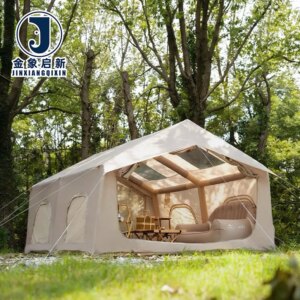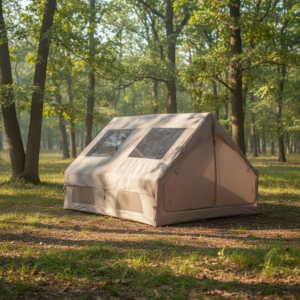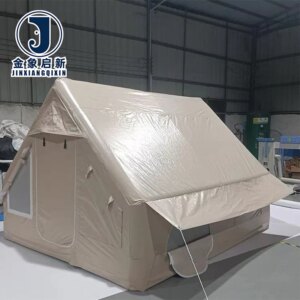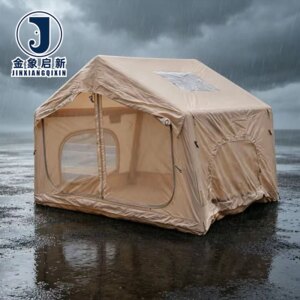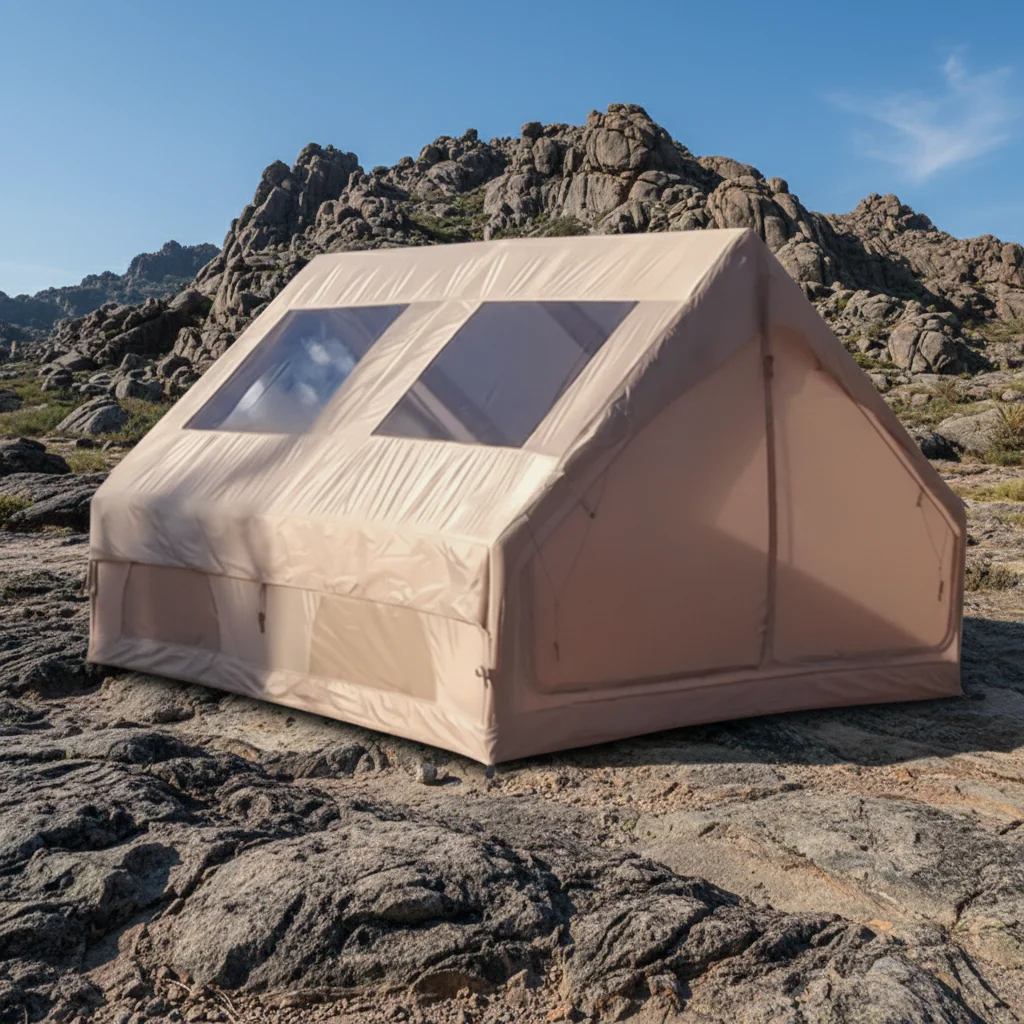
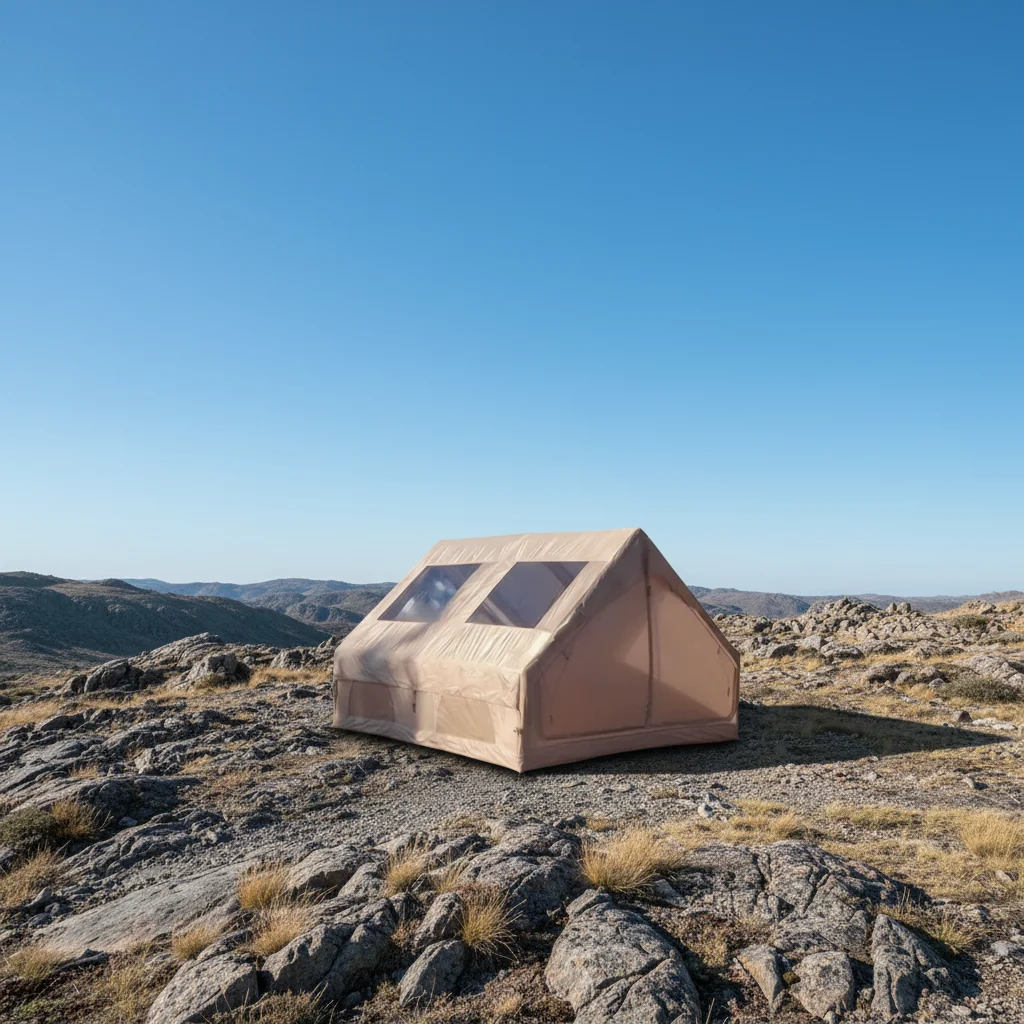
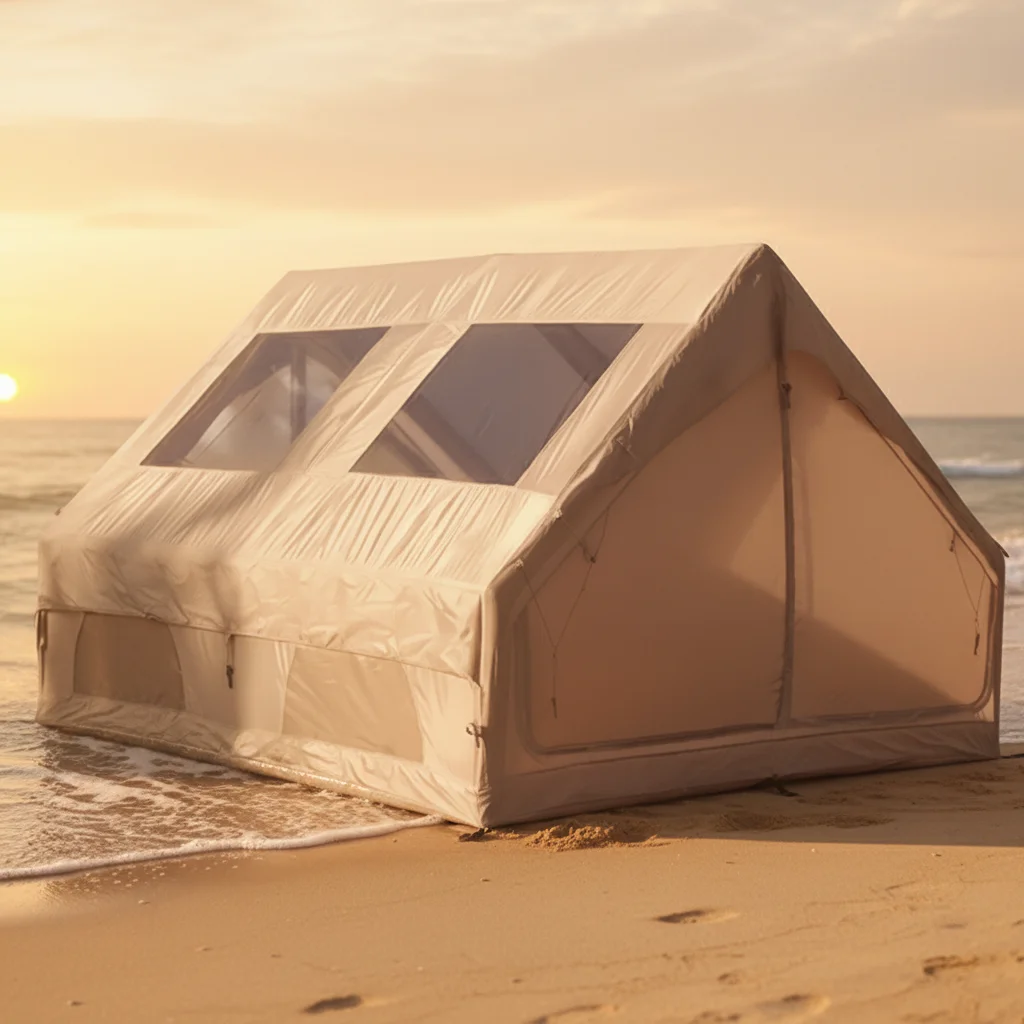
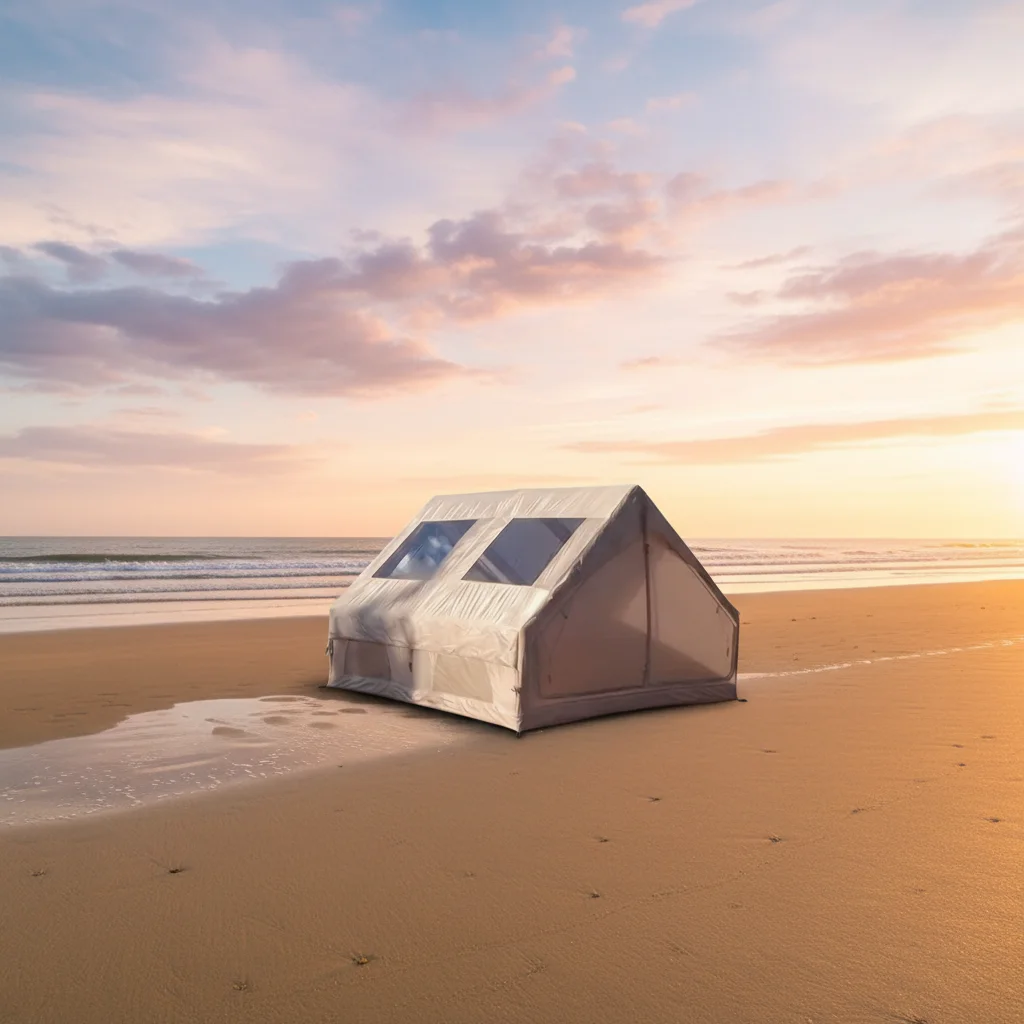
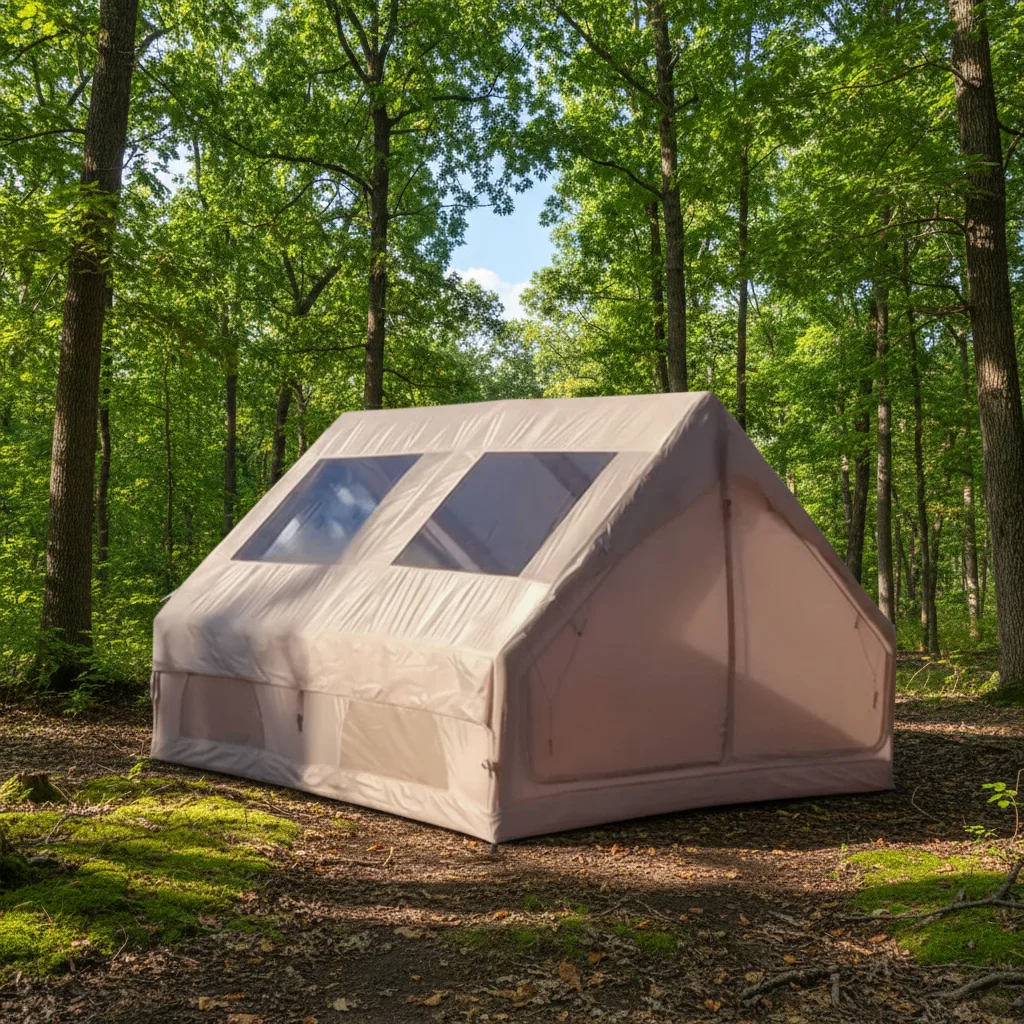
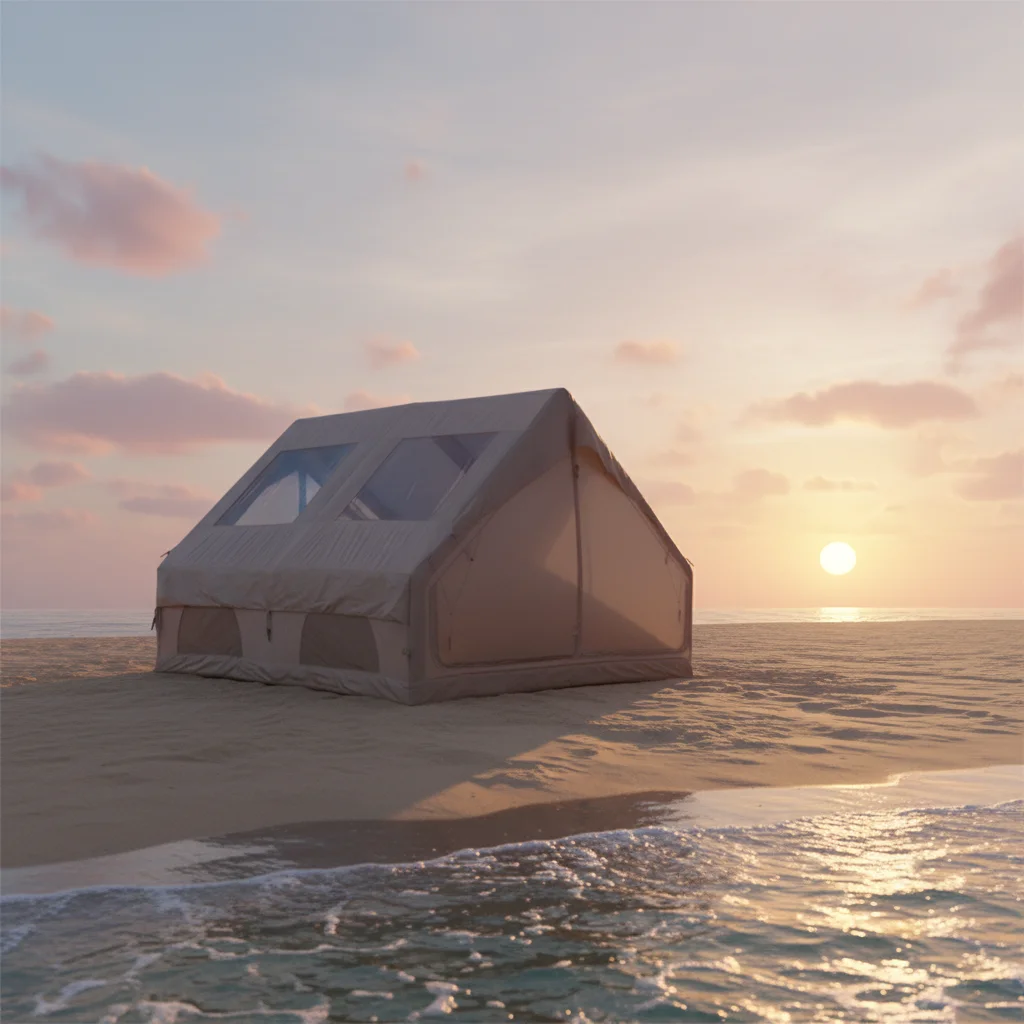
Four-Season Inflatable Tent for Camping — PVC knife-coated tarpaulin, 0.6mm to 1.2mm fabric thickness, quick automatic inflation with 24-hour sustained pressure retention tested. Single-layer construction supports full OEM/ODM on dimensions, Pantone color matching, and valve system modifications.
- Complete fabrication from coated fabric to finished inflatable structure under one roof, eliminating spec drift between material and final product
- 3 full production lines with 10-person R&D team; samples developed within 7–10 working days and 100% leak tested before shipment
Description
Full-Chain PVC Coating Control — Every inflatable camping tent we produce starts with knife-coated PVC formulated and applied on our own lines, keeping fabric weight, adhesion and color locked to the approved sample.
Technical Specifications
| Parameter | Value |
|---|---|
| Product Type | Inflatable Tent |
| Core Material | PVC tarpaulin (knife-coated fabric) |
| Tensile Strength | ≥3000N/5cm (source value — verify against manufacturer catalog) |
| Tear Resistance | ≥500N (source value — verify against manufacturer catalog) |
| UV Protection | UPF 50+ (source value — verify against manufacturer catalog) |
| Waterproof Rating | ≥5000mm water column (source value — verify against manufacturer catalog) |
| Fabric Thickness | 0.6mm to 1.2mm (customizable) |
| Weight per Area | ≤8kg/m² (source value — verify against manufacturer catalog) |
| Construction | Single layer |
| Inflation System | Quick automatic opening, 24-hour sustained pressure retention tested |
| Customization | Dimensions, Pantone color matching, logo/pattern printing, valve system modifications |
| Quality Inspection | 12-point inspection, 100% leak testing with compressed air, digital pressure monitoring |
| Standards | ISO 9001, ISO 14001, ISO 45001, CE |
Application Suitability
| Application | Exposure & Requirement |
|---|---|
| Commercial outdoor adventure camps | Repeated inflation cycles, UV exposure across seasons, ground abrasion during setup and breakdown |
| Expedition outfitter base shelters | Mountainous and coastal weather swings, wind load on inflated structure, long-term UV exposure |
| Outdoor promotional events and festivals | Rapid deployment and branding, frequent transport, short setup windows between activations |
| Guided tour operator base camps | Daily setup and teardown in varied terrain, exposure to soil moisture, need for visual consistency across units |
What "Waterproof" Means When the Seam Fails Before the Fabric Does
A 5000mm water column rating means nothing if the welded seam splits at the first inflation cycle under load.
When you source a custom inflatable tent, the datasheet typically highlights the fabric’s waterproof rating. Yet the most common field failure for inflatable structures is not the coated fabric itself — it is the heat-welded seam, specifically at flex points where the tube bends and concentrates stress during inflation and deflation. I have reviewed field returns where the PVC material remained intact but the welded joint separated after repeated cycles, leaving the structure unusable mid-trip. [NEED_CITE: heat-welded seam integrity testing for inflatable structures per ISO 1421]
Batch-to-batch seam quality varies when suppliers outsource welding to third-party workshops with inconsistent temperature and pressure settings. The result is a tent that passes the initial leak test in the factory but fails within weeks of commercial use because the seam adhesion was never verified against sustained pressure retention.
Coating to Tent Under One Roof Eliminates Spec Drift
Most inflatable tent manufacturers purchase coated fabric from a separate supplier, then cut and weld it in their own facility. This two-step chain means the fabric specification on the quotation is not always the fabric that arrives in production. By controlling the PVC knife-coating process and the finished tent fabrication in the same facility, we eliminate the gap between quoted spec and delivered product. The inflatable tent manufacturer you work with should be able to show you the coating line and the welding floor in the same visit.
Weld Integrity at the Flex Points That Matter
Inflatable tent tubes concentrate stress where they bend — at the base, at junctions between tubes, and where valve fittings attach. Our welding parameters are calibrated to the specific PVC formulation and thickness of the coated fabric being used, not borrowed from a generic setting sheet. Each welded seam undergoes compressed-air leak testing and is included in the 24-hour sustained pressure retention test, so failures surface before shipment rather than in the field. [NEED_CITE: compressed-air leak testing methodology for inflatable PVC structures]
Reading the Specification Sheet Beyond GSM
Fabric thickness, base fabric denier and coating weight together determine how a PVC inflatable tent fabric performs under real conditions. A thicker coating does not automatically mean better tear resistance if the base fabric weave is loosely constructed — the coating can crack at stress points while the yarns underneath pull apart. Knife-coated PVC delivers higher adhesion between coating and base fabric compared to laminated or calendered alternatives, which matters when the material is repeatedly folded for transport and then inflated under pressure. The UPF 50+ UV treatment extends service life under prolonged sun exposure, but only when the treatment is compounded into the coating itself rather than applied as a surface spray that degrades after a few seasons. Waterproof performance measured at ≥5000mm water column reflects the coating’s ability to resist hydrostatic pressure, which is relevant when the tent base contacts wet ground or when rain pools on the structure before runoff clears.
The Hidden Cost of Underspecing Thickness and Seam Construction
Ordering inflatable tents at the minimum fabric thickness to reduce unit cost creates downstream failures that are not visible at initial inspection. Thinner PVC material flexes more readily, which accelerates fatigue at welded seams during repeated inflation cycles. I have seen batches of lighter-grade inflatable structures where the seams separated at tube junctions within a single season of commercial use, while heavier-grade units at the same site remained operational. [NEED_CITE: fatigue failure at welded seams in inflatable PVC structures under cyclic loading]
Color inconsistency across rolls also compounds the problem when operators deploy multiple tents side by side — a visible mismatch that signals poor quality control to end users, even if the fabric performs adequately.
Why Procure Your Inflatable Tent Fabric and Finished Units Here
Our 10-person R&D team develops samples within days for custom inflatable tent requirements — dimensions, Pantone color matching, valve system modifications and fabric thickness adjustments are confirmed before bulk production begins, not altered mid-run.
Three full production lines and 36 sets of processing equipment support batch capacity without splitting your order across multiple workshops with inconsistent output quality.
Dedicated QA/QC at every production stage includes 12-point inspections and 100% leak testing with compressed air, documented in the pre-shipment inspection record you receive with each dispatch.
Material specification sheets accompany every order, stating fabric type, coating method, thickness and color reference so the documentation matches the physical product.
Full OEM and ODM capability means we produce finished inflatable tents, semi-finished fabric assemblies, or roll stock — depending on where your own fabrication capacity starts.
Documentation & Verification
- Material specification sheet stating fabric type, coating method, thickness and Pantone color reference per order
- UV protection test report confirming UPF 50+ rating for the specific coating batch used
- Waterproof performance data sheet documenting water column value for the coated fabric grade supplied
- ISO 9001, ISO 14001, ISO 45001 and CE certificates included with each shipment
- Pre-shipment inspection record detailing 12-point QA checks and 100% leak test results with digital pressure monitoring data
- Roll packing list with batch traceability linking finished units back to coating production runs
Fabrication, Handling & Storage
- Heat-weld PVC seams at temperatures matched to the selected fabric thickness between 0.6mm and 1.2mm for consistent adhesion
- Store rolled inflatable tent fabric upright in a dry environment to prevent permanent creasing of the knife-coated surface
- Use compatible PVC adhesive for field repairs on single-layer construction, matching coating chemistry for proper bonding
- Avoid dragging inflated structures across abrasive ground to protect the knife-coated PVC surface from puncture and scuff damage
- Clean with mild detergent only — solvent-based cleaners degrade the PVC coating and compromise UV treatment effectiveness
What to Include in Your Inquiry
Provide the deployment environment and expected inflation frequency so we can recommend fabric thickness and valve system specifications. Confirm your target market’s fire safety or compliance requirements, as treatment grades vary by region. Specify whether you need finished inflatable camping tents, semi-finished fabric assemblies, or roll stock for your own fabrication, along with Pantone color references and any logo or pattern printing requirements. Request a production sample to verify dimensions, color and seam construction before authorizing bulk production.
Frequently Asked Questions
Q: How is batch-to-batch color consistency controlled across custom Pantone-matched inflatable tent orders?
A: Pantone color references are matched during the PVC coating formulation stage, not applied as a surface layer. Each coating batch is checked against the approved color standard before application to the base fabric. Pre-shipment inspection records include color reference verification so multiple tents deployed side by side maintain visual consistency across your fleet.
Q: What customization options are available for valve systems, dimensions, and fabric thickness?
A: Valve systems can be modified for specific inflation equipment and pressure requirements. Dimensions are cut to your specifications with welded seam allowances calculated for the selected fabric thickness. Thickness ranges from 0.6mm to 1.2mm depending on the balance you need between pack weight and structural rigidity for your deployment conditions.
Q: How are welded seams tested to ensure they hold under repeated inflation cycles?
A: Every welded seam is included in the 100% compressed-air leak test and the 24-hour sustained pressure retention test. Digital pressure monitoring records any drop that indicates seam separation or micro-leaks. Units that do not hold pressure for the full retention period are rejected before packing.
Q: What documentation ships with each order for customs and compliance auditing?
A: Each shipment includes a material specification sheet, UV and waterproof test reports, ISO and CE certificates, a pre-shipment inspection record with leak test data, a roll packing list with batch traceability, and a certificate of origin. Additional documentation is provided based on destination market requirements.
Q: What is the sample development process and timeline before bulk production?
A: Custom samples are developed based on your dimension, color, valve and thickness specifications. Our R&D team produces samples within 7 to 10 working days for approval. Bulk production begins only after written sample sign-off, ensuring the delivered order matches the approved prototype in material, construction and finish.
Related products
-
Inflatable Camping Tent PVC Four-Season Waterproof Outdoor Air Tent with Quick Automatic Opening for 2-3 Person
Read more -
Outdoor Portable Camping Inflatable Tent Luxury All-Season Use Overnight Large Space Rainproof Insulated Quick Automatic Opening
Read more -
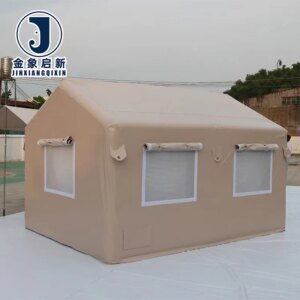
Inflatable Camping Tent PVC Waterproof Four-Season Outdoor Air Tent with Quick Automatic Opening for 3-4 Person
Read more -
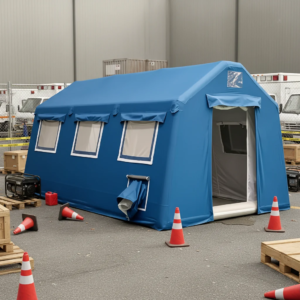
Outdoor Waterproof Inflatable Tent for Camping Portable Air Camping Tent Shelter
Read more