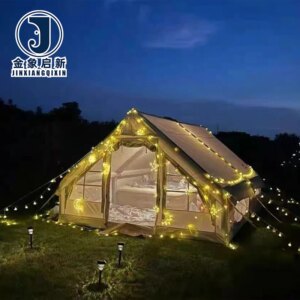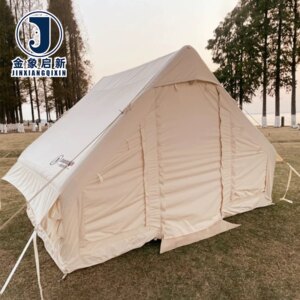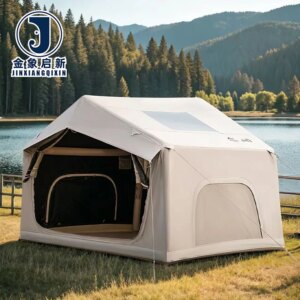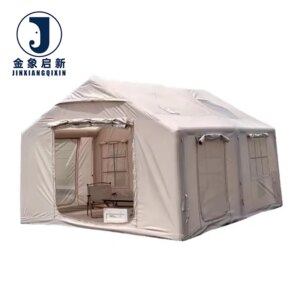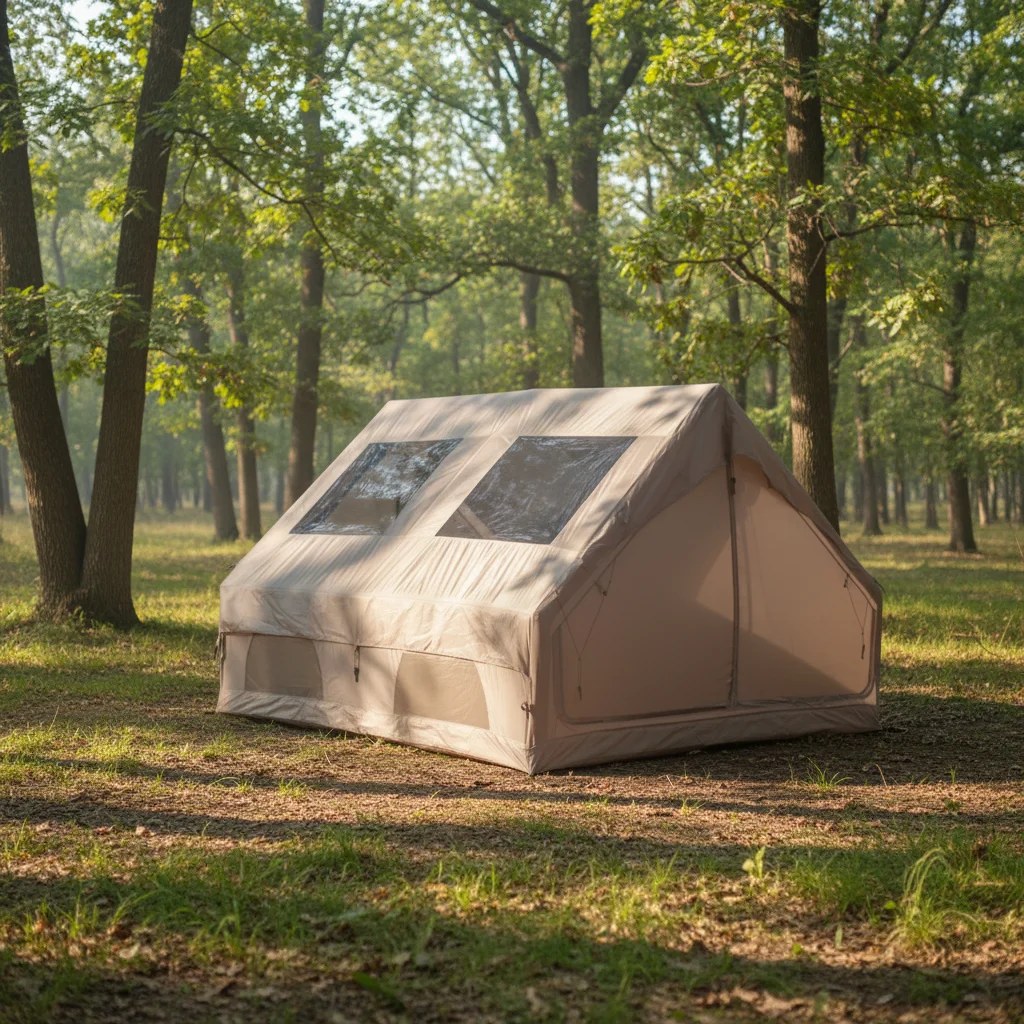
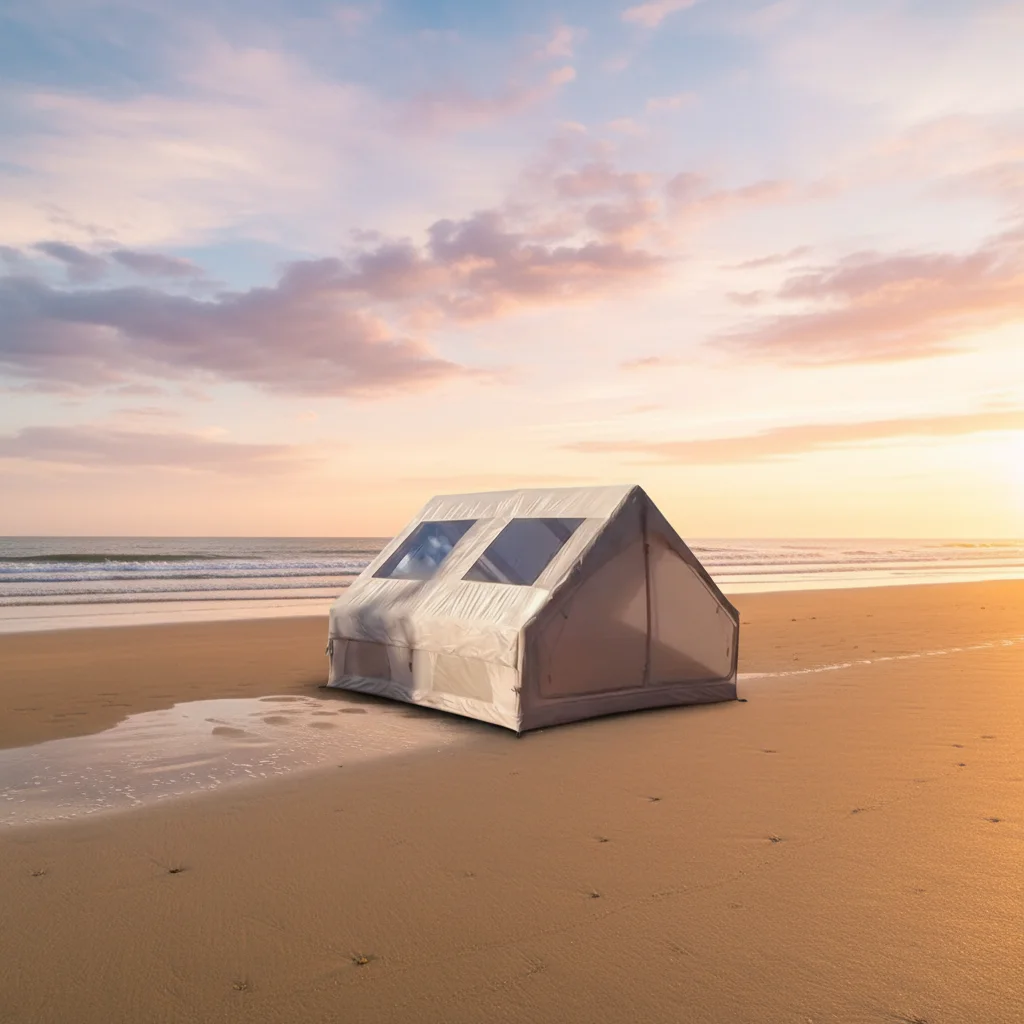
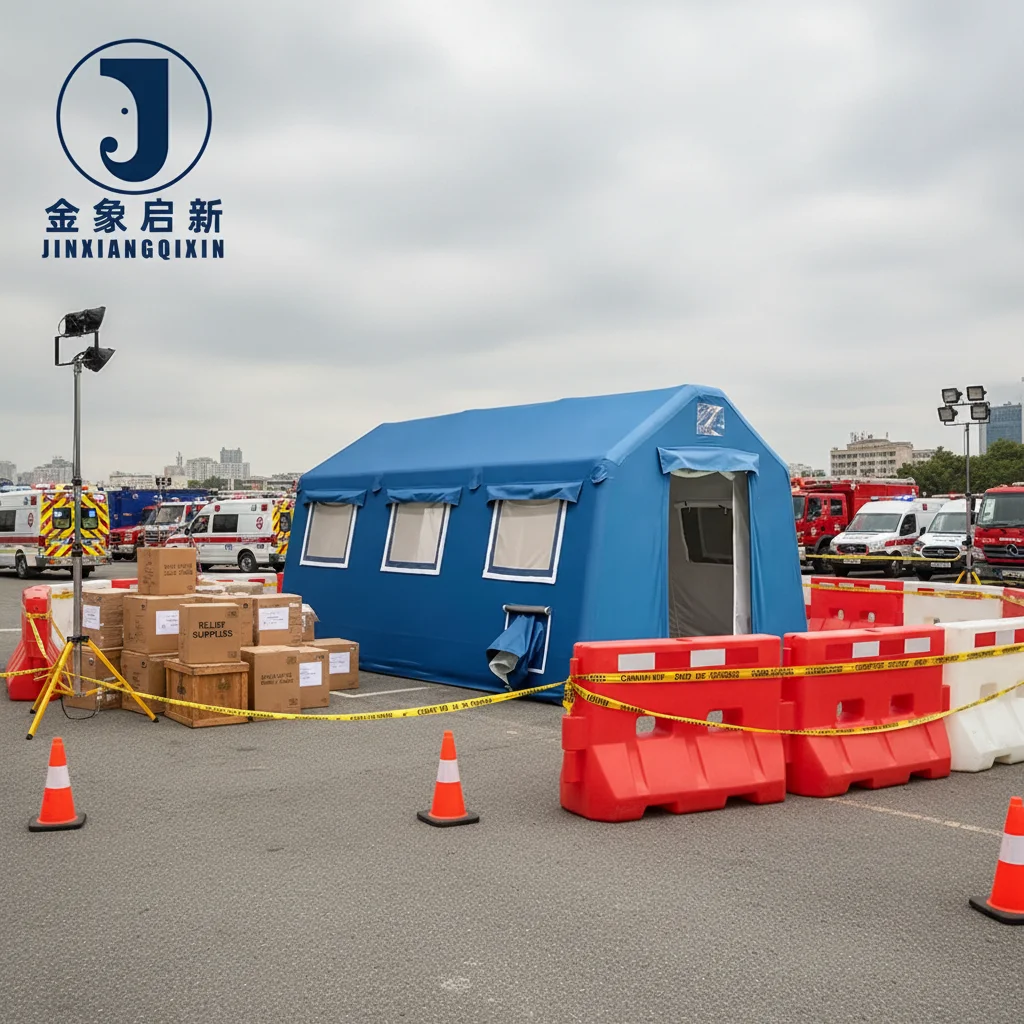
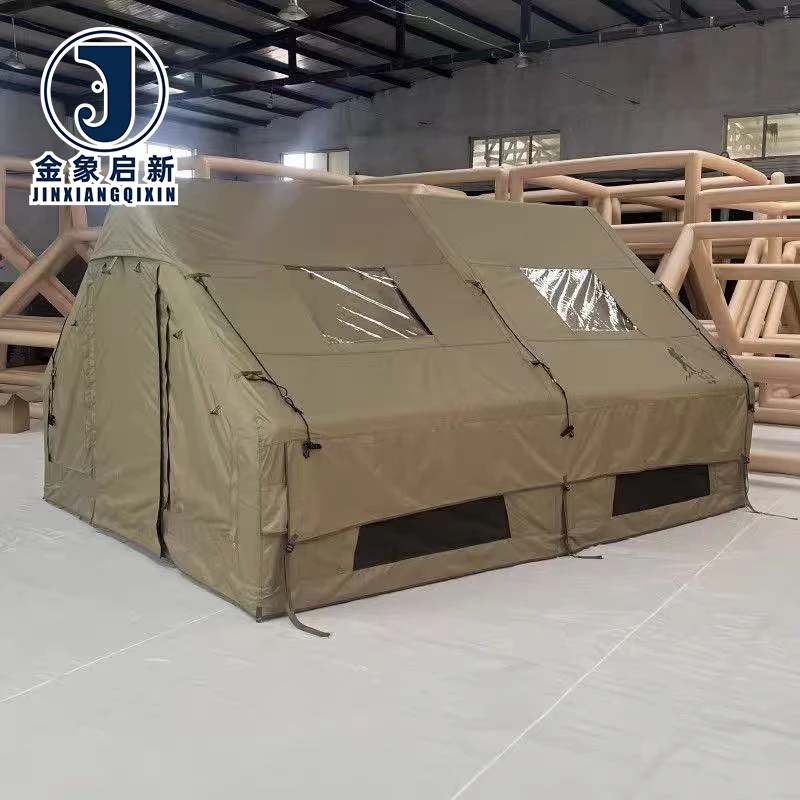
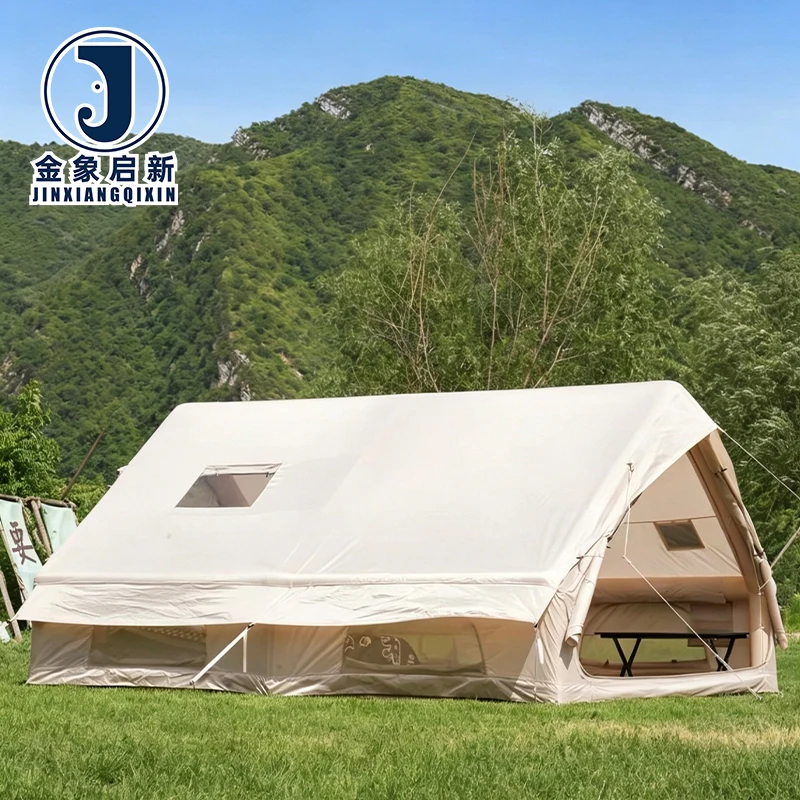
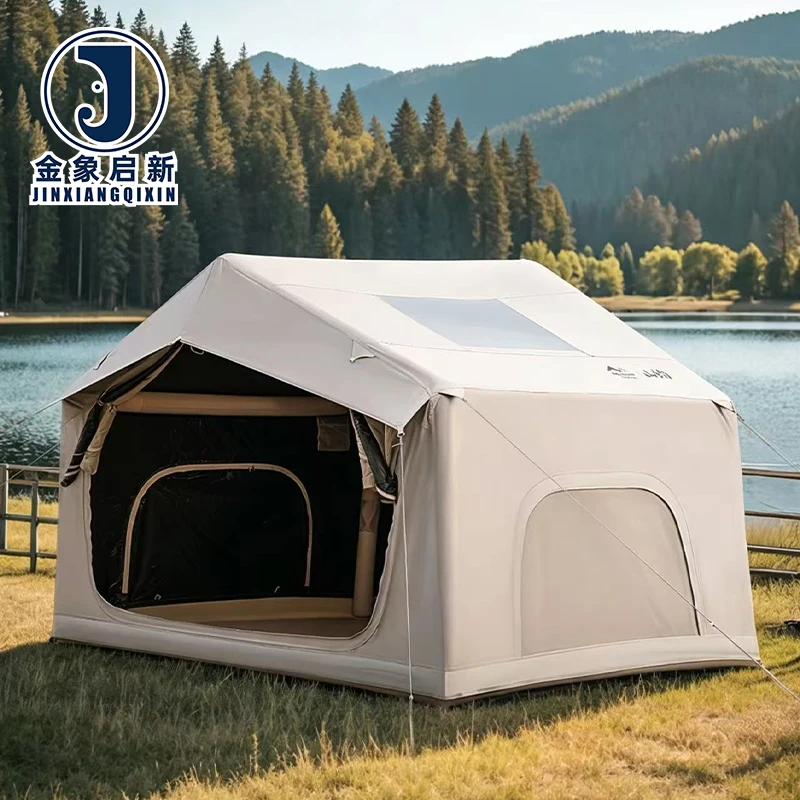
Inflatable Tent Four-Season Quick Automatic Opening PVC — 3000mm waterproof rating, UV-resistant and tear-resistant PVC tarpaulin core, available in 2-3, 3-4 and 6-8 person capacities.
- Quick automatic opening mechanism engineered for rapid deployment in disaster response, temporary site accommodation and emergency stockpile scenarios
- Full catalogue with custom sizing, pattern printing and branding options supported by a 10-technician R&D team
- Every unit undergoes 100% pre-shipment inspection with pressure testing and waterproof verification before dispatch
Samples developed within days for custom requirements, backed by nearly 30 years of coated fabric process control and three full production lines ensuring reliable on-time delivery.
Description
Full-Catalogue Custom Capability — our 10-technician R&D team develops inflatable tent fabric samples within days, covering sizing, pattern printing and material selection for product-line manufacturers.
Technical Specifications
| Parameter | Value |
|---|---|
| Product Type | Inflatable Tent |
| Core Material | PVC Tarpaulin |
| Waterproof Rating | 3000mm |
| Capacity Options | 2-3 / 3-4 / 6-8 person |
| Key Features | UV-resistant (test basis not stated in source), Tear-resistant (grade not stated in source) |
| Product Form | Inflatable structure with automatic opening mechanism |
| Customization | OEM & ODM, sample customization, pattern printing |
| Sample Lead Time | 7-10 working days |
| Production Lead Time | 15-20 working days |
| Certifications | ISO 9001, ISO 14001, ISO 45001, CE |
Application Suitability
| Application | Exposure & Requirement |
|---|---|
| Disaster response operations | Rapid deployment, prolonged rain exposure, repeated inflation cycles |
| Temporary site accommodations | Wind load, UV exposure, ground abrasion at base contact points |
| Emergency preparedness stockpiles | Long-term rolled storage, deployment reliability after extended warehousing |
| Field operations command centers | Multi-day continuous use, equipment ingress and egress, thermal comfort |
| Temporary logistics hubs | High-frequency assembly and dismantling, material handling contact, weather exposure |
Why Fabric Consistency Matters More Than Spec Sheet Numbers for Inflatable Tent Structures
Every roll ships with a verified specification sheet — not just a data claim.
When sourcing Inflatable Tent Fabric manufacturer custom options, buyers often focus on headline numbers while overlooking batch-to-batch uniformity. A waterproof rating stated on paper means little if the coating weight drifts across the production run, leaving certain panels under-protected once the structure inflates. [NEED_CITE: coating weight variance and its effect on waterproof integrity in PVC tarpaulin] Manufacturers who build inflatable product lines need the fabric they tested on sample to behave identically on the five-hundredth unit coming off their own assembly line.
Full Catalogue Coverage From Stock Grades to Custom Specifications
The jxtarpaulin.com catalogue presents the complete inflatable fabric range alongside every treatment and sizing option available. Buyers surveying Inflatable Tent Fabric manufacturer custom solutions will find product families laid out by capacity — 2-3, 3-4 and 6-8 person structures — along with pattern printing and branding routes for differentiated end products. Each variant links back to the same base PVC tarpaulin construction with a 3000mm waterproof rating, meaning product-line extensions stay compatible with established heat-sealing and fabrication parameters already set up on the factory floor.
Engineering the Quick Automatic Opening Mechanism Into the Fabric
An inflatable tent that opens automatically depends on the fabric’s flex behaviour as much as the air-beam geometry. The PVC tarpaulin used here must hold air under pressure without stretching beyond the seam allowance, yet remain pliable enough for the beam to erect within the designed timeframe. [NEED_CITE: relationship between PVC coating adhesion strength and inflatable beam erection speed] Our R&D team of 10 technicians works with tent manufacturers to align the coating weight and base fabric construction with the inflation pressure profile, so the automatic opening cycle remains reliable from the first deployment to the hundredth.
Reading the Specifications That Actually Determine Inflatable Performance
The 3000mm waterproof rating describes the hydrostatic head the PVC tarpaulin can sustain before water penetrates — for inflatable shelters deployed in sustained rainfall, this is the margin between a dry interior and field failure. Waterproof performance, however, rests equally on base fabric weave density and coating adhesion; a high hydrostatic number on loosely woven base cloth will degrade at fold points once the structure cycles through inflation and deflation. UV-resistant treatment (test basis to be confirmed for your target market) slows polymer breakdown from direct solar exposure, which matters for shelters remaining erected across multi-day operations. Tear resistance (grade to be confirmed) governs how a puncture or nick propagates under air-beam pressure — a property shaped by the denier of the yarns and the ripstop or plain weave chosen for the base fabric.
What Happens When Coating Consistency Fails Across a Batch Order
Colour variation between rolls in a single order becomes visible the moment two panels are heat-sealed side by side on an inflatable structure — a defect that only emerges at the customer’s assembly stage, long after the fabric has left the mill. Under-coated sections along a roll edge allow moisture to migrate through the base fabric during rain, defeating the stated 3000mm rating on those specific panels. [NEED_CITE: common coating-weight drift causes in PVC tarpaulin production runs] Welded seams on inflatable beams fail before the fabric body when the coating weight at the flex zone is lighter than specified, concentrating stress exactly where the structure bends most during erection.
Why Sourcing Here Keeps Your Product Line Predictable
Three full production lines and 36 sets of professional processing equipment support volume runs of inflatable tent fabric while maintaining coating parameters across the batch. The dedicated QA/QC process inspects every unit at each production stage, catching coating inconsistencies before they compound downstream. Pre-production samples are developed within 7-10 working days, letting tent manufacturers validate heat-seal temperatures and beam geometry against their specific inflation design before committing to bulk. Material specification sheets accompany each shipment, stating GSM, base fabric details, coating information, colour reference and waterproof rating for the exact batch received.
Documentation & Verification
- Material specification sheet confirming GSM, base fabric, coating type and 3000mm waterproof rating per batch
- UV and tear-resistance test reports provided where applicable to the grade ordered
- ISO 9001, ISO 14001, ISO 45001 and CE certificates included in shipment documentation
- 100% pre-shipment inspection record with pressure testing and waterproof verification per unit
- Pre-production sample confirmation report detailing custom size, colour and print specifications
- Roll packing list with batch traceability codes for receiving and quality-control checks
Fabrication, Handling & Storage
- Heat-seal temperatures should be calibrated against the specific PVC tarpaulin coating weight before production runs begin
- Store rolls upright on pallets to prevent compression marks on the PVC tarpaulin coating surface
- Inflate test units fully before heat-sealing final seams to confirm beam geometry matches fabric flex behaviour
- Use PVC-compatible cleaners only to avoid degrading the UV-resistant treatment layer on the tarpaulin surface
- Repair field punctures with matching PVC tarpaulin patches and solvent cement compatible with the coating formulation
- Plan cutting layouts to place heat-sealed seams along low-stress zones of the inflatable beam structure
What to Include in Your Fabric Inquiry
Provide your target inflatable capacity, deployment environment and expected inflation pressure range so we can recommend the correct base fabric and coating combination. Specify whether you need rolls in standard widths or custom cut sizes with pattern printing, and indicate any fire-safety or compliance grades your end market requires. Confirming sample quantities early allows our R&D team to align material development with your production timeline.
Frequently Asked Questions
Q: How is the 3000mm waterproof rating tested and documented per batch?
A: Each production batch undergoes hydrostatic head testing to confirm the PVC tarpaulin sustains the 3000mm rating before shipment. The test result is recorded on the material specification sheet that ships with your order, giving your quality team a verifiable document to cross-check against incoming inspection requirements.
Q: Can the inflatable tent fabric be customised in size, colour and printed branding?
A: Full OEM and ODM customisation is supported, including cut sizes matched to your inflatable beam geometry, custom colours across the order and pattern printing for branding. Our R&D team develops pre-production samples within 7-10 working days for your approval before bulk manufacturing begins.
Q: What is the sample development lead time for custom inflatable structures?
A: Sample development for custom Inflatable Tent Fabric manufacturer custom requirements typically takes 7-10 working days, covering material selection, sizing and any print specifications. Once the sample is approved, bulk production lead time runs 15-20 working days depending on order volume and complexity.
Q: How do you ensure colour and coating consistency across rolls in a single order?
A: Every roll passes through dedicated QA/QC inspection at each production stage, with coating weight and colour checked against the batch reference. The pre-shipment inspection record included with your shipment documents the verification results, so you can confirm consistency before the fabric enters your production line.
Q: What documentation ships with each order to support receiving and quality control?
A: Your shipment includes a material specification sheet with GSM, coating and waterproof rating data, relevant test reports, ISO and CE certificates, a 100% pre-shipment inspection record, a roll packing list with batch codes and a certificate of origin for customs clearance.
Related products
-
Inflatable Tent Four-Season Quick Automatic Opening PVC 3000mm Waterproof Foldable Eco-Friendly 2-3/3-4/6-8 Person Outdoor Use
Read more -
Inflatable Tent Family Size Four-Season Quick Automatic Opening Waterproof 2-8 Person Factory Direct Sale
Read more -
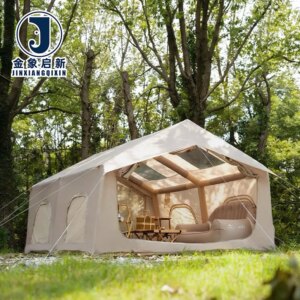
Inflatable Four-season Camping Tent-PVC Coated Waterproof Eco-Friendly Quick Inflation CE Certified ODM/OEM Accepted
Read more -
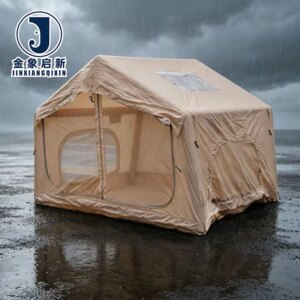
Inflatable Camping Tent Waterproof Outdoor Air Tent for Camping Inflatable Tent Shelter
Read more