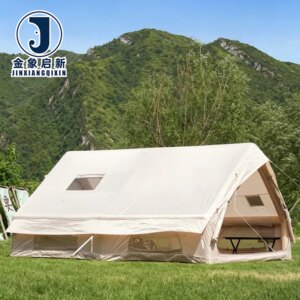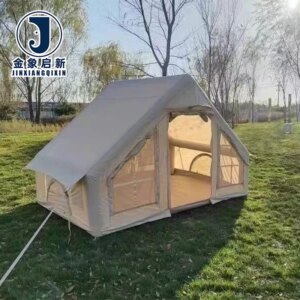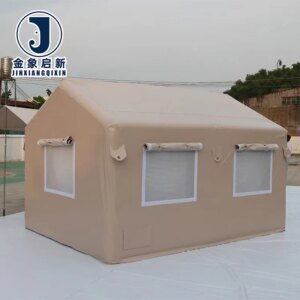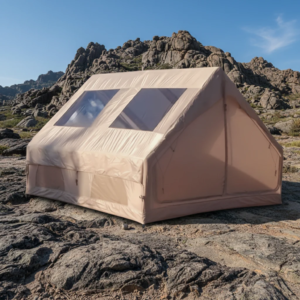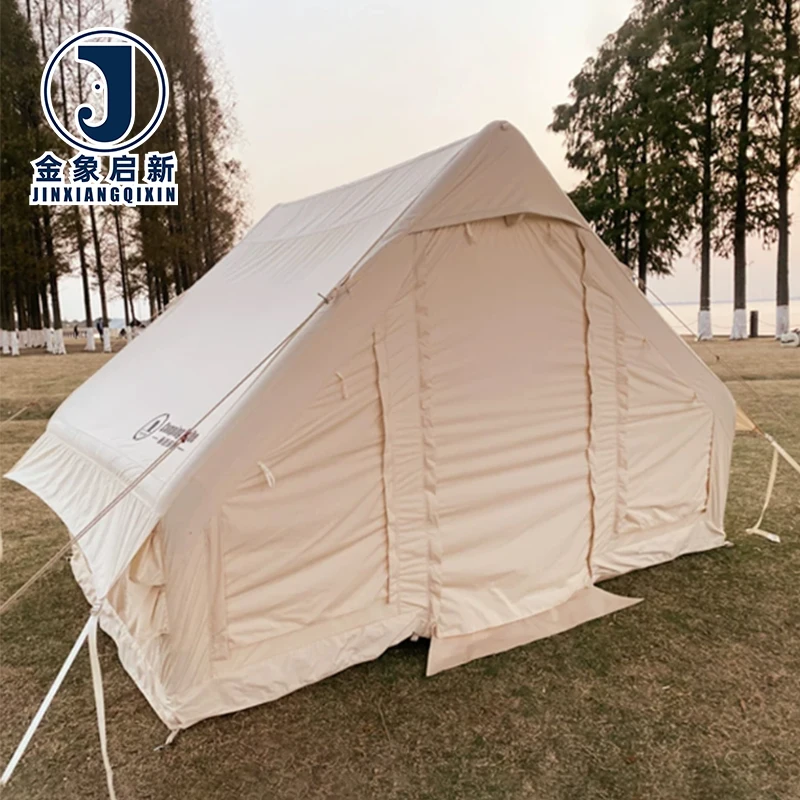
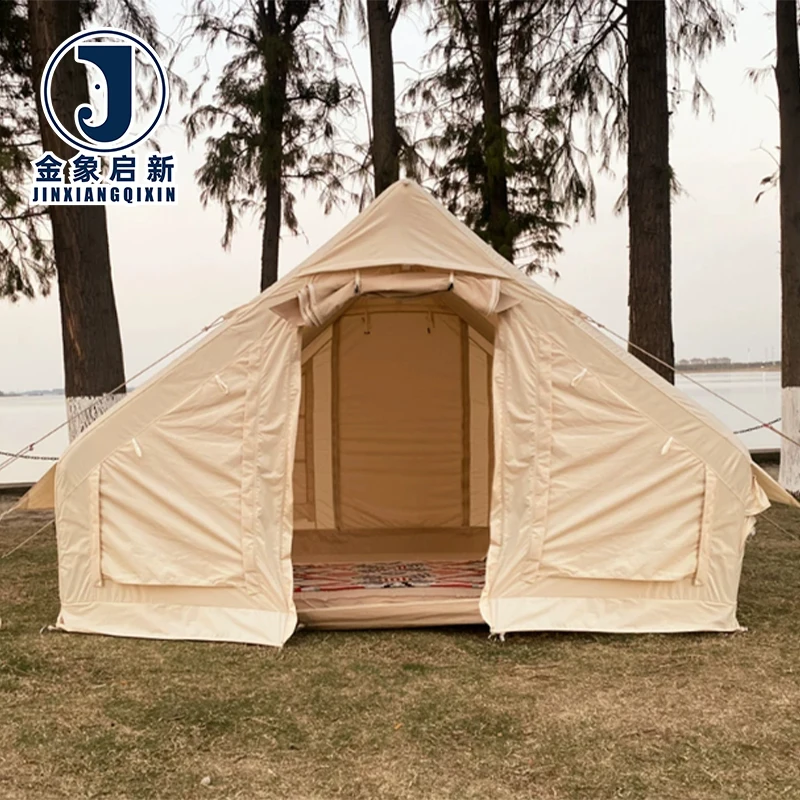
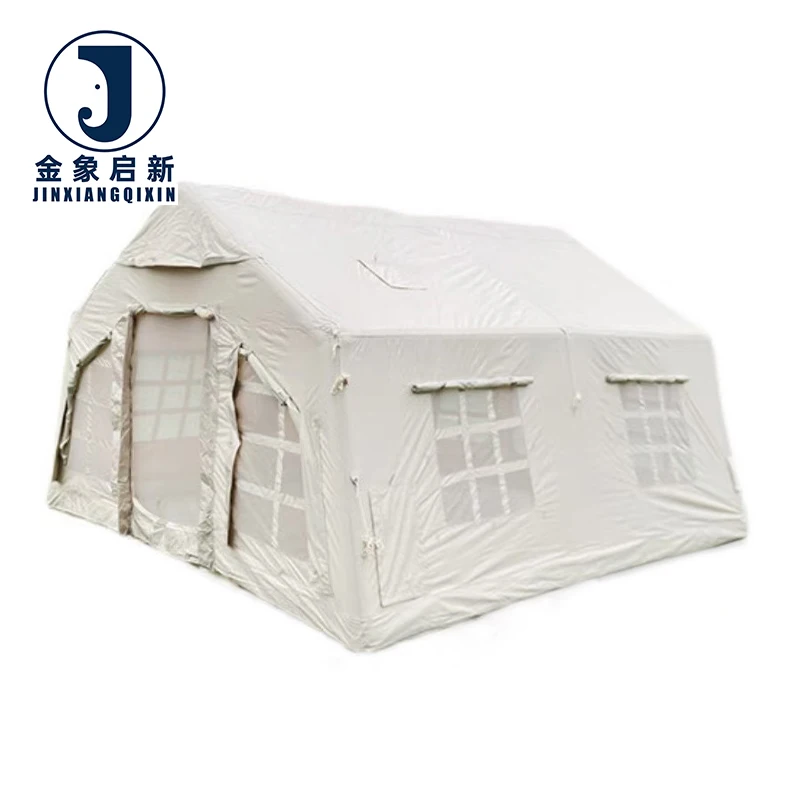
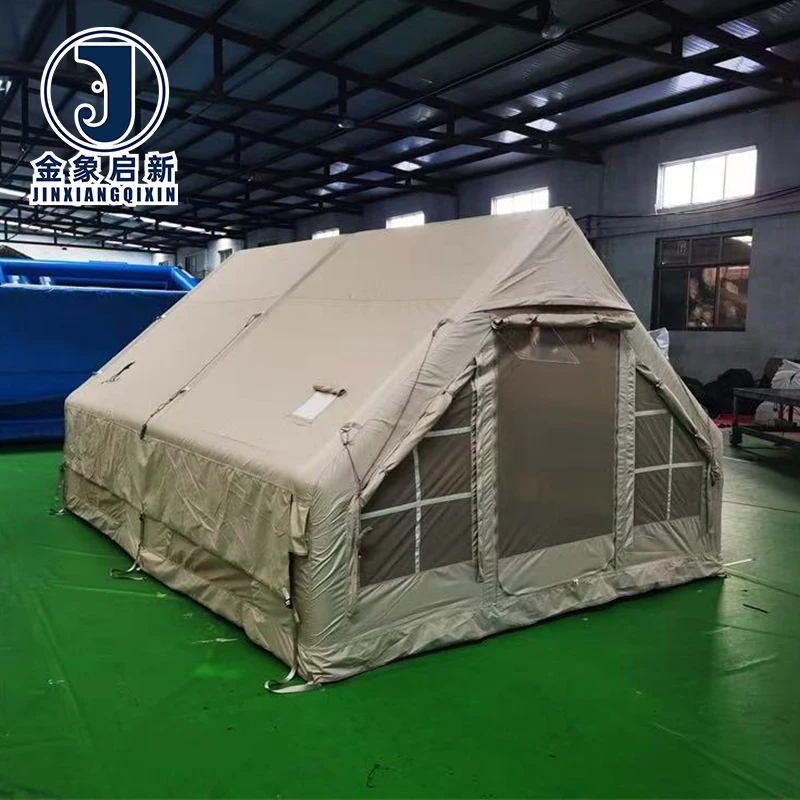
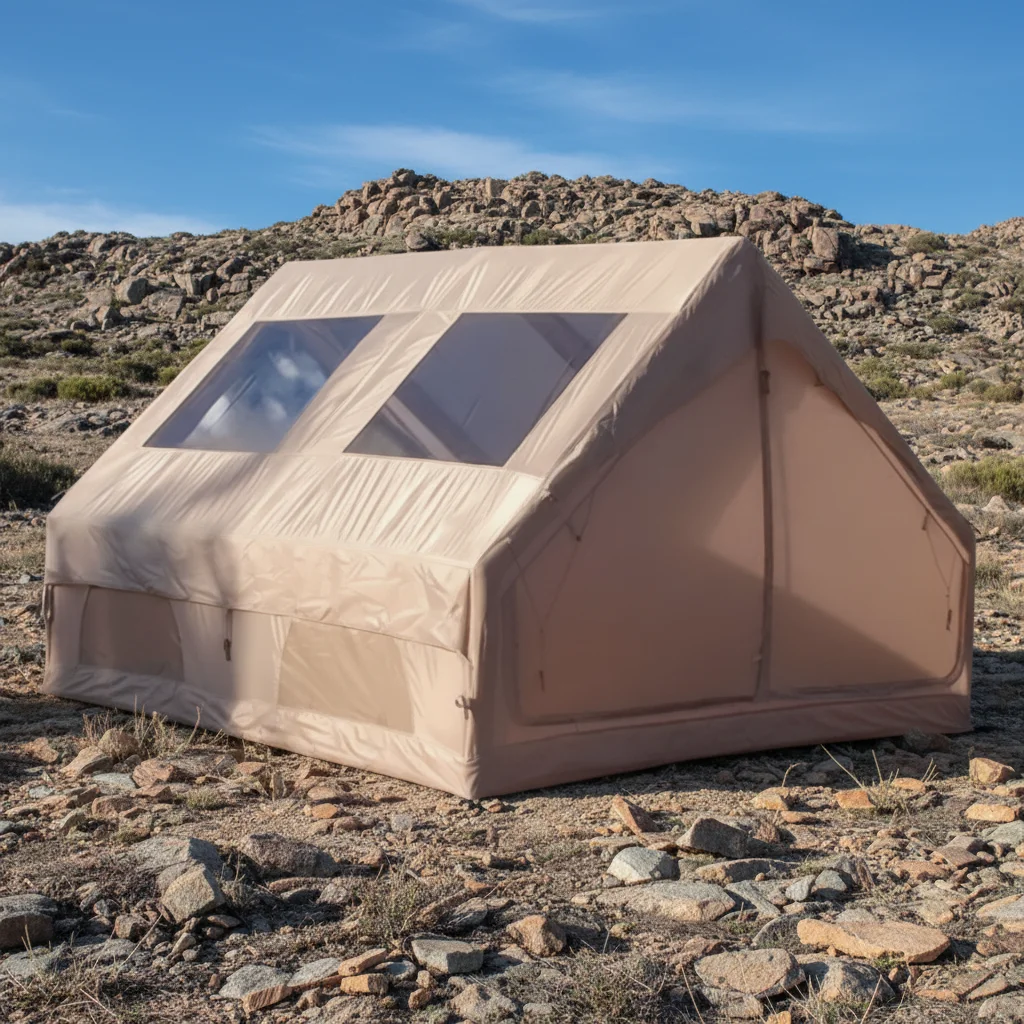
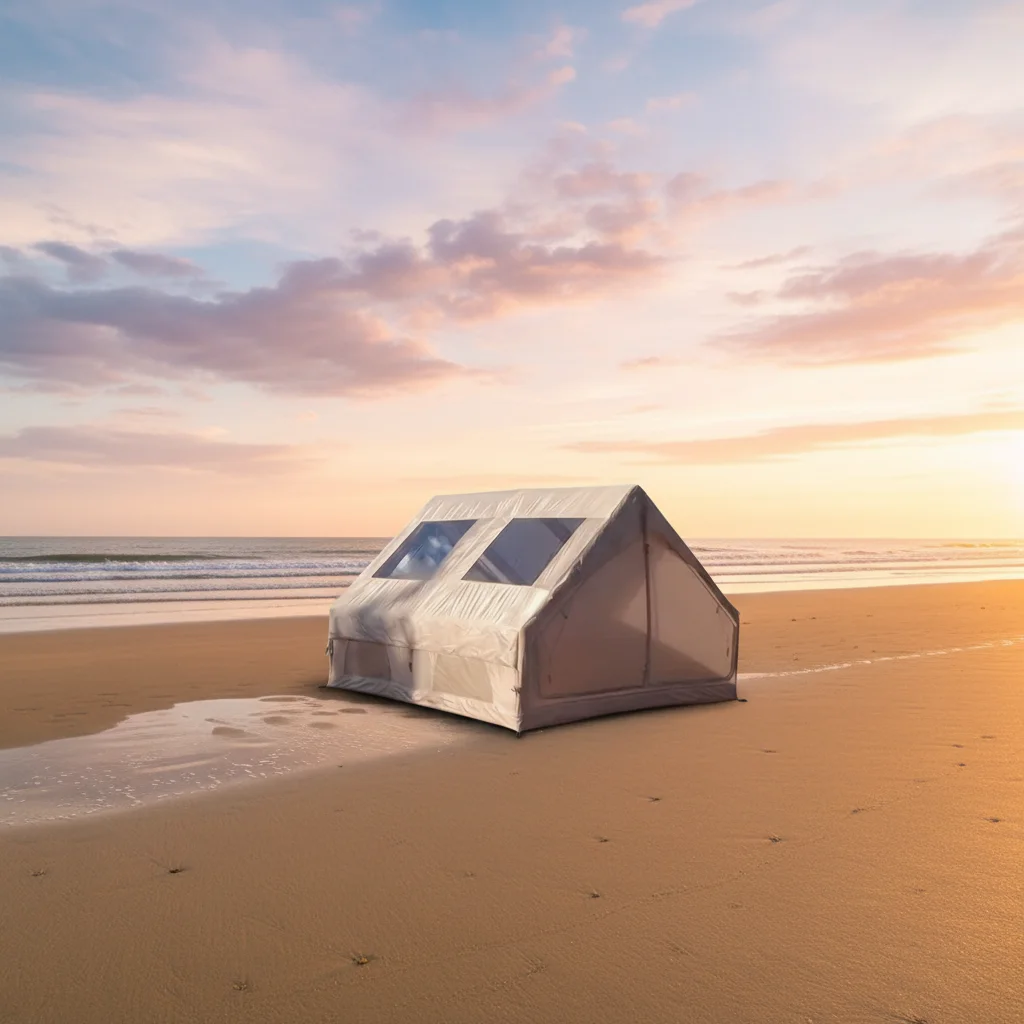
PVC Inflatable Camping Tent, Waterproof & UV-Resistant — single-layer inflatable structure made from PVC tarpaulin for commercial outdoor use.
- Built for camping grounds, event facilities, and expedition bases where reliable shelter matters across seasons.
- Custom sizing, colour, and pattern printing handled by a 10-person R&D team, with fire-retardant compliance to EN 13501-1.
- Each roll and unit backed by dedicated QA/QC at every production stage and 100% inspection before shipment.
Description
Complete Range & Custom Engineering — Every PVC Inflatable Camping Tent order runs through dedicated QA/QC checkpoints with 100% pre-shipment inspection against your confirmed specification sheet.
Technical Specifications
| Parameter | Value |
|---|---|
| Product Type | Inflatable Tent |
| Core Material | PVC tarpaulin |
| Key Performance | Waterproof, UV-resistant, tear-resistant |
| Product Forms | Inflatable structure, single layer construction |
| Fire-Retardant Compliance | EN 13501-1 |
| Tear Strength | 300N (tested to ISO 13937-2) |
| UV Resistance | Retains 85% tensile strength after 500 hours accelerated weather testing |
| Air Pressure Decay | ≤5% over 24 consecutive hours |
| Seam Strength Tolerance | ±3% |
| Prototype Sample Turnaround | 5 days |
| Standards | ISO 9001, ISO 14001, ISO 45001, CE |
Application Suitability
| Application | Exposure & Requirement |
|---|---|
| Commercial camping ground operations | Year-round weather cycles, guest turnover abrasion, UV load, rapid inflation and deflation |
| Large-scale outdoor event facilities | High wind load, frequent relocation, custom branding on exterior skin |
| Construction camps and expedition bases | Remote logistics, rough ground puncture risk, extended seasonal deployment |
| Commercial adventure parks | Continuous public use, safety compliance visibility, cleaning chemical exposure |
| Professional outdoor equipment distribution | Batch consistency across retail SKUs, private-label printing, packaging fit |
Why Inflatable Camping Tent Fabric Consistency Matters More Than You Think
Batch-to-batch GSM variation is the most common reason inflatable tents fail pressure tests after arrival.
You approve a sample, place a bulk order, and the containers arrive. The first panel goes up on the production floor and the welder notices the heat settings are off. The coating melts too fast or not enough. That is usually the moment a buyer discovers the roll GSM drifted from what was quoted. [NEED_CITE: coating weight deviation and its effect on thermal welding parameters for PVC tarpaulin] When you source an Inflatable Camping Tent, the air-holding structure depends entirely on weld integrity, and weld integrity depends on coating consistency roll after roll.
Full Catalogue Meets OEM Custom Demand
Our range covers the complete spectrum of PVC Inflatable Camping Tent options, from stock grades ready for immediate dispatch to fully customised runs where colour, GSM, width, and surface finish are built to your project brief. The 10-person R&D team develops prototype samples within days, allowing buyers to test inflation behaviour, seam response, and print clarity before committing to volume. Whether you are an outdoor gear manufacturer building a new tent line or a distributor restocking commercial camping shelters, the catalogue gives you a single point of specification and accountability.
Single-Layer Construction and Air Retention Logic
Single-layer inflatable construction demands that the fabric itself performs both the structural and the sealing function — there is no inner bladder to fall back on. The PVC tarpaulin core must hold air pressure with a decay rate of ≤5% over 24 consecutive hours, which places tight requirements on coating adhesion and seam strength tolerance at ±3%. Every panel curve and valve surround is a potential leak path if the base fabric or coating weight is inconsistent. [NEED_CITE: ISO 1421 tensile and tear test methods for coated fabrics used in air-holding structures] This is why material selection starts with the base fabric denier and weave density before any coating formula is finalised.
Reading the Numbers That Actually Predict Field Performance
Tear strength of 300N, tested to ISO 13937-2, tells you how a small puncture or cut will behave once the inflatable beam is under pressure — a low tear value means a nick from a tent peg can propagate into a full split along the warp or weft. Fire-retardant compliance to EN 13501-1 matters for any Inflatable Camping Tent deployed at commercial event sites or adventure parks where local fire authorities inspect temporary structures. UV resistance measured at 85% retained tensile strength after 500 hours of accelerated weather testing gives a controlled comparison point, but field life also depends on installation orientation and local irradiance. GSM alone never tells the whole story; a lighter base fabric with tighter weave and well-calibrated coating can outperform a heavier but loosely woven alternative when it comes to air-holding seam performance.
The Hidden Cost of Specifying on Price Per Kilogram
Buyers who select material purely on quoted price per kilogram often discover the real cost on the factory floor. Rolls that arrive under the stated GSM force welders to adjust heat and dwell time mid-run, creating seam weak points that show up as slow leaks once the tent is inflated. [NEED_CITE: welded seam failure occurring before fabric failure at maximum flex points in inflatable structures] Colour variation between rolls in the same shipment becomes visible the moment panels are joined side by side on a commercial camping tent — and your customer sees it first. These are not cosmetic issues; they trigger returns, rework, and missed event deadlines.
What Production Depth Means for Your Order
Three full production lines and 36 sets of processing equipment give this facility the capacity to hold your delivery window even during peak ordering seasons for outdoor gear. Every roll of PVC tarpaulin destined for an Inflatable Camping Tent passes through in-process QA checkpoints that verify coating weight, colour match, and surface finish before it reaches the packing stage. The dedicated R&D team handles everything from custom pattern printing to adjusting coating formulations for specific climate requirements, and sample development completes within days rather than weeks. Documentation is generated per batch, so every roll in your shipment is traceable back to its production run and test data. [NEED_CITE: pre-shipment inspection protocols for coated fabrics per ISO 9001 quality management systems]
Documentation & Verification
- Material specification sheet confirming GSM, base fabric denier, and coating weight per roll
- Batch-specific UV and fire-retardant test reports aligned to EN 13501-1
- Pre-shipment dimensional and air pressure decay inspection record
- Certificate of origin and customs-ready packing list per container
- ISO 9001, ISO 14001, ISO 45001, and CE compliance documentation package
Fabrication, Handling & Storage
- Set thermal welder temperature and dwell time after testing a scrap piece from the exact roll batch, as PVC tarpaulin coating response varies by run
- Store rolls upright on pallets in a shaded, ventilated area to prevent flat-spot deformation on the coating surface
- Use a mild pH-neutral cleaner on the tent exterior; aggressive solvents can degrade the UV-resistant coating layer
- Inflate the structure to partial pressure during first field deployment to allow seam adhesive to fully cure under load
- Keep repair patches cut from the same roll batch to ensure colour and weld compatibility with the parent panel
Getting a Quote That Matches Your Project
To move from enquiry to sample, share your target application and the environmental exposure the tent will face — wind load, expected temperature range, and any fire code your end market requires. Let us know the width and colour you need, whether you require custom pattern printing or branding across the order, and your estimated annual volume so we can align production scheduling. If you are an OEM, confirm whether you need finished cut-and-weld panels or roll stock for your own fabrication line.
Frequently Asked Questions
Q: What GSM and material thickness options are available for different climate conditions?
A: PVC tarpaulin for inflatable camping tents is produced across a range of GSM grades suited to different thermal and wind environments. Lighter grades reduce pack weight for expedition use, while heavier grades add abrasion resistance for permanent camping ground installations. Request a specification sheet with the GSM, base fabric denier, and coating weight for your specific climate scenario before approving samples.
Q: Can I get custom colours, sizes, and printed branding with batch consistency?
A: Yes. The R&D team develops colour formulations and pattern prints matched to your brand reference, and every roll in a single order runs on the same production line with in-process QA checks. Colour consistency across rolls is verified before packing, which matters when tent panels are joined side by side in the field.
Q: What fire-retardant and UV-resistance certifications come with the shipment?
A: Fire-retardant compliance is provided to EN 13501-1, and UV resistance data is documented at 85% tensile strength retention after 500 hours of accelerated weather testing. Batch-specific test reports ship with your order, and additional certifications can be arranged if your market requires a different classification standard.
Q: How does the sample development and approval process work before production?
A: Once you confirm application requirements, GSM preference, and colour or print specifications, a prototype sample is developed within 5 days. You test inflation behaviour, weld response, and visual appearance, then approve or request adjustments. Bulk production only starts after your written sample sign-off.
Q: What documentation is included for customs clearance and quality traceability?
A: Each shipment includes a certificate of origin, roll packing list, material specification sheet, pre-shipment inspection record, and relevant ISO and CE certificates. Batch-specific test reports for UV and fire-retardant performance are also provided, giving you a complete traceability package for customs and your own quality records.
Related products
-
Outdoor Camping Inflatable Tent Luxury All-Season Use PVC Waterproof Quick Automatic Opening Rainproof Insulated
Read more -
Camping Tent Inflatable UV Resistant Customizable Four-season Waterproof PVC Quick Automatic Opening 2-3 Person Outdoor
Read more -
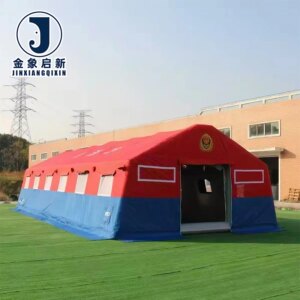
Luxury PVC Inflatable Tent for Glamping Outdoor Waterproof with Quick Automatic Opening Four-Season Foldable Design and Pump
Read more -
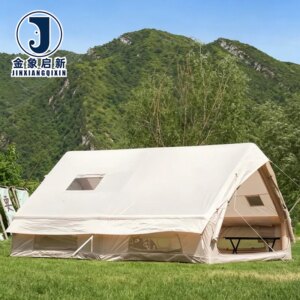
Inflatable Camping Tent PVC Four-Season Waterproof Outdoor Air Tent with Quick Automatic Opening for 2-3 Person
Read more