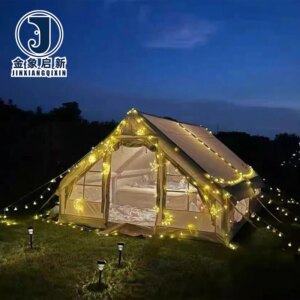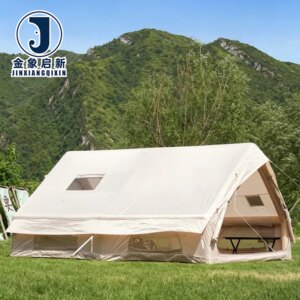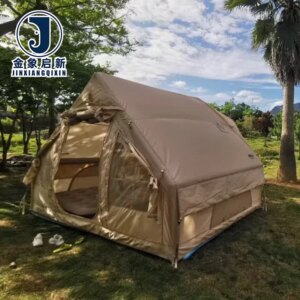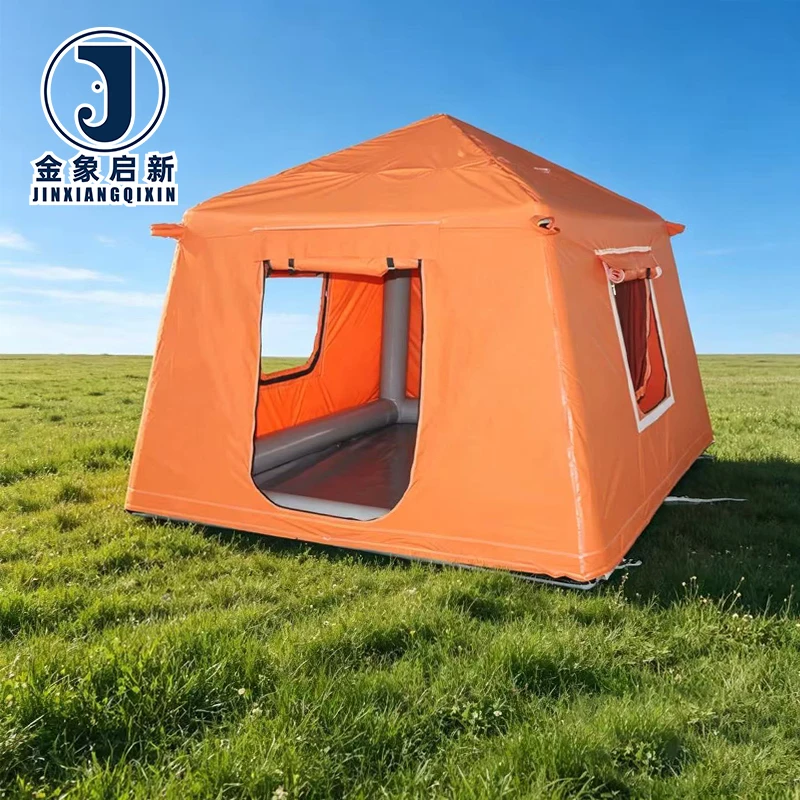
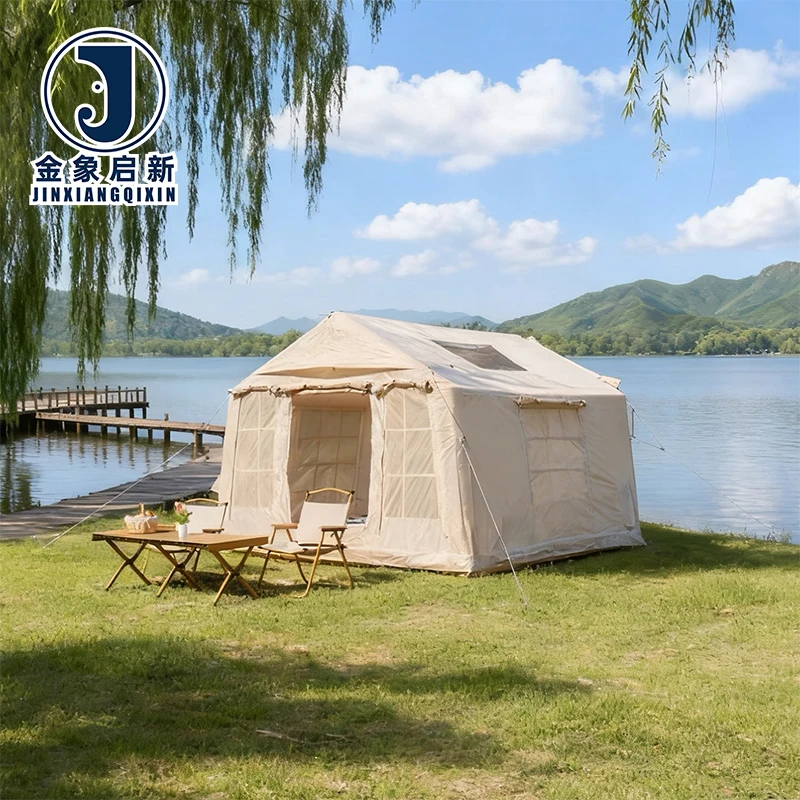
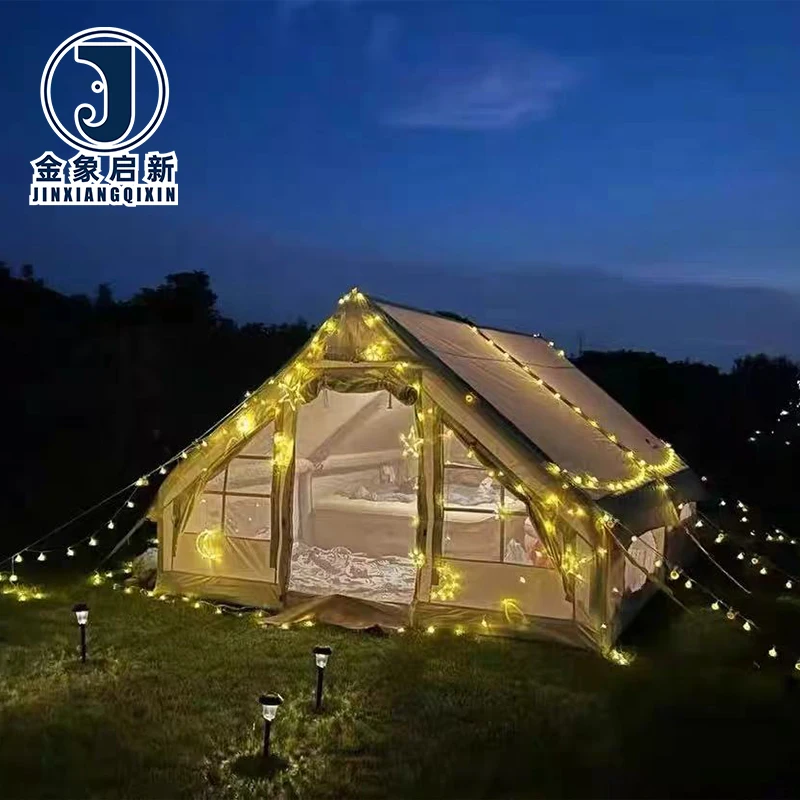
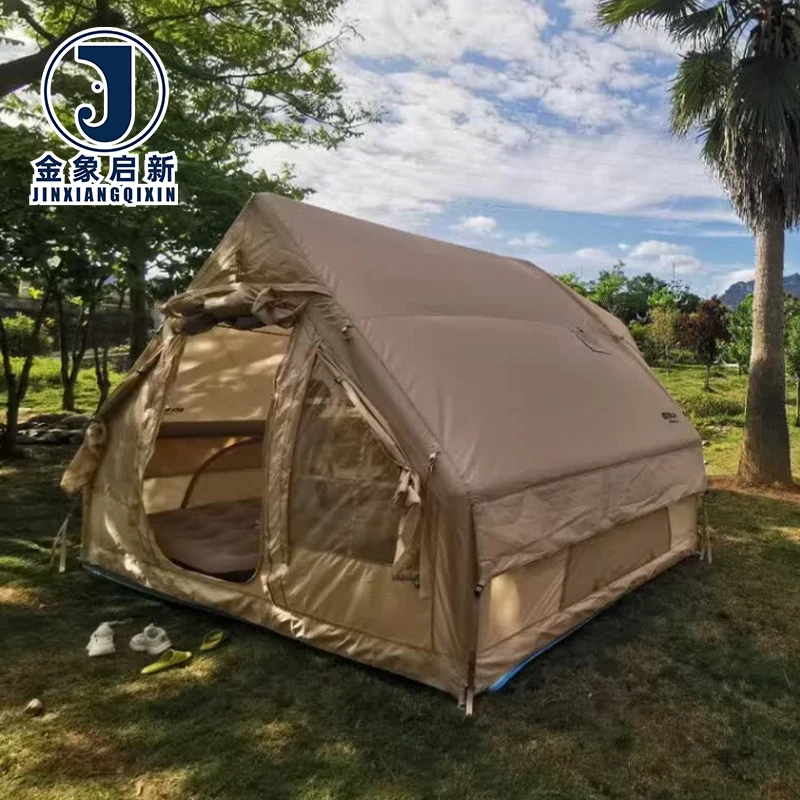
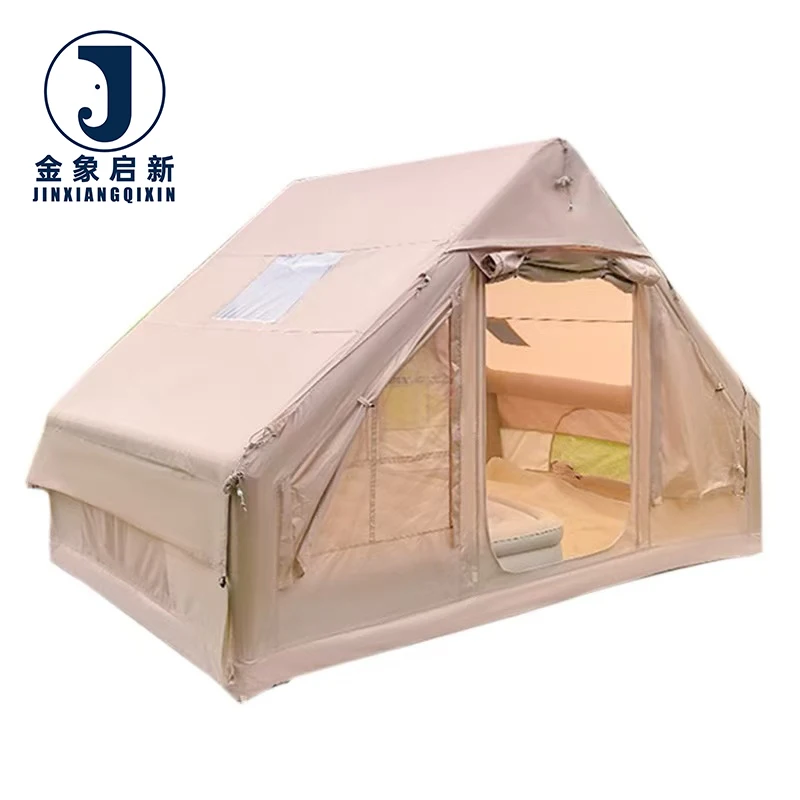
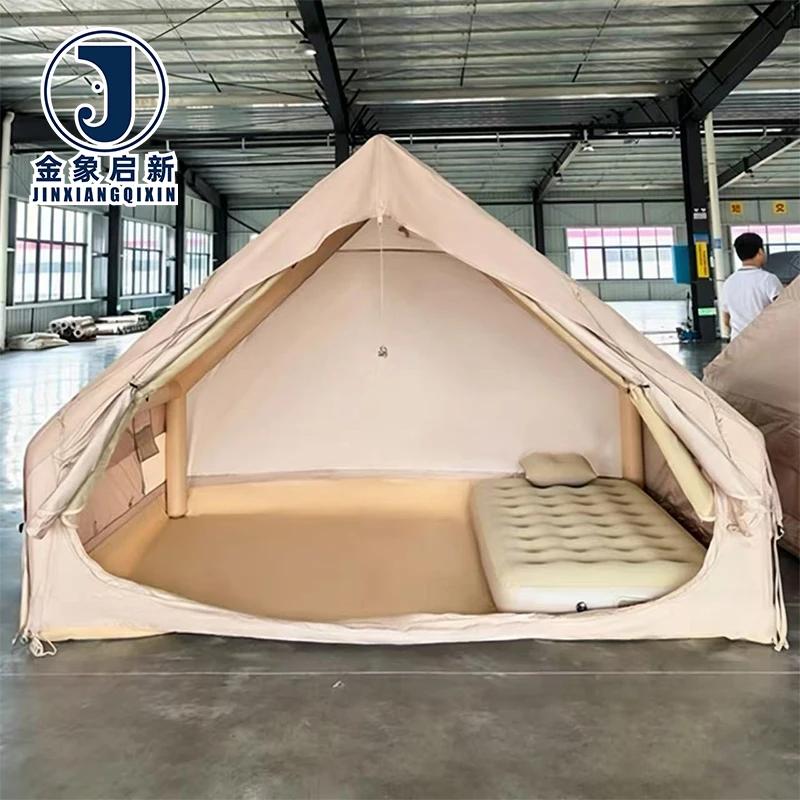
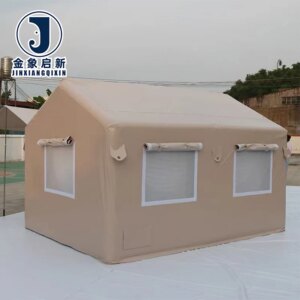
Portable Inflatable Camping Tent, 420D Oxford Cloth, 5-8 Person Capacity — quick automatic opening with ≥2000mm waterproof rating and UV-resistant treatment for commercial deployment.
- Tensile strength ≥300N/5cm with heat-welded seams matched to fabric lifespan
- Full custom sizing, colour and pattern printing supported across bulk orders
- OEM & ODM sample development with 100% pre-shipment airtightness inspection (≤0.2bar loss/24h)
Three full production lines and 36 sets of equipment ensure on-time delivery for volume orders, backed by dedicated QA/QC at every production stage.
Description
Precision in Every Layer — Our three full production lines maintain consistent coating weight and adhesion control, verified roll by roll before dispatch.
Technical Specifications
| Parameter | Value |
|---|---|
| Product Type | Inflatable Tent |
| Core Material | 420D Oxford Cloth |
| Capacity | 5-8 Person |
| Key Performance | Quick Automatic Opening, Portable |
| Tensile Strength | ≥300N/5cm |
| Waterproof Rating | ≥2000mm water pressure resistance |
| Airtightness | ≤0.2bar pressure loss per 24 hours |
| UV Resistance | UV-resistant additives |
| Customization Service | OEM & ODM (sample customization, pattern printing) |
| Standards | ISO 9001, ISO 14001, ISO 45001, CE |
Application Suitability
| Application | Exposure & Requirement |
|---|---|
| Outdoor event management | Repeated setup and teardown, UV exposure, rain contact, crowd abrasion |
| Temporary site accommodation for construction crews | Dust ingress, wind loading, prolonged sun exposure, ground moisture |
| Mobile exhibition spaces | Frequent transport, indoor/outdoor transition, branding visibility |
| Emergency response shelters | Rapid deployment, extreme weather exposure, sanitary conditions |
| Team-based fieldwork | Remote location use, temperature fluctuation, portability requirement |
When UV Claims Lack Lab Data, the Fabric Pays the Price
A UV-resistant additive means nothing without a test report tied to the batch.
I learned this the hard way. Last year we supplied 420D Oxford cloth for inflatable camping tents to a Middle East project. The quote stated UV resistance, but we shipped without attaching a test report. After continuous desert sun exposure, the surface began chalking and cracking within months. The entire batch was claimed. Since then, every roll leaving our line carries lab data matching the buyer’s specified performance criteria — no verbal assurances, only documented results. Commercial buyers of Inflatable Tent aftermarket supplier fabrics face this gap constantly: the quotation promises protection the delivered material cannot prove [NEED_CITE: UV degradation testing standards for coated textile membranes].
What 420D Oxford Cloth Delivers in an Inflatable Camping Structure
The 420 denier base fabric provides the structural backbone for inflatable chambers that must hold air pressure while resisting puncture from ground debris and repeated folding. This Portable Inflatable Camping Tent material reaches ≥300N/5cm tensile strength, which keeps seams intact when the frame flexes under wind load. Quick automatic opening relies on airtight chamber integrity — the ≤0.2bar pressure loss specification per 24 hours ensures the structure stays rigid through an event or overnight accommodation shift without constant re-inflation.
Coating and Waterproof Performance Under Field Conditions
The ≥2000mm water pressure resistance rating means the Inflatable Tent aftermarket supplier coating holds against sustained rainfall without moisture migrating through to the interior. For construction crews using these as temporary site accommodation, ground moisture and splashing runoff test the lower panels continuously. The waterproof coating also serves as a secondary barrier protecting the Oxford weave from abrasion during transport and setup. Sample customization allows buyers to verify coating behaviour against their specific deployment surface before committing to full production runs [NEED_CITE: hydrostatic head test methods for coated fabrics].
Reading the Specifications That Matter for Deployment
The 420D denier indicates the yarn thickness in the base weave — heavier denier resists tear propagation when a puncture initiates, which is critical for inflatable chambers where a small tear can compromise the entire air beam. Tensile strength at ≥300N/5cm measures the force required to pull the fabric apart along a 5cm strip, directly correlating to how the material handles wind-induced tension on the tent envelope. Waterproof rating expressed as ≥2000mm water column indicates the hydrostatic pressure the coating withstands before leakage begins — relevant when rain pools on horizontal surfaces or wind drives moisture against vertical panels. Airtightness at ≤0.2bar loss over 24 hours defines how long the inflatable frame maintains structural rigidity, determining whether the tent requires intermittent re-inflation during multi-day deployments.
The Real Cost of Skipping Pre-Shipment Verification
When an Inflatable Tent aftermarket supplier ships without per-roll inspection, problems surface only after deployment. Airtightness failures discovered on-site mean the structure deflates during use, disrupting events or leaving crews without shelter. Waterproof coating inconsistencies between batches result in some units leaking while others perform as expected — impossible to predict without documented testing. Colour variation across a single order becomes visible only when multiple units stand side by side at an exhibition or emergency camp [NEED_CITE: batch-to-batch colour consistency standards for coated textiles].
Why Buyers Source This Material Here
Three full production lines with 36 sets of professional equipment provide the capacity to fill bulk orders for commercial inflatable tent projects without splitting production across external workshops. A dedicated 10-person R&D team develops custom samples within days, handling pattern printing and sizing adjustments specific to each buyer’s tent frame geometry. Every roll undergoes 100% inspection before shipment — airtightness tested, coating weight verified, colour checked against the approved reference — with results documented in the pre-shipment inspection record. The coating process control developed over nearly 30 years of coated fabric production ensures GSM consistency roll to roll, so buyers receive what the specification sheet states.
Documentation & Verification
- Material specification sheet stating base fabric denier, coating type, and colour reference per roll
- Test report for UV-resistant additive performance matched to the production batch
- Pre-shipment inspection record confirming airtightness and waterproof rating per unit
- ISO and CE certificates covering the manufacturing quality management system
- Roll packing list with net weight and dimensions for customs clearance
- Certificate of origin supporting import duty classification
Fabrication, Handling & Storage
- Heat-weld seams at temperature and dwell time matched to the 420D Oxford coating thickness to prevent delamination under inflation pressure
- Store rolls vertically in shaded, ventilated areas to prevent permanent creasing of the coated Oxford surface
- Use mild, non-solvent cleaners on the coated surface to preserve the waterproof layer integrity during repeated deployments
- Inflate test chambers to ≤0.2bar and hold for 24 hours after welding to confirm seam airtightness before packing
- Avoid dragging the 420D Oxford material across abrasive ground during setup to prevent base fabric exposure
Request a Quotation With Your Project Parameters
Provide your target deployment environment — desert sun, coastal humidity, or temperate seasonal use — so we match the UV and waterproof coating specification to your actual exposure conditions. Specify the quantity, required chamber dimensions, and whether you need finished inflatable tent units or roll stock for your own fabrication line. If your market requires documented flame retardant grades or specific airtightness thresholds beyond our standard range, state the compliance standard so we develop and test to that requirement before quoting.
Frequently Asked Questions
Q: Can you produce inflatable tent fabric in custom dimensions and colours?
A: Yes. Our R&D team develops samples based on your chamber geometry and colour reference. We handle pattern printing and sizing adjustments for OEM and ODM requirements. Sample approval precedes production to confirm coating behaviour, colour match, and airtightness before full-batch commitment.
Q: How do you control colour consistency across multiple rolls in one order?
A: Every production run references an approved colour standard, with inline checks during coating. The pre-shipment inspection compares each roll against that reference. If your installation places units side by side, we recommend requesting the inspection photos before dispatch to verify visual match.
Q: Do UV-resistant and waterproof claims come with test reports?
A: Every batch ships with lab data documenting UV additive performance and the ≥2000mm waterproof rating. We do not rely on verbal claims. If your project specifies a particular test method or exposure standard, confirm the requirement at inquiry stage so we test accordingly.
Q: What is the minimum order and typical lead time for custom specifications?
A: Minimums and lead times depend on the customisation scope — standard colours and sizes ship faster than bespoke prints or non-standard widths. Provide your annual volume and required delivery schedule at inquiry so we confirm capacity allocation before quotation.
Q: What does the weld warranty cover on inflatable chamber seams?
A: Welds are inspected for airtightness at ≤0.2bar pressure loss per 24 hours before dispatch. Our warranty covers seam failure under normal inflation conditions within the stated specification range. Provide your operating pressure and deployment environment so we set weld parameters accordingly.
Related products
-
Camping Tent Inflatable PVC Waterproof UV Resistant Four-Season Quick Automatic Opening Customizable 2-3 Person
Read more -
Outdoor Camping Inflatable Tent Luxury All-Season Use PVC Waterproof Quick Automatic Opening Rainproof Insulated
Read more -
Camping Tent Inflatable UV Resistant Customizable Four-season Waterproof PVC Quick Automatic Opening 2-3 Person Outdoor
Read more -
Inflatable Four-Season Event Tent Outdoor Waterproof PVC Quick Automatic Opening 6-8 Person Custom Logo
Read more