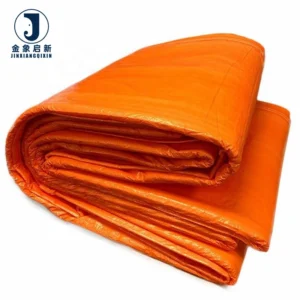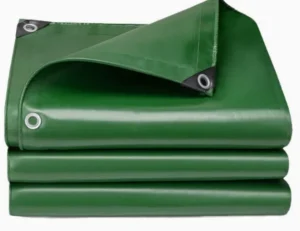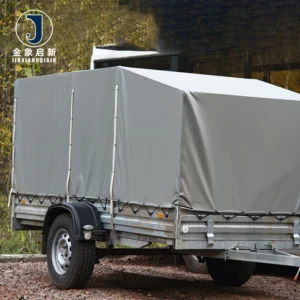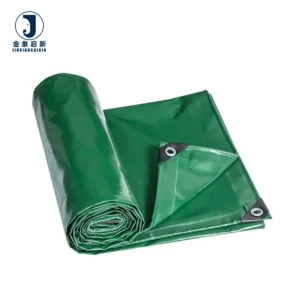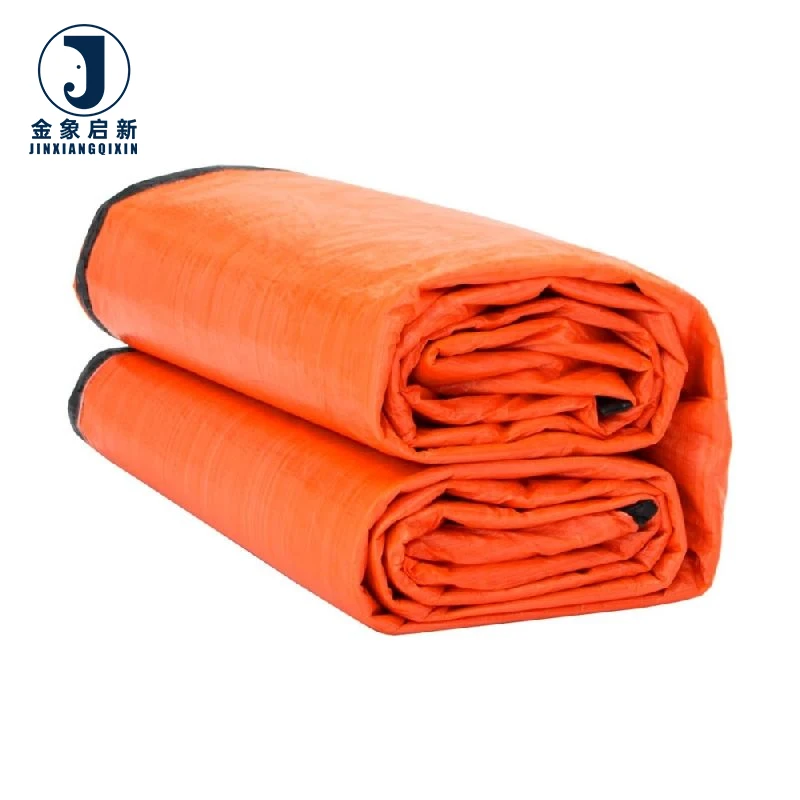
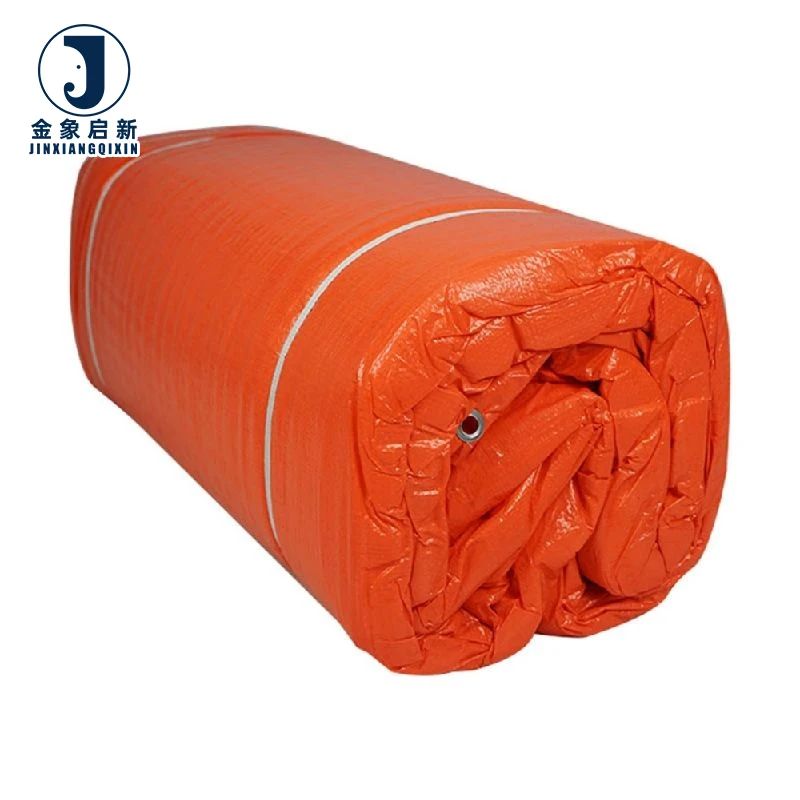
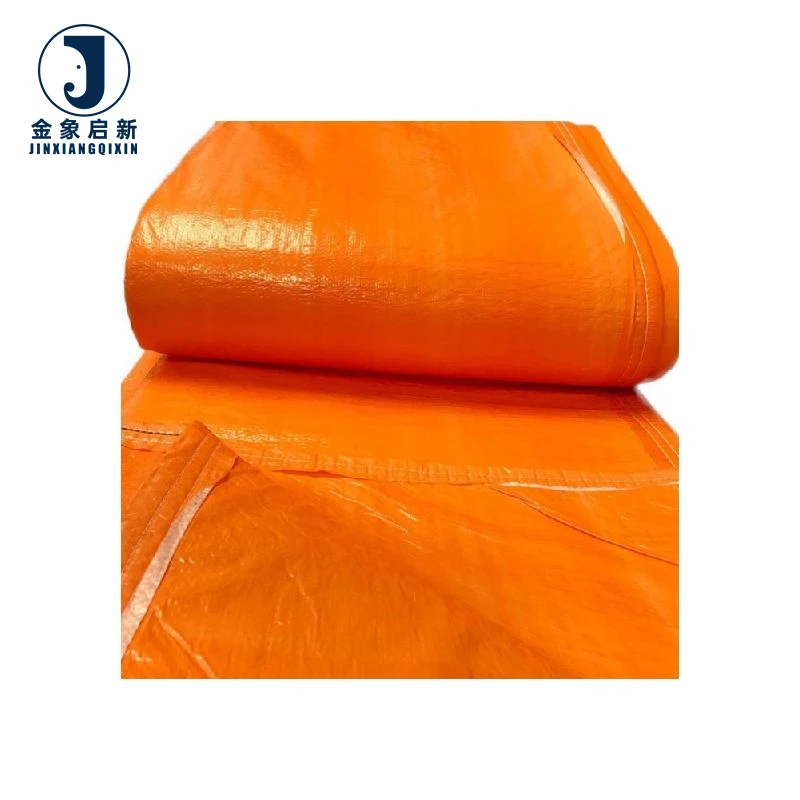
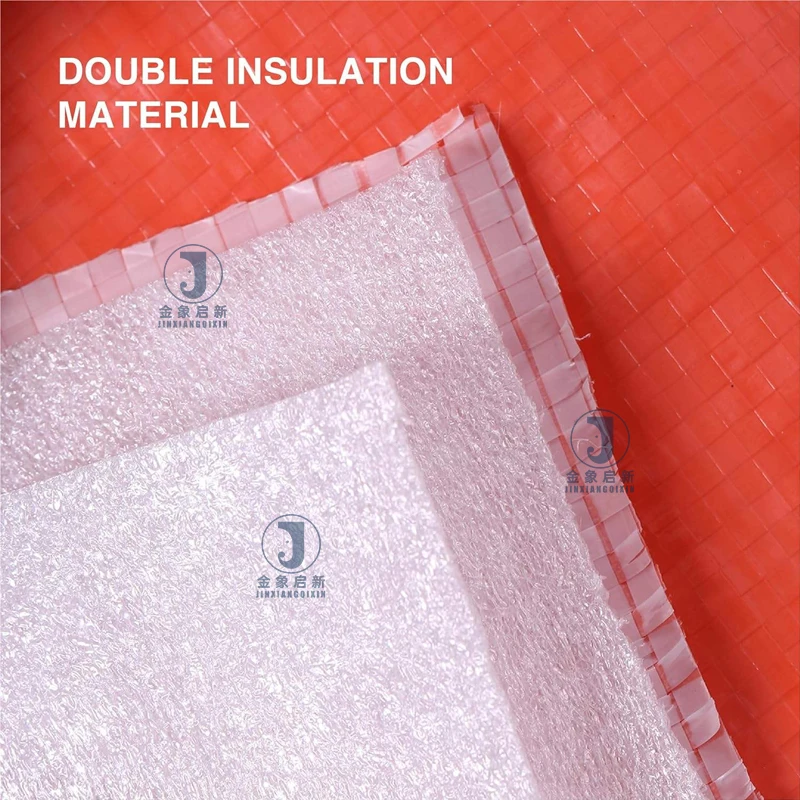
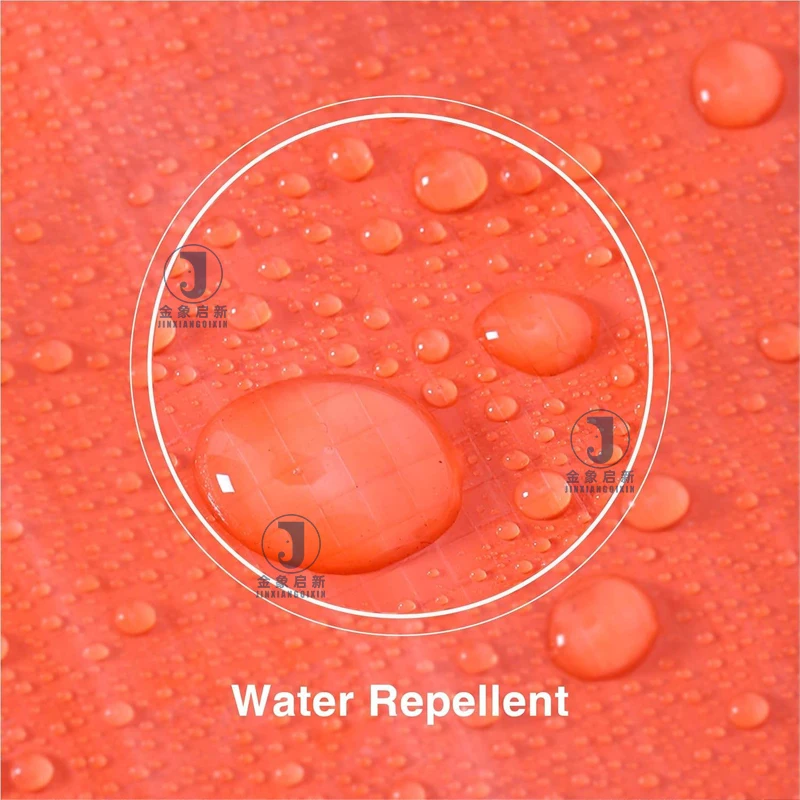
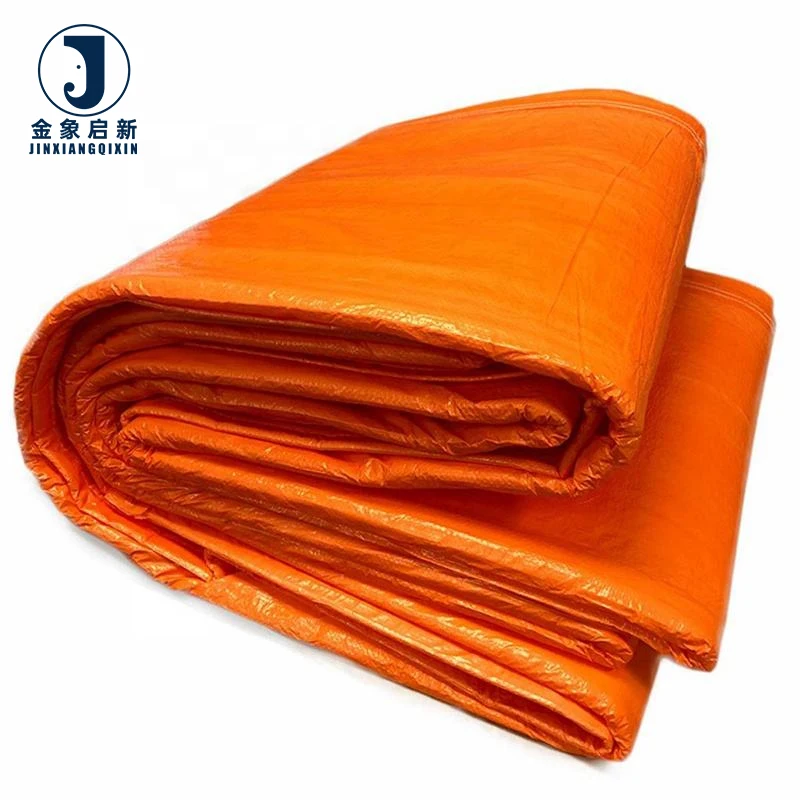
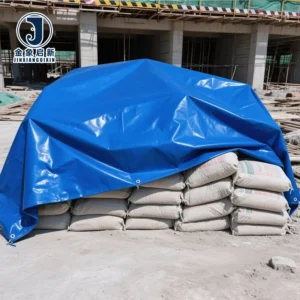
PE Insulated Tarpaulin Concrete Curing Blanket, 12ftx20ft, 6mm Closed-Cell Foam Core — three-layer construction with PE cloth faces sandwiching a closed-cell PE foam insulation core. Rust-proof brass grommets spaced 61cm and 91.5cm along reinforced stitched hems handle flex-point stress at enclosure edges. UV treatment integrated into the base fabric ensures sustained performance across the tarp lifespan.
Full-range insulated PE tarps from curing blankets to 12mm enclosure panels, with custom sizing, colour and grommet layout available from a single source.
Dedicated QA/QC at every stage with 100% pre-shipment inspection and roll-to-roll colour consistency confirmed before dispatch.
Description
Production Depth Over Claims — Every insulated blanket we ship carries a material specification sheet stating exact layer structure, thickness, and colour reference, verified at every stage before dispatch.
Technical Specifications
| Parameter | Value |
|---|---|
| Product Type | Insulated PE Tarpaulin |
| Dimensions Available | 6ft x 24ft, 8ft x 25ft, 12ft x 20ft, 12ft x 24ft |
| Thickness Options | 2x2mm, 3×1.5mm, 1x4mm, 5mm, 6mm, 8mm, 12mm |
| Material Structure | PE cloth + closed cell PE foam core + PE cloth |
| Coating Material | PE |
| Color Options | Orange, Black, White, Silver, Customized color |
| Grommet Configuration | Aluminum grommets, hole distance 61cm and 91.5cm |
| Edge Finish | Reinforcement stitch, rust-proof brass grommets on all finished stitched edges |
| Waterproof | Yes (surface fabric) |
| UV Treatment | Yes (test basis not stated — confirm grade required for your market) |
| Standards | ISO, CE |
Application Suitability
| Application | Exposure & Requirement |
|---|---|
| Concrete Curing Blankets | Direct ground contact, moisture retention, thermal stability across curing cycles |
| Heated Enclosure Insulation | Interior heat retention, vertical hanging stress, repeated installation and removal |
| Construction Cold Weather Enclosures | Wind loading on vertical panels, low temperature exposure, scaffold tie-down points |
| Snowy & Rainy Day Outdoor Covering | Surface water shedding, snow load, UV exposure during extended outdoor use |
| Equipment & Material Temperature Control | Abrasion from loading, edge wear at grommet points, repeated folding and storage |
Why Stated Thickness Means Little Without a Layer Breakdown
A blanket labelled "insulated" tells you nothing until you know what sits between the two outer faces.
When sourcing an Insulated PE Tarpaulin manufacturer, buyers frequently receive quotes that state a single thickness number without specifying how that thickness is achieved. A 6mm blanket made from a single foam layer behaves completely differently under wind load and repeated handling than a 6mm blanket built from a closed-cell PE foam core sandwiched between two PE cloth faces. The outer layers carry the tensile and abrasion loads; the core provides thermal separation. Without this breakdown, thickness becomes a marketing number rather than an engineering input. [NEED_CITE: thermal insulation test methods for flexible building enclosures]
What the Three-Layer PE Construction Actually Delivers
The Insulated PE Tarpaulin Concrete Curing Blanket uses a defined structure: PE cloth on both outer faces with a closed cell PE foam core between them. The closed-cell nature of the foam prevents moisture migration through the core itself, which matters when blankets sit directly on curing concrete or face driving rain on a scaffold enclosure. The outer PE cloth layers handle mechanical abuse — dragging across formwork, folding into storage, and the point-load stress where grommets take tie-down forces. This Insulated PE Tarpaulin manufacturer builds every thickness option from this same three-layer architecture, so the mechanical behaviour remains predictable whether you specify 5mm for light enclosure work or 12mm for heavy-duty curing applications.
Matching Thickness to Your Actual Site Conditions
Choosing the right thickness starts with the thermal demand and the mechanical environment, not just the coldest temperature you expect. A 12mm blanket holds more heat but is stiffer and heavier, which affects how well it seals against irregular surfaces and how much load the grommet points must carry in wind. Thinner options like 1x4mm or 5mm conform more easily to curved or uneven surfaces, making them suited to wrapping irregular formwork or draping over stockpiled materials. For vertical building enclosures hung from scaffold tubes, the wind load calculation should drive both grommet spacing and the thickness grade you select. [NEED_CITE: wind load calculations for temporary construction enclosures]
How Grommet Spacing and Edge Reinforcement Interact
The standard configuration uses aluminum grommets at 61cm or 91.5cm intervals with rust-proof brass grommets on all finished stitched edges. On a 12ft x 24ft panel hung vertically as a wind block, the top edge grommets carry the entire dead weight of the blanket plus dynamic wind uplift. The reinforcement stitch distributes this load across the edge fabric rather than concentrating it at each grommet hole. If your site experiences sustained high winds, specifying the closer 61cm grommet spacing reduces the unsupported span between fixings and limits fabric billow that accelerates edge fatigue.
Reading the Thickness Options Against Your Project
The available range — 2x2mm through 12mm — covers fundamentally different use cases. The 2x2mm and 3×1.5mm grades serve light insulation duties: protecting freshly poured slab edges, covering temperature-sensitive materials during short-term outdoor storage, or lining the interior of small heated tents. The mid-range options (5mm, 6mm, 8mm) suit standard concrete curing blanket applications and typical scaffold enclosure panels. The 12mm grade is specified where thermal retention is the primary performance criterion, such as heated enclosures in sub-zero ambient conditions or curing blankets for mass concrete pours where heat of hydration must be contained. The PE foam core thickness directly governs thermal resistance, while the outer PE cloth denier and weave govern mechanical durability.
What Happens When Colour Consistency Is Assumed but Not Verified
Orders covering multiple blankets for the same enclosure or curing area require colour matching across every panel — a visible mismatch once installed signals inconsistent production to the site owner. When an Insulated PE Tarpaulin manufacturer does not control pigment dosing at the compounding stage, roll-to-roll colour variation is inevitable, especially across large orders placed weeks apart. This is not a cosmetic issue on a high-profile construction site where the building enclosure is visible from the street. Batch colour verification before dispatch, with reference samples held on file, is the only reliable way to prevent this. [NEED_CITE: colour measurement standards for coated and laminated fabrics]
Why Buyers Specify Here for Insulated PE Products
Production control begins at the coating stage, where adhesion between the PE cloth faces and the closed-cell foam core is verified before the blanket moves to cutting and finishing. Three full production lines with 36 sets of professional equipment support volume orders without compressing lead times on custom sizes. The 10-person R&D team develops samples within days when you need a non-standard dimension, a specific colour match, or an adjusted grommet layout — and sample approval gates bulk production. A 100% pre-shipment inspection covers thickness verification, edge stitch integrity, and grommet pull-strength on every blanket before it leaves the facility. Custom width, length, and colour orders carry the same documentation and inspection discipline as standard cut sizes.
Documentation & Verification
- Material specification sheet stating layer structure, core thickness, and colour reference per blanket
- Pre-shipment inspection record with thickness and edge stitch verification
- UV test report provided where applicable — confirm test standard required
- ISO and CE certificates included with dispatch documentation package
- Roll and cut-size packing list with item-level dimension confirmation
- Certificate of origin and customs documentation for export shipments
Fabrication, Handling & Storage
- Heat-weld seams at temperatures matched to PE coating to prevent delamination at the foam core interface
- Brass grommet installation through reinforced edge stitch zones to distribute pull-out load across the PE cloth face
- Store folded blankets flat and avoid point compression that permanently deforms the closed-cell PE foam core
- Clean PE surfaces with mild detergent; solvent-based cleaners degrade the outer PE cloth coating
- Allow cold-stored blankets to reach ambient temperature before unfolding to prevent PE cloth cracking at fold lines
- Repair small punctures with PE-compatible adhesive patches applied to both outer faces for waterproof continuity
How to Specify Your Insulated Blanket Order
Provide the application, the thermal demand, and the mechanical environment rather than just a thickness number. Tell us whether the blankets will be used flat on curing concrete, hung vertically as enclosure panels, or draped over irregular stockpiles — each orientation changes the stress profile on edges and grommets. If your market has specific fire classification requirements for temporary construction enclosures, state the standard so we can confirm whether the material meets it or recommend an alternative grade. Specify your colour requirement with a reference sample or RAL code if batch consistency across the order is critical.
Frequently Asked Questions
Q: How is the insulation thickness verified on each blanket before shipment?
A: Each Insulated PE Tarpaulin Concrete Curing Blanket undergoes thickness measurement at multiple points during the 100% pre-shipment inspection. The closed-cell PE foam core thickness is verified against the material specification sheet, and any blanket falling outside tolerance is rejected before packing. Inspection records accompany the shipment documentation.
Q: What custom sizes and thicknesses are available beyond the standard cut options?
A: Our R&D team develops samples for non-standard dimensions and thickness combinations within days. You can specify any cut size up to the maximum production width, and any thickness from the 1x4mm to 12mm range. Sample approval gates bulk production, ensuring the custom Insulated PE Tarpaulin matches your project requirements before full commitment.
Q: How is colour consistency maintained across multiple blankets in the same order?
A: Pigment dosing is controlled at the compounding stage, and production batches are cross-referenced against a held reference sample. Every blanket in your order is visually compared under consistent lighting during pre-shipment inspection. For large or repeat orders, a signed colour approval sample is kept on file to anchor future production runs.
Q: What grommet spacing and edge reinforcement options are available for high wind exposure?
A: Standard aluminum grommets are set at 61cm or 91.5cm intervals with rust-proof brass grommets on all finished stitched edges. For vertical enclosure panels in exposed sites, we can adjust grommet spacing closer together and add supplementary edge reinforcement. Confirm your wind load requirement so we can recommend the appropriate configuration.
Q: What documentation confirms the material structure and waterproof performance?
A: Every shipment includes a material specification sheet stating the three-layer PE construction, core thickness, and colour reference. Pre-shipment inspection records confirm dimensional accuracy and edge integrity. ISO and CE certificates, a packing list with item-level detail, and a certificate of origin complete the documentation package dispatched with your order.
Related products
-
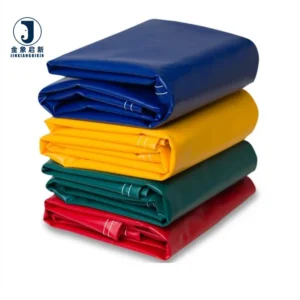
Heavy Duty Truck Tarpaulin 1000d Pvc Tarp Waterproof Pvc Canvas
¥1.20 Add to cart -

Hotsale Custom China Supplier Super Strength Industrial Grade 680GSM RIPSTOP PVC Tarpaulin for Builders Roof Tarp and Sheeting
¥2.80 Add to cart -
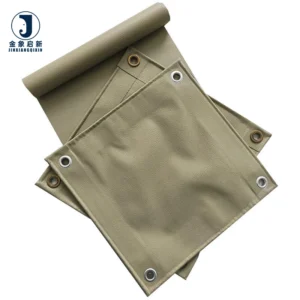
JX PVC Waterproof Fabric High-strength Sheeting for Industrial and Outdoor Coverings
¥1.90 Select options This product has multiple variants. The options may be chosen on the product page -
Wholesale Pvc Tarpaulin Wear-resistant Waterproof Multi-purpose Heat-resistant Tarpaulin
¥2.00 Add to cart