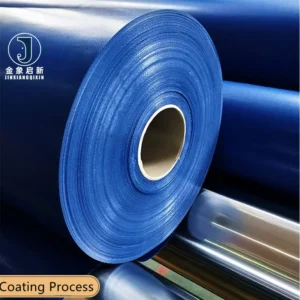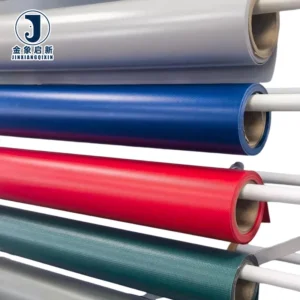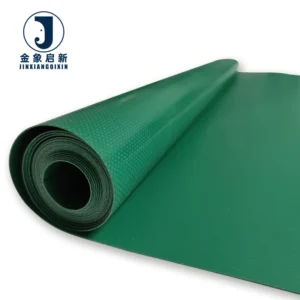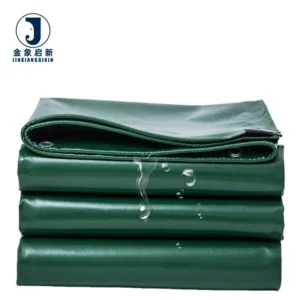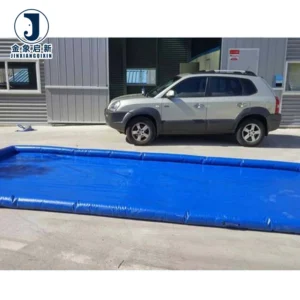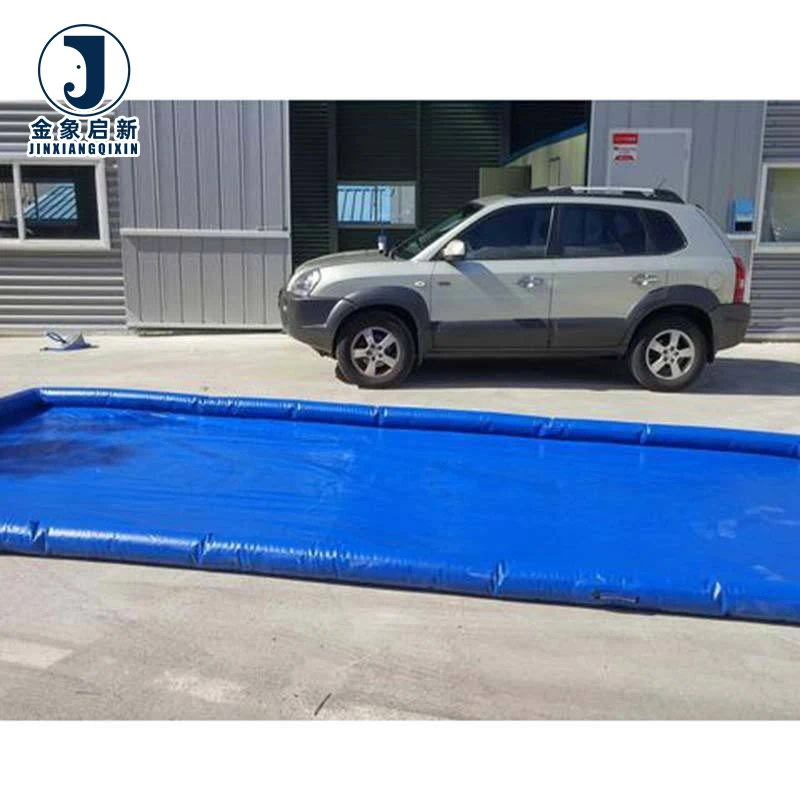
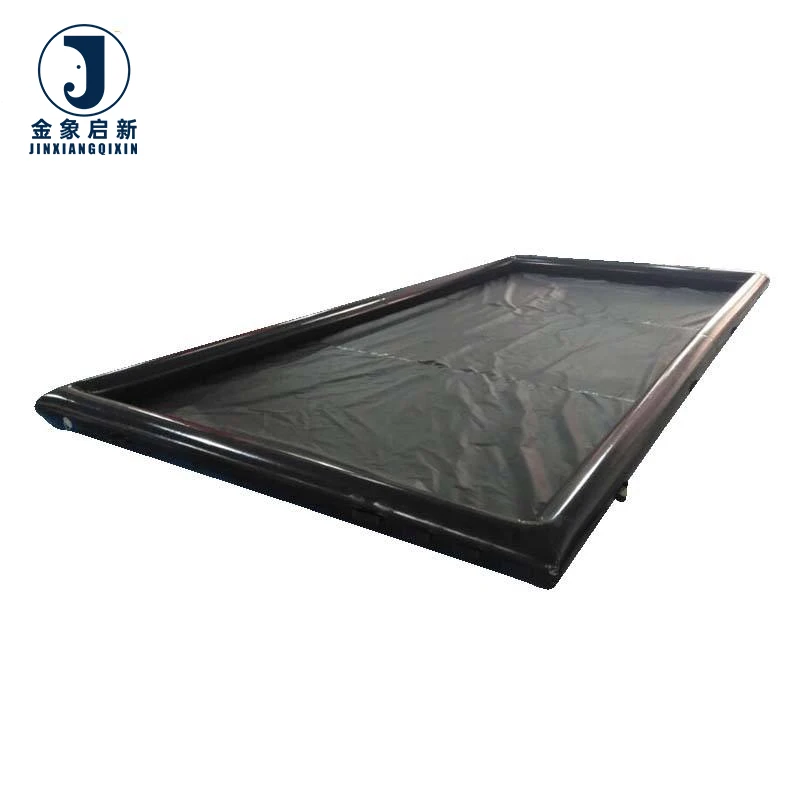
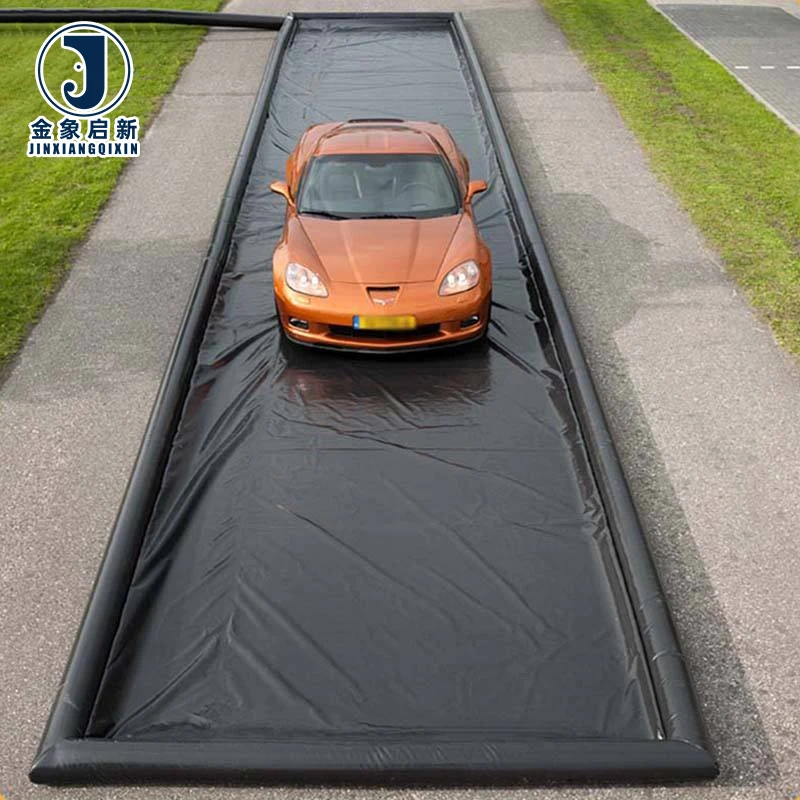
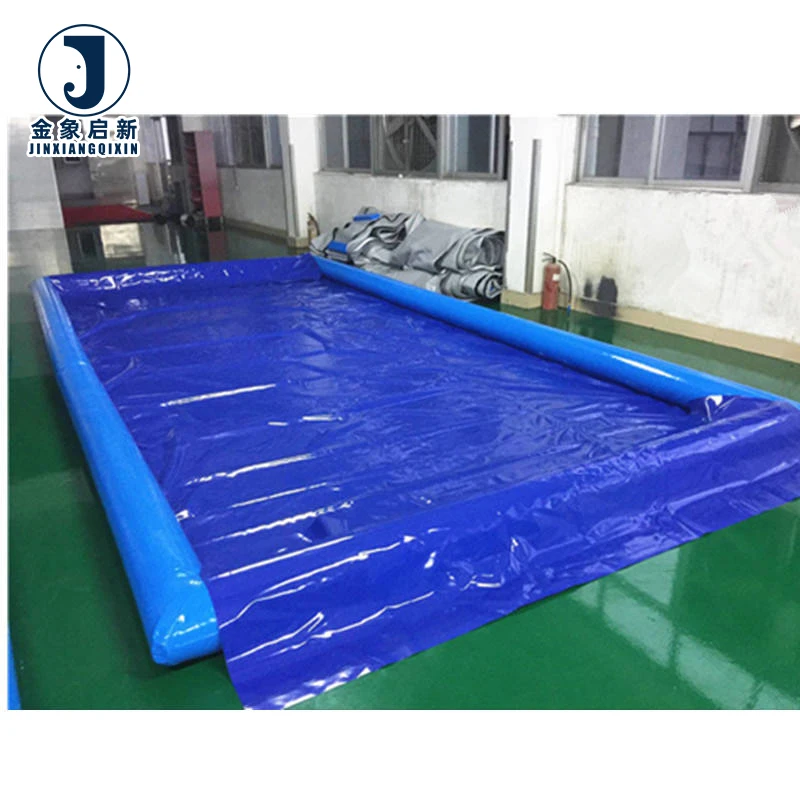
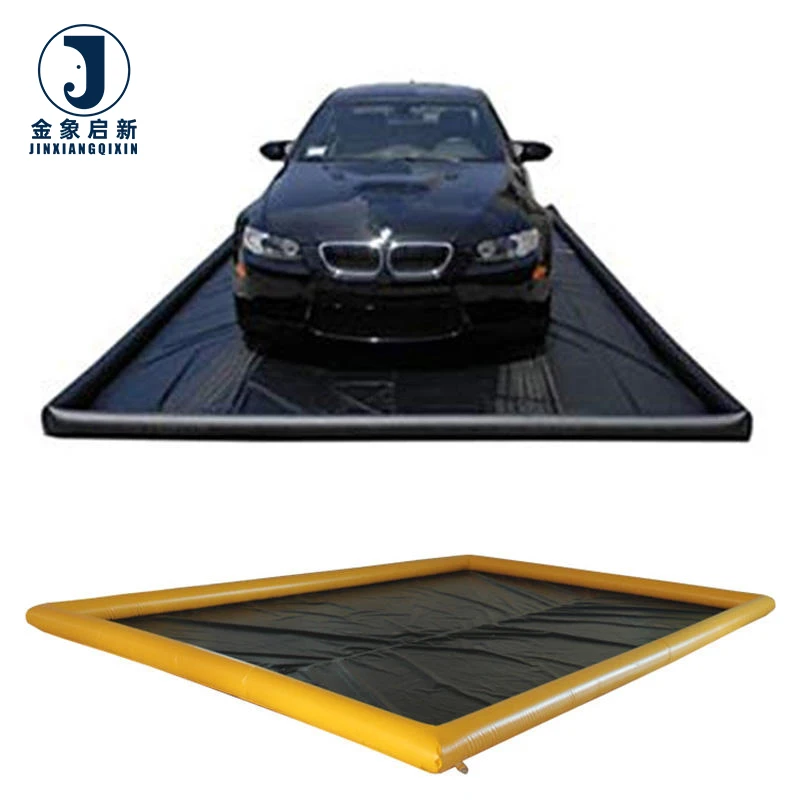
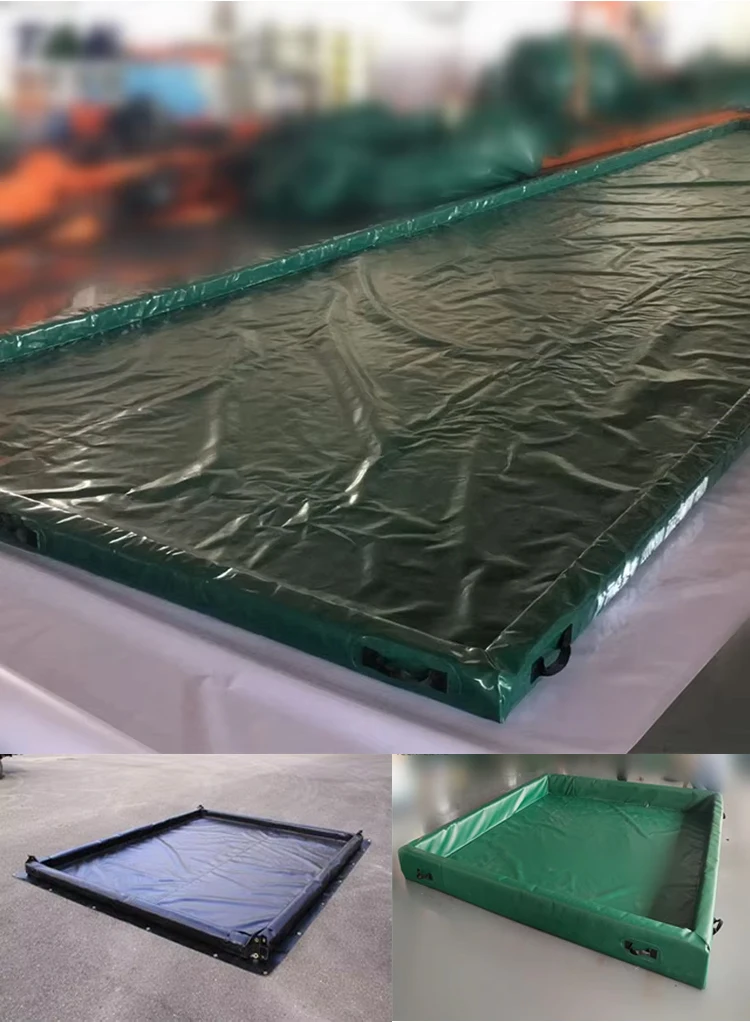
PVC Car Wash Containment Mat, 900gsm plain woven warp construction with UV stabilized coating, foam edge barriers and anti-slip surface — engineered to capture wash water, chemicals and debris in industrial wash bays and garage environments.
- Waterproof PVC tarpaulin rated for repeated vehicle traffic and chemical exposure
- Foam edges prevent liquid runoff where generic tarps fail at the perimeter
- Custom sizing available to match specific wash bay dimensions
Supported by a 10-person R&D team handling custom sizing and sample development within days for your wash bay project.
Description
Process-Controlled Coating — nearly three decades focused on PVC coated fabric, with in-house QA at every production stage ensuring the 900gsm weight stated on your quotation is the weight that arrives on your dock.
Technical Specifications
| Parameter | Value |
|---|---|
| Product Type | PVC Car Wash Containment Mat |
| Material | PVC Tarpaulin (Plain Woven Warp Knitted Base) |
| Weight | 900gsm |
| Coating Material | PVC |
| Edge Construction | Foam edges |
| Surface | Anti-slip surface |
| Waterproof | Yes |
| UV Stabilized | Available — confirm UV treatment level required for your application |
| Eco-Friendly | Yes |
| Custom Size | Available |
Application Suitability
| Application | Exposure & Requirement |
|---|---|
| Commercial car wash bays | Constant water flow, detergent exposure, vehicle tire abrasion, slip prevention for personnel |
| Truck and fleet wash stations | Heavy axle loads, high-volume water containment, chemical runoff from degreasers |
| Dealership service centers | Frequent vehicle movement, oil and fluid spill capture, professional appearance |
| Garage flooring containment | Brake fluid and solvent exposure, tool drop impact, edge barrier integrity |
| Vehicle maintenance areas | Hydraulic fluid and coolant spills, repeated mat repositioning, long-term chemical contact |
Why Containment Mat Weight Consistency Matters More Than the Quoted GSM
A 900gsm PVC Car Wash Containment Mat manufacturer must verify every roll before dispatch — the number on the invoice means nothing without a scale at the shipping door.
Buyers who have sourced wash bay mats before know the frustration: the sample felt substantial, the quotation specified a heavy grade, yet the delivered mats feel noticeably lighter underfoot. This is not a perception issue. When coating weight falls short, the PVC layer compresses faster under repeated vehicle traffic, the foam edge barriers lose adhesion sooner, and the anti-slip surface texture wears through to the base fabric. For a PVC Car Wash Containment Mat manufacturer, maintaining weight consistency across every mat in a batch is a process control challenge, not a material cost decision. [NEED_CITE: coating weight verification methods for industrial PVC fabrics]
Edge Barrier Design for Wash Bay Water Capture
The foam edge construction on this PVC Car Wash Containment Mat serves a specific hydraulic function. Unlike flat tarps where wash water flows freely off the perimeter, the raised foam barriers create a shallow containment basin that traps water, suspended solids, and chemical residue within the mat boundary. The edge height and foam density determine how much liquid the mat can hold before overflow occurs, which directly affects whether your wash bay floor stays dry or whether contaminated water reaches the surrounding drainage system. For fleet wash installations handling multiple vehicles per hour, the containment volume must be matched to the water flow rate of the wash equipment.
Anti-Slip Surface and Personnel Safety Under Wet Conditions
Wash bay floors are among the highest slip-risk environments in any vehicle service facility. The anti-slip surface on this mat is engineered to maintain grip under a continuous film of soapy water, where smooth PVC would become hazardous. The surface texture must balance two competing demands: enough friction to prevent personnel from sliding, yet enough smoothness to allow vehicles to drive on and off without the tire tread catching and tearing the mat surface. This balance is achieved through the coating finish applied during production, and it must remain effective after months of exposure to alkaline detergents and acidic wheel cleaners.
Understanding the 900gsm Construction and Base Fabric Role
The 900gsm weight of this mat comes from the combined mass of the warp knitted PVC base fabric and the PVC coating applied to it. In coated fabric engineering, the base fabric provides tensile and tear strength — the skeleton that resists stretching and puncture — while the coating provides waterproofing, chemical resistance, and surface characteristics. A 900gsm specification alone does not tell you how that weight is distributed between base and coating. A mat with a heavier base fabric and thinner coating will resist tearing better but may have less chemical protection; a mat with a lighter base and thicker coating may seal better but tear more easily when a sharp tool is dropped on it. This is why material specification sheets that break down base fabric weight and coating weight separately are essential for informed purchasing. [NEED_CITE: relationship between base fabric denier and coating weight in PVC tarpaulin per ISO 1421]
The Hidden Cost of Inconsistent Batch Production
When containment mats are ordered in quantity for multiple wash bays, batch-to-batch consistency becomes critical. If the PVC coating thickness varies between production runs, mats installed side by side may show visible differences in surface sheen and stiffness. More seriously, foam edge barriers applied with inconsistent adhesive coverage can delaminate on some mats while holding firmly on others, leading to selective containment failures across your facility. Buyers who have experienced this describe it as a slow-burn problem — the mats look identical on arrival, and the defects only appear after weeks of use, by which time the supplier considers the delivery complete. [NEED_CITE: common causes of coating adhesion failure in PVC containment products]
Why Source This PVC Car Wash Containment Mat From Jinxiang
Three full production lines and 36 sets of professional equipment mean your containment mat order does not compete for capacity with unrelated product lines — the PVC coating process is dedicated and repeatable. The 10-person R&D team handles custom sizing and foam edge configuration, developing samples within days so you can verify fit before committing to production volume. Every mat receives 100% inspection before shipment, with the QA team checking edge adhesion, surface consistency, and dimensional accuracy against your drawing. Custom widths and lengths are produced without punitive minimums, which matters when your wash bay dimensions do not align with standard roll sizes. The plain woven warp knitted base fabric is sourced and coated in-house, giving full traceability from raw material to finished mat.
Documentation & Verification
- Material specification sheet confirming 900gsm weight, base fabric type, and PVC coating composition
- Pre-shipment inspection record verifying edge barrier adhesion and dimensional accuracy per mat
- ISO and CE certificates covering the production facility and quality management system
- Roll packing list detailing mat dimensions, quantity, and batch reference for traceability
- UV and chemical resistance test reports available upon request for specified treatment grades
Fabrication, Handling & Storage
- Heat welding parameters must match the 900gsm PVC coating thickness to avoid burning through the base fabric
- Foam edge barriers should be inspected for adhesion before folding the mat for transport or storage
- Store rolled mats flat or on wide-diameter cores to prevent permanent creasing in the PVC coating layer
- Avoid dragging the anti-slip surface across rough concrete during installation to prevent coating abrasion
- Clean with pH-neutral detergents; strong solvents can degrade the PVC coating and reduce surface grip
- Repair small punctures with compatible PVC adhesive patches applied to a clean, dry surface
Specifying Your Wash Bay Containment Requirements
To provide an accurate recommendation, share your wash bay dimensions, the types and axle weights of vehicles being washed, and the detergent chemistry used in your wash process. If your facility requires compliance with specific environmental containment regulations, state the regulation or standard so the mat specification can be matched accordingly. Confirm whether you need individual mats cut to bay size or continuous coverage across multiple bays, and indicate your annual replacement volume so production scheduling can be aligned.
Frequently Asked Questions
Q: How is the 900gsm weight verified on arrival and what is the acceptable tolerance?
A: Every production batch is weighed during the pre-shipment inspection, and the inspection record accompanies your shipment. On arrival, you can verify by cutting a measured sample from the mat edge and weighing it on a calibrated scale. Minor variation is normal in coated fabric production, but significant deviation from the quoted 900gsm should be flagged immediately against the inspection record provided.
Q: Can the containment mat be custom-cut to my exact wash bay dimensions?
A: Yes. Custom sizing is a standard production option. Provide your wash bay length and width, and note any obstacles such as drain grates or equipment plinths that require cutouts. The R&D team will produce a dimensional drawing for your approval, followed by a sample mat so you can verify fit and foam edge barrier height before full production begins.
Q: What edge barrier heights are available and how do they affect containment capacity?
A: Foam edge height is configured based on your wash water flow rate and the volume of liquid the mat must retain before drainage. Higher barriers increase containment capacity but may create a trip hazard or interfere with vehicle tire clearance. During the specification stage, share your wash equipment flow rate and vehicle types so the appropriate edge height can be recommended.
Q: Is the PVC material resistant to oil, grease, and industrial cleaning chemicals?
A: The PVC coating provides resistance to a wide range of aqueous cleaners, detergents, and mild solvents encountered in vehicle wash environments. However, prolonged contact with concentrated degreasers, strong acids, or aromatic solvents can degrade the coating over time. Share the specific chemical products used in your wash process so compatibility can be confirmed before production.
Q: What is the typical lead time for custom-size containment mat orders?
A: Lead time depends on order volume and the complexity of custom dimensions. Standard-size mats ship faster, while custom-cut mats with specific foam edge configurations require sample approval before production scheduling. Request a quotation with your dimensions and quantity to receive a confirmed production timeline.