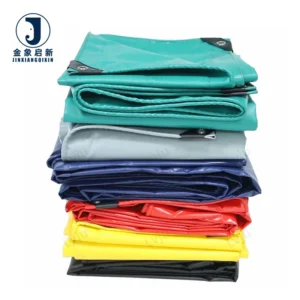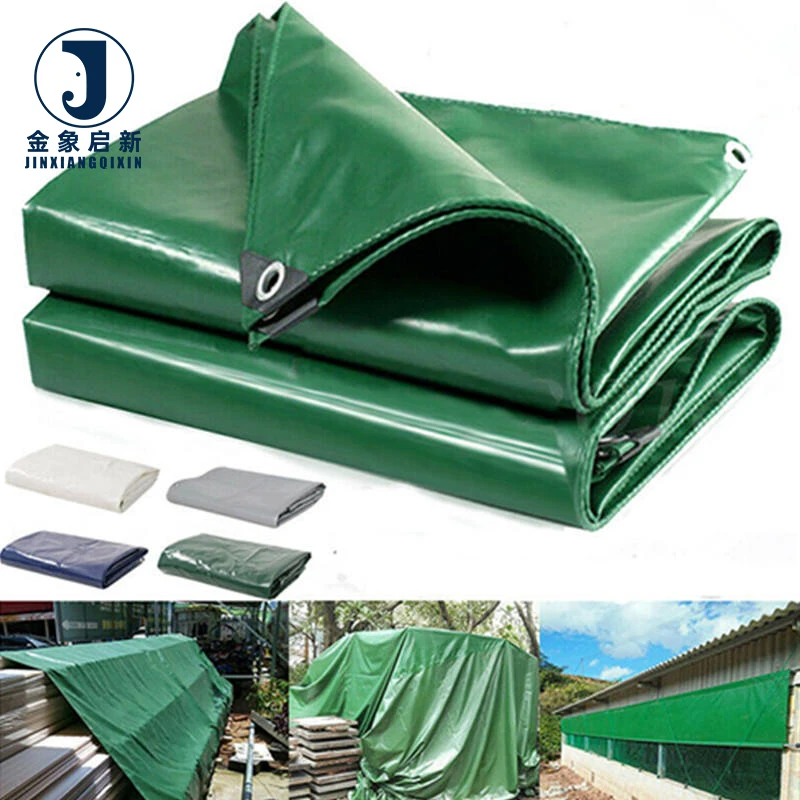
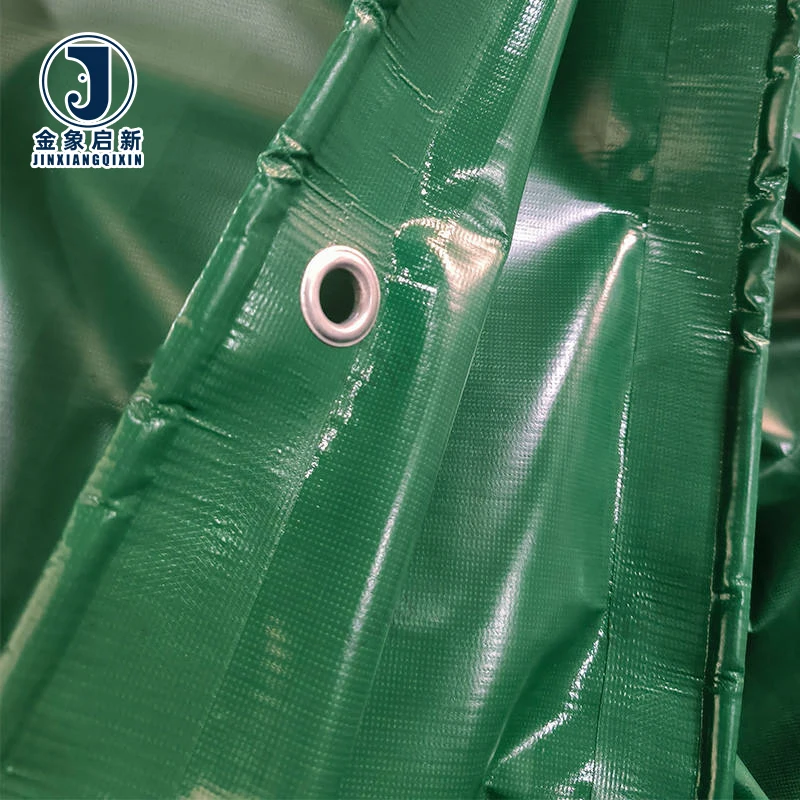
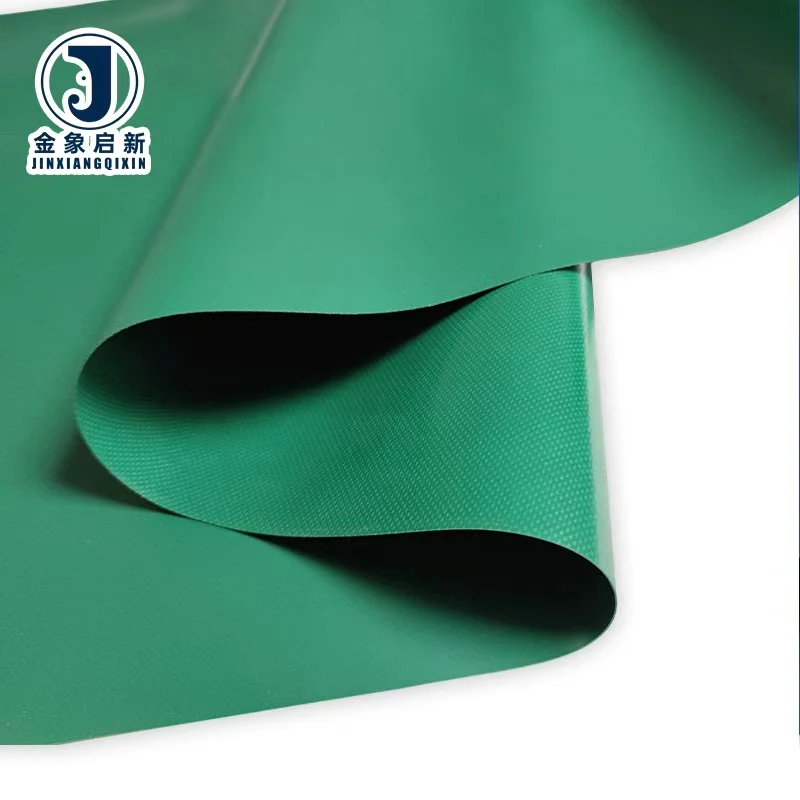
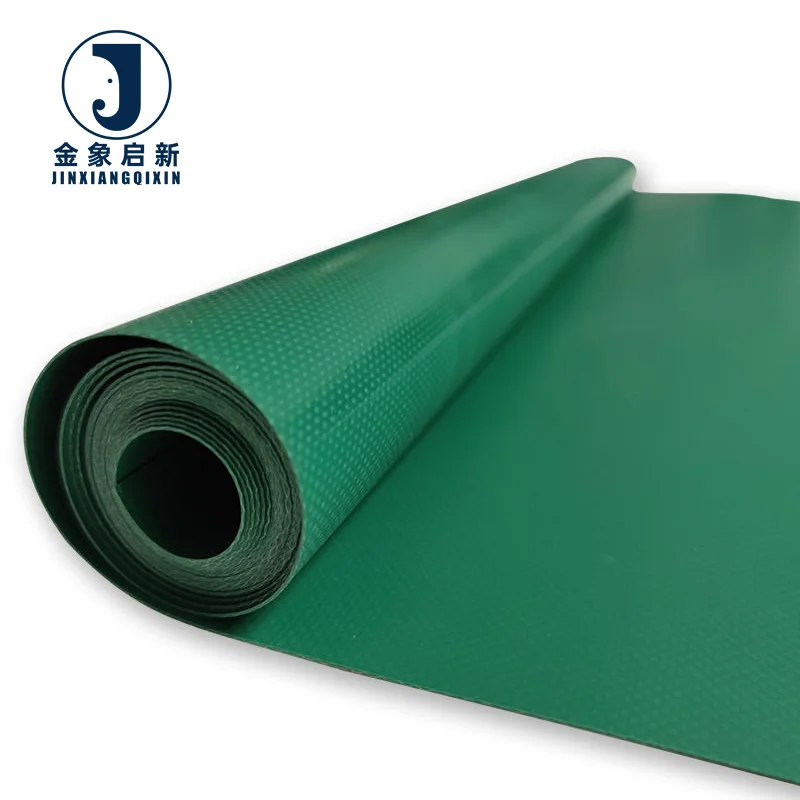
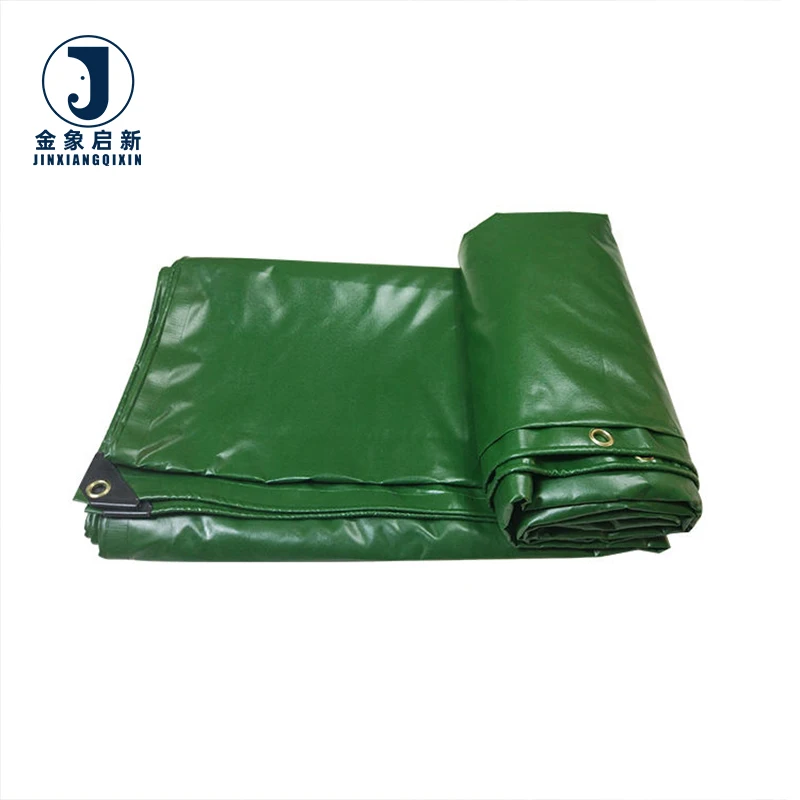
PVC Knife-Coated Tarpaulin Fabric with 400–1500 g/m² weight range, 500D–2000D base fabric, and up to 6m width delivers reliable tensile strength for membrane structures, truck covers, and awnings. Knife-coated construction ensures strong coating adhesion and superior heat-weld performance compared to laminated alternatives. Treatment options available with test documentation on request.
- Backed by 30 years of coated fabric expertise, full in-house QA, and 100% pre-shipment inspection across three production lines.
Description
Deep Coating Process Control — every roll of PVC Knife-Coated Tarpaulin Fabric produced on our lines is measured for exact coating weight and adhesion before leaving the factory, ensuring the material you specify is the material you receive.
Technical Specifications
| Parameter | Value |
|---|---|
| Product Type | PVC Coated Tarpaulin |
| Material | PVC coated polyester fabric |
| Thickness | 0.35mm – 1.5mm |
| Weight | 400 g/m² – 1500 g/m² |
| Base Fabric Denier | 500D – 2000D |
| Tensile Strength (Warp) | 1500 – 3000 N/5cm |
| Tensile Strength (Weft) | 1200 – 2800 N/5cm |
| Available Widths | 2m, 4m, 6m (custom available) |
| Roll Length | 100 yards / 100 meters (or custom) |
| Surface Finish | Glossy / Matte |
| Treatment Options | Anti-UV, Flame Retardant, Anti-static |
| Standards | ISO, CE |
Application Suitability
| Application | Exposure & Requirement |
|---|---|
| Membrane & Tensile Structures | Long-term UV and weather exposure, high sustained tension, structural wind and snow loads, weld seam integrity |
| Truck and Trailer Covers | Road abrasion, constant flexing, tie-down stress at eyelets, fuel and exhaust exposure |
| Awnings and Tents | Repeated folding and packing, direct sunlight, water shedding, mildew resistance in storage |
| Inflatable Structures | Air-holding seam integrity, puncture resistance, internal pressure stress on welded joints |
| Industrial Protective Covers | Heavy equipment storage outdoors, mechanical impact, dust and moisture ingress prevention |
Why Stated GSM Without a Coating Breakdown Misleads Buyers
Specifying a PVC knife-coated tarpaulin fabric by weight alone leaves the most critical performance variables undefined.
A roll marked at a given GSM can owe that weight to a heavy base fabric with minimal coating, or to a thick coating over a thin, low-denier yarn. The difference determines whether your PVC Knife-Coated Tarpaulin Fabric aftermarket supplier has actually delivered material suited to structural tension or merely a light tarp. I once traced a batch failure on membrane panels back to a coating-heavy, low-denier base: the panels stretched under wind load because the base fabric lacked the dimensional stability the spec sheet implied [NEED_CITE: relationship between base fabric denier and dimensional stability in coated textiles]. Without separating coating weight from base fabric weight, you cannot predict tear propagation, weld strength, or long-term creep under tension.
Matching Denier and Coating to Structural Load
The base fabric carries the mechanical load in any coated textile. A 2000D yarn at a high thread count delivers the tensile and tear figures required for membrane structures and large-format tensioned facades. A 500D base suits lighter-duty awnings and temporary covers where weight savings matter. Our PVC Knife-Coated Tarpaulin Fabric range spans these deniers so that each application receives a base fabric proportioned to its stress profile, not a generic roll relabelled for a different end use.
Surface Finish Selection for Application Context
Glossy surfaces shed dirt and water more readily, which keeps membrane structures presentable over extended outdoor exposure. Matte finishes reduce glare and provide better adhesion for pattern printing and branding when visual appearance matters on architectural facades. Both finishes are available across the weight range, allowing you to match surface characteristics to the functional and aesthetic demands of your project [NEED_CITE: effect of surface finish on soiling rate and print adhesion in PVC coated fabrics].
How Coating Weight and Base Density Interact
Knife coating applies a liquid PVC layer directly onto the woven polyester base, filling the interstices between yarns before curing in a multi-zone oven. A heavier coating increases waterproofing and chemical resistance but adds weight without improving tensile strength — that responsibility lies with the yarn. Tensile values of 1500–3000 N/5cm warp and 1200–2800 N/5cm weft reflect base fabric construction, not coating thickness. When evaluating options, request both the total GSM and the base fabric weight per square metre. A supplier who cannot separate these two figures cannot guarantee that the mechanical performance you need is actually built into the roll [NEED_CITE: ISO 1421 tensile test methods for coated fabrics].
What Happens When You Procure on GSM Alone
Orders placed on a single weight figure routinely produce three field failures: weld seams that peel because the coating composition is unknown to the fabricator, panels that deform under wind load because the base denier is too low for the span, and colour drift across rolls because batch consistency was never specified beyond colour name. Each of these costs far more to correct on site than to prevent at the inquiry stage. I have seen membrane projects delayed by weeks because the specified material could not hold the tension required across a curved frame — the coating was adequate, but the base fabric simply stretched and would not recover.
Why Fabricators Consolidate Specification Here
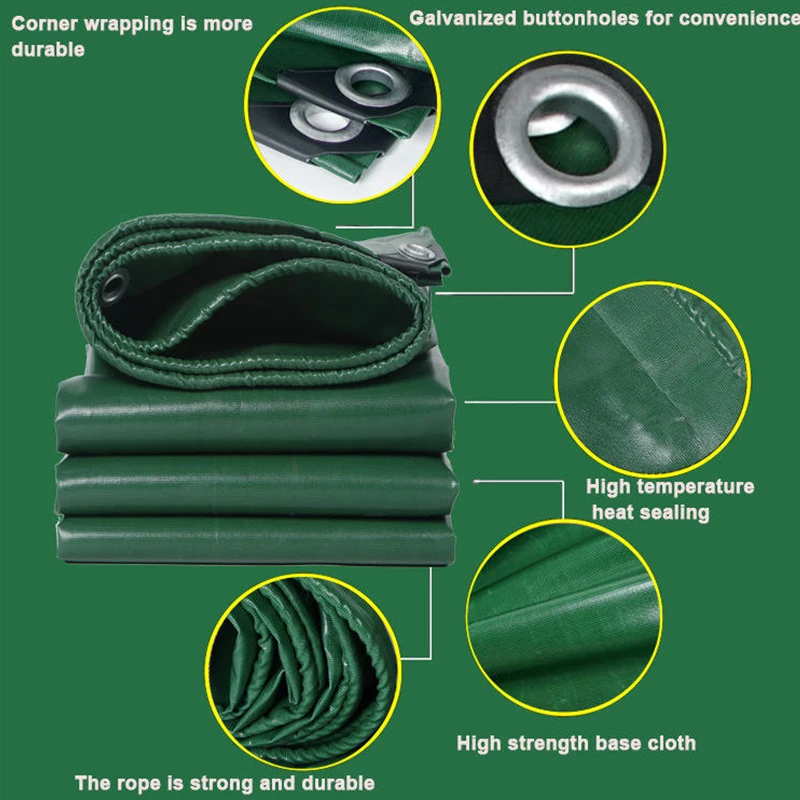
Our three full production lines handle the entire weight range from 400 g/m² to 1500 g/m² without switching between external coating and weaving facilities, which eliminates the coordination failures that cause colour and weight drift across rolls. A 10-person R&D team develops samples for your exact width, colour, and surface finish within days, so you approve physical material — not a data sheet — before bulk production begins. Dedicated QA/QC checks at every stage verify coating adhesion, weight per roll, and colour against your approved reference. Finished tarpaulins are produced with reinforced hems, galvanized eyelets at specified intervals, and reinforced plastic corners when your order requires cut-and-sew fabrication rather than roll stock dispatch.
Documentation & Verification
- Material specification sheet stating total GSM, base fabric denier, and coating weight separately for each roll
- Test reports for anti-UV and flame retardant treatments where applicable, matched to batch number
- Pre-shipment inspection record confirming weight, colour, and surface finish against approved sample
- Roll packing list with individual roll weight and length for receiving verification at your warehouse
- ISO and CE certificates covering the production facility and the coated fabric product category
Fabrication, Handling & Storage
- Set heat-seal temperature and dwell time based on the specific coating weight of your roll, not a generic chart
- Store rolls horizontally on pallets to prevent permanent creasing in the 2m–6m width range
- Allow cold-stored rolls to acclimate to ambient temperature before unrolling to avoid coating crack at low flexibility
- Use compatible PVC-based adhesives for field repairs, matched to the glossy or matte surface finish
- Reinforce eyelet positions with additional PVC patches when fabricating covers from lighter GSM grades
What to Include in Your Inquiry
Tell us the structural span or cover dimensions, the environmental conditions at the installation site, and whether you need roll stock or finished fabricated panels. Specify your target market’s fire classification requirements so we can match the correct treatment grade. Confirm whether you require colour samples or printed branding proofs before authorising bulk production.
Frequently Asked Questions
Q: What GSM and denier do I need for a membrane structure versus a truck cover?
A: Membrane structures require higher denier base fabrics for dimensional stability under sustained tension, typically in the heavier weight range. Truck covers prioritise flexibility and abrasion resistance, often at medium weights. We recommend submitting your span dimensions and load calculations so we can match the base fabric construction and coating weight to your specific structural or transport application rather than quoting a generic grade.
Q: Can I order roll stock and finished cut-to-size tarps in one shipment?
A: Yes. Our production lines handle both raw roll dispatch and finished fabrication within the same order. This ensures colour consistency across all pieces since the base fabric and coating batch remain identical. Specify which items require eyelets, reinforced hems, and corner patches, and which should ship as full rolls for your own workshop to process.
Q: How is colour consistency maintained across multiple rolls?
A: Every roll in a single order is coated from the same PVC compound batch and cured under identical oven parameters. We retain a signed colour reference sample from your approval and inspect each roll against it during pre-shipment QC. Rolls showing any visible deviation from the reference are held and reprocessed before dispatch to prevent mismatched panels on your installation site.
Q: What fire classification grades are available and how are they verified?
A: Flame retardant treatments are available in grades suited to different market requirements. We provide test reports from recognised laboratories matched to each production batch, so you can submit documentation directly to your project inspector or authority having jurisdiction. Specify the classification standard your market requires at inquiry stage so we formulate the coating compound accordingly.
Q: What is the sample process for custom widths or printed branding?
A: We develop physical samples to your specified width, colour, and print artwork within days of receiving your brief. You approve the sample — including hand feel, colour under natural and artificial light, and print resolution — before we schedule bulk production. This prevents the situation where a full container arrives and the colour or print does not match your expectation.
Related products
-
Heavy Duty PVC Tarpaulin for Truck and Tent – Custom Made
Read more -
PVC Knife-Coated Fabric Tarpaulin 300-600gsm – Custom Made
Read more -
300-600gsm Heavy Duty PVC knife-coated Fabric Tarpaulin roll or Customization
¥0.83 Select options This product has multiple variants. The options may be chosen on the product page -
Custom Made PVC Knife-Coated Fabric for Truck Canopy
Read more