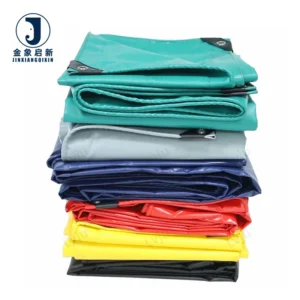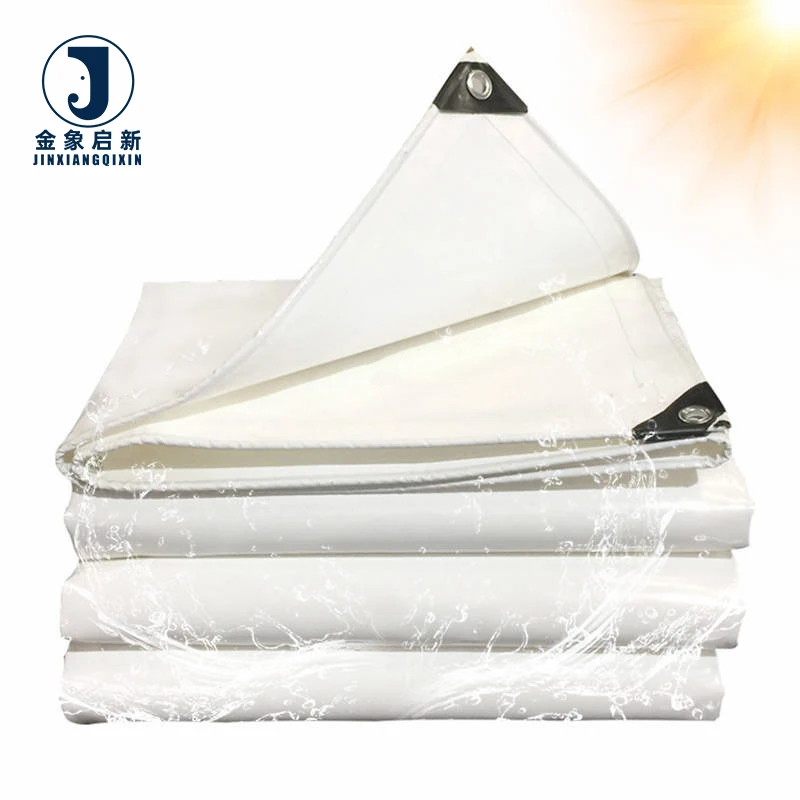
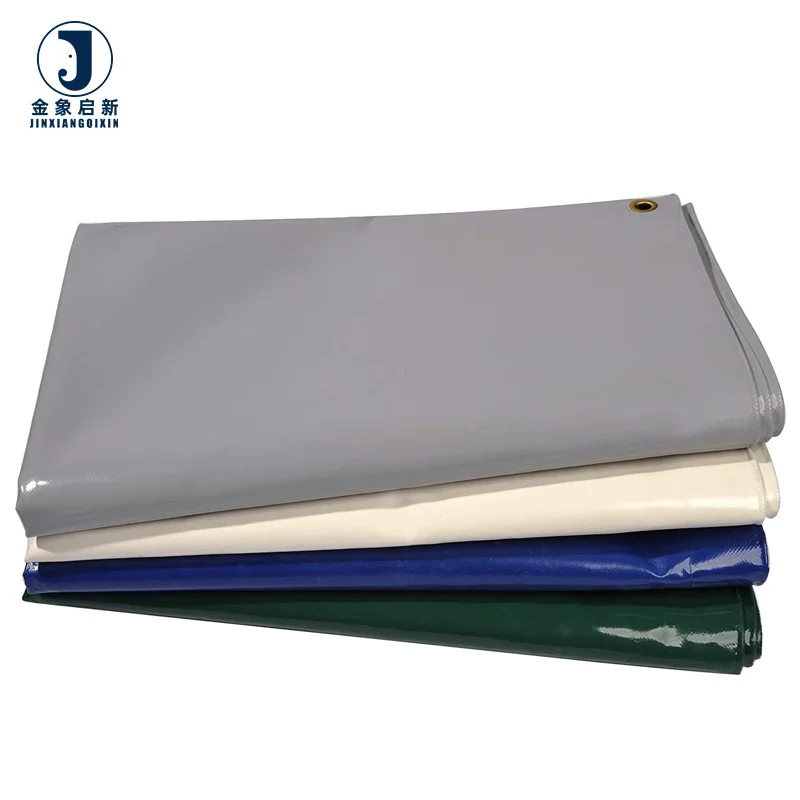
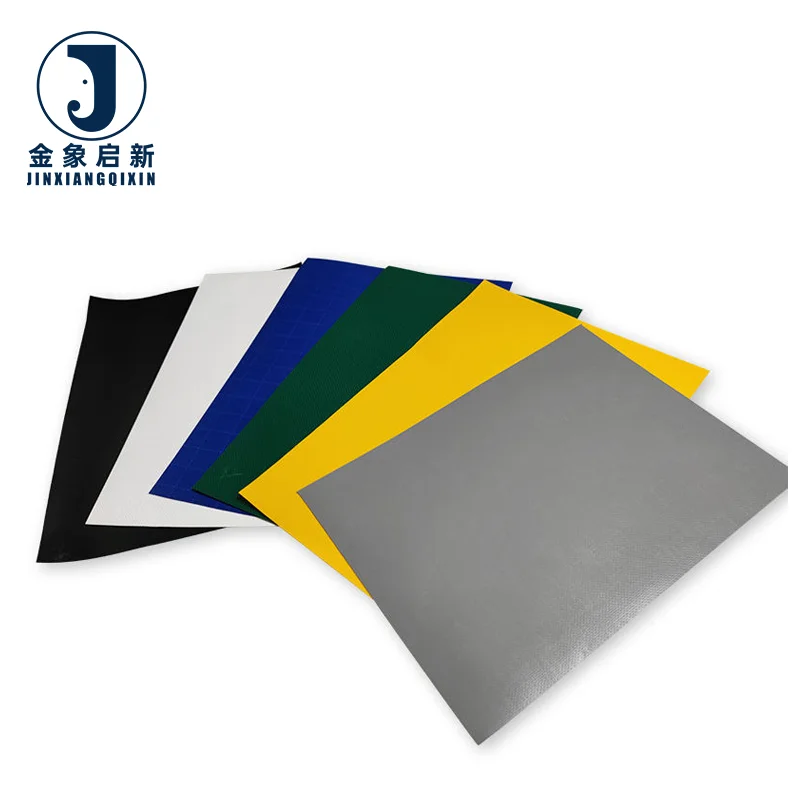
PVC Tarpaulin Truck Cover in 350–750gsm with high-tenacity polyester mesh base, hot-melt knife coated for peel strength and reliable heat-welded seams.
- Custom width, eyelet spacing, reinforced hems and printed branding fabricated to your truck or trailer dimensions
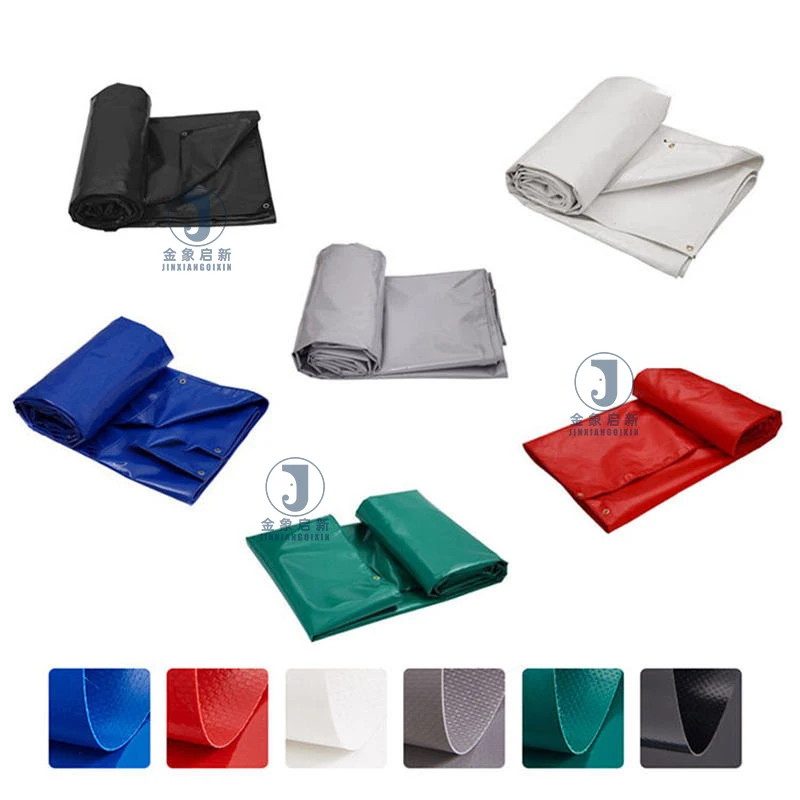
- Roll-to-roll colour consistency controlled at coating stage — panels match when installed side by side
Specification sheet, UV/FR test reports, and pre-shipment inspection record provided before dispatch, with samples developed in days so you verify weight, colour and weld integrity before committing to bulk.
Description
Custom Fabrication from Roll to Finished Cover — we control the coating line and the cutting table, so GSM, colour and finished dimensions stay under one roof from material selection to dispatch.
Technical Specifications
| Parameter | Value |
|---|---|
| Product Type | PVC Tarpaulin |
| Material | PVC + High-strength polyester mesh fabric |
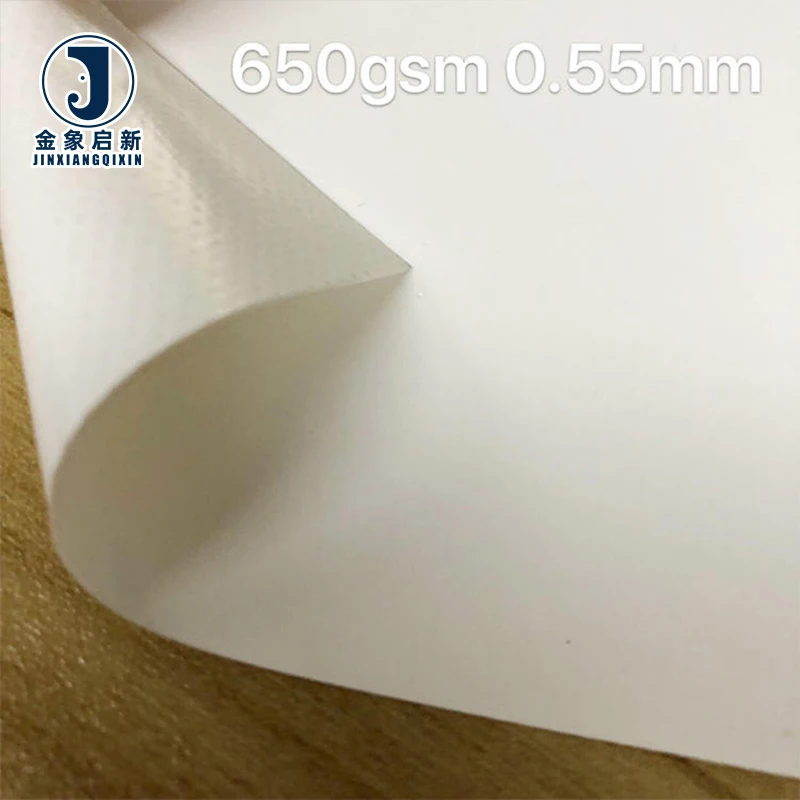
| Weight Options | 350gsm, 420gsm, 500gsm, 550gsm, 600gsm, 750gsm |
| Thickness Options | 0.32mm, 0.35mm, 0.4mm, 0.45mm, 0.5mm, 0.65mm |
| Roll Dimensions | 2m × 75m or 2.1m × 50m |
| Available Colours | Blue, Red, Yellow, Light blue, Grey (custom colours available) |
| Coating Technology | Laminated and hot-melt coating |
| Treatment Options | Anti-UV, flame retardant, anti-static, anti-mildew (confirm grade required for your market) |
| Key Features | Cold crack resistance, waterproof, sunproof |
| Service Life | 3–7 years under normal circumstances |
| Standards | ISO, CE |
Application Suitability
| Application | Exposure & Requirement |
|---|---|
| Truck and trailer side curtains | Constant flexing at tie-down points, road debris abrasion, prolonged UV and rain exposure |
| Construction and scaffolding enclosure | Wind load on large panels, scaffold tube friction, dust and water ingress prevention |
| Equipment and machinery covers | Static outdoor storage, condensation underneath, forklift and crane handling damage |
| Agricultural and pond liners | Continuous water contact, soil chemistry, puncture risk from substrate irregularities |
| Marine and offshore covers | Salt spray corrosion, high wind uplift, crane and deck abrasion |
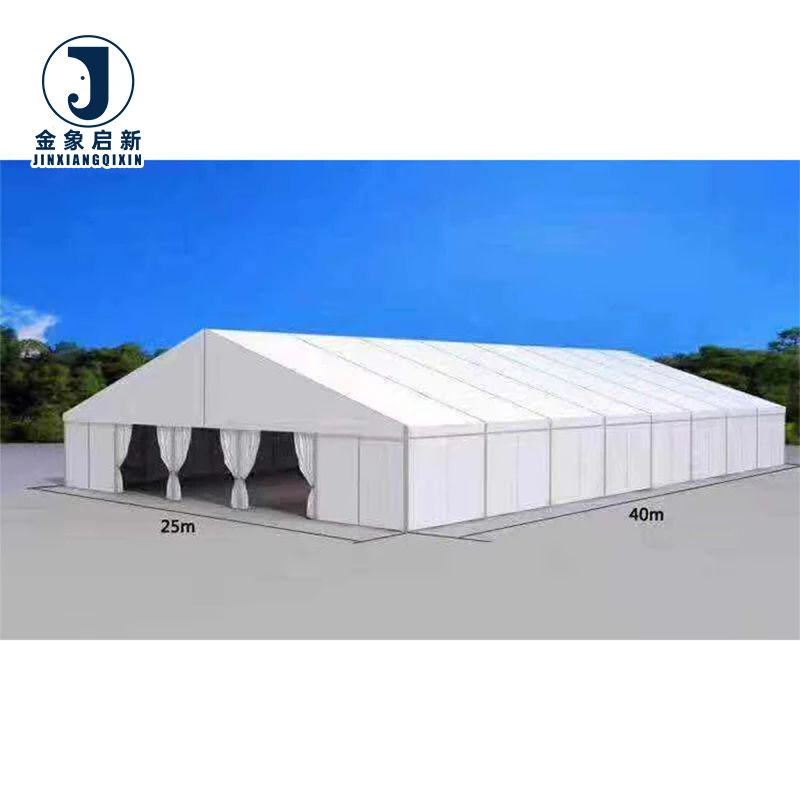
| Tent and temporary structure fabric | Repeated assembly and folding, UV degradation over seasonal use, fire safety compliance |
| Olive harvest ground sheets | Fruit acid contact, dragging over rocky terrain, sun exposure during harvest window |
Why Specified GSM Does Not Guarantee Field Performance
GSM is a weight measurement, not a strength rating — base fabric denier and weave density determine how that weight translates into tensile and tear resistance.
A PVC tarpaulin aftermarket supplier quoting 650gsm can deliver a fabric that passes the scale test yet fails at the first flex point on a truck curtain. The coating accounts for most of the weight; if the polyester mesh underneath uses low-denier yarns or a loose weave, the panel will tear along the warp line under load. I have seen rolls arrive on site, pass the weigh-in, and then split at the hem within the first month of highway use. The gap between quoted weight and actual field durability is where most cover failures originate. [NEED_CITE: tensile and tear test methods for coated fabrics per ISO 1421]
What the Weight Range Actually Covers
This PVC tarpaulin range spans from 350gsm for light-duty temporary covers up to 750gsm for heavy transport and industrial applications. The lower grades suit agricultural sheets and short-term equipment wraps where the fabric is handled infrequently and replaced seasonally. The mid-range options — 500gsm through 600gsm — cover most truck curtain and construction enclosure work where daily flexing and wind load demand a balanced base fabric. At the top end, 750gsm supports marine covers and long-term outdoor installations where the material must resist sustained mechanical stress and environmental exposure without showing fatigue at fold lines or weld seams.
Coating Method and Its Effect on Fabric Behaviour
The laminated and hot-melt coating processes used across this range produce different surface and adhesion characteristics. Laminated fabric bonds a pre-formed PVC film to the polyester base under heat and pressure, giving a smooth surface that is straightforward to clean and print on. Hot-melt coating pushes liquid PVC into the mesh structure before curing, creating a deeper bond between coating and yarn that improves peel strength at welded seams. The choice between the two affects how the material behaves when fabricated into finished covers — particularly at hem folds and eyelet reinforcement zones where delamination is the most common failure mode in the field. [NEED_CITE: peel strength test methods for PVC coated polyester fabrics]
Reading the Thickness-to-Weight Relationship
Thickness values from 0.32mm to 0.65mm correspond to the GSM options, but the relationship is not linear because base fabric construction plays an equal role. Two fabrics rated at 550gsm can show different thickness readings if one uses a tighter weave with *sh flooded with PVC. The tighter weave typically delivers better tear propagation resistance because individual yarns are locked by more crossover points, forcing a tear to break multiple yarns simultaneously rather than unzipping along a single warp or weft line. Thickness alone, like GSM alone, tells only part of the story.
When Colour Mismatch Costs More Than the Fabric
Ordering PVC tarpaulin from multiple sources to hit a target price often means the rolls arrive with visible shade differences once installed side by side on a truck fleet or building enclosure. This is not a cosmetic complaint — a fleet operator presenting mismatched trailers to a client signals poor maintenance, and a construction contractor wrapping a scaffold in two shades of blue draws unwanted site attention. The problem traces back to pigment dosing at the coating stage; without tight batch control, the same colour code produces noticeable variation across production runs. The cost of replacing panels to achieve a uniform appearance exceeds the original savings from splitting the order across suppliers. [NEED_CITE: colour consistency standards for coated textile production]
Why Sourcing Material and Fabrication Together Reduces Risk
Coating weight is verified per roll against the specification sheet before any cutting begins, eliminating the short-weight problem that surfaces only after delivery. Colour matching is controlled at the coating stage, so panels cut from different rolls within the same order install with a uniform appearance. The ten-person R&D team develops samples within days for custom width, colour or printed branding requirements, letting you confirm the material before committing to bulk production. In-process quality checks at each production stage catch adhesion and thickness deviations before the roll reaches the fabrication table. Pre-shipment inspection covers weight, dimensions, colour and weld integrity — a documented record ships with every order.
Documentation & Verification
- Material specification sheet stating GSM, base fabric type, coating method and colour reference for every roll produced
- Weight verification per roll measured and recorded against the stated GSM before dispatch
- Test reports for anti-UV, flame retardant and anti-static grades supplied with the relevant batch documentation
- Pre-shipment inspection record covering colour consistency, dimensional accuracy and weld seam integrity
- Roll packing list and certificate of origin included for customs clearance at destination
Fabrication, Handling & Storage
- Hot-air welding parameters should be adjusted to coating thickness — 0.65mm material requires higher temperature and slower speed than 0.32mm to achieve full bond penetration
- Store rolls horizontally on pallets to prevent permanent creasing in the polyester mesh, particularly in heavier grades above 600gsm
- Allow cold-stored rolls to reach ambient temperature before unrolling to avoid cracking the PVC coating along fold lines
- Clean with mild detergent only; solvent-based cleaners can soften the PVC surface and reduce anti-mildew treatment effectiveness
- Cut patterns should account for the 2m or 2.1m roll width to minimise off-cuts and reduce the number of welded seams in the finished cover
Before You Request a Quote
Provide the application, the exposure conditions the cover will face, and the dimensions or vehicle model you need to fit. If your market requires fire safety or anti-static compliance, specify the grade or standard so the correct treatment is applied and documented. Let us know whether you need roll stock in standard widths or finished, fabricated covers with eyelets and reinforced hems — and whether a sample is required before bulk commitment.
Frequently Asked Questions
Q: How do I confirm the GSM I receive matches the quotation?
A: Every roll is weighed and recorded against the specification sheet before shipment, and the pre-shipment inspection report documents the verified GSM. You can cross-check this against your own measurements on arrival. If any roll falls outside the agreed tolerance, it is held before dispatch rather than shipped for you to discover on site.
Q: Can you match colour across multiple rolls in the same order?
A: Colour is controlled at the coating stage using pigment dosing tied to the batch, so rolls produced within the same production run install side by side without visible shade differences. For large orders spanning multiple runs, we retain reference samples from the first batch and match subsequent production against them.
Q: What treatments are available and how are they verified?
A: Anti-UV, flame retardant, anti-static and anti-mildew treatments are available across this range. Where a specific grade or test standard is required for your market, confirm the requirement at inquiry stage so the correct formulation is applied and a test report is included with the shipment documentation.
Q: Do you supply roll stock, finished covers, or both?
A: Both. Rolls are available in standard 2m × 75m and 2.1m × 50m formats for fabricators, and custom-fabricated covers can be produced to specific truck model dimensions, equipment sizes or structural panel layouts with eyelets, reinforced hems and pattern printing as required.
Q: What is the lead time for custom width or printed branding?
A: Custom width, colour and printed branding require a sample development stage before bulk production is scheduled. Confirm the specification and approve the sample early in the process, and the production team will provide a lead time based on the order volume and current line schedule.
Related products
-
Tarpaulin Waterproof Heavy Duty 650Gsm Agriculture China Plastic Tarps Cover Sheet Blue Orange 15oz Pvc Tarpaulins for Truck
¥2.50 Select options This product has multiple variants. The options may be chosen on the product page -
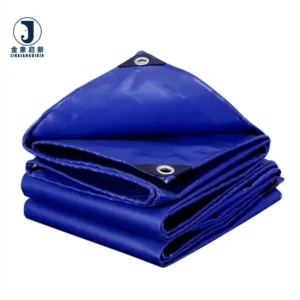
Custom PVC Knife-Coated Tarpaulin for Railway Wagon
Read more -
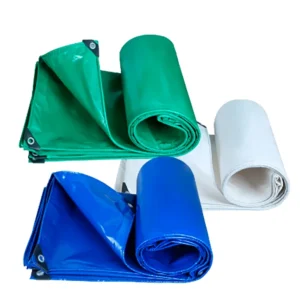
JX Customizable Waterproof Anti-UV Knife Tarpaulin Tents Canopies Awnings PVC Coated Plain Style Wrinkle Resistant Solid
¥2.49 Add to cart -
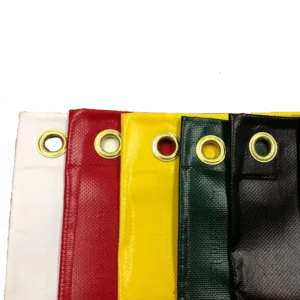
300-600gsm Heavy Duty PVC knife-coated Fabric Tarpaulin roll or Customization
¥0.83 Select options This product has multiple variants. The options may be chosen on the product page