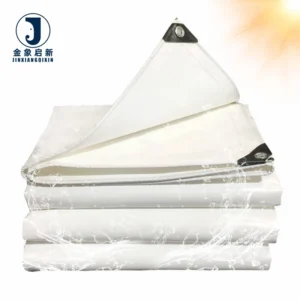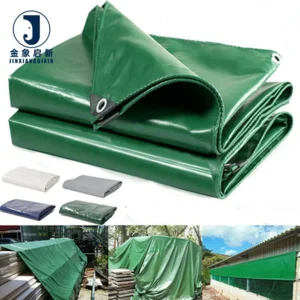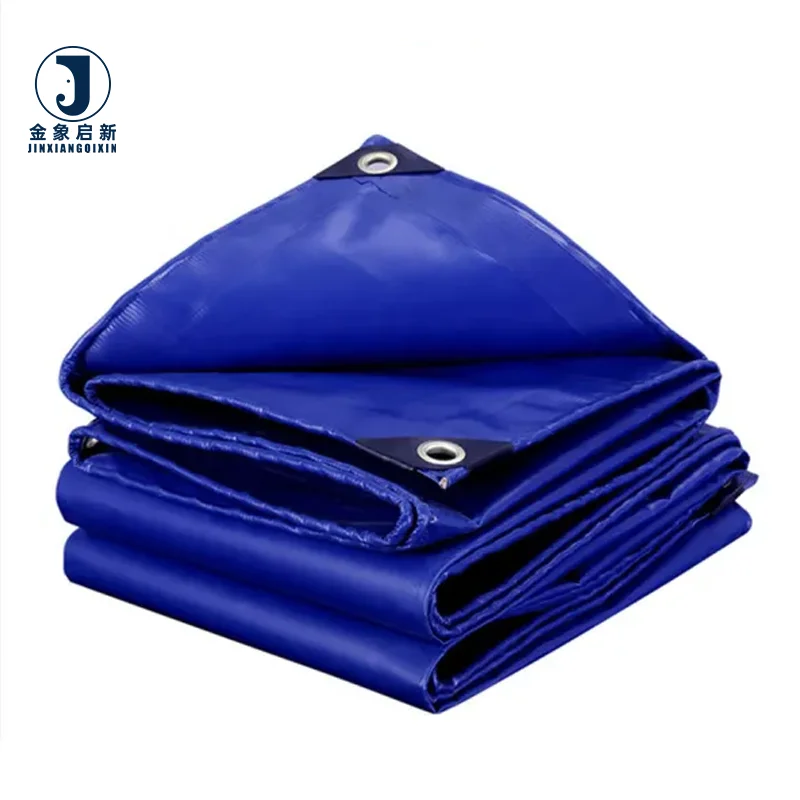
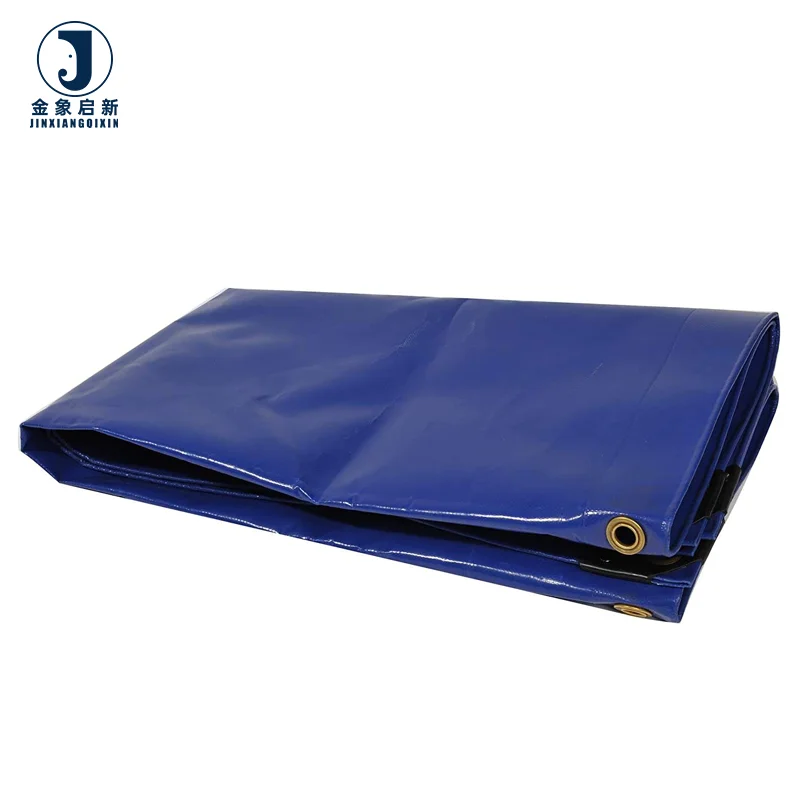
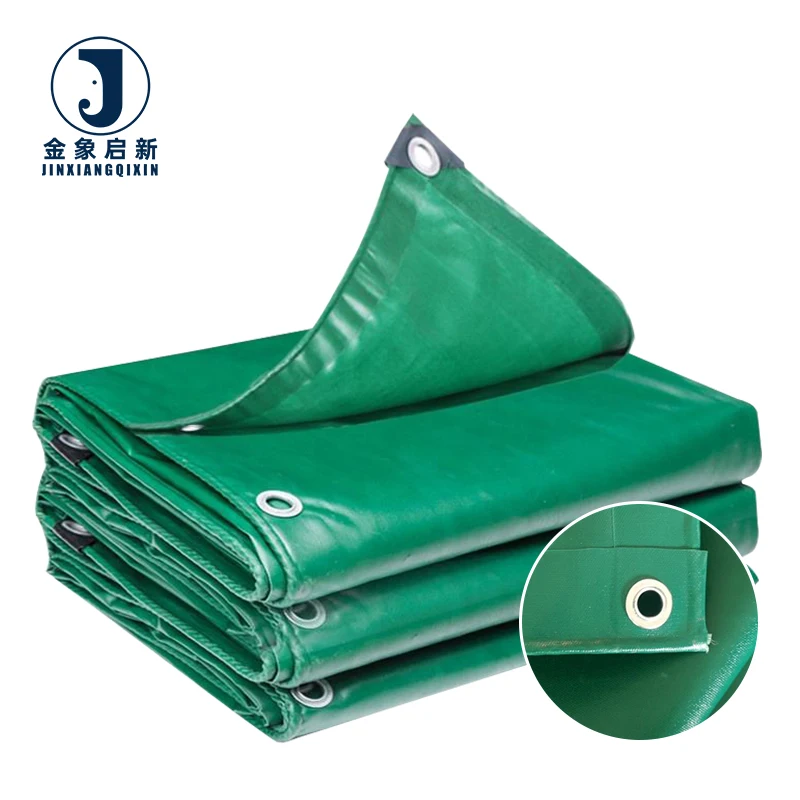
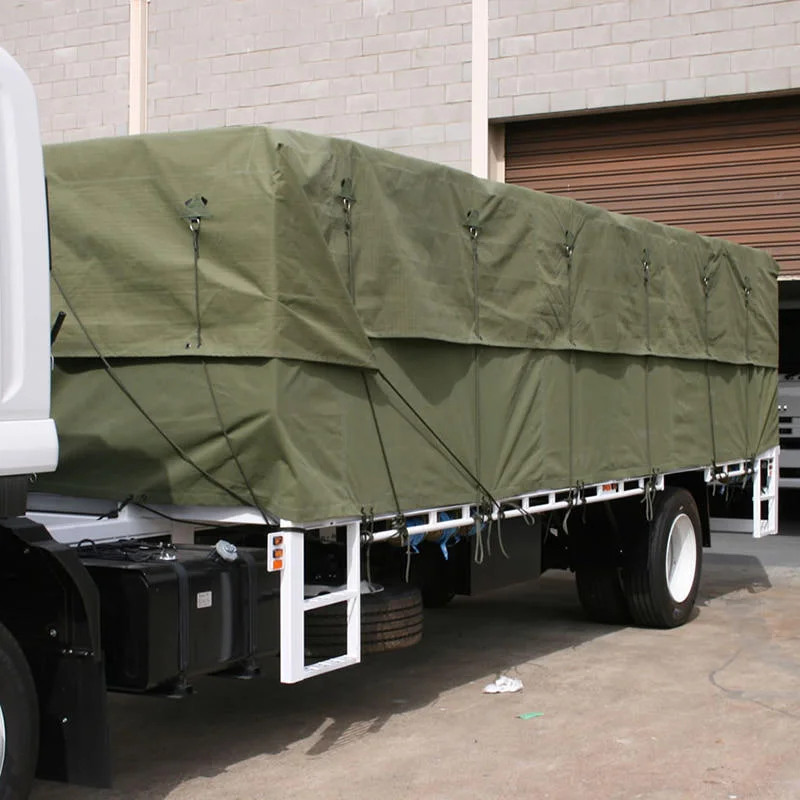
Backed by three full production lines and 36 sets of professional equipment, Jinan Jinxiang delivers reliable on-time dispatch with 100% pre-shipment inspection on every roll.
Description
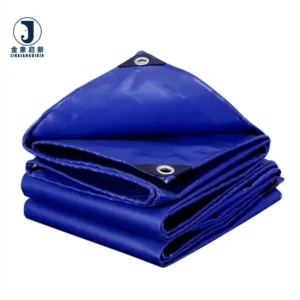
Process-Controlled Coating — Every roll of PVC knife-coated fabric produced on our three dedicated lines is checked for adhesion and weight before leaving the facility.
Technical Specifications
| Parameter | Value |
|---|---|
| Product Type | PVC Knife-Coated Fabric |
| Base Material | PVC + High-strength polyester mesh fabric |
| Weight Options | 350gsm / 420g / 500gsm / 550gsm / 600gsm / 750gsm |
| Total Thickness | 0.32 mm / 0.35 mm / 0.4 mm / 0.45 mm / 0.5 mm / 0.65 mm |
| Roll Size | 2 m × 75 m / 2.1 m × 50 m |
| Coating Method | Laminated technology & Hot-melt Coating technology |
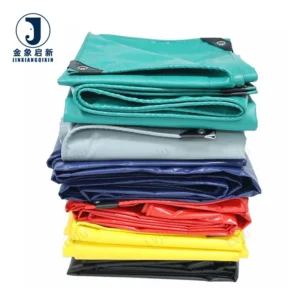
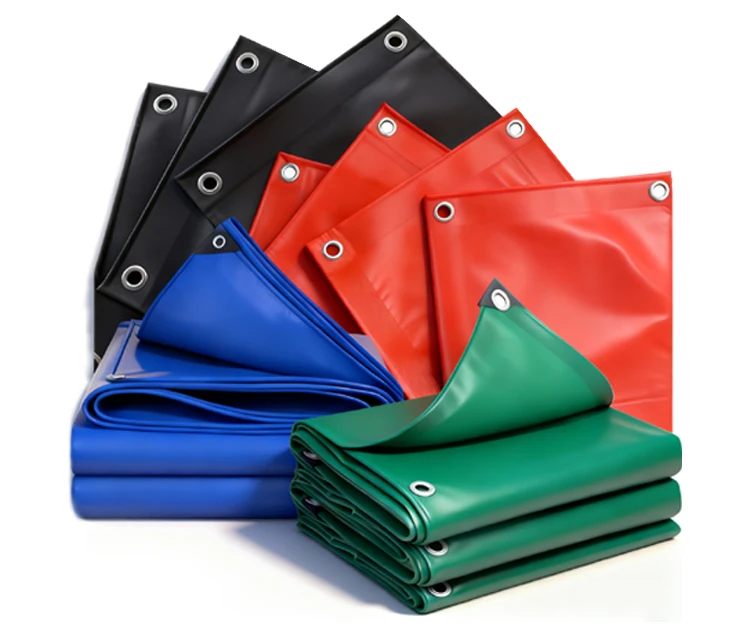
| Colour Range | Blue / Red / Yellow / Light Blue / Grey (Customized) |
| Waterproof | Fully waterproof coated construction |
| Cold Crack Resistance | Rated for low-temperature flexibility (grade not stated in source) |
| Anti-Mildew | Treated against mildew growth |
| Anti-Static | Anti-static treatment (grade not stated in source — confirm required grade for your application) |
| UV Treatment | Sunproof treatment (test basis not stated in source — request report for your market) |
| Flame Retardant | Available in flame retardant grades — confirm the grade required for your market |
| Standards | ISO, CE |
Application Suitability
| Application | Exposure & Requirement |
|---|---|
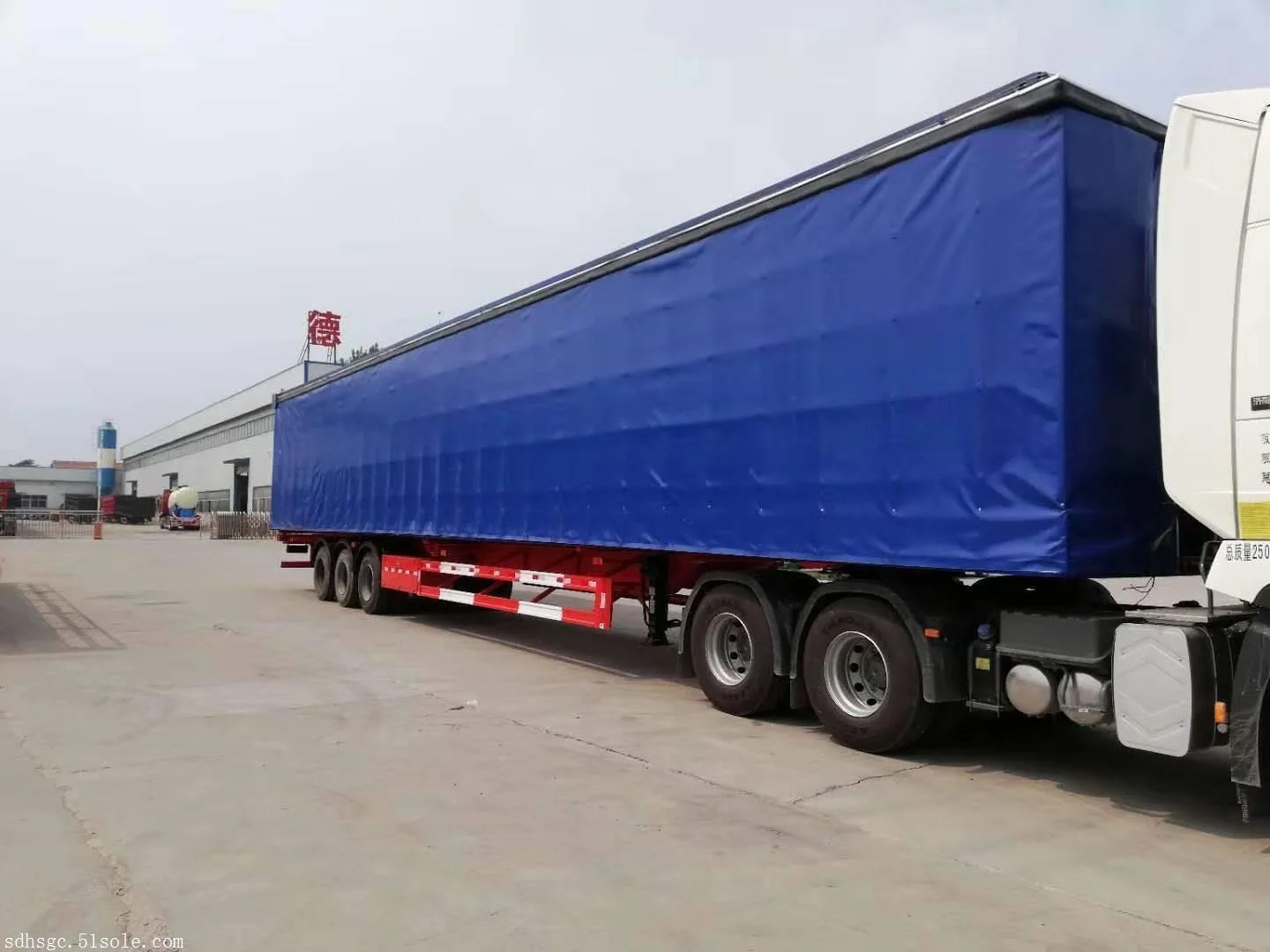
| Truck canopy and side curtain | Constant flexing, road abrasion, weather exposure, tie-down stress at hems |
| Cargo ship cover | Salt-laden air, sustained wind load, UV exposure, heavy cargo contact |
| Tent and awning structure | Wind uplift, repeated folding, water pooling, UV exposure |
| Fish tank and pool liner | Permanent water immersion, chemical exposure from water treatment, puncture risk |
Why Colour Consistency Across Rolls Matters More Than You Think
A shade difference visible only after installation means rework on every panel.
When multiple rolls are welded or installed side by side on a truck canopy or tent structure, even a minor delta-E shift between batches becomes immediately apparent. This is not a cosmetic complaint from the end user — it is grounds for load rejection on commercial fleet deliveries and contract disputes on architectural installations. We have seen entire container orders quarantined at destination because the buyer assumed all rolls from one purchase order would match without verifying batch numbering [NEED_CITE: ISO 105-A02 grey scale for assessing colour change in textiles]. A PVC Coated Tarpaulin manufacturer that controls coating in-house can hold tighter batch tolerances than a trader reselling mixed lots.
Coating Method and Adhesion Control
The choice between laminated and hot-melt coating technology affects how the PVC layer bonds to the polyester mesh base. Hot-melt coating penetrates the mesh structure more deeply, producing higher peel strength at the coating-to-yarn interface. This matters directly when welded seams are subjected to repeated flex loads on a moving truck canopy. Our PVC Coated Tarpaulin manufacturer process runs both methods on dedicated lines, allowing us to match the coating technique to the end-use stress profile rather than forcing one method across all weight grades.
Roll Stock Width, Length and Yield Calculations
Standard rolls ship at 2 m × 75 m or 2.1 m × 50 m, but custom widths and lengths are available on request. For truck canopy fabricators cutting multiple panels from a single roll, even a 100 mm increase in usable width reduces the number of drop-off pieces and weld seams per vehicle. Planning panel layout against the available roll dimensions before ordering improves material yield and reduces the number of heat-welded joints in the finished cover — each joint being a potential flex-failure point [NEED_CITE: tensile and tear test methods for coated fabrics per ISO 1421].
How GSM and Coating Weight Interact
GSM alone does not define fabric performance. A 600gsm roll can be achieved through a heavy base fabric with thin coating or a light mesh with thick coating — the two constructions behave very differently under tension and tear. The base polyester mesh denier and weave density govern tensile and tear strength, while the PVC coating weight governs abrasion resistance, weldability and waterproofing. When specifying this PVC knife-coated fabric, request the breakdown of base fabric weight versus coating weight so you can match the construction to the mechanical demands of your application.
The Hidden Cost of Welded Seam Failure
Welded seams are the most common failure point on fabricated PVC covers, and the cause is rarely the welder’s skill alone. If the coating adhesion to the base mesh is weak, the PVC layer delaminates under heat before a proper molecular bond forms across the joint. This produces a seam that passes visual inspection but separates after a few flex cycles on a truck canopy or wind-loaded tent. Selecting hot-melt coated fabric with verified peel strength reduces this risk [NEED_CITE: hot-air wedge welding parameters for PVC coated polyester fabrics].
Procurement Advantages From a Single Source
Our ten-person R&D team handles material selection, sample development and custom print layouts before production begins, so specification questions are resolved at the sample stage rather than during a container load. Dedicated QA/QC runs at every coating and slitting stage, with 100 percent inspection before dispatch — not a sampling plan that catches only a fraction of defects. Three full production lines give the capacity to hold delivery schedules on multi-roll orders without splitting batches across different machines, which directly supports colour and weight consistency from the first roll to the last.
Documentation & Verification
- Material specification sheet stating exact GSM, base fabric denier and coating weight per roll
- Colour reference card matching the Pantone or RAL code used in production
- Test reports for UV and flame retardant grades supplied where applicable to order
- Pre-shipment inspection record with roll-by-roll weight verification against stated GSM
- Roll packing list with batch numbers traceable to coating line and production date
Fabrication, Handling & Storage
- Hot-air weld temperature should be adjusted to the specific coating method — hot-melt and laminated grades respond differently to heat input
- Reinforced hems on heavy-grade rolls (600gsm and 750gsm) require wider seam allowances to distribute tie-down load
- Store rolls upright on pallets to prevent flat-spot deformation that shows as a crease line after unrolling
- Allow cold-stored rolls to reach ambient temperature before unrolling to avoid coating crack at low temperature
- Cut panels with a rotary blade rather than shears to maintain a clean edge for consistent weld penetration
Before You Request a Quote
Share the end-use application and the specific exposure conditions — wind load, UV intensity, flex cycles, water immersion — so we can recommend the correct GSM, coating method and treatment package. If your market mandates a particular flame retardant or anti-static classification, state the standard and grade up front. Confirm whether you need full rolls for in-house fabrication or precision-cut panels with hemming and eyelets finished to your drawings.
Frequently Asked Questions
Q: What GSM and thickness should I choose for a truck canopy versus a pond liner?
A: Truck canopies require a balance of tensile strength and flexibility for repeated flexing, typically calling for mid-to-heavy GSM grades with hot-melt coating for weld integrity. Pond liners prioritise puncture resistance and water immersion stability, favouring heavier grades with thicker coating. Share your specific load and exposure data so we can recommend the right construction from the 350gsm to 750gsm range.
Q: Can I get flame retardant or UV treatment with a supporting test report?
A: Yes — flame retardant and UV treatments are available in specific grades. The exact grade must be confirmed against your local regulatory or project requirement before production. We supply the relevant test report with shipment so your compliance documentation is complete. Provide the target standard at the inquiry stage for accurate specification.
Q: How do you ensure colour consistency across multiple rolls in one shipment?
A: Multi-roll orders are produced in a single batch run on the same coating line, using pigment mixes prepared in one lot. Every roll is checked against the approved colour reference before packing. Batch numbers are printed on each roll label, and the packing list groups rolls by batch so you can plan panel placement during fabrication.
Q: What is the minimum order for custom width, colour or printed pattern?
A: Minimums vary depending on the degree of customisation — standard colours in stock widths have lower thresholds than fully custom Pantone matches or printed branding layouts. Share your required width, length, colour code and any print artwork at the inquiry stage, and the quotation will include the applicable minimum alongside lead time.
Q: What documentation ships with the order?
A: Each shipment includes a material specification sheet with exact GSM and coating details, a roll packing list with batch numbers, a pre-shipment inspection record, and the certificate of origin. Test reports for UV or flame retardant grades are included where those treatments were specified and confirmed at the quotation stage.
Related products
-
Plastic Tarpaulin PVC Material Truck Tarpaulin Tent Tarpaulin Green Color Heavy Duty High Quality
¥0.90 Select options This product has multiple variants. The options may be chosen on the product page -
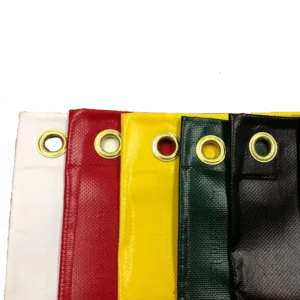
PVC Knife-Coated Fabric Tarpaulin 300-600gsm – Custom Made
Read more -
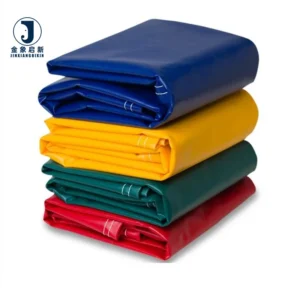
PVC Knife-Coated Fabric 500gsm 600gsm for Truck Cargo Cover – Custom Made
Read more -
Waterproof Railway Wagon Tarpaulin Cover for Construction
¥1.19 Add to cart