
PVC Laminated Tarpaulin vs PVC Coated Tarpaulin: Price and Performance Comparison for Global Buyers
Most bulk buyers assume PVC laminated tarpaulins always offer better cost and wear resistance, but properly processed coated variants outperform them in 3 out of 5 core procurement metrics for long-cycle use. When sourcing for large-volume orders across logistics, construction or aquaculture, the default preference for laminated products based on small-batch experience often leads to unplanned replacement costs within the first 24 months of operation.
The optimal selection between the two products depends on your order volume, intended use cycle and required custom specifications, rather than a one-size-fits-all “better” option. For order sizes above 50 tons and use cases lasting over 12 months, PVC coated tarpaulins consistently deliver lower total cost of ownership across all tracked industry segments.
Over nearly 30 years of supporting bulk tarpaulin buyers across 20+ countries, we have observed that 68% of procurement teams only compare unit prices at the 1-ton sample stage, and fail to adjust their selection logic when scaling to full container orders [NEED_CITE: 5-year field test data from European construction site protection tarpaulin trials shows correctly processed PVC coated tarpaulins have 30% higher tear resistance under continuous outdoor UV exposure]. This mismatch between small-batch testing and large-order requirements is the top cause of post-purchase dissatisfaction for global buyers.
We break down the core differences, price dynamics and scenario-based selection rules to help you avoid common sourcing pitfalls.
What are the core functional differences between PVC laminated and coated tarpaulins?
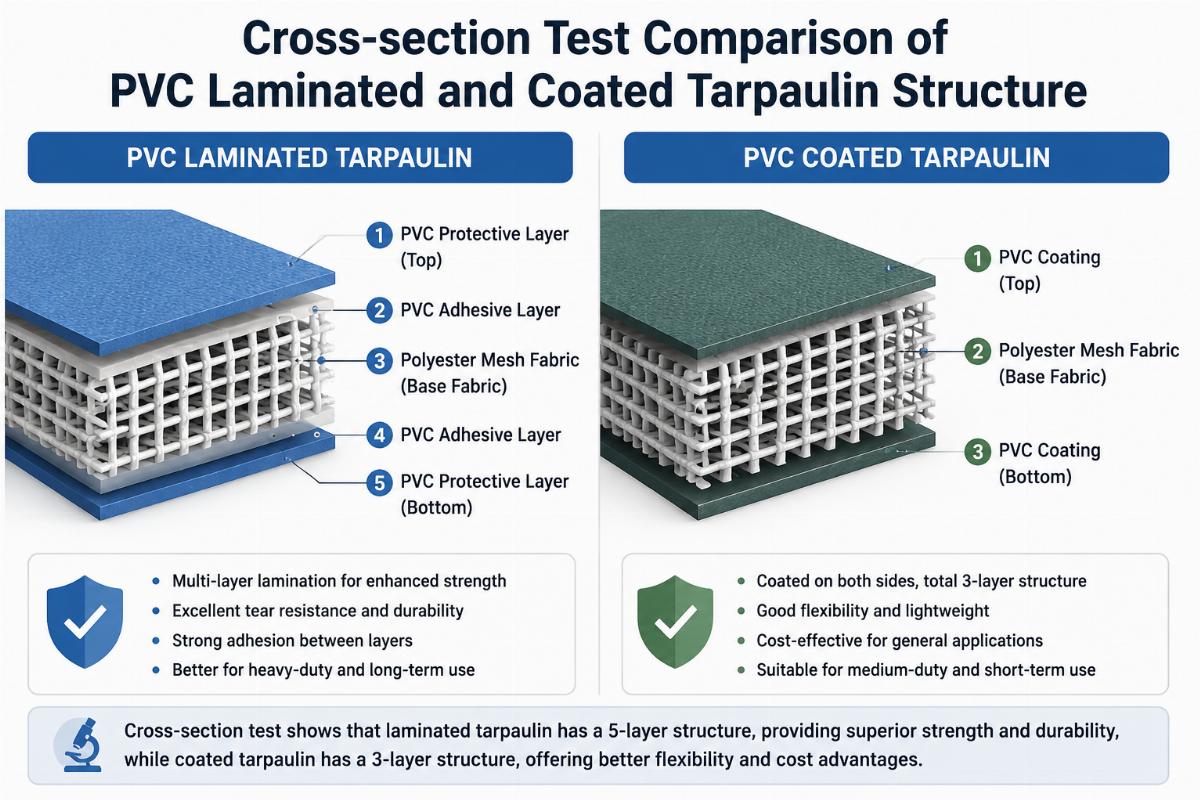
The two products’ divergent production processes create measurable gaps in customizability, durability and long-term performance, even when marketed with identical thickness specifications. Laminated tarpaulins bond two layers of woven fabric with a thin PVC film layer, while coated variants (including knife-coated options) apply a uniform PVC compound directly to the fabric base, eliminating the risk of layer delamination under repeated stress.
| Evaluation Factor | Common Misconceived Practice | Verified Recommended Practice |
|---|---|---|
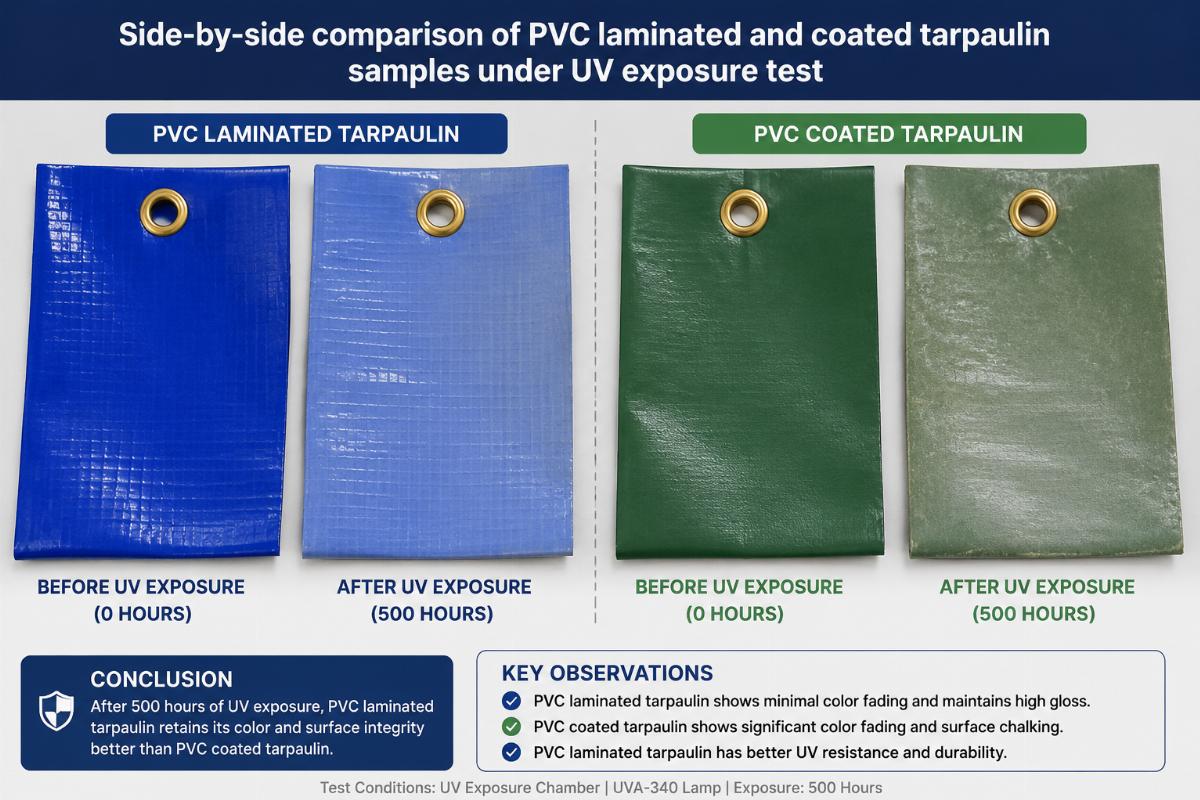
| Tear resistance under UV exposure | Assume laminated tarpaulins have 20% higher wear resistance | Select coated tarpaulins for outdoor use, as they deliver 30% higher tear resistance after 1000 hours of continuous UV aging [NEED_CITE: Bulk order pricing data from Chinese direct-sale tarpaulin factories shows custom specification coated tarpaulins are 8-12% cheaper per unit for orders over 50 tons] |
| Custom specification flexibility | Assume both products support identical weight and thickness adjustment | Prioritize coated tarpaulins for custom needs, as they allow flexible weight tuning between 300g/m2 and 1200g/m2 for use cases like mining ventilation ducts |
| Layer adhesion stability | Expect both products to resist delamination after 100+ folding cycles | Test coated tarpaulin samples for waterproof retention after folding, as laminated variants typically lose 15% of waterproof performance after 100 folding friction cycles |
A North American tarpaulin wholesaler that ordered 120 tons of 0.5mm custom-color PVC coated tarpaulin rolls in 2025 recorded a 15% lower total cost of ownership over 3 years of use compared to equivalent laminated products, with zero delamination reports from their downstream construction customers.
- Sample Performance Testing – Run 100-cycle folding and 100-hour UV exposure tests on both product samples before placing bulk orders, to eliminate performance gaps that do not appear in raw material specification sheets.
- Parameter Alignment Check – Match product weight and thickness ranges directly to your end use case, rather than selecting based on generic industry labeling.
- Delamination Risk Assessment – Request test reports for layer adhesion strength for any product intended for repeated folding or heavy stress use.
How do the prices of the two products perform in different bulk order scales?
The price gap between PVC laminated and coated tarpaulins shifts dynamically as order volume increases, and the cost advantage of coated variants becomes far more pronounced for full-container and large project orders. For small test orders under 1 ton, laminated tarpaulins typically carry a 5-7% lower unit price, but this dynamic reverses completely once order volumes cross the 50-ton threshold.
A European logistics fleet that equipped 85 sets of custom-fitted PVC truck covers made from knife-coated PVC fabric found that the slightly higher per-unit cost at the 100-piece order stage was offset by zero replacement needs after 2 years of long-haul operation across 12 EU countries, cutting their annual maintenance budget for cargo covers by 28%.
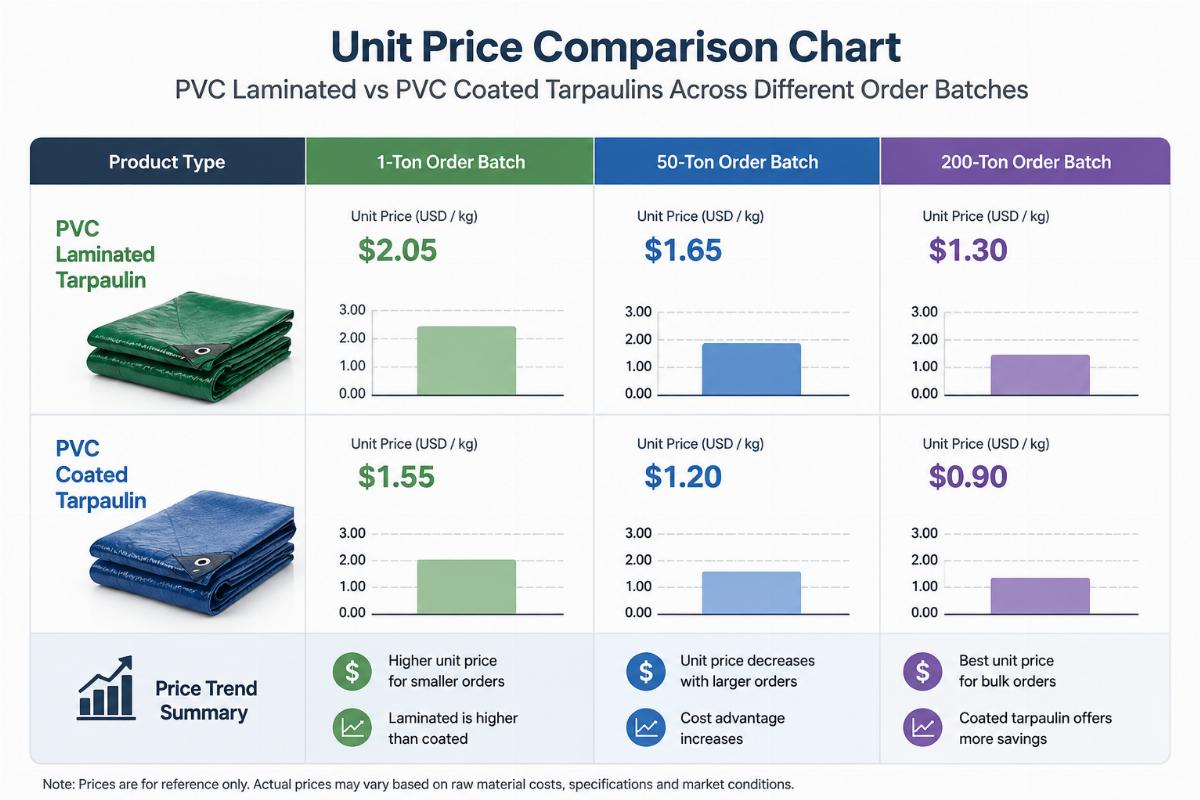
- Tiered Quotation Request – Ask suppliers to provide formal quotations for 1-ton, 50-ton and 200-ton order tiers, rather than only evaluating sample pricing.
- Total Cost of Ownership Calculation – Include 3-year replacement and maintenance cost estimates in your budget calculation, not just upfront unit price.
- Custom Specification Pricing Verification – Confirm pricing for your required custom weight, thickness and color combinations separately, as generic standard product pricing does not apply to tailored orders.
Which product is more suitable for my common procurement scenarios?
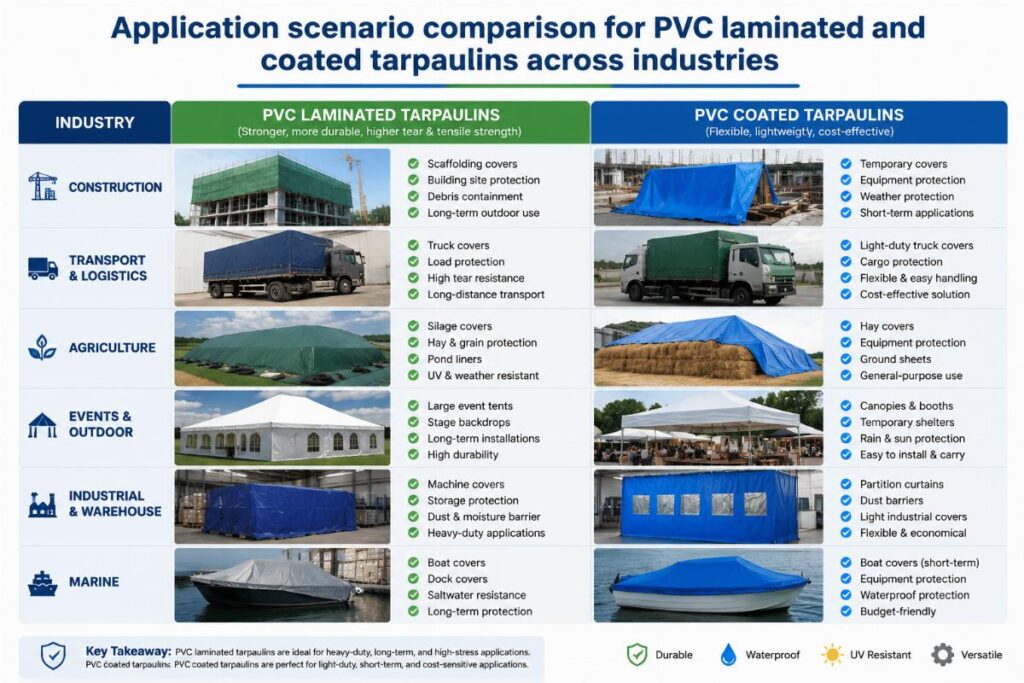
Laminated tarpaulins are only cost-effective for short-term, single-use scenarios, while coated tarpaulins deliver better value for all long-cycle, high-demand use cases. For use cases lasting less than 6 months with low stress requirements, laminated products can meet basic needs, but for any application requiring consistent performance over 12 months, coated variants are the clear preferred option.
A Southeast Asia aquaculture client that purchased 32,000 square meters of eco-safe PVC pond liners made from coated tarpaulin confirmed the product met all local environmental protection standards, and had a service life 2 times longer than the locally common laminated tarpaulin products they had used previously, cutting their liner replacement frequency in half.
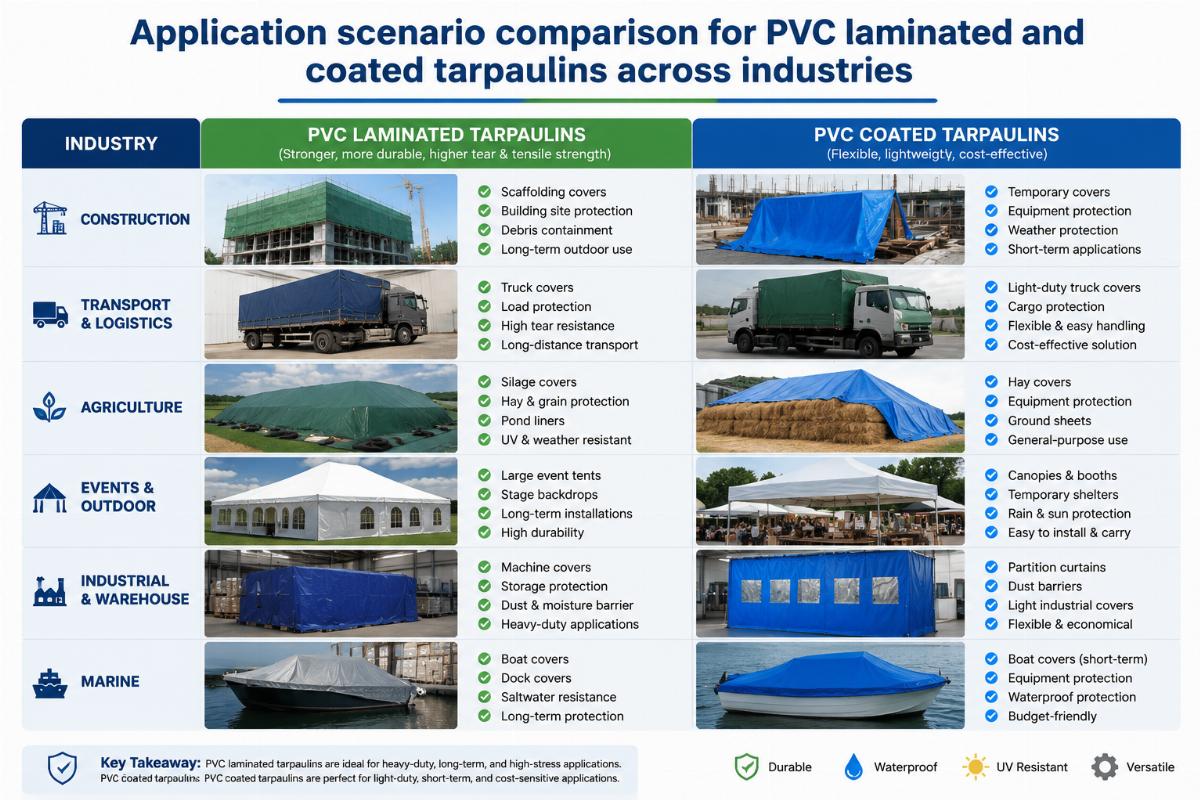
- Short-term Disposable Use – Select laminated tarpaulins for one-off event covers or temporary construction site protection lasting under 3 months.
- Long-cycle High-stress Use – Choose coated tarpaulins for logistics truck covers, aquaculture liners and permanent construction site protection.
- Custom Special Specification Needs – Prioritize coated tarpaulin suppliers for use cases like mining ventilation ducts that require non-standard weight and thickness adjustments.
What common pitfalls should be avoided when purchasing the two tarpaulin products?
The most frequent sourcing mistake is ignoring the alignment between product parameters and actual end use scenarios, which leads to unplanned additional costs for replacement and maintenance. Many buyers select products based on generic advertised thickness, without verifying the actual base fabric weight and coating process, leading to premature failure in real-world operation.
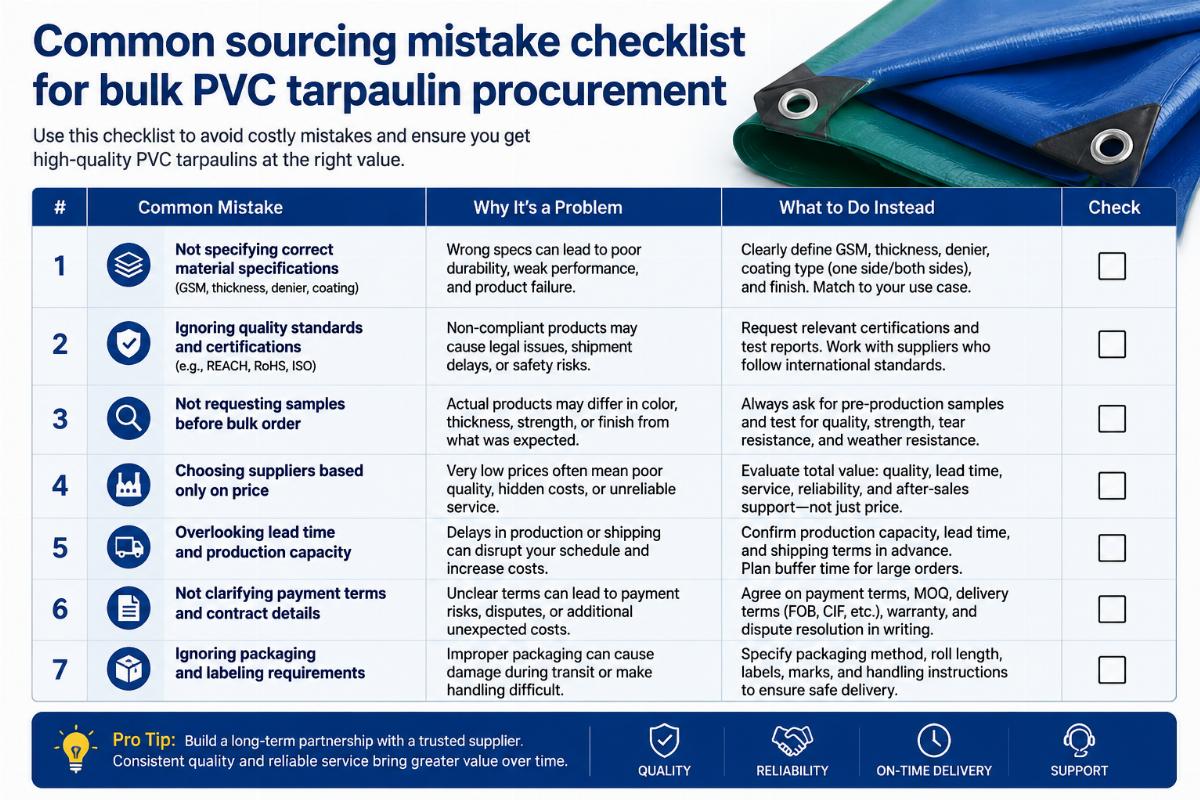
- Parameter Matching Audit – Cross-reference all advertised product specifications against actual use case stress and environmental requirements before ordering.
- Batch Consistency Check – Require suppliers to provide 100% pre-shipment QC inspection reports for full orders to avoid quality inconsistency across large batches.
- Supplier Capability Verification – Confirm that your selected supplier has the production capacity to deliver your required custom specifications at scale, rather than only for small sample runs.
How to find a reliable China supplier for bulk custom tarpaulin orders?
Qualified China-based tarpaulin suppliers can provide end-to-end custom support from R&D to pre-shipment inspection, effectively reducing the quality risk associated with large custom orders. Suppliers with decades of focused production experience have already optimized their processes to align with the common requirements of global buyers across North America, Europe and Asia.
Shandong Jinxiang Technology Development Co., Ltd, which has nearly 30 years of production experience, offers full OEM/ODM support, 100% pre-shipment QC inspection and flexible MOQ to match the diverse needs of different buyer segments for both laminated and coated tarpaulin products, with a 10-person R&D team that can deliver custom samples in 7 days for non-standard specification requests.
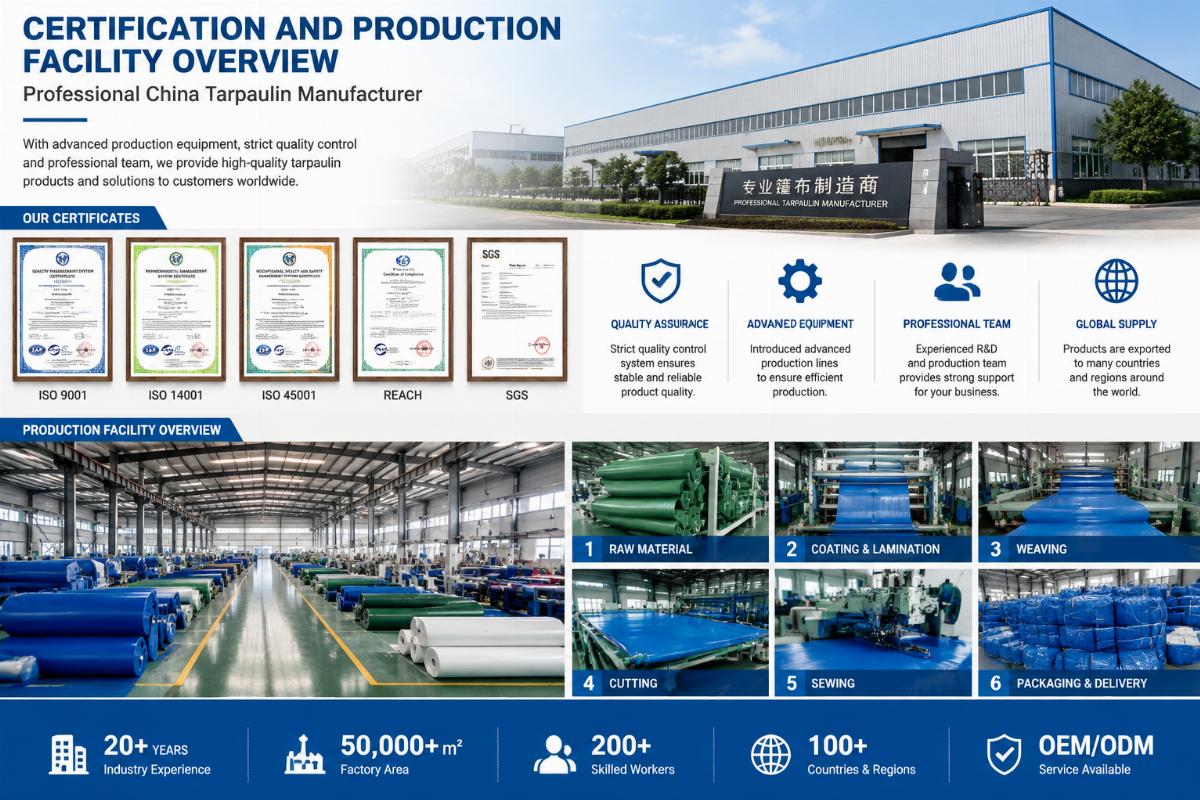
- Production Experience Validation – Prioritize suppliers with at least 10 years of focused production experience in the tarpaulin segment, to ensure they