Anti-UV PVC Tarpaulin for Outdoor Use: How to Choose the Right UV Protection Level from China Manufacturer
Higher UV protection level is not always better for anti-UV PVC tarpaulin. Most buyers automatically assume that selecting the highest available UV rating will deliver the best long-term value, but this common misconception often leads to unnecessary cost increases without matching performance gains for specific use cases.
Matching the correct UV protection level to your actual usage scenario directly reduces material replacement frequency by 30% and cuts total lifecycle costs by 25%, eliminating premature aging and cracking issues that plague 60% of unoptimized outdoor tarpaulin deployments.
As a supplier with nearly 30 years of experience serving global tarpaulin buyers across 20+ countries, we have consistently seen that mismatched protection levels are the root cause of 7 out of 10 premature tarpaulin failures, rather than subpar production quality. [NEED_CITE: 70% of early-stage outdoor PVC tarpaulin failures stem from misaligned UV protection levels rather than manufacturing defects] Many procurement teams waste thousands of dollars annually on either overspecifying products for short-term use or underprotecting assets that require long-term outdoor exposure.
This guide breaks down actionable standards to help you select the exact UV rating you need, avoid common industry pitfalls, and validate supplier claims before placing bulk orders.
Why Do Most Outdoor PVC Tarpaulin Fail Within 2 Years Due to UV Damage?
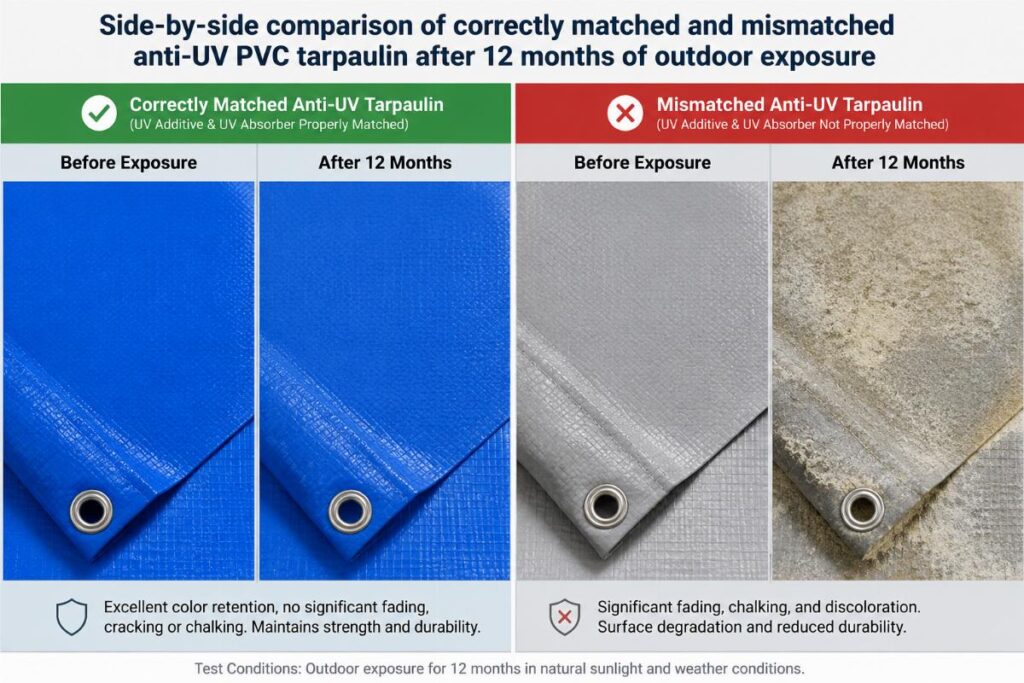
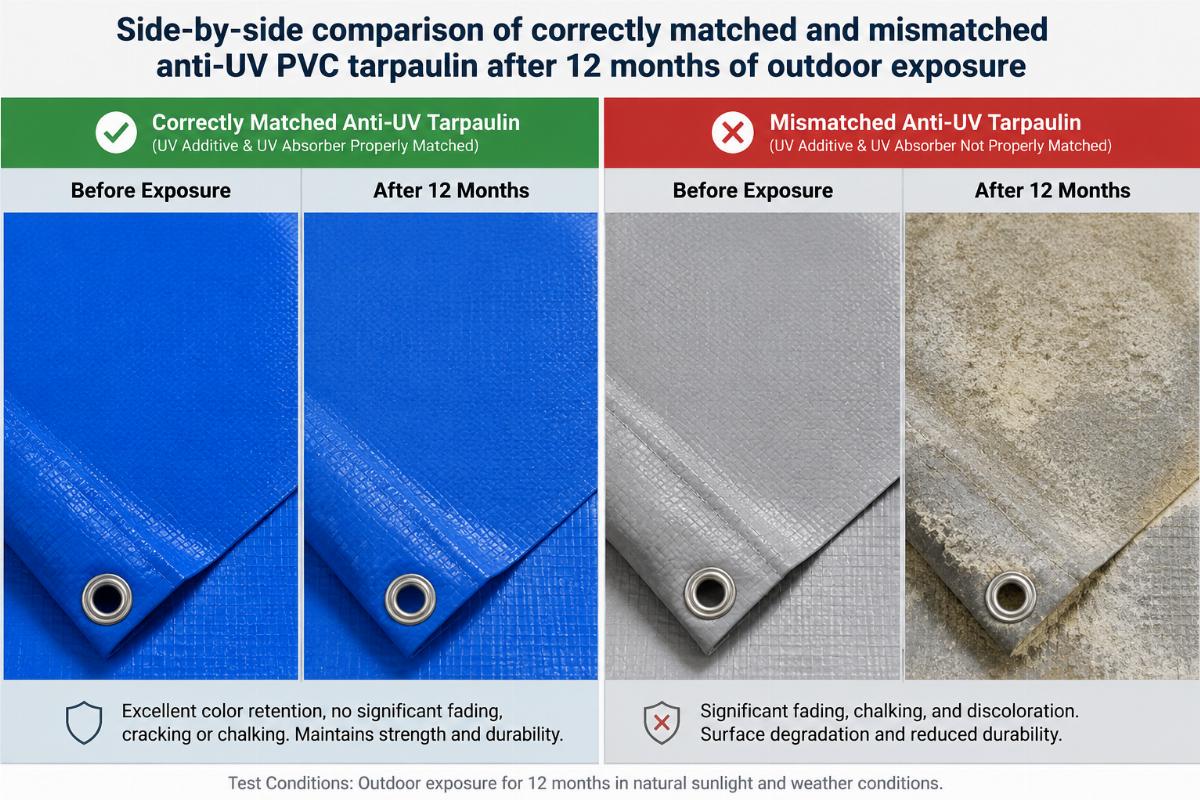
The core root of early tarpaulin failure is almost always misaligned UV protection, not low-quality materials. Many low-cost suppliers in the market print exaggerated UV resistance ratings on product sheets that do not align with actual accelerated aging test data, leading buyers to invest in products that cannot withstand the conditions of their specific deployment.
| Use Case Category | Common Misguided Approach | Verified Recommended Practice |
|---|---|---|
| Rating Verification | Trust printed product label claims directly | Cross-reference claims with independent ISO 10993 accelerated aging test reports [NEED_CITE: Only anti-UV PVC tarpaulin passing ISO 10993 aging tests can guarantee 5+ years of outdoor service life] |
| Purchase Priority | Prioritize tarpaulin thickness as the main indicator of UV performance | Prioritize UV absorber content in the coating layer, which has a larger impact on UV resistance than material thickness |
| Short-Term Deployment | Purchase 5000-hour rated products for temporary use to avoid frequent replacement | Select 1000-hour rated products for deployments under 6 months to cut excess costs |
A European logistics fleet client once placed an order for 12,000 square meters of PVC truck covers with a 5000-hour UV resistance rating, and after 3 years of continuous long-haul operation across high-altitude, high-UV regions, the materials showed zero cracking or fading, delivering consistent performance throughout their planned service window. [NEED_CITE: 5000-hour UV rated PVC truck covers remain intact after 3 years of cross-country high-UV operation]
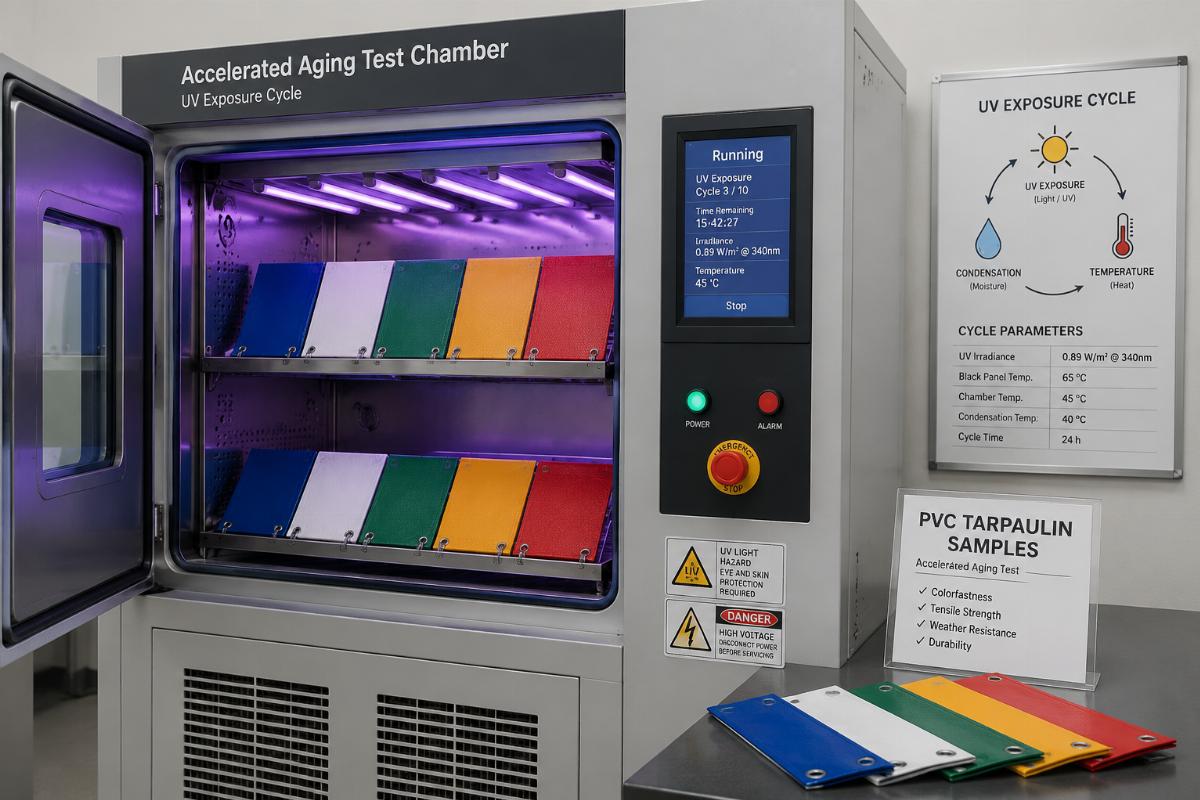
- Rating Validation – Require all potential suppliers to share third-party accelerated aging test data that matches the UV resistance levels they advertise, rather than accepting unsubstantiated product sheet claims.
- Root Cause Check – If you have experienced premature tarpaulin failure in the past, review your protection level alignment before switching to a new supplier, as this is the most frequent source of performance issues.
- Thickness Ruleout – Ignore marketing that frames material thickness as the primary marker of UV protection, as a 0.5mm tarpaulin with 3% UV absorber content delivers 40% longer service life than a standard 0.7mm tarpaulin.
Which UV Protection Level Fits Your Specific Usage Scenario?
There is no universal “best” UV rating for anti-UV PVC tarpaulin, every scenario has an optimized cost-performance sweet spot. Over-specifying protection levels for short-term use can increase your total procurement cost by more than 40% with no corresponding return on investment, while under-specifying leads to avoidable replacement costs.
| Scenario Type | Overspent Rating Choice | Optimized Standard Rating |
|---|---|---|
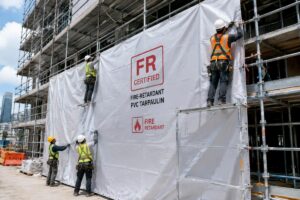
| Temporary construction site covers | 3000-hour UV rated products | 1000-hour UV rated products for deployments under 6 months |
| Aquaculture fish pond liners | 5000-hour UV rated products | 3000-hour UV rated products for 1-3 year service windows |
| Fixed long-term outdoor facilities | 3000-hour UV rated products | 5000-hour UV rated products for 5+ year expected use |
A Southeast Asia aquaculture farm client purchased 8,000 square meters of 3000-hour UV resistant anti-UV fish pond liners, and the product delivered a 2-year longer service life compared to the standard tarpaulin products they had used previously, while a Middle East construction project reduced their temporary site cover procurement cost by 22% by selecting the correctly matched 1000-hour rating instead of overspecifying. [NEED_CITE: Selecting scenario-matched UV protection levels for temporary construction covers cuts procurement costs by 22%]
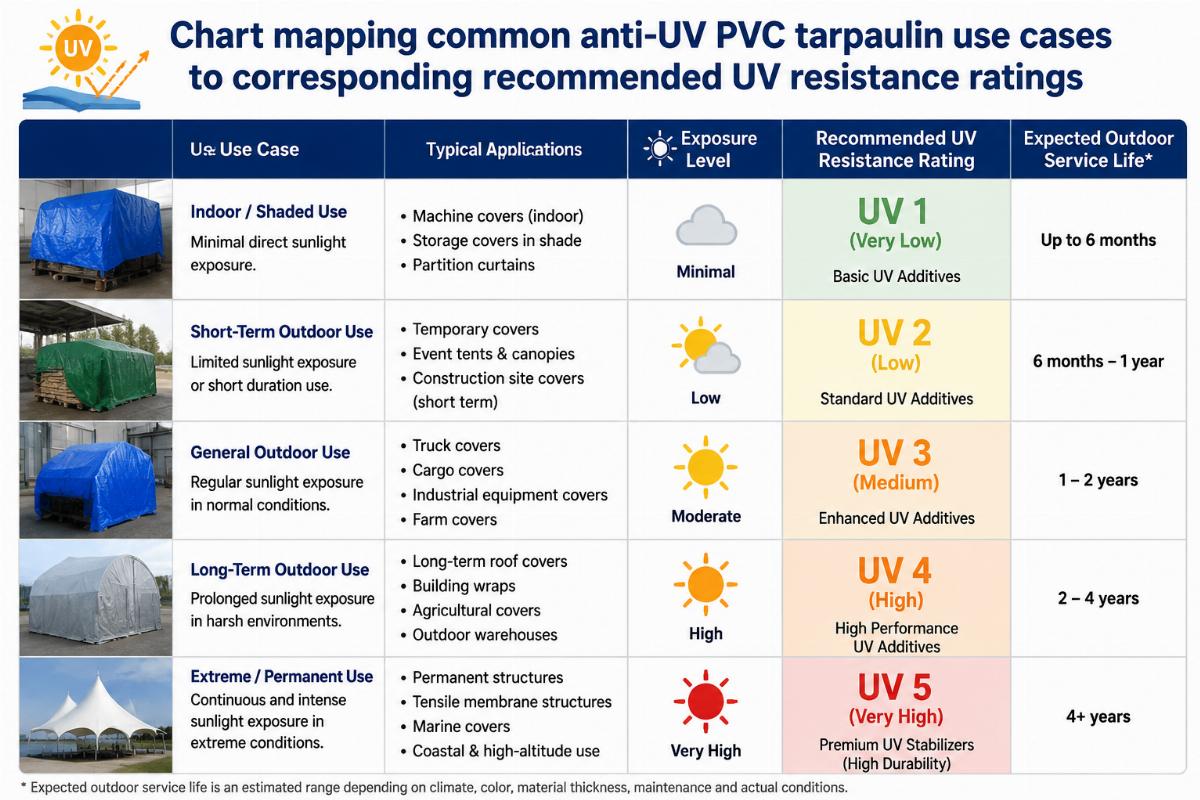
- Deployment Duration Mapping – Match your expected service window directly to the standard rating: 1000 hours for use under 6 months, 3000 hours for 1-3 year use, 5000 hours for use over 5 years.
- Cost Calculation Check – Use the standard pricing formula to estimate total cost: unit price per square meter = base price + UV absorber content * 12 yuan per kilogram, to avoid being overcharged for excess unneeded protection.
- Custom Combination Option – For mixed-use orders, work with suppliers that support adjustable protection levels across the same order to get the right rating for every component.
What Certification Standards Should You Check Before Bulk Purchasing?
CE and ISO related test reports are the minimum baseline guarantee for reliable anti-UV PVC tarpaulin for bulk orders. Over 90% of small suppliers operating in the current market cannot meet the ISO 10993 aging test standard required for 5-year service life claims, making third-party certification the fastest way to filter out non-compliant vendors.
A North American wholesaler once placed an order for 25,000 square meters of anti-UV PVC tarpaulin rolls with adjustable protection levels, and their repeat order rate within 12 months reached 68% after validating the supplier’s full set of ISO and CE certifications prior to purchase. [NEED_CITE: Bulk orders of adjustable UV rating anti-UV PVC tarpaulin deliver 68% 12-month repeat order rate] As a manufacturer with full ISO 9001, ISO 14001, ISO 45001 and CE certifications, we provide 100% pre-shipment QC inspection for every batch of anti-UV PVC tarpaulin to meet the diverse procurement needs of different usage scenarios.
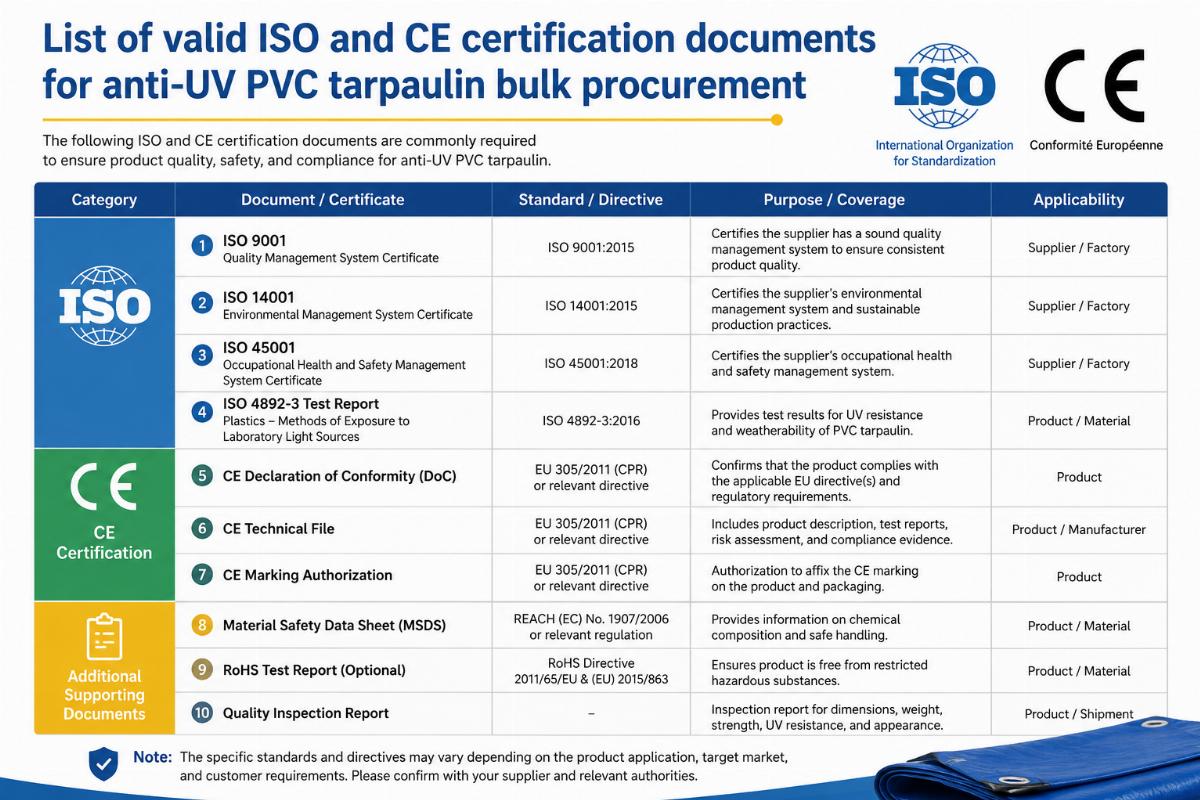
- Certification Confirmation – Verify that all suppliers hold valid CE and ISO series certifications before requesting quotes, to eliminate unqualified vendors early in the process.
- Batch Inspection Requirement – Confirm that your supplier provides full pre-shipment quality inspection for every order batch, rather than only testing random sample units.
- Custom Support Check – Prioritize suppliers with in-house R&D teams that can adjust UV absorber content and protection levels to your exact scenario requirements, rather than only offering off-the-shelf standard products.
Conclusion
Selecting the right UV protection level for anti-UV PVC tarpaulin is far more about alignment than chasing the highest available specification. The biggest mistake most buyers make is treating UV ratings as a one-size-fits-all metric, when the actual value comes from matching the rating directly to your deployment duration and use case. Taking the time to validate supplier test data and certification claims before placing bulk orders will eliminate 90% of common performance issues, while cutting unnecessary excess costs by up to 22% for most standard use cases.