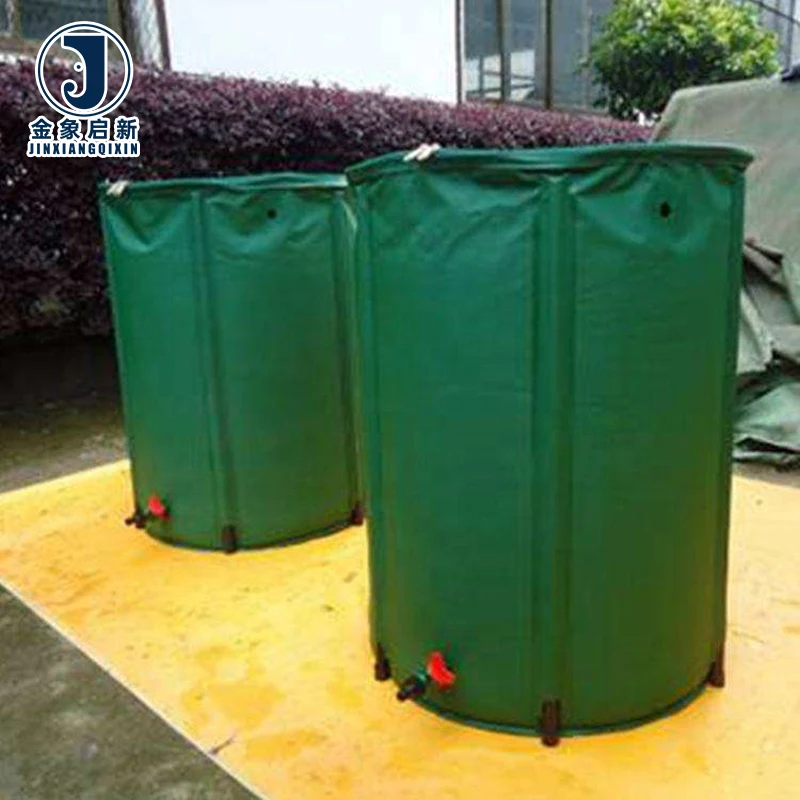
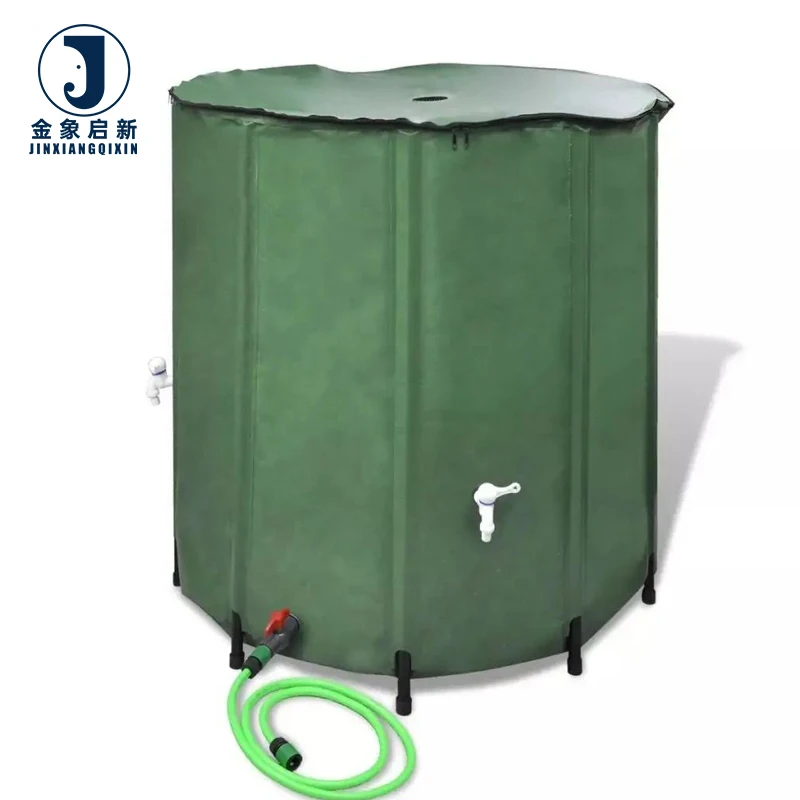
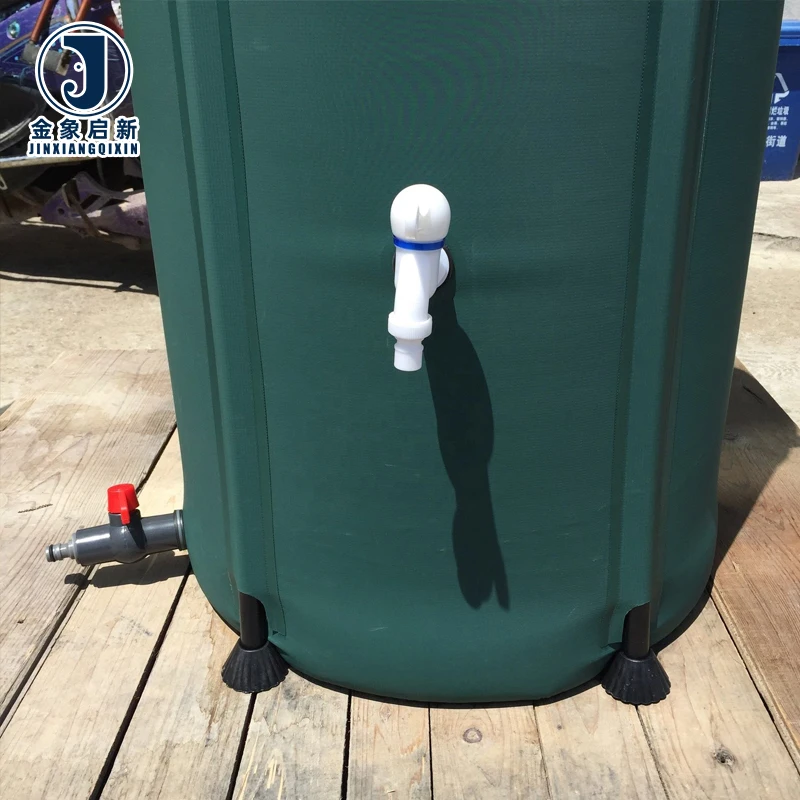
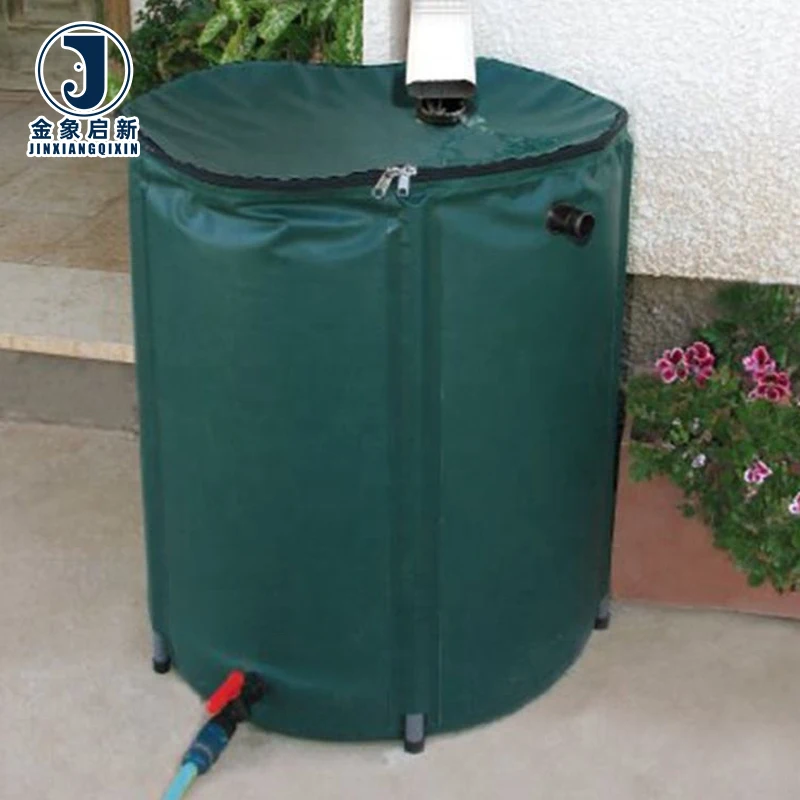
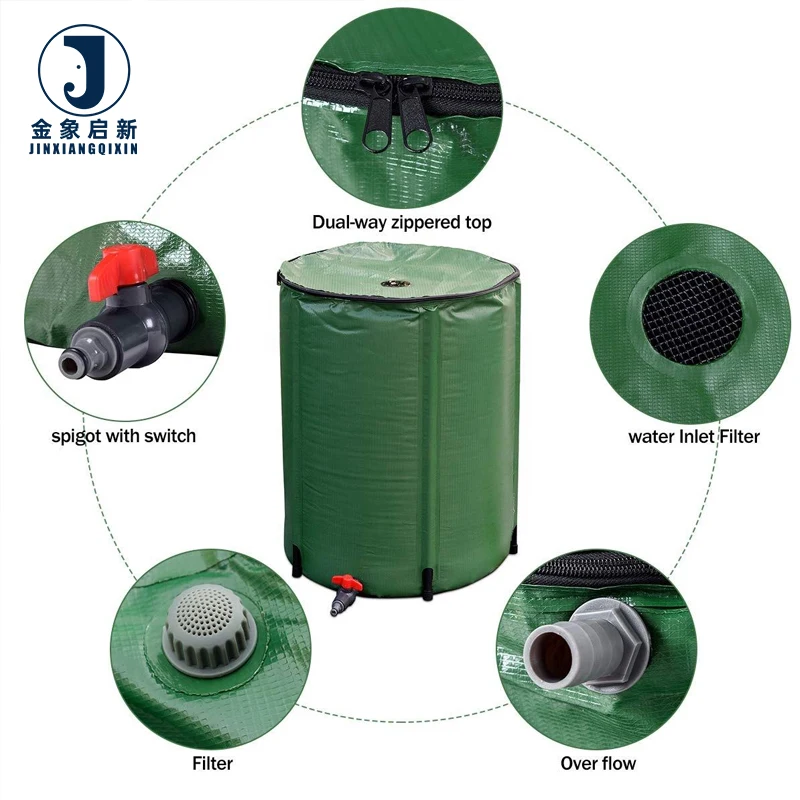
Collapsible PVC Tarpaulin Water Storage Tank, 750L, UV-Resistant, Industrial Grade — flexible and foldable for rainwater harvesting, garden irrigation, and outdoor portable water collection.
- Heat-welded seams from PVC coated tarpaulin ensure long-term watertight integrity under continuous fill-and-drain cycles
- Mildew-proof and UV-resistant treatment keeps stored water clean across seasonal exposure
Backed by 100% pre-shipment inspection covering seam weld integrity and leak testing on every unit before dispatch.
Description
Coated Fabric Process Control — nearly 30 years focused on PVC coated fabric, applied here to collapsible water tanks with deep adhesion control across every heat-welded seam.
Technical Specifications
| Parameter | Value |
|---|---|
| Product Type | PVC Tarpaulin Water Tank |
| Capacity | 750L |
| Material | PVC Tarpaulin |
| Waterproof | Yes |
| UV-Resistant | Yes (test basis not stated) |
| Mildew-Proof | Yes |
| Foldable | Yes |
| Grade | Industrial Grade |
Application Suitability
| Application | Exposure & Requirement |
|---|---|
| Garden and greenhouse rainwater harvesting | Continuous outdoor UV exposure, seasonal temperature swings, algae and mildew risk from standing water |
| Agricultural and aquaculture irrigation reservoirs | Direct soil contact, livestock proximity, frequent filling and draining cycles, portability between sites |
| Industrial and construction site temporary storage | Heavy particulate exposure, abrasion from site traffic, rapid deployment and relocation requirements |
| Hydroponic water reservoirs | Constant water contact, nutrient solution chemistry, indoor or sheltered UV conditions |
Why a Collapsible PVC Tarpaulin Water Tank Fails Before the Fabric Does
The seam outlests the fabric only when heat welding parameters match the exact coating chemistry.
When a collapsible water tank develops a leak, the failure point is almost always a welded seam rather than the body of the PVC tarpaulin itself. This happens because the thermal profile used during fabrication does not fully fuse the coating layers, leaving a micro-channel that opens under hydrostatic pressure as the tank fills and empties across seasons [NEED_CITE: tensile and tear test methods for coated fabrics per ISO 1421]. For a collapsible PVC water storage tank manufacturer, the discipline lies not in selecting a heavier fabric, but in tuning weld temperature, dwell time, and pressure to the specific PVC formulation being joined. Operators who have had tanks fail mid-season know that the cost is not just the replacement unit — it is the lost water, the interrupted irrigation cycle, and the labour to drain and reposition a new bladder on site.
Heat-Welded Seam Integrity for Long-Term Water Containment
Every seam on this collapsible PVC tarpaulin water tank is heat welded rather than stitched, eliminating needle holes that would otherwise become leak paths under sustained hydrostatic load. The welding process fuses the PVC coating layers across the join so that the seam strength approaches the base fabric strength, which is critical when the tank is filled to its 750L capacity and the lower panels bear the full weight of the water column. A collapsible PVC water storage tank manufacturer must validate weld integrity on every production run, because a seam that passes a static leak test may still fail once the tank flexes during filling or is dragged across uneven ground.
UV-Resistant and Mildew-Proof Treatment for Seasonal Deployment
Standing water inside a folded or partially filled tank creates conditions for mildew growth on the inner PVC surface, which over time degrades the coating and introduces contaminants into stored rainwater. The mildew-proof treatment applied to this PVC tarpaulin water tank addresses that inner-surface risk, while the UV-resistant treatment — available with documented test basis on request — protects the outer surface from solar degradation during months of outdoor exposure [NEED_CITE: UV degradation mechanisms in plasticised PVC coatings]. Together these treatments extend the service window of the tank across multiple seasons, reducing the frequency of replacement and the downtime associated with decommissioning and reinstalling a new unit.
Understanding Capacity, Coating Adhesion and Fabric Weight in Water Bladders
The 750L capacity rating of this tank depends on the PVC tarpaulin base fabric maintaining its dimensional stability under load; a fabric that stretches or creeps at the seams will distort the tank geometry and concentrate stress at the welded corners. Coating adhesion — the bond between the PVC layer and the base fabric — is equally important, because delamination allows water to migrate between the layers and creates blisters that eventually rupture. The industrial grade specification of this PVC tarpaulin water tank indicates a coating weight and base fabric density selected for sustained water containment rather than light-duty temporary use. Buyers evaluating a collapsible PVC water storage tank manufacturer should request the material specification sheet that documents base fabric construction, coating type, and the adhesion test method used during quality control [NEED_CITE: coating adhesion test methods for PVC tarpaulin per ISO 2411].
The Hidden Cost of Choosing the Wrong Tank Specification
Specifying a tank with insufficient coating adhesion for the intended water volume leads to delamination at the seams, typically discovered only after the tank has been filled and left standing for several days. A PVC tarpaulin water tank that lacks verified mildew-proof treatment will develop internal biofilm within weeks in warm climates, contaminating stored rainwater intended for irrigation or hydroponic systems [NEED_CITE: microbial growth in stored rainwater systems]. When UV resistance is claimed without a documented test basis, the outer surface becomes brittle and cracks after one or two seasons of direct sun exposure, forcing an unplanned replacement that disrupts the entire water collection setup.
Why Source This Collapsible PVC Water Tank Here
The 10-person R&D team handles custom capacity development, inlet and outlet positioning, and reinforcement detailing, with samples produced within days so that buyers can verify fit and function before committing to a production run. A dedicated QA/QC process inspects every tank before shipment, covering seam weld integrity, leak testing, and dimensional verification against the agreed specification. Three full production lines and 36 sets of professional equipment support bulk orders with consistent lead times, while the coating process control developed over nearly 30 years ensures that PVC adhesion and seam strength remain within tolerance across every unit in a batch.
Documentation & Verification
- Material specification sheet stating PVC tarpaulin weight, base fabric, and coating type for each tank order
- UV-resistant and mildew-proof test reports supplied where applicable to the treatment grade selected
- 100% pre-shipment inspection record covering seam weld integrity and leak test results
- ISO and CE certificates available for the manufacturing facility producing the water tanks
- Roll packing list and certificate of origin included with each dispatch for customs clearance
Fabrication, Handling & Storage
- Heat-weld all seams using temperature and dwell settings matched to the industrial grade PVC tarpaulin coating chemistry
- Reinforce inlet and outlet penetrations with additional PVC tarpaulin patches to distribute stress around the fitting
- Store folded tanks in a dry, shaded location to prevent mildew formation on the PVC tarpaulin surface between uses
- Avoid dragging the 750L tank across sharp or abrasive surfaces that could score the PVC tarpaulin base fabric
- Clean inner surfaces with mild, non-solvent detergents to preserve the mildew-proof treatment on the PVC tarpaulin coating
- Inspect heat-welded seams annually and apply PVC-compatible repair patches to any lifting edges before refilling
What to Include in Your Enquiry
Provide the required capacity, the site footprint available for the tank, and the inlet and outlet configuration your pipework demands, so that a dimensional drawing and sample can be prepared. Confirm whether the tank will be deployed in direct outdoor sun or sheltered conditions, as this determines the UV treatment grade to specify. Indicate your annual volume requirement and whether you need multiple capacities across a single order, which affects production scheduling and container loading.
Frequently Asked Questions
Q: What capacities are available and can I order a custom size?
A: Standard capacities include 100L, 225L, 250L, 750L, and 1000L options. Custom dimensions and capacities beyond these can be developed by the R&D team, with samples produced within days for approval. Provide your required footprint, height restriction, and volume so that a technical drawing and prototype can be prepared before production begins.
Q: How are seams welded and tested for long-term watertight performance?
A: All seams are heat welded using parameters tuned to the specific industrial grade PVC tarpaulin coating, ensuring the join strength approaches the base fabric strength. Each tank undergoes a leak test and visual weld inspection as part of the 100% pre-shipment quality control process, with results documented in the inspection record shipped with your order.
Q: Is the PVC tarpaulin material UV-treated and safe for irrigation water?
A: UV-resistant treatment is available and can be supplied with a documented test basis on request, confirming the treatment grade and the exposure conditions it is designed to withstand. The mildew-proof inner treatment prevents biofilm formation, keeping stored rainwater suitable for garden, agricultural, and hydroponic irrigation use across multiple seasons.
Q: What outlet and valve options can be fitted to the tank?
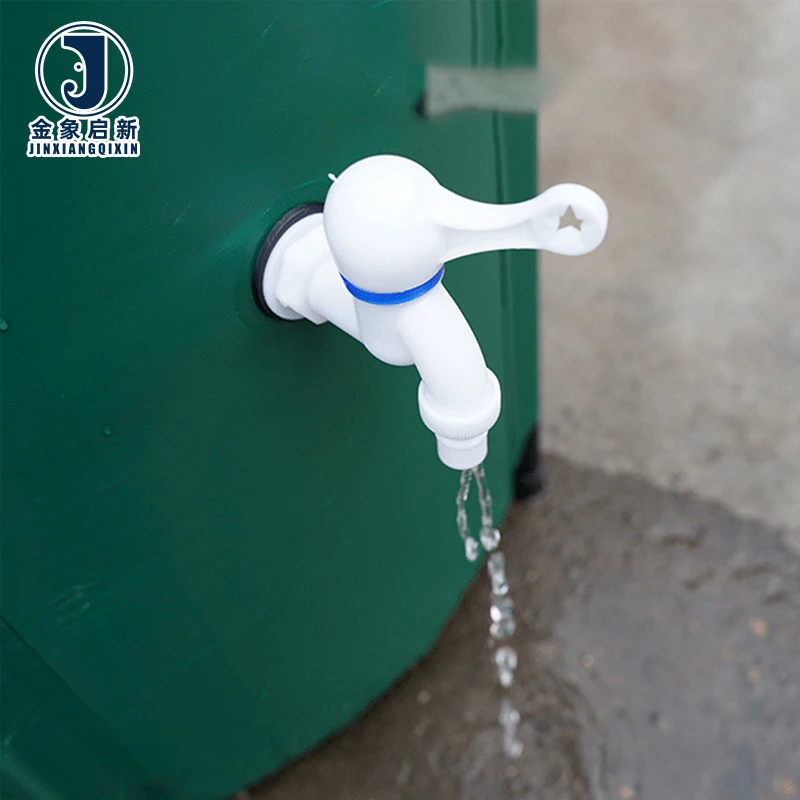
A: Inlet and outlet positions are fully customisable to match your site pipework layout. Fittings are heat welded or mechanically secured with reinforced PVC tarpaulin patches around each penetration point to distribute load and prevent tearing. Specify the fitting type, diameter, and position when requesting your sample and dimensional drawing.
Q: How should the tank be cleaned, stored, and repaired between seasons?
A: Drain the tank fully and rinse inner surfaces with a mild non-solvent detergent to preserve the mildew-proof PVC tarpaulin coating. Fold and store in a dry, shaded location. Minor seam lifting or surface scoring can be repaired with PVC-compatible adhesive patches applied to clean, dry fabric, extending the tank service life without full replacement.
Related products
-
Custom Made PVC Tarpaulin 650 Gsm 630 Gsm for Truck Cover
Read more -
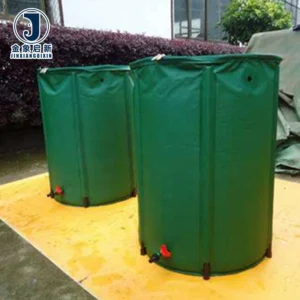
Custom Made PVC Waterproof Fabric Rain Tank for Irrigation – Manufacturer
Read more -
PVC Tarpaulin 650 Gsm 630 Gsm for Truck Cover – Custom Made
Read more -
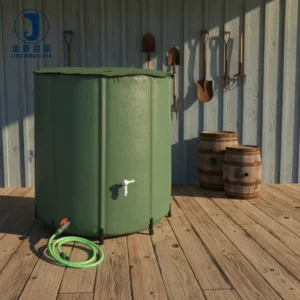
Foldable Waterproof PVC Rain Collecting Barrel Garden Use Rain Water Tank Collapsible Water Storage
¥21.25 Add to cart