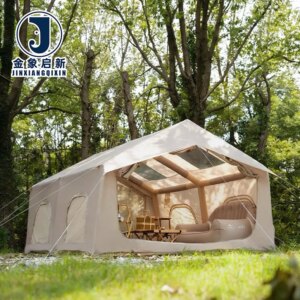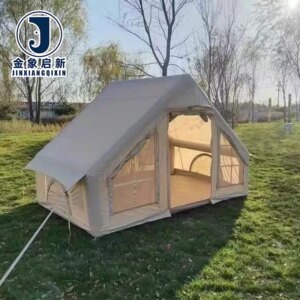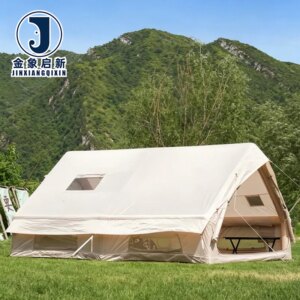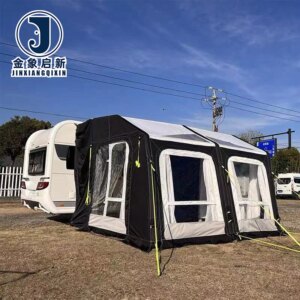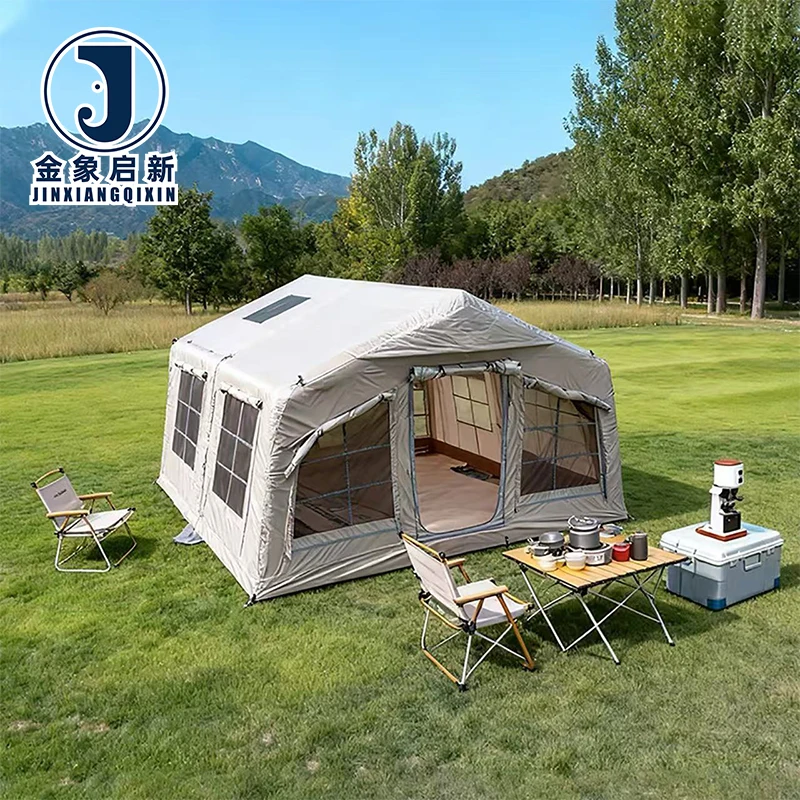
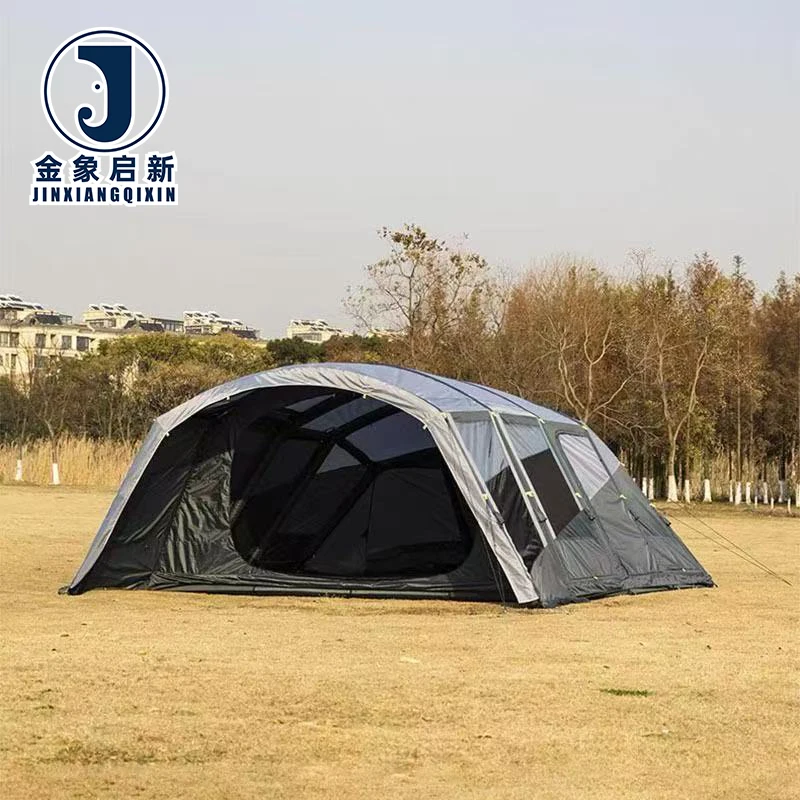
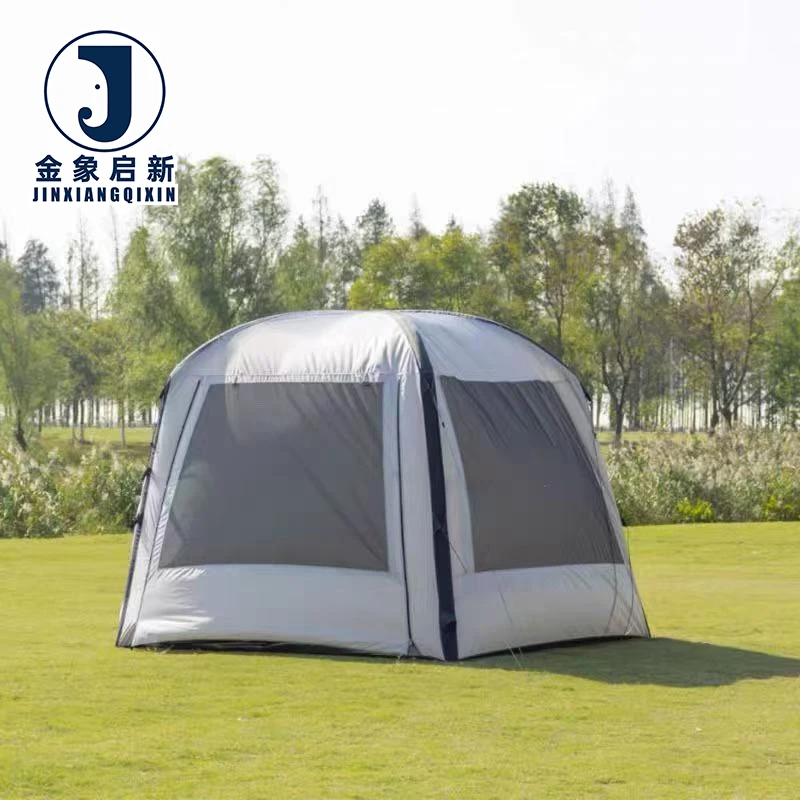
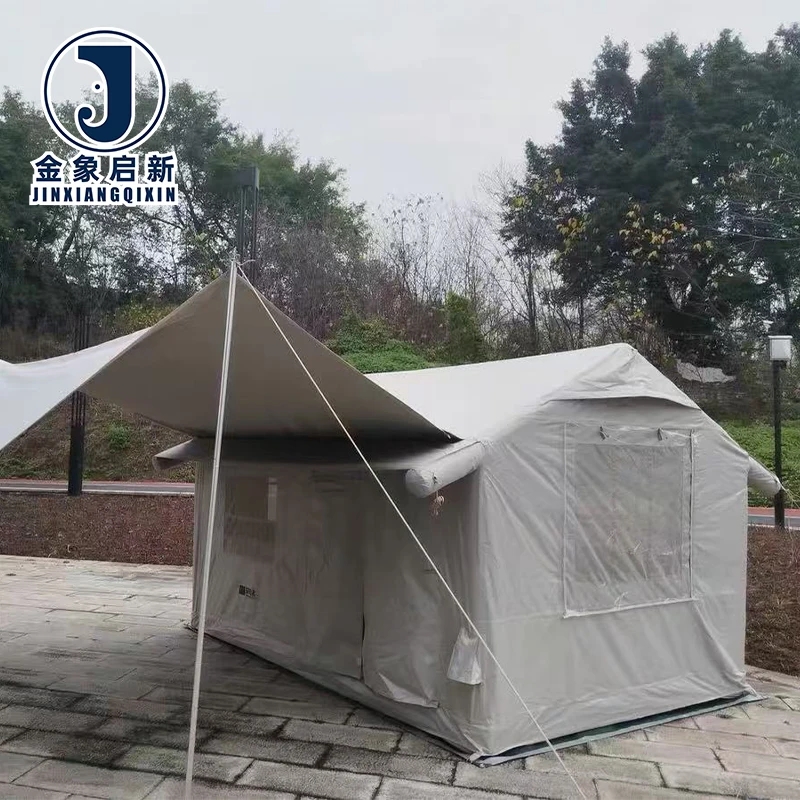
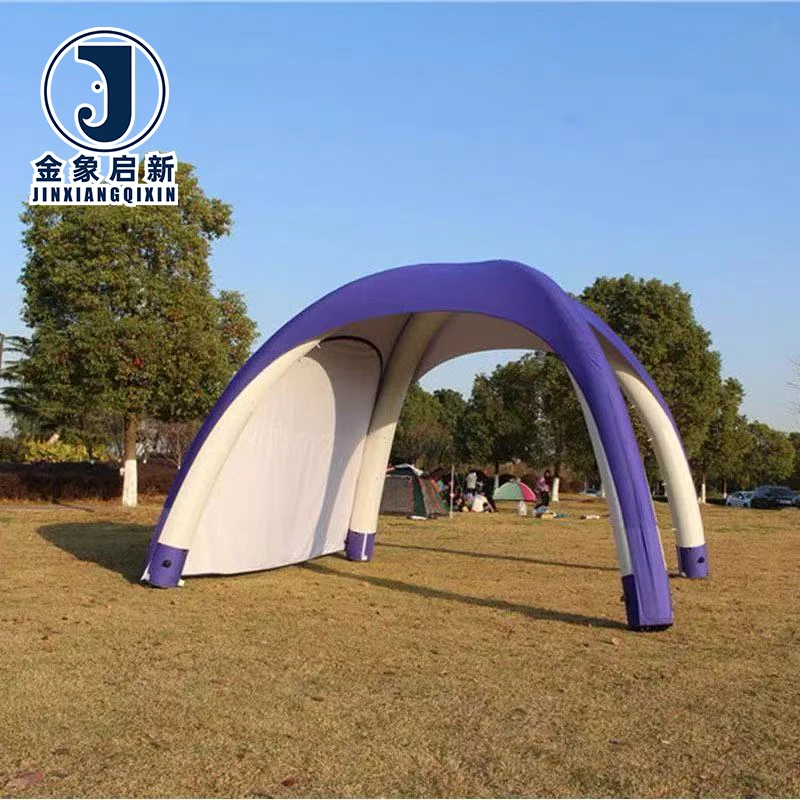
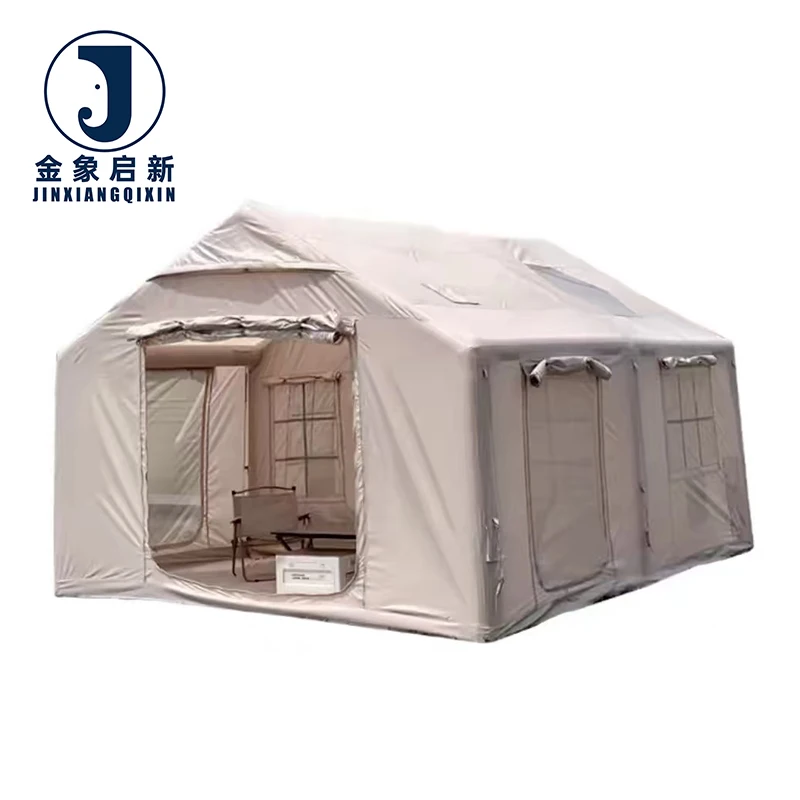
Custom Inflatable Tent for Glamping – Waterproof PVC, Windproof, Quick Automatic Opening — engineered with PVC tarpaulin base fabric for reliable weather protection across commercial glamping, events, and temporary industrial shelter applications.
- 4-season design extends usable operating windows across diverse climates
- Quick automatic opening mechanism enables rapid deployment on-site
- Full OEM & ODM customization: sizing, pattern printing, and branding handled by in-house R&D team
Backed by 100% pre-shipment inspection, three full production lines supporting bulk capacity, and samples developed within days for custom specifications.
Description
Precision Coating Control — Nearly 30 years focused on PVC coated fabric with deep process oversight over adhesion and weight consistency, applied here to inflatable tent structures where airtight integrity depends on uniform material behavior across every panel.
Technical Specifications
| Parameter | Value |
|---|---|
| Product Type | Inflatable Tent |
| Core Material | PVC tarpaulin |
| Product Forms | Inflatable structure |
| Key Performance | Waterproof, windproof, quick automatic opening |
| Season Rating | 4 season |
| Customization Service | OEM & ODM (sample customization, pattern printing) |
| Standards | ISO9001, ISO14001, ISO45001, CE |
Application Suitability
| Application | Exposure & Requirement |
|---|---|
| Commercial glamping sites | Continuous outdoor weather exposure, guest comfort across seasons, aesthetic consistency across multiple units |
| Event hosting and outdoor exhibitions | Rapid deployment and teardown cycles, branded visual identity, wind load resistance on open terrain |
| Industrial temporary shelter | Heavy-duty weather protection, structural stability under sustained inflation, site safety compliance |
| Emergency response staging | Fast inflation under field conditions, reliable waterproof barrier, transportability between deployments |
| Seasonal tourism operations | Multi-season durability, repeated assembly cycles, UV exposure during peak operating months |
Why Batch Consistency Matters More Than Quoted GSM for Inflatable Tents
A stated GSM on paper means little if roll-to-roll coating weight varies enough to alter panel stiffness and weld behavior during fabrication.
When commercial glamping operators deploy multiple inflatable tent units across a single site, even slight colour shifts between fabric rolls become immediately visible once structures stand side by side. The same applies to coating thickness inconsistency — panels cut from different rolls may inflate at different rates or show uneven surface tension under load. [NEED_CITE: colour consistency measurement methods for coated textiles per ISO 105 series] Buyers specifying inflatable tent manufacturer custom orders need assurance that every unit in a multi-tent deployment comes from material produced under the same controlled batch parameters. Without that, the visual and structural uniformity that defines a professional glamping or event site breaks down before guests even arrive.
Full-Catalogue Custom Inflatable Tent Capability from Design Through Delivery
Developing a custom inflatable tent involves more than cutting fabric to size — it requires matching the base fabric denier and coating weight to the intended inflation pressure and structural load. Our 10-person R&D team handles material selection, pattern layout, and sample iteration within days, allowing commercial operators to validate dimensions, colour, and branding before committing to full production runs. Whether you need a single prototype for a glamping concept or a fleet of branded event structures, the inflatable tent manufacturer custom workflow moves from specification review through sample approval without handoff delays between departments.
How 4-Season PVC Construction Extends Operating Windows
A 4-season inflatable tent must perform under conditions ranging from summer heat to winter wind loading without loss of airtight integrity or surface flexibility. The PVC tarpaulin core material provides the waterproof and windproof barrier that keeps interior conditions stable, while the quick automatic opening mechanism supports rapid deployment even when operators face tight event setup schedules. [NEED_CITE: tensile and tear test methods for coated fabrics per ISO 1421] This combination allows commercial glamping sites and seasonal tourism operators to extend their revenue-generating months beyond the traditional summer window, reducing the cost-per-use of each structure across the operating year.
Reading the Specifications That Actually Determine Inflatable Tent Performance
The relationship between base fabric denier, weave density, and PVC coating weight determines how an inflatable tent panel behaves under sustained air pressure. A higher denier yarn in the base fabric provides tear resistance, but without sufficient coating adhesion, the layers can separate at stress concentration points near valve openings and seam junctions. The coating method — whether knife-over-roll, lamination, or calendering — directly affects peel strength and heat-welding behavior during fabrication, meaning two fabrics with identical GSM can perform differently once welded into an airtight structure. Surface finish selection, available in glossy or matte options, influences both cleanability for guest-facing glamping applications and print adhesion for branded event deployments. Buyers evaluating inflatable tent specifications should request the material specification sheet that breaks down base fabric construction and coating weight separately, rather than relying on a single GSM figure that conflates the two.
The Hidden Cost of Specification Shortcuts in Inflatable Tent Procurement
When coating weight falls below what the structural design requires, welded seams become the failure point — not because the weld was poorly executed, but because the coating layer is too thin to form a reliable bond under heat. The same issue surfaces when fabric from different production batches is mixed within a single tent order: panels cut from rolls with slightly different coating formulations may require different heat-weld temperature settings, and if fabrication runs at a single parameter set, some seams will be under-welded. [NEED_CITE: thermal welding parameters and peel strength correlation for PVC coated fabrics] For glamping operators who have invested in site infrastructure and marketing around a specific aesthetic, receiving inflatable tent units with visible colour variation between adjacent structures means either accepting a substandard appearance or paying for replacement material and the downtime that comes with it.
Why Procurement Teams Source Inflatable Tent Fabric Here
Coating weight and adhesion control built over nearly 30 years of focused PVC coated fabric production ensures that inflatable tent panels behave predictably during both fabrication and field inflation. Three full production lines and 36 sets of professional processing equipment support the volume consistency needed when commercial operators order multiple units simultaneously. The dedicated QA/QC system inspects every production stage, catching coating irregularities before they reach the cutting table rather than after a tent fails a pressure hold test. Sample development handled in-house by the R&D team means custom sizing, colour matching, and pattern printing are validated before bulk production begins, eliminating the guesswork that arises when sampling is outsourced to a separate facility.
Documentation & Verification
- Material specification sheet stating base fabric denier, coating weight, and colour reference per inflatable tent order
- Pre-shipment inspection record documenting dimensional and visual consistency across all units in a batch
- ISO9001, ISO14001, ISO45001, and CE certificates supporting import compliance in regulated markets
- Test reports for UV and flame-retardant treatment grades where applicable to your site requirements
- Roll packing list with batch traceability linking each inflatable tent unit back to its production run
Fabrication, Handling & Storage
- Heat-weld temperature and dwell time must match the specific PVC coating formulation — confirm parameters against the material specification sheet before running production seams
- Store inflatable tent fabric rolls horizontally on padded racks to prevent permanent creasing that compromises airtight integrity at fold lines
- Clean PVC tarpaulin surfaces with pH-neutral solutions only, as alkaline cleaners can degrade the coating surface and reduce print adhesion on branded panels
- Allow cold-stored rolls to reach ambient temperature before unrolling and cutting, as stiffened PVC coating is prone to micro-cracking under flex
- Field repair of punctured inflatable tent panels requires compatible PVC patch material and solvent weld adhesive matched to the coating weight
What to Include in Your Inflatable Tent Inquiry
Provide the intended application environment and expected wind and weather exposure so we can recommend the appropriate base fabric construction and coating weight for your inflatable tent structures. Specify your target market and any fire safety or building compliance requirements that apply to temporary or semi-permanent structures at your site. Include required dimensions, colour references, and whether pattern printing or branded graphics are needed so the sample development phase addresses all visual and structural parameters before bulk production begins.
Frequently Asked Questions
Q: How is batch colour consistency controlled across multiple inflatable tent units in one order?
A: All fabric for a single inflatable tent order is produced within the same controlled batch run, with colour reference checks at the coating stage and again during pre-shipment inspection. This prevents the visible variation that appears when rolls from different production dates are cut into adjacent tent panels on a glamping or event site.
Q: What custom sizing and pattern printing options are available for branded inflatable structures?
A: Custom sizing is developed through sample iteration with our R&D team, covering overall dimensions, panel geometry, and valve placement. Pattern printing and branding are applied during fabrication, with colour and layout validated on the approved sample before the full production run proceeds.
Q: How are waterproof seams and welded joints verified before shipment?
A: Every welded seam on each inflatable tent unit undergoes visual and pressure-hold inspection as part of the full-process QA/QC system. The pre-shipment inspection record documents seam integrity results per unit, providing traceability from fabrication through to dispatch.
Q: What documentation is provided to support import compliance and site inspection requirements?
A: Each shipment includes a material specification sheet, pre-shipment inspection record, roll packing list, certificate of origin, and applicable ISO and CE certificates. Flame-retardant or UV test reports are included where the specified treatment grade requires documented verification for your market.
Q: What is the sample development process and lead time for custom inflatable tent designs?
A: The process begins with a specification review covering dimensions, material selection, and visual requirements. The R&D team produces a physical sample for approval, typically within days of design confirmation, allowing buyers to validate structural and aesthetic parameters before authorizing bulk production.
Related products
-
Tienda de Camping Inflable PVC para Cuatro Estaciones Impermeable al Aire Libre con Apertura Automática Rápida para 2-3 Personas
Read more -
Tienda de Camping Inflable PVC Impermeable para Cuatro Estaciones, Tienda de Aire Exterior con Apertura Automática Rápida para 3-4 Personas
Read more -
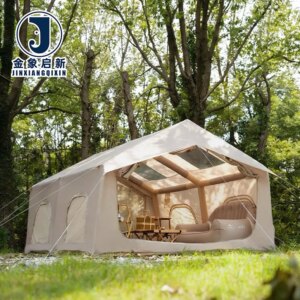
Tienda Inflable de Alta Calidad para Cuatro Estaciones para Acampar, Duradera, PVC Impermeable, Resistencia a Todas las Climas, Apertura Automática Rápida
Read more -
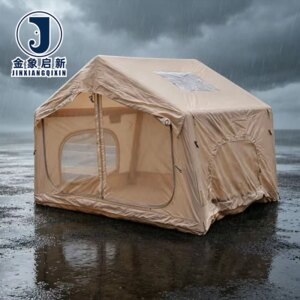
Tienda de Camping Inflable Impermeable Tienda de Aire Exterior para Camping Refugio de Tienda Inflable
Read more