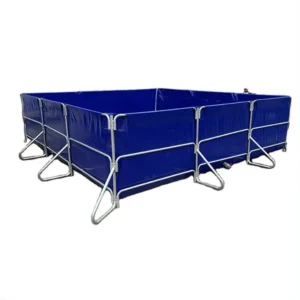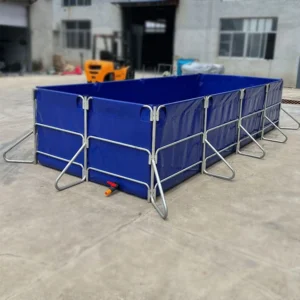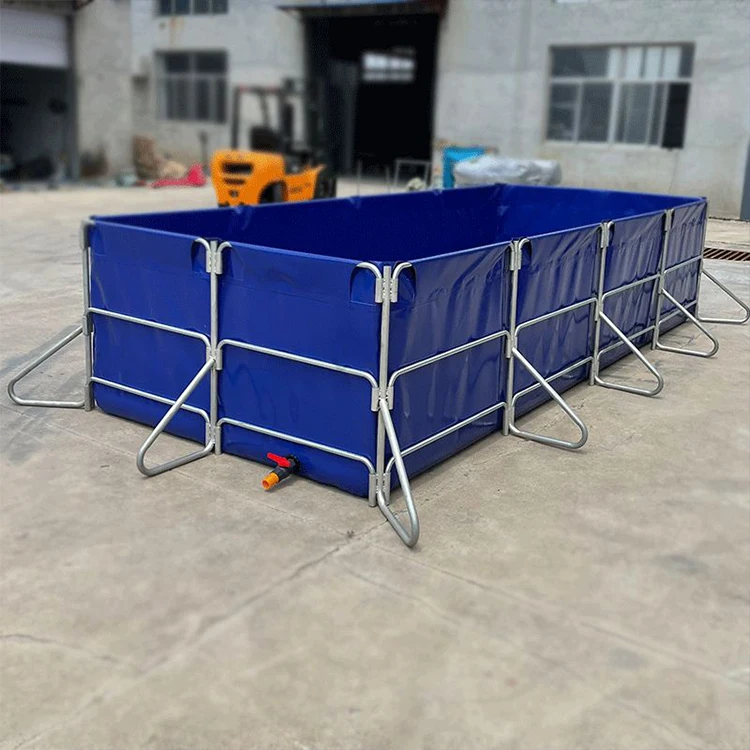
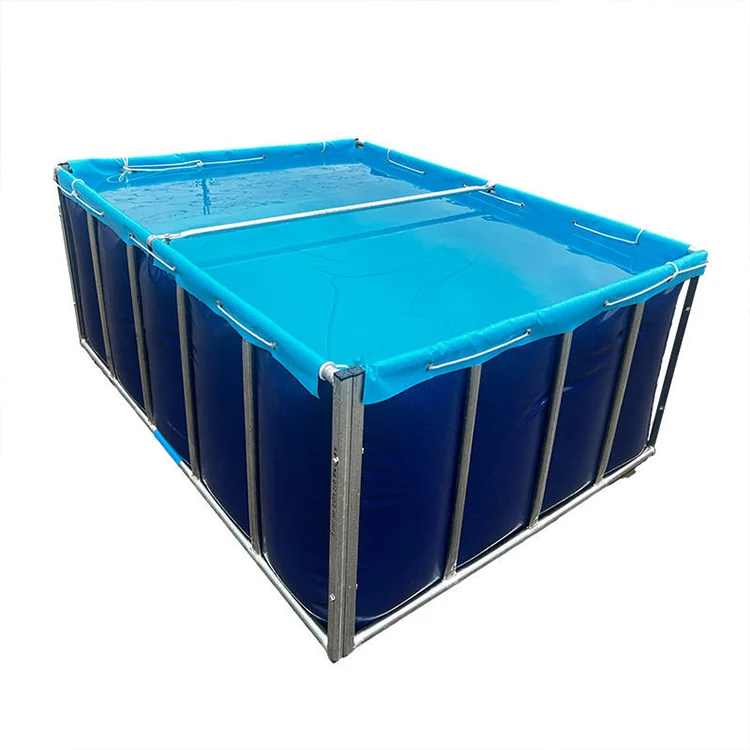
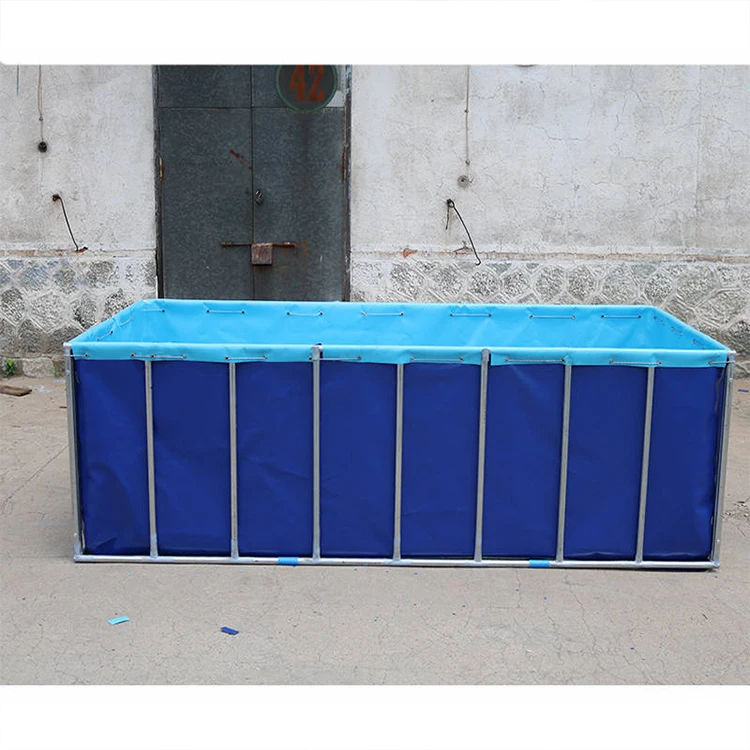
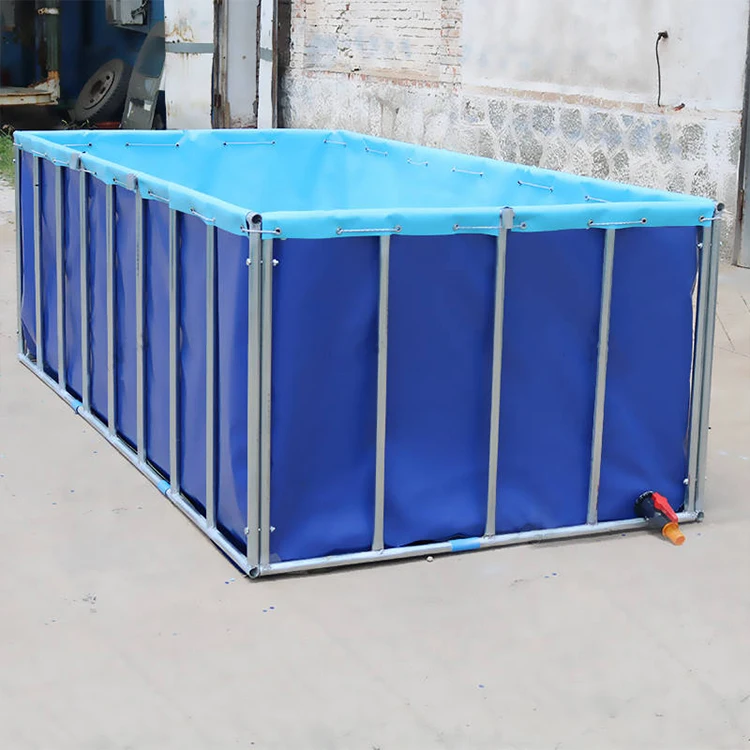
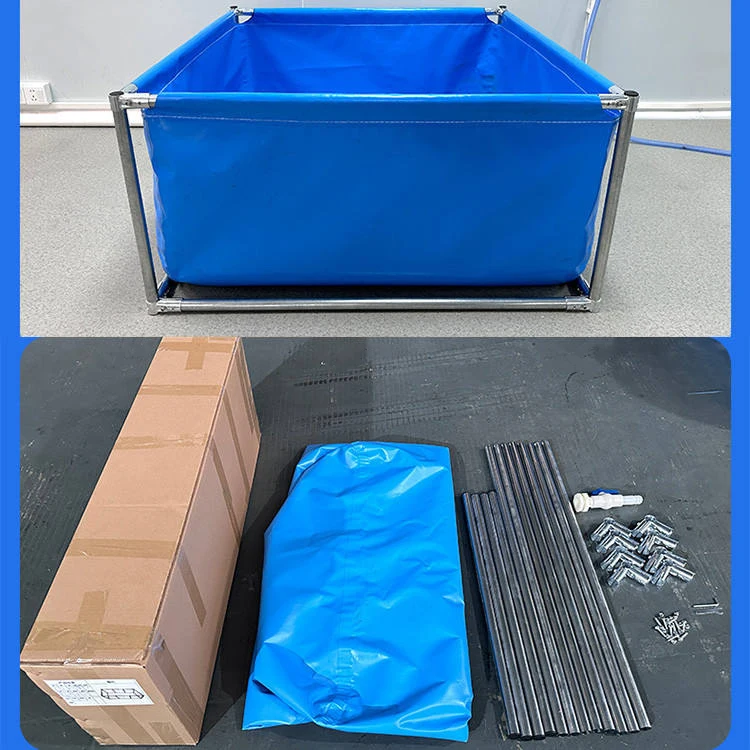
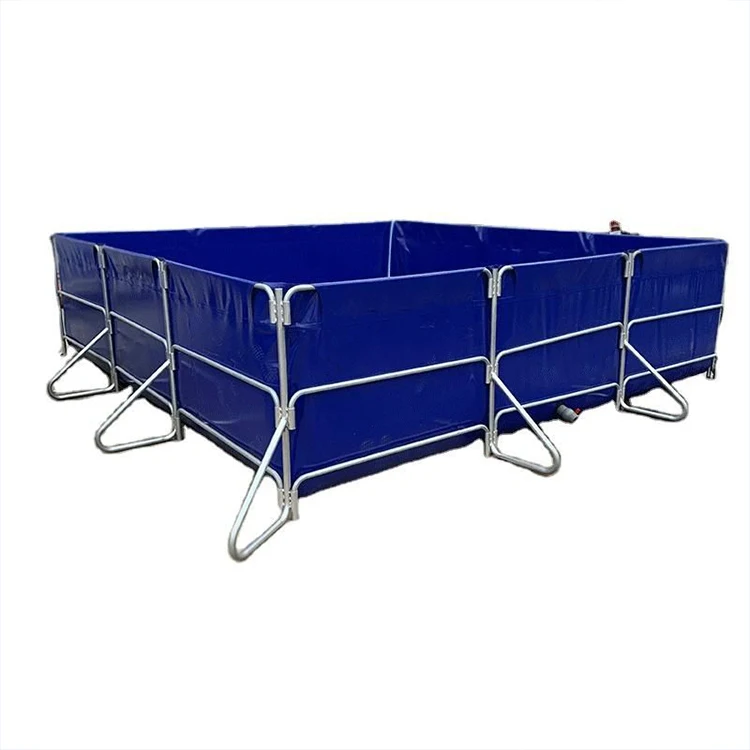
Foldable PVC Tarpaulin Fish Pond Liner, Circular & Rectangular Custom Sizes — engineered for aquaculture operators requiring reliable water containment in outdoor fish farming environments.
- Coating weight and GSM verified at production with dedicated QA/QC, so the liner matches the quotation specification on arrival
- Welded seams tested to hold before the fabric yields at flex and stress points
- Anti-UV treatment backed by test report for sustained sun exposure
- Reinforced hems and eyelets for secure anchoring and tie-down
Backed by nearly 30 years of coated fabric process control, three full production lines for reliable on-time delivery, and 100% pre-shipment inspection on every order.
Description
Deep Process Control Over Coating — Nearly 30 years focused on PVC coated fabric ensures reliable adhesion and weld integrity across every pond liner we produce.
Technical Specifications
| Parameter | Value |
|---|---|
| Product Type | PVC Tarpaulin Fish Pond Liner |
| Material | PVC Tarpaulin |
| Shape Options | Circular / Rectangular |
| Assembly State | Foldable |
| Application | Fish Tank / Fish Pond |
| Standards | ISO, CE |
Application Suitability
| Application | Exposure & Requirement |
|---|---|
| Aquaculture fish ponds | Permanent water contact, soil chemistry, biological load, puncture risk from substrate |
| Fish tank liners | Contained water pressure, cleaning chemical exposure, abrasion from equipment |
| Hatchery and nursery ponds | Controlled water environment, frequent draining and refilling, UV exposure outdoors |
| Agricultural water storage | Static water load, ground settling, UV and weather exposure over seasons |
Why Seams Fail Before the Liner Does in Aquaculture Ponds
Heat-welded seams must be engineered to outlast the fabric under continuous hydrostatic pressure.
Pond liners rarely fail in the middle of a panel. The leaks appear at the seams, where water pressure concentrates and flexing occurs during filling and draining. When a PVC tarpaulin fish pond liner is welded without controlled temperature and pressure, the joint becomes the weakest point. Aquaculture operators then face stock loss, water treatment chemical waste, and emergency repairs that interrupt production cycles [NEED_CITE: tensile and tear test methods for coated fabrics per ISO 1421].
Coating Weight and Adhesion for Water Containment
The PVC coating on this pond liner is applied with controlled weight and adhesion to the base fabric, creating a fully waterproof barrier that withstands continuous immersion. Coating adhesion directly determines whether the liner delaminates under hydrostatic load or remains intact through seasonal temperature cycles. Each PVC tarpaulin fish pond liner undergoes in-process quality checks to confirm coating consistency before it leaves the production line.
Foldable Design and Shape Configuration
Foldable construction allows the liner to be transported compactly and deployed on-site without heavy machinery. Circular and rectangular shape options match standard aquaculture pond geometry, reducing on-site cutting and the number of field welds required. This PVC tarpaulin fish pond liner can be custom-sized to fit specific pond dimensions, whether the installation is a new build or a retrofit of an existing containment structure [NEED_CITE: ISO standards for flexible pond containment materials].
Understanding GSM, Base Fabric and Coating Together
GSM alone does not define how a pond liner performs under water pressure. The base fabric denier and weave density determine tensile and tear strength, while the coating weight governs waterproofing and weld performance. A high GSM achieved through heavy coating on a low-density base fabric will puncture more easily than a moderate GSM liner built on a tightly woven, high-denier base. The relationship between these three variables — base fabric construction, coating method, and total weight — must be evaluated together when selecting a PVC tarpaulin fish pond liner for a given pond depth and water volume. Coating method also affects peel strength at welded seams, which is critical where water pressure exerts continuous outward force.
The Hidden Cost of Underspecifying Pond Liners
A liner that arrives lighter than the quoted GSM may hold water initially but deteriorates faster under UV exposure and mechanical stress. Seams that pass a visual inspection but were welded at incorrect temperatures will separate under sustained hydrostatic pressure, often after the pond is already stocked. Colour variation between liner panels is not merely cosmetic — it signals inconsistent coating batches, which means uneven thickness and unpredictable weld behaviour. These failures compound: a leaking pond means lost stock, wasted water treatment chemicals, and operational downtime that extends well beyond the cost of replacing the liner itself [NEED_CITE: common failure modes in flexible aquaculture containment].
Why Source This PVC Tarpaulin Fish Pond Liner Here
Dedicated QA/QC inspection at every production stage with 100% pre-shipment check means coating weight and seam weld integrity are verified before the liner is packed. Three full production lines and 36 sets of professional equipment support bulk orders with reliable on-time dispatch, even when multiple custom sizes are required in a single shipment. A 10-person R&D team handles material selection, custom sizing and sample development, producing samples within days for non-standard pond dimensions. Full documentation — including material specification sheets, test reports where applicable and pre-shipment inspection records — accompanies every order, giving procurement teams the traceability they need for compliance and auditing.
Documentation & Verification
- Material specification sheet stating base fabric type, coating weight and GSM for each pond liner
- Pre-shipment inspection record confirming seam weld integrity and dimensional accuracy
- Test report for UV treatment where applicable, matching the grade specified on the quotation
- ISO and CE certificates supporting export compliance for international aquaculture projects
- Roll packing list and certificate of origin provided for customs clearance
Fabrication, Handling & Storage
- Heat-weld seams using temperature and speed settings matched to the PVC coating weight to prevent delamination
- Store folded liners in a dry, shaded area to prevent compression creasing on the coating surface
- Deploy the foldable liner on a cleared, smooth substrate to avoid puncture from sharp stones or debris
- Clean the PVC surface with mild detergent; avoid solvent-based cleaners that degrade the coating
- Repair minor field damage with PVC-compatible adhesive patches matched to the liner coating type
Requesting a Quotation
Provide your pond dimensions — diameter or length and width — along with the target water depth so we can recommend the appropriate material grade. Specify whether anti-UV treatment is required for your climate and whether you need circular or rectangular configuration. If your project involves multiple ponds or a phased installation, share the full quantity and timeline so we can align production scheduling and container loading to your site delivery sequence.
Frequently Asked Questions
Q: What GSM and thickness are recommended for fish pond use?
A: The appropriate weight depends on pond depth, water volume and substrate conditions. Deeper ponds with higher hydrostatic pressure require a heavier base fabric construction, not just a higher coating weight. Share your pond dimensions and site conditions so we can recommend a material specification that balances containment reliability with installation practicality.
Q: Can the liner be custom-cut to my pond dimensions?
A: Yes. Circular and rectangular configurations are available in custom sizes to match your specific pond layout. Provide your exact dimensions and our R&D team will develop a sample for your approval before full production begins, ensuring the fit is correct for your containment structure.
Q: How are seams reinforced for long-term water containment?
A: Seams are heat-welded under controlled temperature and pressure to match the PVC coating characteristics. Every weld is inspected during production and verified again at pre-shipment inspection, ensuring seam integrity meets or exceeds the fabric strength at stress and flex points.
Q: Is anti-UV treatment supported by a test report?
A: Anti-UV treatment is available for outdoor pond installations. When this treatment is specified on your order, a test report is provided with the shipment documentation to verify the treatment grade, rather than relying on an unsubstantiated claim.
Q: What documentation comes with the shipment?
A: Each shipment includes a material specification sheet, pre-shipment inspection record, ISO and CE certificates, roll packing list and certificate of origin. UV test reports are included where applicable, providing full traceability for your procurement and compliance records.
Related products
-
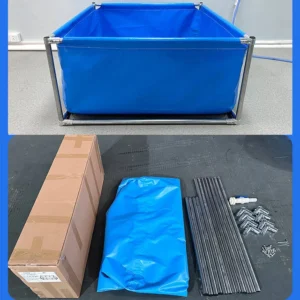
Custom Made PVC Tarpaulin Fish Pond for Aquaculture
Read more -
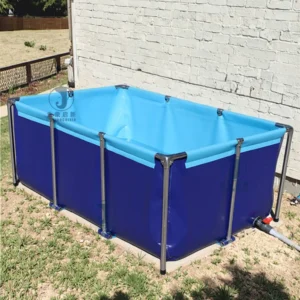
PVC Tarpaulin Roll for Fish Pond Lining & Aquaculture Tanks-Anti-Bacteria Abrasion-Resistant Medium Weight
¥0.53 Add to cart -
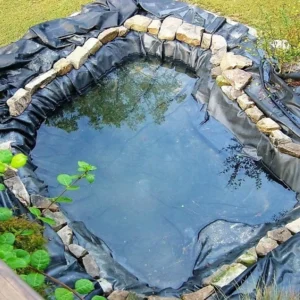
Waterproof Heavy Duty Coated Blackout Fish Pond Tarpaulin Truck Cover Sheet Tent Swimming Pool Liner Anti UV
¥1.00 Select options This product has multiple variants. The options may be chosen on the product page -
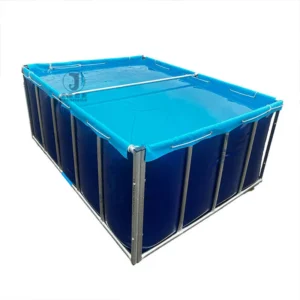
Coated PVC Laminated Tarpaulin Above Ground Swimming Pool Metal Frame High Tensile Foldable Tarp
¥1.00 Select options This product has multiple variants. The options may be chosen on the product page